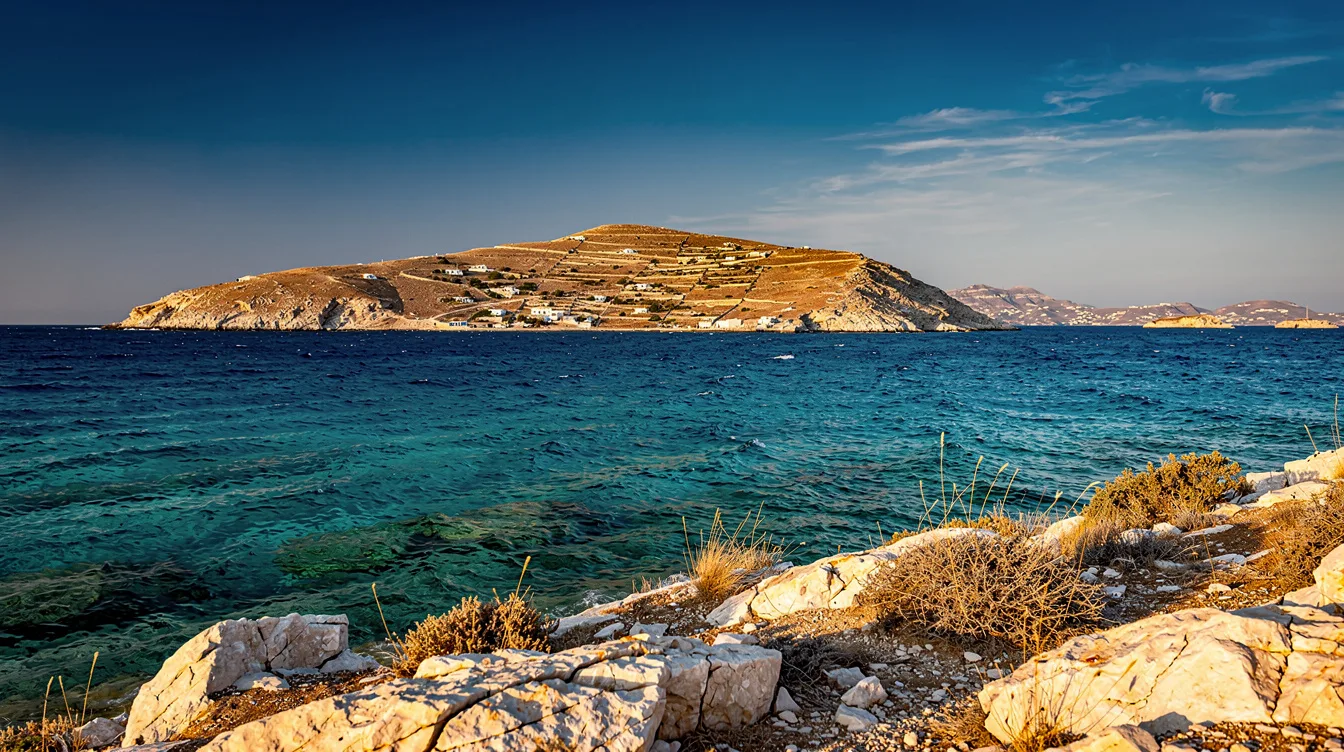
Koufonisia has just 391 residents on Pano Koufonisi, plus an uninhabited neighbor protected as an archaeological site. That gives this Cycladic island group a rare tension: the beaches feel easy and inviting, while one of its three main islands remains firmly off-limits as a normal holiday base.
And you can reach it only by ferry, usually from Naxos, with crossings lasting from 40 minutes to 2 hours 30 minutes. The ride takes planning, but that inconvenience helps préservé the island’s slow, low-key rhythm.
Three islands, but only one is your base
Pano Koufonisi is where you’ll sleep, eat, shop, and arrive by boat. Its port and Chora sit close together, so you can leave your luggage behind and start walking almost immediately.
But Koufonisia actually includes three main islands: Pano Koufonisi, Kato Koufonisi, and Keros. You can visit Kato Koufonisi by excursion boat, while Keros is uninhabited and protected, giving the trip a stronger sense of separation than its easy beaches suggest.
And that contrast is the point. One island gives you tavernas and rooms, another offers a wilder day by boat, and Keros stays across the water as a quiet, protected presence.
Why Keros changes the feel of the trip
Keros isn’t a place to wander ashore for lunch or claim a beach. Its archaeological protection makes it different from the usual Greek island neighbor, and you feel that boundary when you look across the water.
But the view from Pano Koufonisi adds atmosphere without requiring a formal museum visit. At night, the uninhabited island sits in the moonlight, while the port settles into the sounds of small fishing boats and evening conversation.
And if you care more about old Cycladic history than nightlife, this detail gives Koufonisia extra weight. You can spend the day swimming, then remember that the quiet outline offshore belongs to a protected archaeological site.
The beaches are close enough to make you linger
The island’s best argument is the sea. Clear water, pale sand, and small coves sit close enough together that you can build a day around walking, swimming, and stopping whenever the heat wins.
And Ammos, near the port and Chora, is the practical first swim. It works on arrival, when you don’t want another boat ride or a complicated plan.
But the coastal walk leads toward Fanos, Finikas, Italida, and Pori, where the bay gives you a reason to stay until late afternoon. The path and exposed shoreline demand some energy, so carry what you’ll need and don’t expect every stop to feel effortless.
At Devil’s Eye, natural pools and caves shift the focus from beach lounging to swimming and snorkeling. You can take a taxi boat to reach farther coves, then return by water when the walk back feels longer than expected.
Ferry-only access rewards a slower plan
Koufonisia sits between Naxos and Amorgos, but it has no airport. From Naxos, the crossing takes between 40 minutes and 2 hours 30 minutes, depending on the boat.
And the faster ferry isn’t always the simplest choice. Fast services cost more and can be more sensitive to sea conditions, so check the connection carefully before building a tight island-hopping itinerary.
But once you arrive, you won’t need a rental car for most stays. Chora and Ammos are walkable, a coastal path links the main beaches, and taxi boats cover the stretches that feel too long in the sun.
For a US traveler planning through Greece, Naxos makes a sensible gateway because it combines ferry access with more transport and dining choices. Koufonisia then gives you the smaller scale, where the day’s main decision is which cove deserves your afternoon.
June and September keep the island in balance
June and September are the months I’d choose. The weather stays suited to swimming, while the island avoids some of the pressure that builds during July and August.
And you should still reserve early because the hotel supply is small. July and August bring more evening activity, but the beaches and taxi boats feel busier, which weakens the very calm many travelers come here to find.
Stay three to five nights if you want the island to work on its own terms. You can combine it with Naxos or Amorgos, but don’t fill every day with departures and arrivals.
By sunset, the port turns quiet, the water loses its hard midday glare, and Keros becomes a dark outline beyond the boats. That is when Koufonisia feels largest, even though its inhabited island is home to only 391 people.