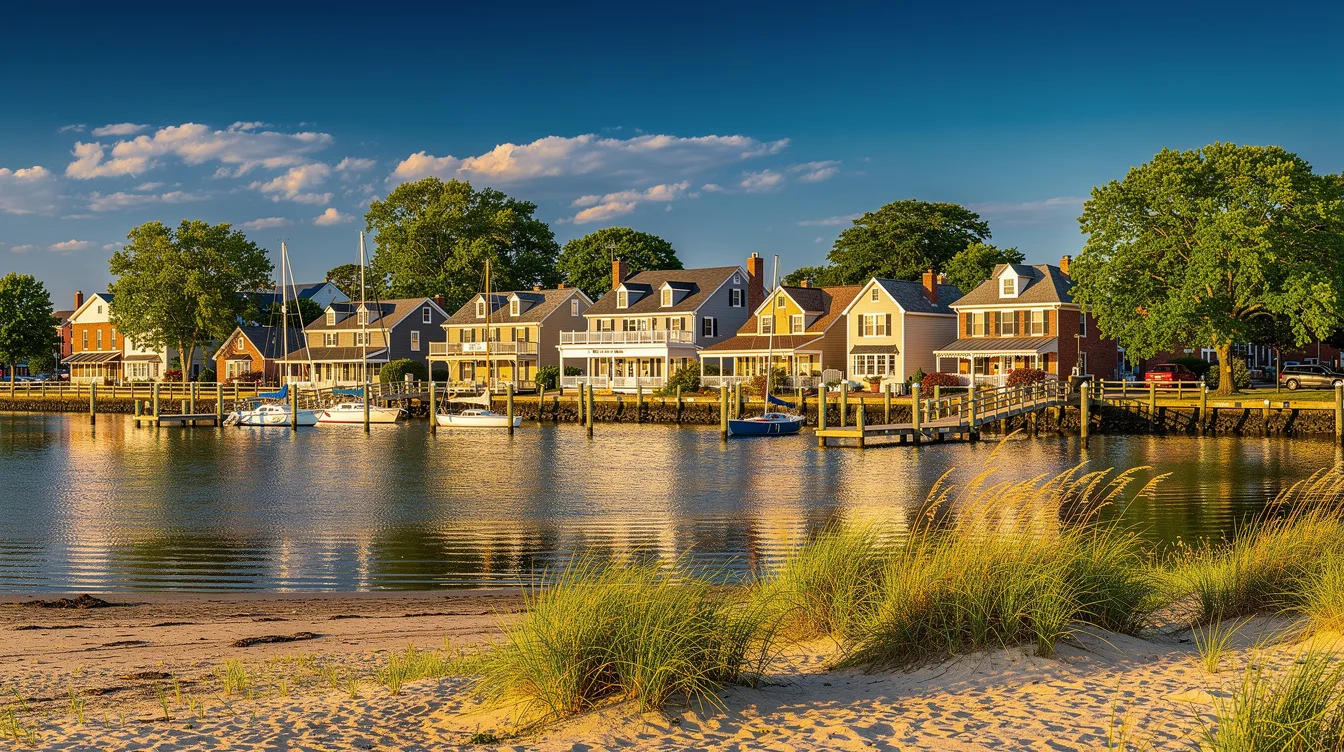
Lewes began in 1631, when Dutch colonists established Zwaanendael at the mouth of Delaware Bay. The town is generally presented as Delaware’s first European settlement, which explains its proud nickname, “The First Town in The First State.”
And that history still shapes the place. Lewes feels more like a maritime town with a beach than a beach resort with a past, especially when summer crowds thin out. I’d come in spring or fall, when Second Street is easier to wander and the bay air smells faintly of salt.
Why 1631 still matters in Lewes
Lewes’s origin story is unusually clear for a coastal town. The Dutch settlement was called Zwaanendael, and its early presence gives the town a different weight from nearby Rehoboth Beach. And because Delaware was the first state to ratify the Constitution, “First Town in The First State” feels more specific than ordinary tourism copy.
But the town’s history isn’t locked behind one museum door. The historic center gathers old houses, quiet streets, small shops, and restaurants around Second Street, so you can absorb the past while walking to lunch. The Zwaanendael Museum focuses on the town’s Dutch beginnings inside a building inspired by a Dutch town hall.
Lewes has harder history, too. British forces bombarded the town during the War of 1812, and Cannonball House recalls that episode. You won’t need a full day to understand the story, but the details make the waterfront feel less decorative and more lived-in.
The bay town is quieter by design
Lewes sits in Sussex County near Cape Henlopen, Rehoboth Beach, and the Atlantic Ocean. And its position beside Delaware Bay gives the town a calmer rhythm than the ocean-facing resorts nearby. The water feels like the main character here, whether you’re watching boats or following the shoreline.
But “quiet” doesn’t mean sleepy. The town has a working maritime identity tied to fishing, boating, bay pilots, canals, and the water around Lewes-Rehoboth Canal. I prefer that mix to a polished resort strip because you can spend an hour watching activity from the harbor, then turn onto a residential street where the afternoon goes still.
Cape Henlopen State Park extends the trip beyond town with beaches, dunes, trails, bike paths, and coastal wildlife. And Fort Miles, a former Second World War military site inside the park, adds another layer to a day that might otherwise become only sun and sand.
What to see when the beach isn’t the whole plan
Lewes Beach and Delaware Bay suit travelers who want a gentler shore. But if you’re expecting the broad ocean energy of Rehoboth or Dewey Beach, the difference is immediate. Lewes is calmer and more family-oriented, which makes it easier to read, walk, or sit near the water without turning the day into an event.
You can kayak, paddle, fish, or cycle around the town and nearby waterways. And the best plan is to leave room between stops, because Lewes rewards slow movement more than aggressive sightseeing. I’d pair the historic center with Cape Henlopen rather than trying to collect every attraction before dinner.
The Cape May-Lewes Ferry runs year-round to Cape May, New Jersey, creating an easy maritime excursion if you’re exploring the Mid-Atlantic coast. But the ferry changes the town’s scale: Lewes becomes a port of departure, not merely a destination where you park and walk.
Is Lewes quieter than Rehoboth Beach?
Yes, generally, and the difference is the point. Rehoboth Beach is more commercial and energetic, with a boardwalk, attractions, restaurants, and heavier summer traffic. And Lewes leans toward heritage, cycling, nature, and a slower waterfront, so you’ll have a better stay here if you like your beach towns with breathing room.
Lewes had 3,303 residents in the 2020 census, a figure that helps explain its smaller-town feel. But it isn’t isolated. You can use it as a base for Rehoboth Beach, Cape Henlopen, the bay, and the ferry, while returning each evening to quieter streets.
When should you visit Lewes?
Spring or fall is the smart choice when summer attendance drops. And the reduced pressure makes the town’s best qualities easier to notice: the hush around the old streets, the salt air near the bay, and the changing sound of boats along the waterfront.
There’s no need to force a grand itinerary. Spend time around Second Street, visit the museum, walk the shore, and leave space for the weather to change your plans. By late afternoon, Lewes settles into the soft sound of bay water against the edge of town.