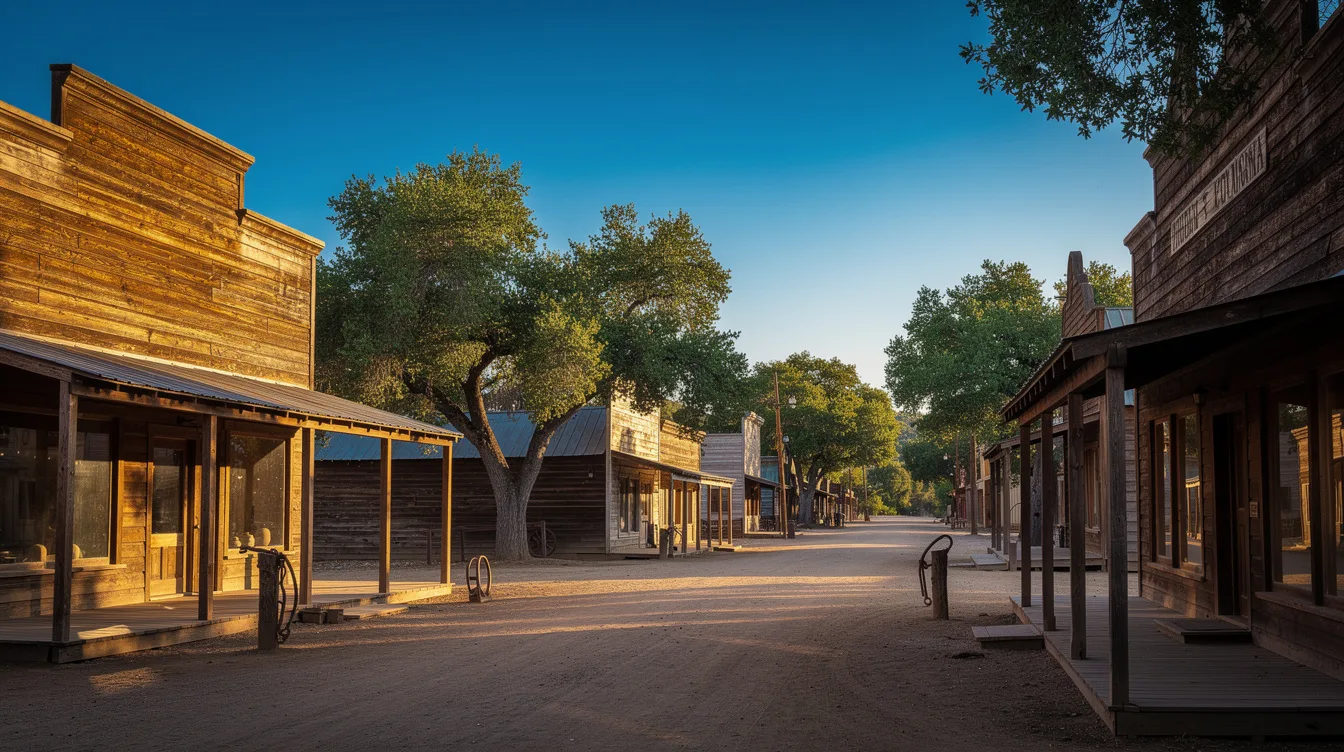
Columbia State Historic Park drops cars from its historic core, so the Gold Rush story arrives at walking speed. In this Tuolumne County town, founded in 1850, preserved 19th-century buildings and live historical activity give the street a purpose beyond a quick photo stop.
You can arrive by car, then leave it behind. That reversal is Columbia’s best trick: once you’re on foot, the town feels less like a roadside attraction and more like a small stage where the audience gets to wander through the set.
But this is no invented Western backdrop. Columbia began during the California Gold Rush, and its historic center is protected as a National Historic Landmark District within the state park.
And the scale helps. It’s a small community, not a grand museum complex, which means you can give it a half-day without turning the stop into an exhausting assignment.
Three miles from Sonora, traffic fades fast
Three miles north of Sonora on Highway 49, Columbia sits in the Sierra Nevada foothills. That proximity makes it an easy detour on a Gold Country drive, especially when you want history without adding a long transfer to the day.
But don’t mistake easy access for a rushed visit. The historic park’s car-free center asks you to slow down, and that’s exactly why it works better than places viewed entirely through a windshield.
And at about 2,139 feet, Columbia has the feel of a foothill stop rather than a high-mountain expedition. You’re here to walk, look closely, and let the street set the pace.
Parking and entry to the historic park area are generally free. That removes one common Gold Country irritation, though merchants, rides, and special activities can keep their own hours and fees.
You’ll find the park at 11255 Jackson Street. It’s practical information, yes, but it also points to the town’s central pleasure: arrive with a plan, then let the pedestrian street interrupt it.
The old buildings are only half the story
Columbia’s restored 19th-century buildings give the place its bones. Shops and saloons fill out the scene, while a blacksmith and costumed interpreters keep the historic district from feeling sealed behind glass.
And that live element matters. You aren’t asked to imagine every detail alone, because the park includes gold-panning activities, stagecoach rides, and people interpreting the Gold Rush era as you move through town.
But it can be touristy in its own direct way. The experience is organized, not accidental, so travelers looking for an empty ruin should adjust their expectations before they arrive.
My view is that Columbia is better for travelers who enjoy a little theater with their history. The absence of vehicles lets you notice the human scale, from footsteps on the street to the movement around a stagecoach.
The town was once called the “Gem of the Southern Mines.” Today, that old label lands best when you treat it as a clue to Columbia’s Gold Rush past, not a demand to see every stop in one sweep.
Go when the guided walks are running
Summer is the simplest time to visit if you want a walking tour, because tours run daily then. In other seasons, they’re offered on weekends, which makes timing more important than it first appears.
But check individual operations before building your day around a ride or activity. The park’s general access is one thing; a merchant, stagecoach, or special program may follow a different schedule.
And if you’re pairing Columbia with a Yosemite-area trip, it works best as a deliberate half-day pause. You can trade a little road time for a place where the Gold Rush period stays visible at street level.
The historic district is also manageable for travelers who prefer a shorter outing. You can walk the core at your own pace, stop for a tour when available, and skip the pressure to turn history into an all-day march.
There’s a useful contrast here: Columbia is preserved, but it isn’t silent. A working blacksmith, shops, saloons, and interpreters keep the past active enough to hold your attention.
What you’ll actually remember
Vehicle-free downtown is the detail that separates Columbia from many historic stops. Cars are necessary to reach Tuolumne County, but once you park, the town’s central street belongs to people moving slowly.
And that makes the live reenactment promise feel earned. Costumed interpreters and Gold Rush activities put motion into the preserved buildings, so you’re not simply reading plaques and moving on.
But keep the visit modest. Columbia is strongest as a focused stop near Sonora, not as a destination that needs endless scheduling or inflated expectations.
You’ll leave with a clearer sense of why the town remains protected. By the time you return to Highway 49, the sound of traffic feels oddly abrupt after a street built for walking.