“`html
The rental car bottoms out on hardened lava for the third time. You question the decision. Then three white crescents appear through heat shimmer and the kind of turquoise Big Island keeps for people willing to work opens below.
Makalawena Beach sits in Kekaha Kai State Park on the Kona Coast, 12 miles north of Kailua-Kona. A 1.5-mile rough lava road from Highway 19 filters crowds. Most visitors turn back at the parking lot.
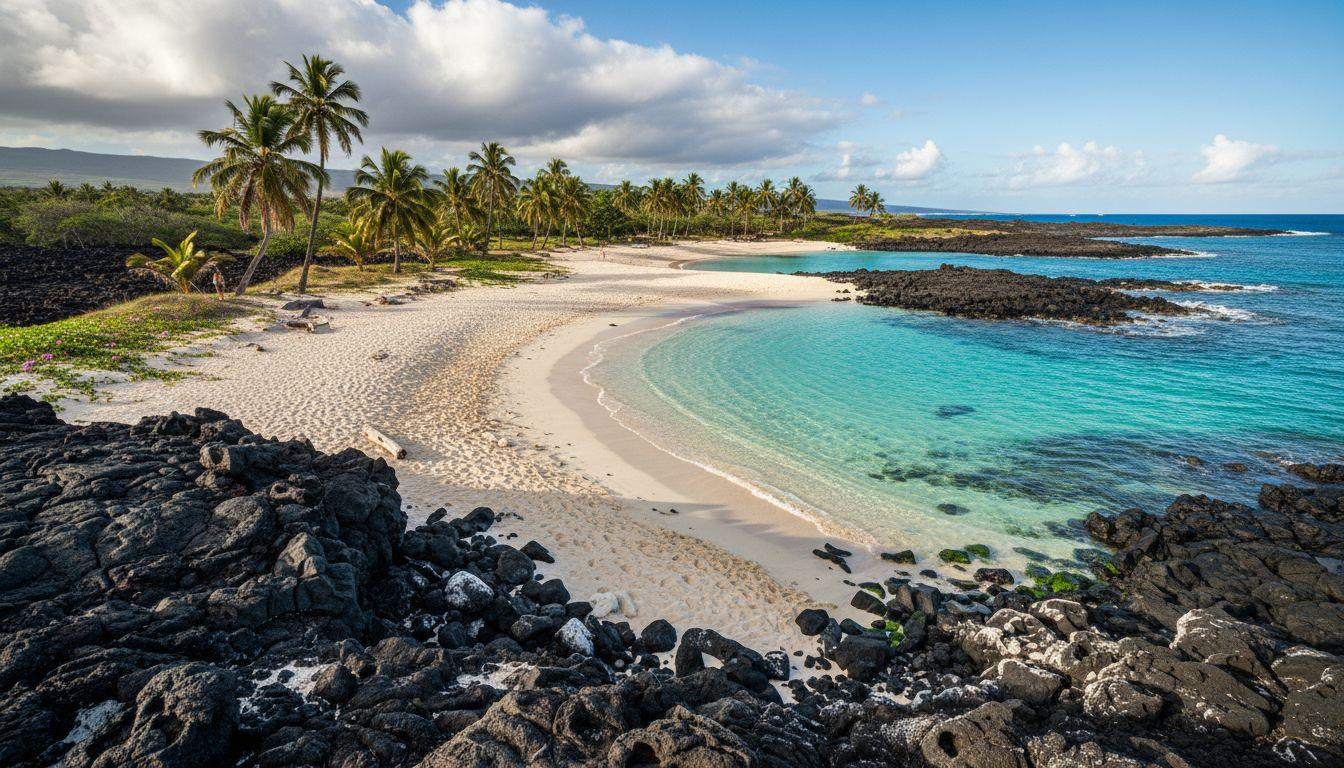
The ones who continue walk 20-30 minutes over black lava fields and sand dunes to reach three protected coves. The sand here is powdery white, rare on an island famous for black beaches. The water runs turquoise in shallow bays where tide pools form between lava outcroppings.
The white sand anomaly
Big Island built its reputation on black sand. Punalu’u Beach draws thousands daily to see volcanic basalt crushed into dark grains. Makalawena breaks that pattern.
The sand here comes from calcareous marine organisms. Coral and shells erode into fine white particles that collect in three crescent bays along a 0.75-mile shoreline. Black lava rocks frame each cove, creating visual drama you don’t find at resort beaches.
The contrast matters. White sand against black lava against turquoise water creates the postcard image Hawaii promises but rarely delivers without crowds. Here the geological oddity stays protected by effort.
The lava road filter
Why the access matters
Highway 19 runs smooth between Kailua-Kona and Waikoloa. Between mile markers 90 and 91, an unmarked turnoff leads to rutted lava hardened into a road. The state improved it in recent years but potholes remain.
Four-wheel-drive vehicles navigate slowly in 15 minutes. Two-wheel-drive cars park at the highway and their passengers hike an extra 1.5 miles. The walk crosses exposed lava fields where heat reflects like an open oven. Closed-toe shoes handle the sharp terrain better than sandals.
From Mahaiula parking, the trail continues north for 1.1 miles. Lava crunches underfoot. Sand dunes appear. Palm clusters offer shade glimpses. Then the first bay opens and the effort makes sense.
What the effort protects
Hapuna Beach sits 2 miles north with direct parking and thousands of daily visitors. Kua Bay draws hundreds to easy-access turquoise water. Makalawena sees maybe 40-50 people on busy weekends, fewer than 20 on weekdays.
The park operates 8am to 6:30pm with no lifeguards and no services. Portable toilets sit at Mahaiula parking. The beach itself offers palm shade and solitude. Nothing else.
Recent visitor surveys show the hike deters 80-90% of potential crowds. The ones who arrive tend to stay longer and respect the quiet. Wild goats wander the coastal stretch, descendants of Spanish imports from the 1800s.
The beach itself
Three coves, one perfect day
The northern bay stays protected and calm for swimming. Water visibility reaches 50-100 feet on clear days. Green sea turtles rest in tide pools formed by lava erosion.
The central cove requires a 15-minute scramble over lava to reach hidden pools. Fish flash silver in shallow water. The southern section connects to Mahaiula Beach for longer walks.
March through May brings the calmest conditions. Water temperature holds around 77°F. Sunrise hits around 6:45am, sunset near 6:30pm. Dawn light turns the coves gold before heat builds. Late afternoon offers similar color without the morning chill.
Beyond the shoreline
Opaeula Pond sits 12 acres behind the northern beach. Hawaiian stilts and black-crowned night herons feed on native red shrimp. The pond provides critical habitat for endangered species.
Palm trees cluster in scattered groups across the beach. Their shade covers maybe 10-20% of the sand. Beach morning glories grow in dunes. The landscape stays arid year-round with minimal rainfall.
A fisherman who works this coast mentioned the beach disappears during high winter surf and reforms after storms pass. Nature resets what crowds never disturb.
When to go and what to know
March 2026 marks shoulder season with lower crowds than winter and calmer water than summer. Air temperature averages 82°F. Lava radiates stored heat during midday hikes.
Bring water. The hike offers no shade and dehydration hits fast in exposed conditions. Snorkel gear works in calm bays. A small cooler makes sense for longer stays. Cell service fails in lava fields so download maps before leaving Highway 19.
The nearest lodging sits in Kailua-Kona, 25-30 miles south. Rooms run $150-250 per night in shoulder season. Four-wheel-drive rentals cost an extra $100 daily but save the extended hike. Weekend parking fills by 9am.
Your questions about Makalawena Beach answered
Is four-wheel-drive required?
Not required but helpful. Two-wheel-drive cars can navigate the lava road slowly with caution, though rental companies discourage it due to damage risk. Parking at Highway 19 and hiking the full distance works fine. The trail stays flat with moderate difficulty comparable to other Big Island coastal hikes.
How does it compare to other Big Island beaches?
The sand feels softer than Hapuna’s coarser grains. Water runs clearer than Kahalu’u’s reef-murky entry. Crowds stay 80% lighter than Kua Bay due to access effort. The lava-and-white-sand contrast creates more dramatic visuals than resort-tamed Anaehoomalu. Similar pristine conditions exist on Molokai where effort filters crowds the same way.
Can you camp overnight?
No camping allowed. Kekaha Kai State Park enforces day-use-only rules. Visitors must leave by 6:30pm closing. Nearby Halawa Valley on Molokai offers similar seclusion for travelers seeking multi-day Hawaii experiences beyond resort zones.
The morning ferry back to Kona leaves at 4:30pm. Most visitors make it with time to spare. The ones who linger watch tide pools fill as afternoon light softens and wonder why they waited so long to walk across lava.
“`