Hanauma Bay charges $25 entry plus $3 parking. Add $20 for snorkel gear rental and you’re at $48 per person before you touch water. Reservations open 48 hours ahead and sell out by 7am. The bay caps visitors at 3,000 daily but still feels crowded by mid-morning.
Halawa Bay sits 100 miles away on Molokai’s northeast shore. Free access. No reservations. Under 50 visitors most days. The same turquoise reef fish swim here, but the beach runs blue-gray from stream sediment mixing with ocean at the valley mouth.
What Hanauma Bay became
The bay implemented its $25 fee in 2021 after decades of damage from over 1 million annual visitors. Coral recovery programs now show progress. The mandatory safety video runs 9 minutes. Parking fills early despite 300 stalls.
Tour buses arrive by 9am. The reef sits 5-20 feet deep with excellent visibility most days. Humuhumunukunukuapuaa and parrotfish cluster near the rocks. Green sea turtles surface close enough to photograph. The experience works, but it’s managed nature now.
Closed Mondays and Tuesdays for environmental recovery. The shuttle from parking to beach costs nothing but adds 15 minutes each way. Gear rental booths line the entry plaza. Everything functions smoothly because it has to at this scale.
Where Halawa Bay sits different
Highway 450 winds 35 miles from Hoolehua Airport through coastal scrub to valley floor. The drive takes 90 minutes. Last gas station sits 20 miles back in Kaunakakai. Cell service drops to nothing past mile 25.
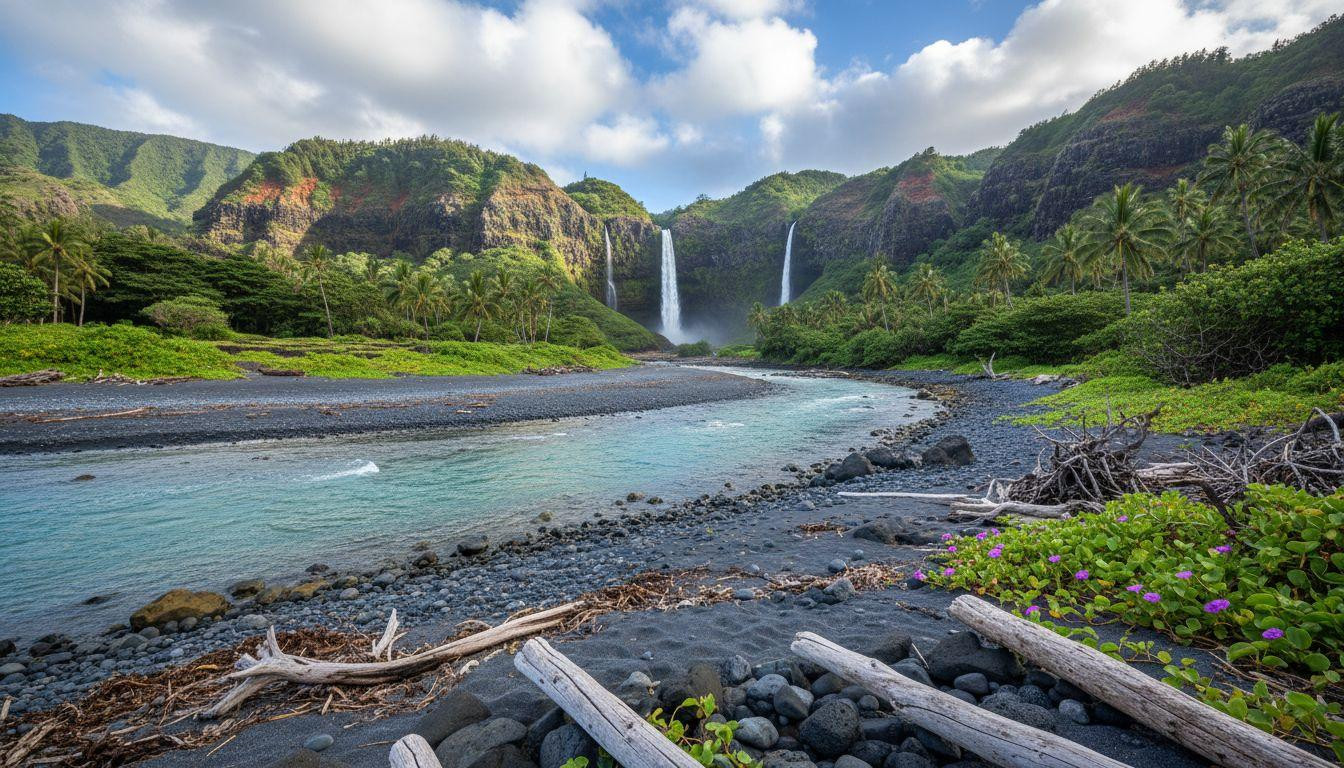
The beach curves half a mile where Halawa Stream meets ocean. Blue-gray sands mark the mixing zone. Twin waterfalls, Hipuapua at 442 feet and Moaula at 370 feet, cascade down valley walls visible from shore. Winter flow runs stronger.
The stream mouth reality
Freshwater carries volcanic sediment that clouds the immediate mixing area. Visibility improves 100 feet offshore where reef structure begins. The sediment creates the unusual sand color tourists photograph. Incoming tide flushes it clearer.
Sea turtles visit occasionally. Reef fish diversity matches Molokai’s barrier reef system but without Hanauma’s protected status. Snorkeling works best on calm days between swells. North-northeast swells hit hardest December through March.
Valley culture protocols
Ancient Hawaiians settled Halawa over 1,000 years ago. Archaeological sites dot the valley floor inland. Taro patches still operate under family stewardship. Guided waterfall hikes cost $100-150 and require permission to cross private land.
The beach itself stays open without fees. Respect means not photographing cultural sites without asking. Flash flood warnings matter here. The stream rises fast during heavy rain. Valley walls funnel water straight to the bay.
What the drive costs versus the experience
Gas from airport to Halawa runs $15-20 at Hawaii’s $4.50 per gallon average. No parking fees. No gear rental requirements. Bring your own snorkel equipment or swim without it. The savings hit $48 per person compared to Hanauma.
No lifeguards patrol. No facilities exist beyond roadside parking. Pack water, food, and sun protection. The remoteness keeps crowds away but demands self-sufficiency. Four-wheel drive helps on the final valley approach but isn’t required for beach access.
When conditions work best
March through May offers 75-78°F water and moderate 1-3 foot swells. September through November runs similar. Summer peaks at 80°F with calmer conditions. Winter brings bigger surf and occasional road closures during storms. Check weather before driving out.
Sunrise at 6am finds the beach empty. Valley mist lifts by 8am. Afternoon trade winds pick up around 2pm. Most visitors who make the drive stay 2-3 hours. The waterfall hikes add another 4-6 hours for those booking guides.
The reef comparison
Hanauma’s protected status since 1967 created denser fish populations. Halawa’s reef remains wild. Purple corals cluster near drop-offs. Parrotfish and butterflyfish navigate the rocks. The experience feels less curated, more like Caribbean spots that escaped development.
Shark sightings occur at the stream mouth where nutrients attract them. Tiger sharks patrol occasionally. Local knowledge suggests staying offshore of the mixing zone. No incidents reported in recent years but awareness matters in remote locations.
The quiet Molokai protects
Molokai’s 7,345 residents maintain low tourism deliberately. No resorts line Halawa Bay. No commercial development plans exist. The valley’s families control access to waterfall trails. This preserves authenticity but limits infrastructure.
Visitors who expect Oahu amenities turn back. Those who accept remoteness find the Hawaii that existed before mass tourism. The blue-gray beach at stream mouth photographs differently than standard golden sand. Valley walls rise 1,000-2,000 feet creating dramatic backdrop.
Morning light turns the bay golden for maybe 20 minutes. Then trade wind haze softens everything. The waterfalls sound constant from beach. Stream gurgles mix with reef break. Scents shift between salt spray and wild guava growing valley floor.
Your questions about Halawa Bay answered
How does access compare to Hanauma Bay?
Hanauma requires 48-hour advance reservations that sell out at 7am Hawaii time. Halawa needs no reservations. The 90-minute drive from Molokai airport replaces Hanauma’s 15-minute shuttle from Waikiki. Highway 450 stays open except during flash floods. Last services sit 20 miles back.
What makes the sand blue-gray?
Halawa Stream carries volcanic basalt sediment from valley walls. Where freshwater meets saltwater at the west beach, the mixing creates blue-gray coloring. Standard Hawaiian beaches show golden or white sand from coral breakdown. The stream mouth’s unique geology creates this visual difference.
Is snorkeling quality worth the remote location?
Hanauma offers better conditions for beginners with 5-20 foot depths, consistent visibility, and protected reef status. Halawa works for experienced snorkelers comfortable with variable visibility, no lifeguards, and wild reef conditions. The trade-off: zero crowds versus managed safety. Other quiet Hawaiian beaches offer middle ground options.
The valley floor holds 1,000 years of Hawaiian history. Twin waterfalls frame the bay. Blue-gray sands mark where mountain meets ocean. March 2026 water temperature hits 77°F. The stream mouth stays empty while Hanauma’s 3,000 daily visitors wait in line.