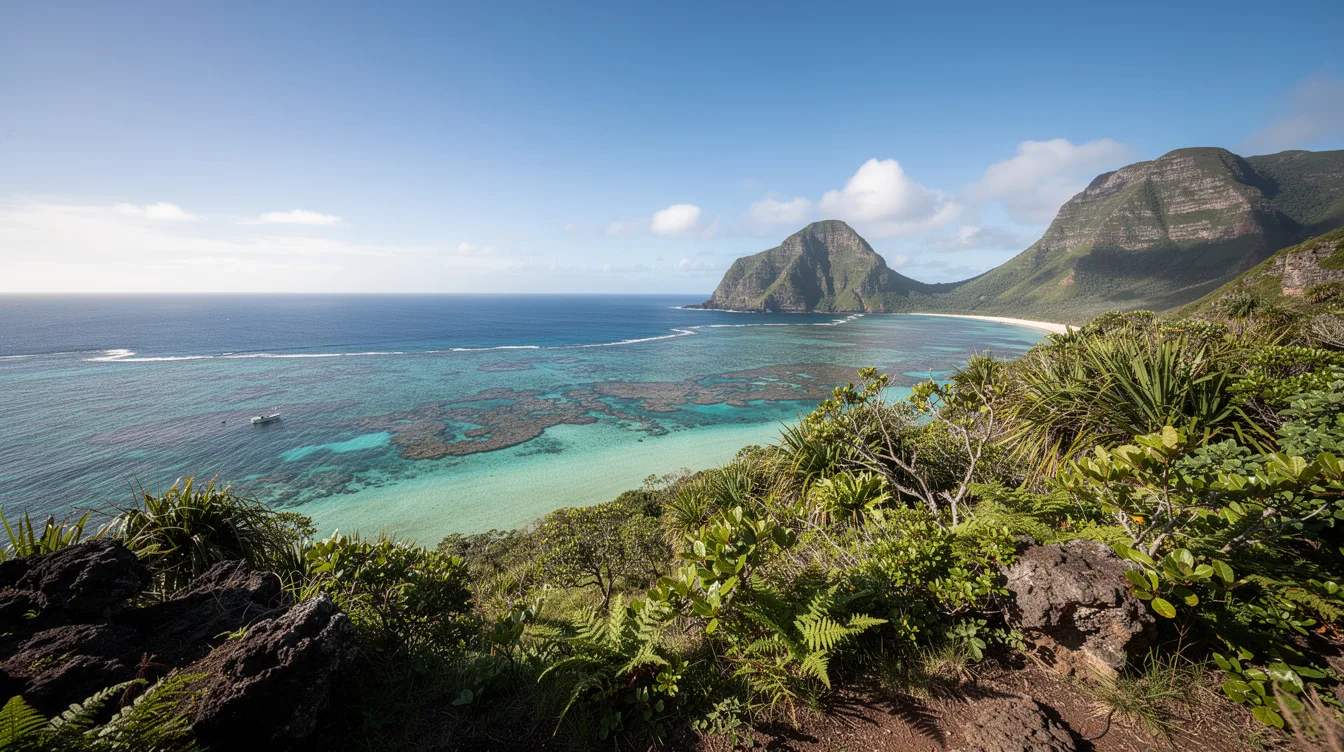
Lord Howe Island sits in the Tasman Sea with about 400 visitors at a time, and it holds Earth’s southernmost barrier reef. That limit changes the experience immediately. You won’t find cruise crowds or a long line of resort towers, because the island’s accommodation and flights are deliberately restricted.
A two-hour flight leads to the world’s southernmost barrier reef
Lord Howe Island belongs to New South Wales, though it lies about 484.7 miles northeast of Sydney. The flight takes about 2 hours, then the road from the small airport quickly gives way to palms, forest, and glimpses of clear water.
And this is where the island earns its place on your itinerary. The lagoon is protected by the southernmost barrier reef on Earth, so calmer water makes snorkeling and swimming practical for much of the warmer season.
But remoteness has a price. You’ll need to arrange accommodation before finalizing flights, and the limited supply means spontaneous trips can be difficult. For planning ideas beyond the island, browse this guide to Australia travel.
About 400 visitors keep the beaches quiet
The island allows only about 400 visitors to stay at one time. That number is small enough to feel in daily life, especially when you cycle between the beach, your accommodation, and the walking tracks.
And bicycles make more sense here than a rental car. There are few vehicles, while the island measures roughly 6.8 miles long and up to 1.7 miles wide. You can cover ground easily, but you shouldn’t expect a large-town choice of shops or restaurants.
My opinion is simple: the restriction improves the trip. The island feels lively around the main settlement, but never loud, and the quiet returns quickly once you reach the lagoon edge.
Mount Gower gives the island its hard edge
Lord Howe isn’t only about calm water. The southern hills rise sharply toward Mount Gower, reaching 2,871 feet, while Mount Lidgbird adds another dramatic wall above the island.
And the Mount Gower walk is demanding. It’s generally done with a guide, so you should choose it for the physical challenge rather than a casual morning stroll. The easier paths around Malabar Hill, Transit Hill, and North Bay offer a gentler introduction.
Because forest covers much of the island, walking can feel cool and shaded even when the shoreline is bright. You’ll hear birds before seeing them, and the views arrive in pieces through leaves and steep volcanic ridges.
When should you go for warm water?
Is September to February the best season?
Yes, if swimming and snorkeling matter most. From September to February, the sea, lagoon, and beaches become the main draw, though this is also the busiest and most expensive period.
But March to May is the smarter compromise for many travelers. Conditions often suit walking and swimming, while visitor pressure eases. You’ll still need to book ahead, because the island’s small capacity doesn’t disappear outside summer.
From June to August, cooler weather favors hiking and nature trips. Bird activity remains notable from November to June, when seabirds are nesting across the wider island group.
What can you do around the lagoon?
Ned’s Beach is the easy starting point for snorkeling, with calm water and fish close to shore. The island also has more than 60 dive sites, including volcanic drop-offs, caves, and areas near Ball’s Pyramid.
And you can make the day as active or quiet as you like. Cycle to the beach, walk toward North Bay, or sit beside the lagoon while the reef breaks the open sea into softer sounds.
The Lord Howe Island Group entered the UNESCO World Heritage list in 1982, and conservation still shapes the visit. By late afternoon, bicycles lean outside quiet buildings, and the lagoon turns silver beneath Mount Gower.