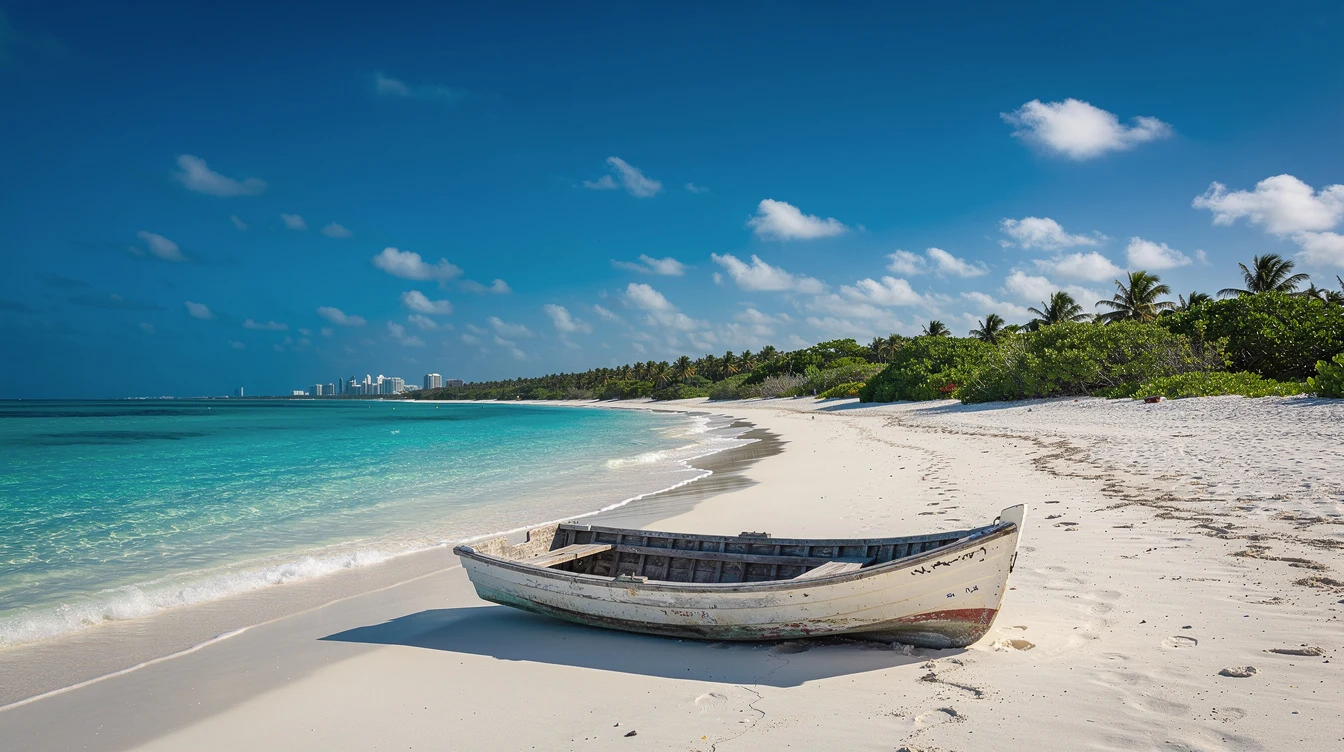
The ferry from Puerto Juárez takes 20 minutes, and that is all it takes to leave Cancún behind. Isla Mujeres is 7 km long and barely 650 m wide, a strip of limestone and sand where the Gulf of Mexico meets the Caribbean. There are 500 golf carts on the island, 121 taxis, and 1,500 scooters. There are zero traffic lights. And the sailfish here outnumber the tourists who bother to look for them.
The numbers that actually matter
13,174 people live here year-round, though the 2010 census counted 12,642. The difference is the slow growth of a place that has not turned itself into a megaresort. The west coast faces Cancún, and on clear evenings you can see the hotel lights across the water. The east coast gets the full Caribbean surf, rocky and unswimmable in most spots. That division is the whole geography of the island.
Water temperature is warm year-round. The average air temperature is warm too, though June through September pushes hotter and wetter. That is also when whale sharks pass through, from mid-May to September. The Atlantic hurricane season overlaps, so the trade-off is real: better marine life, worse odds of a storm.
How to move when nothing moves fast
You will not rent a car. The island closed its airport and landing strip years ago, so everything arrives by boat. From there, you walk, or you hire a golf cart. A full loop takes an hour at cart speed, which is roughly walking pace with a roof. The bus runs to the colonias where locals live, but most visitors stay within a few blocks of the ferry dock.
And the rhythm is deliberate. The fast ferry dumps day-trippers by 10 a.m. They fill Playa Norte by noon, eat fish tacos by 2, and clear out by 5. The island exhales after that. That is when the water turns glassy and the golf carts line up at charging stations near Hidalgo Street.
What the water actually holds
Isla Mujeres is considered one of the world’s best places to catch sailfish. The same currents that make the east coast rough carry baitfish, and the sailfish follow. Charter boats run from the west coast docks from January through April, though local captains who have run the route for decades will tell you the fish do not read calendars.
Below the surface, the Cancún Underwater Museum sits 8 m down on the island’s western reef. Jason deCaires Taylor built concrete figures that coral colonizes, so the art changes as the marine growth thickens. Snorkelers can reach some pieces, though scuba gives you the full layout. Garrafon Park on the south end has the clearer reef for traditional snorkeling, with tropical fish, rays, and the occasional sea turtle.
Can you swim with whale sharks?
Yes, from mid-May through September. The sharks feed on plankton blooms near the surface, so you float alongside them without chasing. The boats leave early, 7 a.m. or earlier, because the water gets choppy by afternoon. And the season is narrow. Come in October and the sharks have moved on, though the sailfish fishing is still strong.
Where to stay, and why it matters
El Centro, the downtown, is where Hidalgo Street packs in restaurants: Yucatecan, seafood, the odd Israeli or Thai place that opened for the winter crowd and never closed. Playa Norte is 10 minutes north on foot, the calm water beach with beach bars that close by sunset. The west coast hotels get the evening light and the Cancún skyline view. The south end, near Punta Sur and the remains of the Ixchel temple, is quieter and windier.
Most visitors do 2-4 days. The island works as a decompression chamber between mainland trips, or as a base where you work mornings in a hotel café and swim in the afternoon. Wi-Fi is decent in town, patchier in the colonias. That said, this is not Tulum’s digital nomad scene. The infrastructure is older, and the appeal is deliberate slowness.
What to know before you book
Hurricane Wilma tore through in 2005 and wrecked Playa Norte. The beach recovered, but the memory stays in local conversation. Hurricane Gilbert in 1988 destroyed most of the Maya temple on the southern tip. What remains is foundation stones and a rebuilt fragment. The island is safe, unusually so for Mexico, but the weather is the real risk.
Shopping is limited. There is a downtown supermarket and scattered minisupers, but islanders still ferry to Cancún for major purchases. Chedraui, a mainland chain, opened in the late 2000s and reduced some of that need. You will not go hungry. You might go bored if you need constant stimulation. That is the point.
When to go, and when to skip it
December through April is dry, busy, and expensive. May and June bring the whale sharks and lighter crowds. July through September is hot, humid, and hurricane-risky, though the water is warmest and the hotel rates drop. October and November are the in-between months, unpredictable but often calm.
Day-trippers dominate from 10 a.m. to 5 p.m. Stay overnight and you get the island back. Stay three nights and you start recognizing faces at the coffee shops. That is when Isla Mujeres stops being a Cancún side trip and becomes its own place, 13 km and 20 minutes away, with 500 golf carts and no traffic lights and fish that do not care about your schedule.