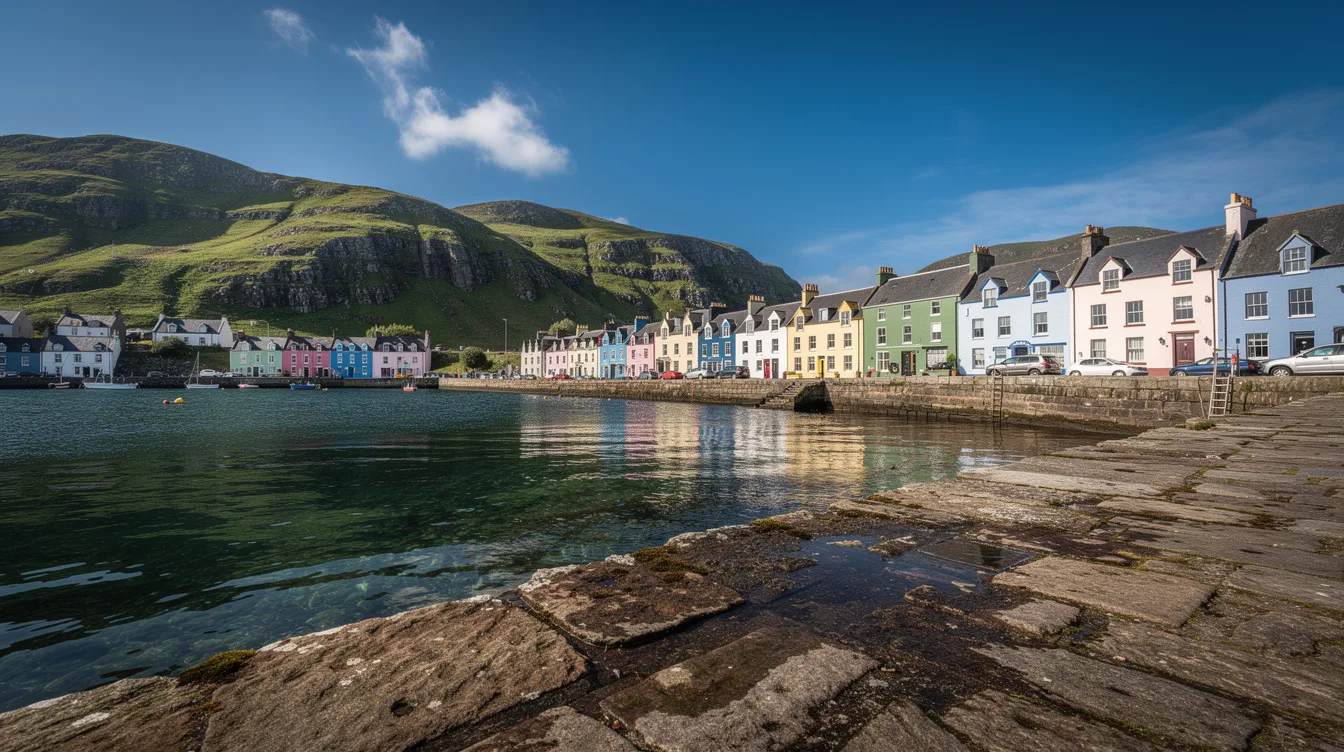
Portree is the Scottish harbor town where the United Kingdom’s final manual telephone calls went through. Its last operator-run exchange closed in 1976, a small fact with a wonderfully human echo in a place where the waterfront still feels made for waiting.
And that history gives this Isle of Skye base a sharper hook than its pastel houses alone. You come for the harbor, certainly, but stay because Portree makes the rest of the island easier without turning your evenings into a logistical exercise.
The last calls went through here in 1976
Portree had the UK’s last manual telephone exchange, which closed in 1976. Before automated dialing took over, calls here required an operator to connect them, so this compact Highland town held onto a slower system longer than anywhere else in the country.
But Portree isn’t a museum piece. It is Skye’s main town, and its 2,281 residents live around a working center of shops, cafés, pubs, seafood restaurants, transport, and lodging.
You can feel the contrast on the harbor walk. The water sits below cliffs, the colored waterfront houses catch the shifting light, and cars still thread through town toward a day’s hiking. Lively, but rarely anonymous.
A harbor made for an unhurried first walk
The harbor is the kind of place that makes you delay dinner. Start near the pier and look across the bay toward the painted buildings, then take the Scorrybreac path or viewpoint above the water for a wider angle.
And don’t rush back to the car once you’ve taken the photo. Around Somerled Square, Portree’s streets are compact enough to wander, which matters after a day spent driving Skye’s larger distances.
Somerled Square is where the town feels most useful rather than merely photogenic. You’ll find places to eat and browse nearby, plus the practical supplies that can be surprisingly welcome before another day outdoors.
There is a limit, though. Portree is small, and high-season parking and accommodation get tight. If you’re driving, book your lodging early and begin popular sights early, before the day bunches up around the island’s key stops.
Portree puts northern Skye within reach
Portree works because it places you near the Trotternish Peninsula. The Old Man of Storr, Kilt Rock, and the Quiraing all lie north of town, so you can use one harbor stay instead of repeatedly changing rooms.
But it is not a quiet retreat from tourism in high season. It is the island’s main base, which means you’ll share its streets and parking with other travelers. The trade-off is simple: more people, far more useful services.
The Old Man of Storr, Kilt Rock, and the Quiraing are the obvious northern draws. You should start early, then return to Portree when the wind has picked up and a warm meal sounds better than another long drive.
From here, you can also head south toward the Cuillin mountains or west toward Dunvegan. That flexibility is Portree’s real advantage, especially if you want a trip with room for weather changes and slower mornings.
Getting there takes planning, not heroics
Portree sits on Skye’s east coast in the Scottish Highlands, about 74 miles from Inverness. Most visitors arrive by car over the toll-free Skye Bridge at Kyle of Lochalsh, then follow the A87 north.
And the drive has a useful rhythm: Portree is roughly 33-35 miles from the bridge. Coaches also connect the town with Inverness, Fort William, Glasgow, and Edinburgh, although Skye has no rail station.
Can you visit Portree without a car?
Yes, coaches connect Portree with several mainland cities, and the town itself is walkable. But a car gives you more freedom for Skye’s northern sights, where timing matters and the island’s routes don’t always bend around your schedule.
The Skye Bridge is toll-free, which removes one small friction from a road trip. Still, don’t mistake that ease for empty roads. In busy periods, the island rewards travelers who accept an earlier alarm.
Why this town earns the overnight
Portree is practical, but it has enough atmosphere to avoid feeling like a mere stopover. The cliffs hold the harbor in view, so even an ordinary walk back from dinner comes with water, boats, and the faint clatter of the pier.
And its telephone-exchange history fits the mood. This is a town that once depended on someone physically making a connection. By evening, with the harbor lights reflected in the bay, Portree still asks you to slow down long enough to notice one.