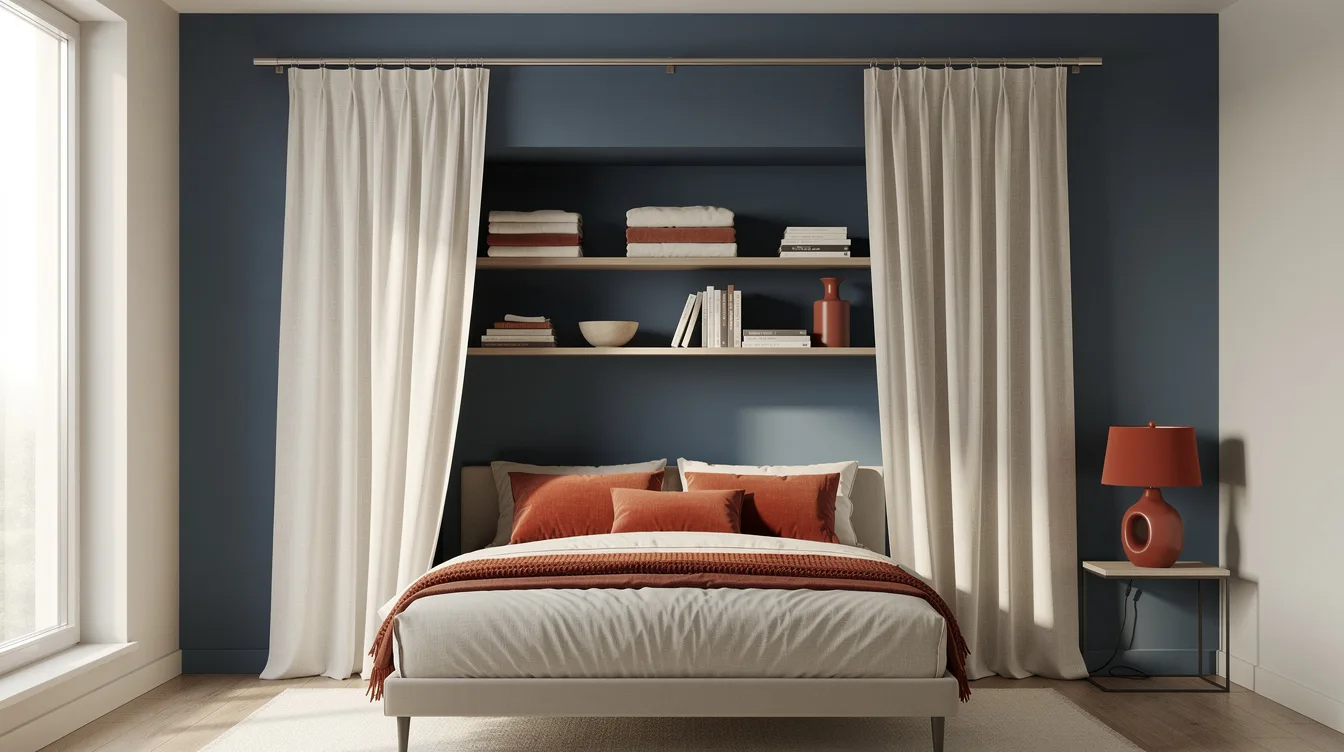
I’d start with a roughly 180-centimeter opening and treat the storage nook like a small room within the bedroom. A ceiling-mounted curtain track hides shelves and clothing without needing the swing clearance of wardrobe doors.
The strongest version is simple: measure the route, choose the right track shape, and give the fabric enough width to fold generously. The curtain should make the nook easier to live with, not harder to reach.
Measure the Opening Before Buying Hardware
I’d begin with the opening, not the fabric. For a roughly 180-centimeter recess, sketch the track path, the panel direction, and the space needed for gathered material.
A ceiling-mounted curtain track keeps the floor clear, which matters in a compact bedroom. The advertised IKEA VIDGA single-track set costs about $35 in the U.S., though fabric, fixings, shipping, and installation can add to the total.
Choose a Straight Track for a Recess
A straight track across the front is the cleanest solution for a simple storage nook. I’d use one panel that parks to the side when there is enough wall space, or two panels that meet in the middle for a wider opening.
An opaque curtain is the practical choice because it hides shelves, folded clothes, and the visual noise that open storage creates. Sheer fabric may soften the boundary, but it leaves the contents partly visible.
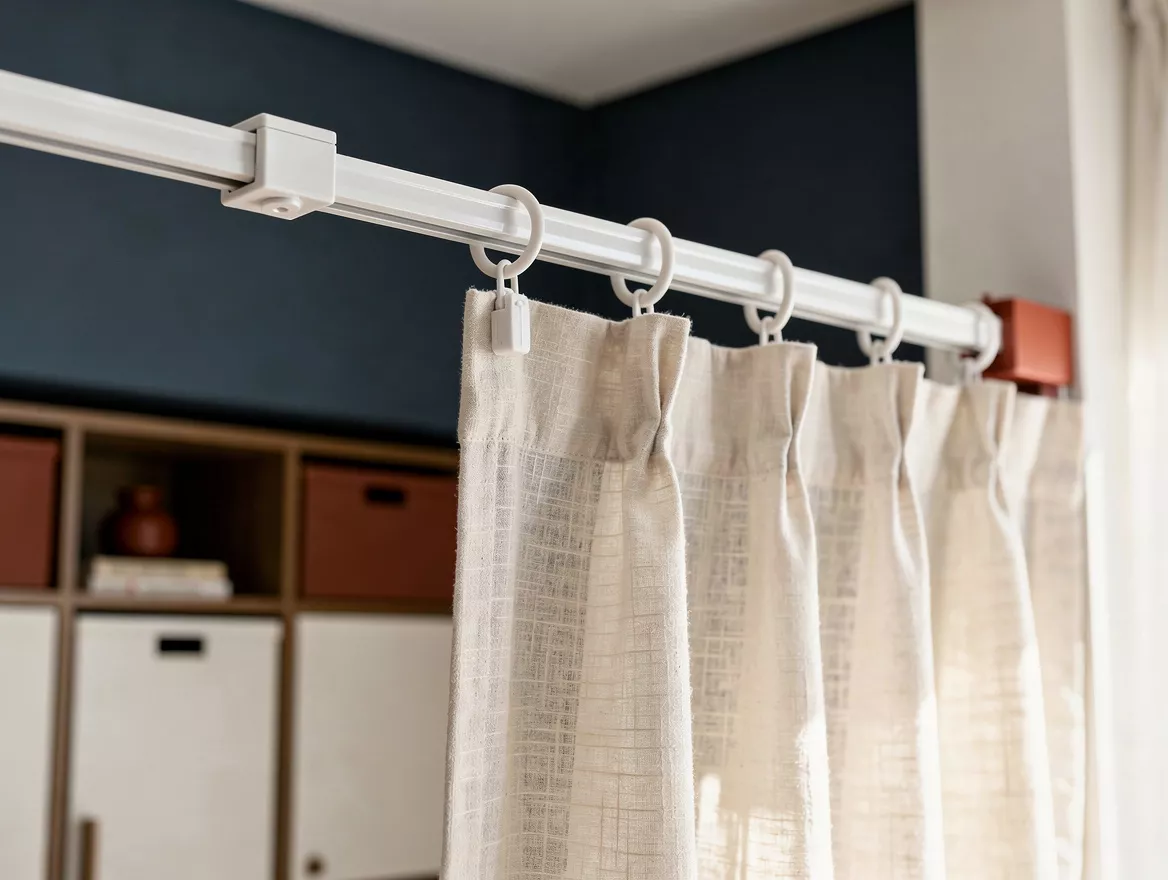
Turn the Corner With an L-Shaped Track
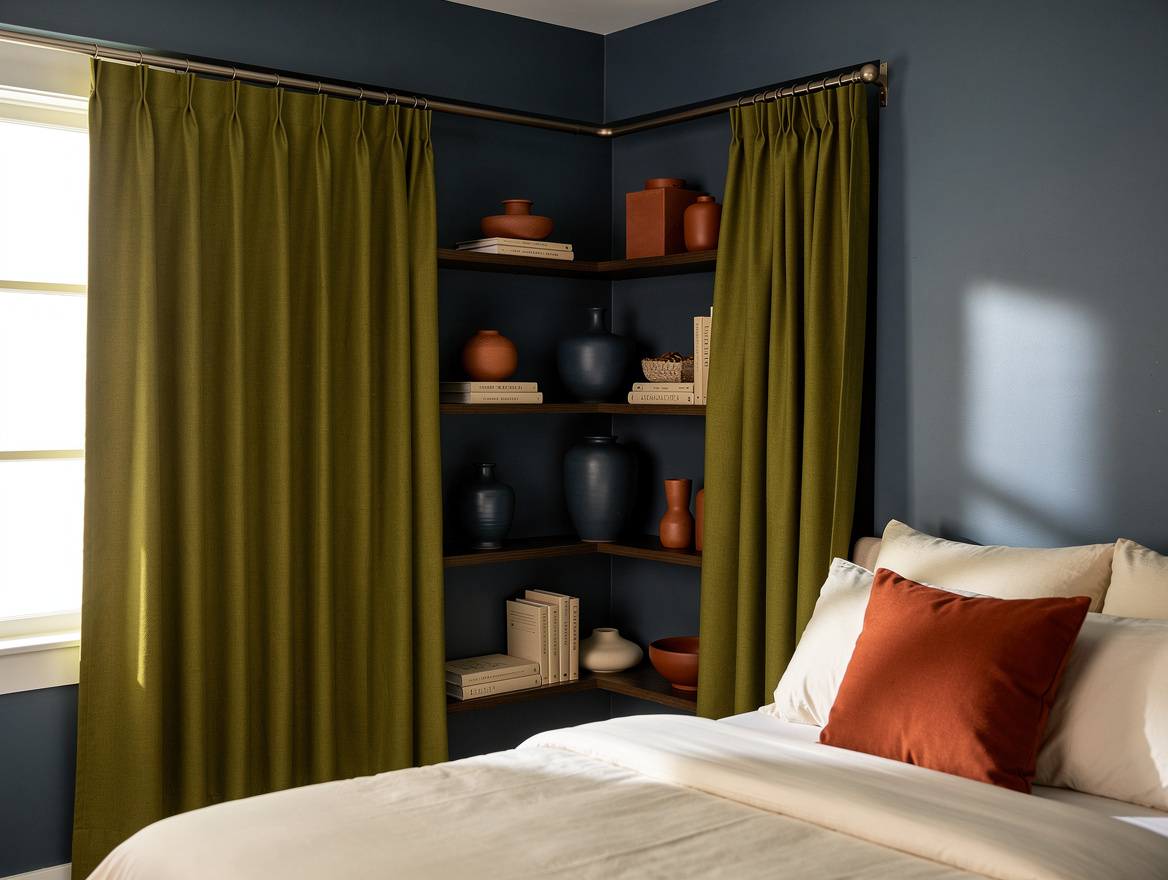
When storage occupies a corner, I’d follow both exposed sides with an L-shaped track. The path for an illustrative 180-centimeter front plus a 90-centimeter side is around 270 centimeters before the exact corner shape is measured.
The IKEA VIDGA corner connector is designed for this kind of arrangement, and the system can create a small dressing zone without adding a framed partition. Check that the connector matches the track and that the ceiling can support every mounting point.
Use Fullness to Keep Shelves Hidden
Flat fabric rarely looks generous enough once it is pulled across a storage opening. I’d plan roughly 2 to 2.5 times the track length in total fabric width, depending on how deep the folds should look.
For that illustrative 180-centimeter opening, the fabric allowance is about 360 to 450 centimeters. A cotton-linen blend gives the curtain enough body to cover shelves while still folding into a manageable stack at the side.
For an L-shaped route around 270 centimeters, around 540 centimeters of flat fabric works as a starting estimate at 2 times fullness. Measure the finished track route rather than ordering from the shelving width alone.
Build Access Into the Panel Layout
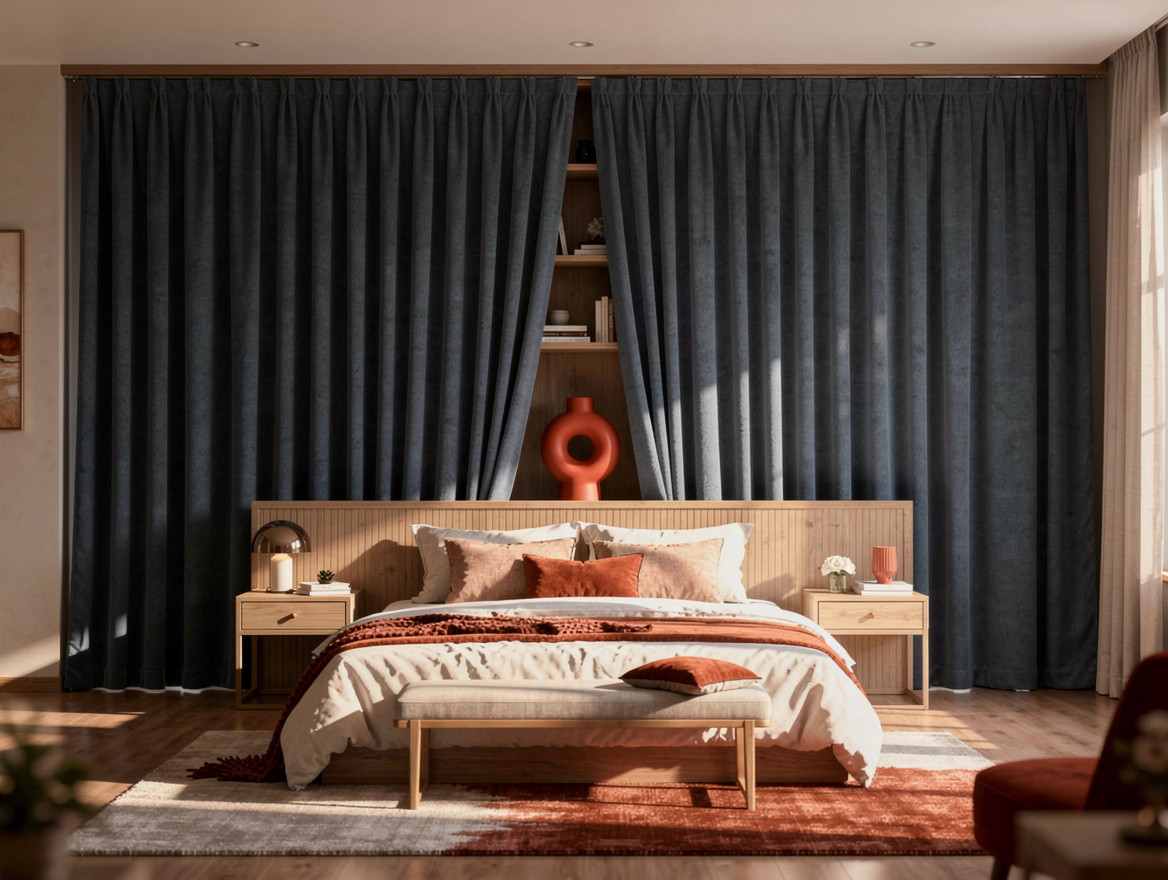
The curtain should conceal the storage without making daily access annoying. Two panels that open from the center work well when clothing or baskets are used from both sides, while one panel is easier when the nook has a natural parking side.
I’d place the center opening away from the busiest shelf whenever possible. That small decision keeps the curtain edges from covering the exact section you reach for most often.
Make the Curtain Feel Like Part of the Room
A storage curtain looks intentional when its color relates to the bedding, walls, or window treatments. A warm white linen-look curtain can calm a busy nook, while a deeper clay or olive tone gives the bedroom a stronger visual anchor.
Keep the ceiling hardware simple and let the fabric carry the softness. IKEA’s curtained storage examples show why this approach works: the same surface can conceal shelves, a desk, or a compact dressing area.
I’d also leave enough room for the gathered curtain to park fully outside the opening. A beautiful fabric choice still fails if it permanently blocks part of the storage.
Start by marking the full track path on the ceiling with painter’s tape, then confirm where the gathered curtain will park. That quick test will reveal whether a straight IKEA VIDGA track is enough or whether the nook needs an L-shaped turn.
Mia Carter writes about small-space living and budget home makeovers. She has restyled three rentals and tests most ideas in her own 45 sqm flat.