
The cortisol cocktail is only one part of a calmer daily rhythm. Light, hydration, texture, and easy transitions also shape how a room supports morning and evening habits. You don’t need a major renovation. A tray, a curtain layer, and three gentle lighting sources can make familiar routines feel warmer, clearer, and more inviting.
- Stage a sunrise hydration tray beside the bed (The Sunrise Tray Rule)
- Layer linen curtains for gentler morning light (Linen over blackout panels)
- Arrange citrus and herbs in a glass pitcher (The Two-Green Rule)
- Style a dedicated tea station on the counter (What belongs within reach?)
- Display calming mugs on a slim peg rail (The Mug Line Effect)
- Place a woven mat beneath the morning chair (The Grounded Chair Principle)
- Group supplements in labeled amber glass jars (The Three-Label Method)
- Hang a robe hook beside the evening shower (The Dry-Robe Landing)
- Create a candlelit corner for nighttime unwinding (The Low-Glow Triangle)
- Fold a weighted throw across the reading chair (The Soft-Edge Rule)
- Dim bedside lighting with a sculptural table lamp (The Three-Height Light Stack)
- Style a screen-free basket beside the sofa (The Evening Drop Zone)
- Anchor the bedtime routine with a ceramic catchall (The Ceramic Landing Zone)
1Stage a sunrise hydration tray beside the bed (The Sunrise Tray Rule)
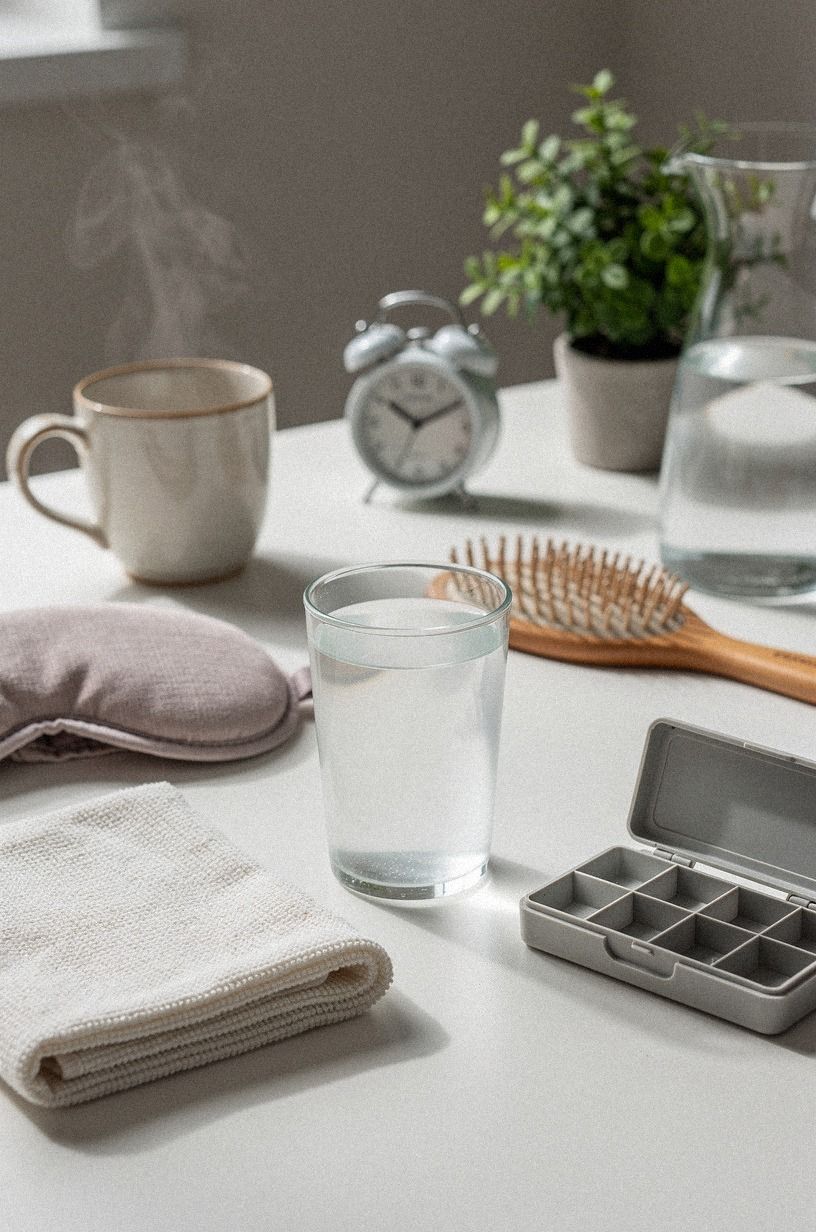
Keep the cortisol cocktail visible on a small tray beside the bed, where the first morning cue feels simple rather than scattered. A cerused white oak board, a low stone tumbler, and one olive linen napkin create an earthy landing spot. You’ll want enough room for the glass without crowding a lamp, alarm, or book.
The tray should look useful, not staged for a showroom. A terracotta cup, a small spoon, and a clear carafe give the arrangement gentle color variation. If your surface is narrow, choose a rectangular tray instead of a round one, because it’ll sit closer to the wall.
Keep the glass easy to reach. When a useful object disappears behind a stack of books or decorative boxes, the morning cue becomes less obvious. A shallow tray keeps the drink, coaster, and spoon together without turning the nightstand into a crowded display.
Use one honed travertine coaster beneath the glass, then leave the rest of the surface open. The negative space matters. It gives your eyes a quiet landing point before the day becomes busy.
A simple tray won’t replace medical guidance, but it may make hydration easier to remember. You’ll notice the practical benefit when the first decision of the morning is already handled!
2Layer linen curtains for gentler morning light (Linen over blackout panels)
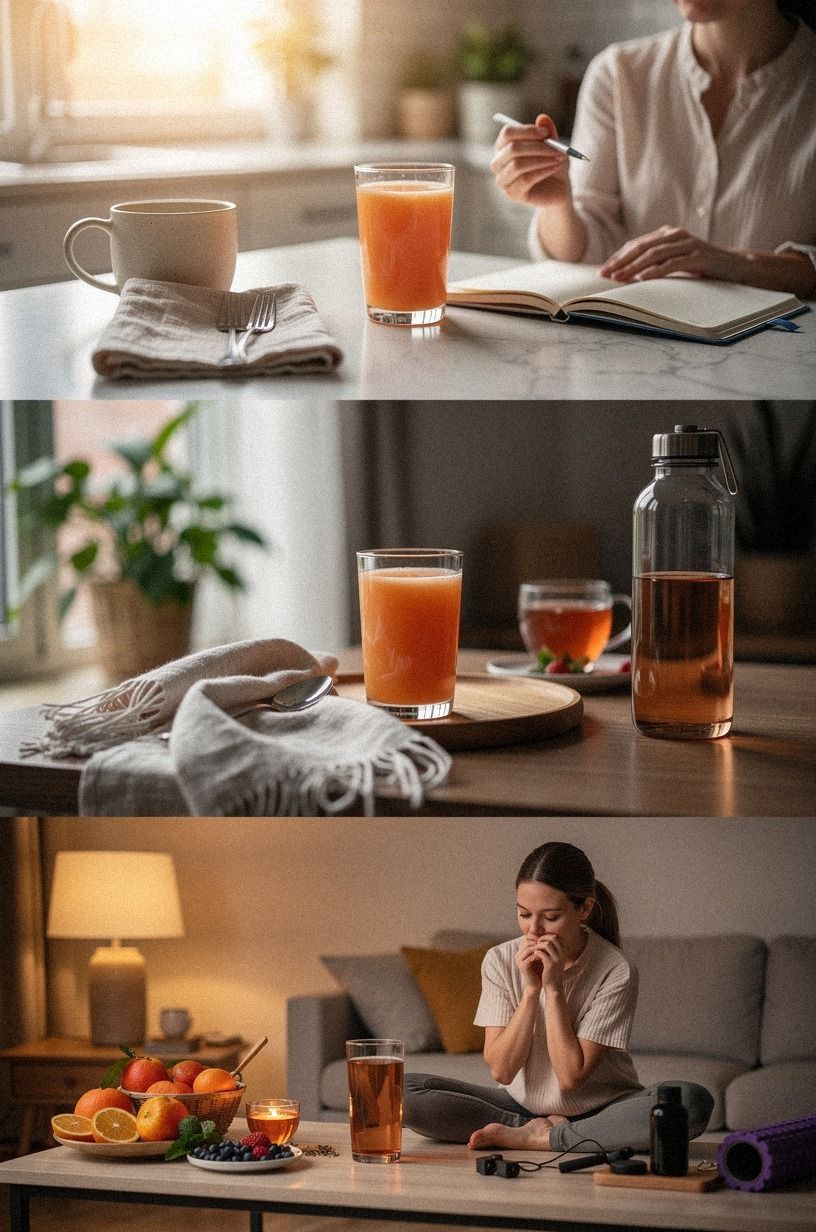
Layer sheer linen with a heavier drapery panel so your room gets soft daylight without losing privacy. Hang the rod 4–6 inches above the frame and let the curtains reach the floor. That extra length keeps the window looking taller, while the clay and linen palette feels warm instead of overly polished.
Choose a linen front layer if you want visible slubs and a relaxed fall. A heavier cotton panel behind it can block stronger light when needed. A backlit translucent onyx ledge beneath the layers adds a quiet glow without requiring another decorative object.
Skip stiff blackout material with a shiny finish. It can make the room feel commercial, especially beside aged brass hardware. A matte weave softens the backlit effect and keeps the window from becoming the only bright surface.
If your bedroom feels visually busy, this is a strong place to begin. You’re changing the quality of light, not filling the room with more objects. For another low-effort morning cue, browse these morning styling cues.
A curtain layer also gives you control over pace. Open the sheer panel for a brighter start, then close the heavier layer when the room needs privacy or a softer atmosphere. The choice is small, but the room feels responsive rather than fixed.
3Arrange citrus and herbs in a glass pitcher (The Two-Green Rule)
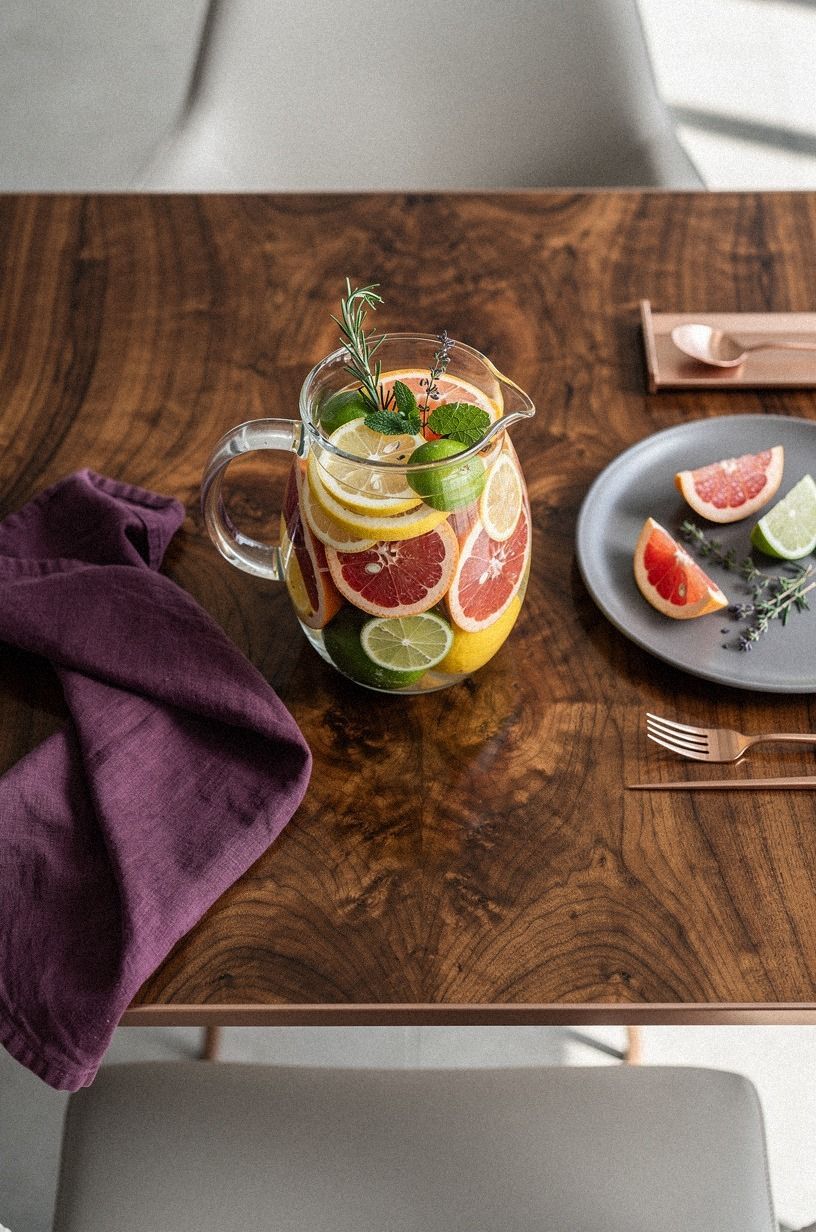
Use a clear pitcher for citrus slices, fresh herbs, and chilled water so the drink becomes part of the kitchen scene. Pair it with plum, grey, and rose gold accents to create a richer arrangement without requiring elaborate styling.
Choose a pitcher with a broad opening if you plan to add ice, cucumber, or rosemary. A narrow neck looks elegant but can make cleaning awkward. The best vessel is the one you’ll refill easily.
Place the pitcher near the glasses, but leave space around the handle. A book-matched walnut board beneath it protects the counter while adding warmth to white stone or pale tile. You can also place two low tumblers beside the pitcher so the next step feels obvious.
Keep the arrangement fresh rather than overloaded. A few citrus rounds look generous; a crowded mixture can make the water appear cloudy. Replace the herbs regularly and wash the pitcher thoroughly between uses.
This setup works especially well in a compact kitchen because it combines color, access, and function. Your counter gains one bright focal point without needing a full beverage station.
4Style a dedicated tea station on the counter (What belongs within reach?)
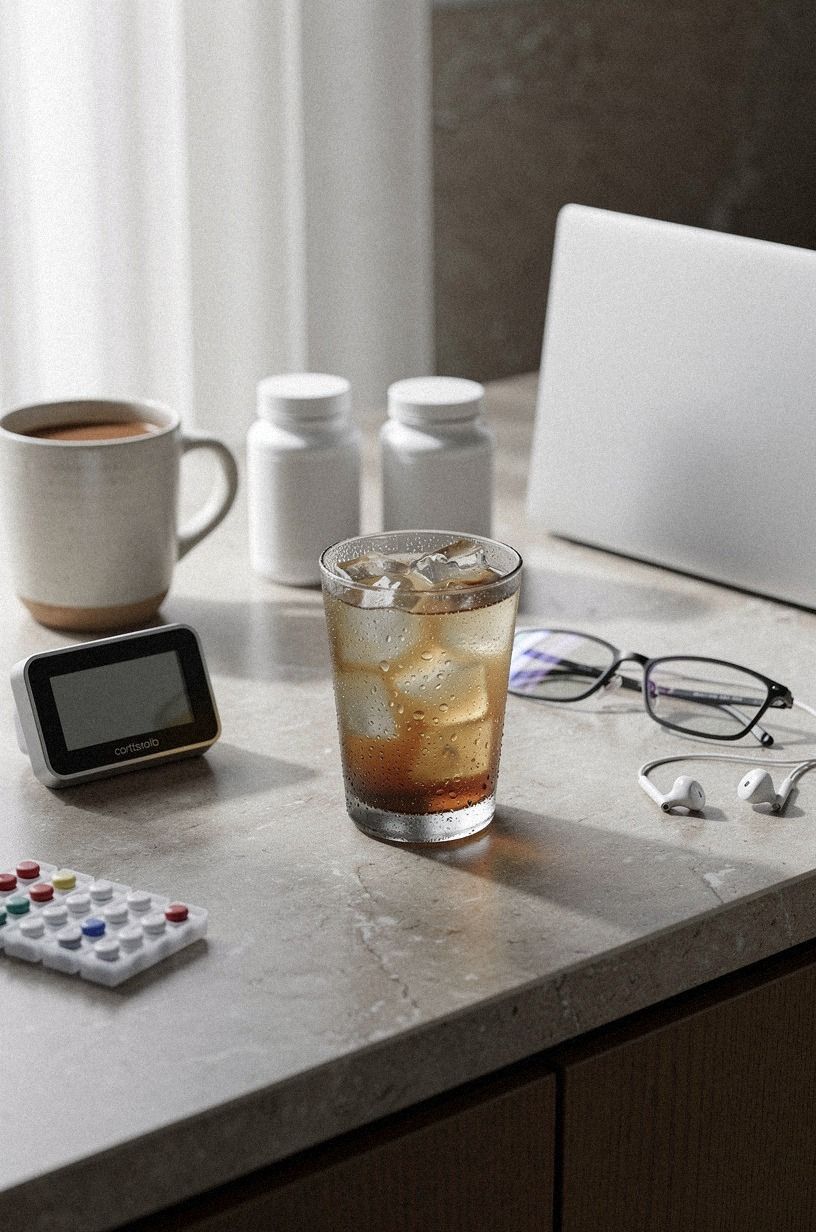
A dedicated tea station works best when the kettle, tea leaves, and favorite cup occupy one compact zone. Use a navy tray against a warm white backsplash, then add walnut and travertine to keep the palette from feeling flat. You’ll want the station close to water, but not directly beneath a cabinet seam.
Choose warm travertine with natural pitting for the tray or backsplash shelf. Its uneven surface keeps the counter from looking too perfect, while a white ceramic canister gives the eye a clean resting point. If your counter is small, keep only two teas visible and store the rest elsewhere.
Don’t buy a complete matching set. A walnut tea scoop, a navy mug, and a brushed steel kettle will feel more collected than six identical pieces. Your routine needs easy access, not a decorative obstacle course.
The strongest tea station has breathing room around it. Leave enough counter space to set down a hot mug safely, and you’ll be less likely to abandon the habit halfway through. For a faster start, pair this station with simple morning organization ideas.
A small tray can also define the station when the kitchen has no spare counter. Place the kettle at the back, the tea canister to one side, and the cup near the edge. That arrangement creates a clear sequence without adding another appliance.
5Display calming mugs on a slim peg rail (The Mug Line Effect)
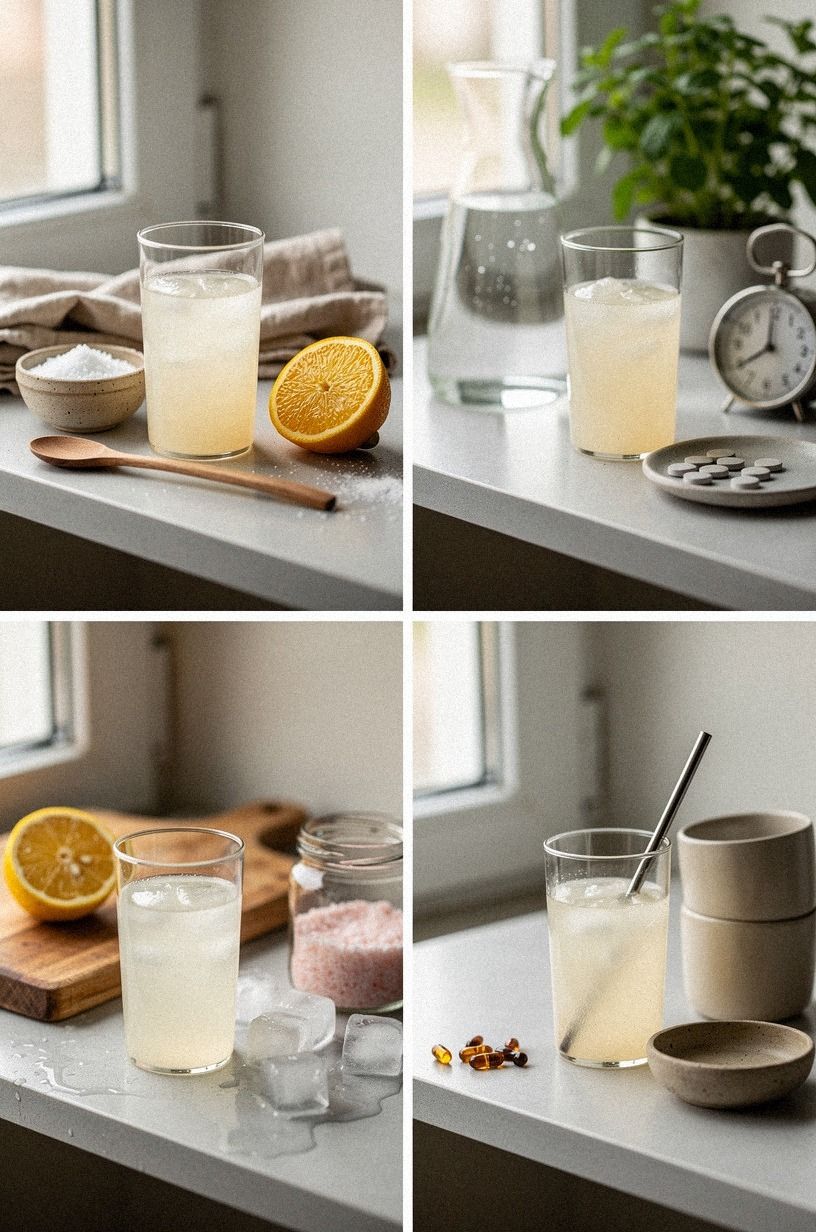
A slim peg rail turns everyday mugs into a useful wall composition.
6Place a woven mat beneath the morning chair (The Grounded Chair Principle)
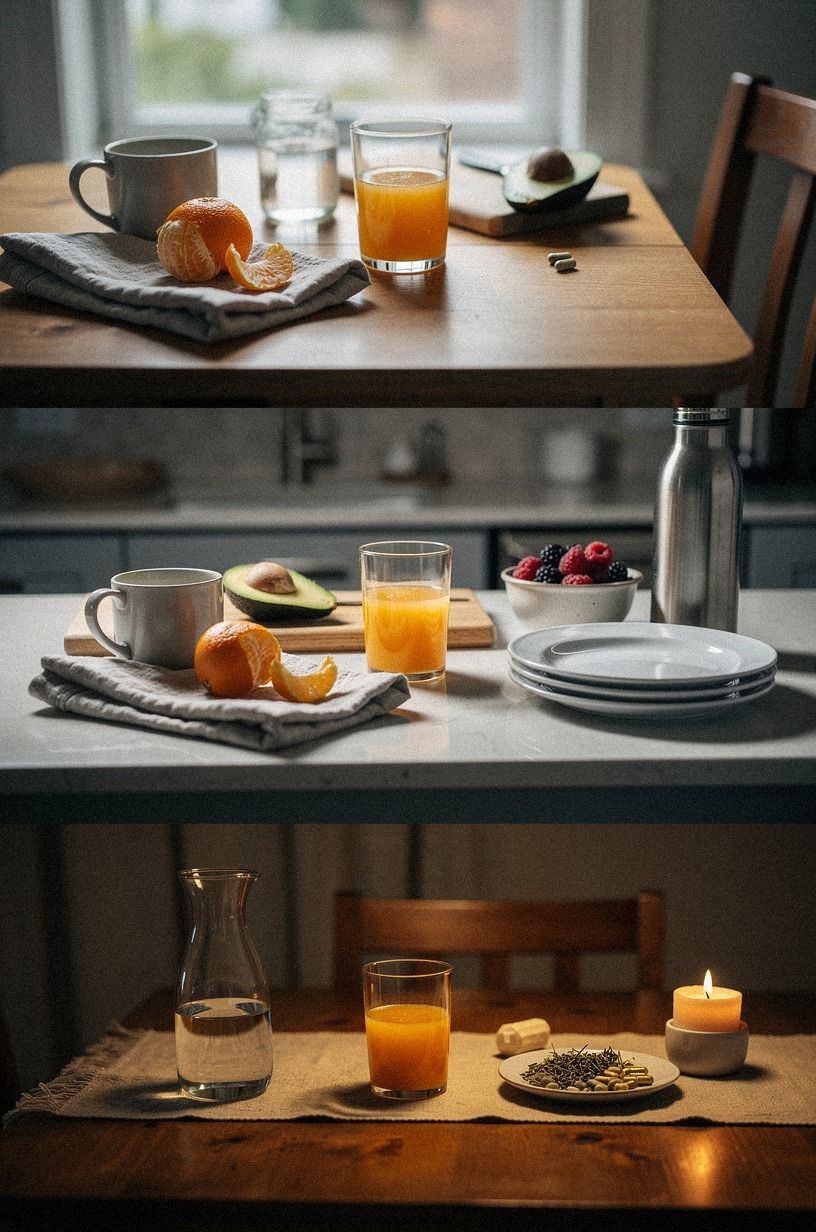
Place a woven mat beneath the chair where the morning routine naturally slows down. The mat defines the spot without making the room feel overly formal. Forest green, rust, and natural fibers create warmth against oversized-chip terrazzo.
Choose a mat wide enough for the front legs and enough room for your feet. A mat that stops directly beneath the chair can look accidental and may shift during use. A slightly generous size feels more settled.
Keep the chair near a window, lamp, or small side table if reading, journaling, or quiet sipping belongs there. You don’t need a large reading corner. One chair, one mat, and one reachable surface can establish a complete zone.
For a polished contrast, pair a natural weave with a natural oak chair or a curved bouclé seat. If the room already has heavy texture, choose a flatter mat so the floor doesn’t compete with the upholstery.

7Group supplements in labeled amber glass jars (The Three-Label Method)

Amber glass jars can organize supplements while protecting the counter from visual clutter. Use three containers with simple labels for morning, afternoon, and evening categories. Dusty rose, charcoal, and brass give the group a refined look against hand-applied Venetian plaster without making the arrangement feel clinical.
Choose amber glass with wide mouths so measuring and cleaning stay easy. Labels should use clear type and short words, not decorative script that becomes difficult to read. You’re building a cue system, so the information needs to work at a glance.
A hand-applied label adds personality, but it shouldn’t hide the contents or expiration details. Keep original packaging nearby when safety information matters, and follow professional advice for storage. The arrangement supports organization; it doesn’t replace informed use.
Place the jars on a charcoal tray beside a brass spoon rest, then leave a little space around them. If your counter is narrow, a shallow drawer insert may be safer. The goal is a calm visual rhythm, not another pile to manage.
Check the storage instructions for each product. Heat, moisture, and direct sunlight can affect certain ingredients. A beautiful arrangement still needs a sensible location away from steam and splashes.
8Hang a robe hook beside the evening shower (The Dry-Robe Landing)

A robe hook beside the shower gives the evening routine one obvious next step. Choose warm white walls, camel fabric, and black accents to create a quieter transition from bathing to winding down. You’ll want the hook close enough to reach, but far enough from direct spray to keep the robe dry.
A shagreen accent on the hook plate can add texture without competing with tile. If shagreen feels too delicate for a damp room, choose a textured resin alternative with a matte black finish. The surface should feel pleasant under your hand, especially when the rest of the room is dim.
Don’t install the hook behind the door. That placement hides the robe and makes the routine less automatic. A visible location beside the shower is more practical, even if the wall looks slightly less symmetrical.
You can make this rental-friendly with a removable hook rated for the robe’s weight. It’s a small change, but your evening transition won’t require searching through a closet. For more routine-focused inspiration, see these quiet personal-care setup ideas.
Use a washable robe in a waffle cotton or lightweight linen blend if the bathroom stays humid. Thick fabric may feel luxurious, but it can take longer to dry. Function should lead the choice.
9Create a candlelit corner for nighttime unwinding (The Low-Glow Triangle)
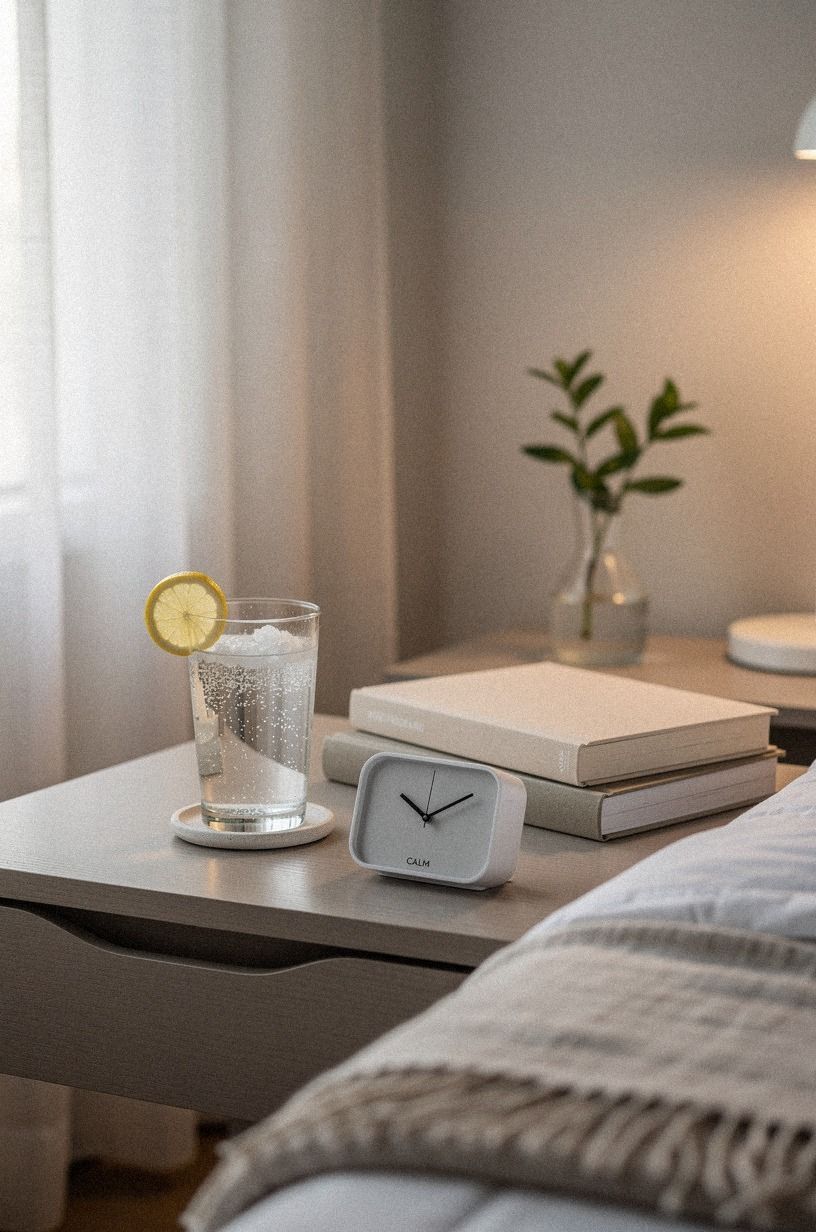
Create a warm-lit corner with one candle, one lamp, and one comfortable seat. The three points form a gentle triangle that keeps the room from feeling flat after overhead lighting is switched off.
Choose a matte ceramic candleholder, a lamp with a fabric shade, and a chair in washed Belgian linen with lived-in texture. Keep the palette restrained with midnight blue, copper, and ivory.
Place the candle on a stable, heat-resistant surface away from curtains, books, and loose fabric. Never leave an open flame unattended. A flameless candle can provide a similar glow when pets, children, or rental rules make a real flame impractical.
A low-glow corner doesn’t need to become a dramatic lounge. One lamp on a dimmer and one small light near the floor may be enough. You’ll get a more welcoming transition when each source has a distinct height.
10Fold a weighted throw across the reading chair (The Soft-Edge Rule)
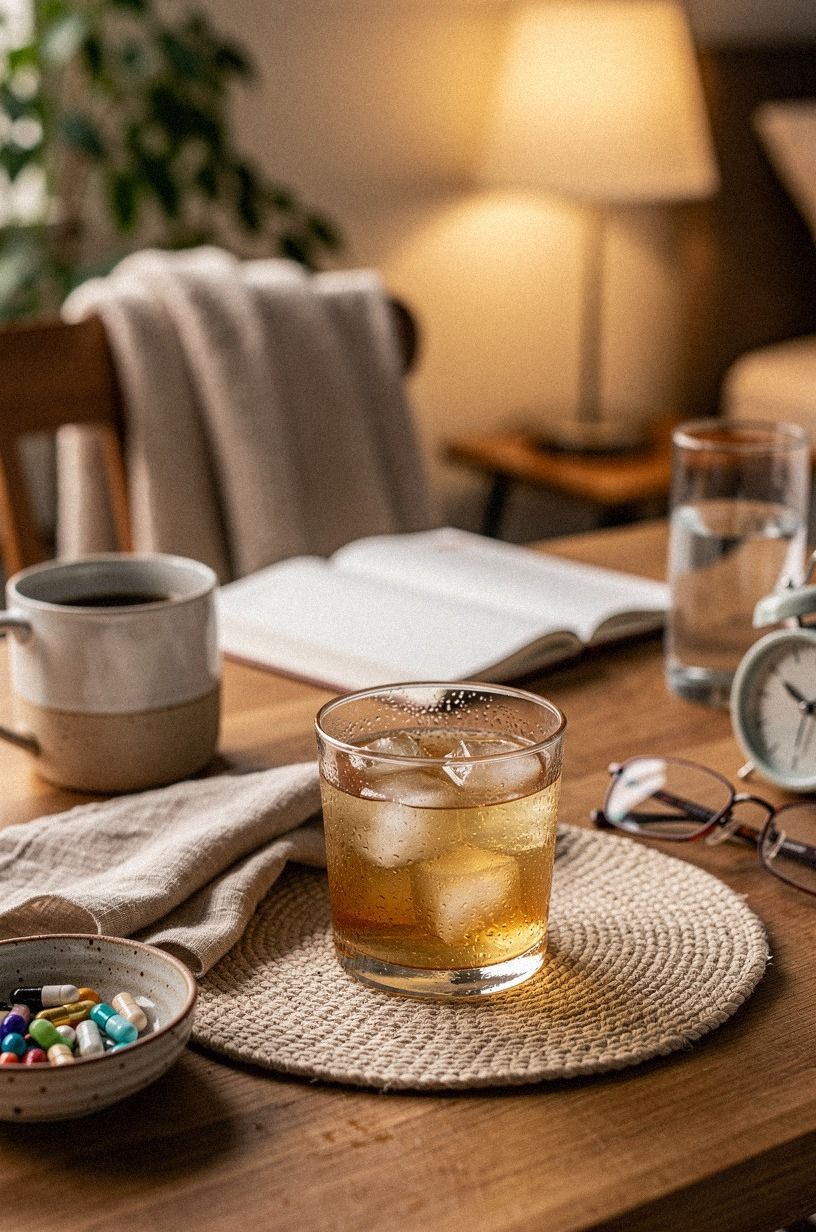
Fold a weighted throw across the reading chair so the texture is visible before the chair gets used.
11Dim bedside lighting with a sculptural table lamp (The Three-Height Light Stack)
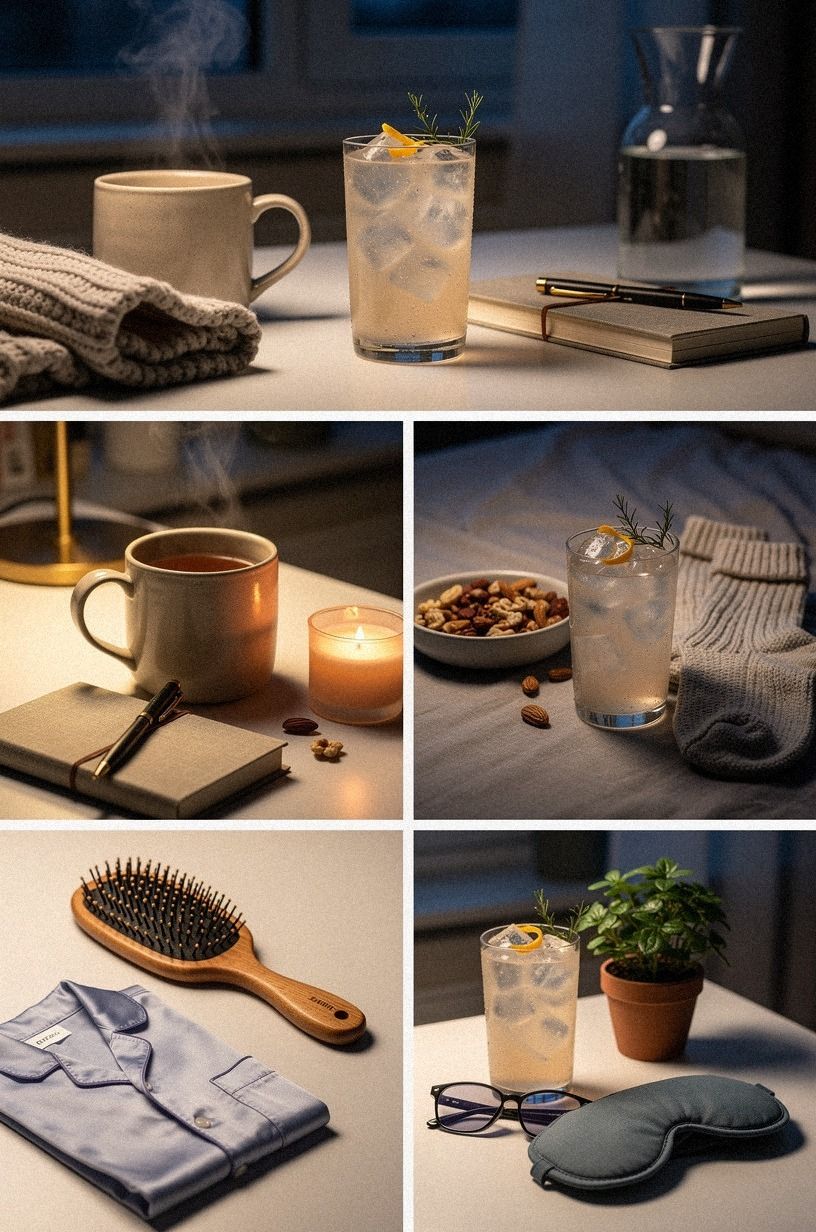
Dim bedside lighting with a sculptural lamp, a low reading light, and a small glow near the floor. Three different heights create depth without requiring multiple decorative objects.
Choose a sculptural lamp beside Nero Marquina black marble with white veins for a richer surface contrast. A small directional reading light can sit behind the bed or on a nearby shelf. The lowest glow might come from a compact plug-in lamp or a shaded floor light.
Keep the brightest source away from eye level when the room is winding down. You’ll want enough light to move safely, but not a harsh beam across the pillow. A dimmer gives you more control than changing bulbs repeatedly.
Repeat one material from the rest of the room. Terracotta, olive, or dark wood can connect the bedside lighting to the tray, curtain hardware, or chair. Repetition makes a small space feel deliberate and cohesive.
12Style a screen-free basket beside the sofa (The Evening Drop Zone)
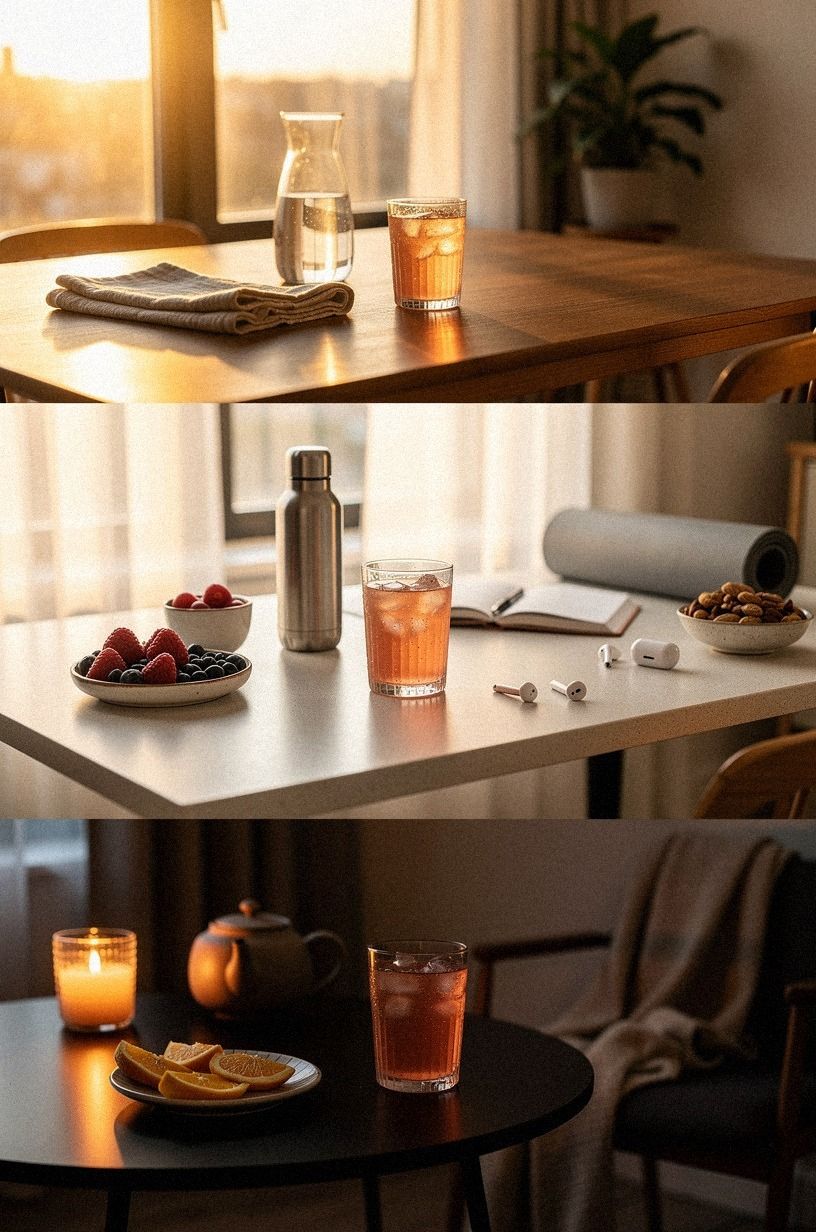
A screen-free basket beside the sofa gives phones, chargers, and small devices a defined place to rest.
13Anchor the bedtime routine with a ceramic catchall (The Ceramic Landing Zone)
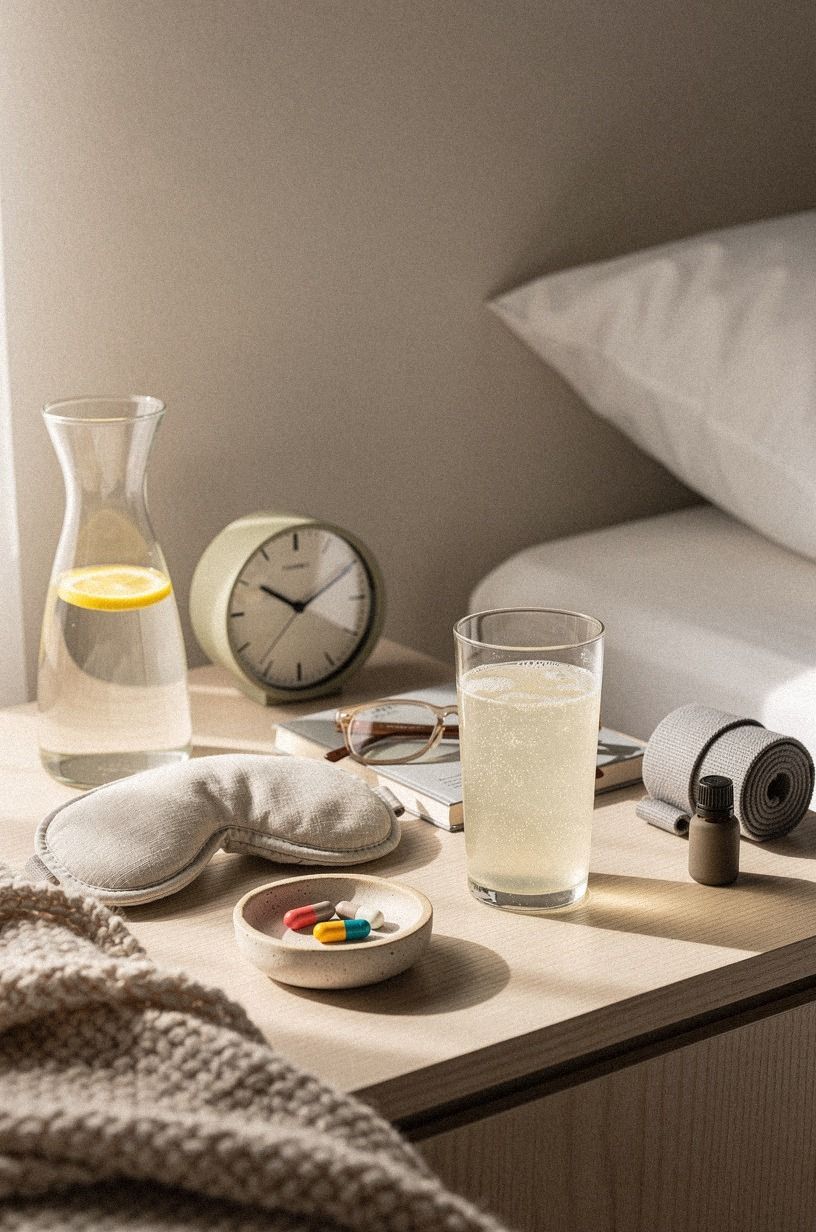
Anchor the final bedtime cue with a Carrara marble catchall on the nightstand. Subtle grey veining, plum accents, and a small rose-gold detail can connect the dish to the wider room palette while holding glasses, rings, hair ties, or a watch.
Choose a shallow dish with a slightly irregular edge. The shape adds character beside a straight-lined lamp, while a softly honed finish feels quieter than polished porcelain. A Carrara marble surface gives the catchall enough presence without overwhelming a narrow nightstand.
Keep the catchall near the edge of the nightstand, but not so close that objects fall behind the bed. You’ll want the final step to take seconds. If the nightstand is narrow, choose an oval form that follows the wall and leaves room for a glass.
A catchall can also prevent visual clutter from returning each evening. When every small item has a destination, the room feels more settled before the lights go down.
Why the Full Routine Works Better Than One Drink
A cortisol cocktail can become a useful morning cue, but it’s only one part of a larger environment. Light, texture, and object placement influence how easily you move from one task to another. A tray beside the bed removes friction.
Curtains soften the first room. A tea station gives the next step a visible home.
The strongest routines aren’t built from expensive objects alone. They use repeated signals, such as the same glass each morning or the same dim lamp at night. Benjamin Moore White Dove OC-17 can keep a small room feeling bright, while Farrow & Ball Pigeon No. 25 adds a quieter, more muted backdrop.
A room can support a routine without making health promises. It may help you notice transitions, pause before reaching for a screen, or prepare a drink before the morning becomes crowded. That’s a practical design goal.
When the palette repeats across the day, the space feels more harmonious. Terracotta in the morning can echo copper at night.
Linen can move from curtain to cushion. Your routine becomes easier to read because the room keeps telling the same story.
The most effective details are often the least dramatic. A lamp within reach, a robe where you can see it, and a glass waiting on a tray may matter more than a complete room makeover. You’re building a sequence through placement.
How to Prioritize the Cost of a Calmer Routine
Start with the changes that affect light and access before buying decorative pieces. A curtain rod, a tray, and a dimmable lamp can influence several moments each day. Sherwin-Williams Agreeable Gray SW 7029 offers a flexible neutral backdrop if the walls need a refresh, while warm textiles can add depth without repainting.
You’ll get the most visible change from one strong material repeated carefully. Choose linen for softness, walnut for warmth, or aged brass for a gentle metallic note. Don’t buy all three in every room, because the palette can lose its focus.
A budget-friendly routine can use thrifted glassware, secondhand baskets, and existing lamps. Your space doesn’t need a matching collection. It needs a few objects that make the next action obvious.
Begin with one high-contact area. If the morning feels scattered, improve the bedside tray or tea station. If the evening feels abrupt, adjust the robe hook, chair, or bedside lighting.
A focused change makes the result easier to notice.
Paint isn’t always necessary. Moving a lamp, removing crowded decor, or changing the curtain height can shift the atmosphere quickly. If paint is needed, test a sample in morning and evening light before committing to the full wall.
The Questions Worth Answering First
What is the best cortisol cocktail routine for a small space?
The best setup uses a narrow tray, a slim peg rail, and one dimmable lamp. Visible organization matters more than size. A compact side table, a thrifted ceramic bowl, or a wall-mounted rail can create a clear routine without taking over the room.
Where can you buy routine pieces on a budget?
Look at Wayfair, Target, Facebook Marketplace, local thrift shops, and independent home stores. Secondhand glassware and baskets can lower the cost considerably. You’ll often find useful trays, mugs, and lamps when searching by material rather than by complete room collection.
How much does a full routine makeover cost?
A small refresh may cost about $100 to $300, while broader projects commonly fall within the table ranges above. Free changes include rearranging lighting, grouping existing mugs, folding textiles, and creating a screen-free drop zone with a basket already at home.
Can a full routine work on a budget?
Yes. Begin with three low-cost moves: repurpose a tray, move one lamp closer to the seating area, and place a chair on an existing mat.
Better placement often matters more than new purchases. Add one textile or vessel only after the basic sequence feels easy to use.
Is this routine worth it in a small space?
Yes, because a small room makes repeated cues easier to see. Use vertical storage, a narrow tray, and one chair with a clear purpose. Less visual competition helps morning and evening transitions feel more direct.
Is this a good idea for a rental?
Yes. Use a tension rod for linen curtains, removable hooks for robes, and peel-and-stick labels for jars or baskets. No-damage organization can still make a rental feel warm, personal, and easier to use.
Which change should happen first?
Start with the place where a routine currently breaks down. If the first drink is easy to forget, use a bedside tray.
If nighttime feels too bright, adjust the lamp and curtain layers. If devices remain on the sofa, place an open basket within reach.
Where to Start First
Start with the bedside hydration tray. It occupies little space, costs less than a major furniture change, and makes the first morning action visible.
Choose one earthy tray, one clear glass, and one olive textile. Let the rest of the routine build around that simple landing spot.