
Low-maintenance black grout works because it disguises daily dust, hair, and water marks better than pale grout, especially in a busy bathroom. I learned that after scrubbing white joints every Saturday. The right tile, lighting, and sealant make the look warm instead of harsh. You’ll find 14 practical ways to use it here!
Editor’s note: Start with the visual balance, then worry about the accessories. A little Venetian plaster in warm white can keep dark grout grounded, while camel and black accents prevent the room from feeling flat. The best version looks collected, useful, and easy to live with.
- Layer bathroom black tile with warm oak
- Benjamin Moore White Dove Softens the Tile
- Can the Two-Tone Grout Rule Calm a Dark Wall?
- Black Grout Border or Glossy Mosaic?
- Give a Bathroom Niche the Nero Marquina Treatment
- Make Black Grout Rental-Friendly
- What Should the Three-Height Light Stack Do?
- Black Tiles or an All-Black Wall?
- Let the Checkerboard Floor Carry the Pattern
- The Honest Cost of Black Grout
- Keep Dark Joints Calm With the Right Sealer
- Matte Black Grout Against Bright Metal
- What Does Bathroom Art Need?
- Pale Ceiling, Dark Joints: Lift a Heavy Room
1Layer bathroom black tile with warm oak
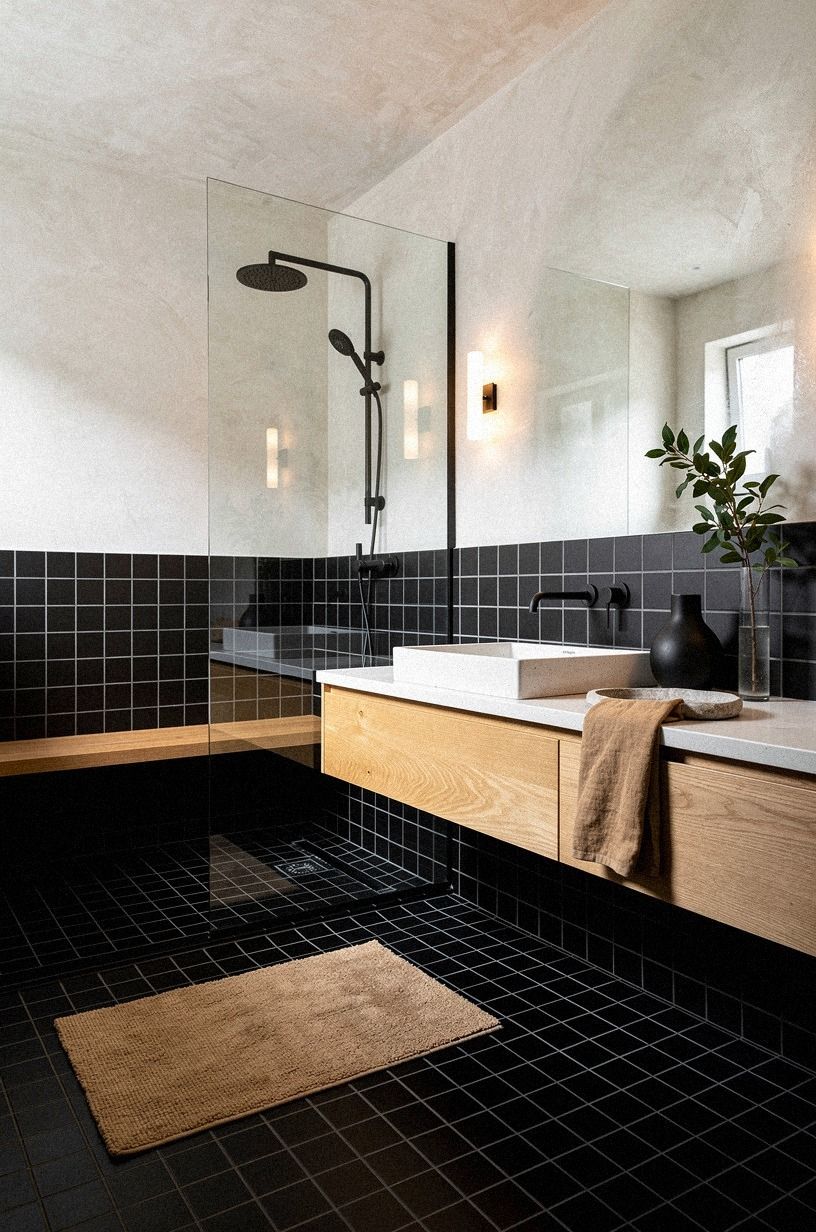
Black grout looks less severe when you pair it with a material that has visible warmth. I’d use warm-white Venetian plaster around a small tiled zone, then bring in camel upholstery or a black-framed mirror for contrast. You’ll notice the plaster keeps the room soft, while the grout quietly handles the toothpaste splatters your old white lines used to advertise.
Skip glossy black tile with shiny black grout if your room is narrow. It can turn the wall into one dark reflective sheet, and you won’t get the calm feeling you wanted. A camel stool, 18 oz cotton bath mat, and one black or amber glass bottle will make your bathroom feel more inviting without adding clutter.
If you’re working with a small footprint, start with this studio apartment layout guide for the same visual move: dark structure, lighter breathing space. And honestly, one warm-white plaster tone is enough. You don’t need five competing finishes.
2Benjamin Moore White Dove Softens the Tile
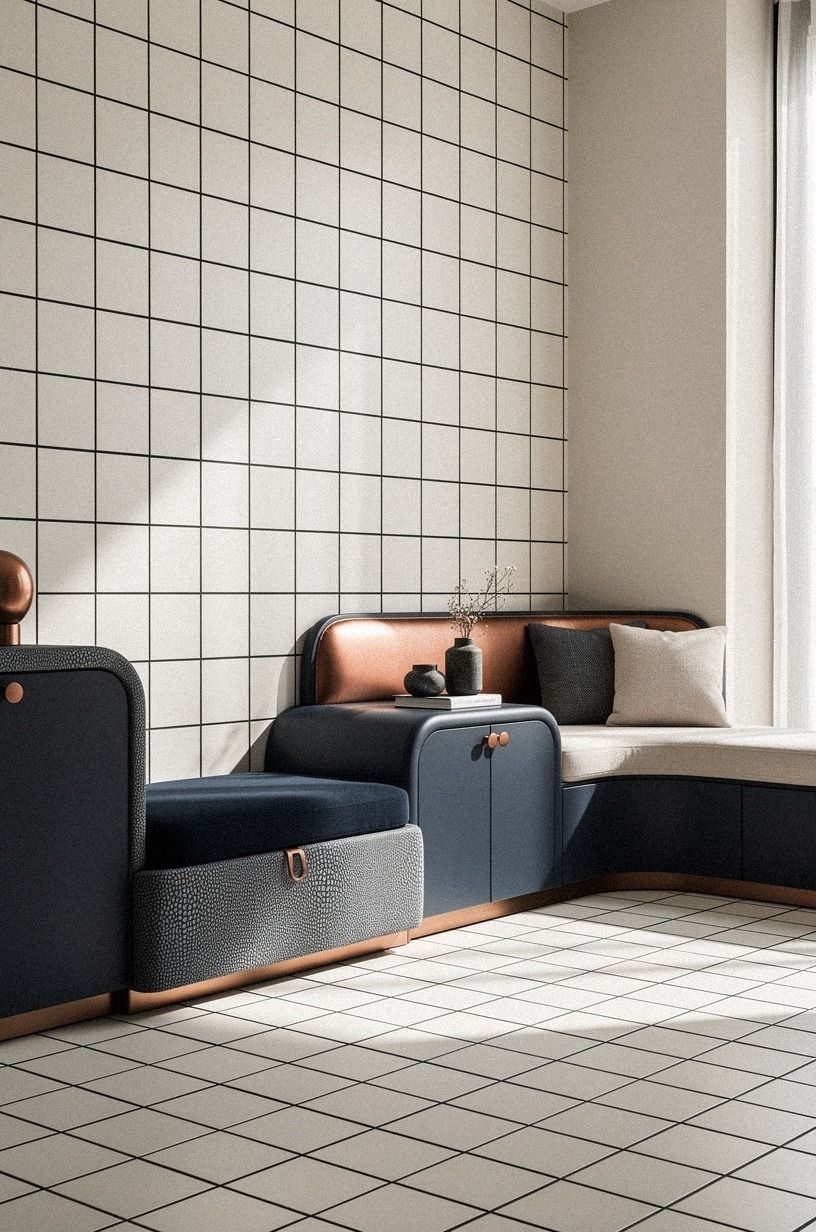
Black grout doesn’t need a black wall beside it. I prefer an ivory upper wall with midnight-blue accents above a tiled wainscot because the lighter tone keeps the room bright while the joints create a steady graphic rhythm below. You’ll get contrast without making every surface feel hard.
The mistake is choosing a blue-white paint. It can make black grout look colder, especially under a ceiling fixture with a cool bulb.
Try an ivory sample beside your tile and watch it at breakfast, noon, and evening. Copper details and shagreen accents can keep the room from feeling clinical.
And if your bathroom has only one window, you’ll want the upper wall to carry the light. Hang art with its center about 57 to 60 inches from the floor, then keep the border thin.
That height will give your eye somewhere to rest above the dark tile. You can borrow ideas from this quiet bedroom TV height guide because proportion matters just as much in a bathroom.
A copper frame can add warmth without competing with the grout.
3Can the Two-Tone Grout Rule Calm a Dark Wall?
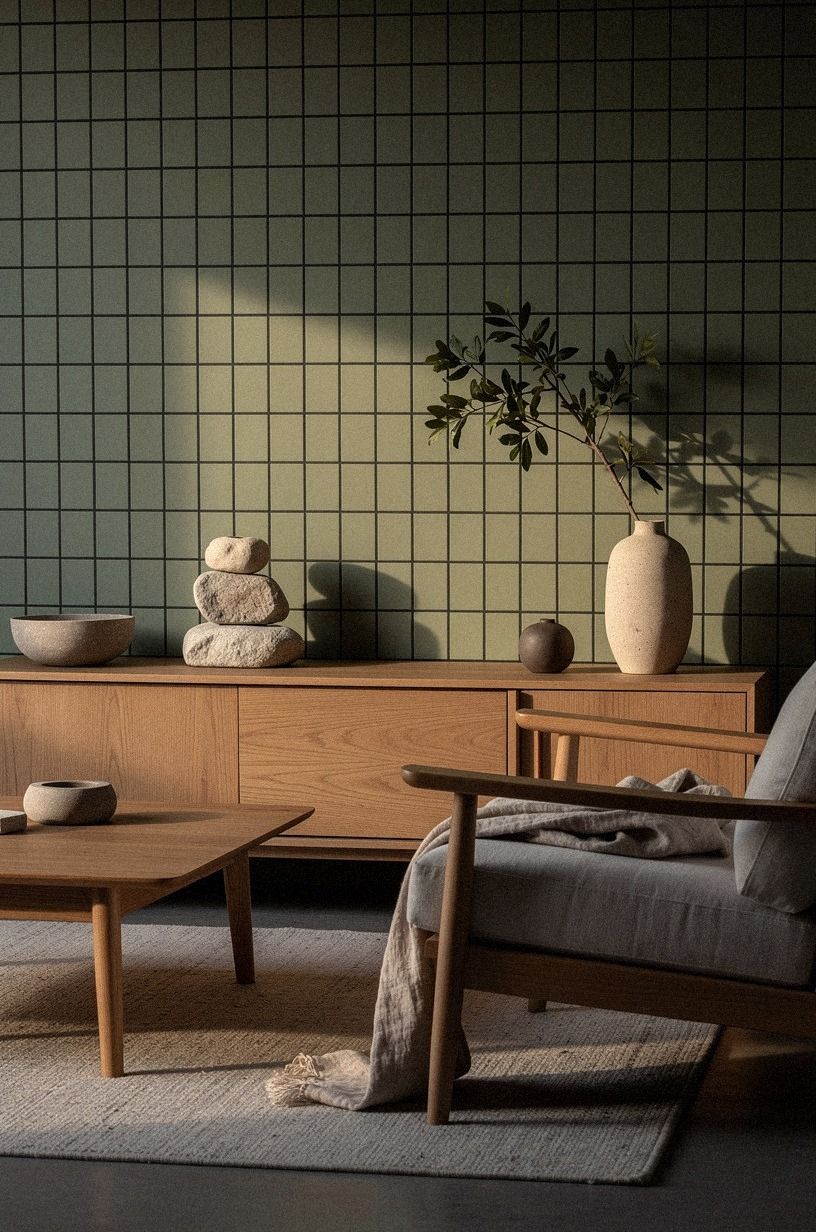
The Two-Tone Grout Rule is simple: use black grout where water and traffic are highest, then use a softer warm gray where you need visual relief. I’d put black grout inside the shower and behind the sink, but choose a medium mushroom grout for a small decorative niche. You’ll still get definition without turning every inch into a checkerboard.
This works best with sage green tile, whose muted color creates movement without shouting. Black grout will emphasize every edge, so you’ll want a patient installer and a mockup board first. I made the mistake of approving grout from a tiny sample.
The finished wall had far more contrast than I expected.
But that tension can be useful if you’re styling a plain rental bathroom. Keep the accessories calm: washed Belgian linen, pale natural wood, and a soft cream vessel.
Your room will feel earthy and collected rather than busy. If you’re deciding how much visual contrast your home can handle, this small-space room guide has useful proportion ideas.
4Black Grout Border or Glossy Mosaic?
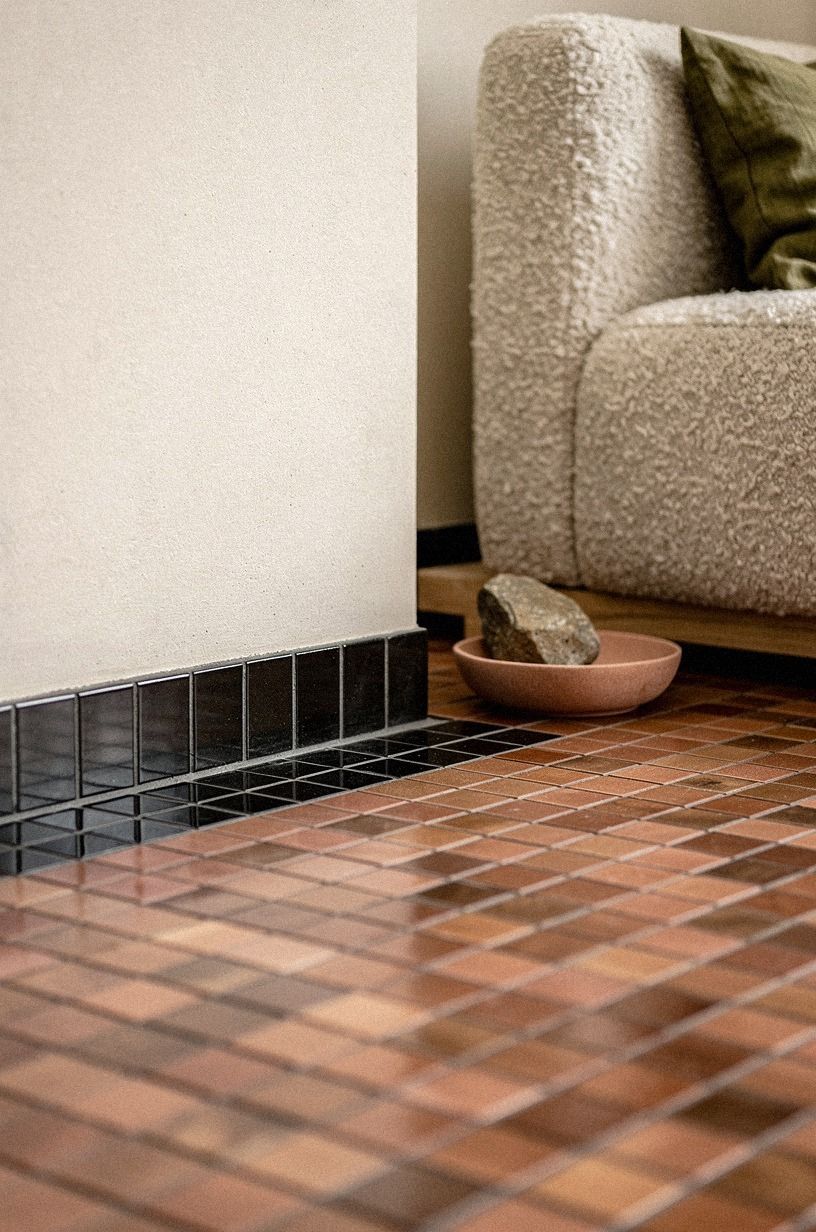
A framed shower wall gives black grout a job beyond hiding mess. Use terracotta on the surrounding wall, then let a narrow black-grouted tile field define the wet zone. You’ll create a warm border that makes the shower feel intentional, with olive accents keeping the composition grounded.
I’d avoid a thick decorative border made from a glossy mosaic. It can look dated quickly, and you’ll spend more time wiping the raised edges.
A strip of organic bouclé beside honed stone is more forgiving. Your eye will read the material change, while the dark grout keeps the transition crisp.
Add three lighting sources if you can: ceiling-level, task, and ambient. A small wall lamp beside the mirror will soften the black lines after sunset, and you’ll be glad you didn’t rely on one bright ceiling fixture. And yes, the room can be moody without being gloomy!
Put the 2700K bulbs where your face needs warm light. For a compact bathroom, the same proportion principles in this studio apartment layout guide can help you keep the border from overwhelming the room.
5Give a Bathroom Niche the Nero Marquina Treatment
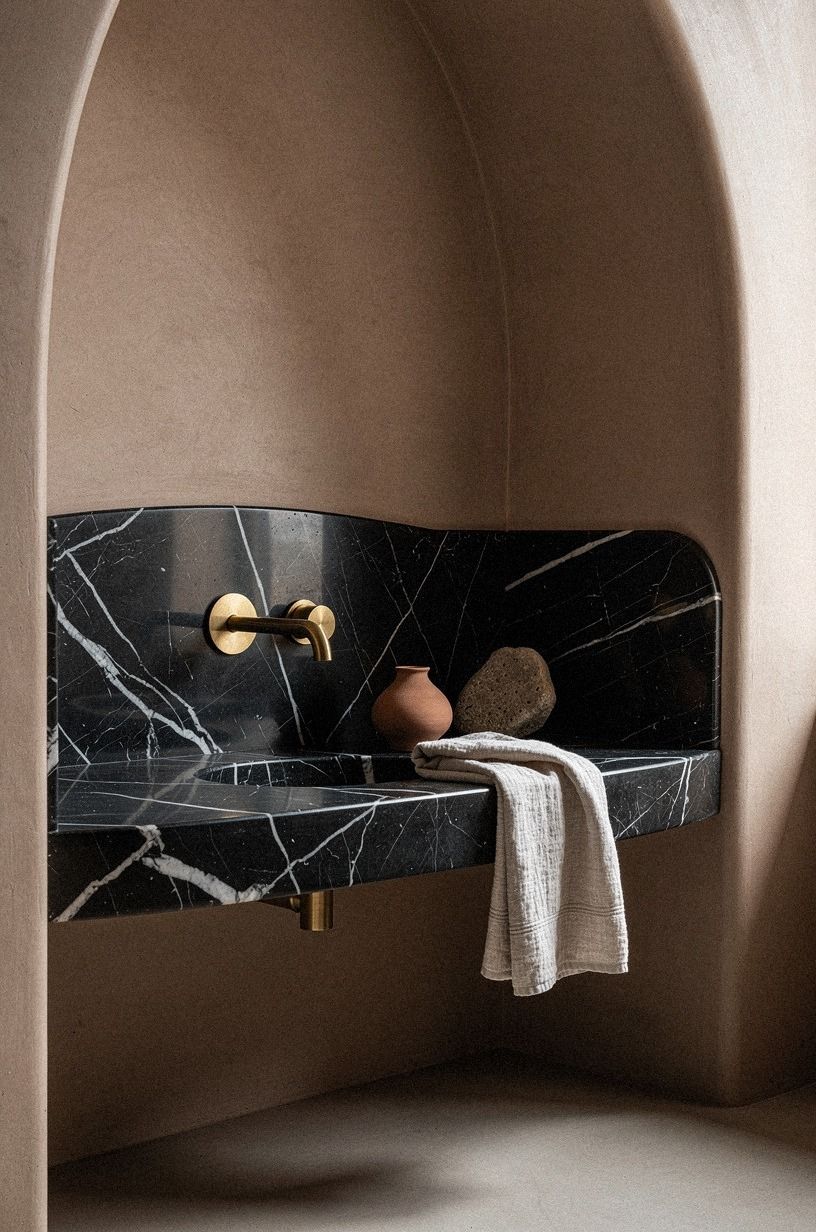
A recessed niche is a useful place to test black grout before committing to an entire wall. Line it with Nero Marquina black marble, whose white veining gives the dark surface some movement, then use black grout to outline the shelves. You’ll get a strong architectural detail without making your whole bathroom feel dramatic.
Your niche should look built in, with the restraint of a proper storage detail. Keep the bottles simple, and choose one repeated finish such as aged brass.
Clay-colored accessories and a piece of linen will soften the marble without competing with it. I’d skip clear plastic containers because they catch every drop and make the niche feel temporary.
You’ll also want the shelf depth to work for the products you use daily. Don’t design around a tiny soap bottle if your family buys larger shampoo containers.
A linen washcloth, one amber pump, and a low ceramic cup are enough. If you’re styling several small zones, this hidden-space planning article can help you think in vertical layers.
6Make Black Grout Rental-Friendly
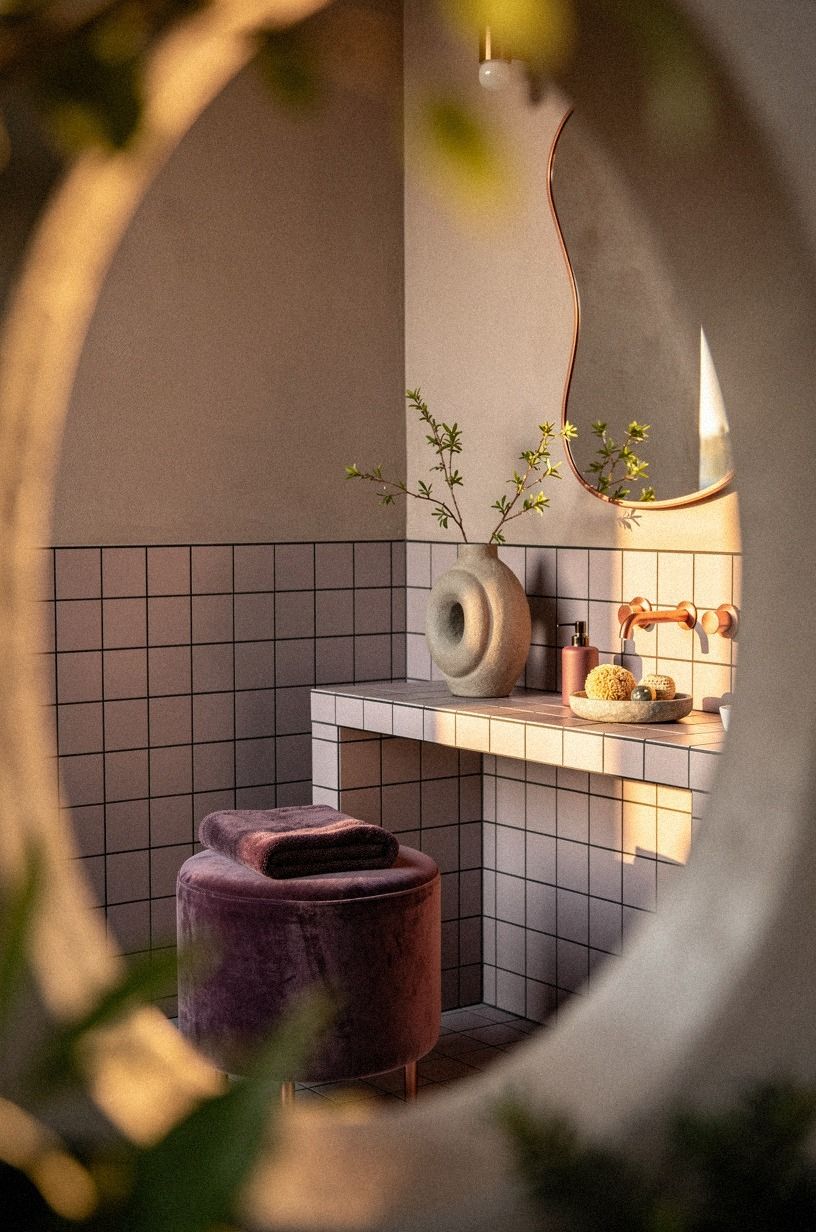
You can bring in the black-grout look without retiling if you focus on removable surfaces. Use plum and grey textiles, a rose-gold mirror, and one piece of deep-pile mohair velvet for softness. The palette adds character while staying easy to reverse when your lease ends.
7What Should the Three-Height Light Stack Do?
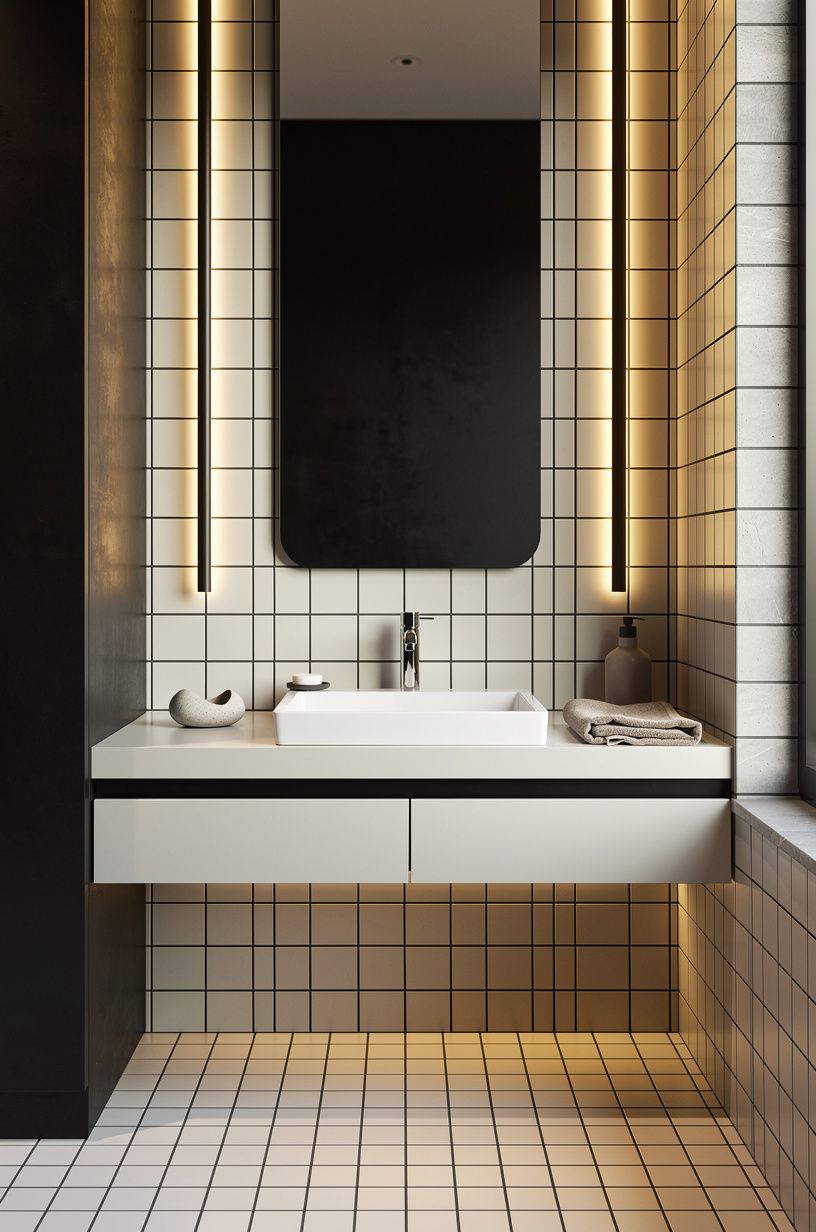
The Three-Height Light Stack places illumination at ceiling level, eye level, and low level. The idea sounds technical, but it simply keeps black grout from becoming the only thing your eye notices. A pendant, mirror light, and floor-level glow create a more relaxed Three-Height Light Stack.
At eye level, use an ivory shade or a frosted globe so the light spreads across your face instead of creating a hard reflection. Keep the fixture close enough to the mirror that it actually helps with grooming. Midnight blue around the light and a little Carrara marble can give the arrangement a clean, settled feel.
At the low level, use a walnut stool or concealed night-light to give the room a soft evening anchor. Choose a warm LED bulb for that layer, especially if the upper fixture has a brighter task setting.
This quiet bedroom TV height guide also shows why eye-level placement changes how a room feels. Get the balance right and the bathroom changes immediately!
8Black Tiles or an All-Black Wall?
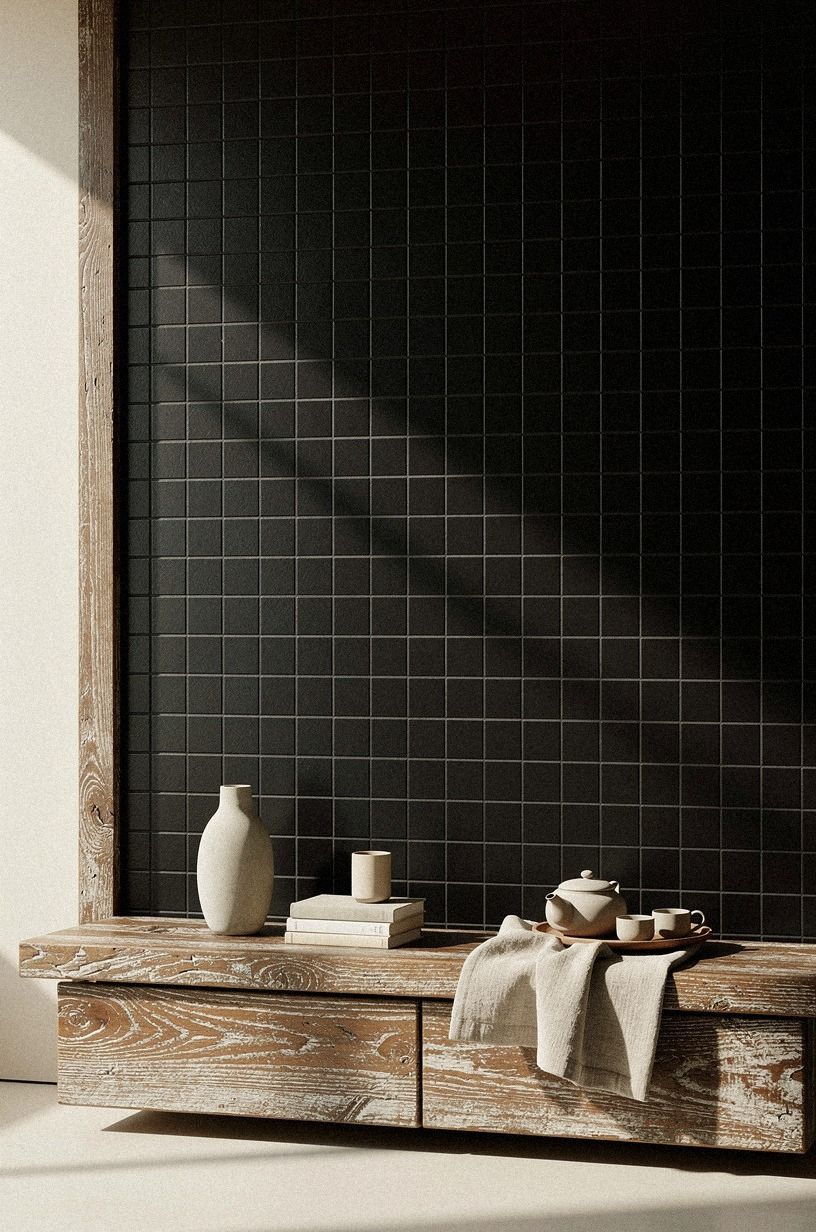
Black tiles in bathroom zones can create depth, but an all-black wall is rarely my first choice. I’d rather balance them with emerald, cream, and small gold details, then bring in reclaimed weathered teak for warmth. The room can feel rich without becoming visually heavy.
9Let the Checkerboard Floor Carry the Pattern
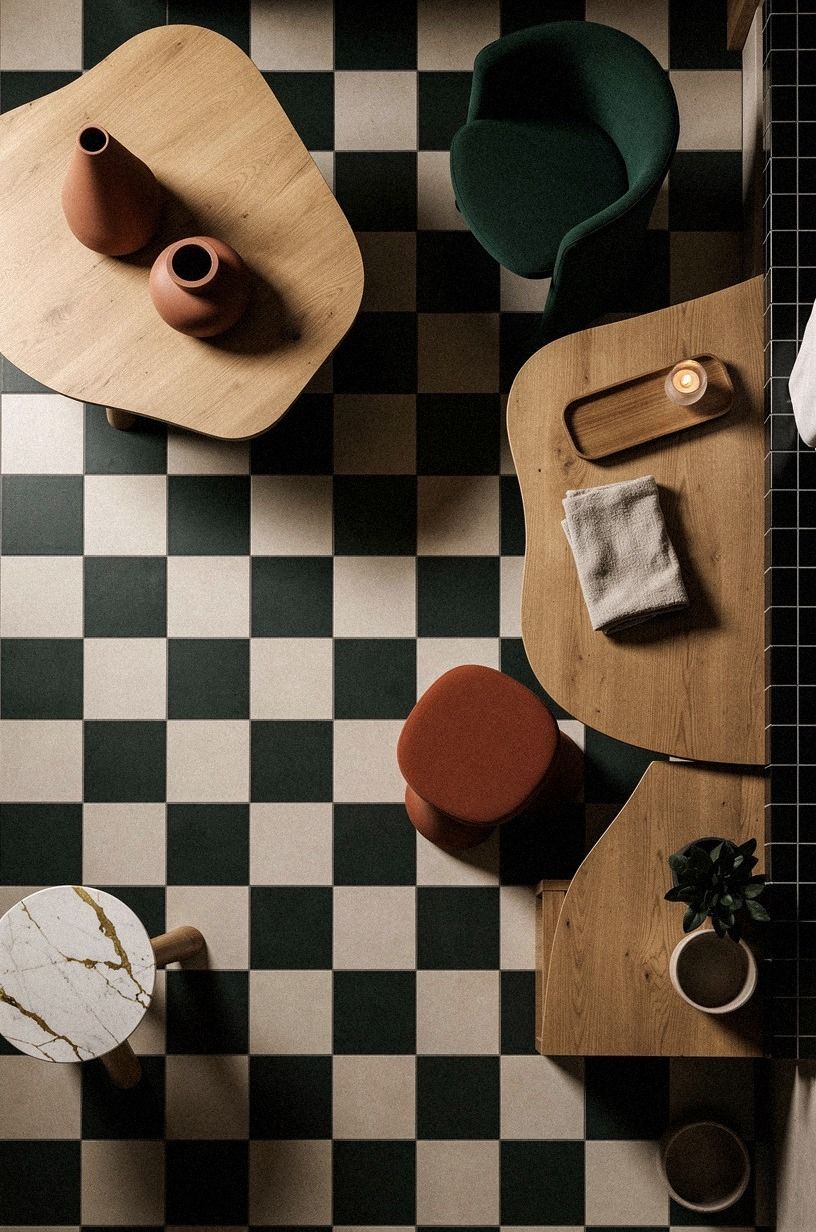
A checkerboard floor becomes easier to live with when the grout is dark enough to hide the everyday grit that gathers near the toilet and door. Use Calacatta marble with gold veining in a restrained checkerboard, then repeat forest green or rust in one small object above the vanity. You’ll get a graphic floor without turning the room into a pattern contest.
I’d choose a large-format tile if your floor is open and square. Smaller tiles create more joints, which can look charming, but they’ll also demand more visual attention.
Your room doesn’t need to perform from every angle. Let the floor carry the pattern and keep the walls quiet.
A 9 by 12 rug belongs in a living room, not here, so use a washable runner sized to sit clear of the toilet base and shower swing. Add a natural oak stool if you need a seat, then stop. This studio apartment layout guide is useful when you’re trying to keep a small floor plan from feeling overfilled.
10The Honest Cost of Black Grout
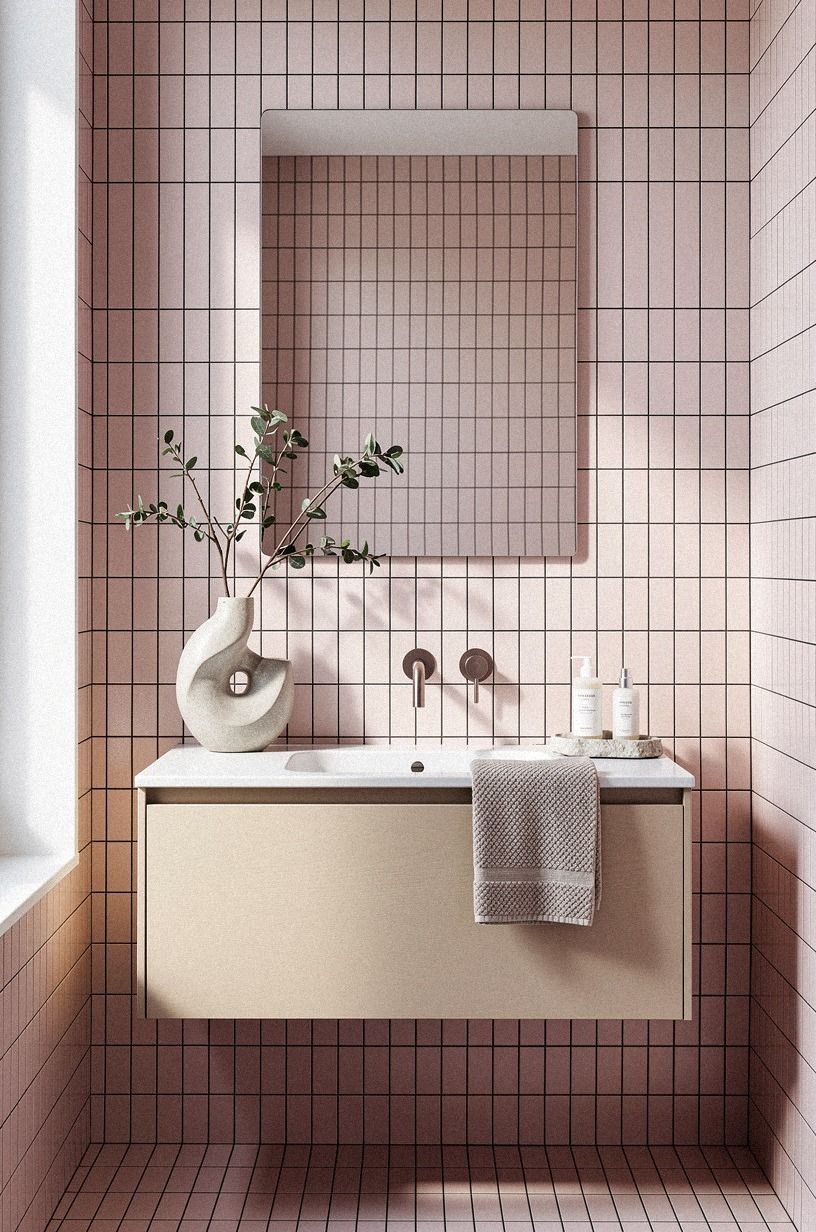
Black grout itself isn’t the expensive part. Your tile, prep, waterproofing, and labor will determine the real budget, especially if you’re changing a shower. For a cosmetic room refresh, the broad planning tiers below are useful US averages.
They’re not a quote, but they’ll help you decide whether to paint, retile, or leave the existing surround alone. Spend first on waterproofing.
I’d spend first on waterproofing and skilled tile work, not a designer faucet. You’ll notice crooked joints every morning, while a modest fixture can still look refined if the installation is clean.
If you’re weighing a larger bathroom change, this luxury bathroom decision story is a useful reminder to look past the shiny finish. A modest brass faucet can still look considered beside dusty rose, charcoal, and cerused white oak.
A larger renovation also needs a realistic allowance for changes behind the wall. Moving plumbing, correcting an uneven substrate, or repairing ventilation can change the total quickly. A skilled tile installer is often worth the money because clean preparation protects the look for years.
This quieter old-town design story also makes a good reminder that restrained materials can carry plenty of character without an extravagant finish.
11Keep Dark Joints Calm With the Right Sealer
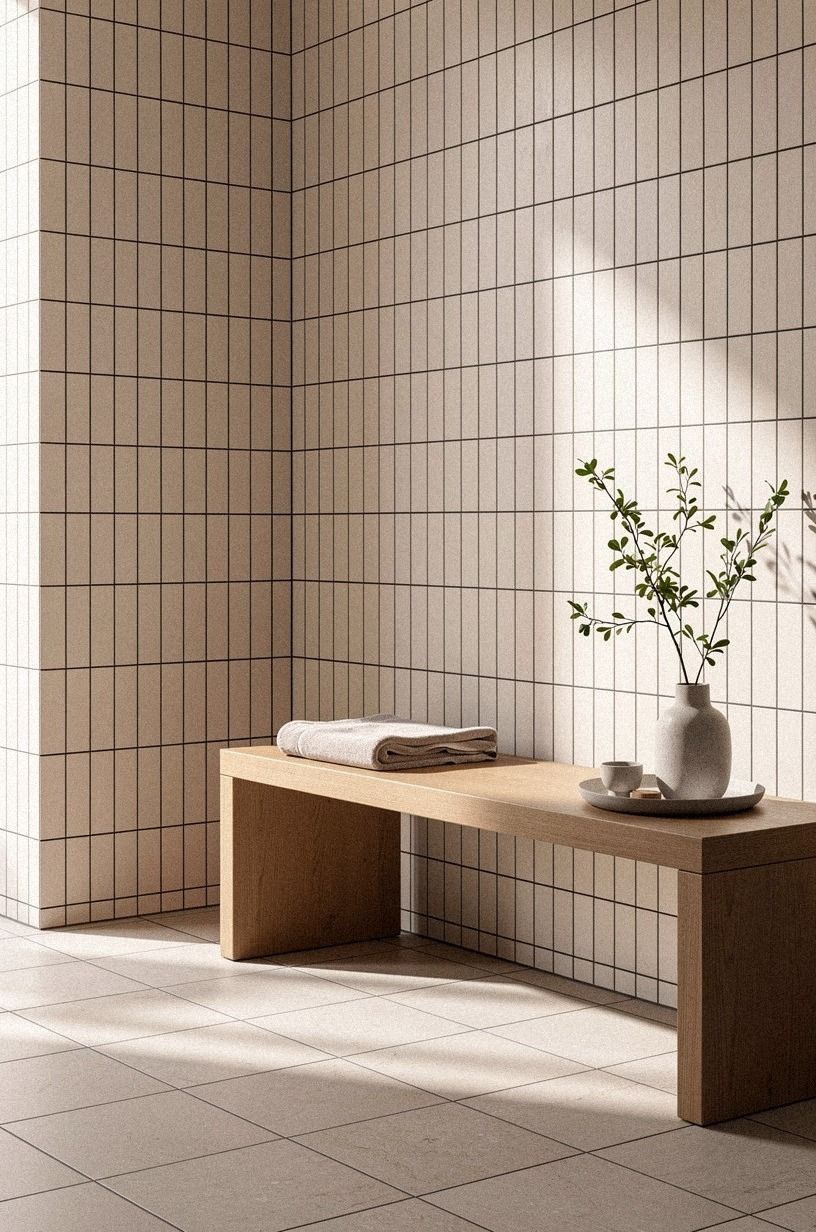
Black grout hides more than pale grout, but it isn’t maintenance-free. You’ll still want a compatible sealer, especially in a shower or around a freestanding tub.
Follow the manufacturer’s cure time, then keep your first cleaning gentle. Your grout needs time to become durable before you test it with a stiff brush.
A penetrating sealer is usually the starting point for porous cement grout.
Choose a penetrating sealer for porous cement grout, and ask your installer about the exact product. 600gsm Turkish cotton towels, a squeegee, and a ventilated room will do more for daily care than a shelf of harsh cleaners.
I learned this after using an aggressive spray on a backlit translucent onyx edge. The surface lost its quiet finish.
And don’t assume dark grout hides every flaw. Soap film can still sit on top and make the joints look cloudy. You’ll want to rinse the shower walls, open the door, and dry the lower corners when you can.
A neutral pH cleaner will help preserve the surface while keeping the routine manageable. If you’re also reviewing the room’s placement and proportions, this quiet bedroom TV height guide shows how small height decisions affect everyday comfort.
12Matte Black Grout Against Bright Metal
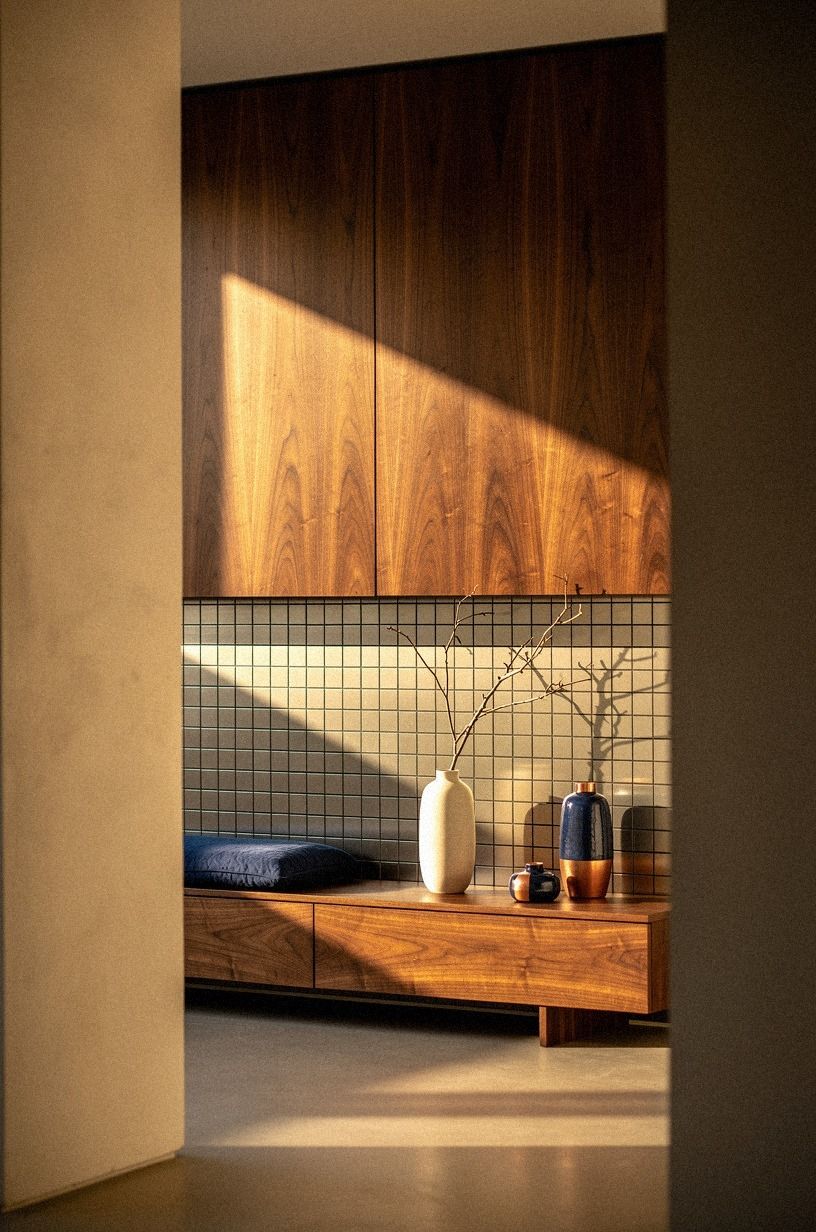
Matte black grout and bright metal can be a lovely contrast when the metal appears in small, repeated doses. I’d pair dark joints with copper lighting, an ivory mirror surround, and one warm metal hook. You’ll get a polished note without turning the bathroom into a showroom.
Avoid mixing chrome, nickel, brass, and bronze in one tiny room. Your eye will keep sorting the finishes instead of enjoying the tile.
Choose copper as the dominant metal, then let the grout act as the visual bridge. A book-matched walnut vanity can hold the combination together because its surface has enough weight.
Your accessories don’t need to match perfectly. That’s where the room starts to feel human.
A ceramic soap dish, folded ivory linen, and a small branch in a stoneware cup will give you a soft, organic counter. But keep the counter useful.
The best styling still leaves space for your toothbrush. This quieter old-town design story is a good reminder that restrained materials can still have character. For a related approach to mixing practical and decorative pieces, this studio apartment layout guide keeps the focus on useful visual weight.
13What Does Bathroom Art Need?
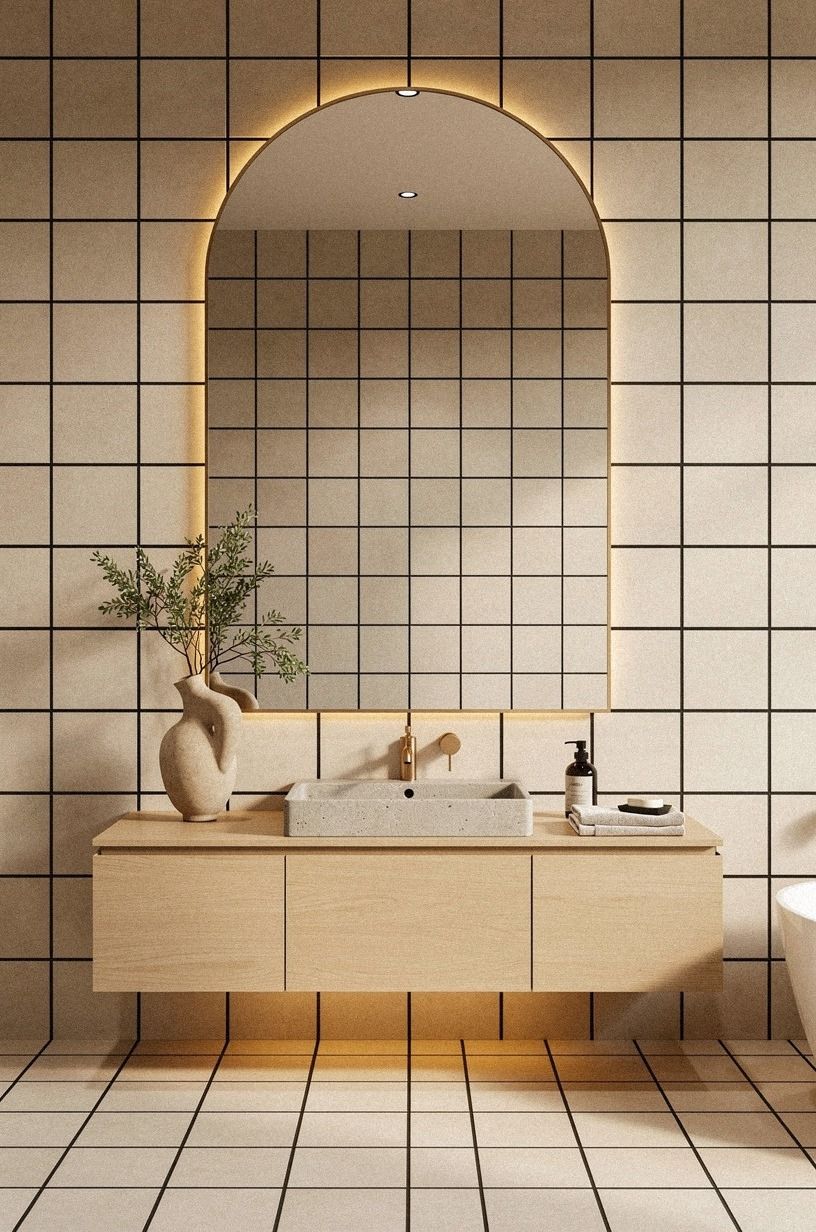
Art keeps black grout from making the bathroom feel purely functional. Choose something with sage green, warm cream, or natural wood tones, then place it above a warm travertine ledge or vanity. The material adds quiet texture while the artwork gives the room a little personality.
14Pale Ceiling, Dark Joints: Lift a Heavy Room
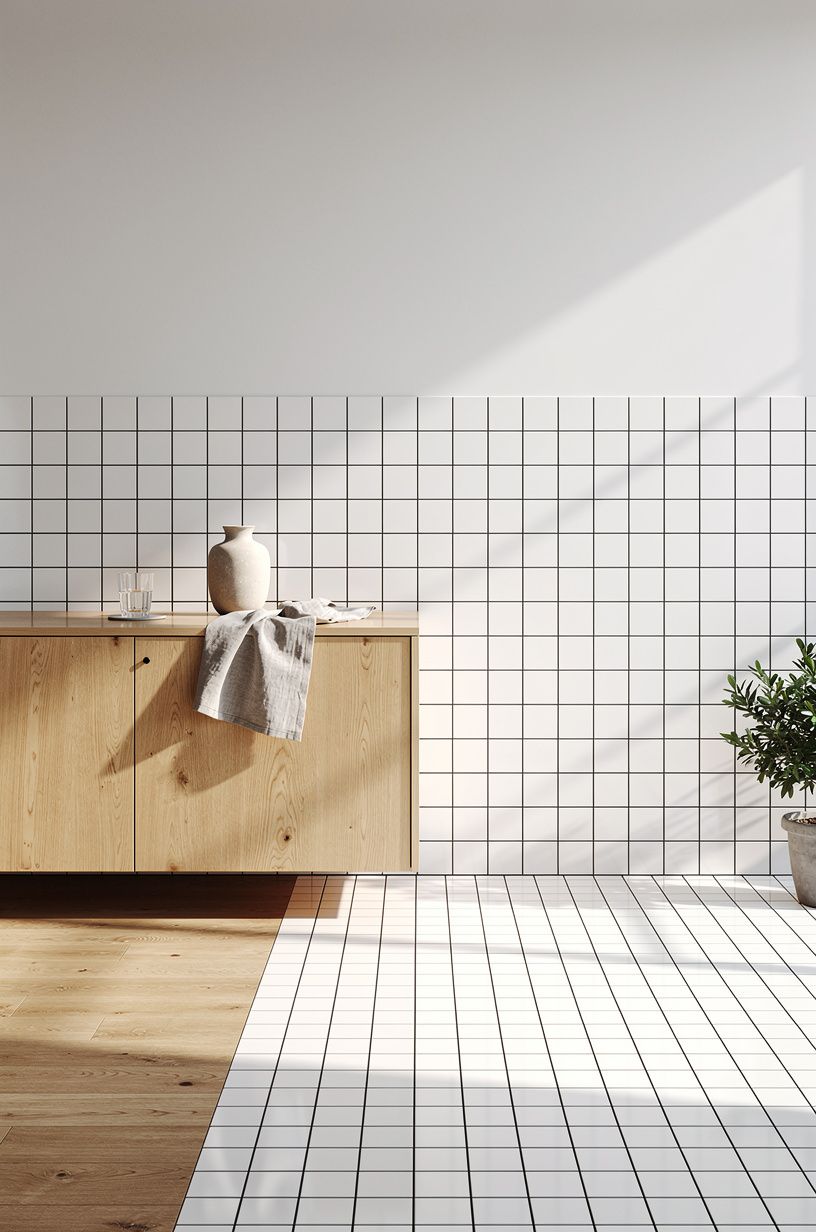
When black tiles bathroom ideas start making the room feel compressed, look up. A ceiling in terracotta, soft stone, or muted olive can lift the whole composition when balanced with lighter walls. You’ll soften the dark wall without repainting the tile, and the change will cost less than replacing a surround.
I’d avoid a pure ceiling white if the walls are warm gray or cream. The sharp break can make the room feel chopped into pieces. Test your paint beside the grout and tile under the room’s real bulbs.
You’ll see the undertone change, especially on a cloudy morning. A stone tone can make the transition feel more natural.
Use a low-sheen finish and keep the trim simple. A small black fixture, olive accent, and warm material create a sophisticated setting for the darker joints.
Add unlacquered brass only where you want a finish that will develop patina. But don’t add a dramatic ceiling color just to make the room memorable.
Your goal is to make the tile feel settled, not to create another focal point. If you’re studying how color changes a compact space, this Croatian old-town design story is a nice visual reference.
The same balance principles in this small-space room guide can help you judge whether the ceiling needs more lightness.
Why I’d Choose Black Grout for a Real Bathroom
I didn’t choose black grout because I wanted a bathroom that looked dramatic. I chose it because pale grout made me resent the room. Every splash around the sink became a little announcement, and the shower floor looked tired before the rest of the bathroom did.
Dark grout gave the space visual weight, but it also gave me a little breathing room between cleanings. That’s the practical appeal of matte tile.
The important distinction is that black grout isn’t a substitute for good planning. If your tile edges are uneven, dark joints will show the irregularity. If your lighting is cold, the whole room can feel stern.
If your installer rushes the cleanup, haze will sit across the tile and make your new wall look unfinished. You’ll want to solve those problems before you buy the prettiest sample.
Cement grout still needs careful installation.
I’ve gone back and forth on glossy versus matte tile, and matte wins for a busy bathroom. It hides water spots, feels quieter under strong light, and lets the grout provide the pattern.
I’d also choose a warm white ceramic or muted green tile over a flat black field. The room still needs reflection and air.
And the cost decision is personal. You might spend $200 to $800 on paint, textiles, and organization, or much more on a full tile project. Your money should go toward waterproofing, surface prep, and the installation details you’ll see every day.
The grout color is the personality. The waterproof membrane is what keeps that personality from cracking.
One last test matters more than any showroom display. Tape a few tile samples beside the vanity, switch on the real bulbs, and look at them after a shower. Black grout can shift from soft charcoal to hard graphite depending on the light and surrounding finishes.
The Questions I Get Asked Most
What is the best black grout look for a small bathroom?
A small bathroom benefits from warm white tile, narrow black joints, and one light wood element. Benjamin Moore White Dove OC-17 keeps the walls bright, while an IKEA KALLAX birch-effect piece can add storage without visual heaviness. You’ll want fewer patterns so your room feels calm.
Where can I buy black grout bathroom pieces on a budget?
Look at IKEA, Wayfair, and Target for black hardware, trays, stools, and washable textiles. You can also check Facebook Marketplace or a local thrift shop for mirrors and wood frames. Your best finds won’t need to match perfectly, and you don’t need affiliate links to plan the room.
How much does a black grout bathroom makeover cost?
A cosmetic refresh can fit within the $200 to $800 budget tier when you’re painting, changing textiles, and adding organization. A larger project with accent furniture, lighting, or tile work can move into the $1,500 to $5,000 range. You’ll save most by keeping the existing plumbing.
Can I create this look on a budget?
Yes, and you can start with three low-cost changes: paint the wall, repeat black through a mirror or hook, and add a washable bath mat. Sherwin-Williams Agreeable Gray SW 7029 can soften the contrast. You’ll get the strongest result by editing what you already own first.
Is black grout worth it in a small space?
Yes, when you balance it with light tile and layered lighting. The dark joints add structure, so your small room can feel more intentional instead of visually scattered. You’ll want one main pattern, three light sources, and a light-oak vanity finish that doesn’t absorb every bit of brightness.
Is black grout a good idea for a rental?
It can be, but permanent grout work usually isn’t rental-friendly. Try peel-and-stick tile, removable hooks, a tension rod, and a black-framed mirror instead.
Your landlord’s rules matter, so check before applying anything. The goal is a reversible graphic layer that protects your deposit.
Where I’d Start First
If I had to pick one, I’d start with warm white tile and black grout behind the vanity. The joints will hide daily splashes, while the pale tile keeps the room from feeling boxed in. A warm white tile sample will tell you more than a screen image.
Pin this idea for later and test one sample board in your real bathroom light before committing. Look at the pale ceramic beside the floor, vanity, and mirror, then live with it for a full day. The right choice should feel settled at breakfast and still inviting at night.