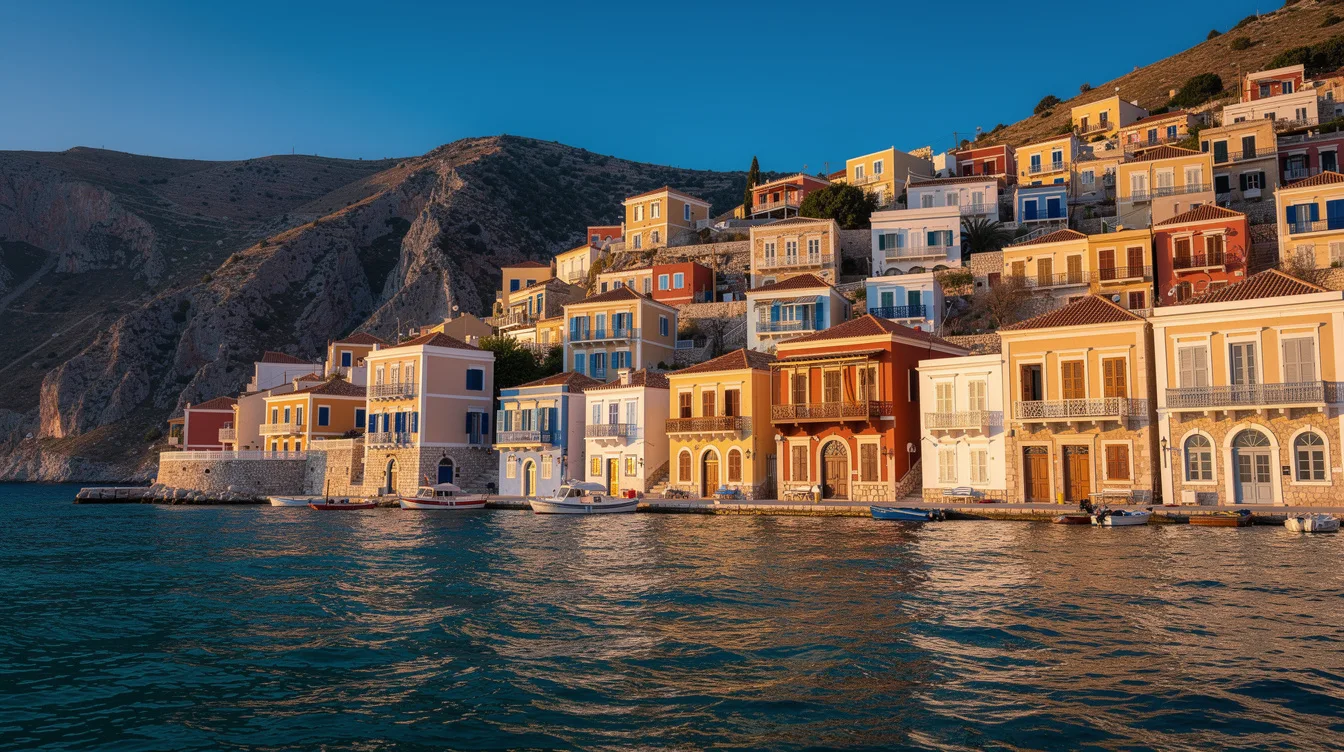
Symi is Greece’s Amalfi, where pastel neoclassical mansions climb above a bright harbor. Their story is even better than their color: at its height, the island reportedly had the world’s largest sponge-fishing fleet. That trade paid for the grand homes visitors photograph today.
But Symi isn’t only a pretty stop near Rhodes. Its population reached 22,500 in the 19th century, then fell to 2,603 permanent residents in 2021. You can see that history in the scale of the buildings, which feels surprisingly grand for such a small island.
And the contrast is the point. The harbor looks polished and theatrical, while the island’s identity remains tied to boats, fishing, trade, and steep streets above the water.
Gialos makes the first impression, then asks you to climb
Gialos, Symi’s main port, is the place that earns the comparison with Amalfi. Yellow, pink, and ochre façades rise behind the waterfront, while small boats shift beside terraces facing the harbor.
Can you see the best architecture without climbing?
Yes, but the strongest views begin above the quay. From Gialos, you can walk toward Ano Symi, also called Chorio, where old houses, narrow lanes, stairs, and views back toward the port change the pace completely.
But this isn’t an easygoing stroll for everyone. You’ll want sturdy shoes because the town rises sharply, and the reward is perspective rather than a single landmark. My opinion: see Gialos early, then climb before the heat makes every step feel longer.
The sponge trade explains why the houses look so ambitious
Symi’s wealth came from sponge fishing and shipbuilding, not from modern tourism. At the height of the sponge trade, the island had what is described as the world’s largest sponge-fishing fleet, a claim that gives the harbor’s grand architecture real context.
Those neoclassical mansions weren’t random decoration. They reflected money earned at sea, then turned into colorful homes along the slopes near the main town. And that connection makes the architecture more interesting than a row of attractive façades.
But the island isn’t frozen in that earlier prosperity. Tourism is now the main industry, while fishing and trade remain part of local life. With only 2,603 residents in 2021, Symi feels shaped by its past even as visitors arrive by ferry each day.
Panormitis gives the island a quieter second act
Beyond the port, Panormitis brings a different mood. The southern destination is known for its important monastery and imposing baroque bell tower, with a bay setting that feels removed from Gialos’s busy waterfront.
And you don’t need to treat it as a rushed checklist stop. Boat trips and local buses can connect the area, but you’ll need to check schedules before setting out. The island is compact, yet its roads, stairs, and coves don’t always line up neatly.
But the journey is worth considering if you want more than harbor photographs. Symi also has clear water, beaches, and coves that are often easier to reach by boat. Bring a towel, accept the limited options, and let the day stay simple.
Can you reach Symi easily from the United States?
Symi has no airport, so you’ll fly to Rhodes first. From there, the island sits 14.9 miles north, close enough for an easy addition but far enough to feel distinct once the ferry leaves the port.
The crossing takes 55-90 minutes, depending on the boat. And because summer connections are numerous, you can visit as a day trip from Rhodes, although staying overnight gives you more time after the day visitors leave.
But a day trip only shows you the outline. If you want Gialos at a slower pace, Ano Symi without rushing, or a boat outing toward the coves, plan at least one night. Symi is accessible, but its best moments need room around them.
When should you go, and is Symi your kind of island?
The tourist season generally runs from May to November. For a better balance of warmth, swimming, prices, and visitor numbers, choose late May through June or September to early October.
July and August are very hot and bring more daily excursions from Rhodes. But if you prefer tavernas, stairs, boat rides, and architecture to nightlife or long sandy beaches, the busier months may still suit you.
And you should know the trade-off before booking. Symi is mountainous, dry, and shaped by steps and boats, with fewer modern hotels than larger Greek destinations. By evening, the harbor lights settle across the water, and the sponge fishermen’s old homes turn quietly gold.