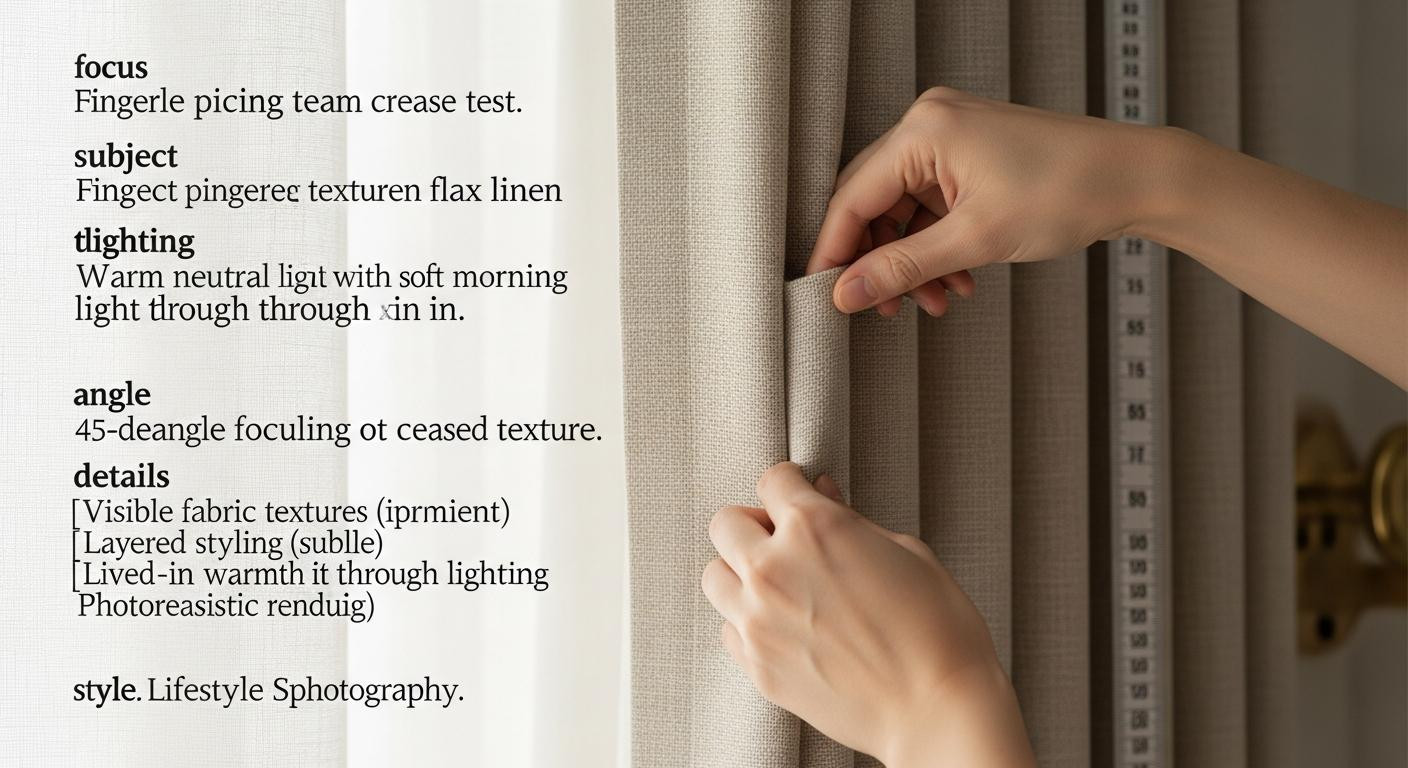
Your hand on a bolt of linen at West Elm on a Saturday afternoon, the fabric smooth under your fingers but somehow still textured. The tag says Belgian flax, $89 per yard, and you need six yards for curtains. That’s $534 before hemming. But three months ago you bought what looked like linen online for half that, and it arrived feeling like a tablecloth, went transparent in afternoon light, and wrinkled into permanent creases after one wash. You’re holding fabric you can’t afford to get wrong again.
Four specific tests separate fabric that lasts from fabric that disappoints. And they all happen before you reach the register.
The thumbnail crease test reveals fabric memory in 8 seconds
Pinch 2 inches of fabric between your thumb and forefinger. Hold for 5 seconds with firm pressure. Release and watch what happens in the next 30 seconds.
Quality 12-ounce linen shows a soft crease that relaxes about 60% within half a minute. The fold stays visible but softens, which is how real linen behaves in a room. Cotton sateen releases almost completely in 10 to 15 seconds, bouncing back to smooth. But polyester-linen blends hold hard creases that photograph like wrinkles and never fully disappear.
Interior designers featured in Architectural Digest note that fabrics holding visible creases longer than a minute will look rumpled in daily use. That’s the difference between a room that feels relaxed and one that reads as neglected. And it’s why testing before buying saves you from expensive decorating mistakes.
What 12-ounce linen feels like versus 6-ounce imposters
Fabric weight determines drape and durability. Curtain linen should weigh at least 10 to 14 ounces per square yard for proper body. Anything under 8 ounces hangs limp, goes transparent in sunlight, and develops permanent wrinkles within months.
The 6-ounce “linen” curtains sold online for $45 a panel feel insubstantial because they are. Real Belgian linen at 12 ounces has enough weight to fall in soft folds without collapsing. That’s what makes a $340 pair of West Elm curtains worth the cost over three years of daily sunlight exposure.
The backlight test catches synthetic content retailers hide
Stand between the fabric and a window or overhead light. Hold the material 8 inches from your face and look at the weave against the light.
Real linen shows irregular fiber texture with visible slubs and natural variation. Each thread looks slightly different. Cotton sateen shows smooth, consistent weave with a subtle sheen. But polyester blends show uniform synthetic shine that reflects light like plastic film, even when the label says “linen-look.”
Textile experts confirm that synthetic fabrics catch light harshly, making spaces feel cheaper. Natural fibers diffuse light softly, which reads as more expensive even in budget rooms. That’s why your room feels cheap and the fabric fix changes everything.
How polyester-cotton blend fools afternoon light
A 60/40 polyester-cotton curtain might look fine in morning light but turns translucent by 3 p.m. The synthetic fibers reflect rather than absorb, creating a shiny, cheap look that no amount of styling can fix.
Pure cotton or linen at 11 ounces or heavier stays opaque through afternoon without blackout lining. That’s the threshold where fabric stops being decorative and starts controlling light properly.
Ask about fabric weight in ounces per yard, not thread count
Thread count measures density but ignores fiber quality and construction. A 600-thread-count polyester sheet feels slippery and traps heat. A 280-thread-count cotton sateen feels substantial and breathable because the fibers themselves are better.
Professional organizers with certification recommend asking for fabric weight instead. Curtain linen needs 10 to 14 ounces per square yard for proper drape. Upholstery cotton needs 12 to 16 ounces. Decorative pillows hold shape at 8 ounces minimum.
Some $140 curtains use 8-ounce fabric that won’t last two summers. Some $95 IKEA options use 11-ounce cotton-linen blends that survive four years of daily sunlight. Weight correlates with durability more reliably than price.
The curtain weight that survives 4 years of sunlight
South-facing windows degrade fabric faster than any other exposure. Linen curtains cost less per year than seasonal swaps because heavier natural fibers resist UV breakdown better than lightweight synthetics.
At 12 ounces, linen holds color and structure through direct sun. At 7 ounces, it fades and weakens within 18 months. That’s the difference between an investment and a mistake.
The drape test shows how fabric behaves at home
Hold 24 inches of fabric vertically, pinched at the top. Quality curtain fabric falls in soft folds with natural body, not stiff or limp.
Flick the fabric sharply and watch recovery. Good material returns to drape within 3 seconds. Cheap fabric stays displaced or falls flat, which means it’ll photograph poorly and create visual clutter in your room.
Lighting designers with residential portfolios note that fabrics failing the drape test make spaces feel unfinished. The fabric can’t hold sculptural folds, so it just hangs there doing nothing. And that’s exactly what makes a room feel cheaper than it should.
Your questions about quality fabric assessment answered
Can I assess fabric quality when shopping online?
Request swatch samples before buying curtains or upholstery over $200. West Elm, Pottery Barn, and Restoration Hardware send 4×4-inch swatches free or under $5. Perform the crease test, backlight test, and drape test at home before committing to full yardage.
For budget purchases under $100, search product name plus “too thin” or “see-through” to find honest reviews. Return policies matter more than ratings. Wayfair allows 30-day returns on most textiles, Amazon extends to 90 days on home goods.
Which rooms need the heaviest fabric weight?
Living room curtains need 11 to 14 ounces to filter light without transparency. Bedroom curtains function at 10 to 12 ounces if lined. Dining chairs require 14 to 16 ounce upholstery weight to survive daily friction and cleaning.
Decorative pillows work at 8 to 10 ounces but won’t hold shape below 7 ounces. That’s why quality costs less than replacing cheap options every few years.
When is polyester-blend worth buying?
Performance fabrics blending polyester with natural fibers work for high-use areas like family room sofas and kitchen chairs. Look for 60% natural to 40% synthetic ratios minimum in lines like Crypton or Sunbrella.
Avoid 100% polyester for visible areas like curtains, bedding, or decorative pillows where synthetic sheen reads cheap. Budget exception: IKEA’s Ektorp slipcovers use cotton-poly blends at $79 to $149 and survive years of washing without looking worn.
Your hand on 12-ounce Belgian linen at the fabric store on Tuesday morning, thumbnail pressed into the weave. The crease releases in 35 seconds. The backlight shows irregular slubs. The drape falls in soft folds. You know what quality feels like now.