Your spare bedroom at 11:47am on a Tuesday in May when you measure the wall space for a Murphy bed and realize the hardware kit costs $1,840 plus installation, and even the Pinterest versions with wood paneling still read like transforming furniture from an RV dealership. The room measures 10 feet by 11 feet. A standard queen Murphy bed requires 8 feet of clear wall and leaves 22 inches of walking space when deployed. But the bigger problem sits in how the mechanism announces itself: those vertical seams, the pull handles, the industrial hinges that say temporary solution even when the wood finish matches your nightstand.
Why Murphy beds look institutional (even the expensive ones)
The flush-mount design keeps the wall flat, which makes the room feel like a converted office space. Pull handles at waist height read as storage access, not bedroom furniture. A mid-range Murphy bed system from California Closets runs $3,200 to $5,800 installed but still looks like built-in storage rather than considered design.
The visual weight of a Murphy bed panel sits uniform and door-like. Compare that to a cabinet bed or daybed, which creates sculptural presence with depth and shadow. According to ASID-certified interior designers, visible hardware and uniform paneling create institutional cues that announce function over form, even in premium installations.
Cabinet beds look like credenzas that happen to sleep two
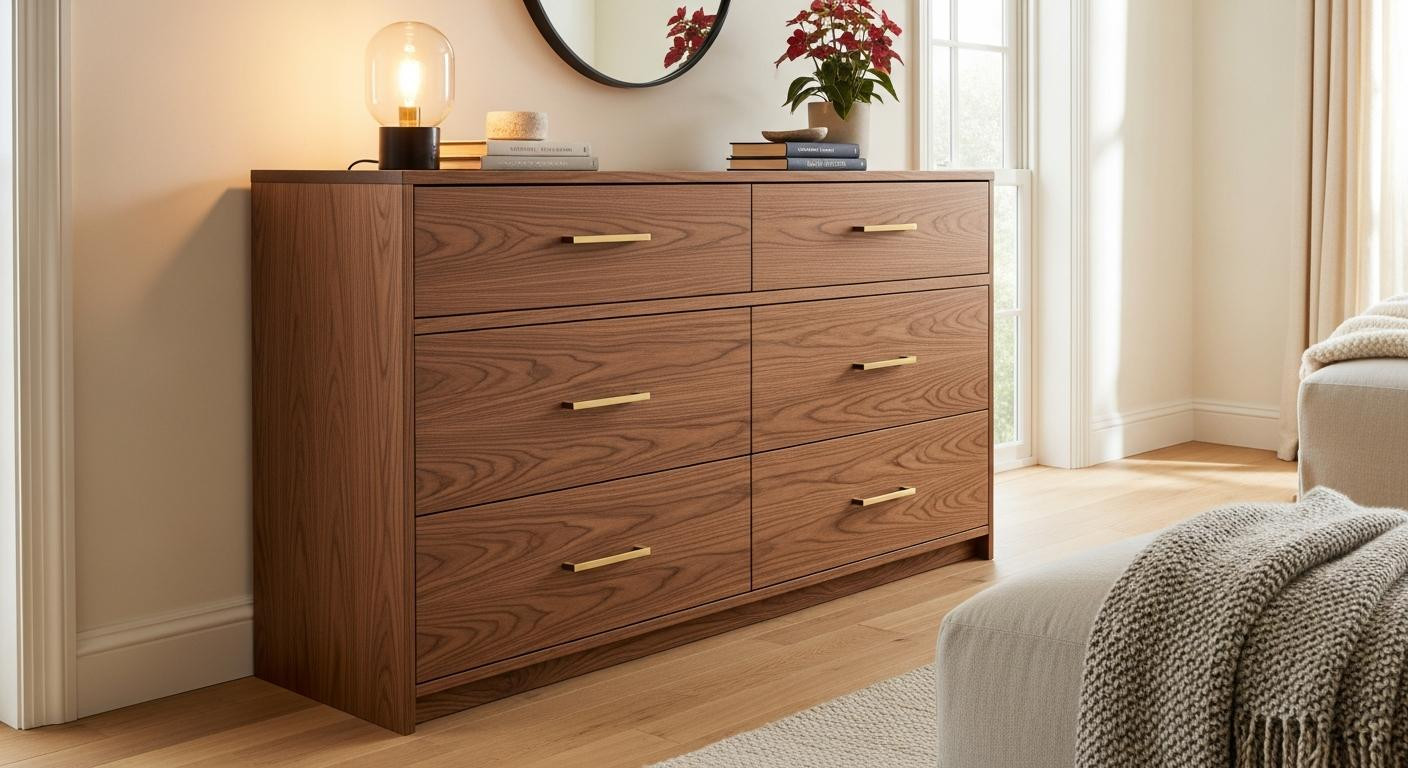
Cabinet beds present as freestanding furniture with visible legs, hardware that reads as decorative rather than functional, and a depth of 24 to 28 inches that creates dimension. The 6-inch leg clearance keeps the piece from reading as a wall unit, which makes the room feel furnished rather than fitted. Night & Day Furniture’s Murphy Cube Bed at $2,189 closes into what looks like a walnut cabinet, not a mechanism.
And the math works better than you’d expect. A cabinet bed takes 13.8 square feet when closed, freeing 6.5 square feet compared to a permanent twin bed. That’s enough room for a reading chair or a small desk without the space feeling like a bedroom first.
Why wood finish matters more than price
Cabinet beds with real wood veneer photograph and age like mid-century credenzas. Laminate versions reveal their budget origins within months, especially where handles meet drawer fronts. Admittedly, solid wood cabinet beds start at $2,800, but the walnut veneer versions at $1,695 hold up better than Murphy beds twice their price.
The grain pattern catches morning light differently than uniform laminate. It’s one of those details that quietly elevates the whole space, especially when paired with warm wood nightstands or brass hardware that echoes the cabinet pulls.
Daybeds work when the room doubles as an office
Daybeds with deep, channeled upholstery function as seating during work hours and avoid the temporary bed aesthetic. West Elm’s Haven Daybed at $1,799 or Article’s Abisko at $1,249 both read as lounge furniture first. The bolster pillows and tailored slipcover make the piece read as sofa, which keeps the room from feeling like it’s waiting for guests.
But daybeds only solve half the equation. They occupy floor space permanently, so they work best in rooms at least 12 feet wide where you can still fit a desk or shelving without blocking the walking path. Design experts featured in Architectural Digest recommend leaving 30 inches of clearance on at least one side to maintain usability.
Trundle beds only work in rooms under 12 feet wide
Trundle beds need floor clearance for the pull-out frame, which limits furniture placement in already-compact rooms. The main bed stays made, which solves the daily reset problem, but the vertical sleep solutions work better in tighter quarters. Price range: $400 to $1,200 for decent upholstered versions from Target or Wayfair.
What doesn’t work (and why everyone tries it anyway)
Sleeper sofas with visible bar mechanisms compress and wrinkle in ways that announce their dual purpose. Futons sag in the center after six months. Inflatable mattresses stored in closets solve the institutional look by hiding entirely, but create hosting anxiety when you realize the pump’s battery died two moves ago.
Platform beds in rooms under 180 square feet create spatial problems worse than aesthetic ones. If your room truly multitasks daily, permanent beds lock you into a bedroom identity you’re trying to avoid. And that’s exactly why zoning strategies matter more than furniture selection alone.
Your questions about Murphy bed alternatives answered
How much floor space does a cabinet bed actually save compared to a twin bed?
A twin bed occupies 39 inches by 75 inches, which equals 20.3 square feet permanently. A cabinet bed closes to 28 inches by 71 inches for 13.8 square feet. The real gain sits in the psychological shift from bedroom to multipurpose room when the bed disappears into furniture that looks intentional.
Can renters install cabinet beds without losing their deposit?
Yes. Cabinet beds are freestanding furniture requiring no wall anchoring. Some models like Night & Day’s Poppy ship fully assembled and sit on adjustable legs that protect floors without permanent attachment. Lighting designers with residential portfolios note that freestanding pieces preserve flexibility in ways built-ins can’t, which matters when color and spatial strategy need to adapt.
What’s the actual price difference between a decent Murphy bed and a cabinet bed?
Murphy bed systems installed run $2,200 to $5,800. Cabinet beds delivered cost $1,500 to $3,500. The installed Murphy bed costs more, but custom carpentry can create built-in aesthetics no cabinet bed matches. For renters or anyone moving within five years, cabinet beds win on portability and cost, especially when you factor in the furniture scale problems that come with oversized pieces in compact rooms.
The cabinet bed in your sister’s guest room at 4pm when afternoon light hits the walnut veneer and catches the brass drawer pulls, and for six seconds you forget there’s a queen mattress folded inside. It’s 27 inches deep, costs $2,189, and looks exactly like the credenza you’d buy anyway.