
Detail reading nook and study ideas for a cozy hideaway cost far less than redoing a whole office if you put the money into enclosure and light and one seat you’ll use constantly. I learned that the hard way with a spare-room corner that looked fine on a floor plan and flat in real life. Small footprint, big emotional difference.
I didn’t need more square footage. I needed one quiet corner that could hold my laptop, my late-night reading stack, and my attention at the same time. Once I stopped trying to make the entire room perform and started shaping one intimate hideaway, the room finally felt grounded, serene, and a little private in the best way.
The other surprise was how little drama the room sequence needed. A darker ceiling, a concealed desk, and a shaded lamp did more than any giant desk or flashy storage wall ever did. If you’re building your own tucked-away setup, steal the sequence first and the styling second.
- Tuck the desk behind paneled bookcase doors
- Line the closet walls with library sconces
- Should the pocket door disappear into the millwork?
- Paint the ceiling dark for quiet focus
- Build a window seat under office shelves
- Hide charging drawers inside the reading bench
- Add a curtain track behind the file wall
- Face the desk toward the hidden opening
- Layer a wool runner into the hideout
- Mount picture lights over the narrow shelves
- Leave one brass knob as the only clue
- Use IKEA KALLAX as the decoy base layer
- Mix matte plaster against polished brass
- Balance open shelves against closed drawers
- Set clay against ink-blue paint
- What makes a hideaway stay calm on Tuesday night?
1Tuck the desk behind paneled bookcase doors
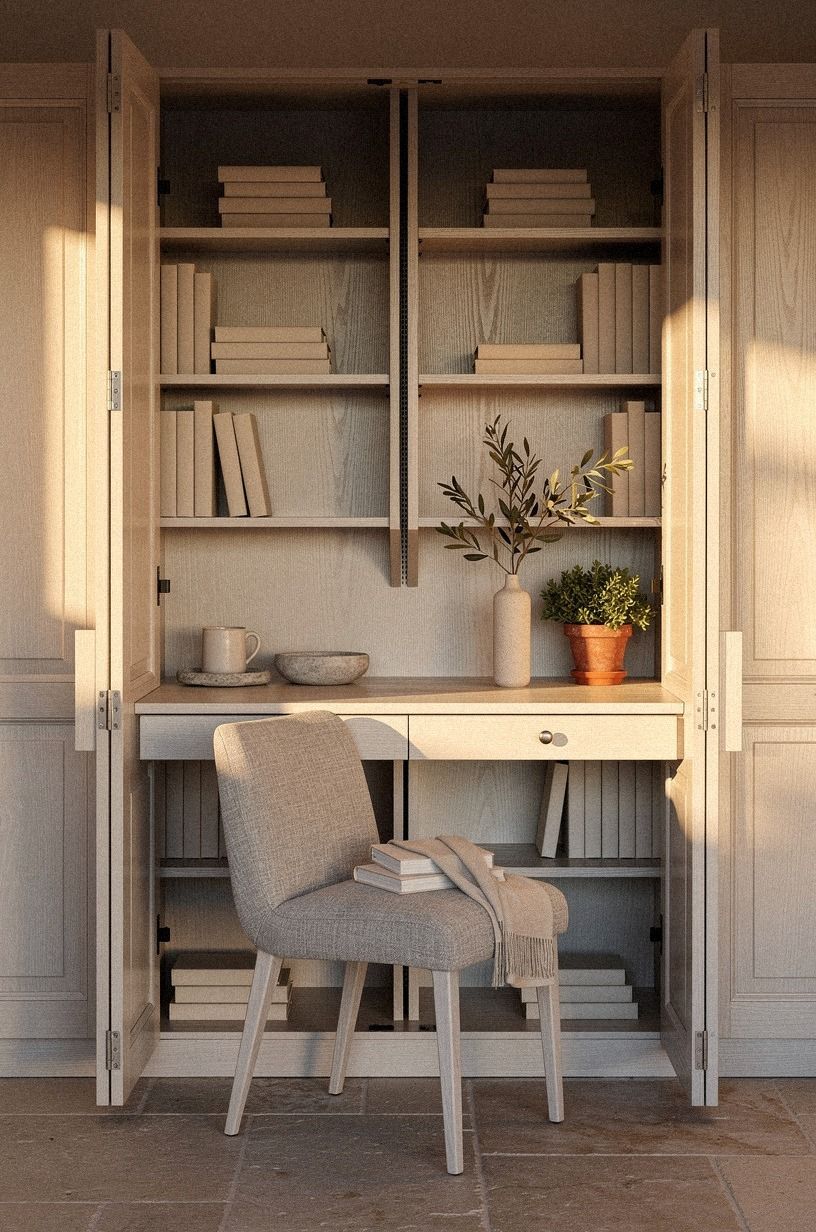
This was the move that changed everything. I tucked a compact cerused white oak desk behind paneled bookcase doors so the work zone disappeared the second I shut them, and that one shift made the room feel calm instead of visibly busy.
You don’t need a huge desktop in a hideaway. You need 24-inch desk depth You need about 24 inches of depth, a real 29 to 30 inch working height, and enough knee room that you can sit down without scraping into the trim. I kept the chair pulled a little off center, let the doors open wide, and suddenly the nook felt more inviting than any open desk wall I had before.
If you’re mapping the whole room around that tucked-in feeling, the spacing rules in this small bedroom layout guide translate beautifully to a snug office too, especially the circulation rule. The point is simple: let the desk disappear when you’re done, and the room feels soft all day.
2Line the closet walls with library sconces
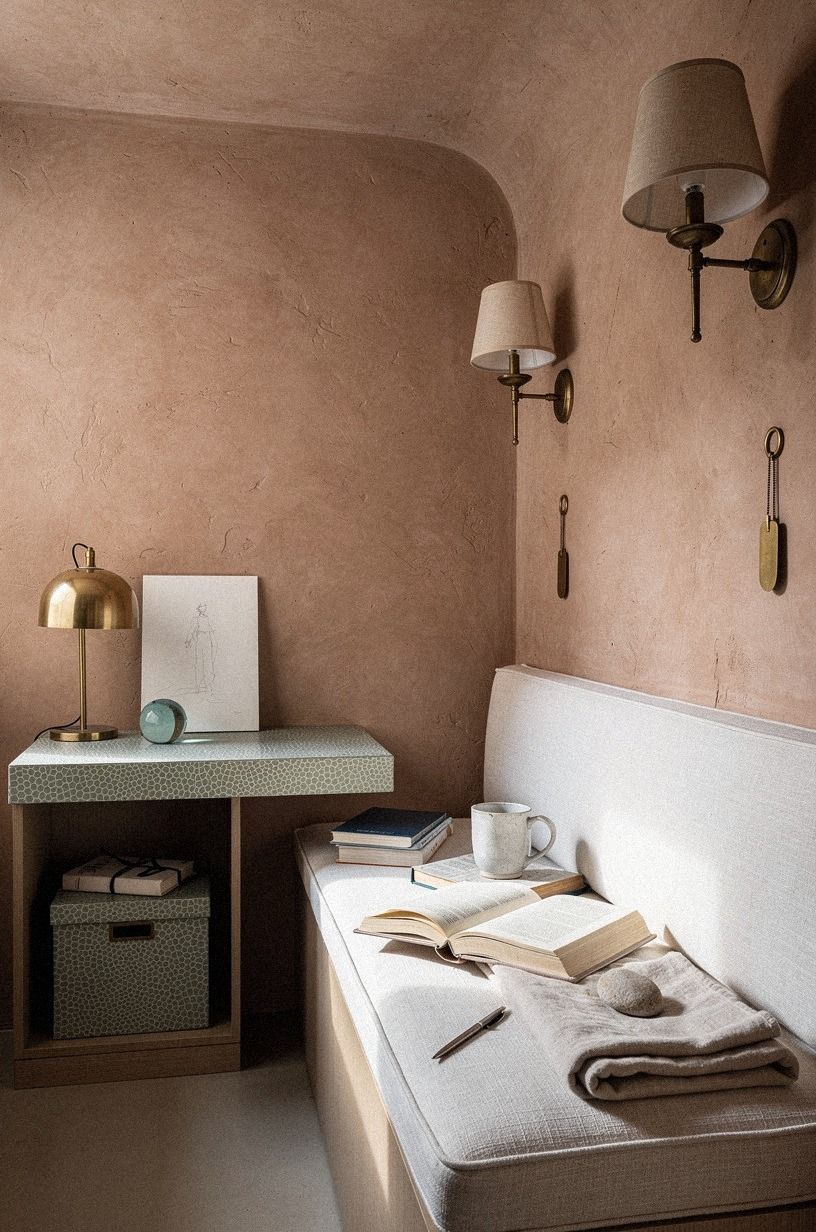
A hideaway office doesn’t need brighter overhead light. It needs better side light, and aged brass library sconces give you that flattering wash that makes books, plaster, and linen look richer after dark.
I mounted the sconces roughly 12 to 16 inches above the desktop line so the beam height landed on the page instead of in my eyes. Low-kelvin bulbs only. Cool light turns a promising nook harsh fast, and harsh is the opposite of why you built this little retreat in the first place.
The layered-light logic in this layered lighting guide works here almost line for line with side lighting leading the whole setup. Once the walls start glowing instead of glaring, even a narrow closet office feels more generous and a lot more human.
3Should the pocket door disappear into the millwork?
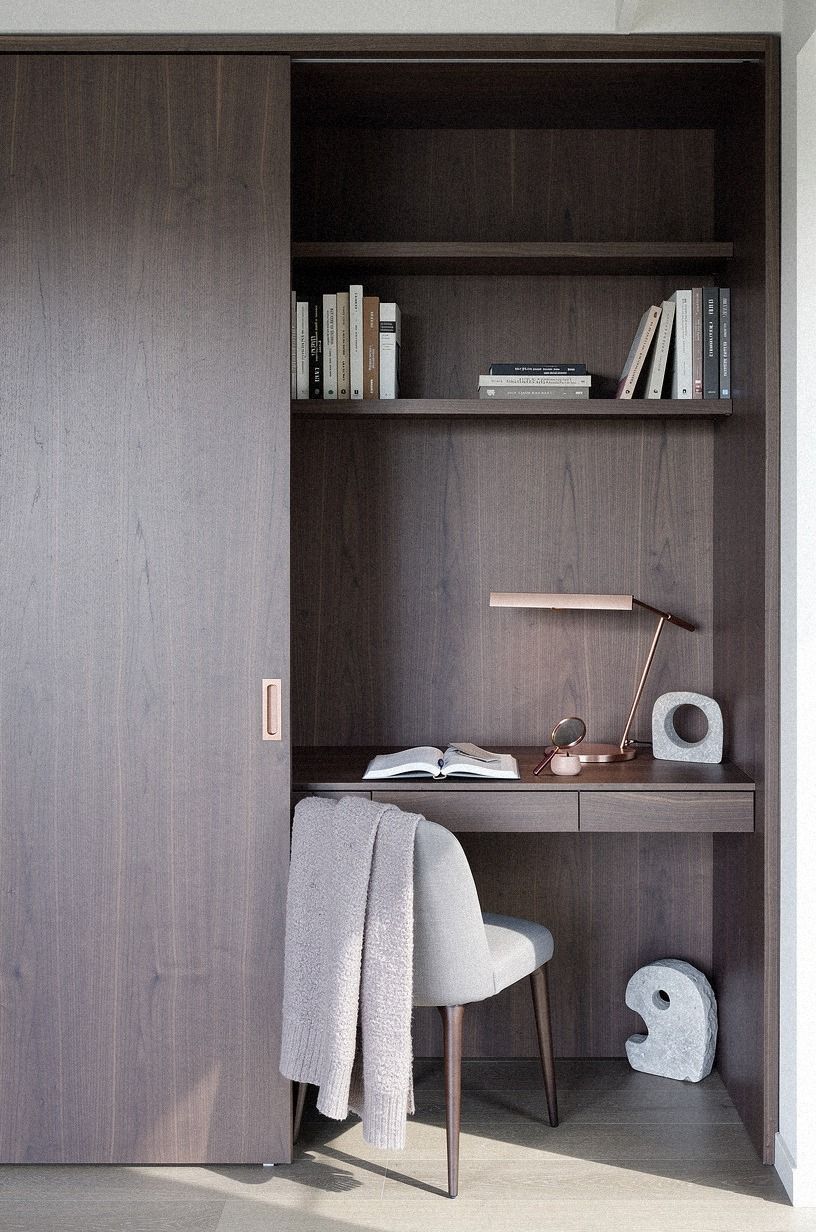
Yes, if you can swing it. A pocket door wrapped in painted oak millwork keeps the entrance feeling intentional instead of improvised, and you don’t lose the swing space a regular door would steal from a small room.
I like this best when the trim color blends with the shelves so the trim color lets the door read as architecture first. A visible slab can work, but the hidden version feels more cocooning because the threshold doesn’t shout at you every time you sit down. That’s a subtle gain, but it reads every single day.
If your room already has a divider or a partial wall, borrow the threshold cues in this room divider ideas roundup, especially the threshold move. You want the entry to feel deliberate, not like an afterthought grafted onto a guest room wall.
4Paint the ceiling dark for quiet focus
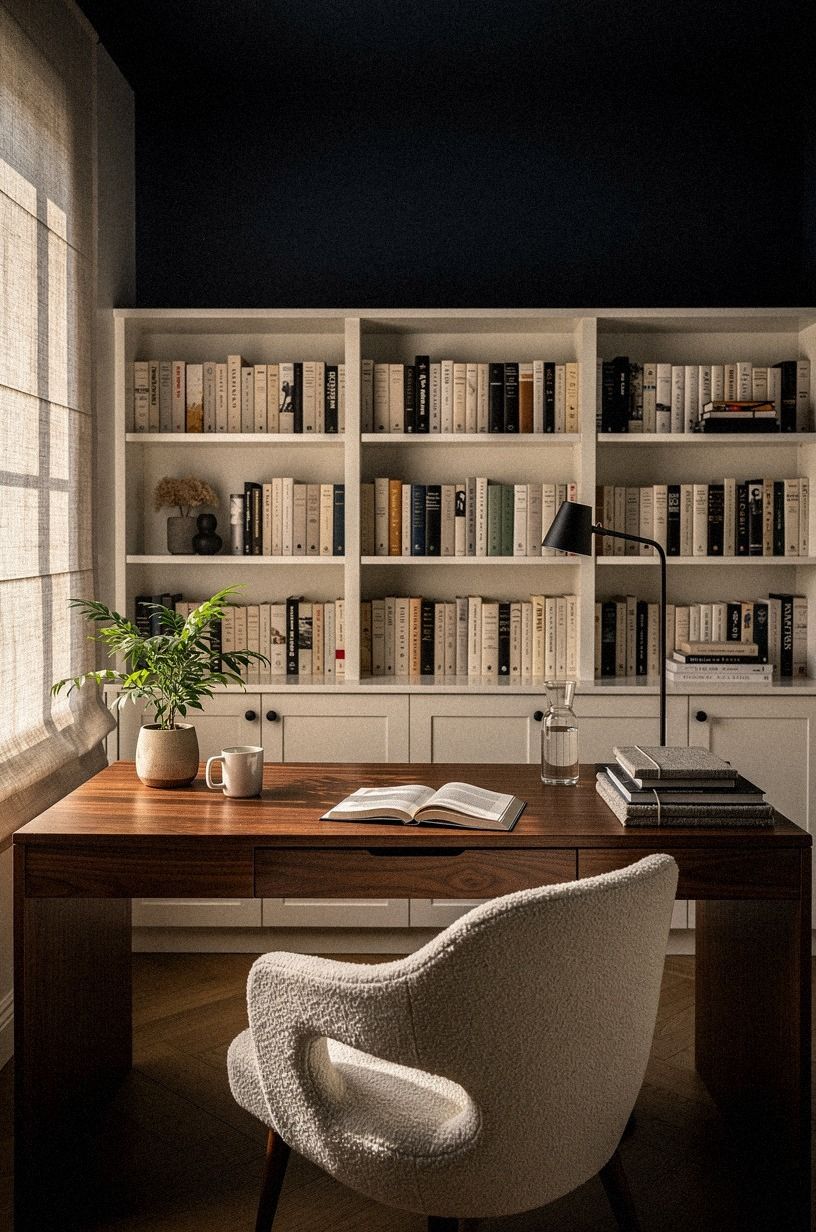
This was the boldest decision, and I’d do it again tomorrow. I painted the ceiling Benjamin Moore Cheating Heart 1617 and left the shelves lighter, which made the whole nook pull inward in a hushed, cocooning way.
A bright white ceiling keeps bouncing your eye up, but a deep ceiling settles it. A deep ceiling settles it.
That’s why the desk felt calmer as soon as the paint dried. I wouldn’t go flat black here because black can turn severe in a tiny office.
A moody blue-black feels deeper, gentler, and much more forgiving in evening light.
If you’re still deciding whether your walls need contrast too, the color framing in these accent wall ideas helps you judge how much drama your room can carry through color framing. The ceiling doesn’t need to look trendy. It needs to help you concentrate.
5Build a window seat under office shelves
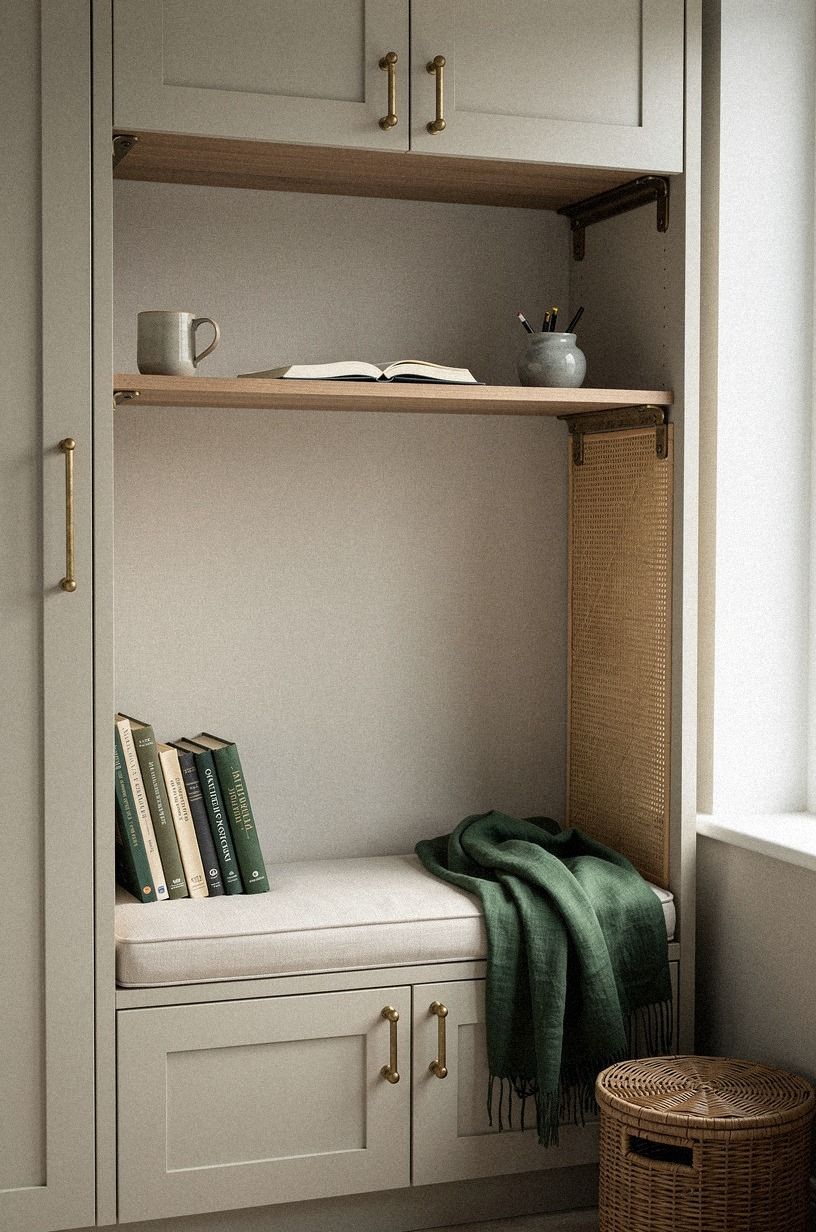
If you have a window, use it twice. A low bench with a Belgian flax linen cushion gives you a reading perch by day and a visual breathing space between all the practical office pieces.
I kept the bench deliberately low so the low bench line let the shelves still feel airy instead of stacked from floor to ceiling. That matters.
Once the whole wall turns into cabinetry, the nook starts reading heavy. A lower seat, one linen cushion, and one lean sconce keep the whole setup snug, soft, and not cramped.
For proportion help, I like the low-profile seating logic in this reading nook ideas guide, especially seat height. You want a seat that welcomes you in, not a platform that bullies the room.
6Hide charging drawers inside the reading bench
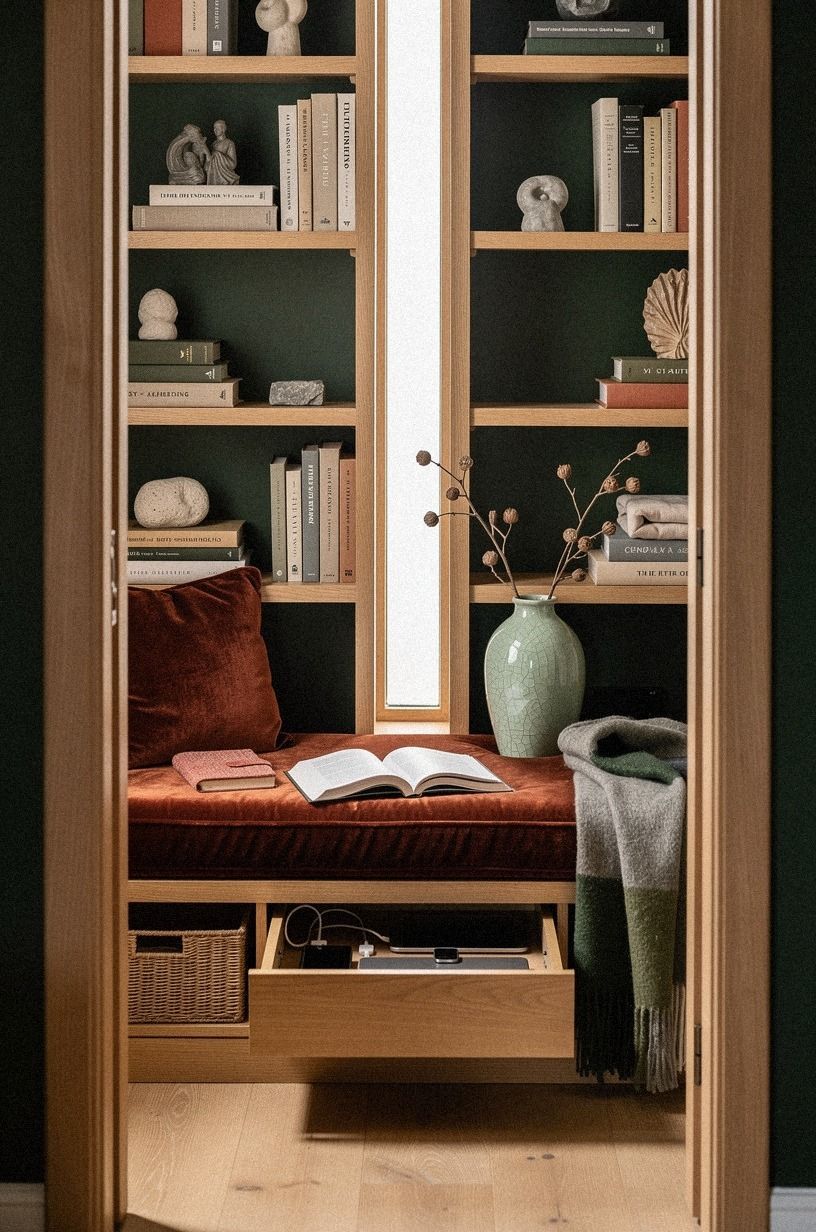
Cords ruin the mood faster than almost anything else. I hid mine inside shallow bench drawers, and the whole palette finally had room to breathe around mohair velvet seat pads and natural oak.
The best part is what disappears. No power strip, no cable bundle, no blinking adapter tucked beside your book pile.
Just one clean seat with the tech doing its job underneath. That visual silence is worth more than people expect in a room this small.
The same conceal-first instinct shows up in this small space storage ideas guide, and concealed storage pays off here too. If the nook looks restful and cozy at first glance, you’ll use it more.
7Add a curtain track behind the file wall
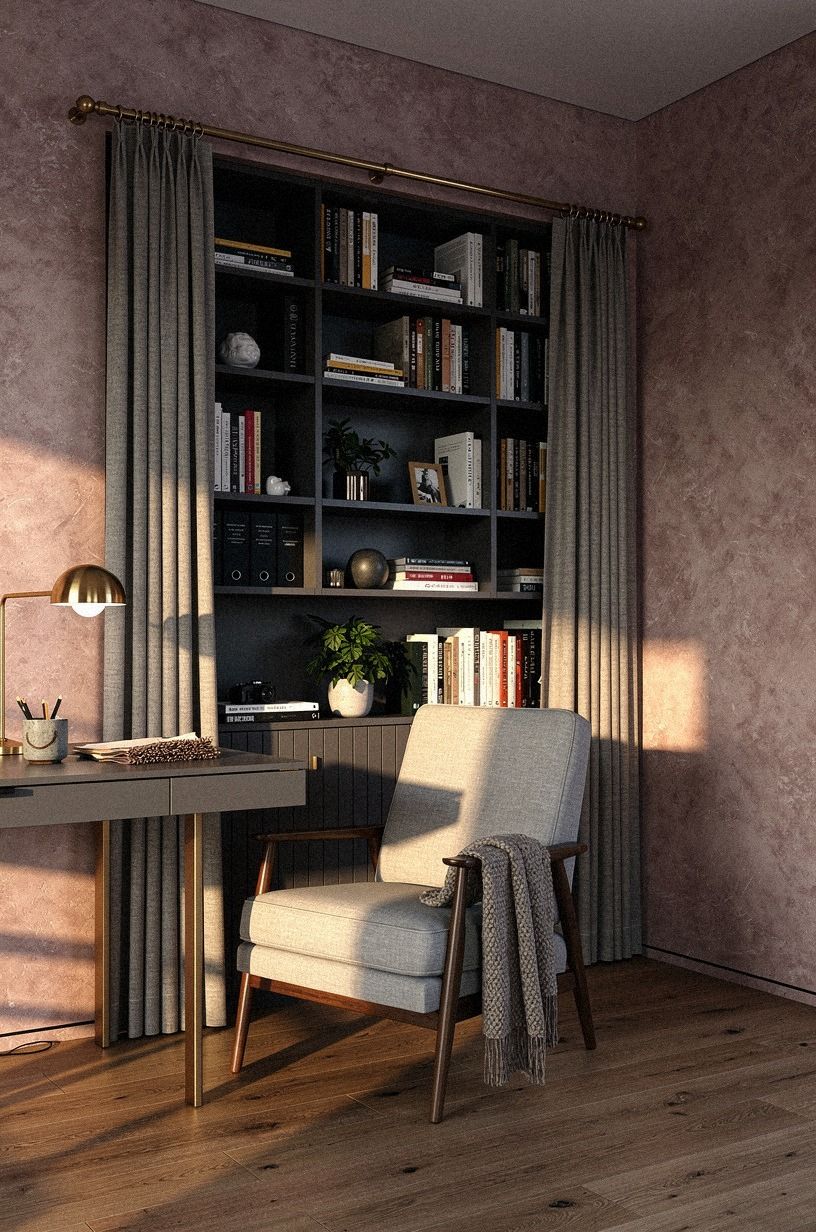
A curtain track sounded almost too soft for an office, but it fixed what cabinetry couldn’t on its own. One lined oat linen panel behind the file wall made the reading side feel quieter, dimmer, and much more serene.
Hard surfaces are helpful until the hard surfaces are the only thing you have. Then the room starts sounding stiff and looking clinical instead of warm.
Fabric changes that fast. The panel doesn’t need a pattern or a dramatic color.
It just needs enough weight to fall cleanly and enough texture to soften the shelf wall.
If you like the idea of architecture without a full renovation, the hanging and puddling advice in this outdoor curtain ideas guide oddly works indoors too, especially the panel drop. One panel can do more for mood than three more baskets ever will.
8Face the desk toward the hidden opening
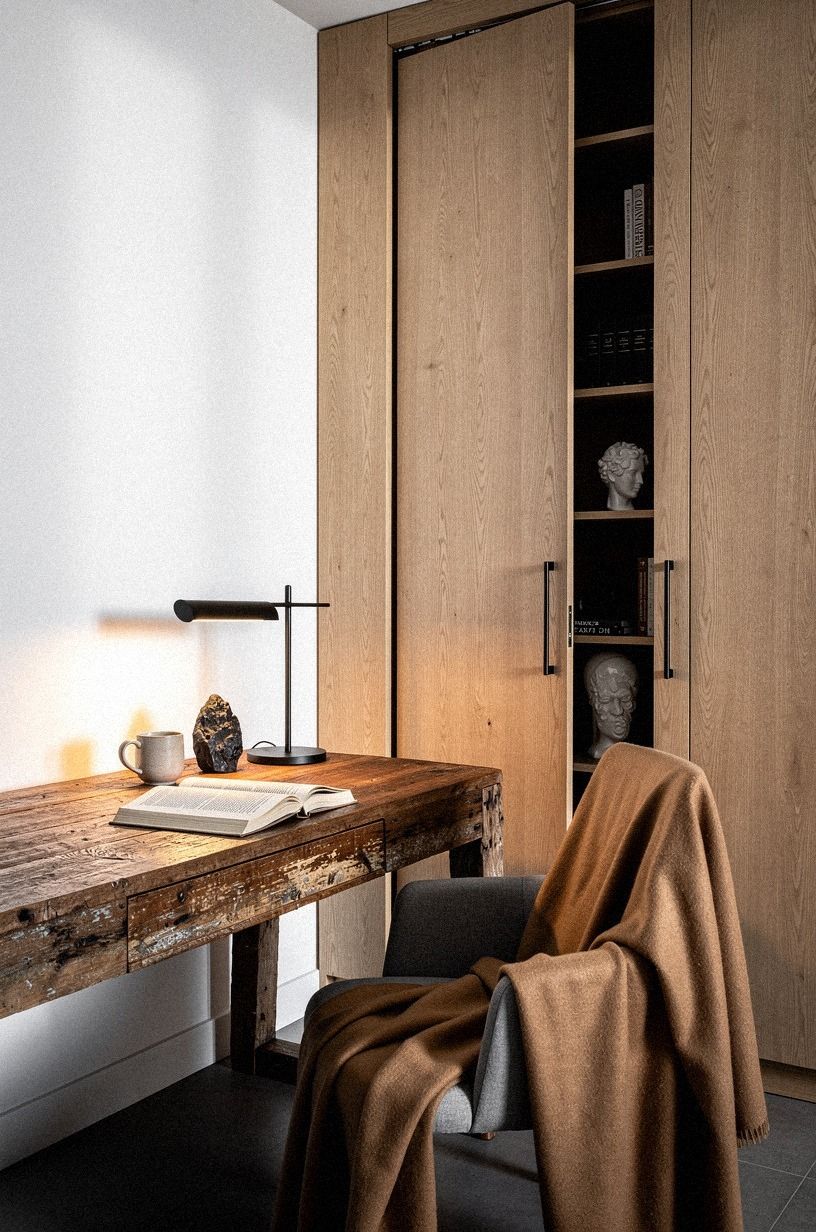
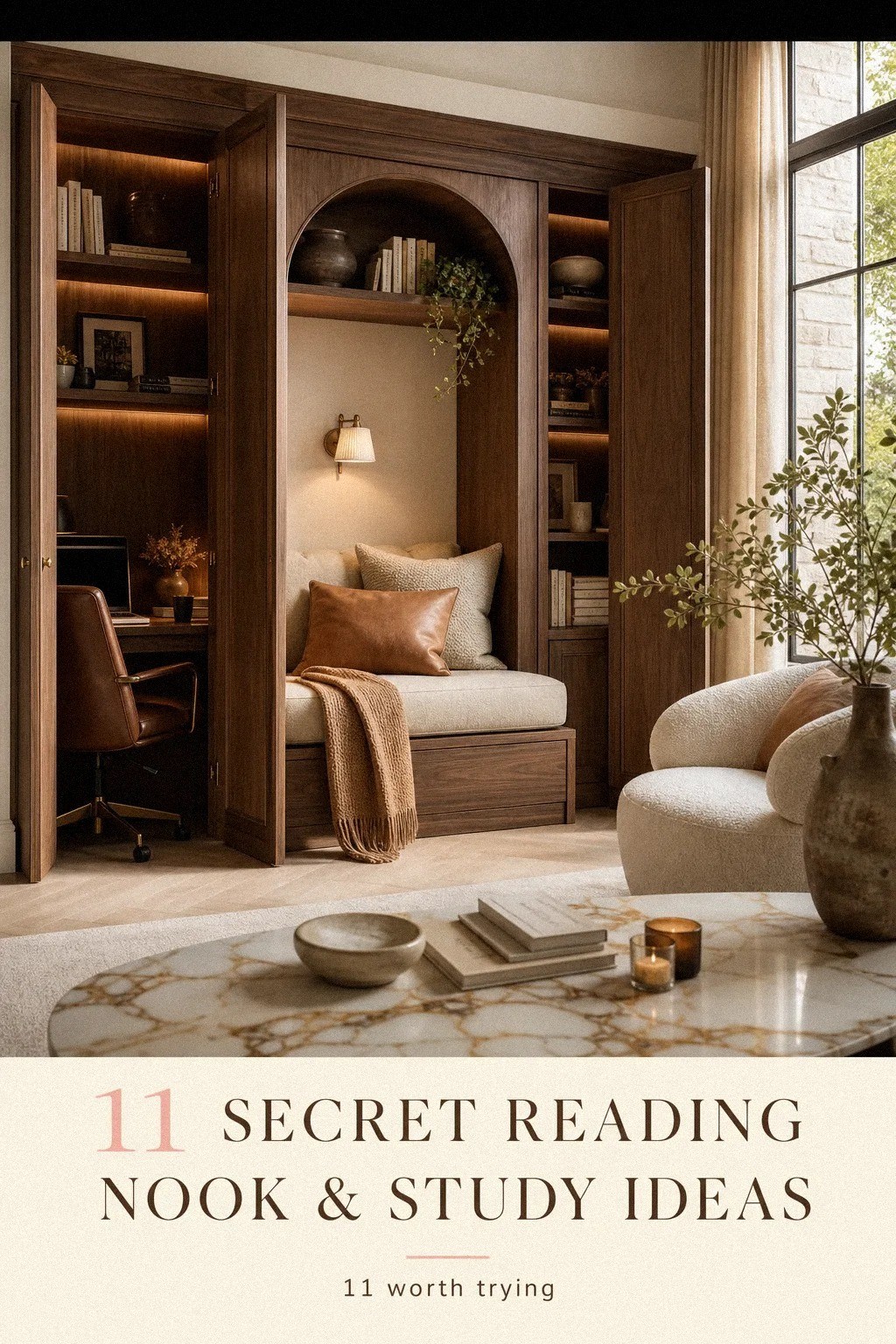
I tried the desk facing a wall. It felt trapped. Turning it toward the concealed opening, with a weathered teak desktop catching the side light, made the nook feel protected without feeling sealed shut.
When you enter through a hidden opening, the sightline wants a destination right away. Facing the desk toward that threshold gives the room a natural line of sight, which makes the whole layout easier to understand in one second. It feels calmer because the geometry is calmer.
The sightline lesson overlaps with this gallery wall layout guide, even though the focal-point logic is different. You still want your eye to land on one clear focal move first.
9Layer a wool runner into the hideout
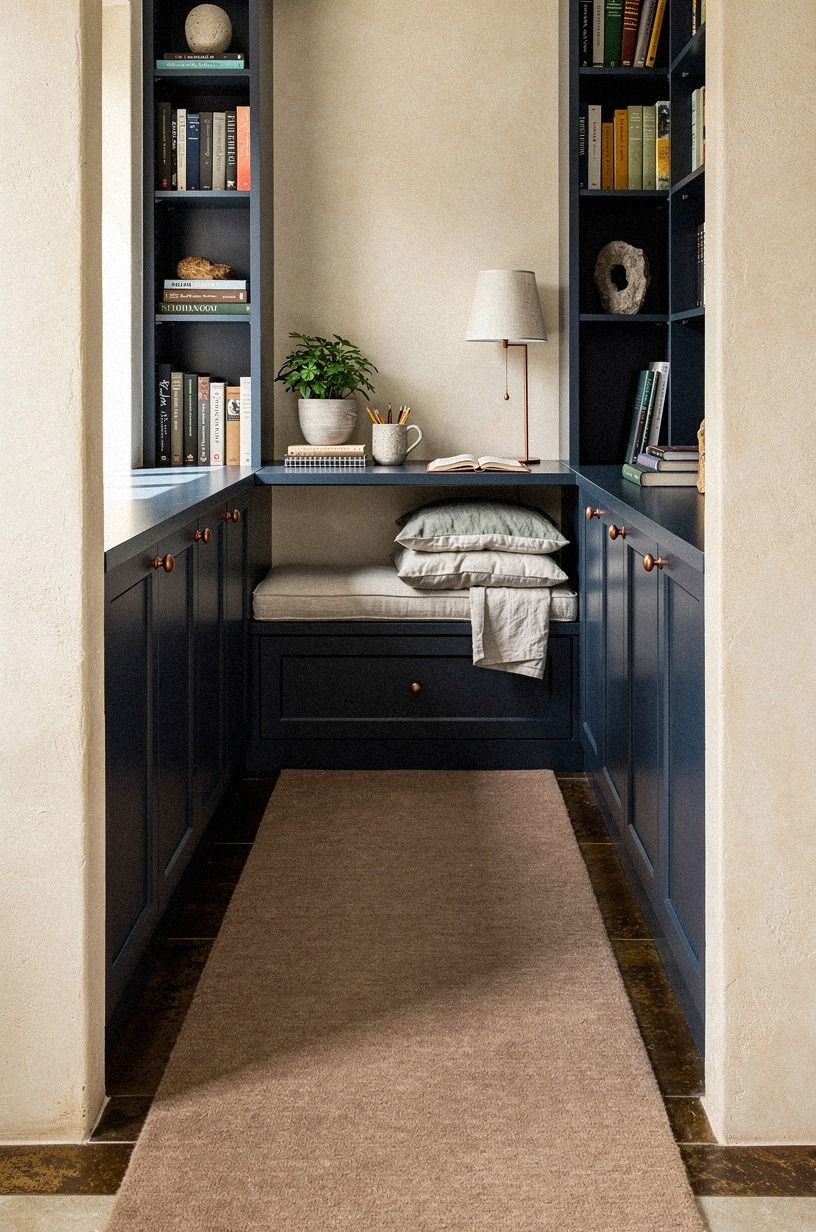
The floor should lead you in. A faded hand-knotted wool runner did that instantly by creating a path toward the desk and reading bench instead of leaving the nook floating on bare floor.
I wouldn’t buy the palest rug in the store for this. You need something with a little depth, a little pattern wash, and enough visual weight to handle a chair leg without looking precious. Mine has a worn border and a denser pile, which keeps the room feeling handsome rather than flimsy.
If you’re sizing the path in a tight room, the math in this small patio layout ideas guide is surprisingly helpful for circulation and clear walking space. The principle is the same indoors: give your feet an obvious route and the room feels bigger.
10Mount picture lights over the narrow shelves
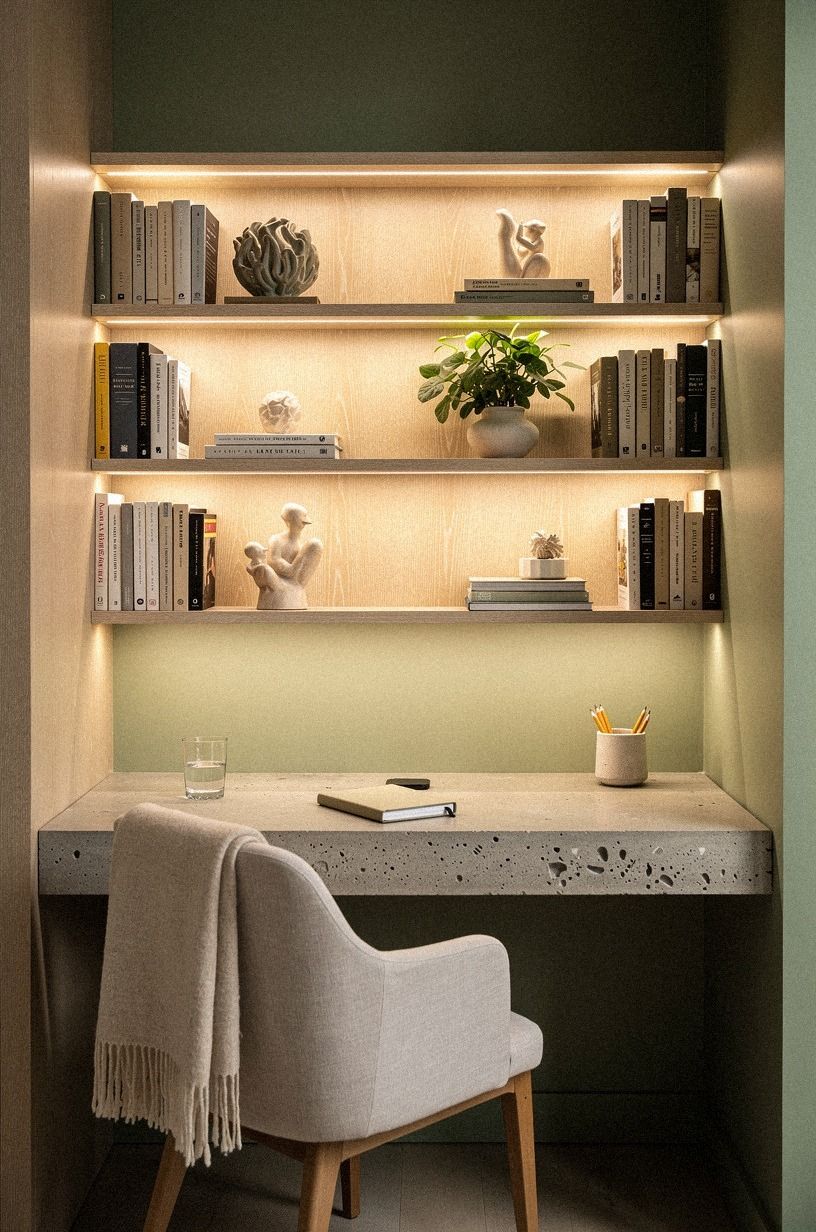
Shelf lighting is where a lot of small nooks go wrong. I mounted slim brass picture lights over the narrow shelves so the books and grain got a mellow wash instead of one flat pool from a desk lamp.
That changed the night mood of the room. The shelves stopped looking like storage and started looking chosen.
And because the beam hits the vertical plane, the nook feels taller without any extra furniture at all. Go smaller than you think, though.
Oversized fixtures start bossing the room around.
If you want the same layered glow across the rest of the room, this pendant lighting guide helps you keep fixture scale from getting clumsy with fixture scale doing the heavy lifting. Quiet lighting nearly always wins in a hideaway.
11Leave one brass knob as the only clue
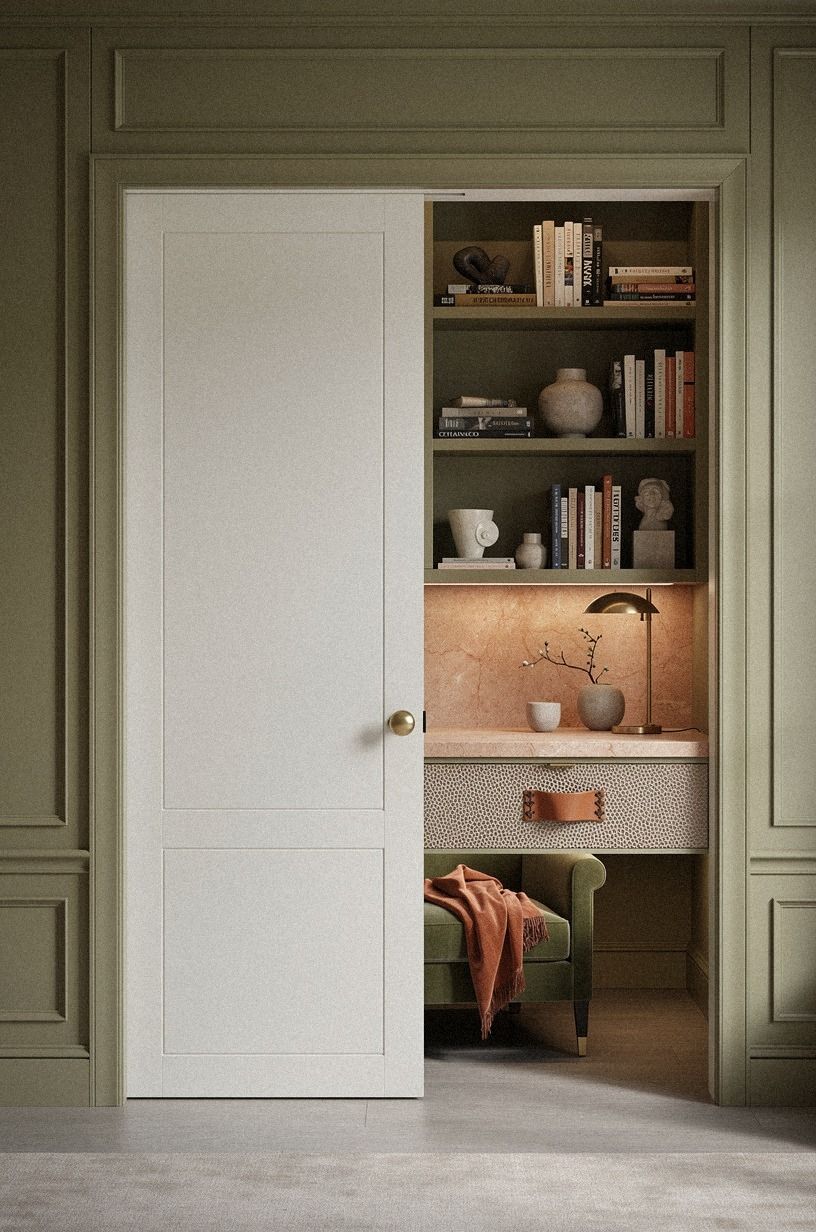
This was my favorite finishing touch because it trusted the room to whisper. I left one unlacquered brass knob visible on the otherwise seamless wall, and that tiny signal made the nook feel clever without turning gimmicky.
You don’t need a theatrical reveal for a hidden room to feel special. In fact, the less you explain, the better this kind of space reads. One visible knob, one line in the paneling, and one low pool of light beyond the opening are plenty.
For other small moves that make a room feel intentional rather than overdesigned, I like the restraint in this coffee table styling guide, especially edited styling. Tiny cues often feel more luxurious than obvious ones.
12Use IKEA KALLAX as the decoy base layer
If custom cabinetry isn’t happening yet, start with IKEA KALLAX birch-effect units as the lower shell and trim them out until they read built-in from the doorway. This is one of those practical shortcuts that looks far more expensive than it is.
The move is to use them low, keep the doors plain, and wrap the face with matching side trim so the trim wrap stops the boxes announcing themselves. Then top the whole run with a thicker oak cap. Once the sightline cleans up, the room feels more tailored and a lot less temporary.
Budget-friendly built-ins always benefit from the editing mindset in this home refresh checklist, and edited millwork always reads richer. Make the shell look calm first, then let the accessories arrive slowly.
13Mix matte plaster against polished brass
Contrast matters here, but controlled contrast. A chalky wall finish next to polished brass sconces gives you one matte surface and one crisp surface, which keeps the nook from falling flat and a little dull.
I like hand-applied plaster or even a dead-matte paint because it absorbs light in a velvety way. The brass then has a job to do. Without that interplay, the room can get sleepy fast, especially if the palette is all beige and oak.
You need one clean note cutting through the softness.
If you’re deciding where to put the sharper materials in a small room, the contrast examples in this mantel styling ideas guide are useful beyond fireplaces because material contrast matters everywhere. The same matte-against-shiny rule holds up beautifully in a tucked office and adds an earthy balance.
14Balance open shelves against closed drawers
All open storage looks busy. All closed storage looks a little dead. The sweet spot in a nook like this is open books above and flat-front oak drawers below so the room feels collected but never cluttered.
I learned that after living with visible office supplies for too long. Papers, chargers, sticky notes, and pens may be useful, but they’re not what you want staring at you when you’re trying to read for twenty minutes before bed. Closed lower storage keeps the practical stuff quiet while the upper shelves stay handsome.
This is the same visual split that makes the rooms in this reading corner ideas guide feel restful instead of overfilled thanks to the upper-lower split. Let the eye see books and light first, not admin.
15Set clay against ink-blue paint
Once I had the millwork sorted, the prettiest pairing in the room was simple: clay objects against Farrow & Ball Hague Blue No.30 in the back of the shelves. That color contrast made every book spine and brass detail feel more deliberate, moody, and inviting.
This is where tiny offices either get too sweet or too stern. Clay keeps the deep blue from feeling cold. The blue keeps the clay from looking dusty.
Together they create that moody, welcoming tension you want in a room meant for quiet focus.
If you’re building a whole palette instead of one shelf wall, the paint logic in this calming bedroom paint colors guide is worth borrowing through palette control. A tucked-away room can be dark and still feel gentle.
16What makes a hideaway stay calm on Tuesday night?
Honestly, it’s not the reveal. It’s the repeatability.
A nook stays useful when the chair feels good, the lamp turns on without fuss, and the room doesn’t ask you to restyle it every time you use it. That’s why I kept reaching for CB2 Primitivo bouclé energy here: one seat, one tactile texture, one inviting silhouette with a soft edge.
The magical version online often isn’t the usable version you reach for on a random weeknight when you’re tired and slightly cranky. The usable version is better. Keep the path clear, keep the light low, keep the hidden storage honest, and the room keeps earning its square footage.
If you want another example of a room winning by restraint instead of drama, the pacing in this living room layout guide makes the same point through quiet pacing. A hideaway should feel easy long after the first photo is taken.
How much it cost
I didn’t build this with one giant check. I layered the upgrades, and that’s why the room stayed manageable. Paint and lighting came first, then the better seat, then the trim work that made the nook feel custom instead of makeshift.
The one splurge that mattered most was solid oak millwork where my eye landed every day.
If your budget is tight, spend on the things your body notices first: the chair, the light, and the surface height. A gorgeous room with a bad sit still feels wrong. A modest room with Sherwin-Williams Evergreen Fog SW 9130 on the side wall and a good lamp can already feel special.
Why the hideaway worked better than my first office setup
My first attempt was too exposed and too eager to prove it was a workspace. I had a bigger desk, more visible shelving, and nowhere for the eye to rest.
The whole thing looked productive and felt exhausting. Once I admitted that privacy mattered more than sheer storage, the room started getting better on every pass. The guiding idea became The Threshold Effect: the second you cross into the nook, your nervous system should understand that you’re entering a different pace.
That changed the order of decisions. I stopped shopping for organizers and started shaping the envelope first.
Darker paint above eye level, oak below it, one clear seat for reading, one honest work surface for email. That’s it.
I also quit asking the room to multitask in every inch. Some square footage had one job only, to stay visually calm. The result wasn’t bigger.
It was quieter, and quieter was what the room had been begging for all along.
The most useful principle ended up being what I think of as The Two-Surface Rule. One surface is for work, and it can hold the monitor, charger, notebook, and whatever else the day requires.
The other surface is for retreat, even if retreat only means a bench and a lamp with enough room for a book and a tea mug. When one piece tries to do both jobs, the room feels compromised. When each surface keeps its lane, the nook starts feeling surprisingly luxurious, even if the materials are modest.
And here’s the part nobody tells you until you’ve lived with one. The room has to work on an ordinary Tuesday night, not just in the afternoon light of a styled photo.
If the door sticks, if the lamp glares, if the chair asks too much of your back, you’ll stop using the nook no matter how pretty it is. Mine became useful only when the mechanics turned simple.
A West Elm Andes chair would be gorgeous here, sure, but the real luxury is the frictionless rhythm: sit down, pull the book, switch on the sconce, disappear for half an hour.
The Questions I Get Asked Most
What is the best layout for a small office nook?
The best version in a small office is a compact hidden desk plus one comfortable chair. A tucked desk wall saves visual space and gives you privacy without needing a separate room. If you can add side lighting and one bench, even better.
Where can I buy pieces on a budget?
I would start with Target Threshold for soft goods, IKEA for the storage shell, and Facebook Marketplace for the desk or reading chair. Secondhand wood casegoods often look richer than cheap new ones, especially once you simplify the rest.
How much does a hideaway makeover cost?
A simple version can land around $200 to $800, while a more finished build climbs once you add trim, carpentry, or a door. The best cheap upgrade is still lighting, because one shaded sconce changes the room every night you use it.
Can I create one on a budget?
Yes, and the budget version is mostly restraint. One painted shelf wall plus a secondhand desk, a runner, and plug-in sconces can get you remarkably close to the feeling of a custom nook without the custom invoice.
Is a hideaway nook worth it in a small space?
Absolutely, because a small room benefits more from enclosure than a large one does. A focused little retreat can make the entire home feel calmer, especially when the desk disappears and the reading seat stays visible.
Is this setup renter-friendly?
Yes, if you use removable layers. Plug-in library sconces , freestanding shelves, a low bench, and a curtain track can build most of the mood without permanent construction. You keep the intimacy without risking your deposit.
Where I’d Start First
If I had to pick one, I’d start with the hidden desk wall. The concealed work surface changes the room all day, not just when you’re sitting at it, and that’s why the payoff feels so immediate. Pin that move for later and let the rest of the nook build around it.