
detail pantry door ideas can work without a full kitchen remodel, and mine landed between the $300 cosmetic tier and a weekend of stubborn measuring. I needed storage, not another exposed shelf. So I made the pantry disappear behind a bookcase panel, and the kitchen finally felt calm.
Here’s what it looked like before
Before, the pantry opening was the full starter-home package: shallow white shelves, cereal boxes visible from the dining table, and a door that swung straight into the only useful walking path. I kept trying baskets, then labels, then prettier baskets. Nothing changed because you could still see the mess.
The opening sat beside Benjamin Moore White Dove OC-17 walls and a 36 in counter, which made its bright white trim look oddly yellow. I didn’t need more décor. I needed the pantry to quit announcing itself every time someone came over.
- Measure the opening before choosing a hidden door bookcase pantry
- Build the Two-Wood Rule into the bookcase panel
- Paint the surround so the door disappears
- Use a bookcase face instead of a heavy cabinet door
- Skip ornate molding and let the wall panel pantry stay quiet
- Anchor the Three-Point Shelf Rhythm
- Could a detail door that hides a pantry work in a small kitchen?
- Put the pull where your hand already goes
- Let the hardware do the quiet work
- Frame the panel with light, not a spotlight
- Choose panel-over-mirror for a kitchen entrance
- Add a back rail before you load the shelves
- Use the Pantry Pause Zone beside the opening
- Float baskets inside the pantry, not on the disguise
- Make the first shelf believable, then stop styling
- Test the reveal with someone who doesn’t know
1Measure the opening before choosing a hidden door bookcase pantry
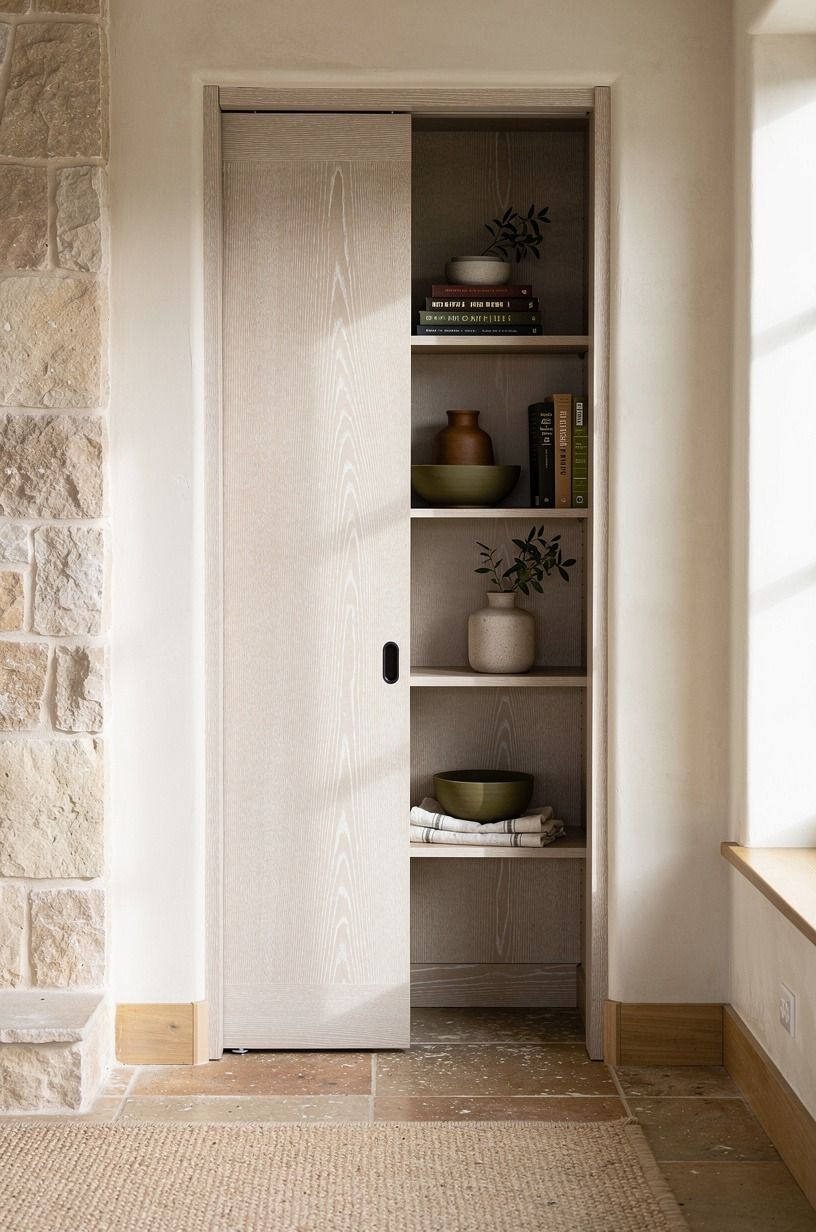
I measured the clear opening, the trim depth, and the swing space before I bought anything. You should do the same, because a bookcase that looks right online can steal the 42 to 48 in clearance your kitchen needs around an island.
My first plan was too deep. IKEA BILLY bookcases are useful, but a full-depth unit would have pushed into the walkway. I chose a slimmer cerused white oak bookcase-style face instead, leaving enough room for your hips, grocery bags, and one distracted kid passing through.
2Build the Two-Wood Rule into the bookcase panel
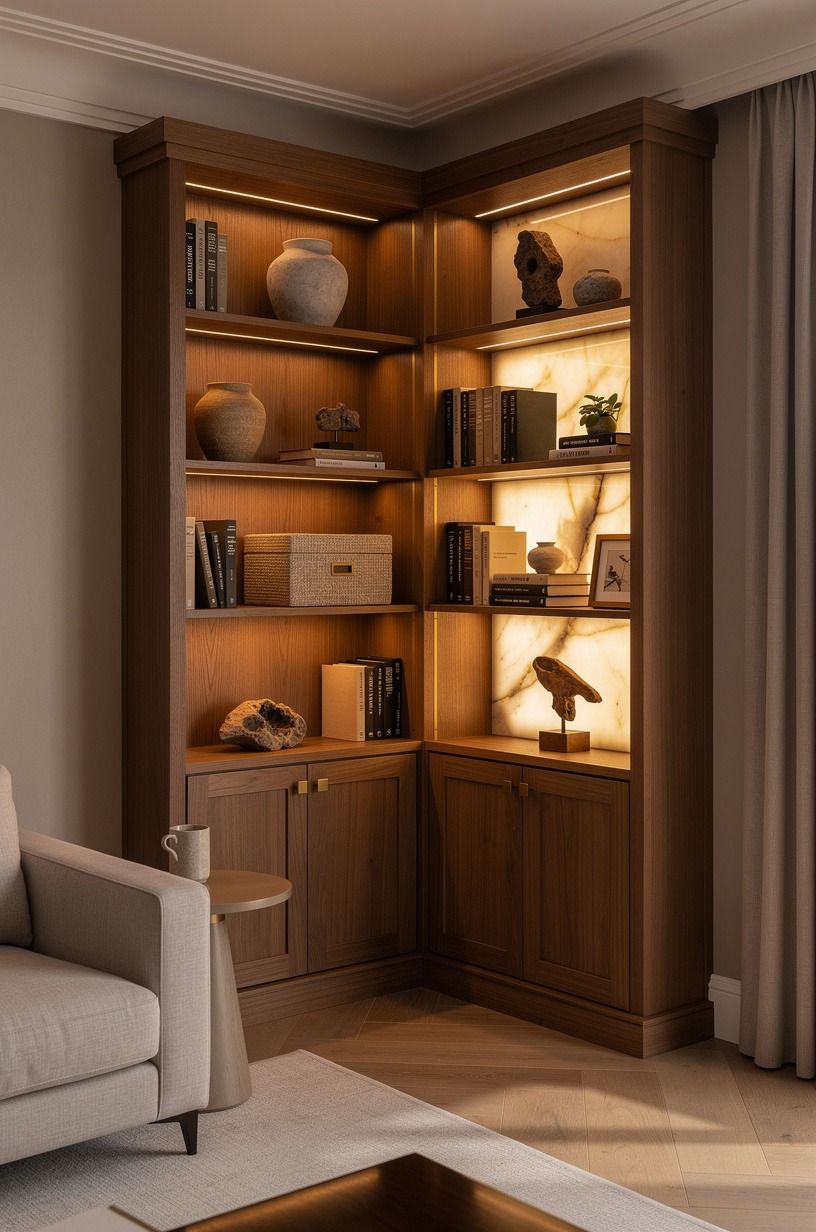
The Two-Wood Rule is simple: you give your hidden panel one wood tone, then repeat that tone once somewhere else.
I paired a clay-toned wood finish with pale linen nearby, then let an aged brass detail keep the mix from feeling flat. A backlit translucent onyx accent can add a soft glow without introducing another competing wood tone.
3Paint the surround so the door disappears
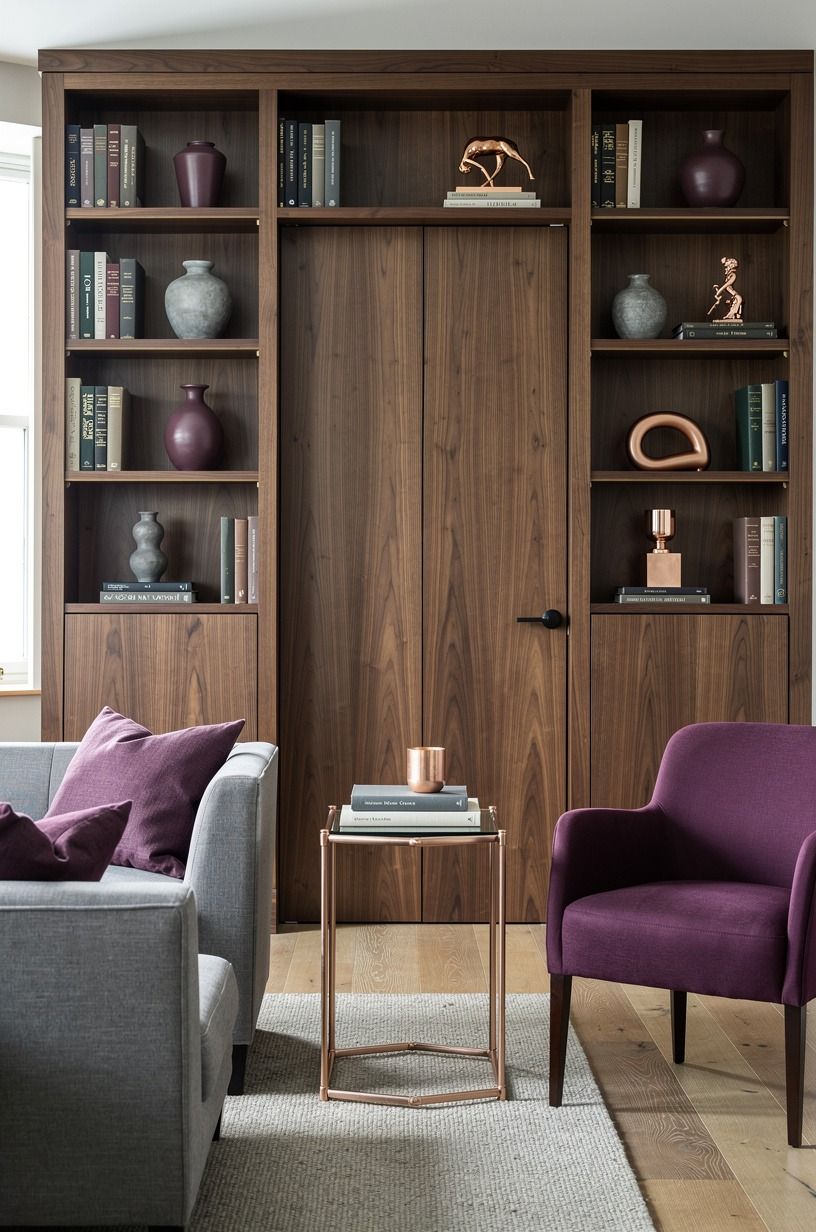
I painted the surrounding wall in a plum-grey shade, then carried it onto the narrow trim beside the opening. Your eye reads one continuous field of color before it starts looking for a door line.
But don’t paint every shelf dark if your kitchen has limited daylight. I tried that once and the interior felt like a tunnel. Keep the hidden face moody, then let your pantry interior stay bright enough to find flour at 7 a.m.!
4Use a bookcase face instead of a heavy cabinet door
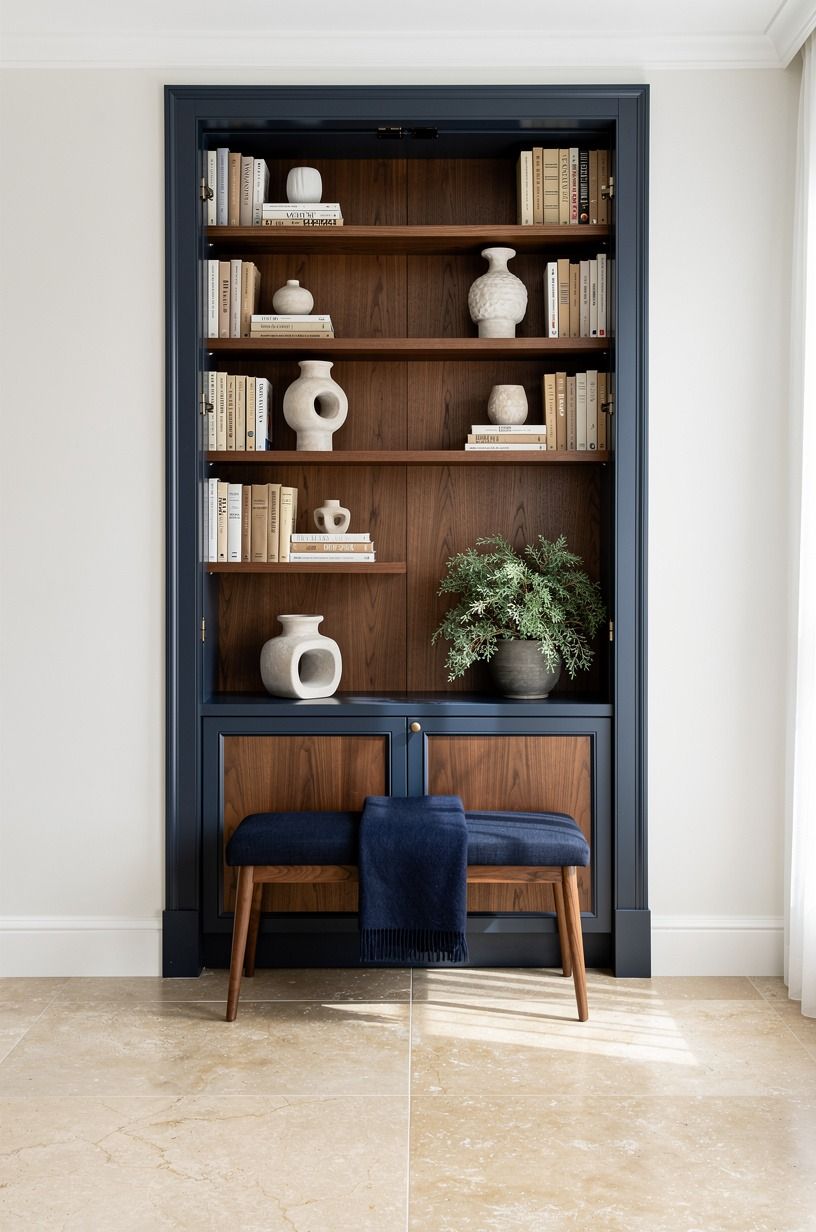
A bookcase face gave me somewhere to put cookbooks, a small bowl, and the sort of objects you already own. Navy, white, and walnut make that practical surface feel settled, especially beside a warm travertine counter or ledge.
5Skip ornate molding and let the wall panel pantry stay quiet
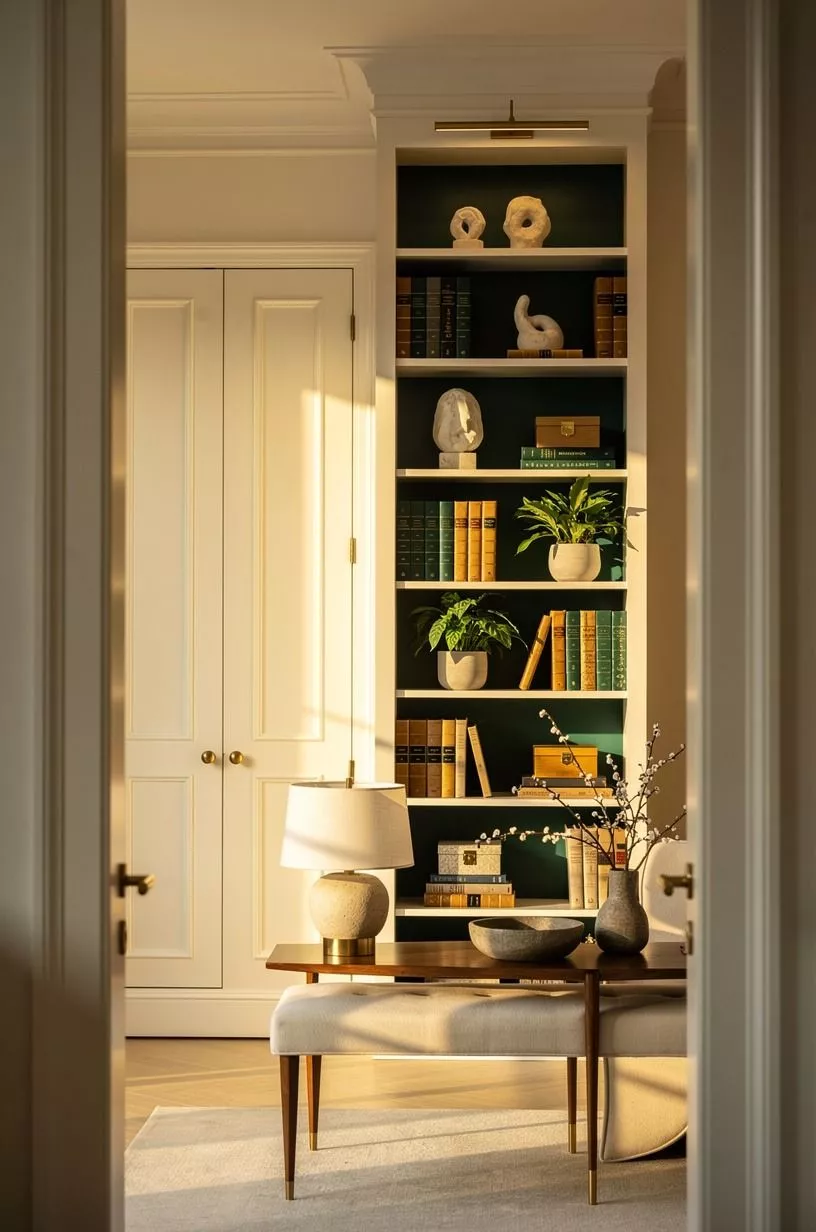
I went back and forth on trim, then skipped ornate molding. Your hidden doors in wall panel pantry setup needs a seam that disappears, not a grand entrance pretending it isn’t an entrance.
A thin poplar edge band painted to match the wall worked better than chunky crown. It’s subtle, and that’s the point.
If you add too many profiles, you create shadows that point directly to the mechanism. An unlacquered brass touch nearby can age softly without making the panel fussier.
6Anchor the Three-Point Shelf Rhythm
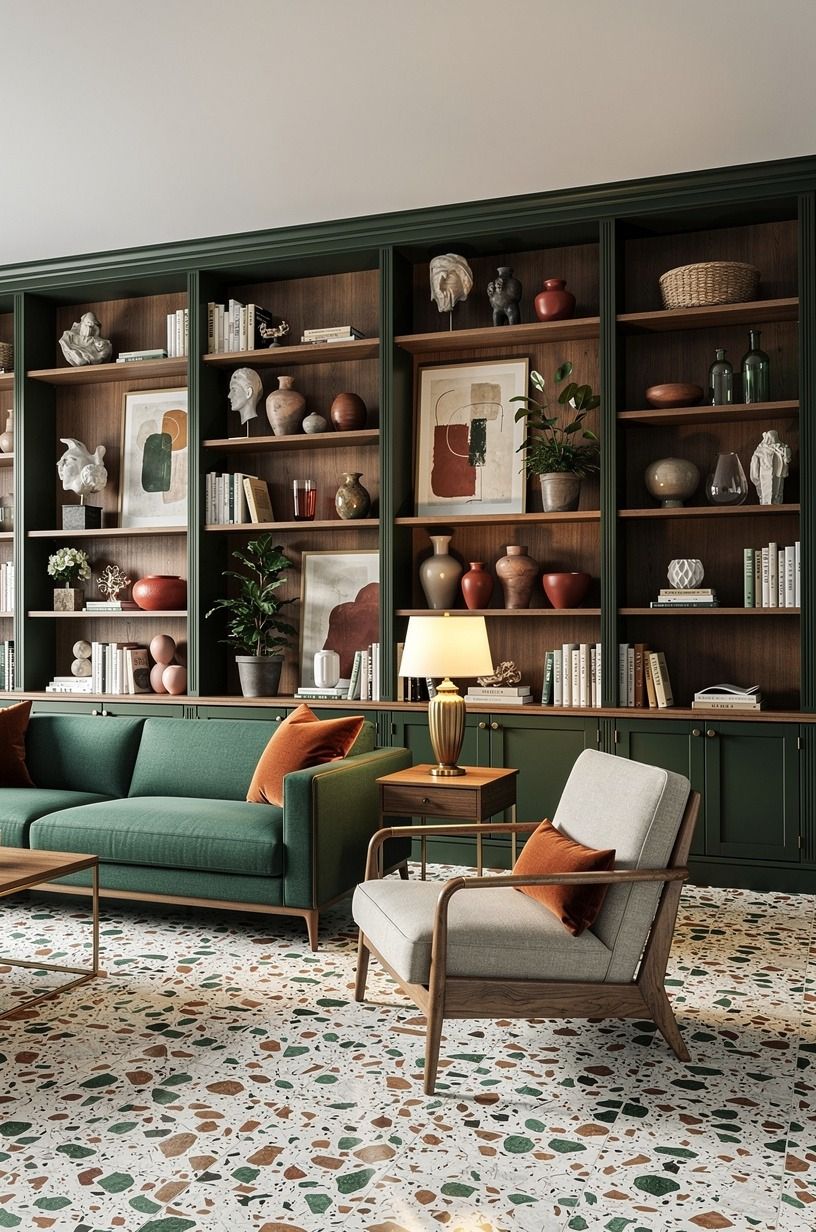
The Three-Point Shelf Rhythm gives you one vertical stack of books, one low object, and one empty patch on each visible section.
I like this against forest green and rust because the natural oak keeps it grounded. An oversized-chip terrazzo piece works as the low object when you want texture without adding another little collectible.
7Could a detail door that hides a pantry work in a small kitchen?
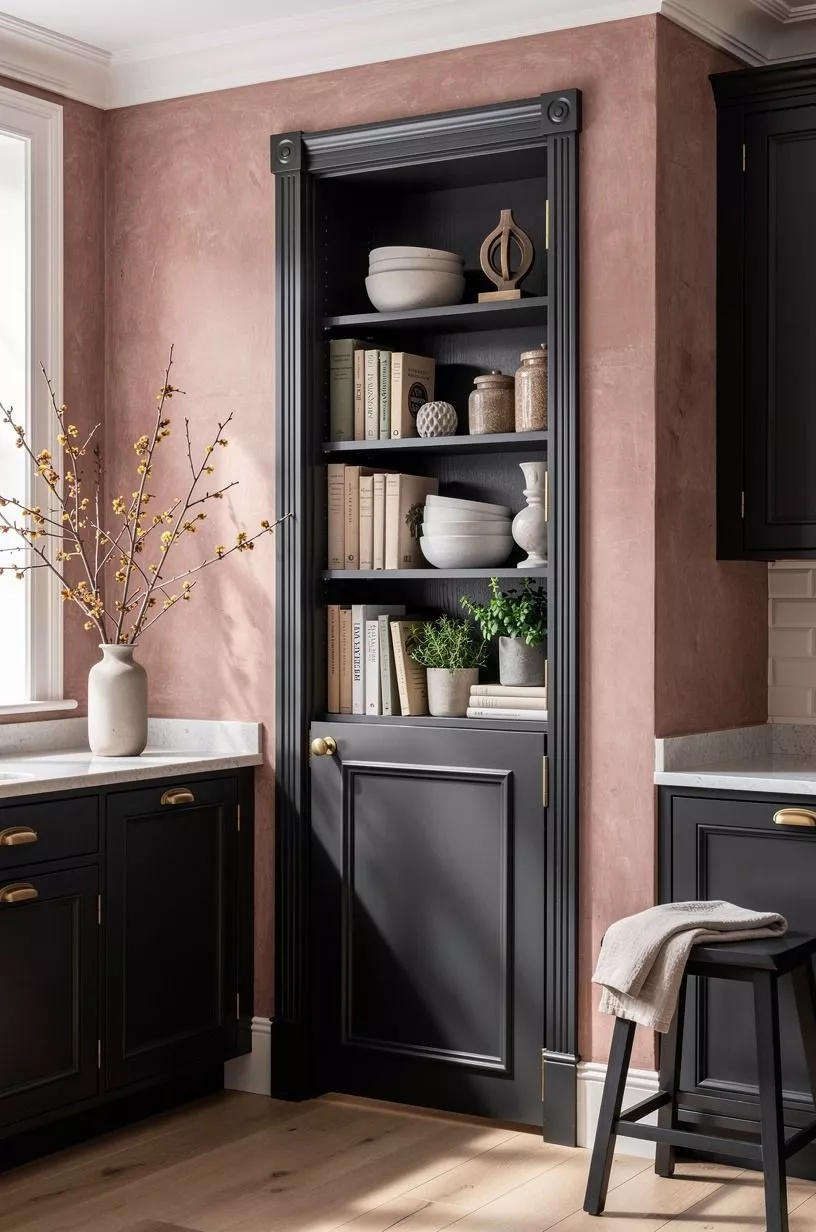
Yes, especially when your pantry door currently interrupts the room. You’re trading a swinging slab for a vertical surface that can hold useful things, and your small kitchen gets back some visual breathing room.
The catch is weight. I kept the shelves shallow and avoided stacks of cast iron.
3/4-inch solid white oak shelves look substantial, but you still need hardware rated for the loaded panel, not the empty one. Nobody wants a dramatic reveal that ends on someone’s toes.
Dusty rose, charcoal, and brass feel especially forgiving with hand-applied Venetian plaster nearby.
8Put the pull where your hand already goes
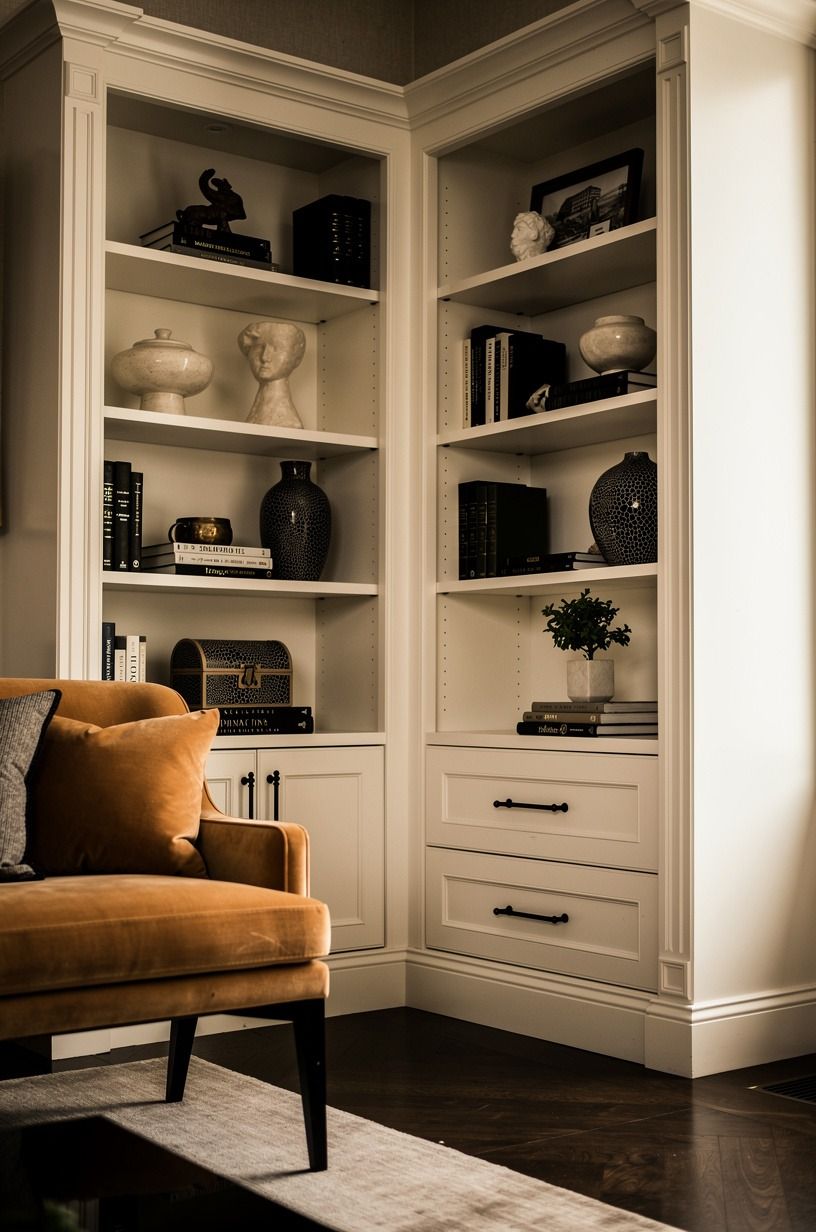
I hid my pull under the lowest shelf lip, just right of center. You should place yours where your hand naturally reaches after you set down groceries, not where a diagram says it belongs.
A tiny aged bronze finger pull was enough. I’d skip a magnetic push latch for a busy pantry, because flour dust and constant opening make a tactile pull less annoying.
And yes, I practiced opening it with a bag of potatoes in one hand. Warm white, camel, black accents, and a small shagreen detail keep the area tailored without making the pull obvious.
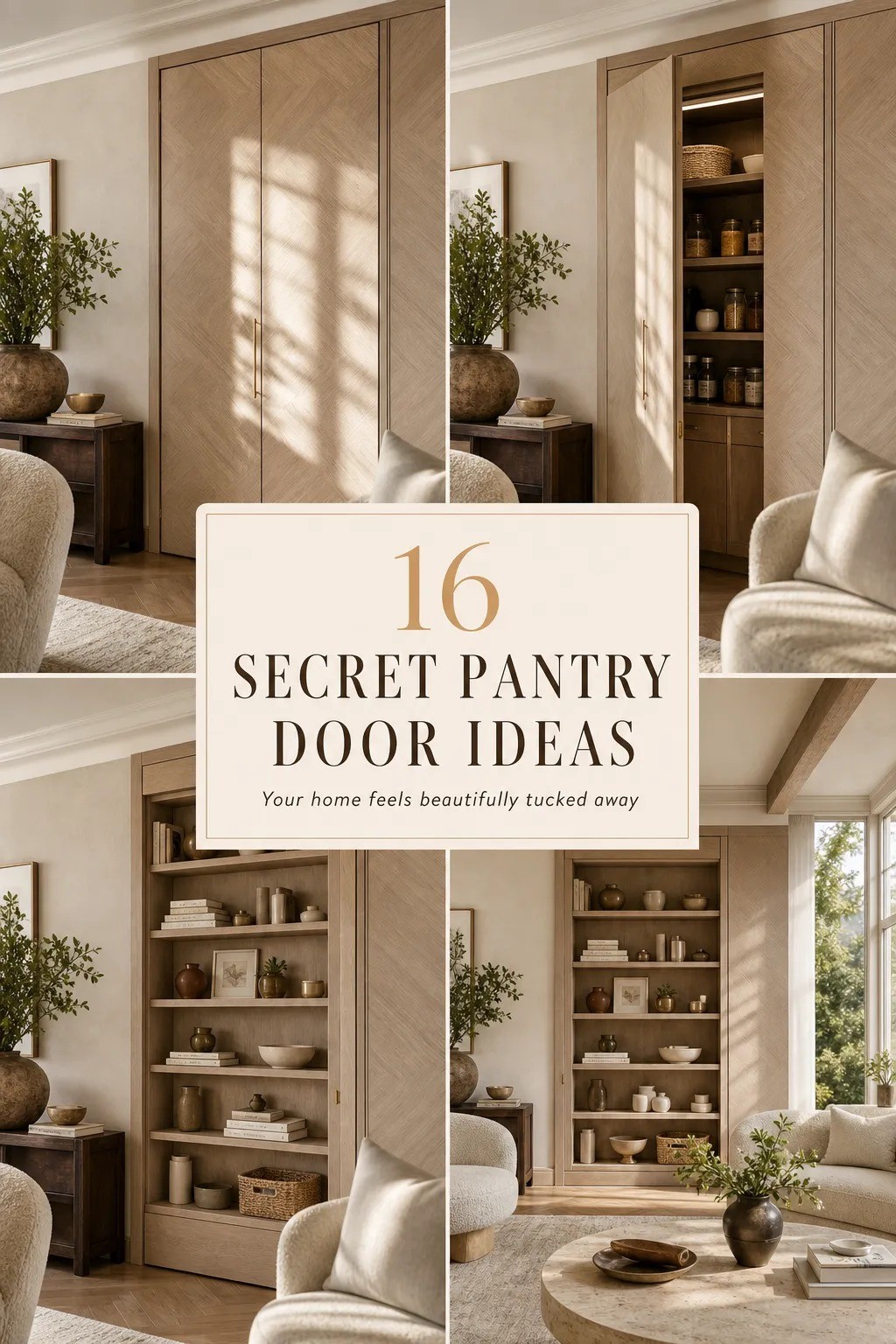
9Let the hardware do the quiet work
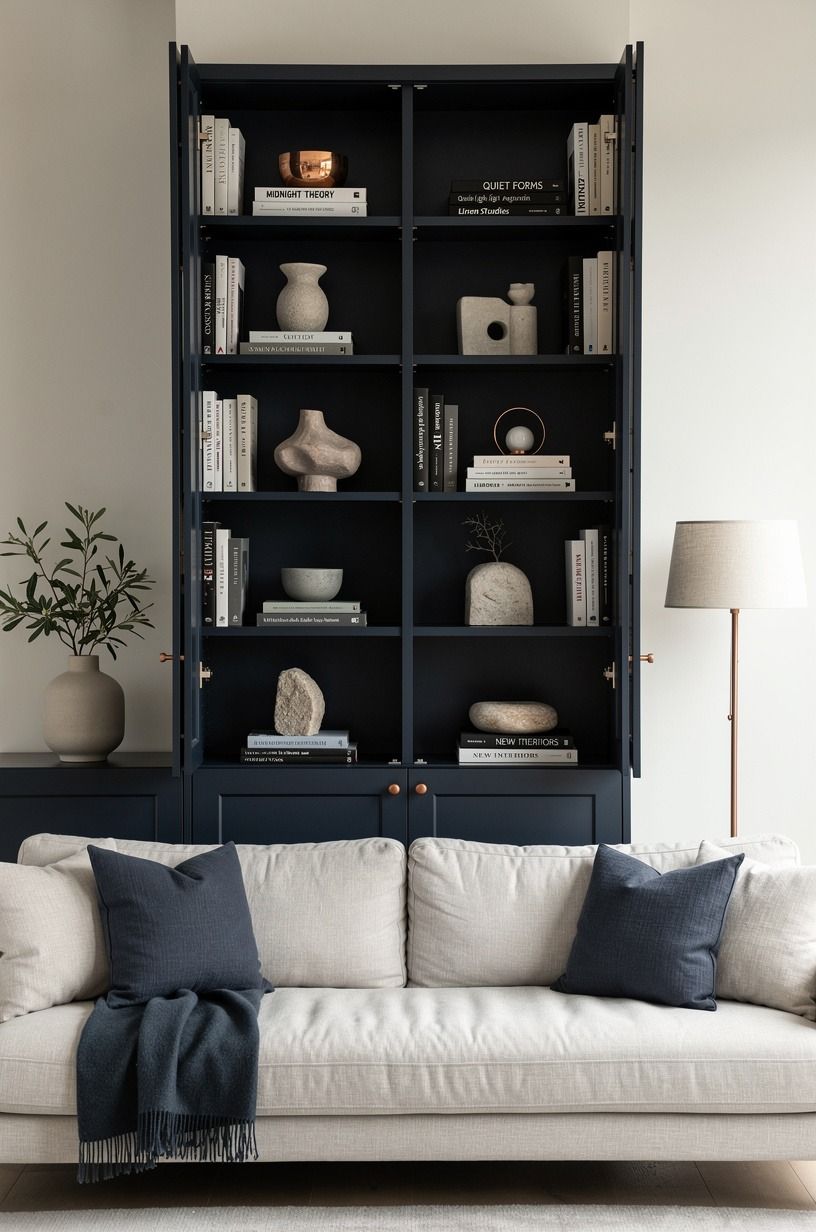
The hardware mattered more than the pretty shelf styling. Against midnight blue, copper, and ivory, washed Belgian linen softens the hard edges so the mechanism can stay almost invisible.
10Frame the panel with light, not a spotlight
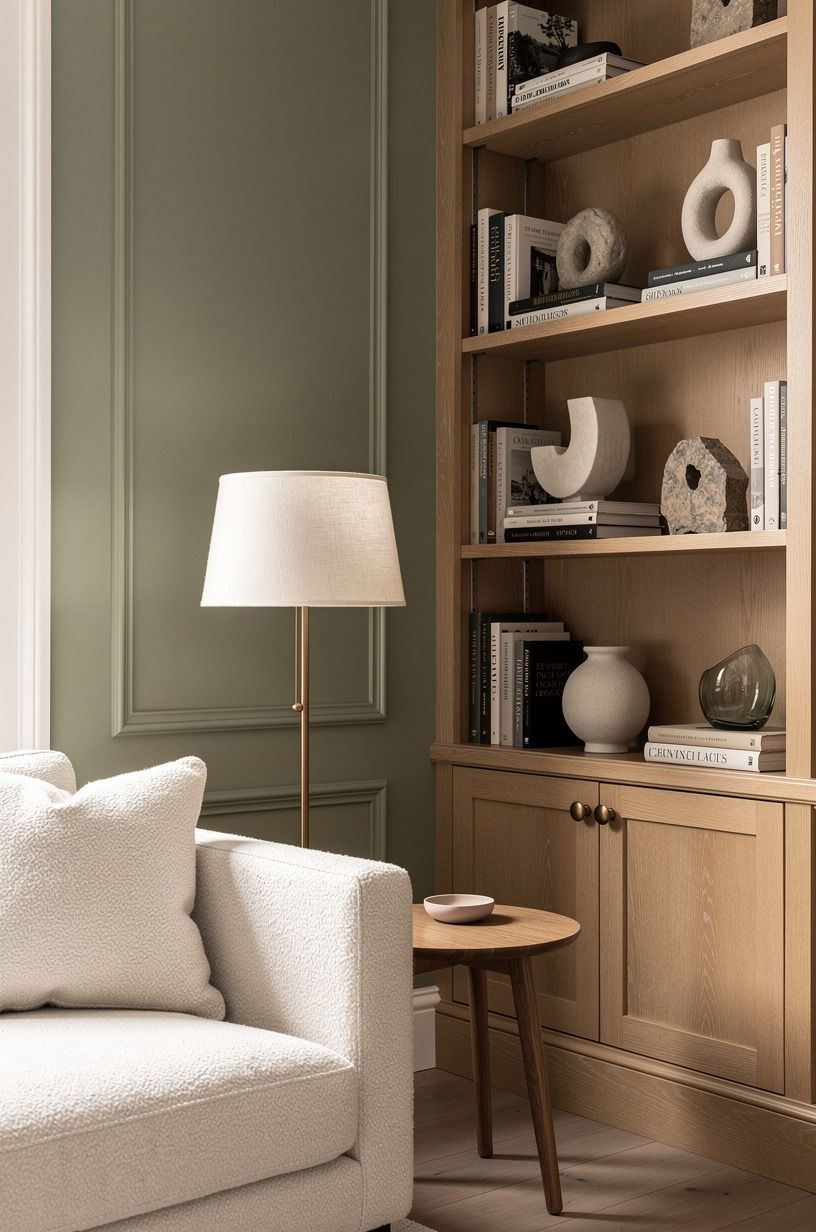
I added a warm under-shelf glow near the adjacent counter rather than aiming a spotlight at the bookcase. You want the area to feel inviting at night, not like a museum display.
A 2700K bulb made the sage green, warm cream, and natural wood feel softer beside organic bouclé. I’d avoid cool bulbs here because they turn the green paint gray and make every pantry label look clinical.
The lamp throws a pool of amber that stops at the rug’s edge. That little boundary is lovely.
See how other rooms hide their entries in these slat wall hidden door ideas.
11Choose panel-over-mirror for a kitchen entrance
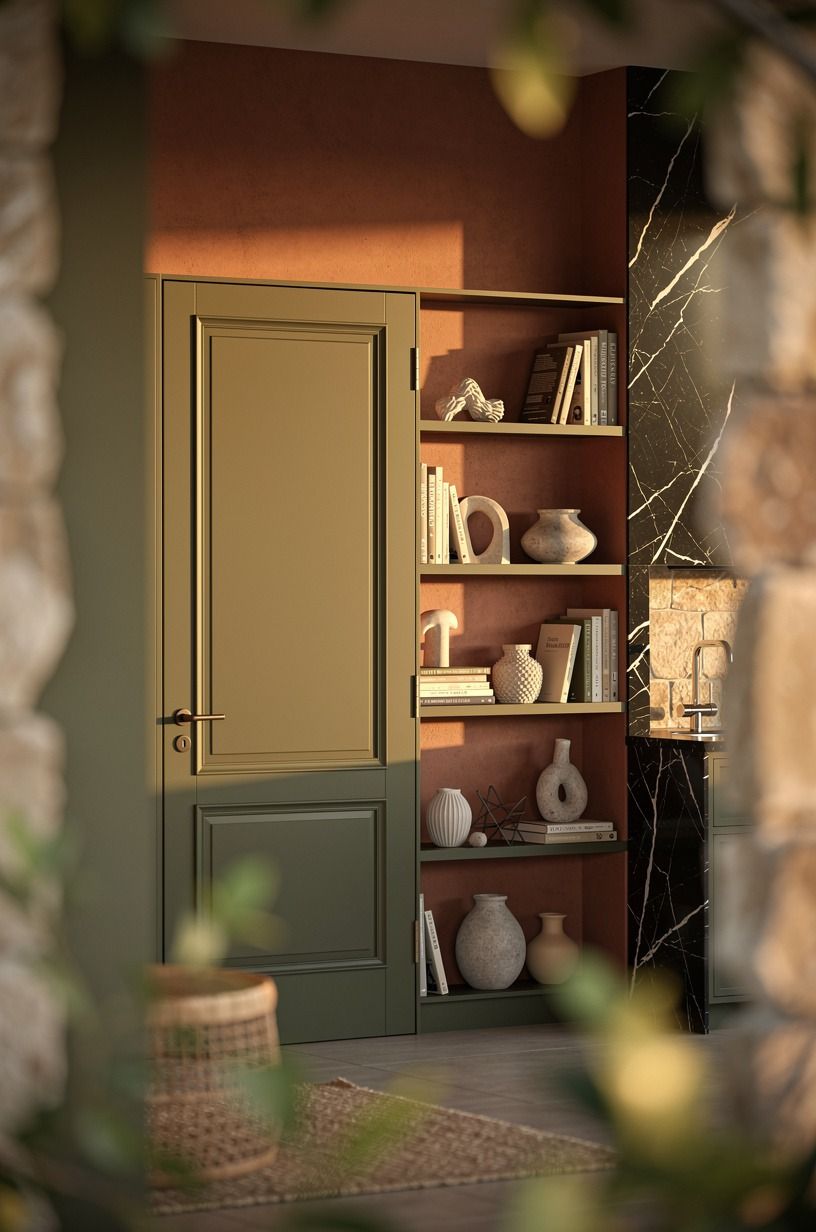
Mirror doors can make a hallway look larger, but I wouldn’t use one beside a pantry. Your kitchen already has enough glare from windows, appliances, and counters; a reflective door adds nervous energy.
A painted MDF shaker panel is the better call if you don’t want books. It can match upper cabinets that are 30 to 42 in tall, and it gives your wall a deliberate rhythm.
Terracotta, stone, olive, and Nero Marquina black marble with white veins make panel-over-mirror feel even more intentional. The losing option is mirror, because it announces itself before anyone has even touched it.
12Add a back rail before you load the shelves
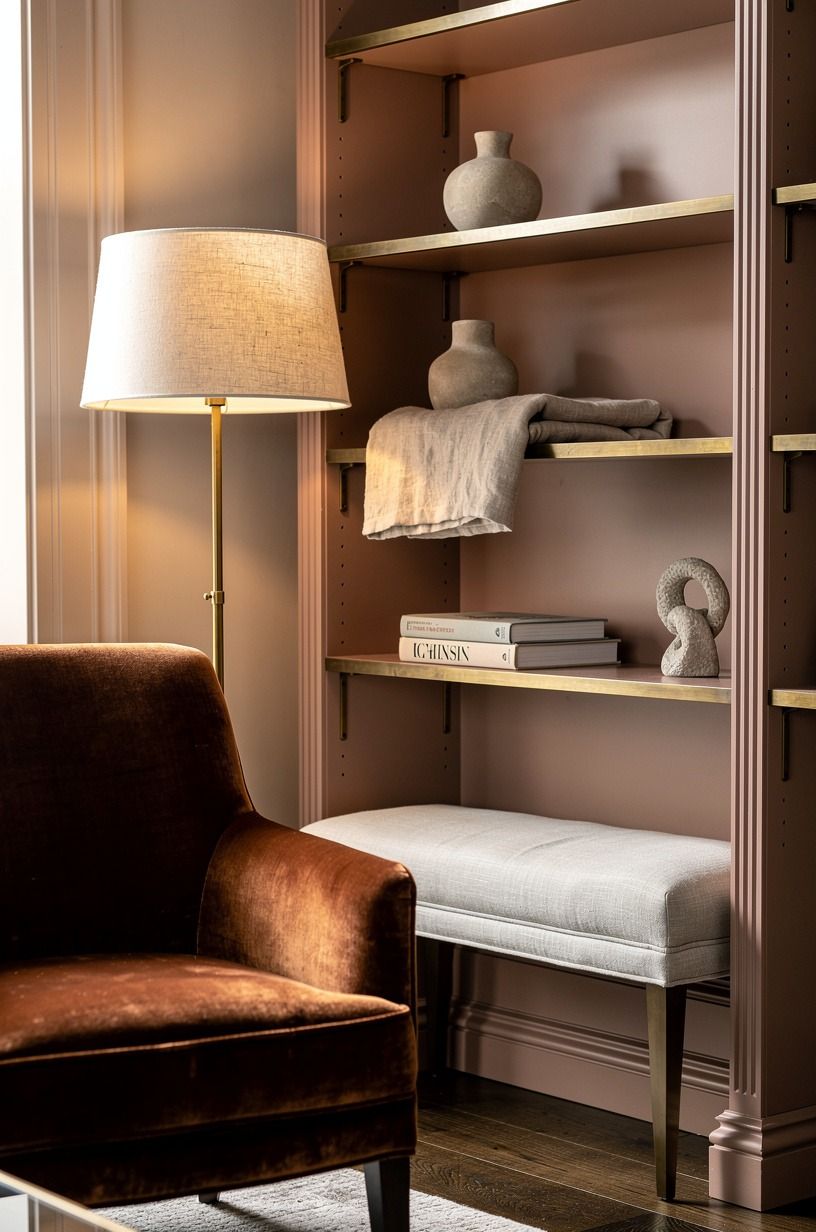
I added a hidden back rail after realizing the panel flexed when I leaned on it. You may not notice that movement with empty shelves, but your guests will when the whole surface gives a little.
A narrow steel mounting rail solved it without thickening the profile. This is one place I wouldn’t cheap out. You can save on paint, baskets, even the decorative objects, but a door needs to close the same way on Tuesday night as it did during installation.
Clay, linen, aged brass, and deep-pile mohair velvet keep the visible side warm while the structure does its job.
13Use the Pantry Pause Zone beside the opening
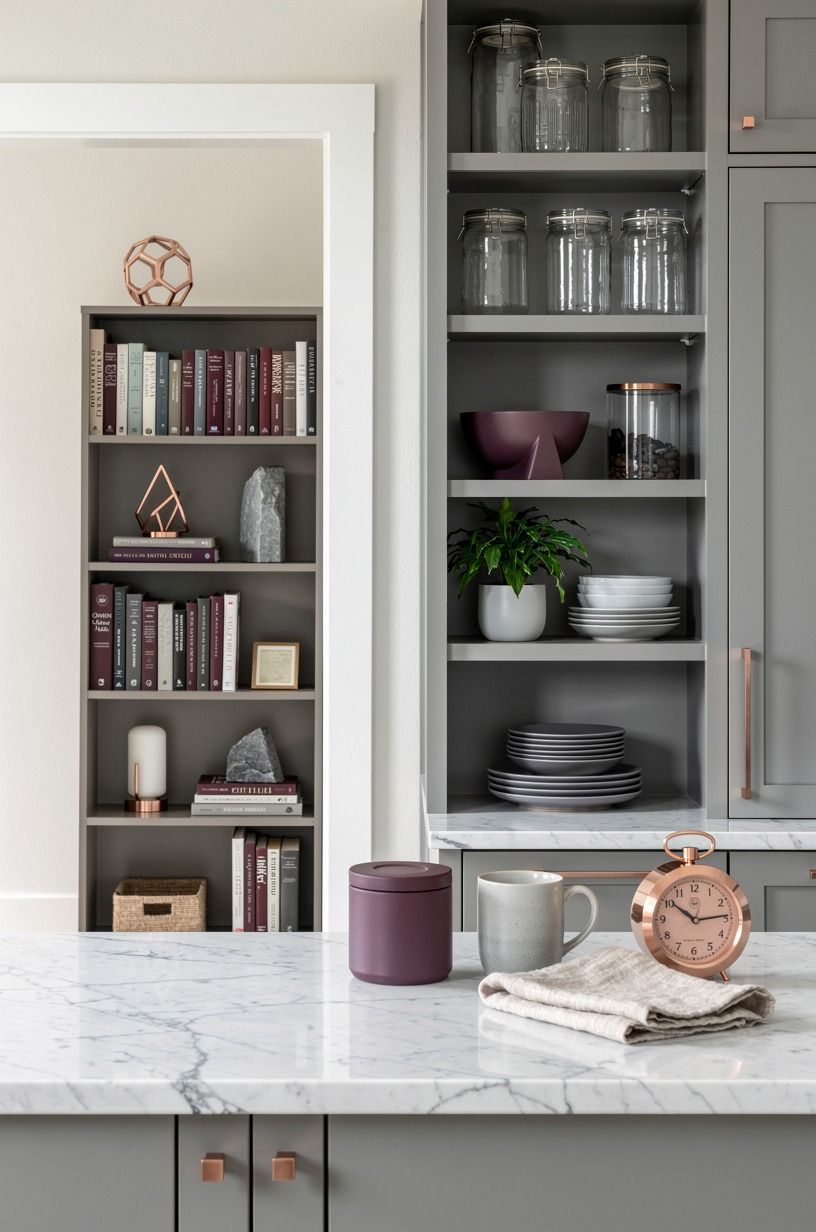
The Pantry Pause Zone is the 18 in strip beside the door where you stop setting random mail, fruit, and school papers.
I kept that strip plum and grey with a small rose-gold accent, which made it feel deliberate instead of like a dumping ground. Carrara marble with subtle grey veining can handle the everyday objects that still need a landing place.
14Float baskets inside the pantry, not on the disguise
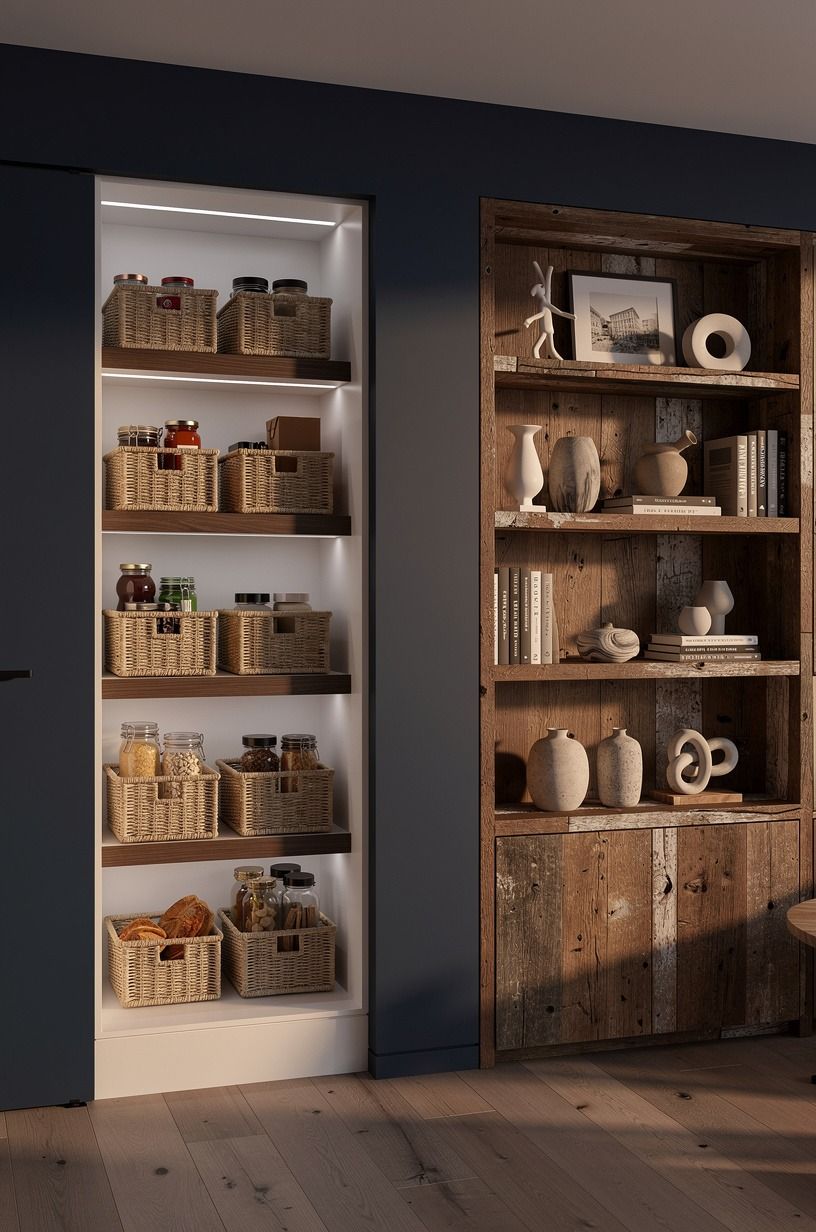
I kept storage baskets inside the pantry rather than hanging them on the visible panel. You can fill the hidden side with useful systems and let the front keep its softer, lived-in look.
Turkish cotton bin liners, labeled glass jars, and low handled baskets worked for me. I’d skip matching plastic bins on the bookcase face because they look like pantry storage from across the room.
Reclaimed weathered teak adds more character than another storage accessory. The front is architecture; the inside is where you get practical.
For another approach, these hidden walk-in pantry ideas helped me think through what belongs behind the panel.
15Make the first shelf believable, then stop styling
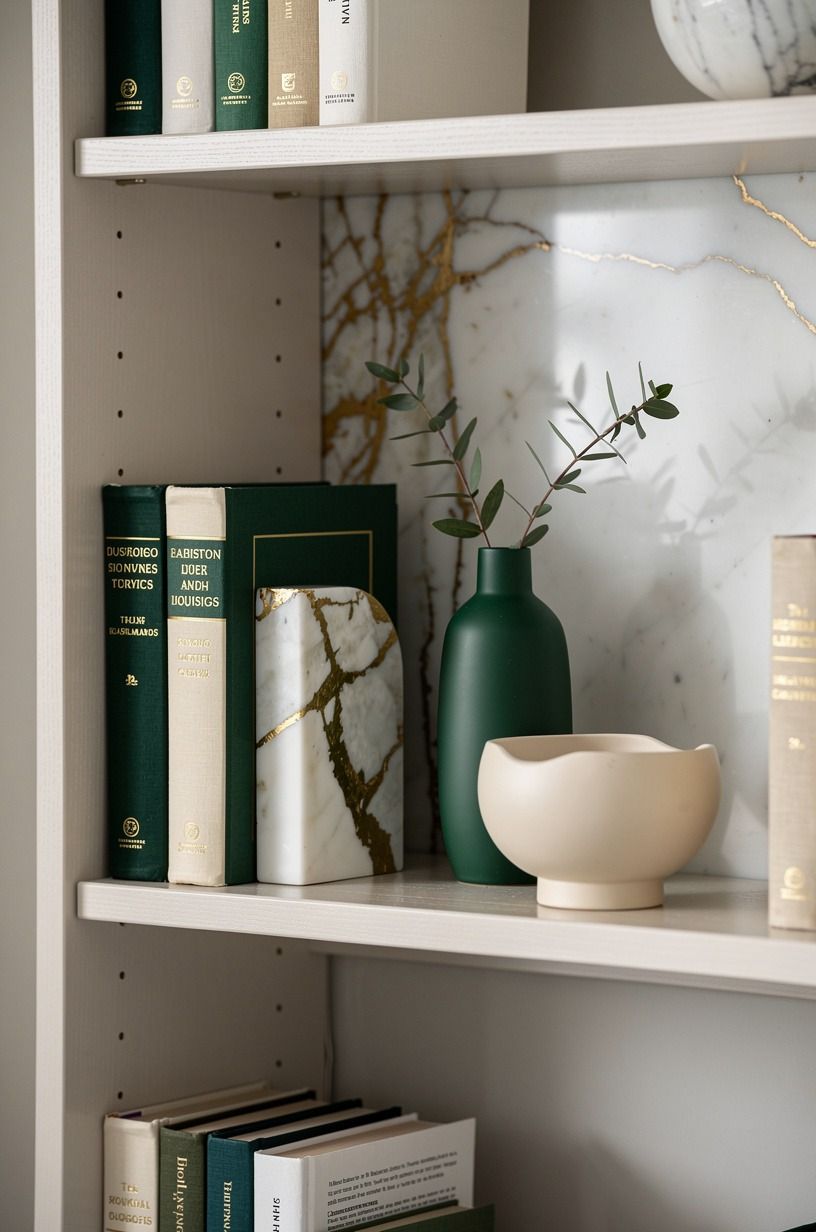
I styled the first shelf hardest because it sits at eye level. You don’t need to fill every inch after that. A worn cookbook, a small West Elm ceramic vase, and a stack of folded linen napkins were enough.
But I removed three objects the next day. Too much “display” makes your bookcase look precious, and a pantry entrance should feel used. Calacatta marble with gold veining can carry one useful object without turning the shelf into a showroom.
Leave a little awkward space (the kind you’d never make in a catalog photo). It’s more convincing.
16Test the reveal with someone who doesn’t know
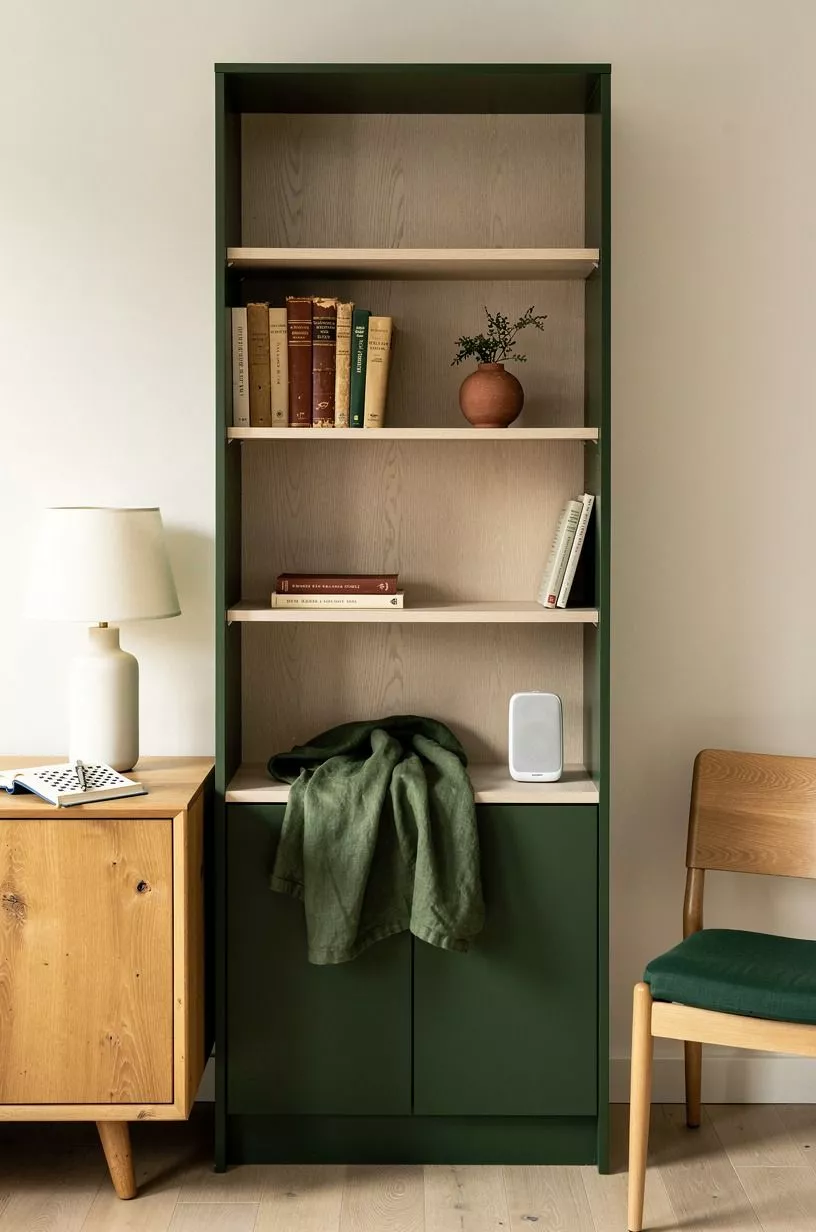
I asked a friend to find the pantry without telling her where it was. She walked past it twice, then laughed when I opened the bookcase. That was the only test I cared about.
You should test yours with the shelves loaded, the lights on, and your normal kitchen traffic happening. A CB2 Primitivo bouclé stool nearby can make the zone feel intentional, but don’t block the route.
Forest green, rust, and natural oak work beautifully with cerused white oak when you want the panel to blend in without becoming dull. Your door has to be hidden, not inconvenient. That difference matters!
How much it cost
My project stayed in the cosmetic range because I reused trim, painted the surround, and avoided moving cabinets. Your cost will rise fast if you change counters or rework plumbing, so it’s worth separating a disguised entrance from a kitchen renovation.
I paid for the door hardware, paint, shelf materials, and a few styling pieces, then used what I already had for the rest. I’d put money into the hinge and alignment first. A quartz countertop can run $60 to $120 per sq ft, but it won’t fix a door that binds every time you open it.
Why I’d hide storage instead of adding more open shelves
I think open shelving has had enough screen time. It can look airy for a week, then it becomes a daily audit of mugs, crumbs, and whatever your family dropped beside the coffee machine.
I’ve lived with it, and I understand the appeal: you see what you own, the room looks larger, and good stoneware feels friendly. Still, a pantry is where food packages multiply when nobody is looking.
A hidden entrance gives you a different kind of luxury. Not expensive luxury, necessarily.
Quiet luxury in the literal sense. You get the practical capacity of a pantry, but your kitchen doesn’t have to perform storage all day.
When the bookcase closes, the room settles down.
I also think people underestimate how much a door changes the feeling of a kitchen. A standard door says utility.
A disguised panel says this room was considered, even if the rest of the kitchen is basic builder cabinetry. You don’t need to chase a full remodel to get that feeling. You need one clear decision, made well.
My mistake was assuming the reveal had to be elaborate. It didn’t.
The best version is almost boring while it’s closed: paint that belongs, shelves that hold real books, a pull your hand can find. Then the panel opens and your guests do that small double take.
That’s enough. More than enough, really.
The Questions I Get Asked Most
What is the best Detail Pantry Door Ideas [Bookcase, Panel & Hidden Entrances] for a small kitchen?
A shallow bookcase panel is the best option because it hides storage without taking over your walkway. IKEA BILLY bookcases can inspire the proportions, but keep your face slim and use concealed hardware so the door doesn’t crowd the kitchen.
Where can I buy Detail Pantry Door Ideas [Bookcase, Panel & Hidden Entrances] pieces on a budget?
Start with IKEA, Target, and Wayfair for shelving, pulls, and paintable panels. You can also find solid wood bookcases on Facebook Marketplace. Your best secondhand score is a plain, sturdy piece that you can paint, not an ornate cabinet that fights your wall.
How much does a Detail Pantry Door Ideas [Bookcase, Panel & Hidden Entrances] makeover cost?
A simple version costs about $100 to $300 if you reuse shelves and focus on paint, a pull, and basic hardware. Paint and styling can be the lowest-cost part. Moving cabinets or changing counters pushes the project into a different budget entirely.
Can I create a Detail Pantry Door Ideas [Bookcase, Panel & Hidden Entrances] on a budget?
Yes, and you can start with what’s already there. Low-cost upgrades include paint, a hidden pull, and books from another room. Empty jars, folded napkins, and a thrifted frame make the visible shelf feel personal without adding much cost.
Is a Detail Pantry Door Ideas [Bookcase, Panel & Hidden Entrances] worth it in a small space?
Yes, it’s worth it when your existing pantry door blocks circulation or exposes constant clutter. Visual quiet helps a small kitchen feel larger. Keep the panel shallow and protect your 42 to 48 in island clearance so the disguise doesn’t create a new problem.
Is Detail Pantry Door Ideas [Bookcase, Panel & Hidden Entrances] a good idea for a rental?
Yes, if you make it reversible and check your lease first. No-damage options include a freestanding bookcase screen, removable wallpaper, and tension-rod curtains inside the pantry. Skip permanent hinge changes if you can’t restore the opening when you move.
Where I’d Start First
If I had to pick one, I’d start with the paint-matched bookcase face. You can’t hide a pantry with expensive hardware if the panel reads like a separate piece of furniture. Pin this idea for later and let your kitchen keep one good mystery.