You passed over the performance fabric sofa because the word “performance” called up stiff cushions, a color called durable taupe, and someone else’s toddlers. That association was accurate for about a decade. But the category has changed in ways that matter specifically for the rooms you are trying to build right now.
The older generation of performance upholstery used a tightly bonded synthetic weave with a slight sheen. It repelled liquids because it had almost no give at the fiber level. That construction made it look utilitarian and feel cool to the touch, like a rain jacket stretched over a cushion frame.
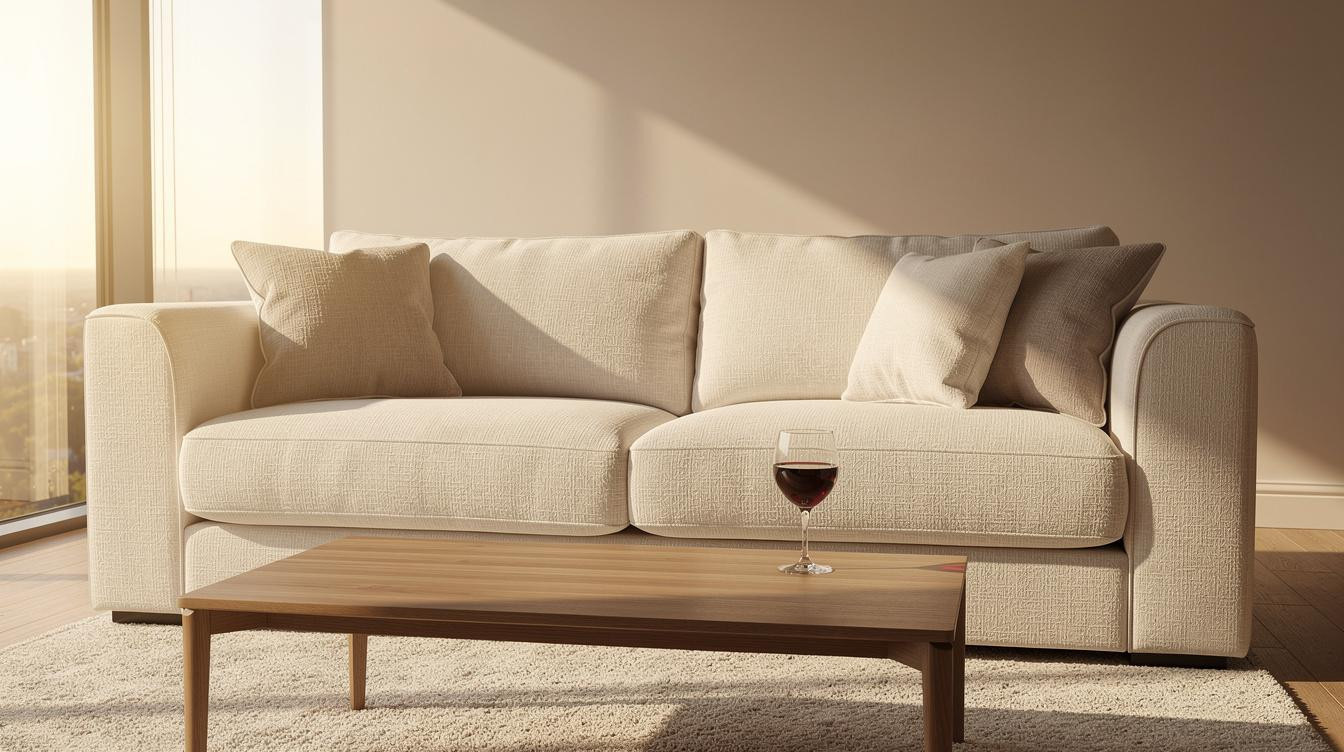
The current generation is different. A looser, textured weave catches light the way natural linen does, drapes softly over the cushion edge, and comes in the cream and oatmeal palette you have been afraid to buy in any other material. The long-term sofa durability conversation has shifted, and performance fabric is at the center of it.
What the fabric actually feels like now
The stain resistance in the current generation is built into the fiber itself, not applied as a surface coating. That distinction matters because a surface treatment wears off within 12 to 18 months of regular use. Fiber-level protection does not wear off the same way, so the fabric continues to behave like a performance textile three years in.
Interior designers who work exclusively with adult clients describe it as the first synthetic weave that does not read as synthetic in a finished room. The texture has enough irregularity that it holds its own beside natural-fiber pillows and wool throws. And up close, the hand is genuinely soft, not the smooth, slightly waxy feel of early microfiber.
The cream sofa problem, solved at the fiber level
A cream sofa in a sunlit room is one of the most requested pieces among women redecorating after children leave. It also has one of the highest return rates in upholstered furniture, because the fabric looks beautiful for a few months and then shows a coffee ring that no care label predicted. Getting the cleaning approach wrong on regular upholstery is a costly mistake, and performance fabric removes most of that risk.
A damp cloth lifts most spills without leaving a ring because the liquid cannot penetrate the weave. The sofa you actually want in the room becomes the sofa you can actually keep. But this only holds if the cleaning code confirms water-safe treatment. Check the tag under the cushion before purchase. W means water-safe, S means solvent only, and S-only fabric is not a true performance textile regardless of marketing language.
The sunny room problem, solved by solution-dyed fiber
Ultraviolet exposure breaks down natural linen and cotton upholstery at a rate visible within 18 months in a south- or west-facing room. A linen sofa that cost $2,200 can look faded and thin by its second full summer, which means the investment calculus changes completely when you account for replacement. Color longevity in a bright room is its own design problem, and fabric choice is the first place to solve it.
Look for solution-dyed on the product spec sheet. It means the color runs through the entire fiber rather than sitting on the surface, so UV exposure removes far less visible tone over time. Hairstylists who specialize in color use a similar principle: color that penetrates the shaft holds longer than color that coats it. The physics are different, but the outcome is the same.
What to look for when you shop
The most durable performance upholsteries are built on 100 percent polyester or polypropylene fibers, because neither absorbs moisture at the molecular level. Blends that include more than 30 percent natural fiber will behave more like natural fabric under stress, even if the weave has been treated. The treatment wears. The fiber content does not change.
Mid-range performance sofas start around $1,299 for a three-seat configuration. Higher-end design-forward options run from approximately $1,600 to $3,200. The price premium over untreated upholstery in the same frame is real, and it is worth it specifically if you have a pet, a sunlit room, or a preference for light colors. If you want a dark sofa in a low-traffic room, the premium is harder to justify. Certain upholstery categories sell fast precisely because their appeal is broader than the original target audience, and performance fabric is a clear example of that pattern.
Your questions about performance fabric answered
Does it actually feel soft, or does it feel like a microfiber couch from 2009?
The comparison to early microfiber is accurate for the previous generation, not the current one. Mid-range and above performance weaves use looser constructions with a distinctly softer hand. Touch it in person before buying. The difference between a treated tight-weave and a current textured performance fabric is immediately clear.
Can my dog sit on it?
A tight performance weave resists pet hair embedding significantly better than loose linen or velvet. And it handles the occasional accident without permanent damage. It will not resist scratching from claws on the cushion face, and no fabric specification covers that.
Will it look too uniform beside natural textiles?
Up close, performance weaves read slightly more consistent than hand-woven linen. In a room built around authentic natural textiles, that regularity is visible. The workaround is to use performance fabric on the sofa and let genuine texture live in the pillows, throws, and rug. The sofa takes the daily impact. Everything around it stays natural.
A cream performance-fabric sofa in a west-facing living room in late May. Afternoon light sits across the seat cushions. A half-full glass of red wine rests on the coffee table six inches from the arm. No coaster. The owner is not watching the glass.