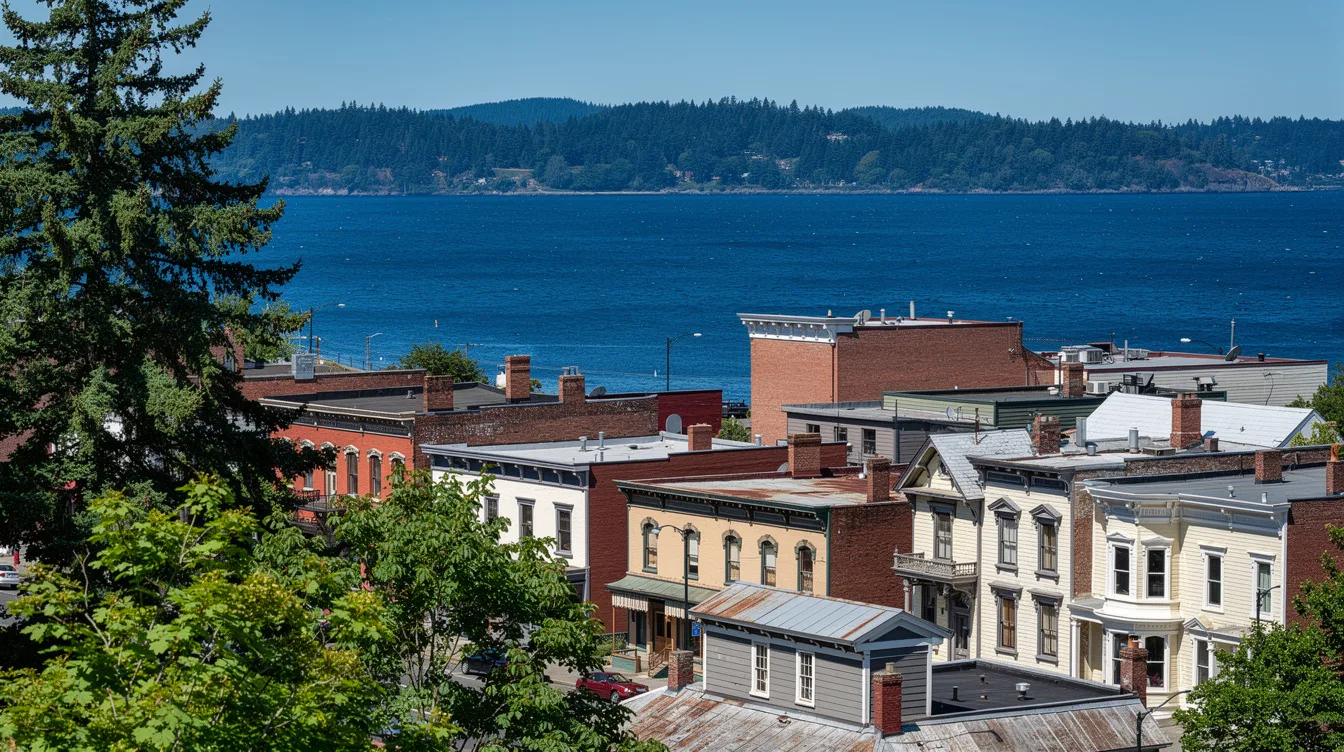
Port Townsend makes its case before you have finished the first block of Water Street. Late-19th-century Victorian commercial buildings still face the waterfront, while Victorian homes climb the bluff above town. This is no decorative historic district.
It is the reason to come.
The district became a National Historic Landmark District in 1977, and it feels unusually intact because the town’s boom ended before much of it could be replaced. You can sense the old ambition in the tall facades and bay-facing streets, even if Port Townsend never became the giant port its early backers expected.
Water Street is where the Victorian story starts
Start along Water Street, where independent shops, galleries, restaurants, and maritime businesses occupy the old commercial core. And don’t rush it. The worthwhile pleasure here is looking up at cornices and window lines while the smell of salt moves in from the bay.
Port Townsend Bay, Admiralty Inlet, and the Strait of Juan de Fuca place water on three sides of the Quimper Peninsula. That geography gives the town its harbor mood, but it also means the wind and fog can change the feel of an afternoon quickly.
You’ll find a working maritime culture rather than a museum set. Boats, ferries, sailing, and independent boatbuilding still matter here, so the historic waterfront has purpose. It’s artsy, but not precious, and that distinction makes the town easier to enjoy.
The bluff holds the houses people come to photograph
Above downtown, Victorian homes line the bluff in a setting that explains the “Victorian seaport” label better than any sign could. But the appeal isn’t simply age. These houses remain part of a living town of 10,148 residents, not an abandoned film location.
The city was officially founded in 1851, then grew during a late-19th-century shipping era. When rail connections failed to make it to Port Townsend, the expected expansion faded. Because development slowed, many older buildings escaped demolition or major rebuilding for decades.
That history gives you a more interesting walk than a polished preservation district usually does. There are grand details, certainly, but also ordinary streets and everyday businesses. My advice is simple: let the town feel slightly uneven.
That is where its character lives.
Fort Worden adds beaches and a different kind of history
Fort Worden Historical State Park sits near town in a former military installation with beaches, trails, historic buildings, and arts programming. You can move from ornate downtown architecture to weathered military structures without spending the day in a car.
And that contrast is Port Townsend’s best trick. Downtown is compact and walkable, while Fort Worden opens toward water and trees. The park’s former military buildings give the visit a harder edge than the gingerbread details around the bluff.
Can you make Port Townsend more than a day trip?
Yes, especially if you want a quieter base for the Olympic Peninsula. You can head toward Port Angeles, Olympic National Park, and nearby coastal scenery, then return to a town with restaurants and evening arts programming. Lodging options can be limited, so flexibility helps.
The ferry route changes the rhythm of the trip
From the Seattle area, the common route uses the Edmonds-Kingston ferry, then SR-104 and US-101. Plan on roughly two hours from Seattle, though ferry waits can change that estimate. If waiting for a boat sounds tiresome, driving via Tacoma and the Hood Canal Bridge avoids the ferry.
You can also take the ferry to or from Coupeville on Whidbey Island. The crossing lasts about 35 minutes, which is short enough to feel useful rather than ceremonial. Stand outside if conditions allow, but bring a layer because the water air can turn cool.
Port Townsend is at the northeastern tip of the Olympic Peninsula in Jefferson County. That location makes it remote enough to feel separate from Seattle, but not difficult to reach. You still need to plan the crossing or drive, and that planning is part of the trade-off.
Summer makes the town easiest to linger in
Summer is the straightforward choice, when warm, dry conditions suit waterfront walks and time at Fort Worden. The Olympic Mountains’ rain shadow makes Port Townsend relatively dry by western Washington standards, with about 19 inches of annual precipitation. But cool breezes and Strait fog can still arrive.
The town hosts annual cultural events, including the Wooden Boat Festival and an international film festival in September. If dates line up, those events add energy. If they do not, you still have Water Street, the waterfront, and the slow pleasure of looking at buildings that survived because the future once went elsewhere.
By late afternoon, the bay light settles across the old facades, and ferry traffic thins. The streets don’t go silent, but the harbor does enough of the talking.