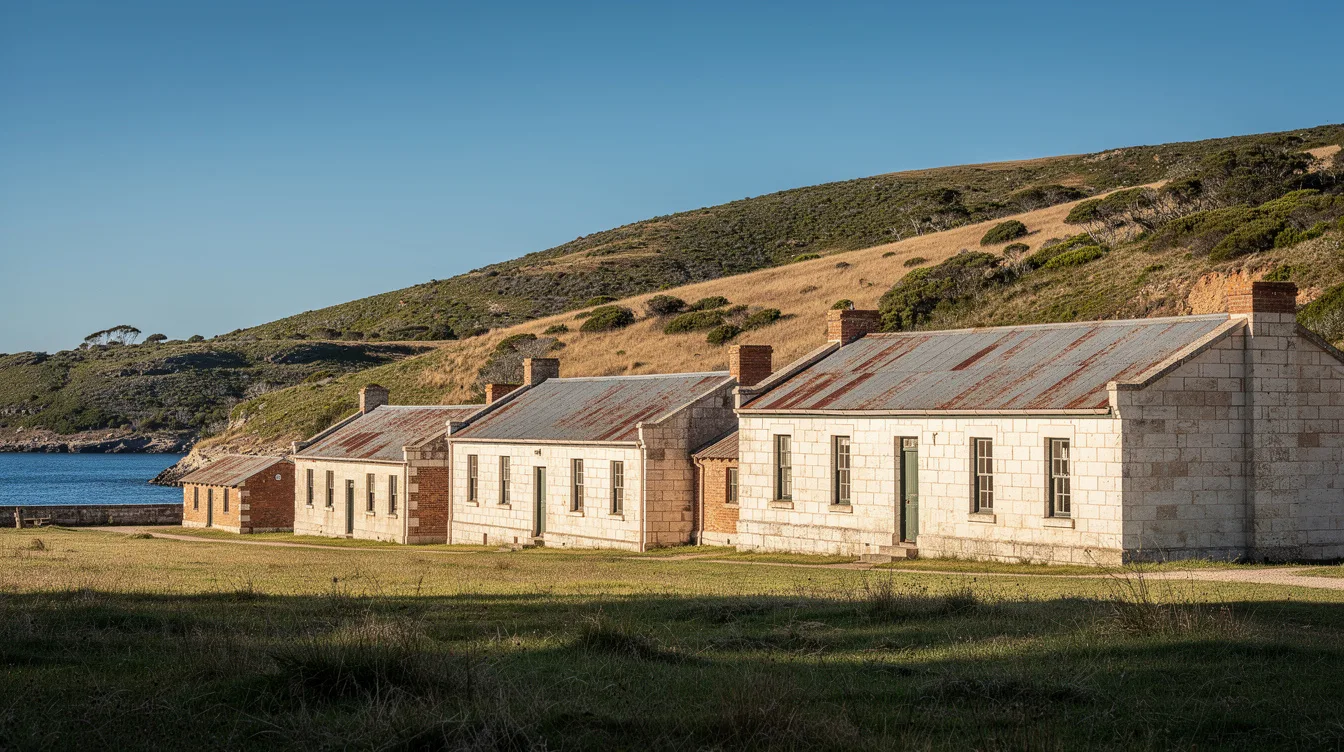
Maria Island sits off Tasmania’s east coast, and its best surprise waits beside the ferry landing. At Darlington, 13 intact convict-era buildings and structures remain from a penal settlement that began in 1825. You can walk among them without a road, a traffic light, or a souvenir shop interrupting the view.
That quiet changes the scale of the story. The former settlement belongs to the UNESCO-listed Australian Convict Sites, but it doesn’t feel arranged for a museum crowd. Grass moves around the old walls, wombats graze nearby, and the place asks you to slow down.
Darlington puts the convict story first
Darlington is the island’s only settlement, near its northern end, and it’s where the passenger ferry arrives. The first penal settlement opened in 1825, then a later probation station followed. You don’t need to hunt for the history because it’s right beside the path.
But this isn’t an easy story dressed up as heritage. Men were sent here under colonial punishment systems, and the buildings carry that weight even in bright weather. The old structures are compelling precisely because they remain part of an open, working park rather than a polished indoor exhibit.
Three survivors are especially direct: the Commissariat Store, a convict penitentiary, and a dam on Bernacchis Creek. The store now functions as the park reception and visitor center. The penitentiary accommodates visitors now, an uncomfortable reversal that makes the past feel closer.
And you should give Darlington more than a quick lap before chasing cliffs. It’s the kind of arrival point that makes the rest of the island legible. The setting is calm, but the history isn’t soft.
A 45-minute ferry removes the cars
The trip begins at Triabunna, about 53.4 miles from Hobart by road. The passenger ferry takes roughly 45 minutes to Darlington, so Maria Island is reachable in a day. But the crossing also marks a firm break from mainland convenience.
There are no cars on the island. You travel on foot or by bicycle, which is why a modest-looking route can take longer than expected. Bring water, food, rain and wind layers, and what you need for the day because there are no shops waiting beyond the jetty.
And reserve the ferry ahead. That practical detail matters more here than it would on a heavily served island, since missing the boat can turn a relaxed outing into an unwanted logistical puzzle. A Tasmania national parks pass is also required.
If you’re based in Hobart, staying near Triabunna or elsewhere on the east coast before departure is the smarter move. You’ll arrive less rushed, and this island rewards an unhurried start. It’s remote in feel, but not difficult to reach if you plan it properly.
Painted Cliffs reward the right timing
Beyond Darlington, the coastal draw is Painted Cliffs. Its sandstone folds in red-orange, brown, and cream, and low-angle light brings out the swirls. You should check tides first because the experience is best at low tide.
That caveat is part of the appeal. The cliffs aren’t a guaranteed, any-hour photo stop, so a little planning pays off. Salt air and the scrape of shoes on the coastal track replace the usual roadside overlook rhythm.
Fossil Cliffs offer a different coastal outing, with limestone faces and visible marine fossils. It’s a good choice for a day visit when you want sea views without committing to the island’s bigger hiking ambitions. Birds move through the open air above the rock.
But don’t treat both stops as boxes to tick if your ferry schedule is tight. Pick one substantial walk and leave room for Darlington. Maria Island works best when you stop trying to conquer it before the return crossing.
Can you cover the island by bike?
Yes, and a bike is one of the few efficient ways to cover more ground without cars. You can bring or rent one, then stretch a visit into one or two nights. On foot, keep your day centered on Darlington and one main route.
For stronger hikers, Mount Maria offers a long day and broad views, but conditions and available time matter. There’s no reason to force it from a short ferry visit. The island is only about 12 miles long, yet rugged ground changes the equation.
Wildlife is close, but it isn’t casual
Wombats, wallabies, Forester kangaroos, Tasmanian devils, Cape Barren geese, and many birds live here. You may see wildlife surprisingly close around Darlington, especially when the light softens. But close visibility is not permission to approach or feed anything.
The lack of cars helps create that sense of proximity, and it also asks more of you. Keep a real distance, carry your waste out, and let the animals set the terms. This is a national park first, even when a wombat seems to have claimed the path.
Camping areas at Darlington, Frenchs Farm, and Encampment Cove make an overnight stay possible. That’s my preferred format for walkers and photographers because the last ferry removes the day crowd. Still, you’ll need to arrive self-sufficient and accept changeable weather.
By the time the ferry heads back toward Triabunna, Darlington’s old buildings sit in the open grass again, with no cars passing through. The wind carries across the water, and the island returns to its slower pace.