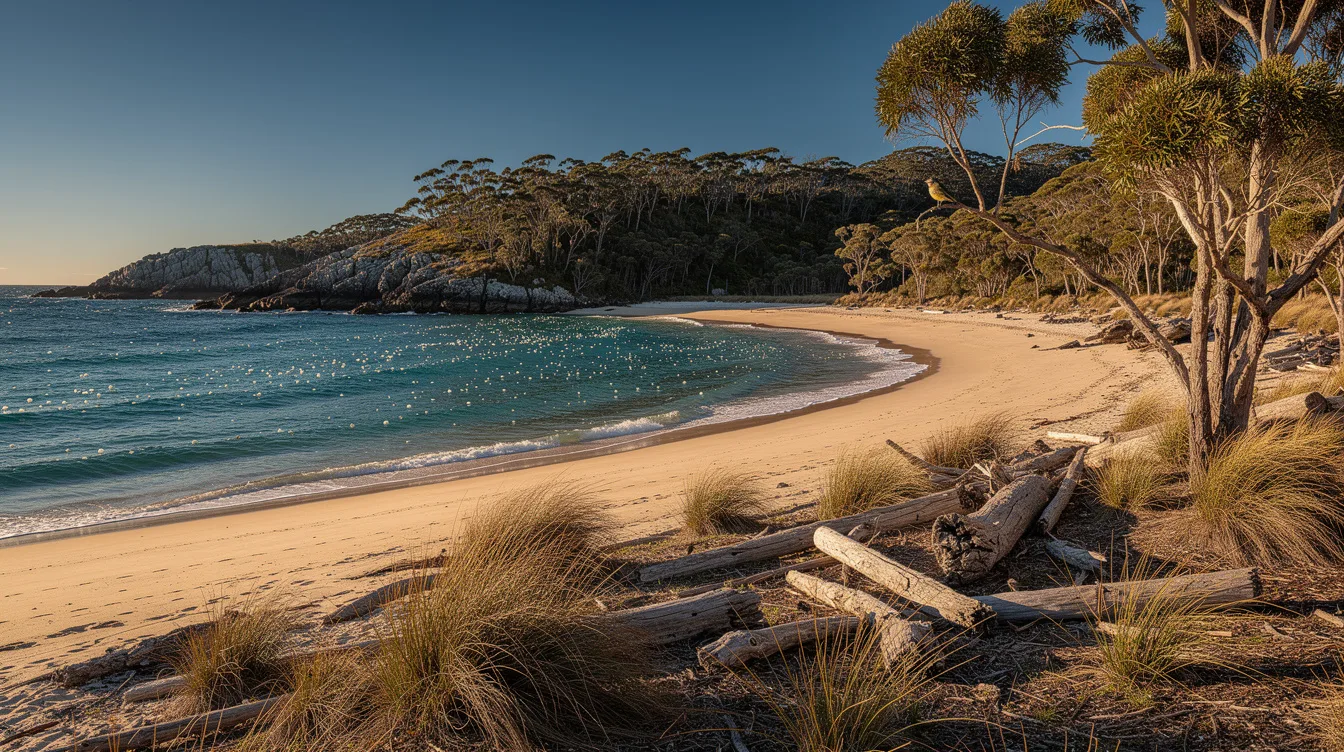
Bruny Island sits south of Hobart, and its headline bird is no small claim: this Tasmanian island holds the world’s largest population of the threatened forty-spotted pardalote. You come for the coast, sure. But the birds give the place its real urgency.
The island is also called lunawanna-allonah. It’s a 362-square-kilometer piece of coast split into North Bruny and South Bruny, joined by the skinny sandy strip called The Neck. That geography makes the day feel pleasantly divided, with gentler farmland north and rougher edges south.
The birds are the reason to slow down
Bruny is an Important Bird Area because the threatened forty-spotted pardalote has its largest global population here. It also supports up to one-third of the world’s swift parrots, all 12 of Tasmania’s endemic bird species, and up to 240,000 breeding pairs of short-tailed shearwaters.
And that changes how you should visit. Don’t treat wildlife as a checklist between food stops. Walk quietly, keep your distance, and let the dry eucalyptus forest do its work around you, with small calls flickering through the leaves.
The island’s bird life is unusually concentrated, but it isn’t guaranteed on command. You may see less on a rushed day trip. Give yourself time, especially if the sound of seabirds and wind through coastal scrub is part of why you came.
Can you see penguins at The Neck?
Yes, little penguins can be seen around The Neck at dusk. Stay on the built facilities and avoid intrusive light. The sandbar has water on both sides, so the late-day air feels exposed and salty even when the light turns soft.
But The Neck is not a private viewing room. Respectful distance matters here, and that restraint is part of Bruny’s appeal. You’re watching a living shoreline, not an attraction arranged for a camera.
South Bruny earns the ferry ride
From Hobart, drive south to Kettering and board the vehicle ferry to Roberts Point. The crossing takes about 20 minutes. There’s no bridge and almost no public transport on the island, so a car makes the route far easier unless you join a guided trip.
And once you’re across, head south with no urge to race. South Bruny National Park brings together dolerite cliffs, coastal heath, beaches, forest, and walking tracks. Some areas require a Tasmanian parks pass, a small practical detail worth sorting before you arrive.
Adventure Bay is a smart base for beaches, cruises, and trail access. The bay is more sheltered than the island’s seaward side, which is why it feels calmer when cold fronts press in from the Southern Ocean.
Beyond the harbor, Cloudy Bay and the Labillardiere Peninsula feel more exposed. The coast is rugged, and the wind can be relentless. That’s the trade-off: bring another layer, and you get long beaches that don’t feel hurried.
Cape Bruny has stayed awake since 1838
Cape Bruny Lighthouse was first lit in 1838 and became Australia’s longest continuously staffed lighthouse before automation in 1993. It later left service in 1996 and joined South Bruny National Park in 2000. Guided tours are available.
Its history is substantial, but the setting is the stronger argument. The cliffs rise above the sea, and the southern coast feels raw rather than polished. You’ll understand why people come here even if the weather refuses to cooperate.
And a cruise from Adventure Bay offers the inverse view, with cliffs seen from the water. Depending on season and conditions, you may spot seals, dolphins, seabirds, or migrating whales. Wildlife is never owed to you, but the coast itself is enough.
Stay after the day-trippers leave
Bruny’s food stops make a good case for lingering. Oysters at Get Shucked, cheese from Bruny Island Cheese Co., local honey, smoked salmon, whisky, chocolate, and cool-climate wine turn a drive into a loose, delicious itinerary.
For an overnight, choose Adventure Bay for access, or Alonnah and Lunawanna for a central South Bruny base. Dennes Point on North Bruny is quieter and more isolated. It’s peaceful, but you’ll spend more time driving if South Bruny is your focus.
December through February is the warmest period, and it’s also the busiest, so reserve the ferry, rental car, and lodging early. A day trip works. But one to three nights let you catch The Neck at dusk without checking your watch.
By the time the last excursions have gone back toward Hobart, the ferry noise fades, the air cools, and Bruny’s birds reclaim the soundscape.