Fair Isle sits between Shetland and Orkney, and at least 27 bird species first recorded in Britain have appeared here. That number explains why serious birders tolerate the island’s wind, shifting weather, and difficult transport. You don’t come for easy logistics.
You come because the next bird could change the entire day.
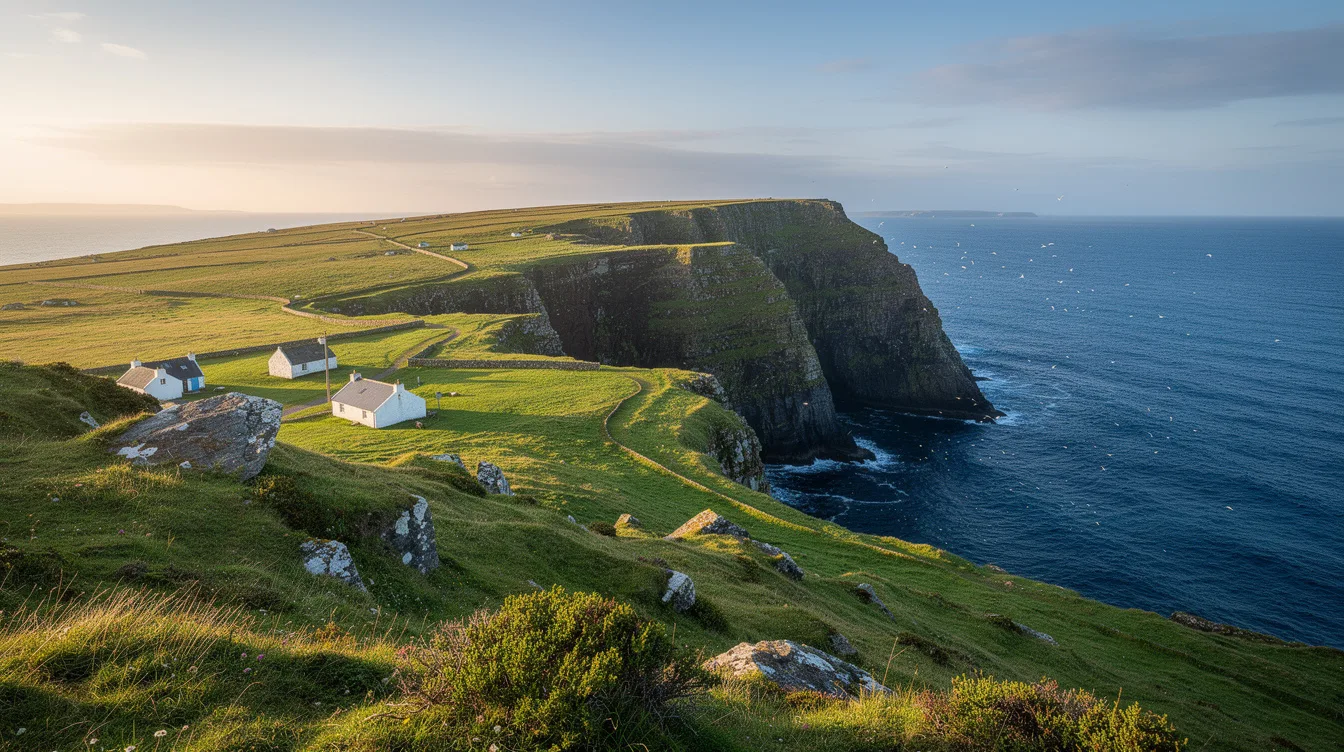
Fair Isle is the southernmost Shetland island and one of the UK’s most isolated inhabited places. With just 44 permanent residents recorded in 2022, it feels quiet without feeling empty. Sheep move across open ground, Atlantic water flashes below the cliffs, and the horizon rarely gives you a town to look toward.
Why Fair Isle keeps surprising birders
And the migration seasons are the main event. Spring and autumn bring passing birds to this narrow island between larger landmasses, while summer is better for seabird colonies. You can spend hours outside with the wind in your ears, waiting for movement in the grass.
But the island’s reputation isn’t built on one lucky sighting. At least 27 species have made their first British appearance here, including birds from other distant parts of Europe and Asia. That makes Fair Isle an unusually rewarding place for patient observers.
The island supports seabirds, waterbirds, and migrating land birds. Puffins, guillemots, and skuas gather during the warmer months, while the open ground gives smaller migrants few places to disappear. For more planning ideas, read our guide to travel in Shetland.
And you don’t need to be an expert to feel the tension. A bird call can pull your attention from the cliffs to a patch of rough grass in seconds. My opinion is simple: Fair Isle is at its best when you leave room for the day to become unpredictable.
Getting there takes planning, not luck
Fair Isle lies in the south of Shetland, roughly between the Shetland mainland and North Ronaldsay in Orkney. From Tingwall, near Lerwick, the light aircraft takes about 25 minutes. The flight is the quicker choice, but weather still controls the schedule.
But the ferry from Grutness takes about 2 hours 30 minutes, and it carries only around 12 passengers. The crossing is exposed, so wind and fog can delay or cancel either option. Reserve ahead, then leave a generous margin before any onward flight from Sumburgh or Lerwick.
Can you visit without flexibility?
No. You can plan the route carefully, but you can’t make island weather obey an itinerary. Bring genuinely waterproof clothing, expect changes, and avoid connecting the island visit too tightly to an important departure.
And that inconvenience is part of the character. The island feels remote because reaching it still requires attention. You get fewer casual visitors, but you also get fewer easy alternatives if the sea turns rough.
Cliffs, a lighthouse, and open Atlantic weather
Ward Hill reaches 712 feet, the island’s highest point. The ground is open, treeless, and often fully exposed to the weather.
And the coast rewards slow walking. You hear wind before you see the sea, then catch the sharp smell of salt near the cliffs. The trade-off is clear: there is no promise of calm conditions or comfortable footing, so you need to dress for the Atlantic rather than the forecast alone.
South Light adds a human landmark to the emptiness. It became automated in 1998 and was the last Scottish lighthouse to operate with permanent staff. Nearby history also includes shipwrecks, Neolithic traces, and remains from the Second World War.
For a broader route through the islands, pair the visit with our Scotland islands guide. But don’t treat Fair Isle as a quick scenic stop. The island’s scale looks manageable on paper, while the weather can make every exposed mile feel longer.
Fair Isle knitting began here
The name also belongs to a textile tradition. Fair Isle knitting uses two colors per row to create repeating geometric bands, and local textile production is recorded from the late 17th century. The pattern later became widely known beyond the island.
And you can feel the connection between craft and place in the island’s practical culture. This is a community shaped by limited supplies, sea crossings, crofting, and long stretches of weather. The knitting is colorful, but the setting around it is spare.
Fair Isle suits travelers who want birds, coastal walking, slow days, and a strong sense of distance. It won’t suit you if you need guaranteed schedules, many restaurants, or stable weather. By evening, the last light fades across the moor, and the island settles back into wind and sea.