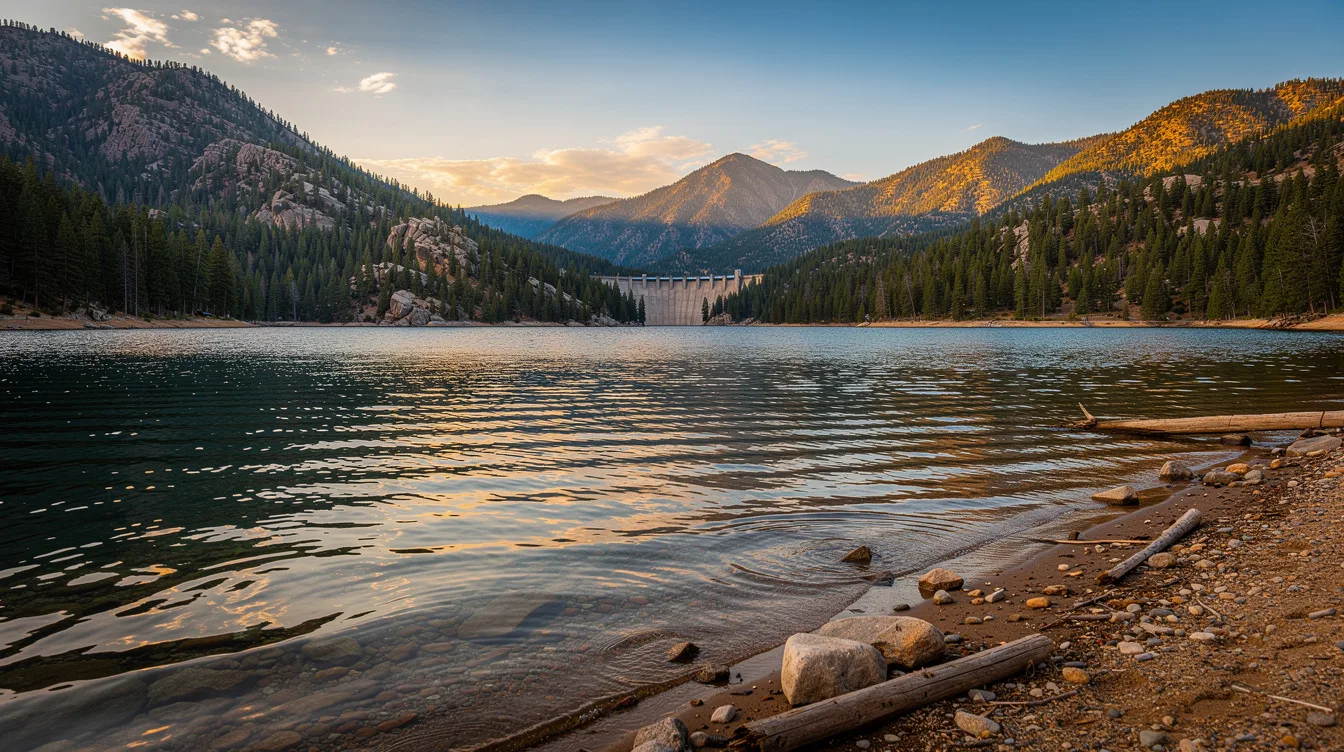
Overlooked by tourists, Big Bear Lake began with an 1884 dam. That history still shapes the visit, because the reservoir is more than a mountain playground. It was once presented as the world’s largest man-made lake, built to supply irrigation water to the Redlands area.
And the setting makes the contrast work. The air feels cooler, the pines replace palms, and the road climbs into the San Bernardino Mountains. My opinion: this is the kind of California escape that earns two nights, not a hurried afternoon.
Why the 1884 dam still matters
The first Bear Valley dam went in during 1884, across a marshy, nearly flat valley. Its single granite arch held back water for irrigation, creating the lake that gave the area its modern identity.
But the original structure couldn’t provide enough water for the citrus growers in Redlands. A larger dam followed in 1912, and the old granite dam now sits beneath the reservoir, usually under about 20 feet of water.
And that submerged history gives the shoreline a strange quietness. You can look across the water from Boulder Bay Park and see a recreation lake, but the real story is below the surface. Visit the Bigbear. Com/”>official Big Bear site before you go, since current access and activities can change.
High elevation changes the whole day
Big Bear Lake sits at roughly 6,750 feet, so summer feels different from the California coast. July through September is the strongest season for boating, kayaking, paddleboarding, sailing, fishing, and mountain biking.
And the lake is compact enough to understand quickly. It stretches about 7 miles from east to west, with a deepest point of 72 feet.
But don’t confuse warm afternoons with warm water. Swimming is discouraged because the lake is very cold and underwater obstacles sit near parts of the shoreline. You’ll have a better day on a boat or paddleboard, with the water flashing silver beneath the high-country sun.
What to do when the lake gets busy
The South Shore gives you the easiest base, with restaurants, cafés, shops, lodging, and evening activities in the Village of Big Bear Lake. That matters because you can leave the car behind for dinner, which is a welcome luxury after mountain roads.
And Boulder Bay Park is the place I’d choose for a simple first look. Bring a picnic, take a short walk, and watch the shoreline fold around the water. The view is accessible, but summer crowds can make the smaller park feel less private.
Beyond the lake, Snow Summit and Bear Mountain keep the destination active in every season. Winter brings skiing and snowboarding, while summer brings mountain biking and a sightseeing lift at Snow Summit. Check Bigbear. Com/”>BigBear. Com for current resort details and reservations.
Can you swim there?
No, swimming is discouraged because the water is very cold and submerged obstacles can sit near shore. And that limitation is useful to know before you arrive. You can still fish, cruise, or rent watercraft, but the lake rewards looking across it as much as getting into it.
When should you plan the drive?
July through September is the clearest choice if your priority is the lake. Days are often around 80 degrees Fahrenheit, while nights stay cool enough that you’ll want another layer after sunset.
But winter changes the mood completely. Snow covers the surrounding mountains, and both ski areas draw visitors from Southern California. Roads can become slow or regulated after snowfall, so check conditions and chain requirements before leaving Los Angeles.
And weekday travel outside school vacations is the best bargain for peace. Big Bear is popular, especially on snowy weekends and holidays, so reserve early if you want two nights near the water. The drive may take about two hours from Los Angeles, depending on traffic.
A lake with a practical edge
Big Bear Lake isn’t a polished resort fantasy, and that’s part of its appeal. It has busy weekends, cold water, mountain weather, and roads that demand attention. You’ll trade convenience for altitude, then get pine-scented air and a sky that feels unusually close.
And the old dam gives the place more weight than its recreation menu suggests. By late afternoon, when boats thin out and the mountain shadows reach the water, the lake feels less like a getaway and more like a reservoir holding onto its past.