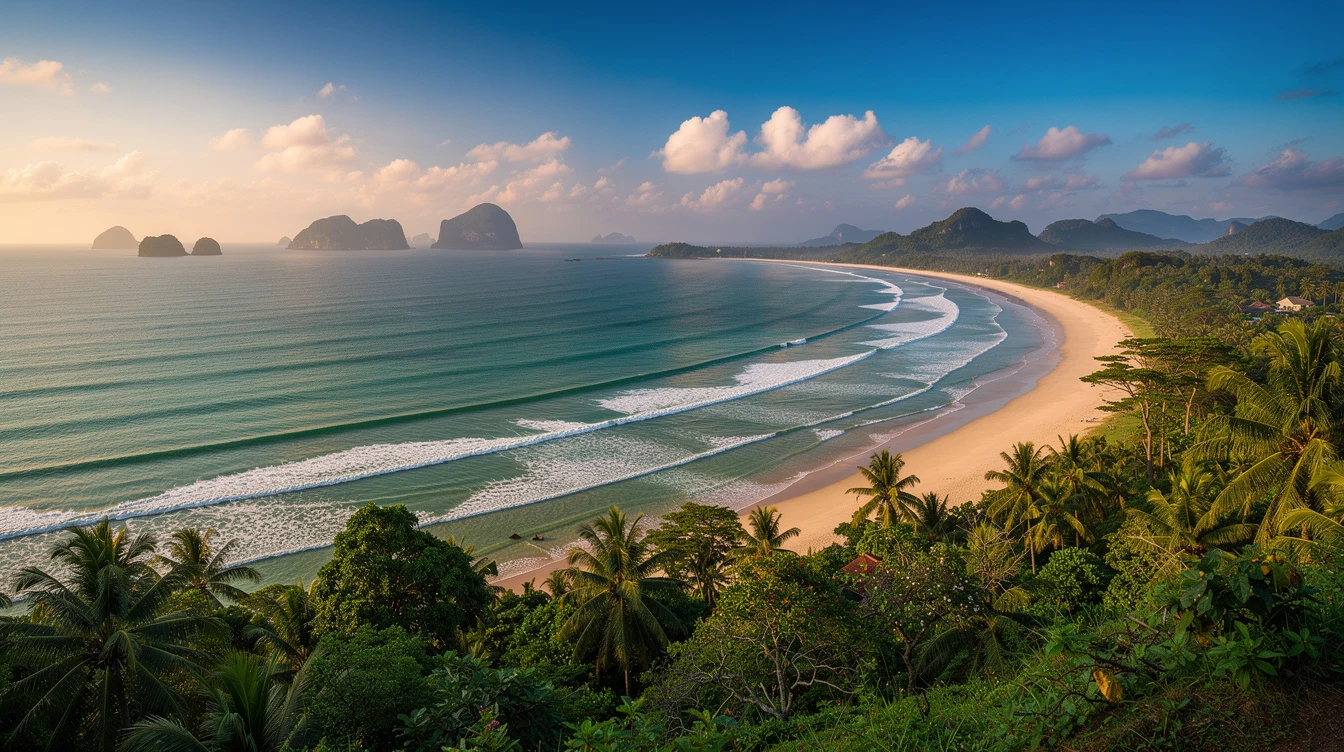
Ko Lanta is the island that gave its name to a French reality show, and that is still the most interesting thing many travelers know about it. The first season of Koh-Lanta filmed here in 2001. The island has spent the 24 years since doing the opposite of what reality television does. It got quieter. It stayed low. And it kept its beach almost entirely free of high-rise construction.
The island is 27 km long, and the road runs almost the whole way
Lanta Yai, the island where you actually stay, stretches 25-27 km from north to south and only 3-6 km across at its widest. A single main road traces the west coast, threading past beach after beach without a single building over four stories. The east coast faces the mainland and feels like a different country entirely. That is where Lanta Old Town sits, a village of stilt houses with Malay and Chinese architectural bones that most visitors skip entirely.
The district counts 33,418 residents, but Lanta Yai itself holds only about 20,000. Many are Muslim fishing families, plus a smaller Chinese community and the Moken sea gypsies who were here before any of the rest. The mix keeps the island’s rhythm slower than Phuket’s. You’ll hear the call to prayer from a mosque near Long Beach, and that sound carries farther than any nightclub bass ever could.
When to go, and what “green season” actually means
The dry window runs November through April, with December to February drawing the most sun and the most visitors. But the so-called green season from May to October is not the washout the name suggests. Rain falls in short bursts, usually a few hours in the afternoon. The temperature barely shifts. The island holds steady at 23-35 °C year-round, and the water stays 27-29 °C regardless of the month.
More travelers are booking long stays during the wet months, working remotely from villas with decent WiFi. The trade-off is real. You’ll get lower rates and empty beaches. But some ferry routes cut back, and a few restaurants close. The minivans from Krabi still run, though, and the road bridge to Lanta Noi means you are never truly stuck.
Getting there takes effort, and that is the point
From Paris, you are looking at 11-12 hours to Bangkok, then a domestic hop to Krabi or Phuket. From Krabi Airport, a shared minivan and ferry combination gets you to your hotel in roughly two to three hours. The route crosses to Lanta Noi first, then rolls over a short bridge to Lanta Yai. It is not seamless. It is not meant to be. The friction keeps the full-moon party crowds on Ko Phi Phi, which sits closer to the mainland and runs ferries like a bus line.
Seasonal ferries also connect Lanta to Phi Phi, Krabi Town, and the smaller Trang islands like Koh Ngai and Koh Kradan. These run less often than the schedules suggest, so check the current timetable before you plan a day trip.
The beaches change character every few kilometers
Klong Dao sits nearest to Ban Saladan, the port town where most arrivals land. It is family-friendly, flat, and practical. Long Beach stretches further south with a mix of guesthouses and small resorts, enough restaurants to not get bored, and enough space to not feel packed. Klong Nin dials the energy down another notch. The beach bars here close earlier. The cafes cater more to people staying a month than a weekend.
Keep driving south and you hit Kantiang Bay, then Bamboo Bay, then Nui Bay. The road narrows. The jungle presses closer. These are the beaches that feel like the end of something, because they are. The paved road stops not far beyond. The national park takes over.
What to do when you are not working
The diving runs through the Mu Ko Lanta National Park, which covers the southern tip of the island and several offshore spots. Koh Haa, a cluster of five limestone outcrops, draws the most consistent day-trip traffic. The park entrance on Lanta Yai itself costs a small fee and delivers a short jungle trail, a lighthouse viewpoint, and beaches where the sand is coarser and the visitors are thinner.
A scooter rental lets you cover the whole island in a morning. The road is paved, the traffic is light, and the only real hazard is the sudden appearance of a water buffalo or a pothole after heavy rain. Lanta Old Town rewards the drive across to the east coast. The seafood restaurants there are not cheaper than the west coast, but they are often better, and the wooden sidewalks creak in a way that concrete never does.
Can you actually work from here?
The infrastructure is good enough, not great. Villas and mid-range resorts have improved their WiFi for the long-stay crowd. You will not find the dedicated co-working spaces of Chiang Mai or the cafe density of Phuket. But for a setup that involves a villa, a scooter, and a few hours of calls in the morning before the heat peaks, it works. The time zone is friendly to European schedules. The cost of a month-long rental drops sharply outside the December-February window.
The real question is whether you want to. Ko Lanta does not reward ambition. It rewards patience. The island’s whole personality is built on being the place you go when Phuket feels like too much. That is not a flaw. That is the product.
Skip the full moon, keep the island
The French production company that named its show after this island chose well. The place looked remote enough to test survival instincts. It still does, in patches. But the test now is different. It is whether you can handle an island that does not try to entertain you every hour. Where the night life is a beach bar with a guitar player who knows three songs. Where the biggest decision is which direction to point your scooter in the morning.
By the time the last ferry of the day pulls away from Ban Saladan, the water in the harbor goes still. The call to prayer starts up from the mosque near the pier. And the island feels exactly as quiet as it did before anyone thought to film a game show here.