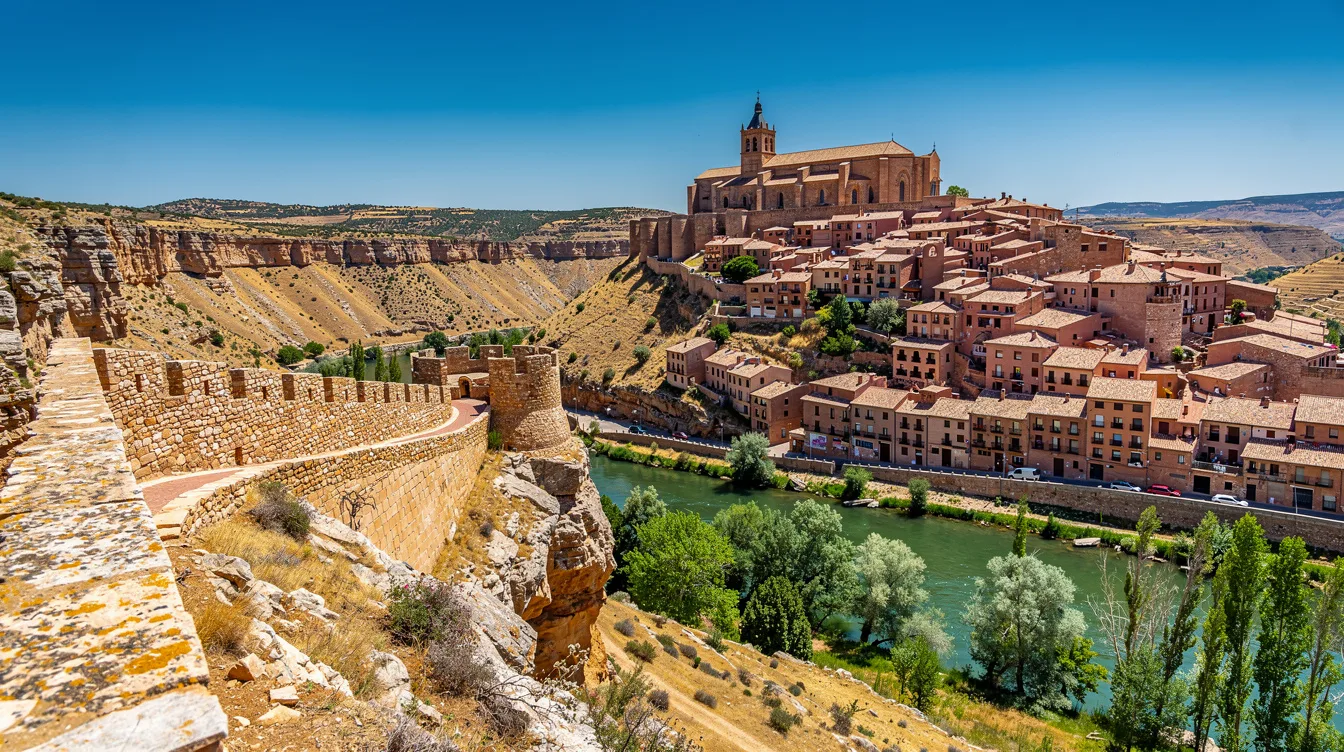
Albarracín was the capital of the Berber Banu Razin dynasty in the early 11th century, and that history still gives this small Spanish town an edge over prettier but emptier medieval stops. It was taken by the Almoravids in 1104, yet its tight streets still feel built for defense first and sightseeing second.
You come to this corner of Aragón for the rose-ochre houses and hanging balconies. But the better reason is the tension beneath them: a town shaped by Berber rule, later powers, and a river bend that made the site both dramatic and difficult to ignore.
A Berber capital, not just a pretty old town
The Banu Razin gave Albarracín its name and made it their capital before the Almoravid takeover. That fact changes the walk through town. You are not simply looking at old stone; you are moving through a place whose medieval identity began under a North African Berber dynasty.
And the setting explains why it held attention. Albarracín curls around the Guadalaviar River, with stony hills pressing close. The streets climb and narrow, so you keep losing the wider view before it suddenly opens again above tiled roofs.
The old center runs from Plaza Mayor through sloping lanes that demand a slower pace. Wear shoes with grip. The stone can feel slick underfoot, and the reward comes from looking up at balconies, doorways, and the odd angle of a house wedged into the hill.
It is touristy enough to have guided visits, but it doesn’t read like a stage set. You can see why the town became a National Monument in 1961: its buildings and defenses remain part of the terrain rather than a separate attraction.
The walls are where Albarracín gets serious
Follow the long Moorish-era walls toward Torre del Andador. This is the part of Albarracín that earns the climb. The walls pull your gaze uphill, while the river and clustered façades make the town below appear compact and deliberately guarded.
But don’t rush it in the hottest part of the day. The lanes are steep, and the town’s appeal is strongest when you leave room to stop. A wall corner, a sandstone slope, or a rooftop line can hold you longer than any formal viewpoint.
The Cathedral and the Episcopal or Diocesan Museum add another layer to the visit. So does Casa de la Julianeta, one of the town’s most recognizable buildings. You should consider a local guided visit if you want access to monuments that may not be as easy to understand from outside.
Albarracín’s appeal isn’t polished symmetry. Houses lean into the slope, streets turn without warning, and the fortified edge stays visible from unexpected places. That slight awkwardness is exactly why it feels more convincing than many restored historic centers.
What to do after the lanes run out
The Guadalaviar riverside walk gives your legs a break after the uphill center. You trade close walls for the sound of water and the sight of the town gathered above the bend. And it is a useful reset before deciding whether to tackle more stone steps.
For a different surface entirely, drive about 10 minutes to Pinares del Rodeno. The protected area combines pine woods with red sandstone, and its prehistoric rock-art sites have UNESCO recognition. It is a strong counterpoint to the town, though a car makes the outing much easier.
Albarracín is also known among climbers for the red sandstone boulders and cliffs around town. You don’t need to climb to notice why they draw people. The rock has a blunt, weathered presence that makes the pale pink walls look even softer by comparison.
And this is where a visit can stretch beyond a quick photo stop. Spend time in the historic center, then leave it for the pines and sandstone. The two settings explain each other, one built from the hill and the other left almost entirely to it.
Getting there and timing the light
Albarracín is in Teruel province, about 23.6 miles from Teruel. It is easiest to visit by car, and you should park outside the old center before exploring on foot. The restriction is sensible: these lanes were never designed for modern traffic.
The town can be visited year-round. It may feel cooler outside summer because of its altitude, so bring an extra layer if you are arriving from warmer parts of eastern Spain. But don’t let that sound like a drawback.
Cooler air suits a day of climbing streets.
For photographs and atmosphere, arrive early or stay overnight. Morning and late-afternoon light changes the stone and pink façades dramatically, turning the hard edges of the town warmer while the surrounding hills begin to lose detail.
You can see Albarracín in a few hours, but that would miss its best trick. By late afternoon, the walls darken, the river bend slips from view, and the rose-colored houses hold the last of the light.