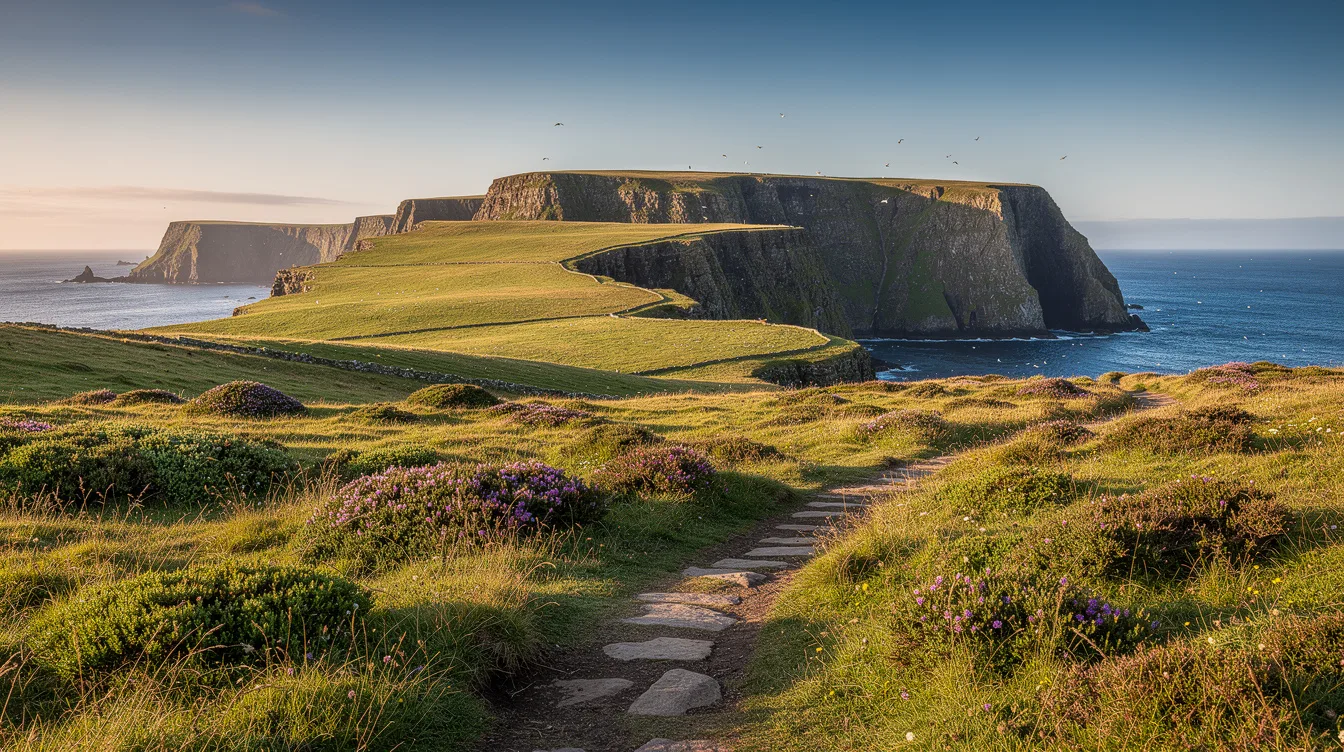
Fair Isle is only 3 miles long, yet at least 27 bird species made their first UK appearance here. That figure changes the way you see this southern Shetland outpost. You are not arriving for a casual coastal walk.
You are arriving at a migration watchpoint where an unfamiliar shape in the grass can matter.
The island sits between Mainland Shetland and Orkney, exposed to the North Sea and Atlantic. Its position puts passing land birds onto a very small target, so Fair Isle has recorded more than 350 species. The air can feel sharp even in summer, with wind pushing through the moor and salt drying on your jacket.
Birds are the reason to come
More than 350 species have been recorded here. That is a serious record for a place smaller than many American city parks. But you do not need to be a life-list obsessive to feel the pull of it.
You walk slowly because the next dip in the ground might hold a bird that has crossed a sea. Fair Isle is especially known for rare Siberian passerines, including Pechora pipit and Pallas’s grasshopper warbler. The thrill is real, though sightings are never promised.
Fair Isle Bird Observatory grew from that obsession with migration and has long provided much of the island’s visitor accommodation. Birding gives the island its pace. And if you come expecting a neat schedule of guaranteed sightings, this is not that kind of trip.
A 712-foot climb with no soft edges
The island is about 1.5 miles wide, so you can feel the sea close by almost anywhere. Its western cliffs rise in places, while Ward Hill reaches 712 feet. The scale is compact, but the exposure makes every walk feel larger.
You should bring waterproof layers and proper boots. Fog can close in quickly, and strong winds are part of the bargain rather than an inconvenience. But that rawness is why the views do not feel staged: sheep crofts sit low against moorland, and lighthouses mark both ends.
Summer brings wildflowers across the island. The colors can be surprisingly soft against dark turf and pale rock. And because Fair Isle is best explored on foot, you will hear gulls and wind long before you hear another visitor.
Getting there is part of the decision
Fair Isle is not far on a map. Travel works differently here. Scheduled flights from Tingwall take about 25 minutes, while the Good Shepherd IV ferry from Grutness takes about 2.5 hours.
Both depend on weather, so build contingency days on either side of your visit. You will want advance accommodation plans too. The island’s isolation is the appeal, but it also means you cannot treat a delayed crossing as a minor hiccup.
Can you arrive without being flexible?
No. Weather can disrupt the ferry and small-aircraft flights, especially when sea conditions or visibility turn. But if you can leave room in your plans, the uncertainty becomes part of the island’s character.
The last bit of mainland control drops away before you step ashore.
There are no conventional pubs or restaurants. A shop and post office cover essentials, while visitor meals are generally arranged ahead, including through the observatory. Low infrastructure is the point here, though it demands more preparation than most Scottish island breaks.
Crofts, wool, and a shipwreck story
Roughly 50-60 permanent residents live largely among crofts in the island’s south. Crofting still matters alongside conservation, tourism, crafts, and remote-compatible work. You will notice that Fair Isle’s famous knitting is not a souvenir concept detached from place.
Fair Isle knitwear uses stranded-color patterns with repeating geometric motifs. The name has traveled far beyond the island, but the original setting is modest and working. And that contrast gives the sweaters more weight than anything behind a department-store display.
History arrives just as abruptly. In 1588, the Spanish Armada flagship El Gran Grifón wrecked in Stroms Hellier cove, forcing 300 sailors to spend six weeks with islanders. The island’s 14 scheduled monuments range from early human activity to Second World War remains.
Come for the weather, not despite it
Summer is the clearest fit for walking, wildflowers, and birdwatching, subject to transport and weather. Fair Isle has cool summers and mild winters because it lies far from a large landmass. The conditions can change quickly, so your best day may begin gray and end in clean late light.
The National Trust for Scotland has owned the island since 1954. That stewardship keeps the focus on a lived-in island rather than a resort version of one. But Fair Isle will frustrate travelers who need fixed plans or constant convenience.
Stay long enough to let the weather rearrange the day. By the time the ferry pulls away from the harbor, the wind is back over the moor, and a small island is listening for the next bird.