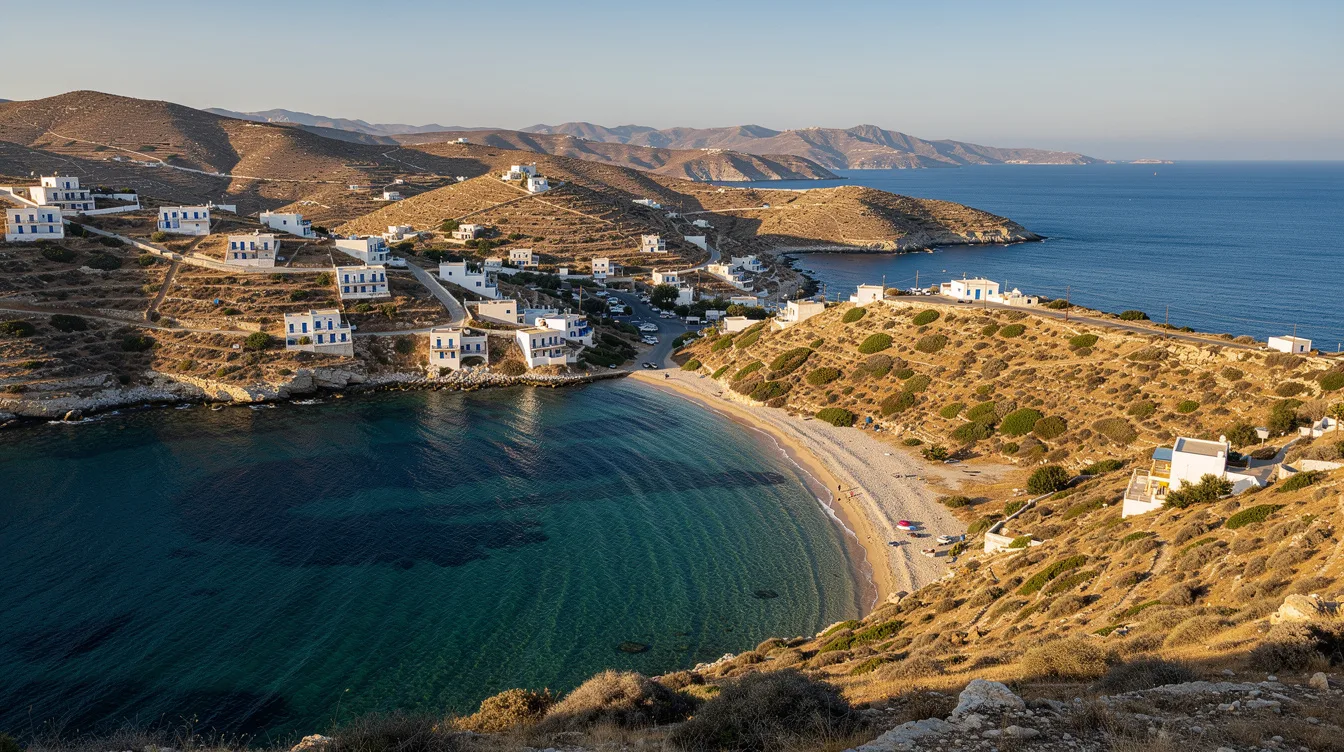
Astypalaia nearly comes apart at Stenó, where a strip of land just 413 feet wide keeps its two larger halves connected. You can feel the island’s odd geometry in the way roads, coves, and plans pull you in opposite directions.
That narrow waist is why Astypalaia gets called the butterfly of the Aegean. But this isn’t a place built around a single photo stop. Its rocky coast keeps breaking into small bays, so the best days often involve changing direction.
The island belongs to Greece’s Dodecanese, though its white cubic homes can feel closer to the Cyclades. That overlap gives it a useful tension: familiar Greek-island imagery, but a slower tempo than the big-name summer circuit.
And at 11.2 miles long, it’s compact enough to understand without treating it like a checklist. You’ll still want wheels, because the island’s mountain roads and distant beaches make walking a limited strategy beyond town.
The 413-foot pinch point changes the whole trip
Stenó is the fact that makes Astypalaia more than another whitewashed island. A band of land roughly 126 meters wide almost separates it in two, which explains the butterfly shape before anyone has to point it out.
On a map, that near-break feels dramatic. In person, it makes the island seem less polished and more physical, all hard edges and sea on both sides. And you’ll notice how quickly one coast can feel unlike the other.
There are only 1,376 residents, according to the 2021 census. That doesn’t mean nobody visits. It means the island still has room for ordinary routines, especially once you leave the main evening streets.
But don’t mistake quiet for effortless. Remote beaches demand a car, scooter, or quad, and a quad is less comfortable on longer rides. The payoff is choice: you can decide between an easy beach day and a rougher route with fewer people.
Chora earns your evening hours
Chora, the main village, rises above the former harbor of Pera Gialos. White lanes climb toward a Venetian castle, with windmills and sea views turning a simple pre-dinner walk into the evening’s main event.
You should stay here if walking to restaurants and bars matters. It’s lively, but never a party-island version of lively. The streets gather voices after sunset, then settle down without asking you to compete with a nightclub.
And Pera Gialos sits below town, close to the archaeological museum and boat departures. That makes Chora practical as well as handsome. You can spend the morning near the water, then climb back up when the light softens.
The old port has the kind of harbor atmosphere that makes you delay dinner. Salt hangs in the air, the boats knock gently against their lines, and the castle hill stays in view even when you turn toward the shore.
Pick your beach by how much effort you want
Livadi is the uncomplicated choice, with a family-friendly beach and taverns nearby. If you want a swim without a logistical project, go here. But its easy access means it won’t deliver the isolated feeling of the rougher bays.
Kaminakia offers a large, secluded bay with clear water, though the road asks more of you. Plan a full day rather than a quick dip. The ride is part of the bargain, and so is the sense that you’ve gone somewhere deliberate.
Vatses feels wilder, with access that can be rough by road or easier by sea. Agios Konstantinos is better suited to late-day light. You don’t need to chase every beach, because switching coves too often defeats Astypalaia’s unhurried appeal.
And boat trips from Pera Gialos reach Kounoupa and Koutsomitis, known for very clear water. Conditions and available boats decide the day, so keep your plans flexible. The sea is in charge here, which is part of the point.
Come when the island still has breathing room
Late May through June is the strongest window, with pleasant conditions and lighter crowds. September is another smart choice, because the water remains warm while the high-season pressure starts to loosen.
July and August are more animated, but flights, ferries, vehicles, and hotels get tighter and pricier. You can still enjoy the island then. Just reserve early and accept that spontaneity costs more when everyone arrives at once.
A flight from Athens takes about one hour, according to the provided tourism summary. Flights are limited and seasonal, so check operating days before building a plan around them. The ferry from Piraeus takes roughly 8-10 hours, depending on vessel and route.
Outside the warmer travel period, connections can become sparse or disappear on some winter days. That’s the trade-off. By the time the last boat leaves Pera Gialos, the water goes dark beneath Chora’s hill, and the island feels briefly held together by silence.