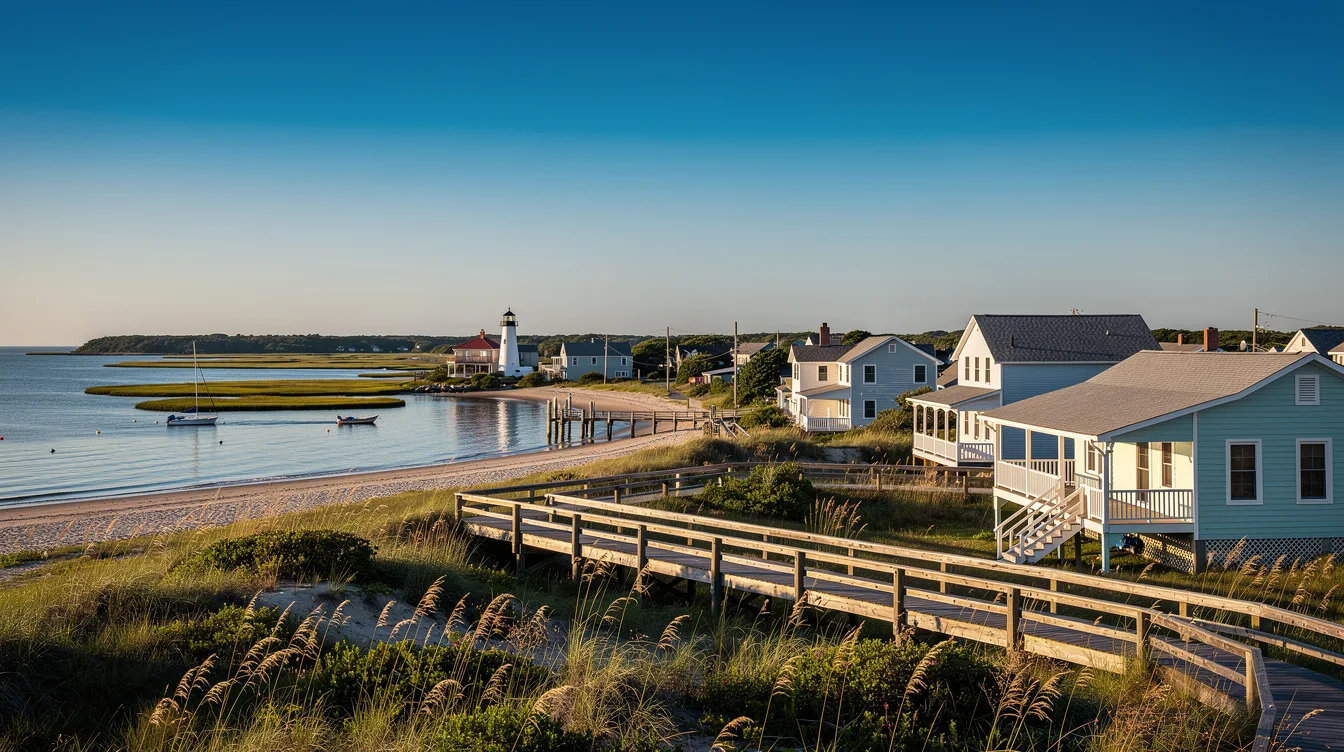
No bridge reaches Ocracoke, a small island at the southern end of North Carolina’s Outer Banks. You arrive by ferry, private boat, or small plane, and that extra effort changes the mood before you ever reach the dock.
The island sits in Hyde County between the Atlantic Ocean and Pamlico Sound. And because access depends on water or weather, Ocracoke feels slower than the busier Outer Banks towns. You can read more about the Outer Banks before choosing your route.
The ferry ride is part of the destination
And the simplest arrival is the ferry from Hatteras Island, which takes about one hour. The ride is usually free, but schedules can change with weather and sea conditions.
But you can also arrive from Swan Quarter on the mainland or Cedar Island farther south. Those ferries take longer, cost money, and may require reservations depending on the season. If you want the least complicated trip, choose Hatteras and check the North Carolina Ferry System before leaving.
Can you reach Ocracoke without a car?
Yes, but you’ll need to plan around the ferry. Private boats and small aircraft can reach the island, though they aren’t the usual choice for visitors. Once you arrive, bicycles and golf carts fit the village better than a car because distances are short and the pace is deliberately unhurried.
Sixteen miles of island, with very little development
And Ocracoke Island stretches about 16 miles, with most of it protected within Cape Hatteras National Seashore. NC 12 runs along the island, linking the ferry dock, village, beaches, and smaller access points. Beyond the pavement, dunes and open sand create the feeling of a place still shaped by wind.
But the island isn’t high or protected from storms. Its average elevation is less than 5 feet above sea level, so flooding remains a real concern during hurricanes and large storms. You should treat weather alerts seriously, especially when your departure depends on a ferry.
At the village end, Silver Lake Harbor gives Ocracoke its working center. The water there is calmer than the Atlantic, and the harbor is a good place to slow down after the crossing. For broader beach planning, the North Carolina beach guide can help you compare the coast.
What to do after the boat pulls in
And Ocracoke Beach is the main reason many travelers stay for several nights. The sand is broad, the dunes are lightly built up, and the beach feels more open than the developed stretches farther north.
But the beach isn’t the whole story. Walk toward the village to see the Ocracoke Lighthouse, which has operated continuously since 1823. You can also explore quiet residential streets, browse local shops, paddle on Pamlico Sound, or watch birds moving along the Atlantic Flyway.
My preference is to spend one morning outside the village, then return by bicycle before the heat settles in. The island is easygoing beyond the built-up area. You can find more ideas in this guide to Ocracoke travel.
A small village with a long memory
And Ocracoke’s history reaches back to 1718, when the pirate Blackbeard was killed near Ocracoke Inlet. That story still follows the island, but the village feels more maritime than theatrical, with old houses, narrow streets, and working harbor views.
But the past is also quieter here. The British Cemetery remembers sailors whose bodies washed ashore during World War II, and a yearly ceremony honors them in May. The village historic district was added to the National Register of Historic Places in 1990.
The island had 797 residents in the 2020 census, so don’t expect nightlife, major shopping, or international hotel brands. Ocracoke suits two to four nights, especially if you want beaches, seafood, and a slower road trip. When the last ferry leaves, the harbor settles into the sound of rigging and water.