
A new home can feel settled during the first week with free layout changes, softer lighting, and a $200-$800 refresh. The common mistake is buying bedding before fixing glare, circulation, and visual noise. Start with the bed, then layer textiles, light, and quiet storage. Small moves matter!
- Place the bed diagonally away from the door
- Layer blackout curtains beneath linen panels
- Why does a plush wool rug belong under the bed?
- Paint one wall in a calming mineral tone
- Style matching bedside tables for visual balance
- How does the Three-Height Light Stack clear both nightstands?
- Tuck a slim bench beneath the window
- Fold a quilt at the footboard
- Hang a soft textile above the headboard
- Arrange amber lamps for evening warmth
- Tea Tray or Table Clutter?
- Add a woven basket for bedtime layers
- Frame the window with trailing greenery
- Choose low-profile furniture for open circulation
- What belongs in the Welcome Vase Moment?
- Build a bedside reading nook with cushions
- Hide charging cables inside a nightstand tray
1Place the bed diagonally away from the door
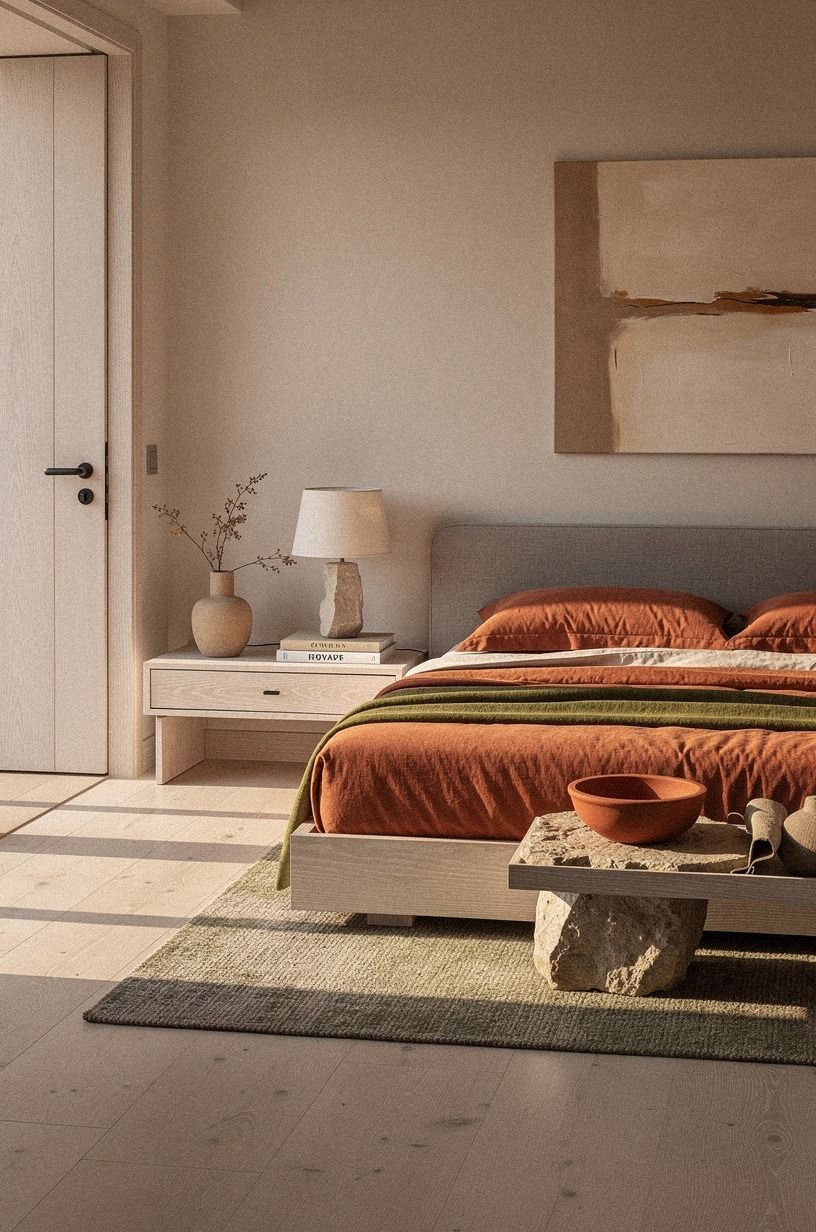
The Diagonal Calm Rule gives your bed a stronger visual position without demanding renovation. Set the headboard against a solid wall, then shift the bed slightly so the doorway remains visible without sitting directly in your sightline. You’ll gain a calmer arrival and a more open path around the room.
Choose cerused white oak for the headboard or a low platform frame when your room needs earthy texture. Terracotta bedding, honed stone accessories, and olive cotton bring warmth without making the space heavy. If your room is narrow, leave enough clearance for the door swing and keep the foot of the bed visually light.
Don’t push every piece against a wall simply because the room is new. Your layout should serve movement first.
A diagonal bed can make a plain rental feel more intentional, especially beside hotel-inspired bedroom details. You’re creating a useful sightline, not following a rigid rule.
2Layer blackout curtains beneath linen panels
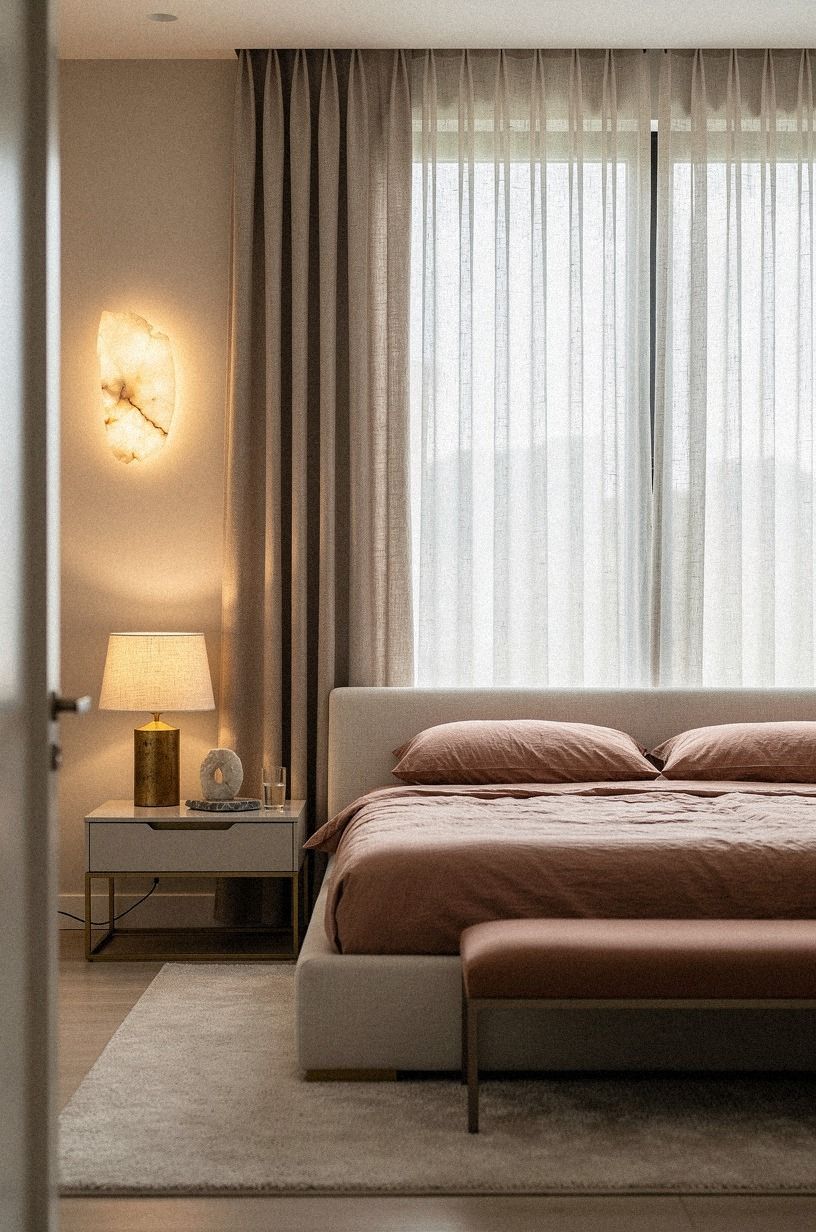
The Layered Darkness Method lets your windows work for daytime softness and nighttime quiet. Hang the curtain rod 4-6 inches above the frame, then let the panels fall all the way to the floor. The lower line creates a longer, calmer wall and keeps your room from looking temporary.
Choose clay blackout curtains beneath Belgian flax linen panels for a gentle, backlit effect. Aged brass hardware adds a warm glint without competing with the fabric. You’ll want the blackout layer to close fully, while the linen layer can remain open during the day for filtered brightness.
Skip short curtains that stop at the sill. They make your bedroom feel visually busy and leave the window unfinished. If you’re working with a rental, a tension rod and removable brackets can create the same layered effect without permanent holes.
The room should feel soft, not sealed off, and your window should stay connected to the rest of the space.
3Why does a plush wool rug belong under the bed?
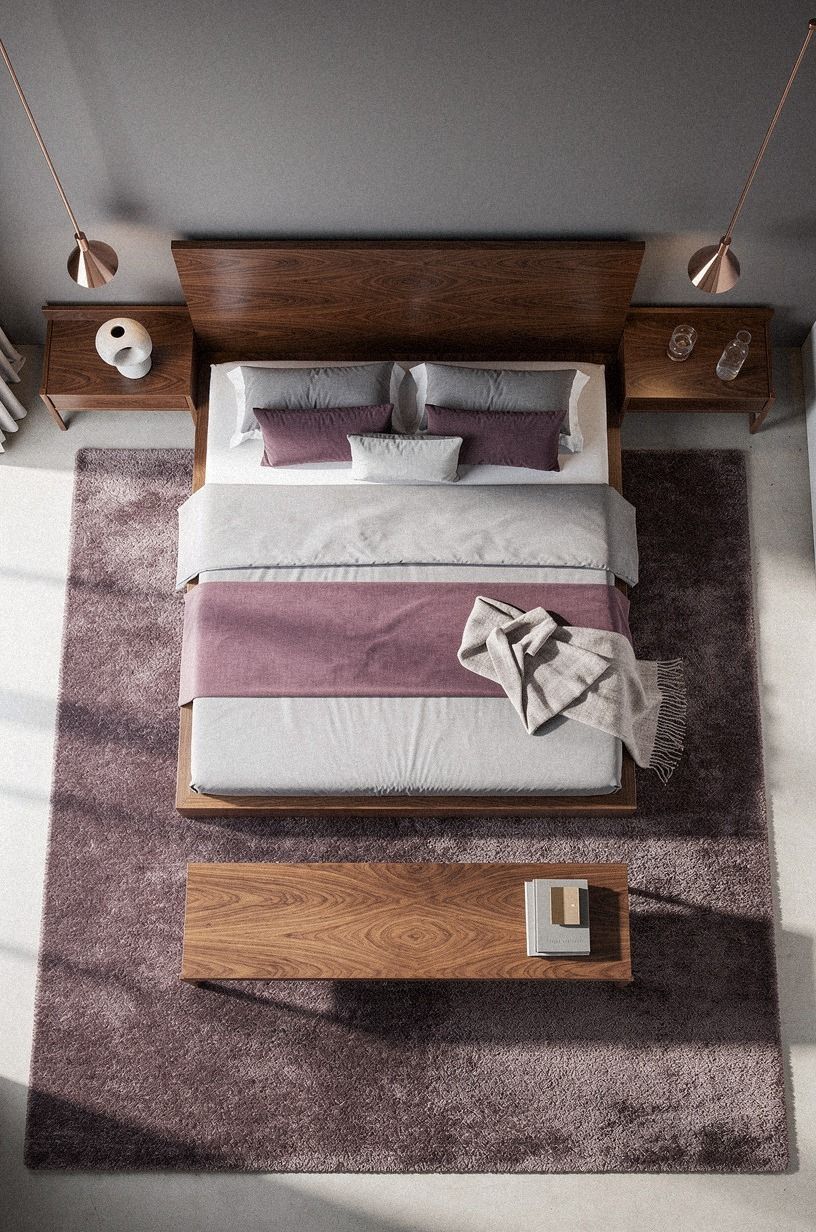
The Three-Texture Anchor places the rug beneath the bed so your first step lands on something warm instead of a hard floor. Choose a rug wide enough to extend beyond both sides and the foot of the bed. Your room will feel more generous when the rug frames the furniture rather than disappearing beneath it.
A plush wool rug adds tactile comfort, while natural jute gives a breezier, more casual character. For a polished bedroom, consider hand-knotted wool, flatweave cotton, or a low-pile blend that allows doors to open freely. You’ll want enough texture to feel inviting without creating a difficult cleaning routine.
If the budget is tight, place two matching runners beside the bed or use a smaller rug at the footboard. That approach won’t provide the same continuous anchor, but it can still give your first step a softer landing. Check the rug pad, door clearance, and furniture legs before committing.
4Paint one wall in a calming mineral tone

The Mineral Wall Principle keeps color focused. Paint the wall behind the headboard rather than every surface, especially during a first-week setup when lighting and furniture placement may still shift. One controlled plane can give your room depth without creating a long painting project.
For a navy, white, and walnut palette, Farrow & Ball Pigeon No.25 offers a muted mineral quality that can soften sharp new construction. If your room receives little daylight, test the color beside the window before committing. A shade that feels serene in the afternoon may look much darker after sunset.
Use Benjamin Moore White Dove OC-17 on the remaining walls when you need a warm white backdrop. It won’t fight the walnut or warm travertine accents. You’re choosing atmosphere, not decoration alone, so watch the color during morning, afternoon, and lamp light.
A third option, Sherwin-Williams Agreeable Gray SW 7029, can work when your furnishings lean cooler. Sample every paint before purchase, because the same color can shift beside cream linen, brass, charcoal, or natural oak. A thoughtful swatch saves money and keeps your finished room graceful.
5Style matching bedside tables for visual balance
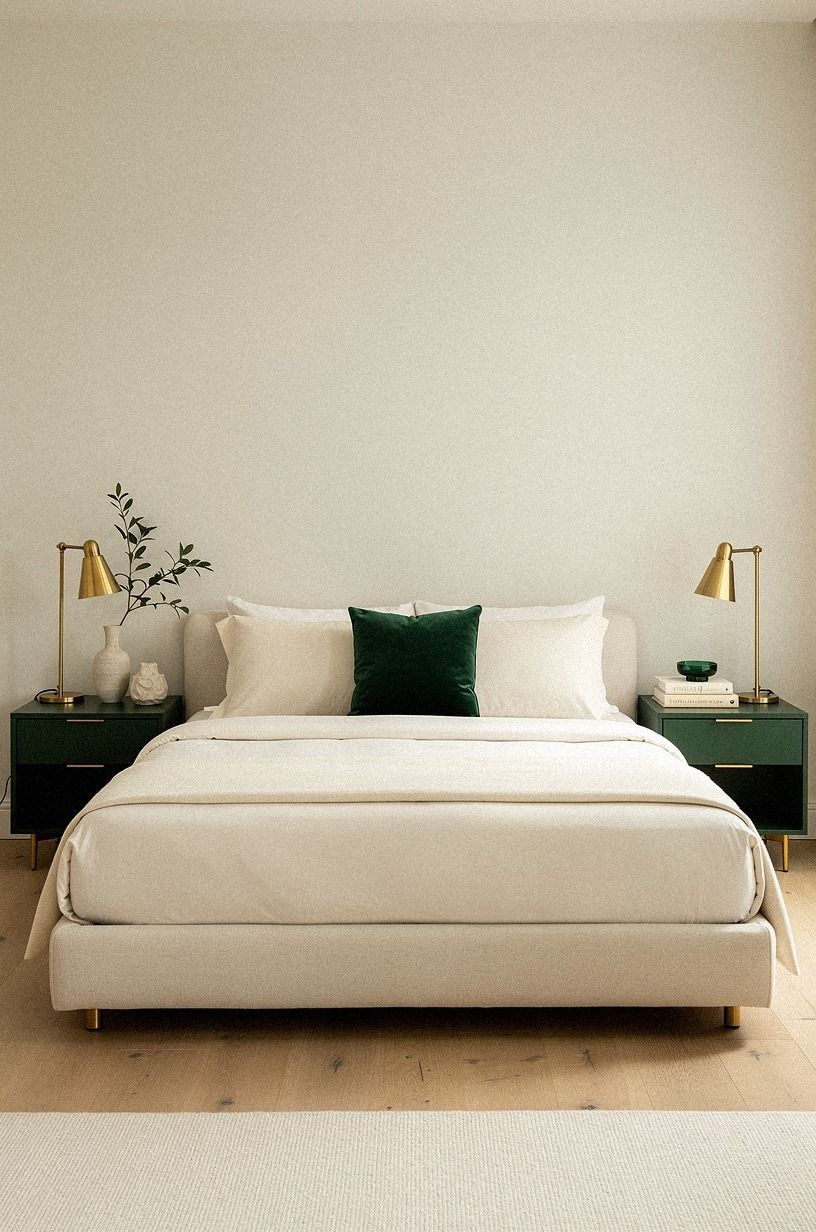
The Twin Table Balance makes a bedroom feel composed even when the furniture budget is modest. Matching tables create a crisp, symmetrical frame around the bed, while similar-height alternatives can provide a more collected look.
Choose oak nightstands, painted wood tables, or compact walnut cabinets according to your room’s palette. Your table only needs enough surface for a lamp, water glass, and one small personal item. You’ll preserve a polished appearance when the top remains useful rather than crowded.
If matching pieces feel too formal, repeat one detail instead. Brass pulls, reeded fronts, or cream ceramic lamps can connect two different tables.
Don’t force symmetry when the room has an awkward window or uneven wall. A balanced visual weight can feel more natural than identical furniture.
6How does the Three-Height Light Stack clear both nightstands?
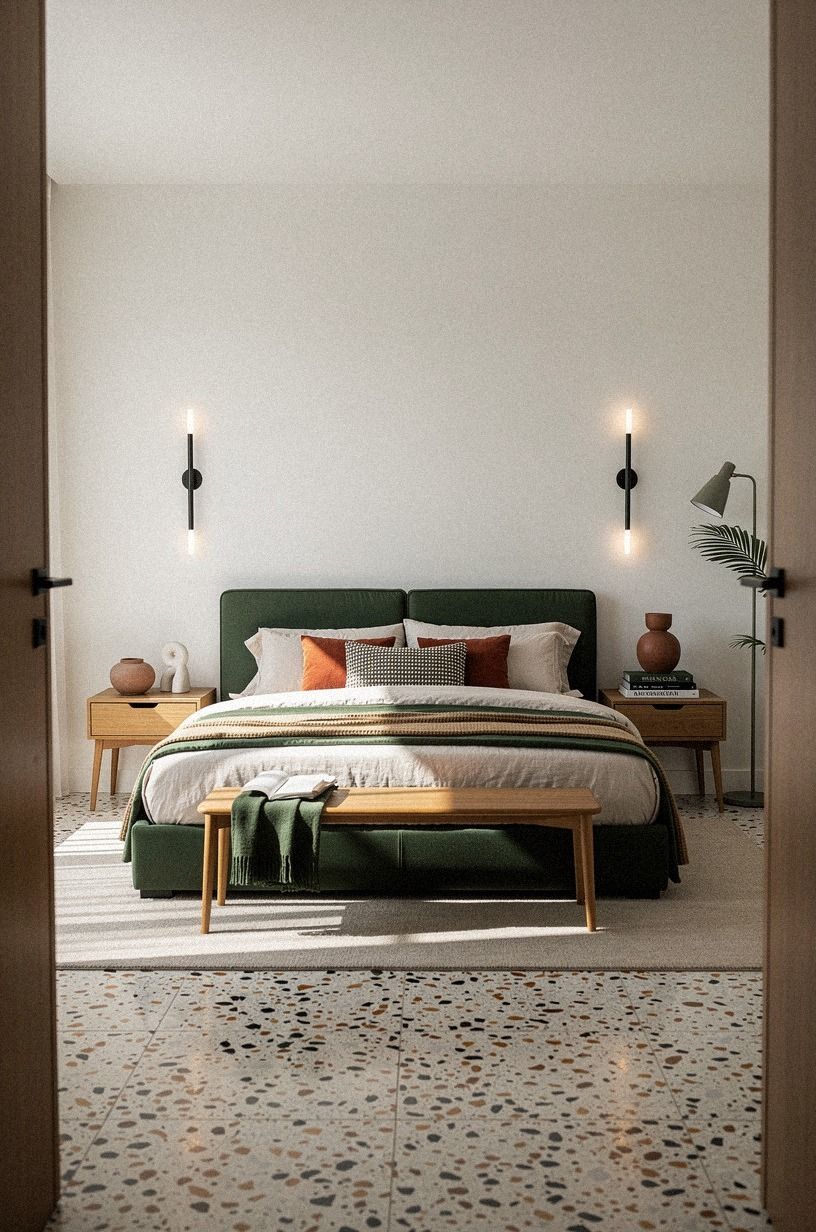
The Three-Height Light Stack uses ceiling light, bedside task light, and low ambient glow to give your room depth. It’s especially useful when a small bedroom has limited surface area.
Mount plug-in sconces above the nightstands when you want to clear space for books, glasses, or charging devices. If wall mounting isn’t practical, choose slim table lamps with narrow bases. You’ll keep the bedside zone functional without adding visual weight.
Don’t rely on one overhead fixture. It’s usually too bright for winding down and too central to create a calm atmosphere.
Add a low lamp on a dresser or shelf, then let the light levels overlap gently. Your bedroom can feel layered without feeling dim.
Check the switch location before installation. You don’t want to reach behind the headboard every evening, and you shouldn’t need to cross the room to turn off a bedside light. Small access decisions matter during the first week!
7Tuck a slim bench beneath the window

The Window Bench Pause gives your room a useful stopping point without blocking circulation. A slim oak bench, upholstered perch, or woven-seat stool can fill the space beneath a window while keeping the room open.
Choose a bench height that sits below the sill and a depth that leaves the curtains free to move. You’ll gain a practical place for folded clothing, a morning book, or a decorative cushion. Don’t turn the bench into a permanent drop zone.
A bouclé cushion can soften a hard surface, while washed linen keeps the arrangement relaxed. If the radiator sits beneath the window, preserve airflow and use heat-safe materials. Your room will feel more refined when comfort never blocks a necessary function.

8Fold a quilt at the footboard

The Footboard Fold creates a visible layer of warmth without covering the whole bed. Fold a quilt into thirds and place it across the lower section, leaving enough of the duvet visible to keep the arrangement light.
Choose washed cotton, linen, or a lightweight matelassé in a color pulled from your curtains or rug. You’ll create connection without matching every surface. A rust quilt can echo terracotta bedding, while faded blue can support a mineral wall.
Don’t use a heavy blanket if the footboard already feels bulky. Your bed should retain a clear silhouette.
A narrow fold is easier to lift, wash, and replace when the room needs a seasonal change. That small layer can make the whole arrangement feel finished!
9Hang a soft textile above the headboard
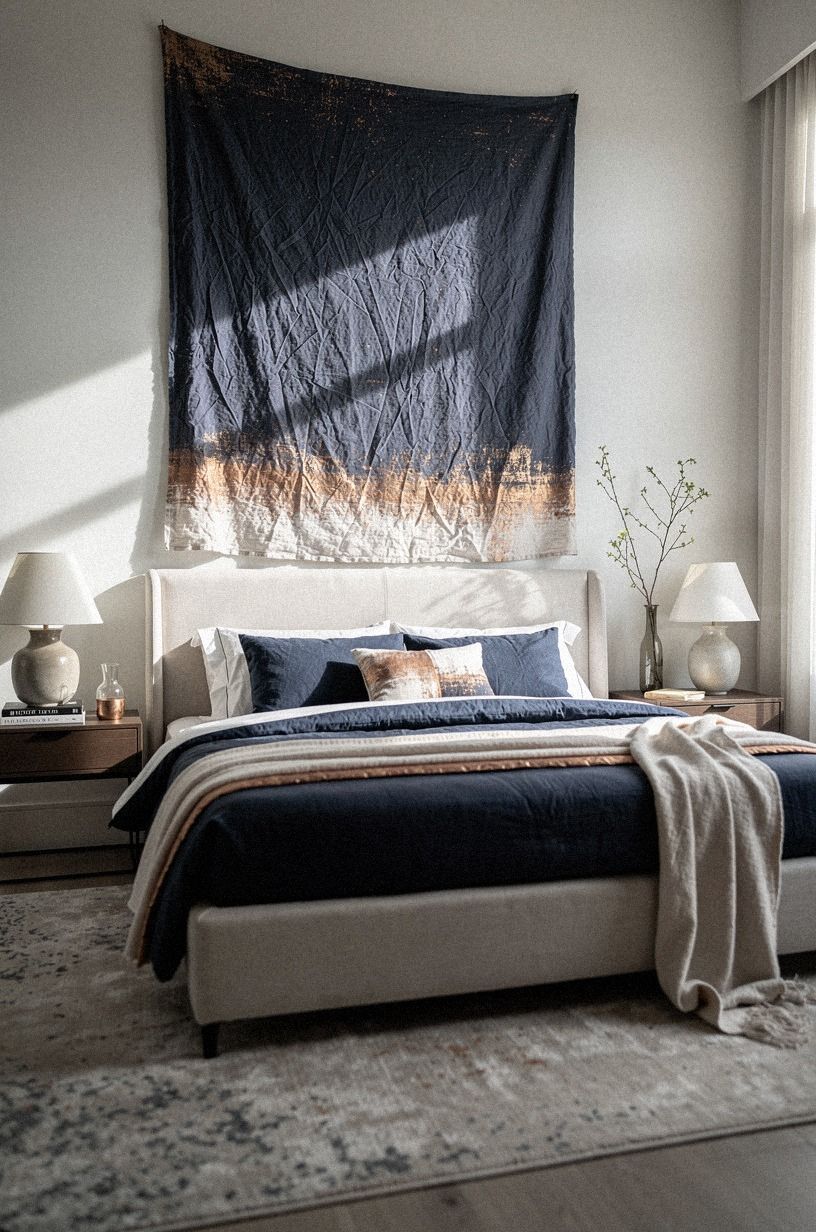
The Soft Horizon Frame adds texture where a large piece of art might feel too formal.
10Arrange amber lamps for evening warmth
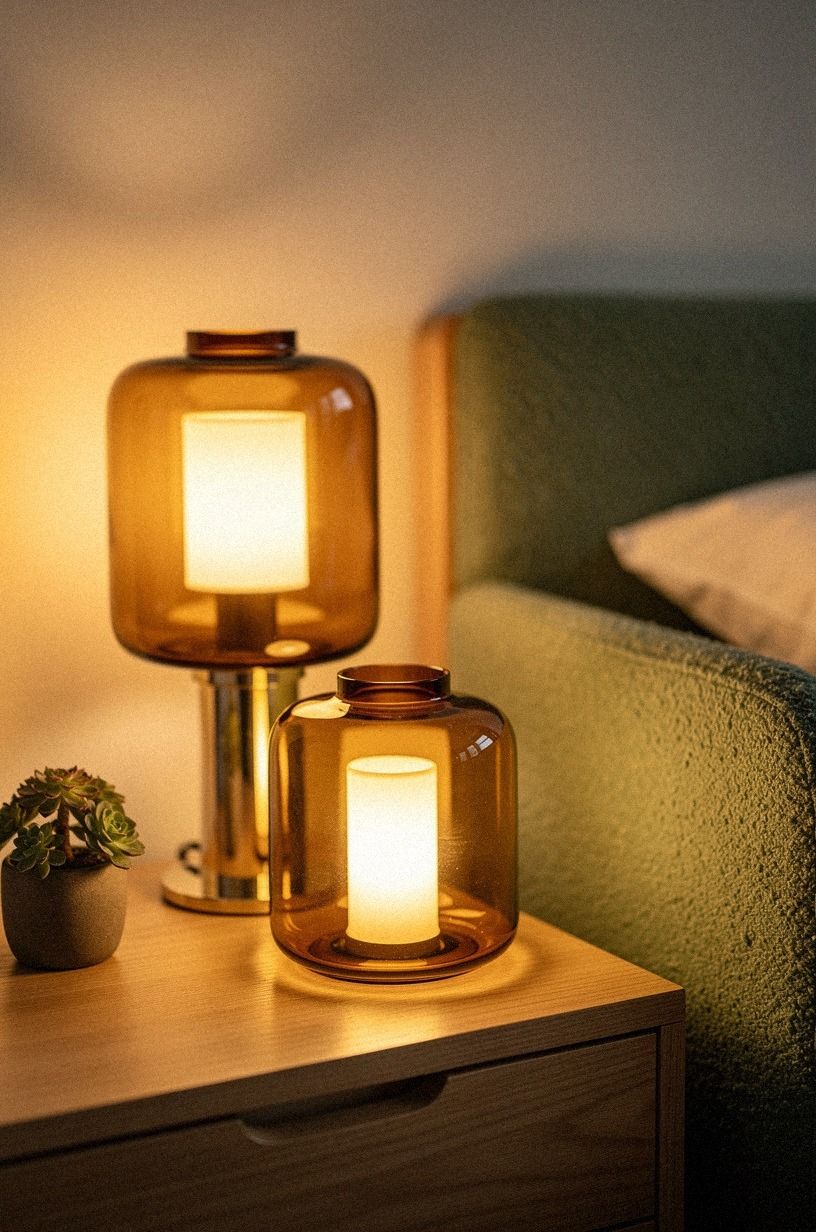
The Amber Pool Method places warm light where your eyes need it most. Choose bulbs between 2200K and 2700K for a mellow, golden atmosphere, then position the lamps below eye level when possible.
A pair of amber glass lamps can create a rich glow beside dark walnut, cream upholstery, or aged brass. You’ll get a more atmospheric result when the shades diffuse the bulb instead of exposing a sharp point of light. A dimmer gives your room useful flexibility.
Don’t scatter warm lamps randomly. Use one near the bed, one across the room, and one at a lower level so the light travels through the space. Your bedroom will feel more generous when each corner receives a gentle pool rather than one harsh center beam.
11Tea Tray or Table Clutter?
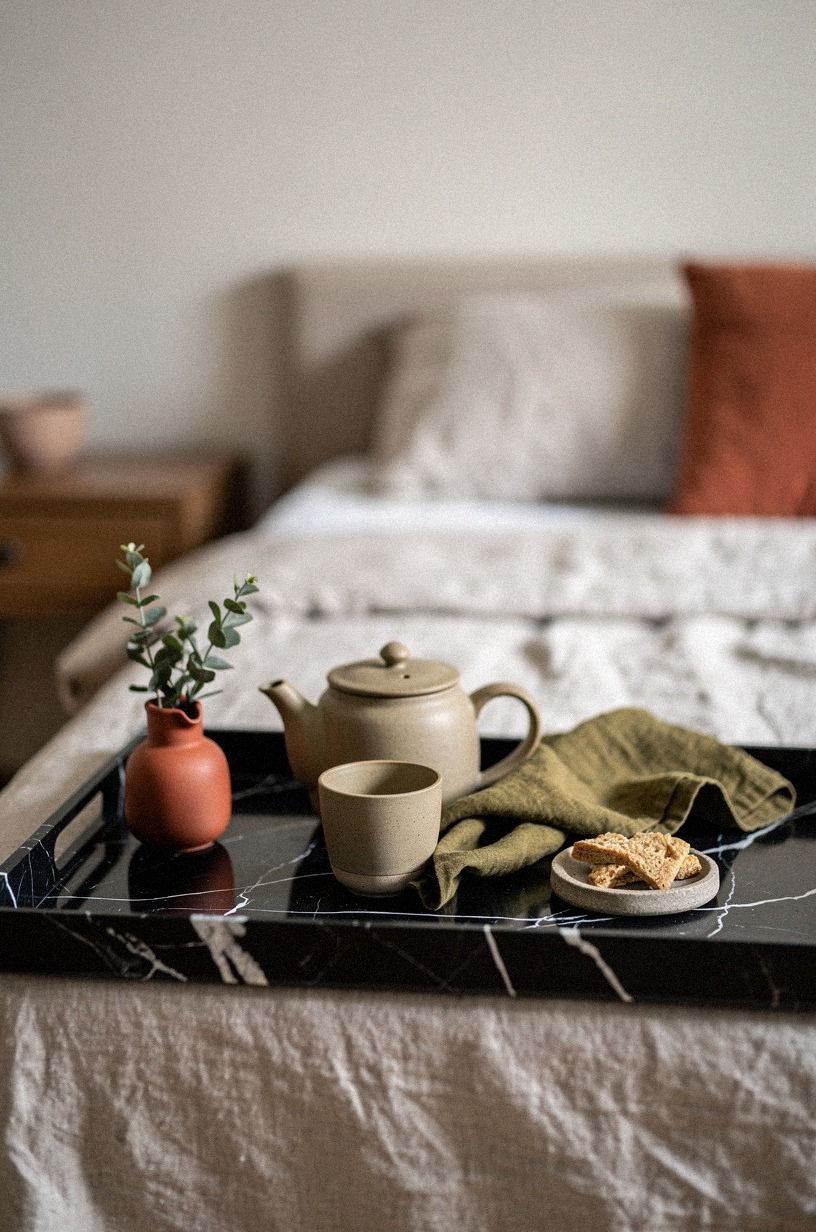
The Bedside Pause Tray gives your evening routine a defined home. A shallow tray can hold a water glass, book, lip balm, or reading glasses without allowing every small item to spread across the nightstand.
Choose stoneware, wood, or lined metal according to your room’s palette. A tray with low sides will feel lighter, while a handled design can move easily when the surface needs cleaning. You’ll keep the bedside area useful without making it look like a storage station.
Don’t turn the tray into a catchall. Your phone charger, receipts, jewelry, and loose packaging should have different homes.
It’s easier to maintain a calm surface when each category stays limited. A blackened steel tray can sharpen a pale room, while white oak feels warmer and more relaxed.
12Add a woven basket for bedtime layers
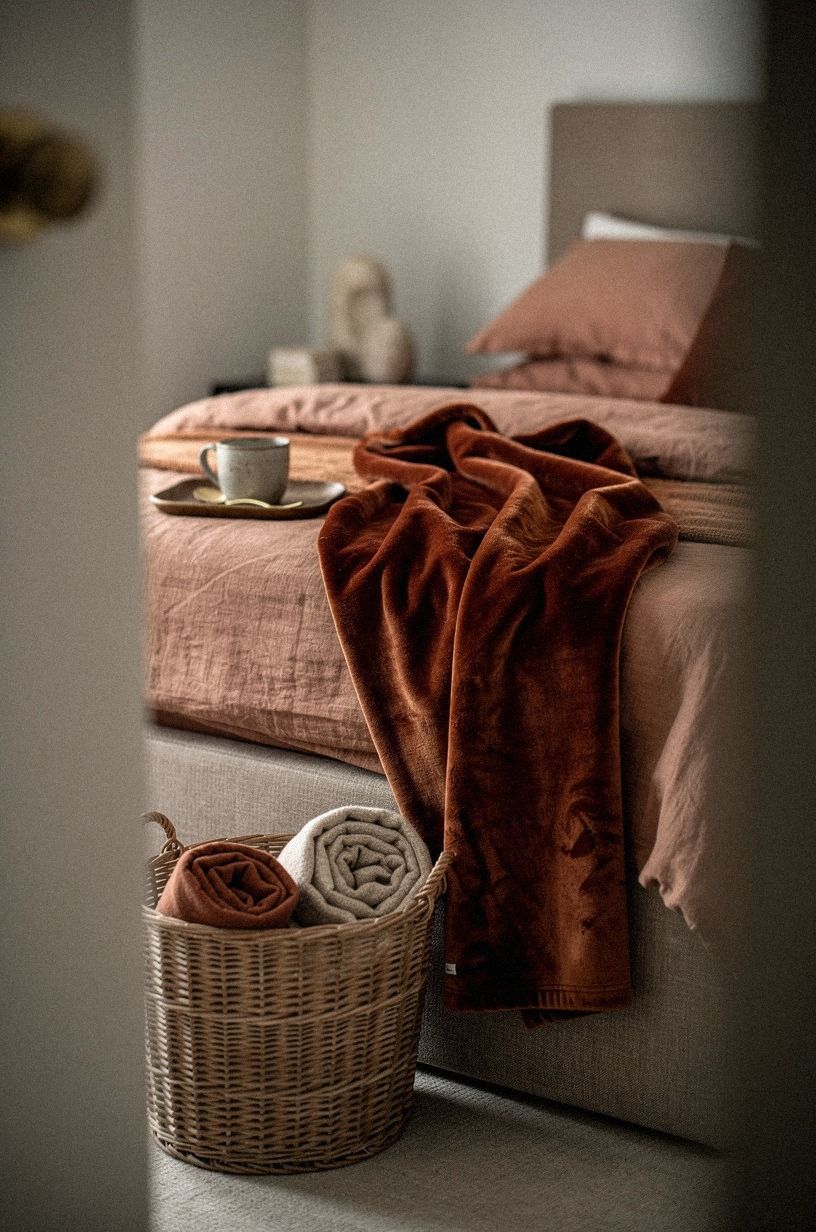
The Layered Landing Basket gives blankets, robes, and spare pillows a quiet destination.
13Frame the window with trailing greenery
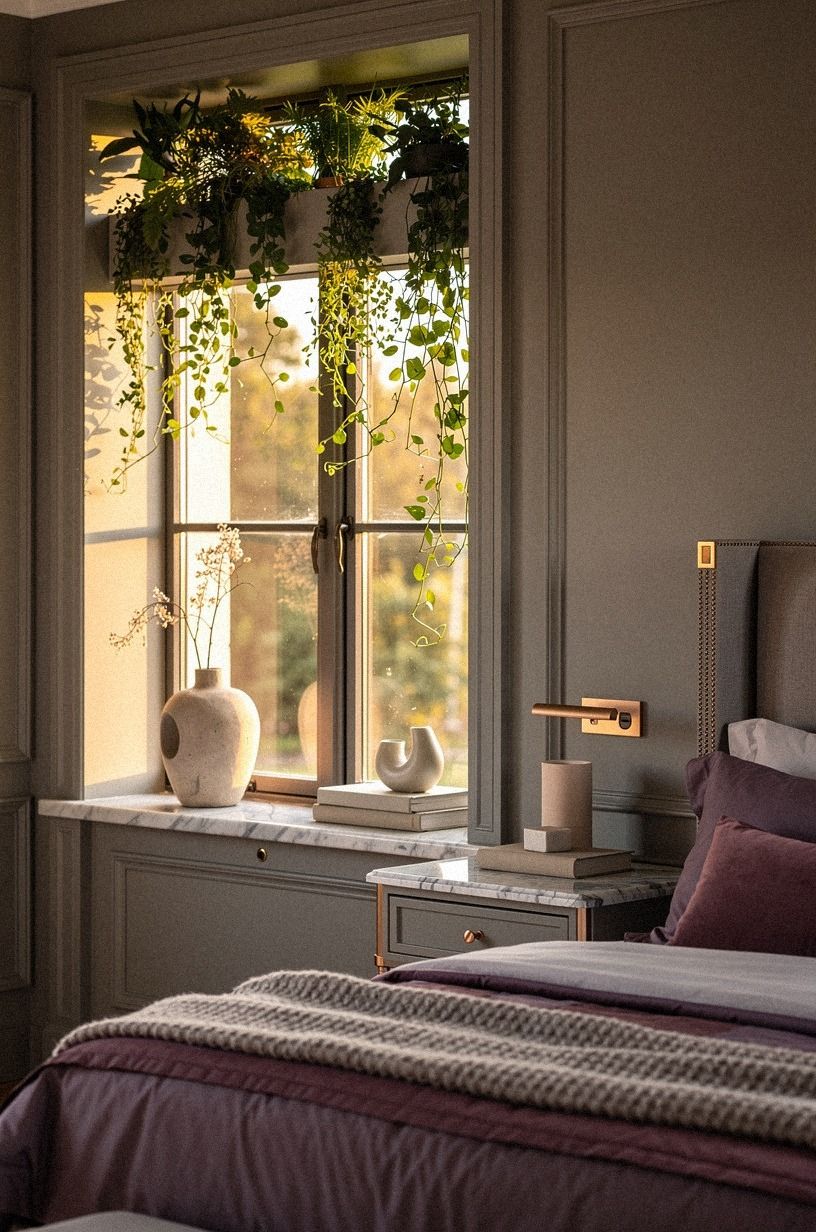
The Green Frame Method softens a window without blocking daylight. Choose one trailing plant, then place it on a narrow stand or wall-safe shelf where leaves can fall beside the glass.
Pothos, heartleaf philodendron, and string-of-hearts can provide movement without demanding a large footprint. Your plant should suit the available light and watering routine. If the window is dim, a realistic faux stem can create the same visual rhythm without adding maintenance.
Don’t crowd the sill with several small pots. One strong shape usually looks calmer than a collection of unrelated containers. You’ll also keep curtain movement clear and make dusting easier.
Protect the floor beneath the planter with a saucer or waterproof mat. Your greenery should soften the room, not create a hidden moisture problem. A matte ceramic planter can add a quiet, sophisticated finish.
14Choose low-profile furniture for open circulation
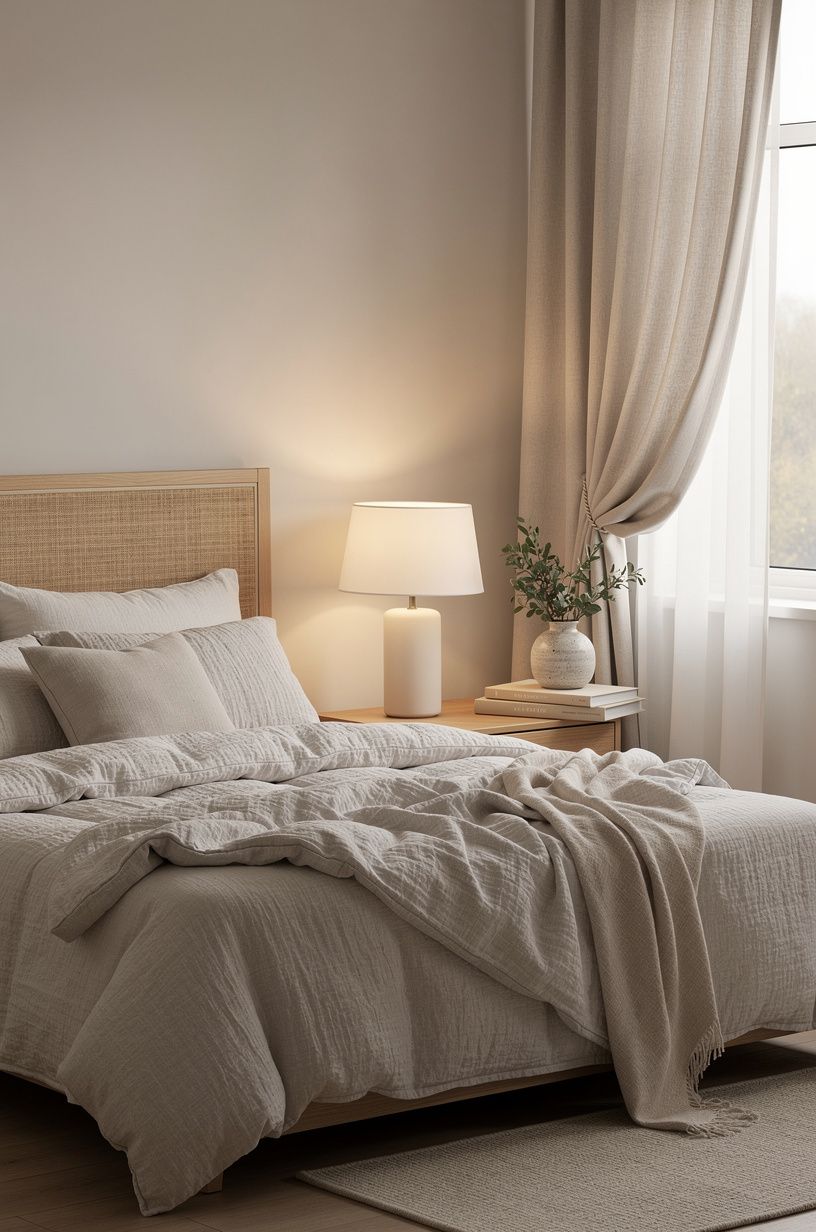
The Open Path Rule keeps your first-week bedroom easy to move through.
15What belongs in the Welcome Vase Moment?
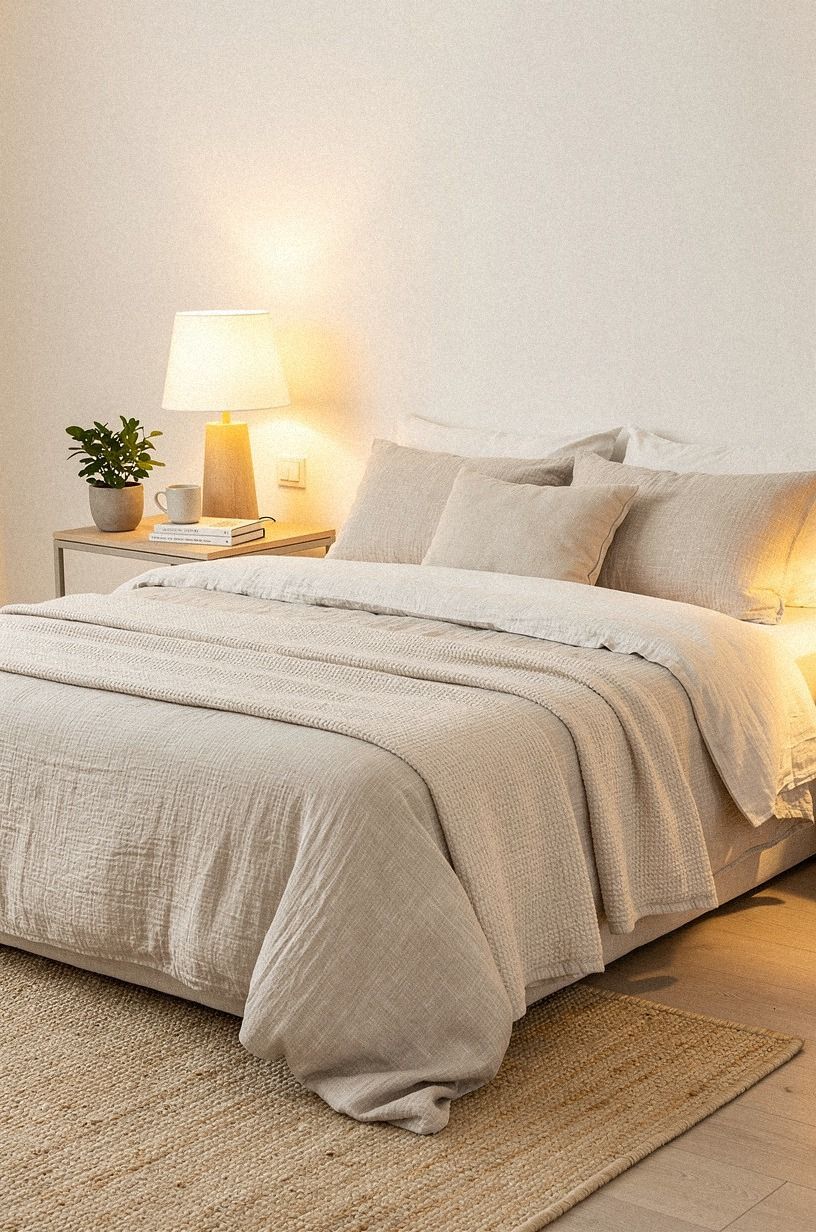
The Welcome Vase Moment gives a new bedroom a clear sign of arrival. Place a small ceramic vase on a dresser, window bench, or reading table where it can be seen without interrupting daily use.
Choose seasonal branches, eucalyptus, or a few garden stems in a restrained shape. Your arrangement doesn’t need to be large. A single branch can add height, while a low cluster can bring color beside a lamp.
Don’t place water near charging devices or delicate wood. It’s a small detail, but a stable tray beneath the vase can protect your furniture. Change the stems when they fade so the arrangement continues to feel intentional.
A matte ceramic vessel will soften a room with brass and glass. A dark stone vase can add contrast when your palette already includes cream, linen, and pale wood. The result should feel fresh, graceful, and easy to maintain.
16Build a bedside reading nook with cushions
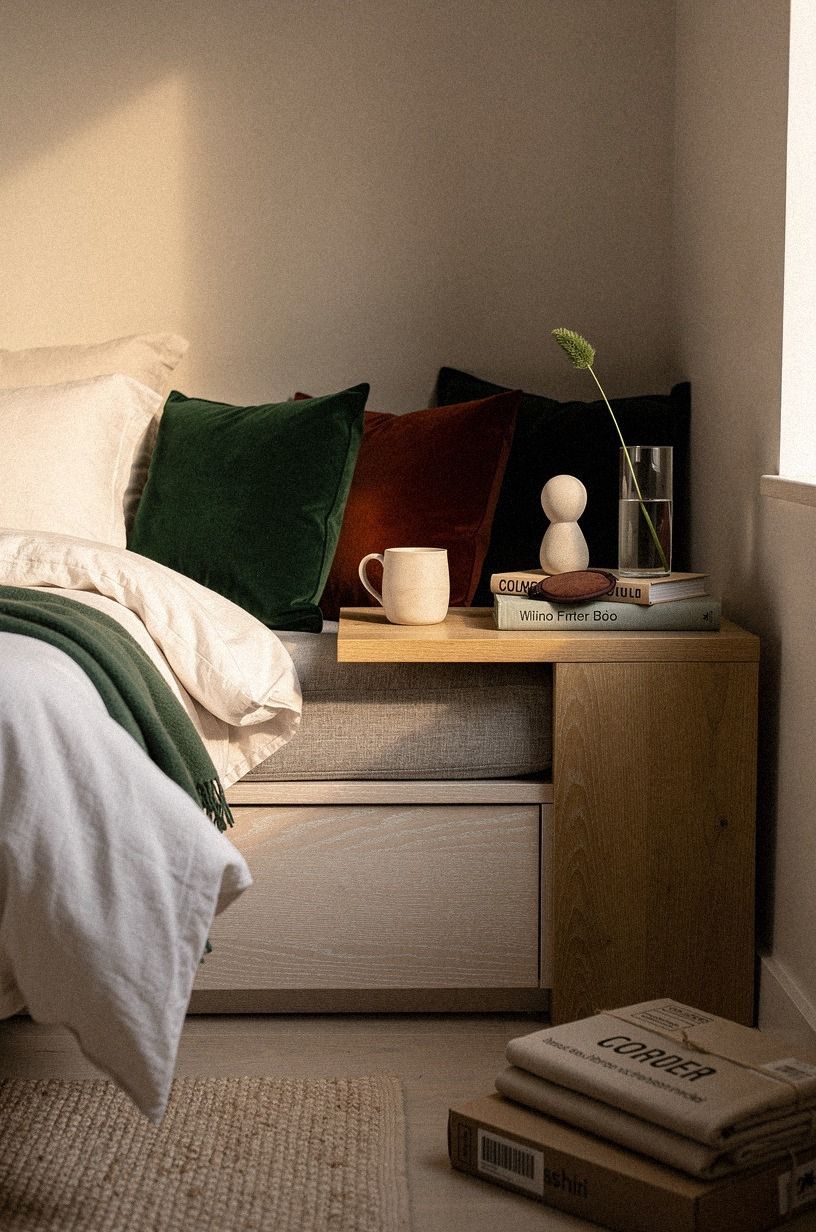
The Reading Nook Layer uses a small chair, floor lamp, and cushion stack to create a second resting zone.
17Hide charging cables inside a nightstand tray
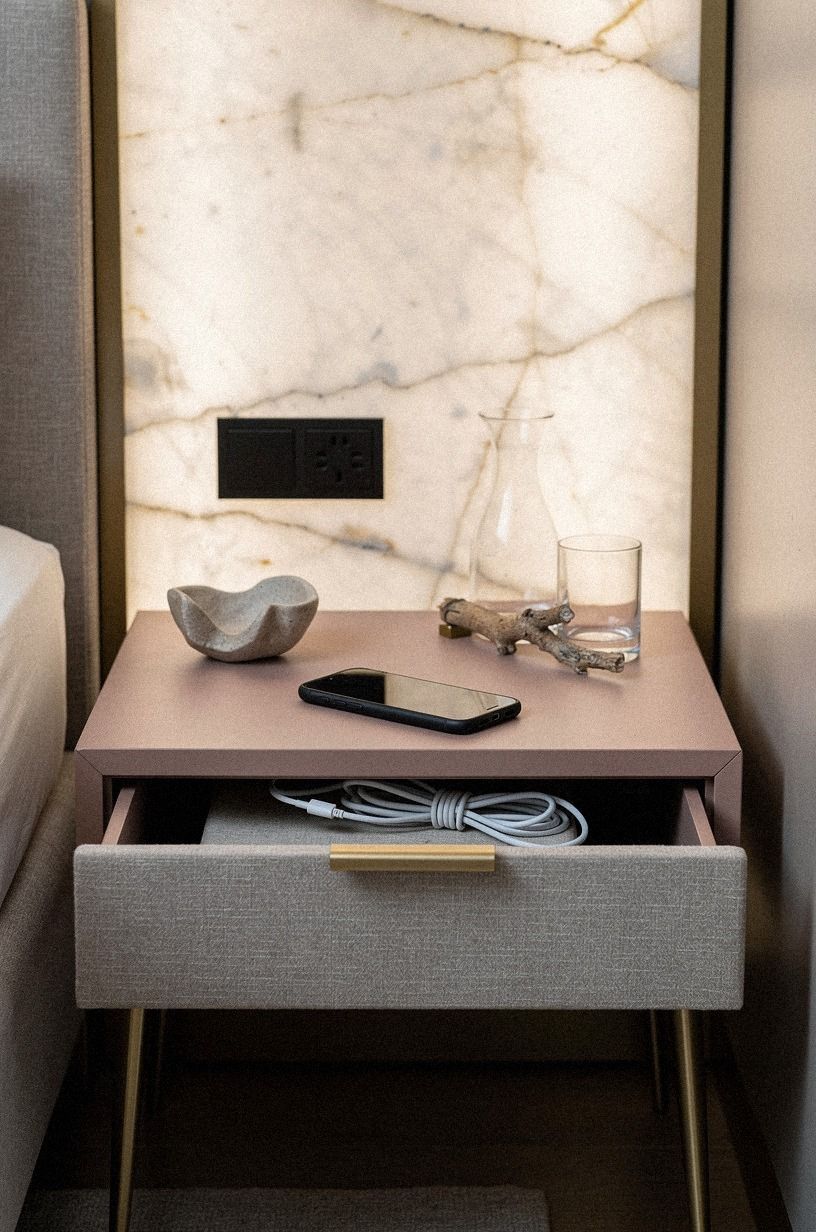
The Cable Nest Method keeps technology contained without pretending it doesn’t belong in modern life. Use a shallow nightstand tray with a rear opening for the charging cord, then guide the cable toward a nearby outlet. Dusty rose, charcoal, and brass work well with backlit translucent onyx.
Choose a tray lined with felt or leather so devices don’t slide when the surface is bumped. Your phone, watch, and reading light can share one organized zone, while the rest of the nightstand stays open. A small adhesive cable clip can hold the cord close to the back edge.
Don’t run loose wires across the floor or behind the bed where they collect dust. The tidy route is safer and easier to maintain.
If the outlet sits far away, use a longer approved cable and conceal it along the baseboard. Small organization choices create a more serene visual field.
Check that every cable remains easy to unplug. You shouldn’t need to move the bed or lift a heavy table to disconnect a device. A clear route helps your room stay orderly during cleaning and furniture changes.
The Three-Source Sleep Sanctuary Rule
A sleep sanctuary doesn’t need a dramatic renovation. It needs a clear order of decisions.
Bed placement comes first because every other choice depends on circulation and sightlines. Window control comes next because glare, fabric length, and daylight affect how the room reads from morning through evening. Lighting follows, then texture, storage, and small decorative details.
The strongest rooms also resist the pressure to buy everything at once. A $200-$800 refresh can cover paint, textiles, art, and organization, while larger furniture and custom work belong to a different budget tier. That distinction matters when a new home still has practical expenses waiting outside the bedroom.
A calm palette doesn’t mean a room must be pale. Farrow & Ball Pigeon No.25, Benjamin Moore White Dove OC-17, and Sherwin-Williams Agreeable Gray SW 7029 can each support a soft foundation, but the surrounding materials decide the character.
Walnut adds depth. Linen diffuses light.
Brass warms a hard edge.
The most useful rule is simple: every visible item should have a job, even if that job is only adding texture or directing the eye. Your room can include books, flowers, art, and technology without feeling crowded. Keep the strongest objects at different heights, leave some surfaces open, and let the bed remain the visual center.
That restraint feels sophisticated because it gives rest a clear place in the composition.
You’ll know the arrangement is working when movement feels easy and the room looks settled without looking overfilled. If the space still feels busy, remove one object before buying another. Your first week should establish the room’s rhythm, not force a finished look overnight.
The Questions Worth Answering First
What is the best new home sleep setup for a small bedroom?
The best small-room setup starts with a diagonal bed position, blackout curtains, and low-profile furniture. Choose a compact flat-pack table or an Article-style nightstand, then keep the walking route open. Clear circulation matters more than adding extra decor.
Where can you buy new home sleep sanctuary pieces on a budget?
Wayfair, Target, local furniture outlets, and thrift shops offer accessible tables, lamps, textiles, and storage. Facebook Marketplace can provide solid wood furniture at lower prices. Look for usable structure, then refresh the finish with paint, new hardware, or cleaned upholstery.
How much does a new home sleep sanctuary makeover cost?
A focused refresh can cost about $100 to $300 when the bed and major furniture already exist. A typical US budget refresh ranges from $200-$800, while mid-range projects commonly reach $1,500-$5,000. Free rearranging and decluttering cost nothing.
Can a new home sleep sanctuary be created on a budget?
Yes, and the strongest low-cost moves are free bed repositioning, cable organization, and removing excess tabletop items. Add second-hand textiles, a removable curtain solution, and one warm lamp. Better visual order often matters before new furniture enters the room.
Is a new home sleep sanctuary worth it in a small space?
Yes, because a small room benefits quickly from clear circulation and fewer competing objects. Place the bed where the doorway remains visible, choose one rug that overlaps the furniture, and keep storage low. Open floor area can make the room feel more peaceful.
Is a new home sleep sanctuary a good idea for a rental?
Yes. Use peel-and-stick color panels, tension rods, removable hooks, plug-in sconces, and freestanding furniture.
Avoid permanent wiring or heavy wall mounting unless the lease allows it. Damage-free flexibility lets your room feel settled while keeping the original space intact.
Where to Start First
If one change deserves first place, start with the bed placement. The diagonal angle opens circulation before any purchase, paint color, or textile can compete for attention.
Set the sightline, then layer curtains and light. Explore calm bedroom details later, after the layout has earned its place.