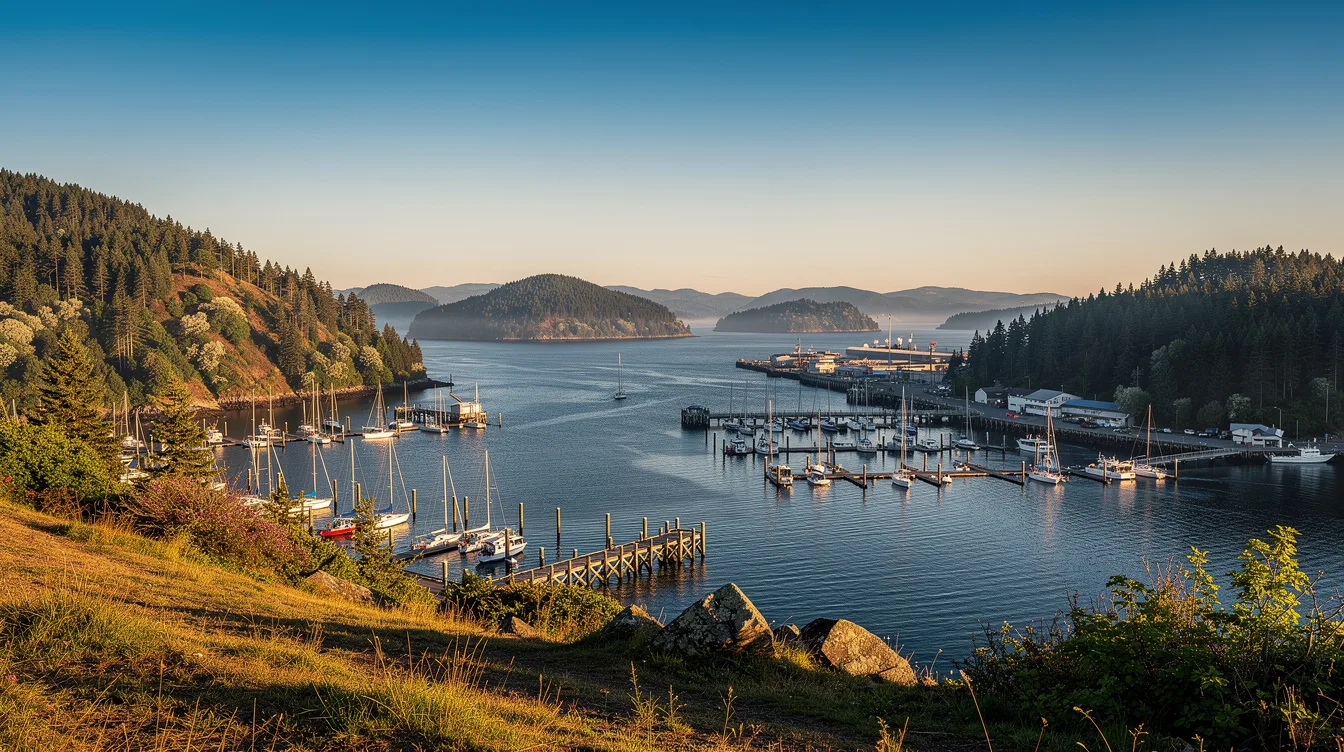
Friday Harbor is the main ferry arrival point on San Juan Island, and that fact shapes the whole town. Near Canada’s border in northwest Washington, this compact harbor is where passengers from Anacortes step ashore, collect their bearings, and decide whether to stay awhile.
The port feels active when a ferry comes in, then quickly settles. Salt hangs in the air, marina masts shift in the breeze, and the streets are easy to cover on foot.
The ferry is why Friday Harbor matters
Friday Harbor sits on San Juan Island’s east coast, facing the San Juan Channel in Puget Sound. Because ferries from Anacortes arrive here, it’s the practical start for an island stay, not merely a pretty stop before somewhere else.
You can arrive by ferry, light aircraft, or seaplane. But the ferry gives you the clearest sense of the island’s pace, especially when the shoreline replaces the mainland’s traffic and the harbor finally comes into view.
In the summer high season, reserve a vehicle space early. The town itself is walkable, but San Juan Island spreads well beyond the harbor, so a car, bike, scooter, or electric-car rental can change what you’re able to see.
And that’s the useful trade-off: you don’t need wheels for an afternoon in town. But you’ll want them if your plans include coastal parks, coves, and villages farther from the ferry terminal.
A harbor town with room to slow down
With 2,613 residents recorded in the 2020 census, Friday Harbor remains small enough that tourism is visible in everyday life. Restaurants, galleries, shops, and the marina sit close together, so you can spend less time navigating and more time looking around.
The town was founded in 1845, yet its appeal isn’t about chasing old buildings. It’s about the working-waterfront feeling, where boats and visitor traffic give the streets a maritime edge without making them hard to handle.
You’ll find the harbor lively in summer, but it doesn’t need an overplanned itinerary. My advice is to leave an open stretch of time after arrival, because this is the kind of port where a short harbor walk can quietly become the afternoon.
Even in summer, evenings may turn cool. Bring a layer, then linger near the marina while the light fades and the day’s ferry traffic thins out.
Whales and history wait beyond the docks
The Whale Museum is an obvious first stop for travelers interested in the local marine mammals. It gives the island’s whale-watching culture some context before you book a boat trip or start scanning the water from shore.
For a coastal outing, head to Lime Kiln Point State Park, known for its lighthouse and opportunities to watch orcas from land. You may see wildlife from the shore, but nature doesn’t work on a schedule, which is part of the bargain.
And if you want a break from the water, American Camp and English Camp tell the story of a 19th-century border conflict between Britain and the United States. They add historical weight to an island that can otherwise feel entirely focused on ferries and marine life.
You can also travel by bike or car toward Roche Harbor, the southern beaches, and Cattle Point. The farther you go from Friday Harbor, the quieter the roads can feel, though getting around takes more planning than the compact downtown suggests.
Plan for summer, then let the island set the pace
Summer is the busiest season, and it brings the strongest demand for ferry reservations, particularly for vehicles. That said, the oceanic climate generally keeps summer pleasant, even if a cool evening catches visitors who packed only for daytime.
Friday Harbor works best as a base because it puts your arrival point, food options, shops, and marine excursions in one small area. But don’t mistake convenience for sameness: the island’s parks and shorelines require you to leave the harbor behind.
Take the ferry reservation seriously, especially with a vehicle, then keep the rest flexible. By the time the last arrival has cleared the docks, the marina is quieter again, with only the soft movement of boats against their lines.