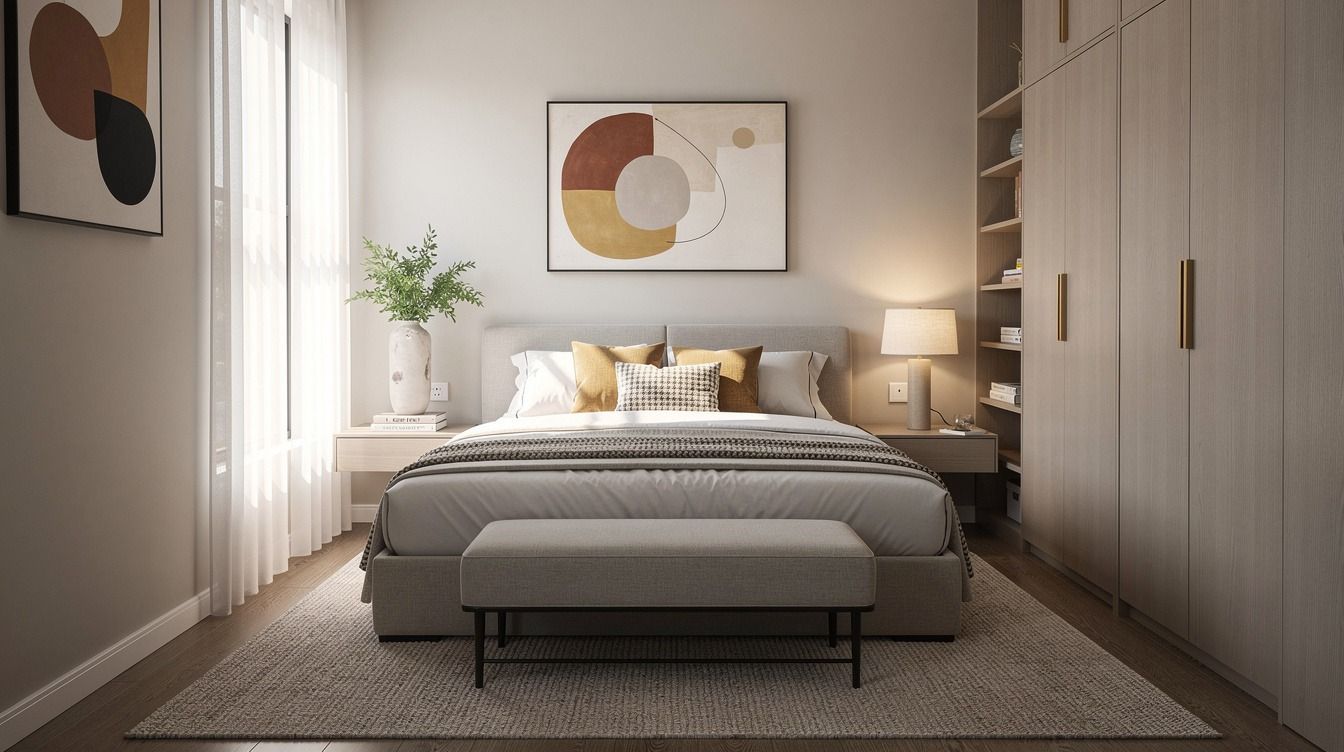
The short answer: narrow bedroom layouts work when you center the bed, protect one clear walking lane, and push storage to the ends instead of the middle. I’ve fixed this exact long-room problem more than once, and the bad version always feels like a hallway with pillows. You buy more furniture, then the room feels worse. But once the big pieces line up, your bedroom starts to breathe.
- Start with the bed centered on the long wall
- Anchor the headboard with matching narrow nightstands
- Slide a slim bench at the bed foot
- Float a petite desk beside the window
- Build a shallow wardrobe along one short wall
- Hang sconces to free both bedside surfaces
- Layer one long runner beside the bed
- Tuck a tall dresser into the far corner
Before You Start With The Two-Lane Test
Before you move a single thing, stand in the doorway and look for two lanes: the visual lane your eye follows to the window, and the real lane your body uses to walk around the bed. If those two lanes fight each other, the room feels longer and tighter than it is. I measure the bed first, then the clearance beside it, because a queen bed at 60×80 in and a king bed at 76×80 in eat a narrow room fast.
Your supporting pieces need to stay lean too. A nightstand works best at 24 to 28 inches tall, close to mattress height, and a runner rug should extend about 18 to 24 inches past the bed edge so your feet hit softness instead of cold floorboards. If you’re still mapping options, this guide to small bedroom layouts that make the room feel bigger helps you compare footprint ideas before you commit.
Here are the cost bands I use when someone asks what this reset usually costs in the US:
And if you want a short shopping list before you start, keep it tight:
– washed-linen bedding – Farrow & Ball Setting Plaster No.231 – Benjamin Moore Pale Oak OC-20 – Sherwin-Williams Accessible Beige SW 7036
- Start with the bed centered on the long wall
- Anchor the headboard with matching narrow nightstands
- Slide a slim bench at the bed foot
- Float a petite desk beside the window
- Build a shallow wardrobe along one short wall
- Hang sconces to free both bedside surfaces
- Layer one long runner beside the bed
- Tuck a tall dresser into the far corner
- Frame the window with floor length curtains
- Angle a reading chair under a wall sconce
- Finish with a mirror opposite the window
- Raise the curtain rod six inches above the trim
- Treat the headboard wall as the warm moment
- Add a slim console behind the door
- Swap the overhead for a soft ceiling wash
- What if your room is less than 9 feet wide?
1Start with the bed centered on the long wall
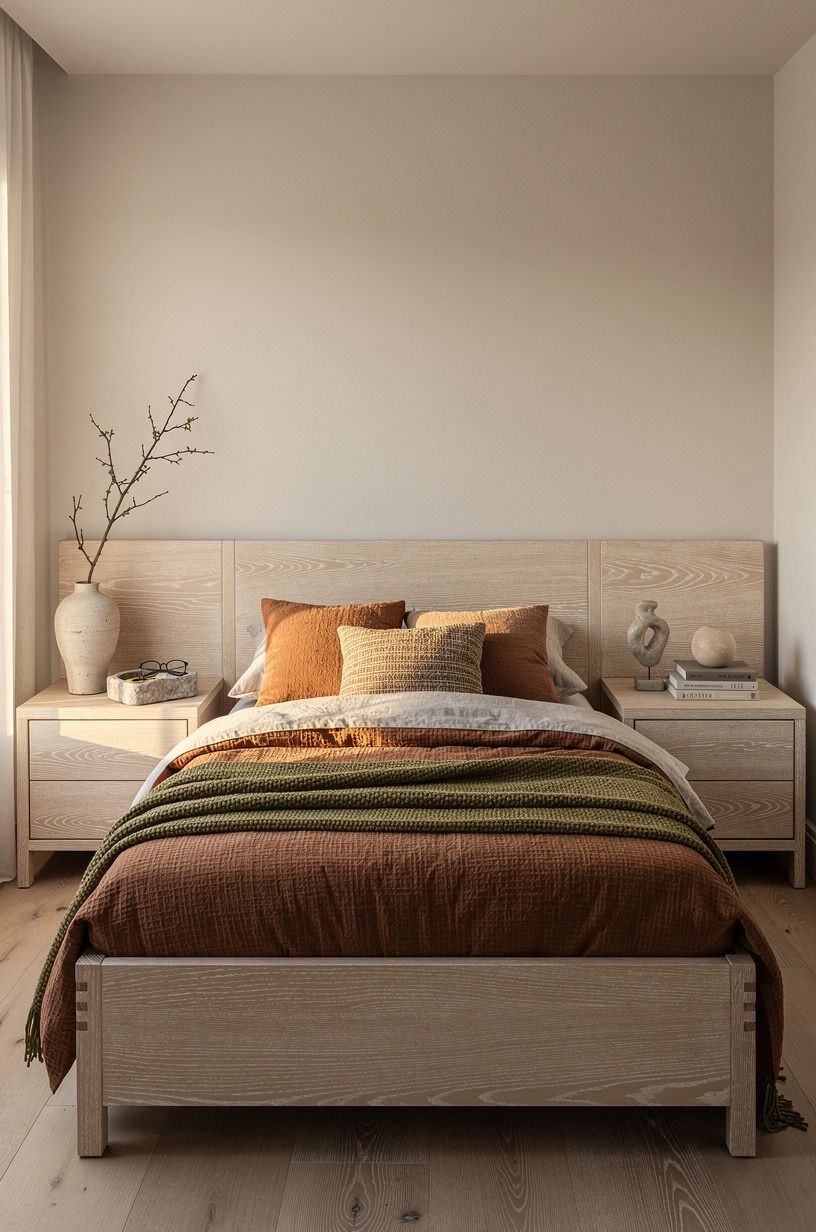
Centering the bed on the long wall is the move that stops the room from reading like a bowling lane. In a narrow bedroom, your eye needs one calm, symmetrical anchor, and the bed does that better than a dresser ever will. I like this most when the room has cerused white oak furniture, because the pale grain keeps the wall from feeling heavy even when the bed is the biggest thing in view.
If you’re working with terracotta, stone, and olive bedding, keep the palette close to the wall color so the whole frame reads as one block instead of five little interruptions. A Belgian flax linen quilt in warm clay tones does that beautifully, and it photographs like a dream in late-afternoon light.
If you want a quieter ground, an IKEA LINDBADMON frame in birch-effect does the centering job for under $200 and disappears into a Farrow & Ball Setting Plaster No.231 wall. But don’t shove the bed onto a side wall just to create fake floor space.
You’ll gain inches and lose balance, which is a bad trade every single time!
When you want proof before moving the whole room, study how a designer fixed a narrow layout by calming the sightline. The principle is the same here.
Fewer cross-currents. More breathing room.
2Anchor the headboard with matching narrow nightstands
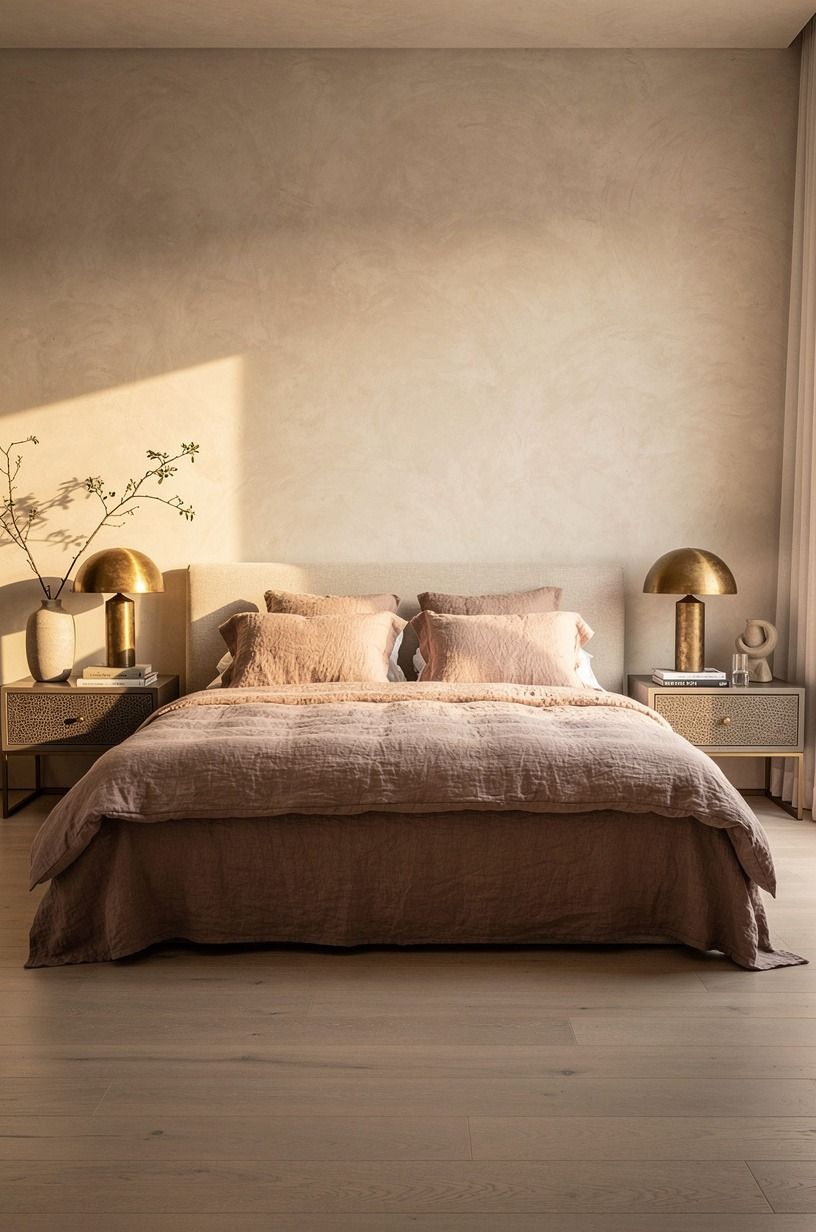
Once the bed is placed, you need the headboard to feel intentional, not stranded.
3Slide a slim bench at the bed foot
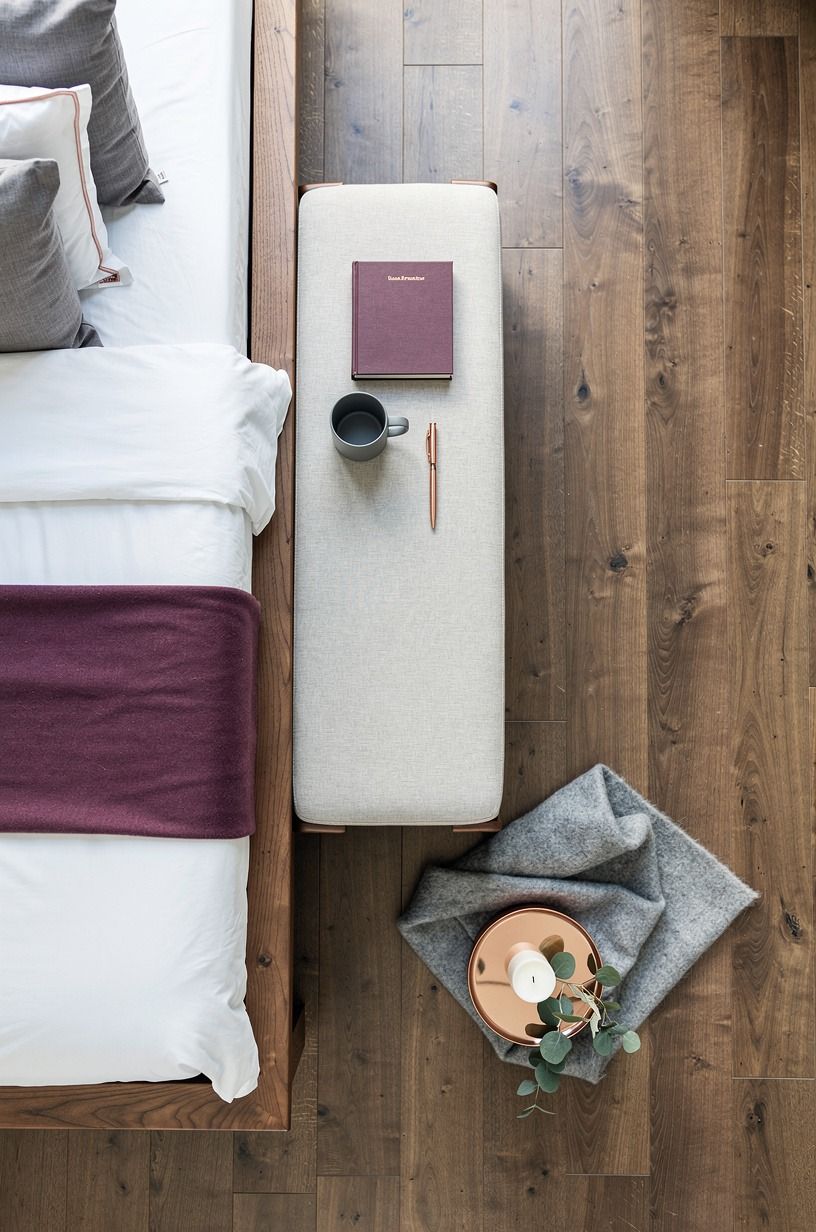
A bench at the foot of the bed does more than hold tomorrow’s sweater. In a long room, it draws a clean line that tells your body where the sleep zone ends and the walking lane begins. That’s why I keep this piece narrow and leggy, especially when the room already has a book-matched walnut tone somewhere else in the furniture.
The overhead view gives away the whole logic: bed on one side, open lane on the other, bench acting like a visual comma between them. A slim bench in plum or grey upholstery with a warm rose-gold accent nearby, even something as small as a hand-hammered copper bowl on the dresser, keeps the room from feeling flat.
But don’t choose a storage bench so deep that it sticks out into the lane. The extra stash sounds smart until you’re clipping it with your shin at night.
If your room still feels too linear after this step, borrow a few restraint cues from this narrow-room furniture story from West Elm thinking. Slim shapes win. Stubby shapes clog the path.
4Float a petite desk beside the window
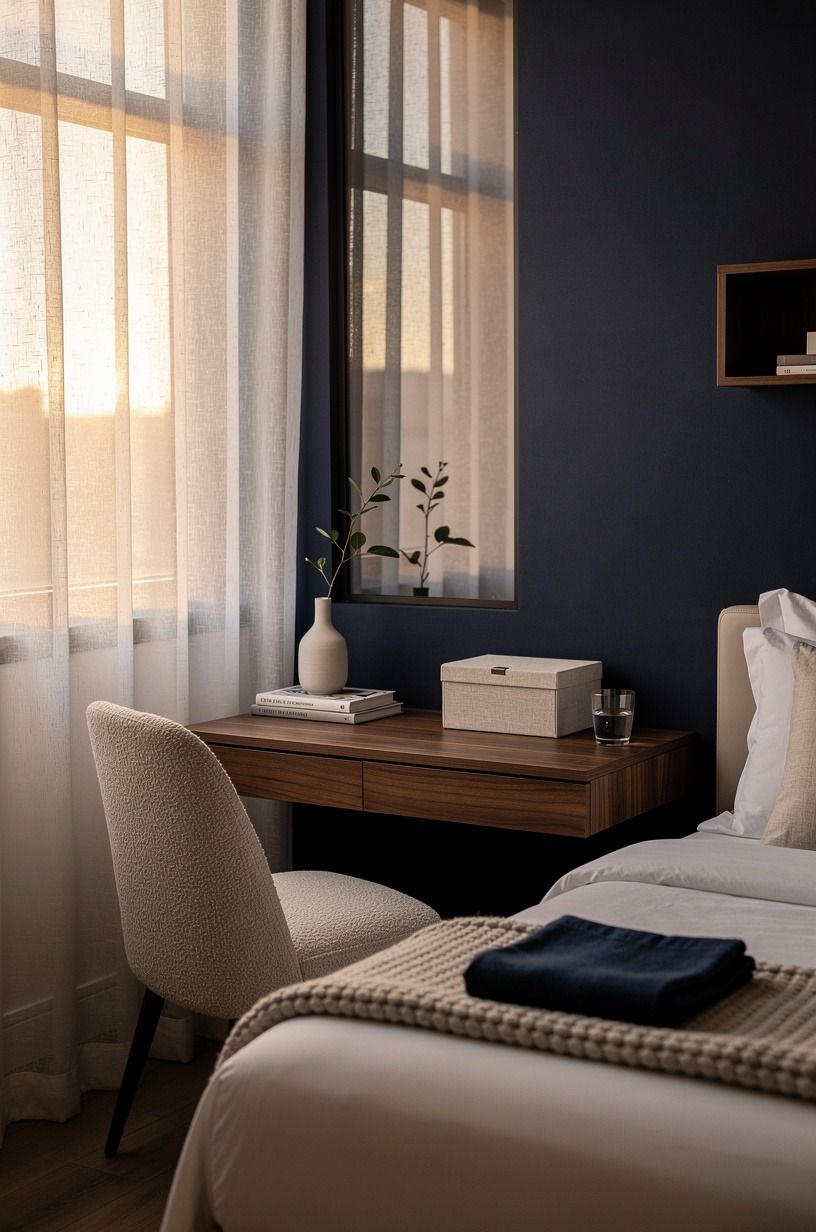
If your bedroom has to multitask, float a petite desk beside the window instead of forcing it onto the long wall.
5Build a shallow wardrobe along one short wall
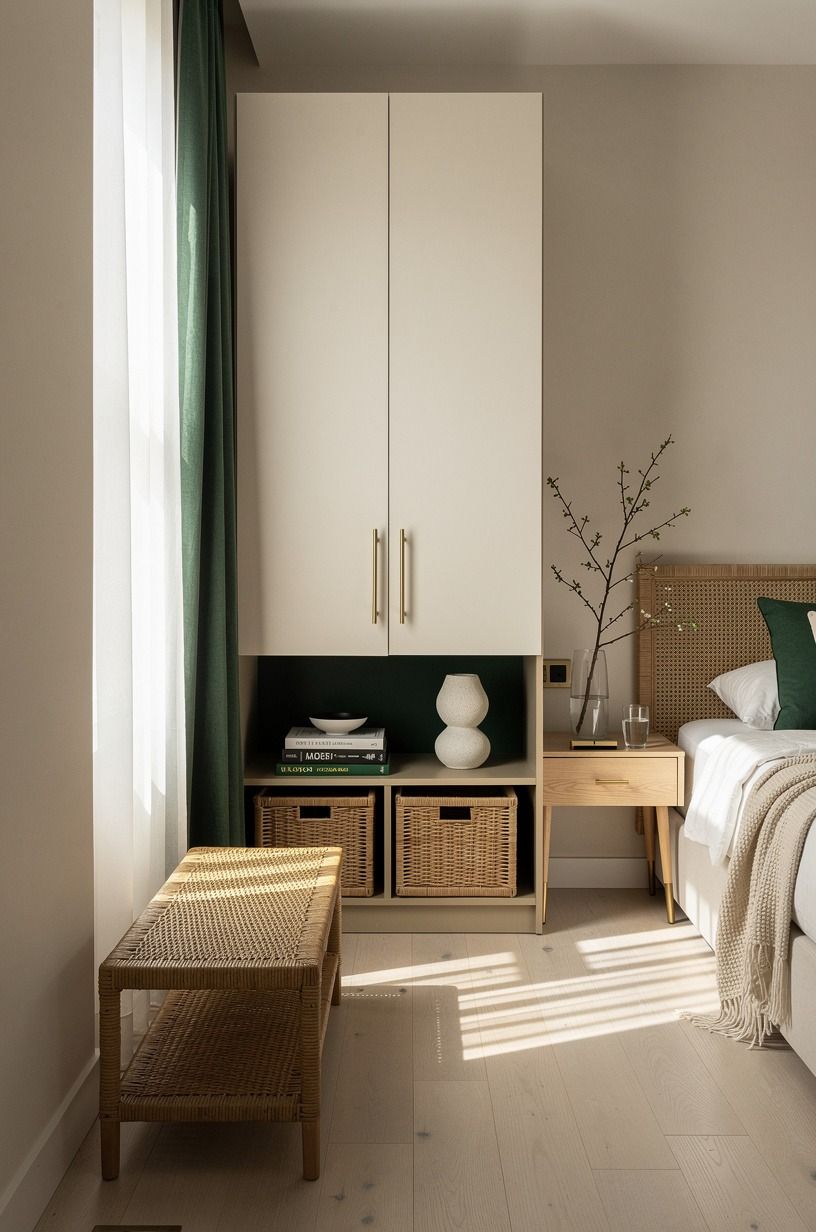
A shallow wardrobe on the short wall is how you square off a room that keeps trying to stretch into a tunnel. Done right, it makes the architecture feel more deliberate because the far end looks anchored instead of abandoned. This is where built-ins or shallow freestanding pieces earn their keep, especially if you finish them in Benjamin Moore Pale Oak OC-20 or a close warm neutral that disappears into the plaster.
Details matter here. Cream-painted doors, unlacquered brass handles, and a little woven rattan or cane paneling stop the storage from feeling flat and cold. If you want more depth, paint the inside back panel in Sherwin-Williams Accessible Beige SW 7036 so the wardrobe reads soft rather than stark when the doors open.
I wouldn’t use a deep wardrobe on the long wall unless the room is unusually wide, because that choice steals the exact floor width you’re trying to protect.
Need a visual reset before you commit to carpentry? The same calm-spacing logic shows up in this narrow layout rescue. Big storage belongs where it shortens the room, not where it narrows the lane.
6Hang sconces to free both bedside surfaces
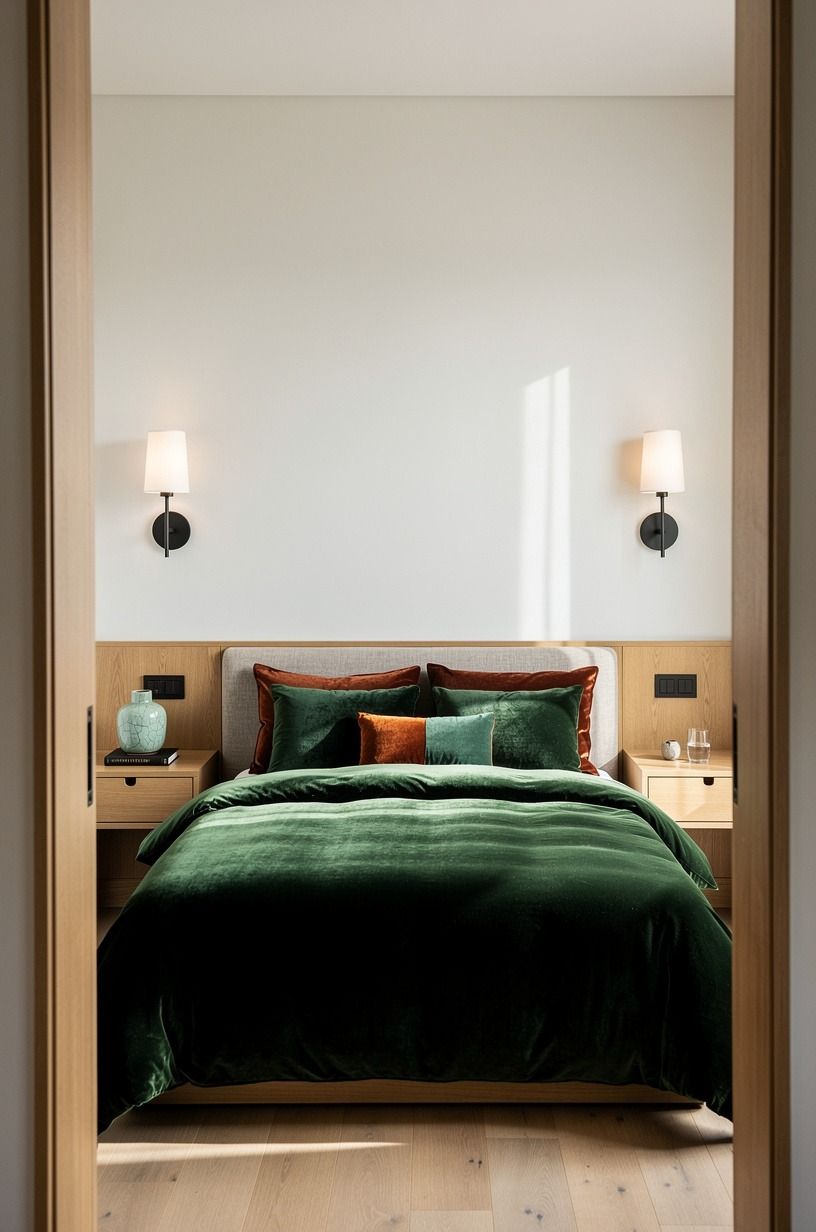
Wall sconces are one of those moves that look decorative but solve a real layout problem. When both bedside surfaces stay clear, the room suddenly feels calmer and wider because your eye isn’t bouncing off two lamp bases and a tangle of cords. That’s huge in a narrow bedroom where every inch near the bed needs to work twice.
I love this look with forest green, rust, and natural oak because the light feels richer against that palette, especially when the bed is layered in mohair velvet or another deep-pile fabric that catches the glow. A cracked celadon vessel or one simple ceramic on the nightstand is enough. More than that, and the whole point is lost.
If your overhead still does most of the work, this bedroom lighting breakdown shows why the low side glow matters so much for sleep and for how the room reads.
And yes, plug-in sconces count. In a rental, they count even more!
7Layer one long runner beside the bed
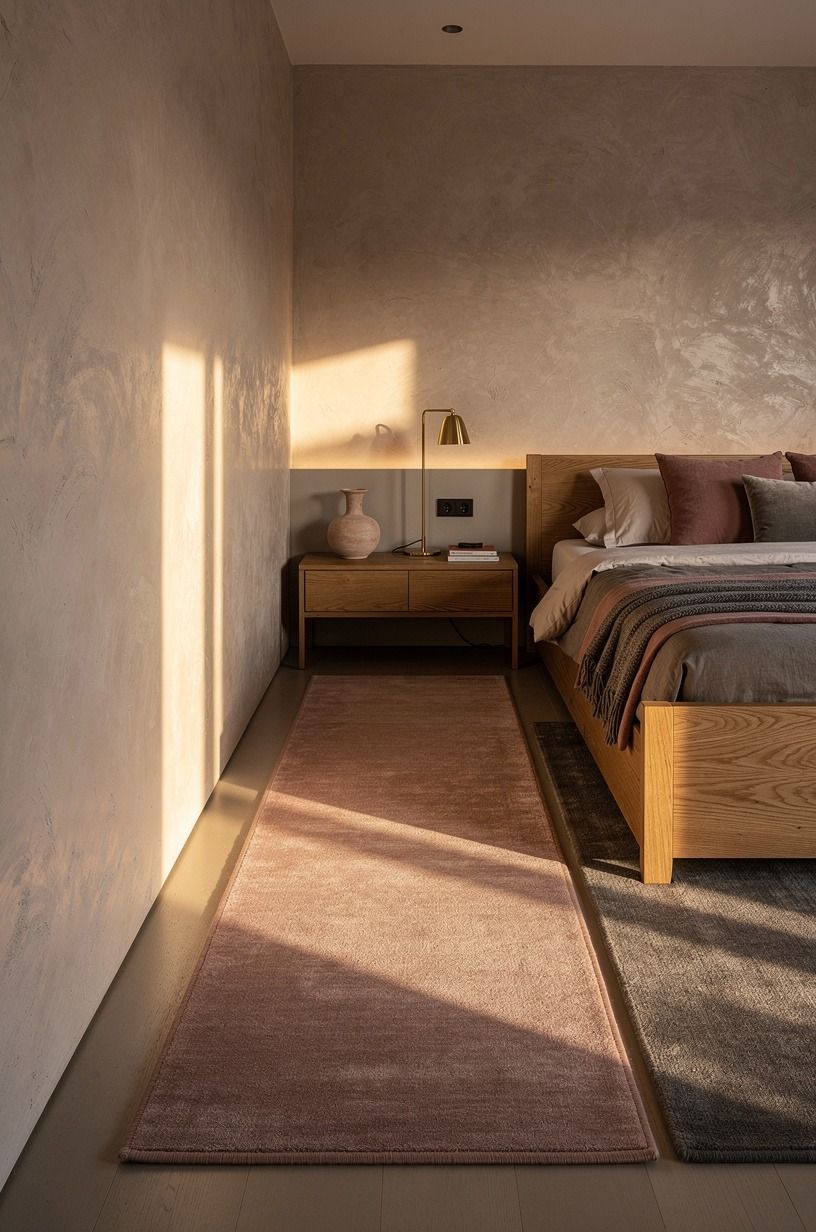
A narrow room usually needs one strong floor gesture, not a pile of little rugs. That’s why I like one long runner beside the bed instead of two tiny mats. The runner stretches the lane on purpose, and if you let it run cleanly from near the headboard toward the foot, the whole bedroom feels more composed.
This is where measurements save you from regret. Let the rug extend about 18 to 24 inches beyond the bed edge so your foot lands on fiber, not on the seam between rug and floor.
A dusty rose or charcoal runner over warm white oak floors, especially near a wall with Venetian plaster, gives you softness without visual clutter. If you want the runner to feel grounded, pair it with a Loloi Layla olive-and-clay runner and the whole lane reads intentional.
But I’d skip the undersized accent rug that floats in the middle of nowhere. It doesn’t ground anything, and it can make the room feel narrower because it breaks the lane into pieces.
If you need more examples of floor plans that stretch a room instead of chopping it up, this narrow-room designer fix is a good next look. The best rooms keep the lane intact.
8Tuck a tall dresser into the far corner
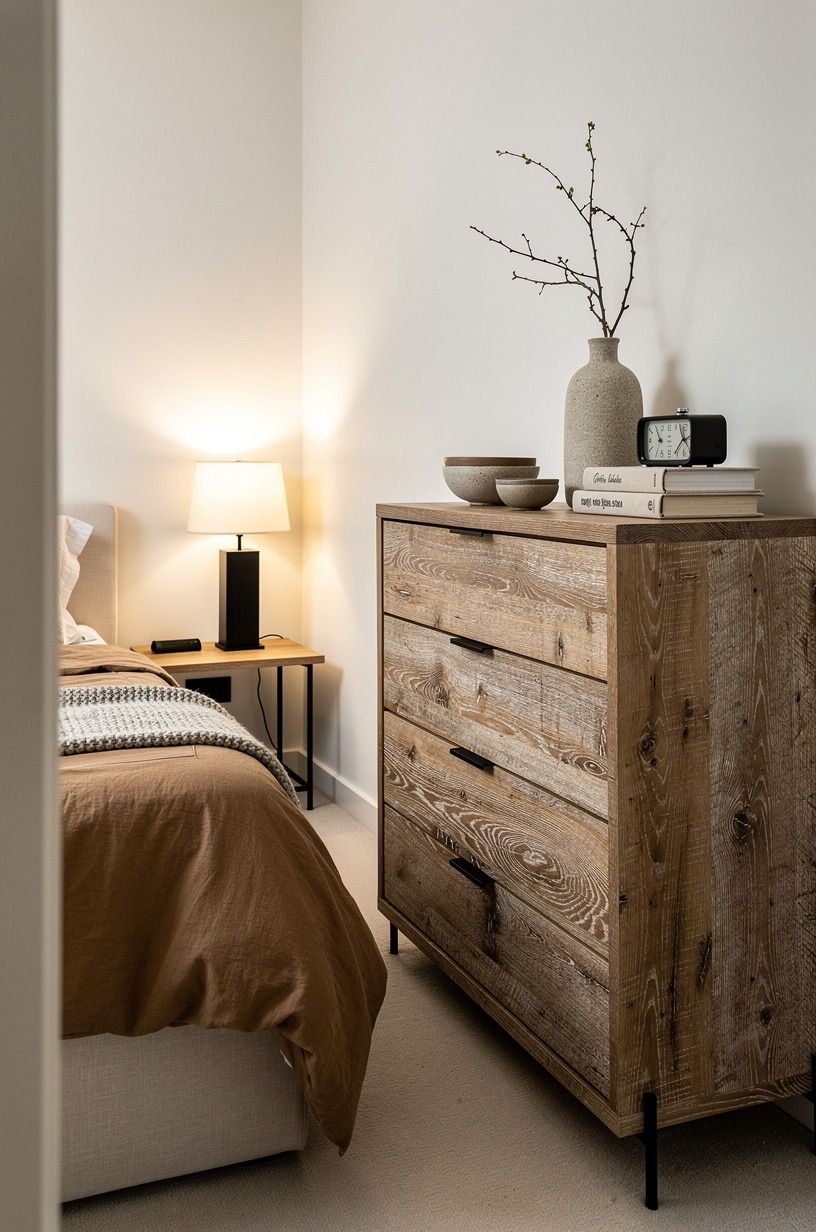
Tall storage beats wide storage in a long bedroom because it uses height instead of swallowing the path. That’s the whole strategy.
Put the dresser in the far corner, let the eye travel past it, and keep the center of the room as open as you can. I reach for a tall dresser most often when the room already has warm white walls and camel textiles, because that palette lets a darker shape sit quietly without yelling for attention.
A piece in reclaimed weathered teak or wire-brushed oak works especially well here. If you’d rather go high-low, an IKEA HEMNES 8-drawer in white stain, painted in Benjamin Moore Pale Oak OC-20, costs under $400 and disappears against a warm wall.
Black pulls can sharpen the silhouette without making it harsh. The mistake is centering a wide dresser on the long wall just because it seems balanced on paper.
It isn’t. It turns your bed wall into one more obstacle course.
If you’re deciding between low and wide or tall and tucked, go tucked. No contest.
But don’t crowd the corner so tightly that the drawers can’t breathe. You still want a little negative space around the piece, even if it’s just enough to let the wall line show. If you need one more visual benchmark, this narrow-room designer fix makes the same case for vertical storage over wide furniture.
9Frame the window with floor length curtains
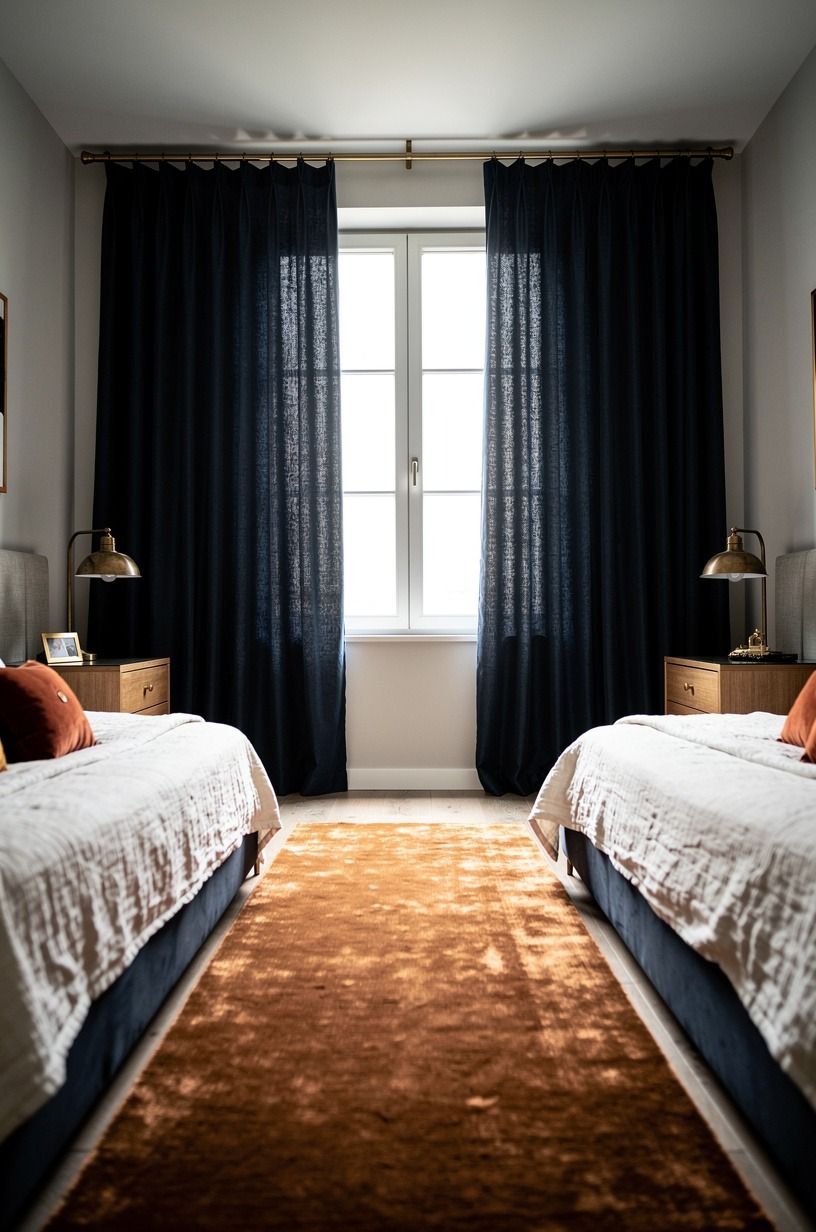
Floor-length curtains fix more than privacy. In a narrow bedroom, they widen the end wall visually, soften the hard rectangle of the window, and make the room feel taller at the same time. I hang them high and wide, then let the fabric skim the floor so the far wall reads generous instead of clipped.
This works best with washed Belgian linen or another fabric with a little body and a little slump. Midnight blue, copper, and ivory all look good here, but the real win is the vertical line. If the room needs warmth, an aged bronze rod against ivory panels can do more than a new piece of art.
And if you want the wall color behind the drapes to glow softly, Farrow & Ball Setting Plaster No.231 is a smart call because it stays warm even when the daylight shifts.
Want your lighting and drapery to cooperate instead of fight? This bedroom lighting guide shows why that pairing matters. Fabric plus warm side light is what makes the room exhale.
10Angle a reading chair under a wall sconce
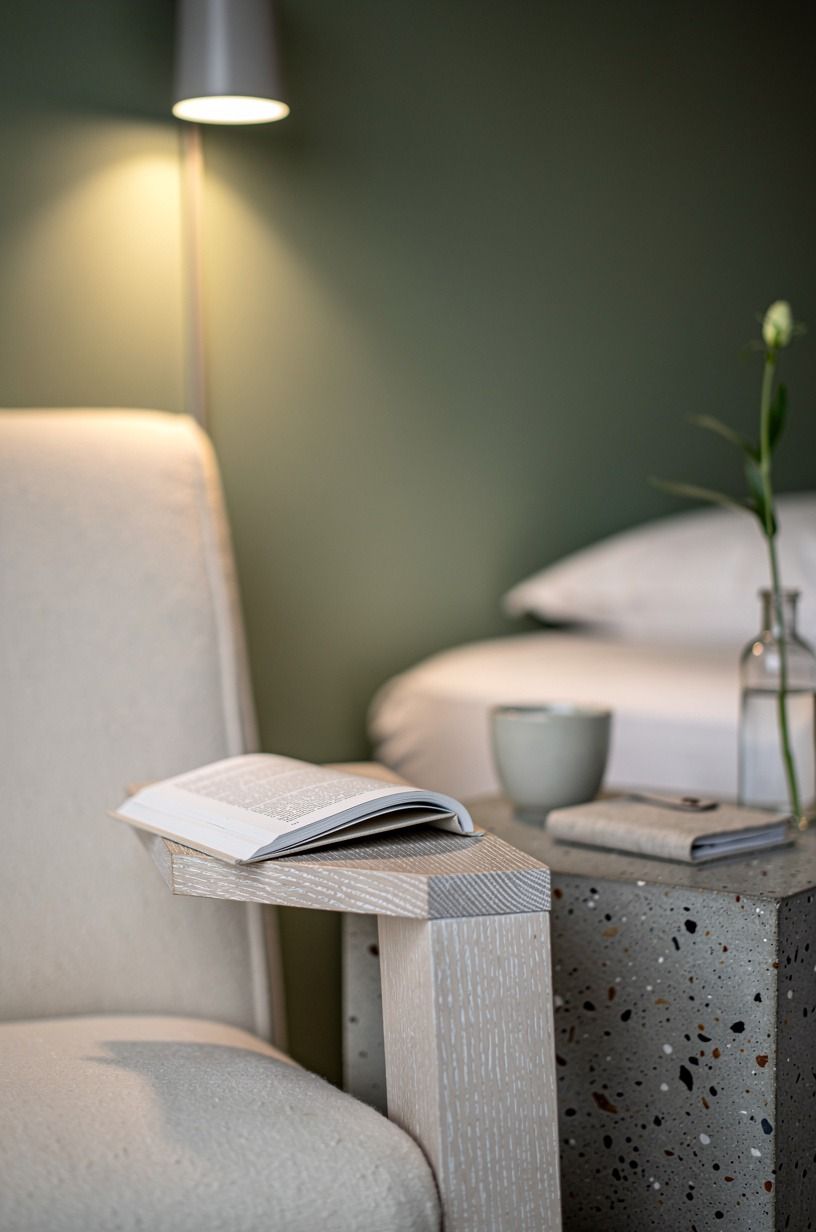
A reading chair is the last seating piece I’d add, but when there’s a spare corner, it earns its place. The key is angle. Push it flat against the wall and it looks staged.
Turn it slightly under a sconce, give it a clear side table, and the corner starts to feel lived in. Small move. Big payoff.
I like this vignette best in sage green and warm cream, with a chair that has enough shape to hold its own but not so much bulk that it crowds the lane. A cerused white oak chair frame paired with a CB2 Truss walnut stool as the side surface, an open book, and a single terracotta ceramic as the accent are enough detail.
Do you need a reading nook in every narrow bedroom? No. But if the corner exists, this is a better use of it than another basket or random plant stand.
If you’re still not sure the corner can take seating, this narrow-room layout fix is a good reminder that one angled piece often works better than two square ones.
And don’t over-style it. One throw.
One book. One light.
Done!
11Finish with a mirror opposite the window
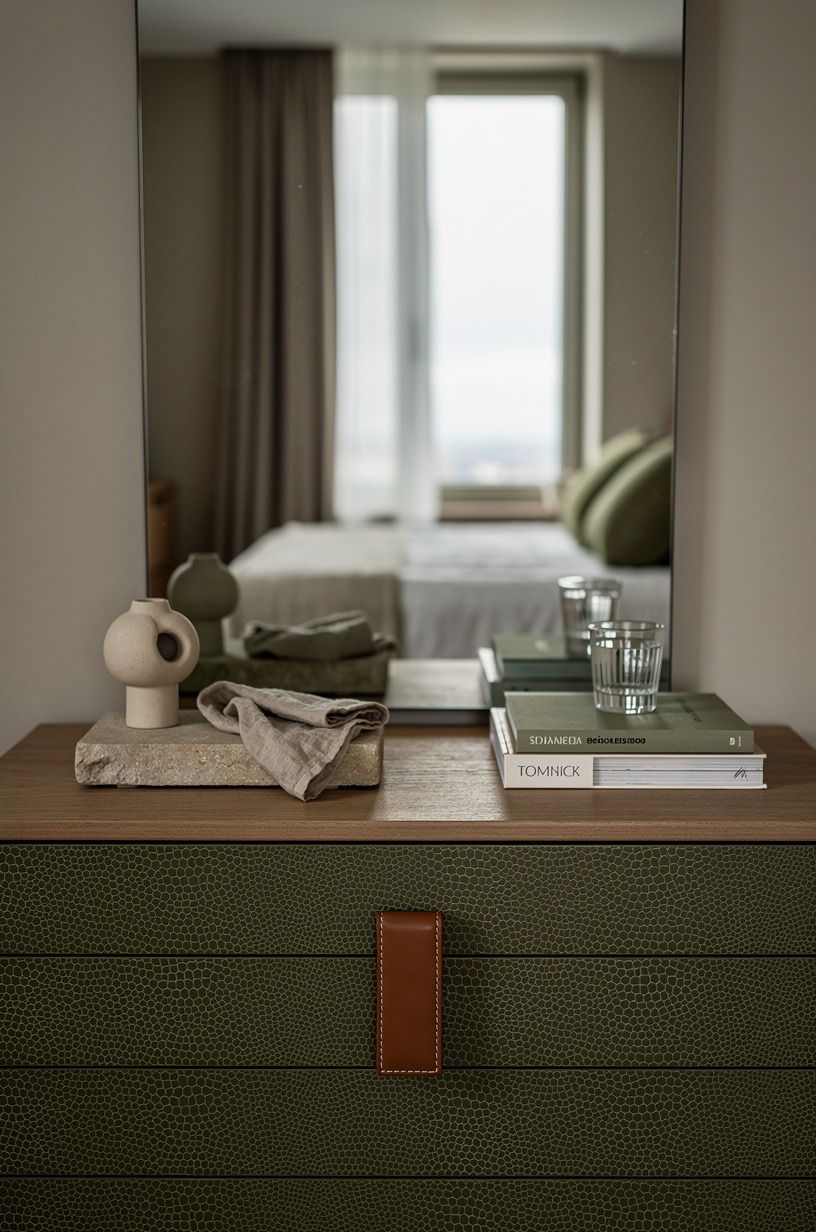
A mirror opposite the window is the finishing move because it gives the room back to itself.
12Raise the curtain rod six inches above the trim
Here’s a small move that punches way above its weight. Mounting your curtain rod six inches above the window trim (and six inches past on either side) does more for a narrow room than almost any single furniture swap. The eye reads the window as taller, the wall as more generous, and the whole far end starts to feel less boxed in.
I picked this up from a stylist who worked on a lot of small brownstone bedrooms in Brooklyn. She said most clients forget the rod exists once it’s up, but the room never stops noticing the extra height.
Pick an aged bronze rod with simple end caps and let the panels do the work. Don’t go decorative here.
The geometry is the point. If the ceiling is under 8 feet, just one inch above the trim is enough. Don’t crowd the crown molding.
Skip the tension rods inside the frame entirely. They shorten the window and make a narrow room feel like a hallway.
13Treat the headboard wall as the warm moment
A long room has one wall that anchors everything, and in a narrow bedroom that’s the headboard wall.
14Add a slim console behind the door
Most narrow bedrooms lose the back of the door to dead space. A slim console (think 8 to 12 inches deep) tucked behind the open door fixes that fast.
It catches keys, a wallet, a folded sweater, and one small alabaster lamp so the entry never feels like a chore. You’ll free up two drawers elsewhere and the room reads more organized the second you walk in.
I like a piece in reclaimed weathered teak here, or a painted version in Benjamin Moore Pale Oak OC-20 if you want it to disappear into the wall. A slim brass cup pull and one bouclé stool tucked underneath are enough styling. Anything deeper than 12 inches and the door starts hitting it, which is the worst kind of design regret.
If you rent, skip the console and use a narrow IKEA HEMNES shoe cabinet instead. Same depth, same purpose, and you take it with you when you leave.
15Swap the overhead for a soft ceiling wash
Harsh overhead light is the single fastest way to make a narrow bedroom feel like a doctor’s office. Swap the ceiling fixture for a soft wash and the whole room exhales.
I’m talking a low-globe flush mount in frosted alabaster glass, or a small drum shade in oatmeal linen if your box beam allows. You want the light to spread, not bounce off the back of your eyeballs at 6am.
Pair that with the sconces from earlier and you’ve got the three-layer setup designers keep talking about: ambient overhead, task at the bed, accent on a dresser or reading chair. The combo is what makes a long room feel like an evening instead of a surgery suite. If you need the exact bulb temperatures and lamp pairings, this bedroom lighting breakdown walks through the whole plan.
Skip the recessed cans if your ceiling is under 8 feet. They throw shadows downward and make the room feel like a bunker.
16What if your room is less than 9 feet wide?
When the room drops under 9 feet wide, the rulebook changes.
Why Does The Long-Wall Anchor Rule Beat More Furniture?
Because long bedrooms rarely need more stuff. They need better placement.
That’s the part people resist, because buying one more storage piece feels productive and dragging the bed six inches to the left feels annoying. I’ve made that mistake myself.
I thought a bigger bench and a wider dresser would make one awkward room feel finished, and all it did was turn the middle into a corridor I had to squeeze through sideways.
What fixed it was simpler. I treated the bed as the anchor, the window as the release point, and the storage as edge work.
Once I stopped decorating every wall equally, the room relaxed. But here’s the part nobody loves hearing: a narrow bedroom can look expensive and still feel wrong if the walking lane pinches at the foot or if the desk interrupts the window wall. You can’t accessorize your way out of bad geometry (I wish you could).
I also think people underestimate how much visual silence matters in a sleeping room. Matching nightstands, one long runner, one tall dresser, one mirror.
That’s not boring. That’s what lets the terracotta throw, the olive pillow, the aged brass sconce, or the warm oak grain read clearly instead of competing for attention. And when the room does have a nice material moment, like washed linen bedding against Farrow & Ball Setting Plaster No.231, you want enough emptiness around it that your eye can enjoy it.
So if you’re debating whether to buy more or move more, move first. Always. Study your lane, then your light, then your storage.
If you want another example of how editing beats adding, the logic in this narrow-room reset translates surprisingly well to bedrooms. Placement is the design.
Shopping comes after.
What People Always Want to Know
What is the best narrow bedroom layout for a small bedroom?
The best one centers the bed on the long wall and keeps one side lane clear. Balance first is what makes the room feel good. I like pairing that setup with slim IKEA HEMNES nightstands or another narrow table so you keep symmetry without spending width.
Where can I buy narrow bedroom layout pieces on a budget?
Start with IKEA, Target Threshold, and Wayfair for narrow nightstands, runners, and petite desks. Lower cost sourcing matters here because scale matters more than pedigree.
I also check Facebook Marketplace for tall dressers, then repaint them to match the room instead of chasing a brand-new set. If you need a size cue, this slim IKEA table example is useful because it shows how little width a helper piece really needs.
How much does a narrow bedroom makeover cost?
A small layout reset usually lands in the $200 to $800 range if you’re mostly buying bedding, paint, shades, and art. Free moves count too: recenter the bed, remove one bulky piece, and swap furniture between rooms before you buy anything.
Can I create a narrow bedroom layout on a budget?
Yes, and you don’t need custom millwork to do it. Low-cost wins include centering the bed, using one runner instead of a full rug, and switching to plug-in sconces. A secondhand tall dresser plus fresh paint can do a lot of heavy lifting here.
Is a narrow bedroom layout worth it in a small space?
Yes, because a small room benefits fast from a clearer path and better sightlines. The payoff is immediate when you stop blocking the lane with deep furniture.
Keep the storage on the short wall or in the far corner, and the room starts reading wider. For more side-by-side examples, this narrow-room designer fix makes the case fast.
Is a narrow bedroom layout a good idea for a rental?
Yes, especially because the best fixes are easy to reverse. Rental-friendly upgrades include plug-in sconces, removable hooks for curtain panels, and a freestanding wardrobe painted to blend with the wall. You can change the feeling of the room without touching the bones.
What paint color works best in a narrow bedroom?
A warm neutral that recedes, not a cool gray that sharpens every corner. Farrow & Ball Setting Plaster No.231 on the headboard wall with Benjamin Moore White Dove OC-17 on the other three walls is my default. The eye reads depth instead of edges.
Start With Placement Over Shopping
If I had to pick one step, I’d start with centering the bed on the long wall. Buy more furniture too soon and every later fix has to fight it. Get the anchor right first, then the lane.
Save this for your next room reset and move the biggest piece before you shop.