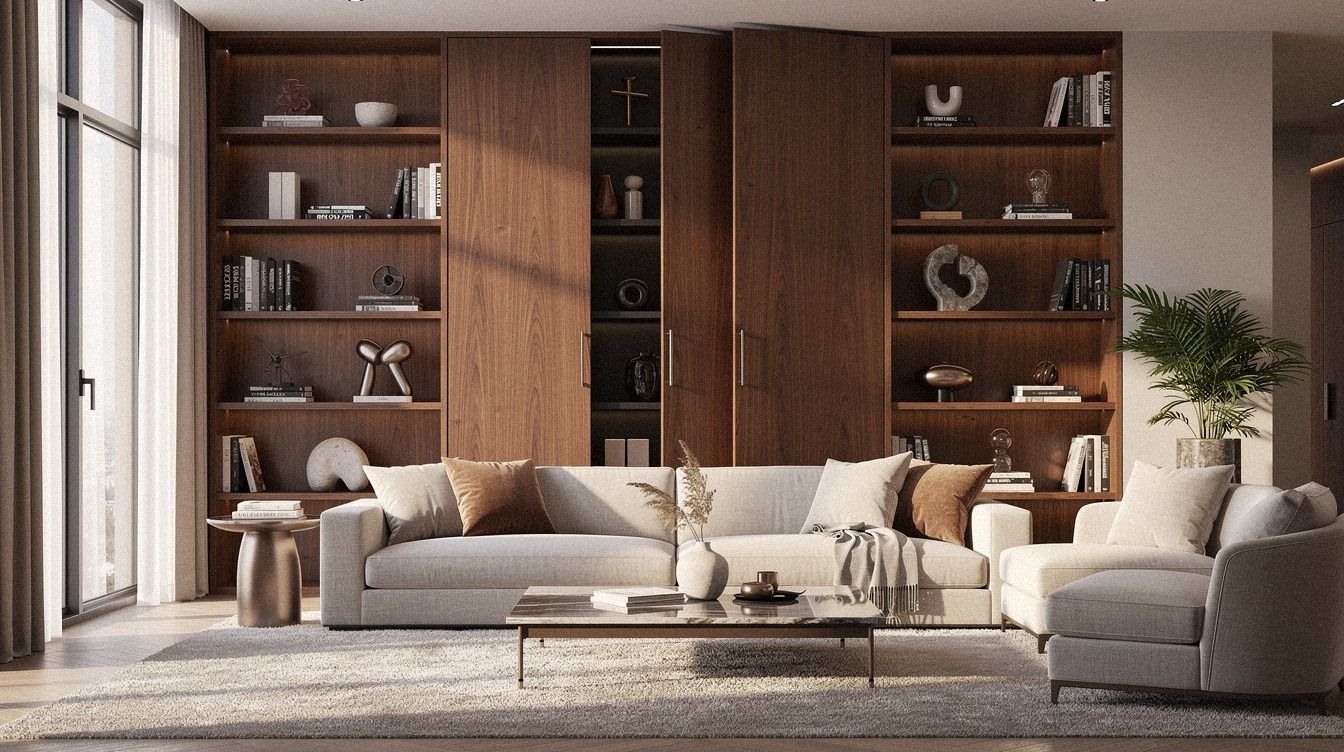
Luxury hidden-room ideas for a high-end hidden hideaway work best when the room looks calm first and clever second. I used to overplay the disguise, and it made every living room feel like a hotel lobby trying too hard. Now I go quieter, richer, and more architectural. That’s when the hidden part starts to feel expensive.
- Install a walnut bookcase with touch-latch panels (The Library Switch)
- Hide a champagne bar behind fluted oak
- Frame the passage with smoked glass shelves
- Wrap the door in marble-look wall panels
- Conceal the seam inside picture-frame molding
- Swing a full-height mirror into a lounge
- Build a fireplace wall with hidden pivots (The Hearth Pivot Rule)
- Why does ribbed leather sell the disguise so well?
- Light the reveal with recessed brass channels
- What makes cabinetry the best camouflage for a hidden door?
- Panel the TV wall with hidden access
- Tuck a cigar room behind moody drapes
- Create a jewel-box nook beyond built-ins (The Jewel-Box Pivot)
- Use bronze hardware as sculptural camouflage
- Blend the doorway into floor-to-ceiling wainscoting
- Can sliding art really hide a wine salon?
- Hide a library alcove behind arched shelving
- Finish the inner room with velvet walls
1Install a walnut bookcase with touch-latch panels (The Library Switch)
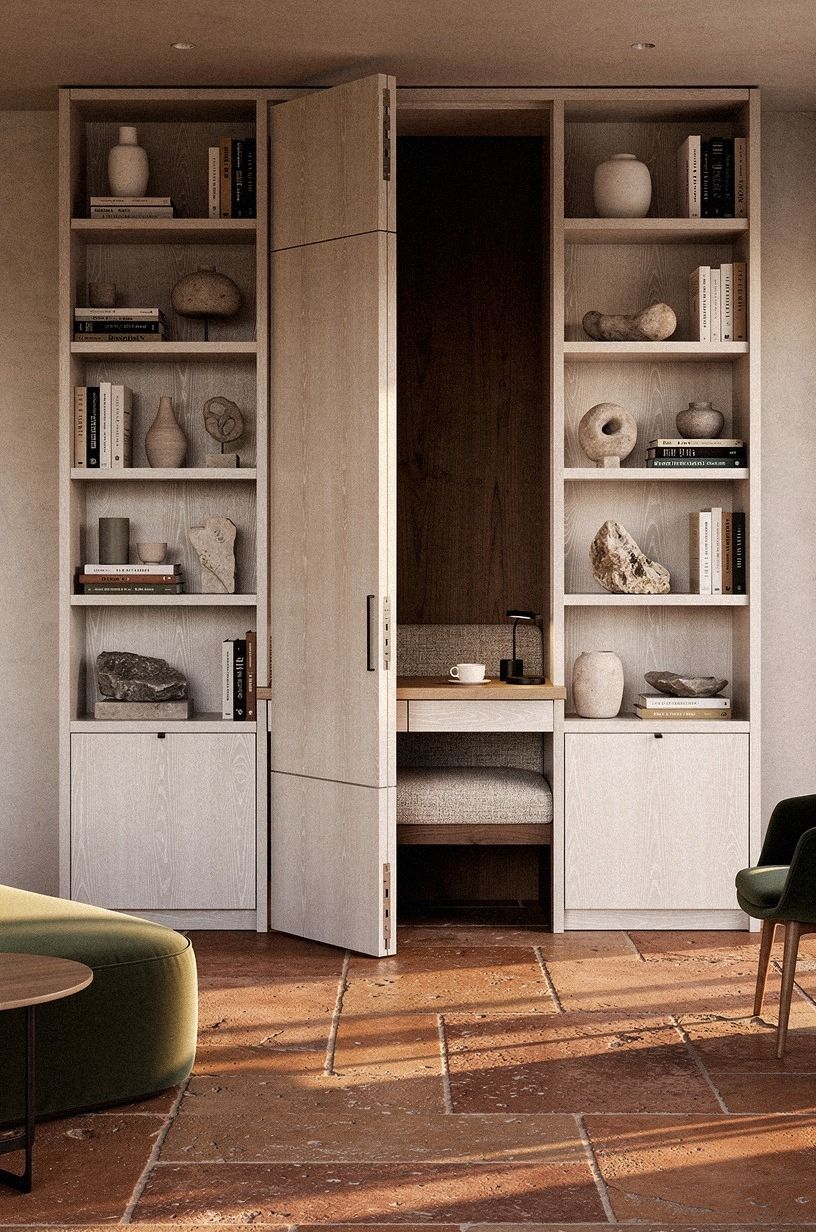
Start with a real bookcase wall, not a fake prop with empty shelves. You want walnut veneer that reads warm and substantial from across the room, plus one bay that sits a hair proud so the touch-latch opening feels intentional instead of gimmicky.
I wouldn’t go too shallow here. If your shelves land under about 12 inches deep, they won’t hold hardcovers well, and you lose the rich, layered look that sells the disguise.
Let the visible shelves do some work for you. Art books. Bronze boxes.
A small stack of black linen cases. If you’re furnishing the front room too, keep your sofa around 35 to 40 inches deep so the bookcase still commands the wall without crowding the seating zone.
And yes, the hinge reveal matters.
But the part that worked for me was keeping the base plinth continuous, because your eye reads that long line before it notices the opening. If you’re chasing the moody-library payoff, our speakeasy wall art ideas piece goes deep on the styling that makes a hidden bookcase feel collected instead of staged.
2Hide a champagne bar behind fluted oak
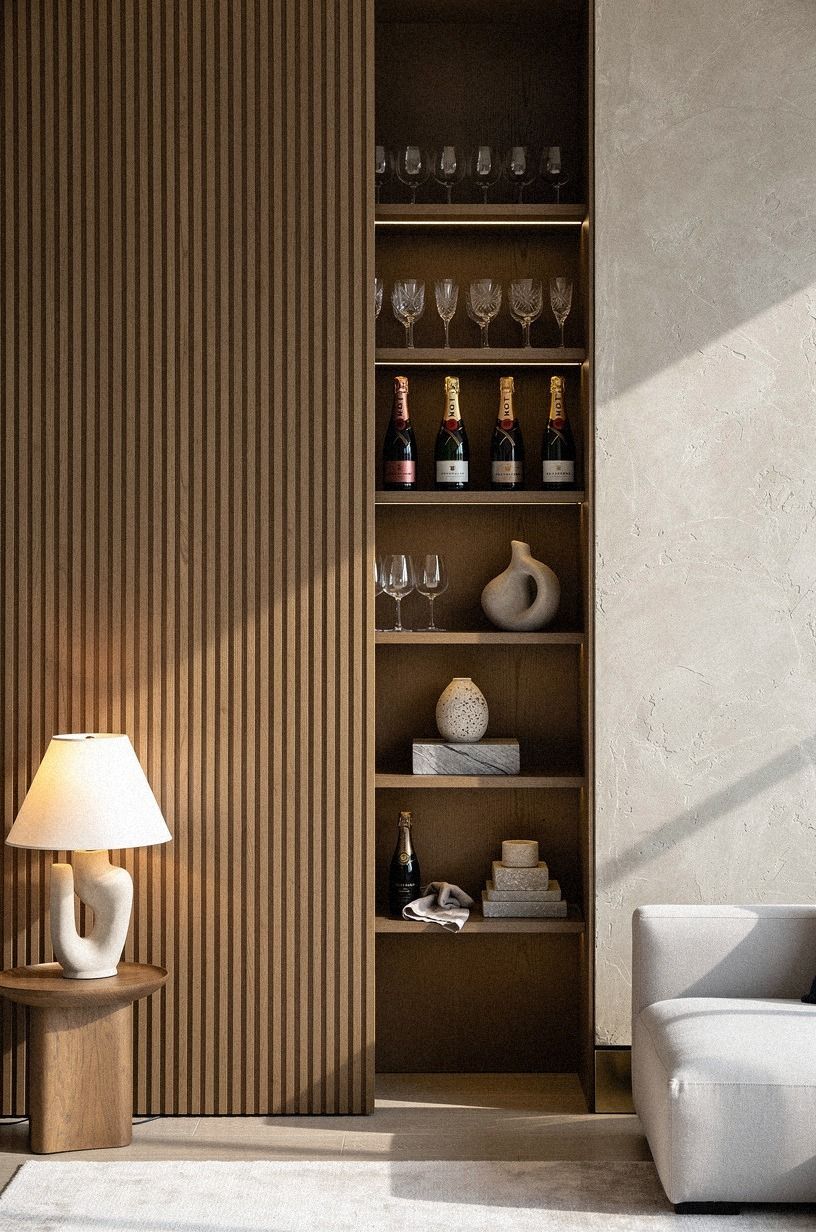
Fluted panels are good at one thing: they break up the seam before you even look for it.
3Frame the passage with smoked glass shelves
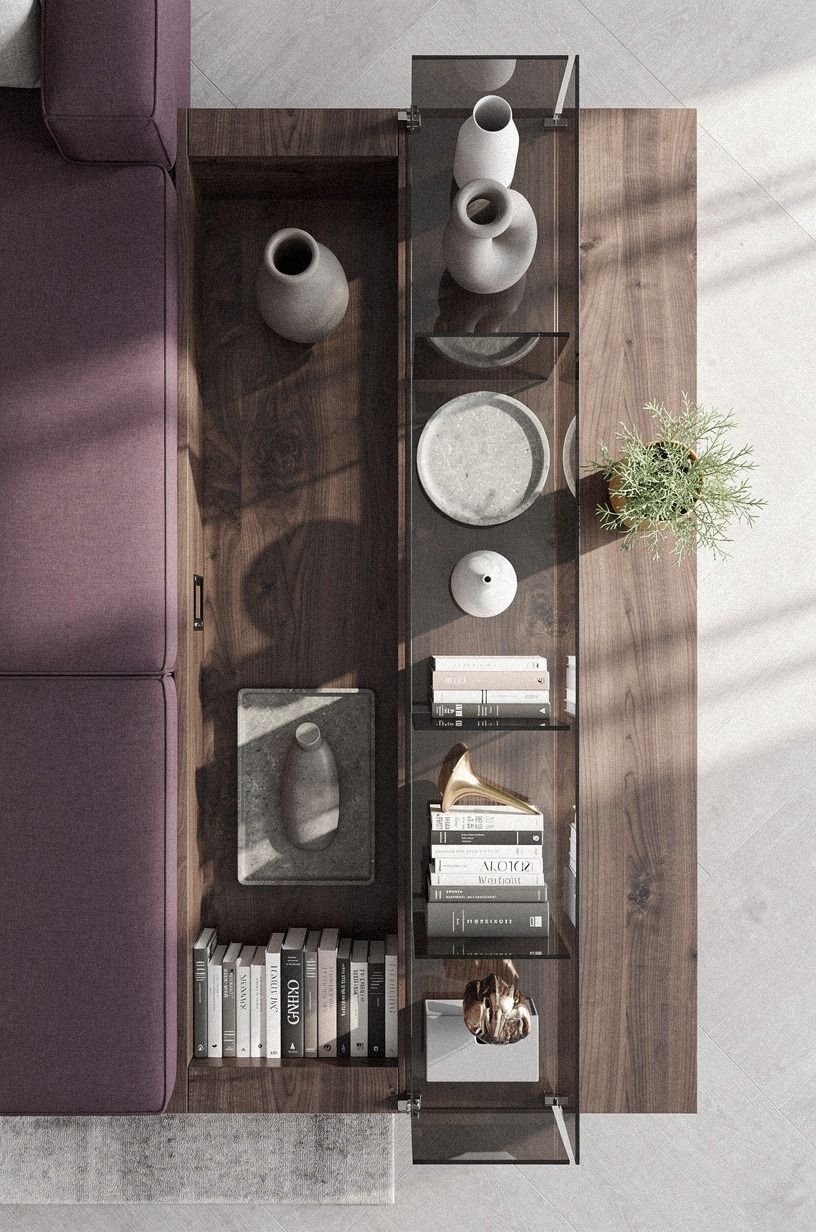
Smoked glass does something drywall can’t. It gives the threshold depth before anyone steps through it.
Frame the passage with smoked bronze glass shelves and keep the shelf lines running clean across the opening so the seam disappears into the composition. You should still be able to read books, bowls, and shadow through the tint, but not every single detail.
This is where proportion matters. If the hidden opening sits inside a shelving wall, I like shelves around 10 to 12 inches deep with enough negative space that the edge of the doorway doesn’t look crowded. And if your rug is anchoring the whole seating area, make sure the front legs of the chairs sit on an 8×10 or 9×12.
That grounded footprint makes the concealed opening feel built in, not tacked on after the fact.
4Wrap the door in marble-look wall panels
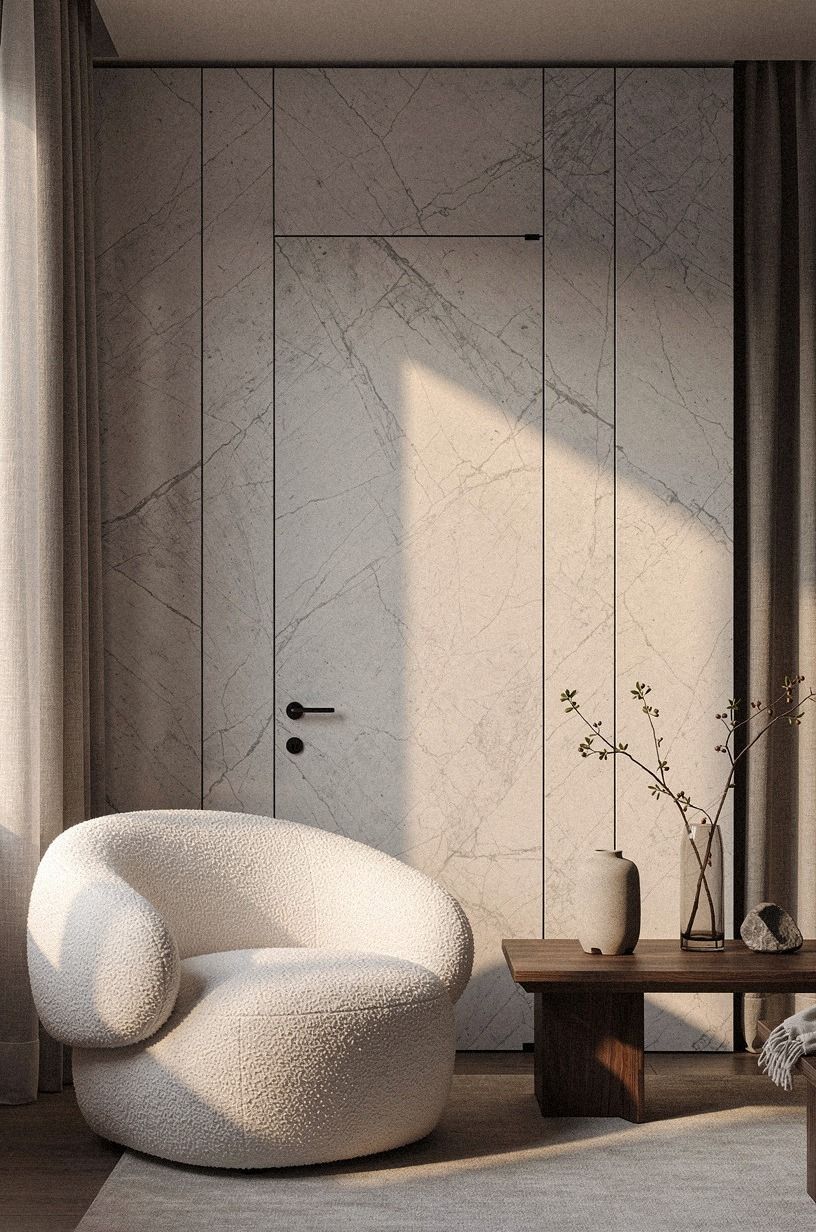
If you want the wall to feel tailored and expensive, run the disguise through large-format panels instead of a standard painted slab. A Calacatta-look porcelain skin with soft amber veining gives you that composed, clubby polish without asking you to baby real stone on a moving surface.
I made the mistake once of choosing a pattern with too much drama. The bookmatch was gorgeous, but it pointed straight to the hinge line.
Keep the veining quiet and the joints deliberate. You want one clean read from sofa to corner, especially if the room already has a fireplace feature.
And don’t forget touch points. A hidden finger pull lined in matte blackened steel keeps the face uninterrupted while still feeling usable.
But the best part is the mood shift: cool marble outside, warmer cocoon inside. That contrast is what makes the room memorable.
If you’re going moody, our dark moody speakeasy decor piece is the cousin to this move.
5Conceal the seam inside picture-frame molding
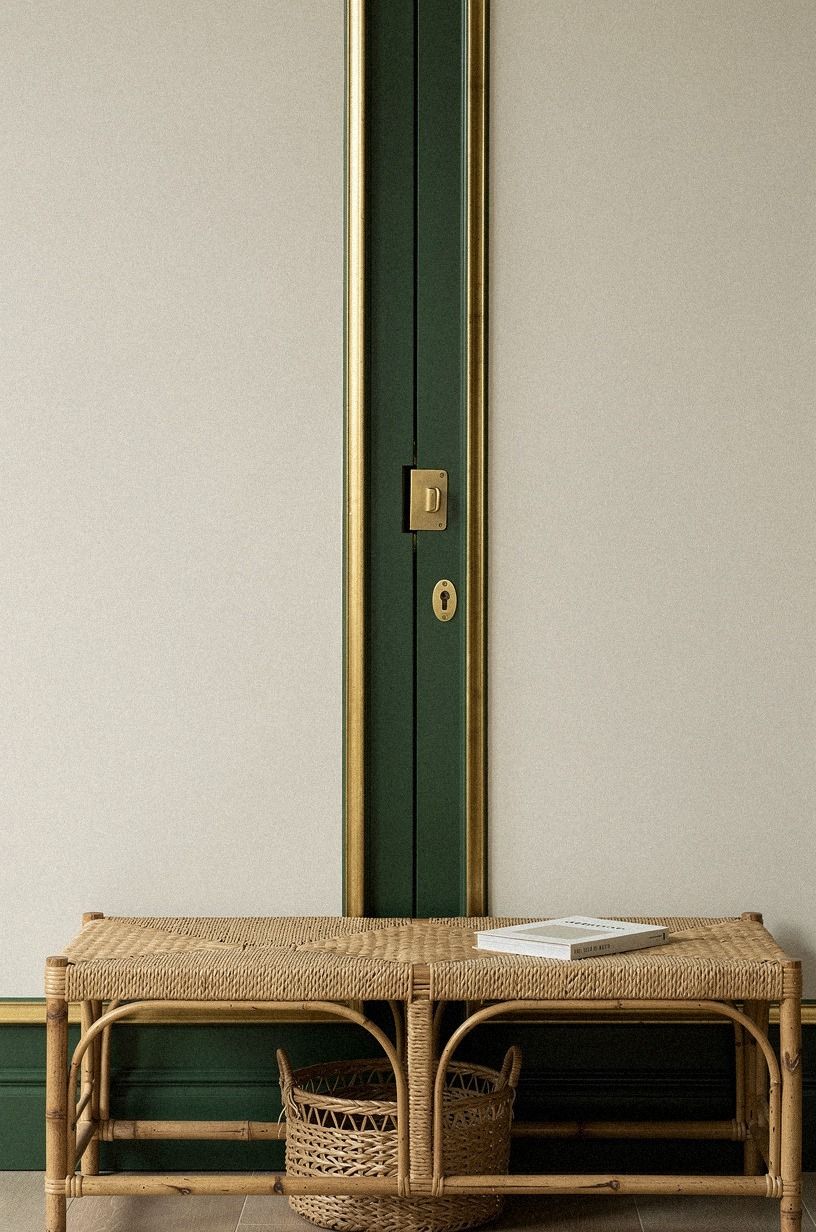
Traditional trim can hide more than modern flat walls ever will. Build the seam inside painted millwork so the opening lands on a stile or rail your eye already expects to see, then carry the molding rhythm across the full wall. That’s how you get a modern hidden room design to feel established instead of theatrical.
Color helps, too. I like Benjamin Moore Revere Pewter HC-172 on this kind of paneling because it softens the geometry without flattening it.
If your living room gets low light, that warm gray keeps the wall from feeling chalky by late afternoon. You should also keep furniture a few inches off the trim wall.
A bench or console jammed too close makes the panel harder to use, and honestly, it makes the whole thing feel more obvious.
6Swing a full-height mirror into a lounge
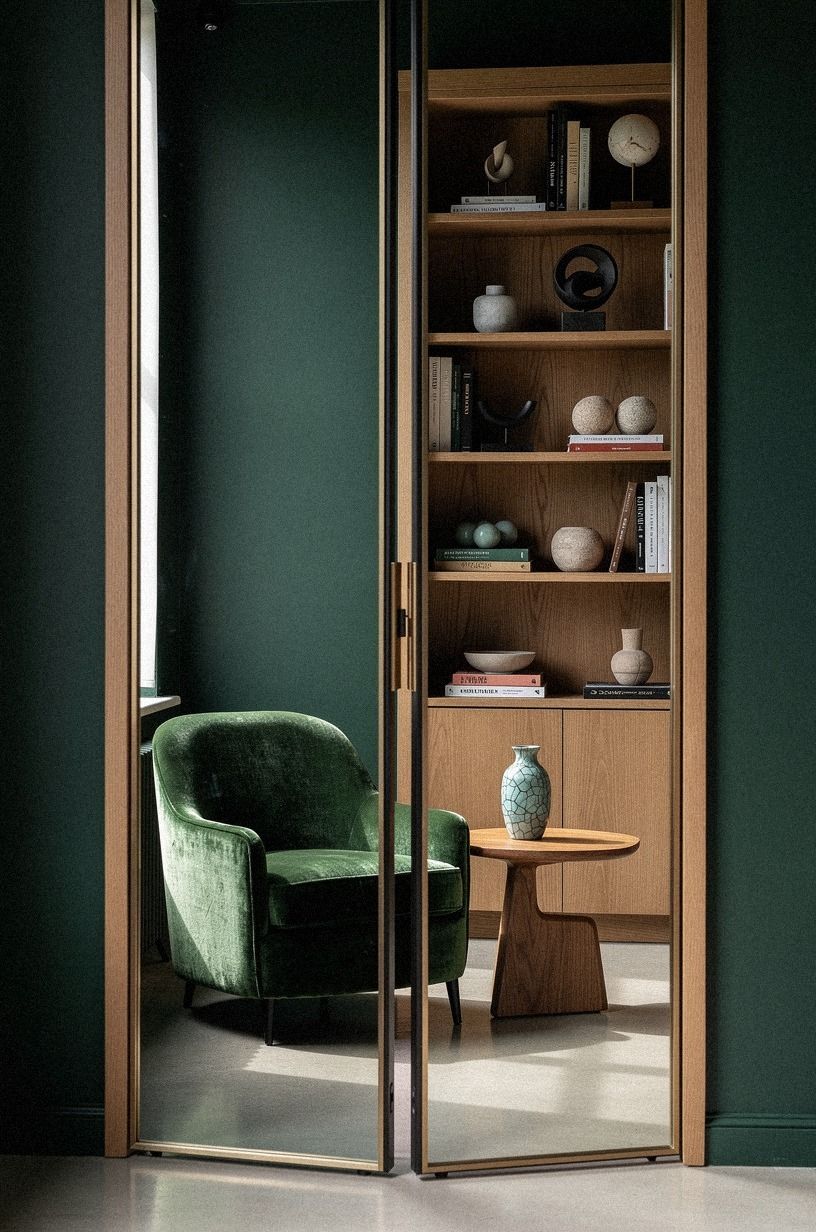
A mirror door works because your eye trusts reflection. Use a bronze-tinted mirror in a full-height frame, let it pivot or swing wide, and reveal a tucked lounge behind it with seating, books, and one low lamp waiting inside.
But here’s the catch: the mirror has to be big enough to justify itself. A skimpy panel reads like a gimmick every single time!
Give it presence. I like a mirror that runs nearly floor to ceiling with a thin bronzed frame, then a small chaise or club chair inside upholstered in camel mohair velvet.
You don’t need much more. One shelf.
One drinks ledge. Maybe a shaded sconce.
If the hideaway is shallow, keep the inside seating under about 40 inches deep so the passage still feels elegant when you step through. Pair the velvet with our speakeasy curtain drapery ideas and the whole room tightens up.
7Build a fireplace wall with hidden pivots (The Hearth Pivot Rule)
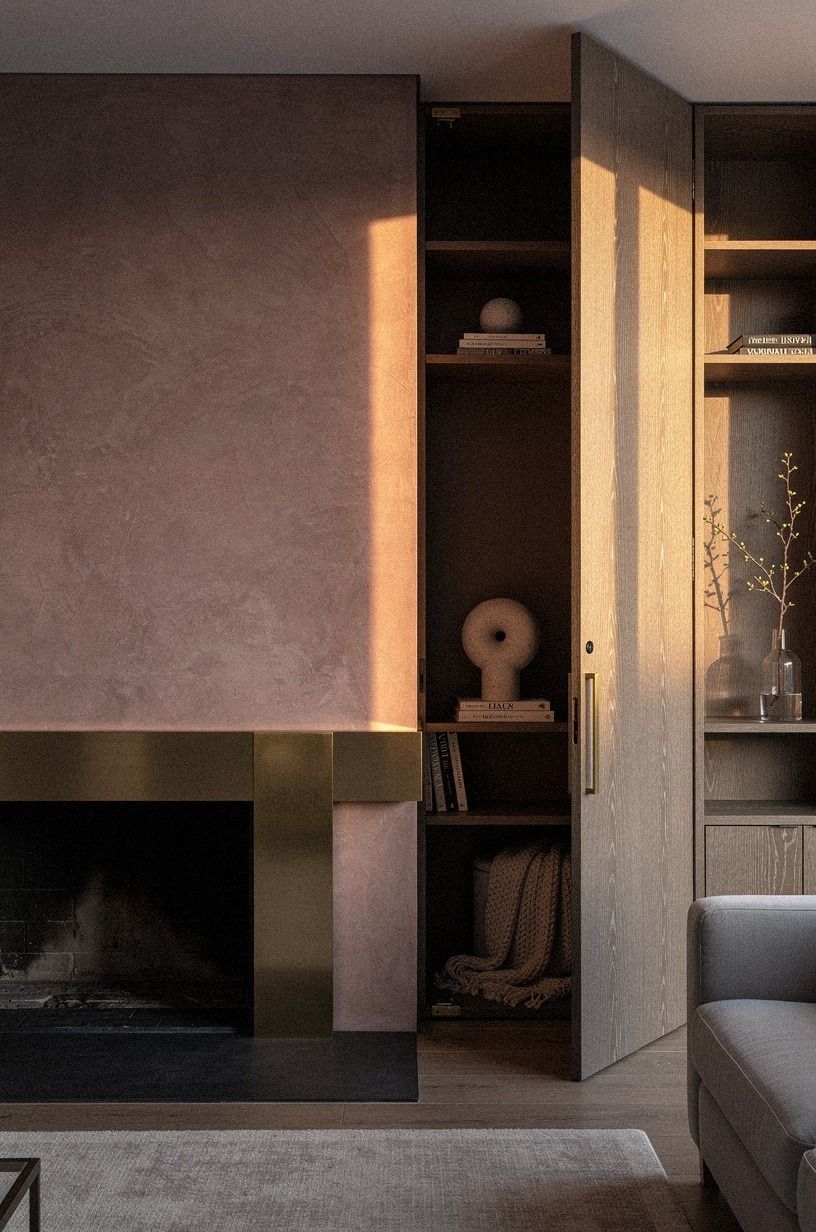
A fireplace wall already owns the room, so it can absorb a hidden opening better than almost anything else. Build plaster or limewashed panels around the hearth and let one section pivot from a concealed axis near the jamb.
The front should read continuous, with the mantel, firebox, and side masses holding the composition together. I wouldn’t interrupt that with fussy trim.
This is also the easiest place to use the real cost table, because the wall often overlaps with broader living room upgrades.
If you’re already refreshing the room, the hidden pivots make more sense when the front furniture is scaled right. Keep the coffee table about 16 to 18 inches tall and roughly two thirds the sofa length.
That lower, cleaner profile lets the fireplace wall stay in charge. And once the panel opens, the reveal feels almost impossible in the best way! For the full fireplace mood, our brass candle fall mantel ideas piece lives next door to this one.
8Why does ribbed leather sell the disguise so well?
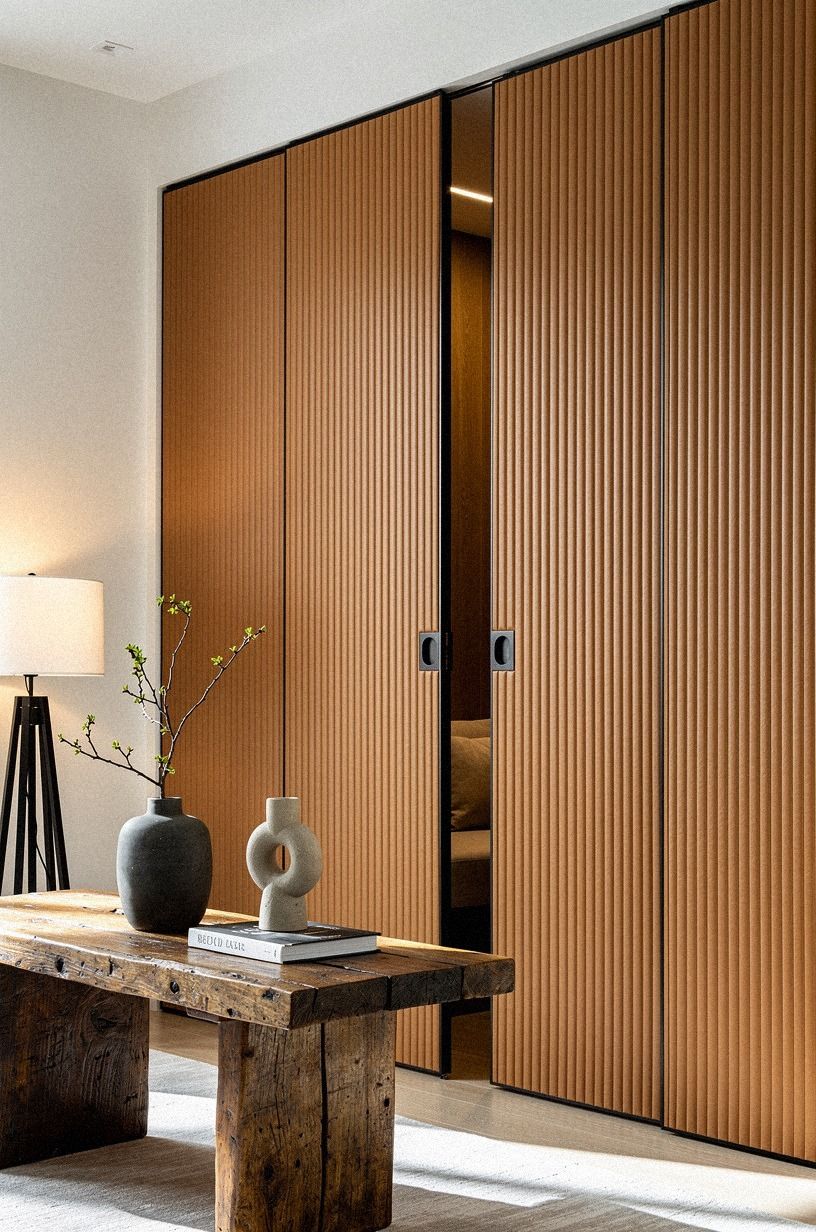
Leather wall panels sound risky until you see them done well. The ribbed profile is what does the work: every vertical channel catches shadow at a slightly different angle, so the wall reads as architecture, not as a soft good.
Use channeled tobacco leather in a tight 1.5 inch rib, and run the panels floor to ceiling so the seams disappear into the rhythm. Behind the ribbed wall, I’d keep the inside quieter than the outer room so the contrast registers.
A single Belgian flax linen-covered bench, one low lamp with a parchment shade, maybe a slim unlacquered brass picture light overhead. The leather does the flirting; you don’t have to.
Honestly, this is one of those moves that photographs far better than it tests on paper.
9Light the reveal with recessed brass channels
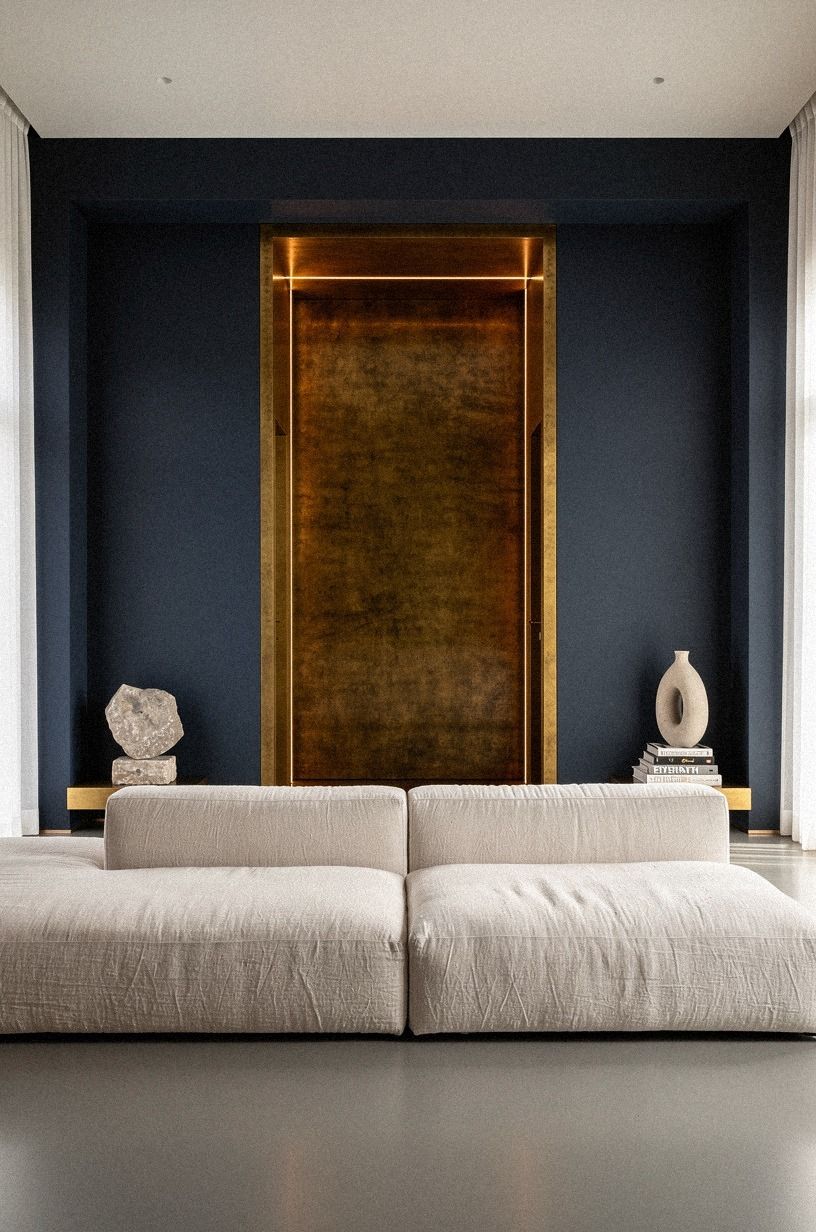
Lighting is what tells your brain the opening matters.
10What makes cabinetry the best camouflage for a hidden door?
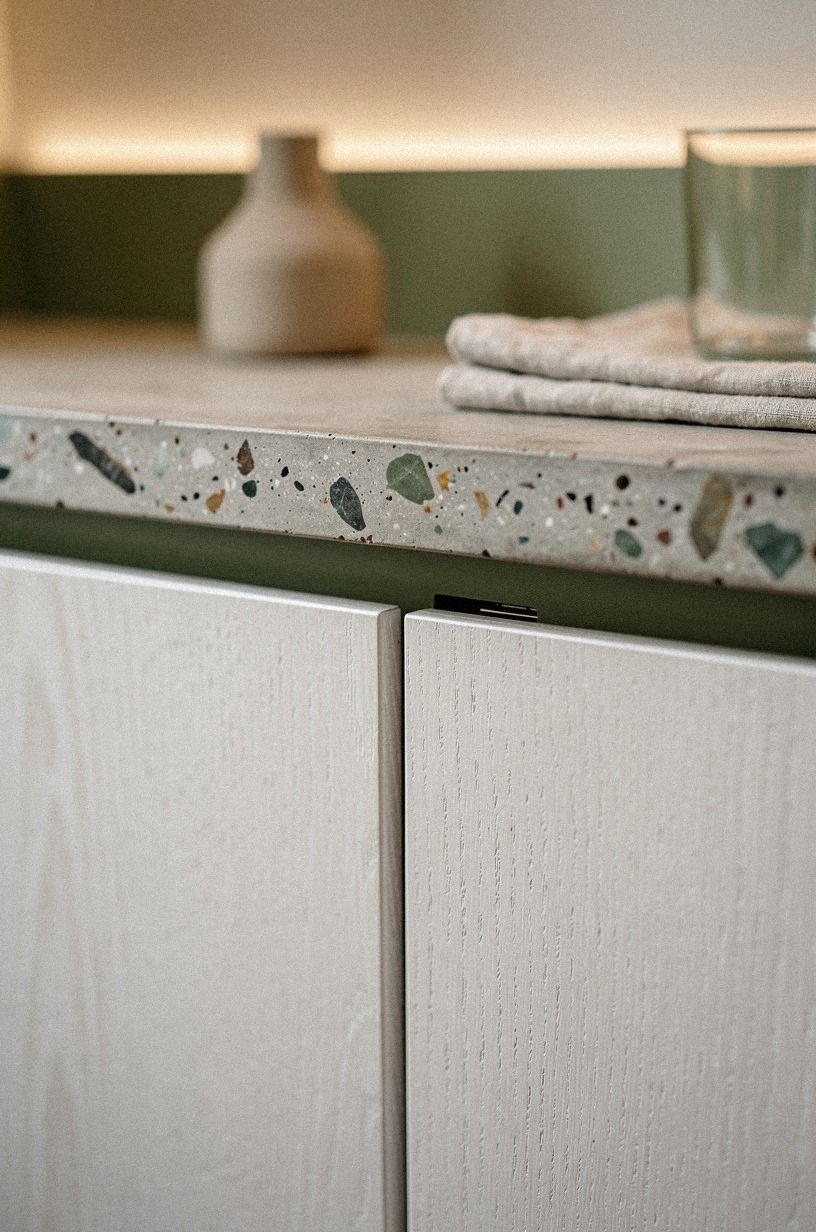
Cabinetry gives you small seams, believable reveals, and a reason for people not to question anything. Build the opening as one tall cabinet door, keep the pulls aligned with the rest of the kitchen or bar, and let the panel swing or pivot on a hidden axis. The trick is the rhythm: when the cabinet field reads as a single composition, your eye doesn’t single out the moving part.
I like paint-grade poplar with a soft-close hinge and a finger pull recessed into the bottom edge. This is the move that gets you a working speakeasy door without anyone asking why the cabinet feels heavier than it should.
If you’re planning the full vibe, our speakeasy home bar ideas piece goes deep on the room behind it.
11Panel the TV wall with hidden access
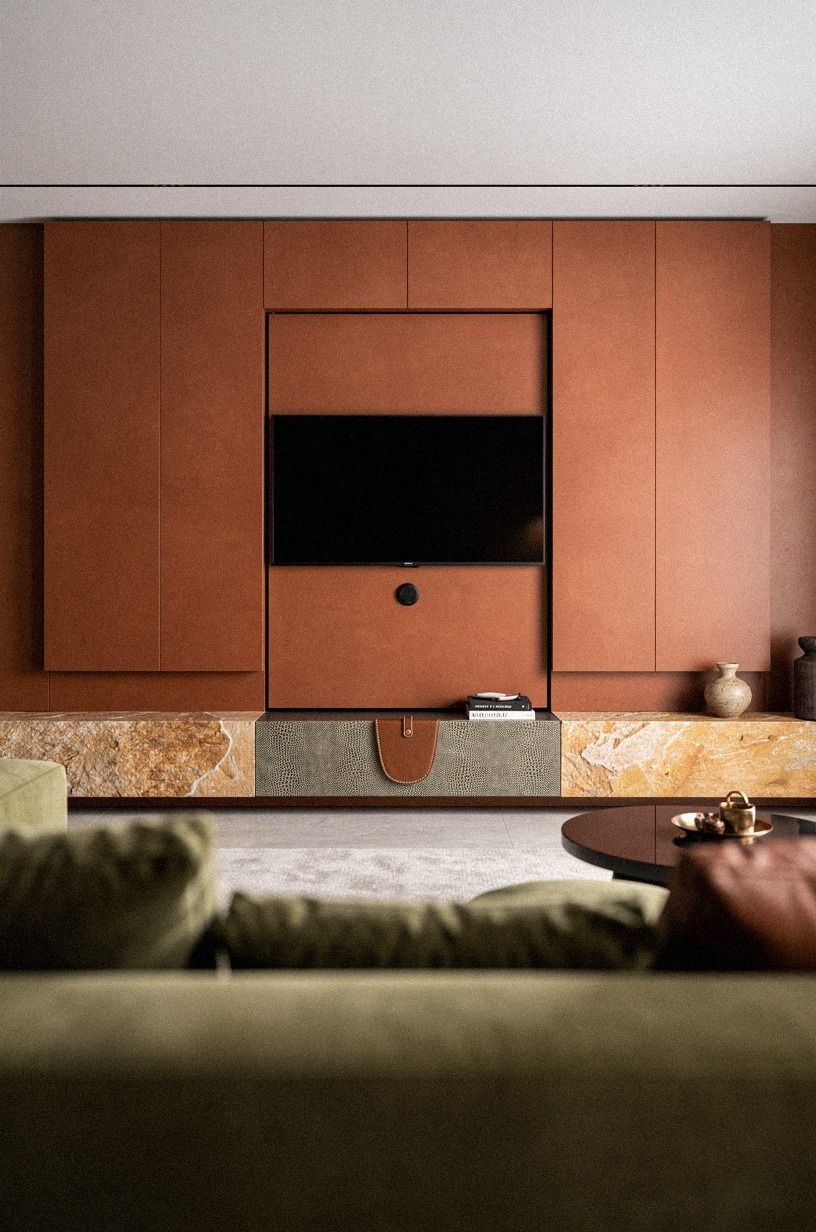
TV walls are already full of visual excuses, so they’re great camouflage.
12Tuck a cigar room behind moody drapes
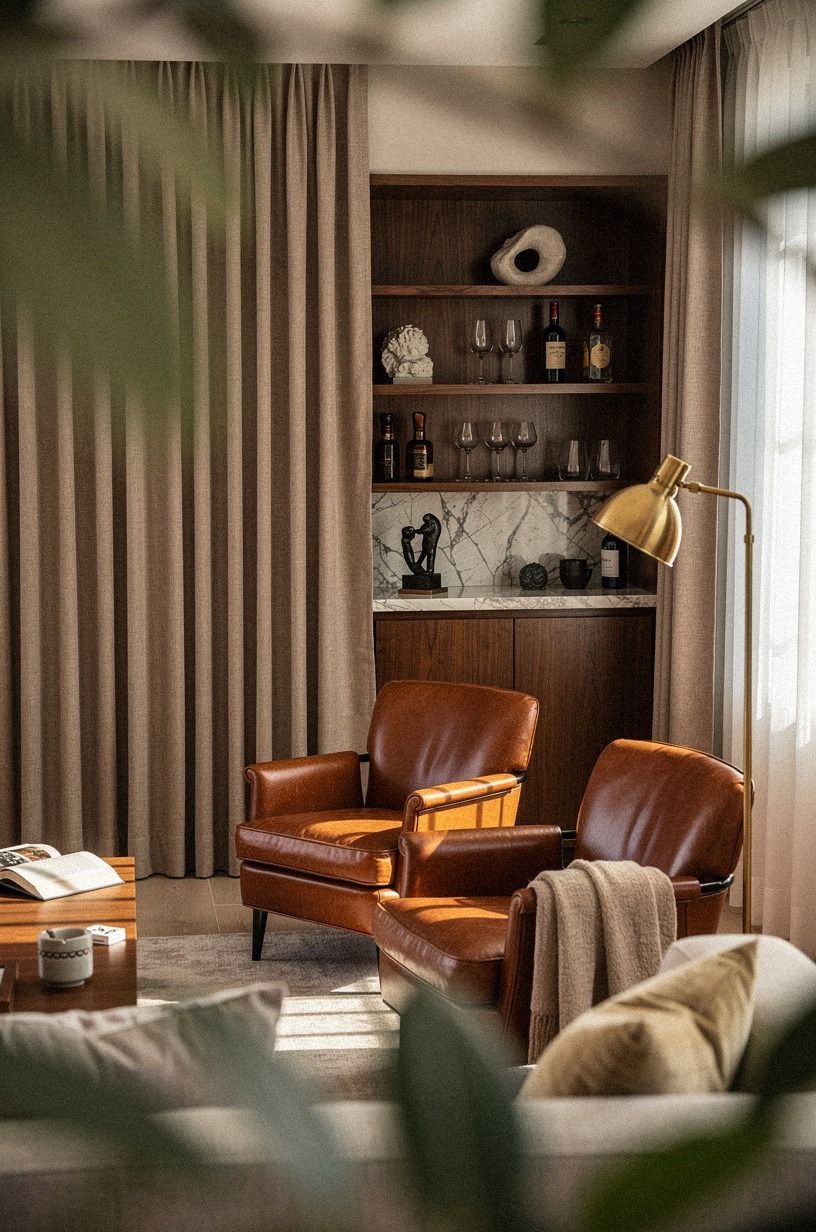
Not every hidden room needs a hard door. Full-length drapes on a ceiling track can disappear a whole corner if you spec them right.
Go with 18 oz cotton velvet in tobacco, near-black, or deep aubergine so the weight reads substantial, then line them in Belgian flax linen so they hang clean. The drapes should puddle a half inch on the floor, never float above it.
Behind them, a single tufted oxblood leather club chair, a slim humidor shelf, and one dimmed picture light with a parchment shade. The reveal is the softest part of the room, which is the whole point.
If you want to push the velvet story further, our speakeasy curtain drapery ideas roundup is the rabbit hole.
13Create a jewel-box nook beyond built-ins (The Jewel-Box Pivot)
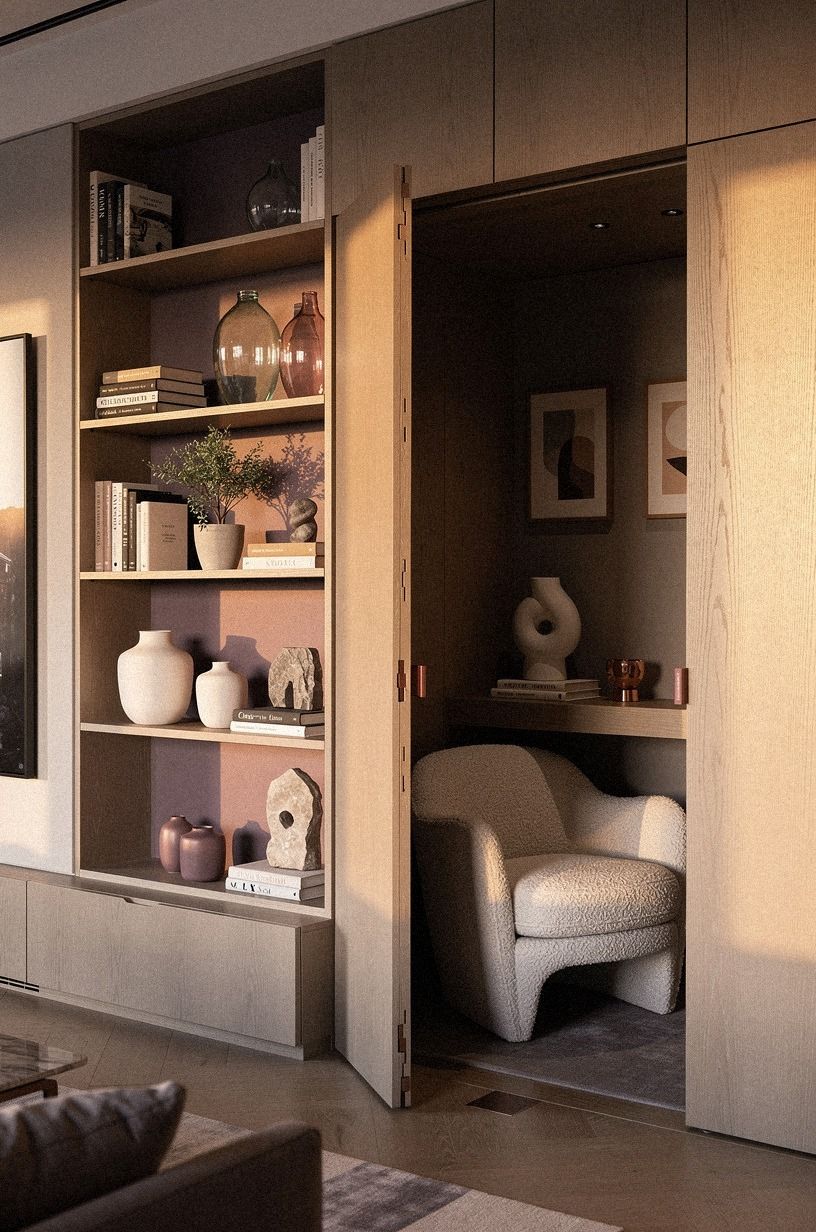
A small room can handle more richness than a large one.
14Use bronze hardware as sculptural camouflage
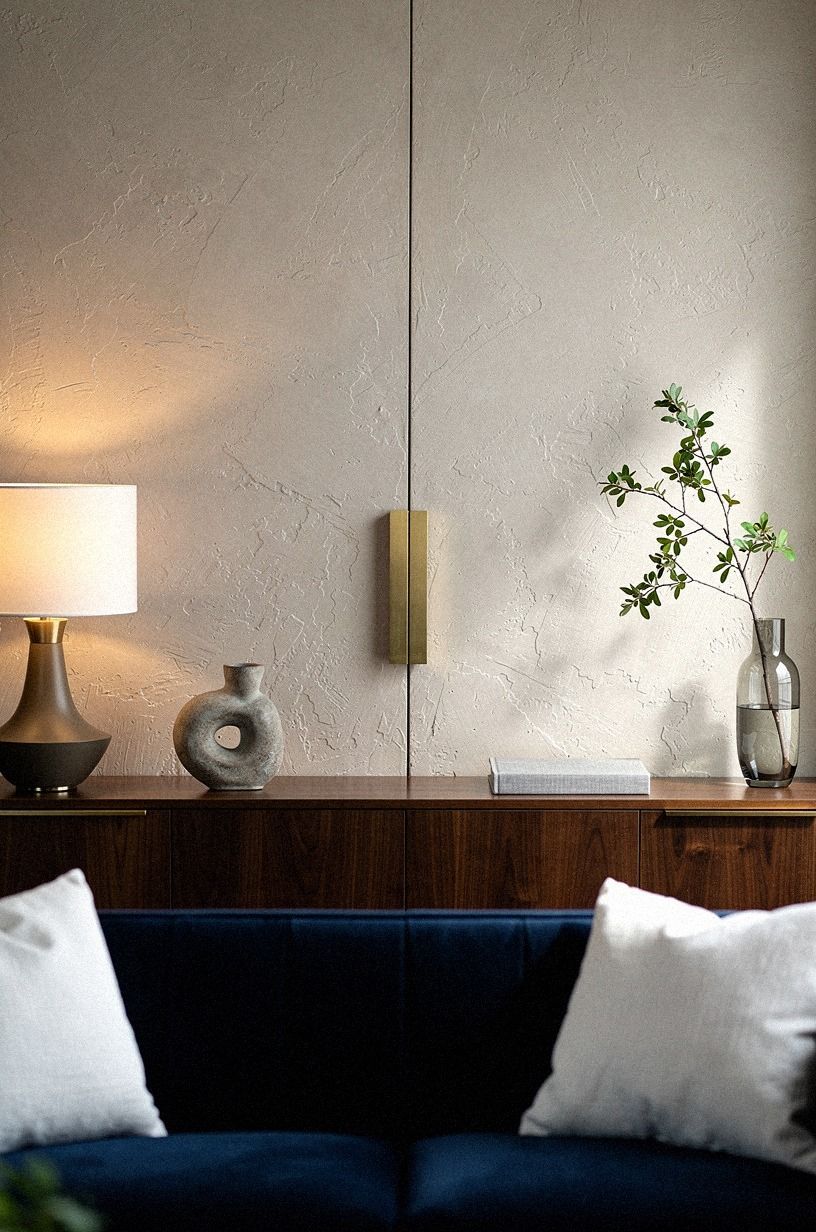
Hardware can disappear by standing out in the right way. Choose a pull or edge detail in patinated bronze that reads like sculpture, then center it within the wall so people assume it’s decorative before they assume it moves.
That’s the whole camouflage game. The hardware shouldn’t shout function, but it also shouldn’t vanish completely.
Scale is the move nobody respects. Too small and you fumble for it.
Too big and the wall starts looking like a disguised appliance. I like a long, narrow bronze form with enough heft to feel intentional in your hand.
Pair it with quieter surfaces around it, maybe painted paneling or pale oak, and let the metal do the flirting. But keep other brass pieces in the room softer so the pull still feels special when you approach it.
For the broader metal story, our speakeasy gold brass accent ideas piece lines up the metals so the pull doesn’t fight the room.
15Blend the doorway into floor-to-ceiling wainscoting
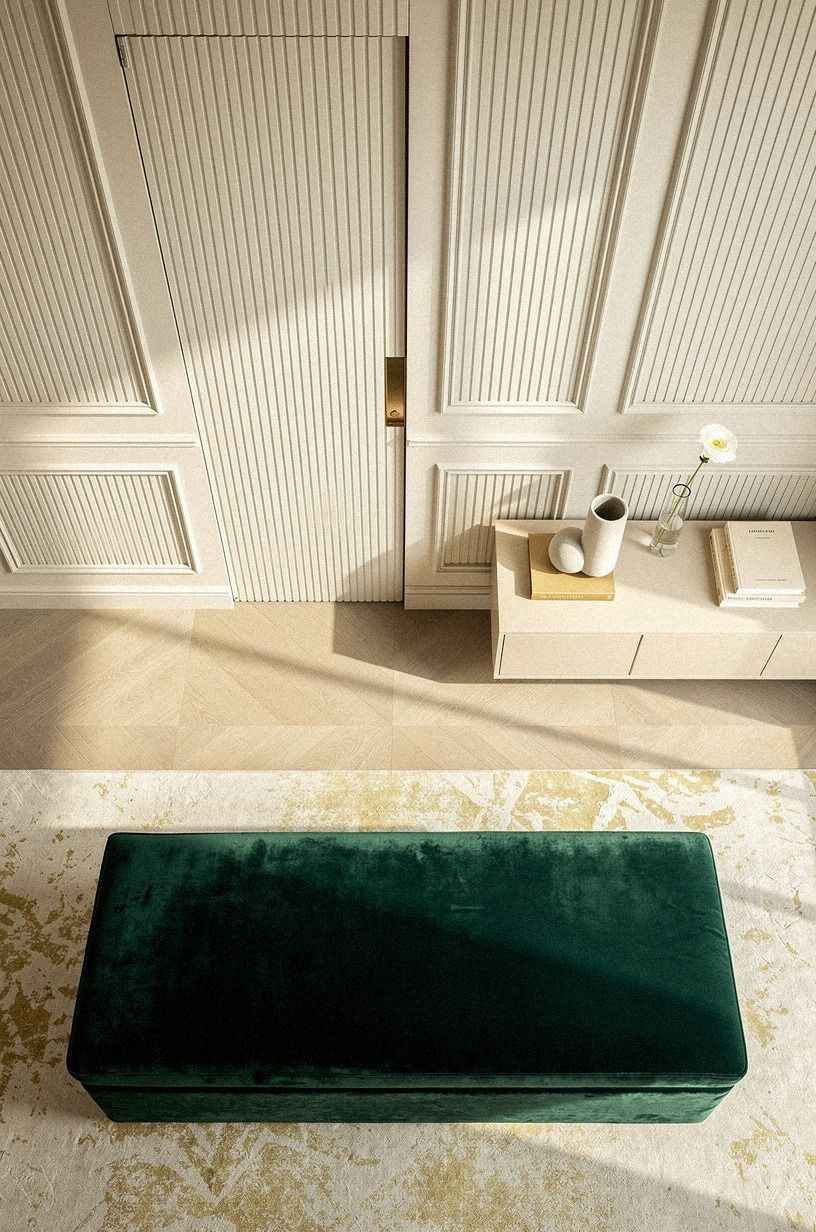
Tall wainscoting gives you geometry for free. Run the panels right up to the ceiling, hide the doorway inside the repeated fields, and keep the bench, console, or lamp in front low enough that you can still use the opening comfortably. This is one of the cleanest ways to make a luxury hidden door feel custom without going flashy.
I like paint-grade poplar millwork here because it takes paint well and keeps profiles crisp. If you want a softer old-money look, use a velvety neutral on the wall and a bench in tobacco or olive. And watch the floor plan.
A coffee table that’s roughly two thirds the sofa length leaves better movement around the passage, especially if the opening is near the main conversation zone. Small planning call, huge payoff. For the dining-room flip, our speakeasy dining room ideas piece lives a wall away.
16Can sliding art really hide a wine salon?
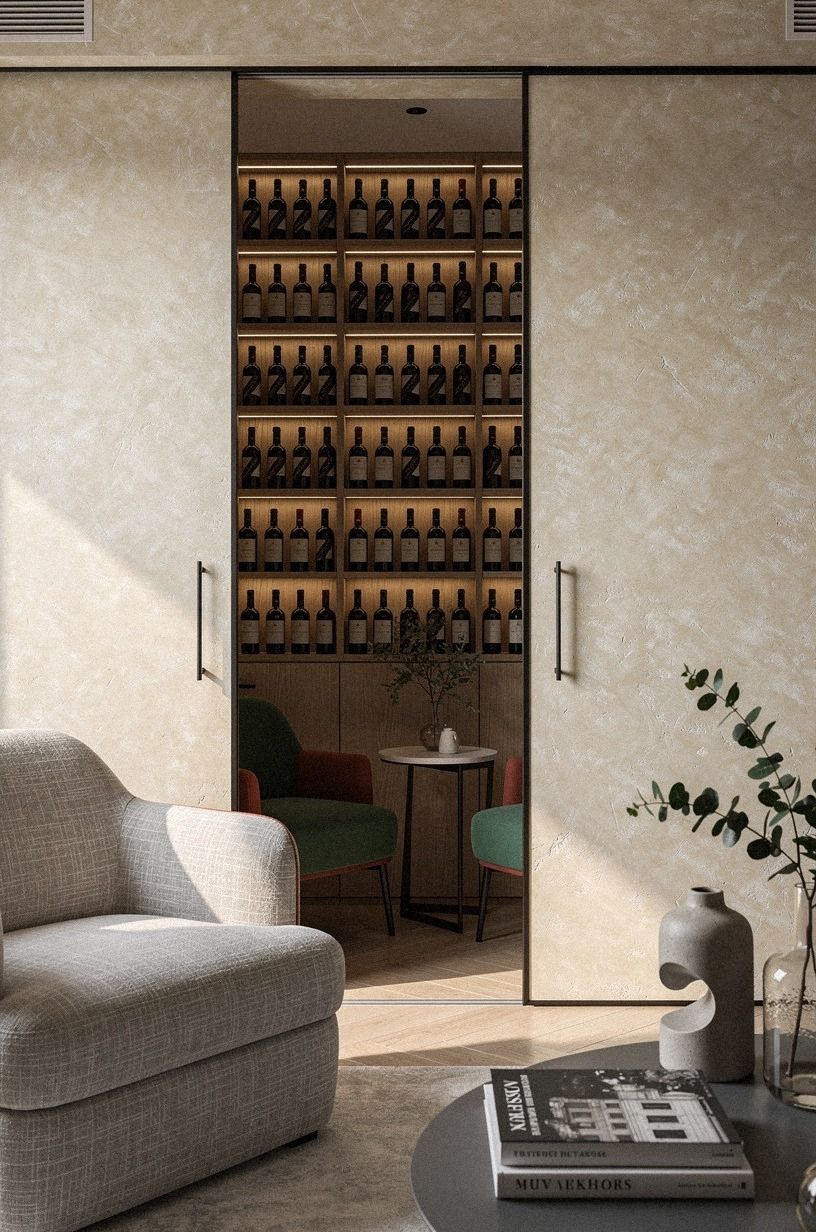
Sliding art gives you a reveal with a little drama, and sometimes that’s exactly right. Mount a single oversized canvas on a ceiling track, let it ride on aged bronze glides, and hide a 60 to 80 inch opening behind it.
The trick is depth: the canvas has to clear the bottles inside, so plan the wall pocket at least 6 inches deep. Inside, go cooler than the outer room.
Nero Marquina marble on a tight shelf, one slimline wine fridge, and a low unlacquered brass picture light overhead. The art does the flirting; the salon stays quiet.
It’s the move I’d steal from a hotel bar in a heartbeat. Pair it with our speakeasy gold brass accent ideas and the whole room tightens up.
17Hide a library alcove behind arched shelving
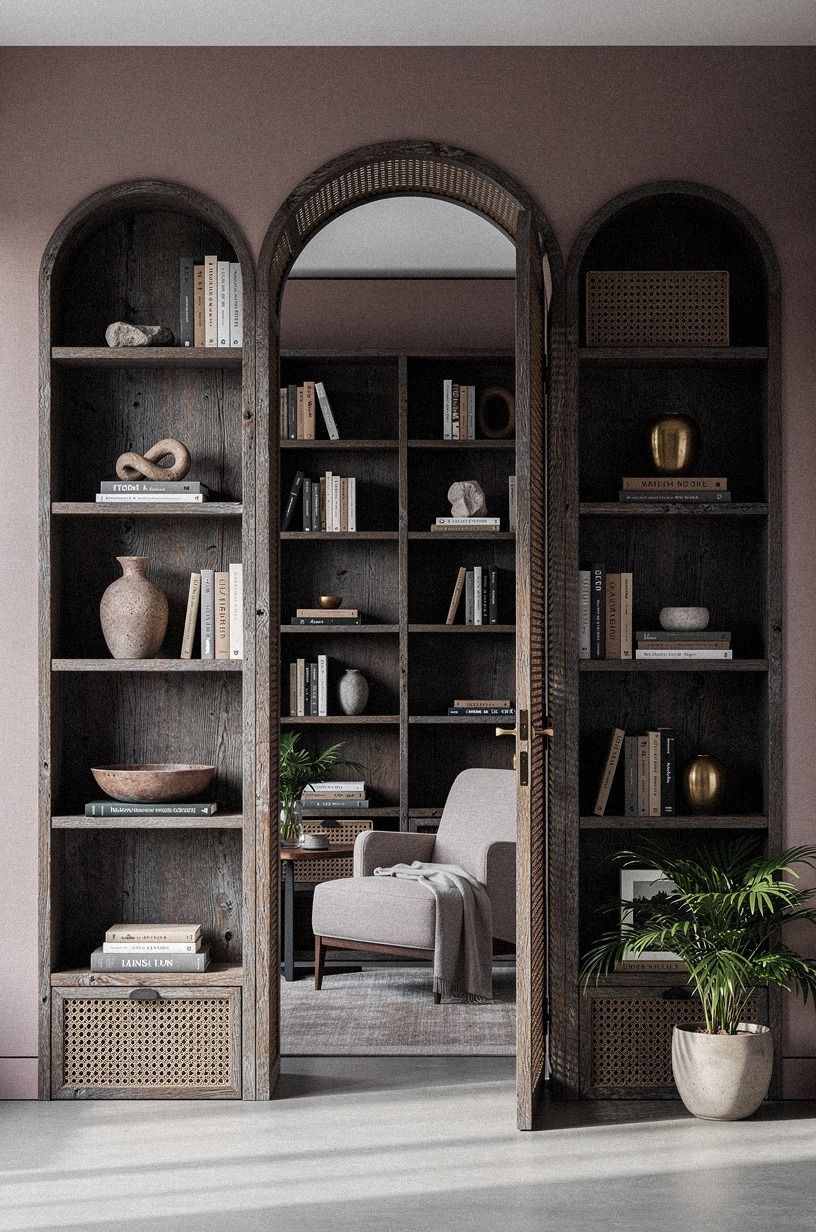
Arches make a book wall feel settled, which is why they hide movement so well. Build the opening into one arched bay, let the curve continue uninterrupted, and reveal a reading chair or tiny writing spot behind it. You can go more traditional here without getting stuffy, especially if the outer room already has quiet plaster walls and warm timber.
This is also a smart place to mind materials in close view. Use solid white oak shelves if you can, or a convincing veneer with a thicker front edge so the arch doesn’t read flimsy.
Inside the alcove, a chair in Article Sven tan leather or another clean-lined leather works better than something overstuffed. You want the hidden room to feel collected, not sleepy.
But a dim lamp and one throw? Absolutely.
For the seating side, our speakeasy seating and furniture ideas rounds up what works behind the arch.
18Finish the inner room with velvet walls
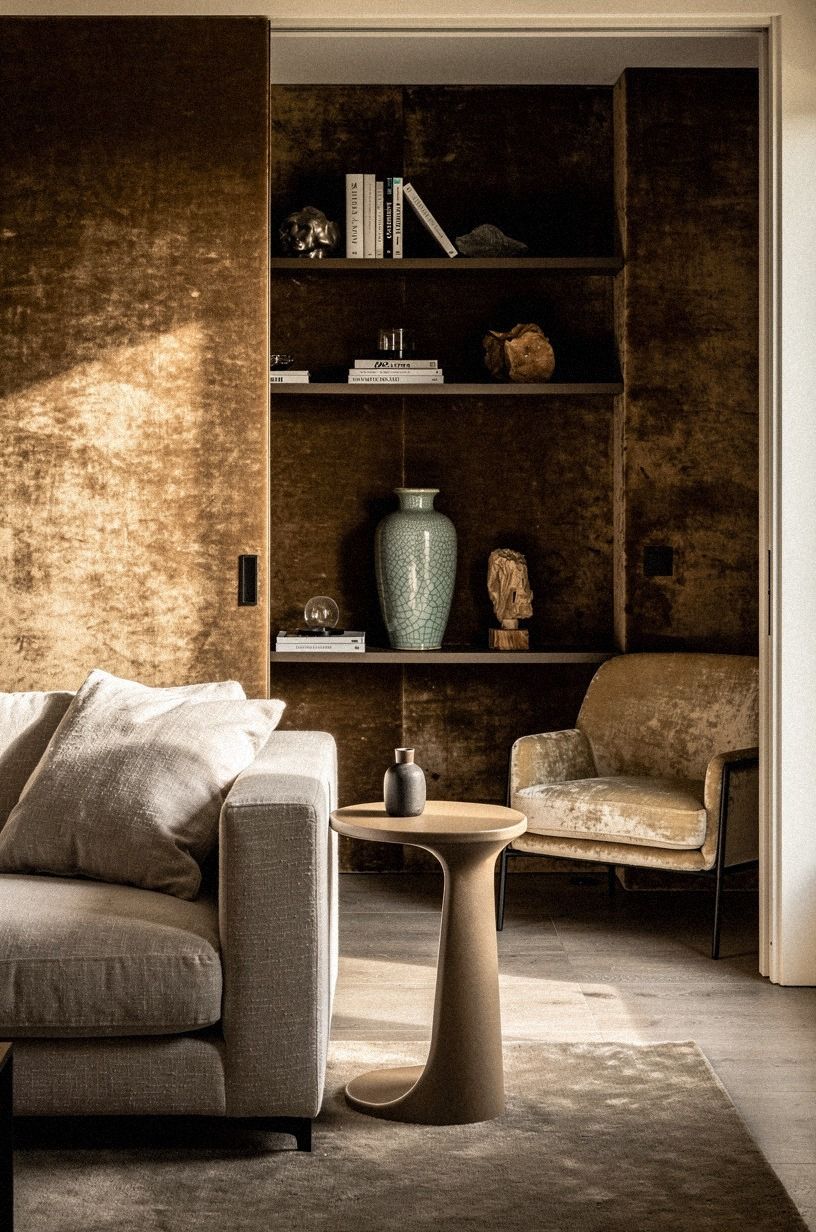
The inner room is where you cash in all the restraint from the outer one. Velvet walls, or panels wrapped in cotton velvet, soften sound and make the hideaway feel immediately set apart from the living room outside.
I like camel, tobacco, deep olive, or near-black depending on how dramatic you want the landing to feel. Done right, the threshold almost hushes the room when you cross it.
Keep the seating simple so the walls stay in charge. One curved chair. One small ottoman.
Maybe a lamp with a parchment shade. If you need one more reason to do it, velvet also helps the room feel fuller with less furniture, which matters in tight footprints.
And if the front room is warm white, camel, and black, this richer envelope feels like the private after-hours version of the same story. For the green cousin to this move, our green speakeasy decor ideas piece shows what olive and forest velvet look like at full scale.
Why this look feels expensive now
I’ve gone back and forth on hidden rooms because they can turn cheesy fast. The ones that stay with you aren’t the ones with the most gadgets. They’re the ones that understand restraint.
A living room with a disguised passage works when the front room is good enough on its own, when the millwork lines make sense, when the materials look believable in daylight, and when the reveal gives you a genuine mood shift instead of a party move.
If I were weighing where to spend, I’d put my money into the envelope before the theatrics. Better oak before more compartments.
Better lighting before more automation. Better proportions before more ornament. That’s the honest hierarchy.
A sofa in the 35 to 40 inch depth range, a wool rug sized so the front legs sit on it, a coffee table that doesn’t block the swing path, paint that holds up at 3pm, and one material with real richness under your hand. That’s the base layer.
The hideaway itself should answer one question: what do you want this room to protect from the main room? Noise, clutter, screens, guests, even just brightness.
Once you know that, the design gets easier. A champagne bar wants lacquer and glow.
A reading alcove wants wood and hush. A draped lounge wants softness first.
I learned the hard way that trying to make one hidden room do five jobs only makes it feel confused (and expensive in the wrong way). For the bar setup, our speakeasy home bar ideas piece covers the back-of-house spec.
What I’d never do again is announce the move too early. No oversized novelty pulls.
No theatrical panel pattern that points straight to the seam. No overfilled shelves trying to sell the disguise.
Quiet outside, richer inside. That’s the move. When you get that sequence right, people don’t say, wow, that’s a hidden room. They say the living room feels incredible, and then they notice there’s more to it.
That’s when you’ve won. And if you’re starting from a closet, our turn a closet into a hidden speakeasy bar piece is the small-space version of this exact playbook.
The Questions Worth Answering First
What is the best hidden-hideaway move for a small living room?
A bookcase wall or drapery concealment is usually the best fit for a small living room because both add function while hiding the opening. Double-duty storage matters when square footage is tight. Think IKEA BILLY styling in front, then a compact lounge or bar tucked behind with disciplined furniture.
Our small speakeasy room ideas roundup covers the tightest footprints.
Where can I buy hidden-hideaway pieces on a budget?
Start with IKEA, Target Threshold, and Wayfair for the visible-layer pieces, then check Facebook Marketplace for solid wood shelving or vintage bar cabinets. Secondhand millwork bones often look better than cheap new pieces.
Art books. Brass trays.
One good lamp. That’s enough to start.
How much does a hidden-hideaway makeover cost?
A surface-level version usually runs about $300 to $1,200, while a room with better lighting, a quality rug, and stronger furniture can reach $2,500 to $8,000. The envelope costs more than the styling.
Paint is cheap. Custom millwork, concealed hardware, and fireplace work aren’t.
Can I create a hidden hideaway on a budget?
Yes, and you don’t need custom joinery to get the feeling. Cheap wins count.
Full drapes on a tension rod. A deeper paint color like Benjamin Moore Revere Pewter HC-172.
Smarter styling on a standard bookcase. Better bulbs. Those changes shift the mood before any construction starts.
Is a hidden hideaway worth it in a small space?
Yes, especially if the hidden room solves one real problem your main room can’t. Purpose makes luxury believable.
A small lounge, reading alcove, or bar works because the compact footprint feels intimate by default. Keep the opening aligned with the seating plan so circulation stays easy. For the dining-room flip, our speakeasy dining room ideas piece lives a wall away.
Is a hidden hideaway a good idea for a rental?
Yes, if you lean on reversible layers instead of built millwork. Low-damage disguise moves work surprisingly well.
Tension-rod drapes. Peel-and-stick panel effects.
Removable sconces. A freestanding bookcase placed as a divider in front of a tucked niche.
You can get the atmosphere without losing your deposit.
Where I’d Start First
If I had to pick one, I’d start with the walnut bookcase wall. It earns its footprint even when the panel stays closed, and that utility is what keeps the whole idea from feeling precious. Pin the bookcase wall for later and build the disguise before the drama.