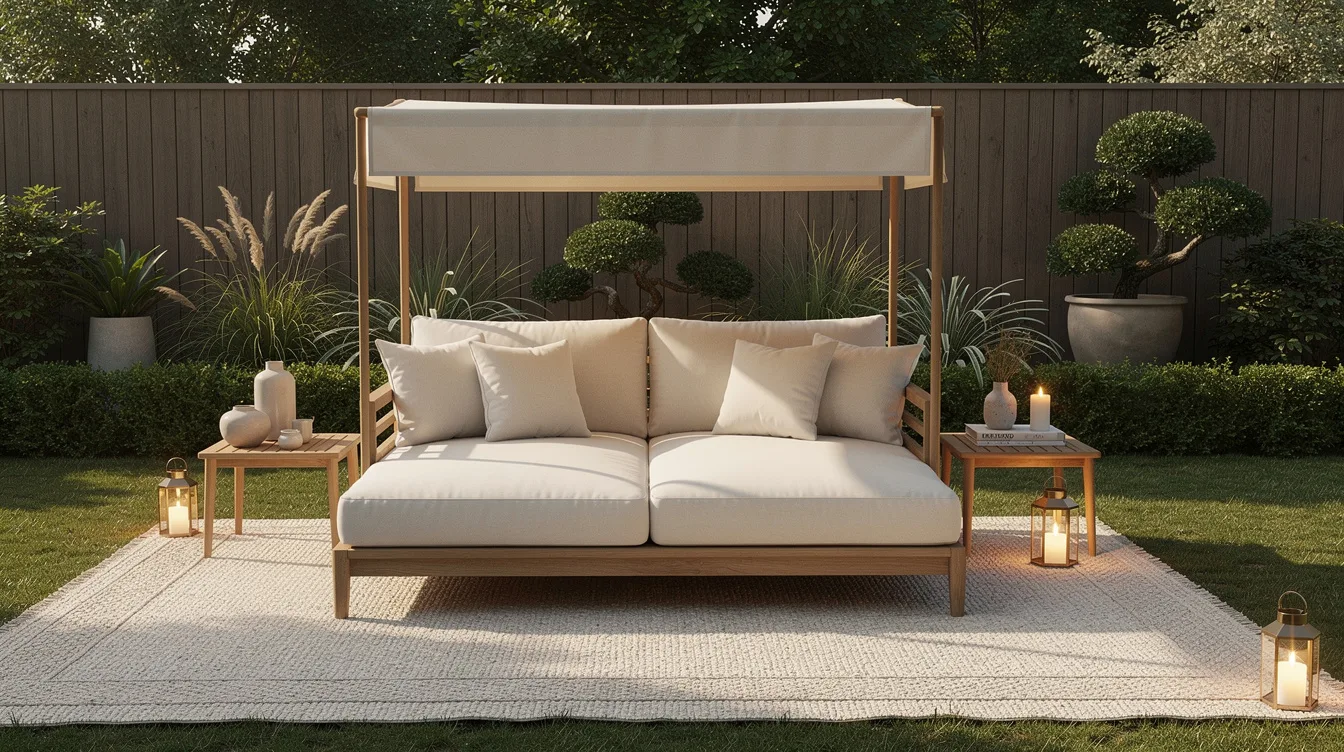
My outdoor daybed looked fine in listing photos, then flat and slightly cheap every evening after 6 p.m. The cushions were thin, the canopy sagged, and there was nowhere to set down a drink except the deck boards.
I wanted that boutique-hotel feeling without pretending my backyard was a resort. What actually worked was treating the daybed like a full zone, not one big piece of furniture dropped near the fence.
Start With a Bigger, More Architectural Frame
The first upgrade was admitting the original frame was too small. A boutique-hotel setup usually has real presence, and a typical rectangular aluminum cabana daybed runs about 79 to 90 inches long and 63 to 79 inches wide, with enough height for a canopy to read as intentional instead of flimsy.
I looked hardest at options from Wayfair and Lowe’s, because that middle market sweet spot is real. Typical pricing for a solid aluminum cabana model lands around $800 to $2,000, and that jump in scale matters more than most decorative extras.
Choose Cushions That Look Deep From Across the Yard
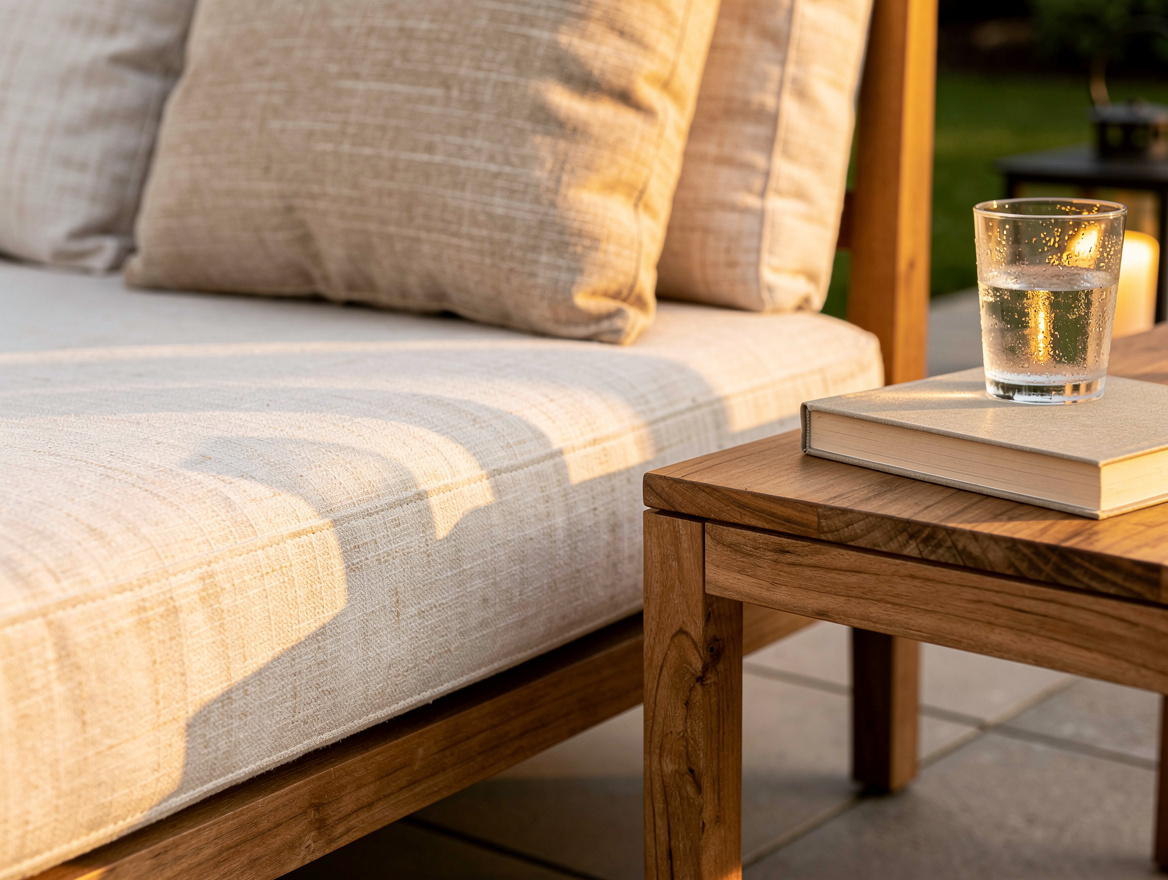
Thin cushions kill the mood fast. I wanted the seat to look generous from the patio door, so I focused on deep outdoor cushions in solution-dyed acrylic or another performance fabric instead of basic polyester that starts looking tired after one hard season.
This is where I stopped chasing tiny savings. On a daybed, cushion thickness is the difference between pool-club energy and college-apartment leftovers, and I think it is worth paying more for denser foam if the frame already cost more than $1,000.
Add Shade That Feels Built In
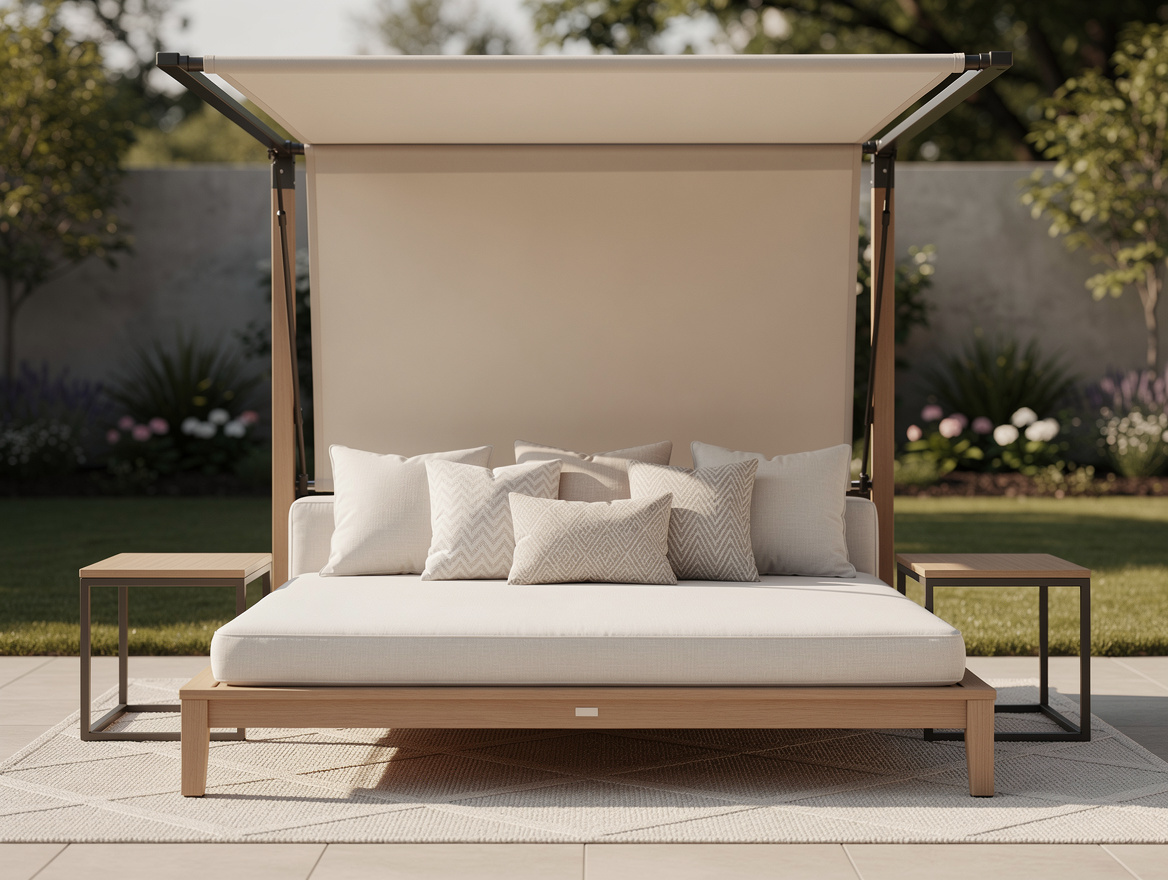
A loose umbrella beside a daybed can work, but it rarely looks hotel-like. I got a cleaner result by choosing a retractable canopy profile, because integrated shade makes the whole piece feel finished and helps the seating area read as one destination.
If you are shopping budget, this is also where value shows up. A typical double chaise or patio daybed at Walmart comes in around 75 to 79 inches long by 53 to 59 inches wide and usually costs about $250 to $700, often with a simple canopy that does more visual work than people expect.
Anchor It With Tables, Not Random Accessories
The setup changed the minute I added landing spots on both sides. One compact side table looked accidental, but two made the daybed feel serviced, like someone had thought through where a book, sunglasses, or a glass of ice water should go.
I like matching tables when the frame is clean and modern, and mixed materials when the bed is warmer. A teak table from Home Depot or Amazon works especially well if your daybed frame is powder-coated aluminum, because the wood softens the sharp lines without making the area fussy.
Layer Lighting Low Instead of Going Bright
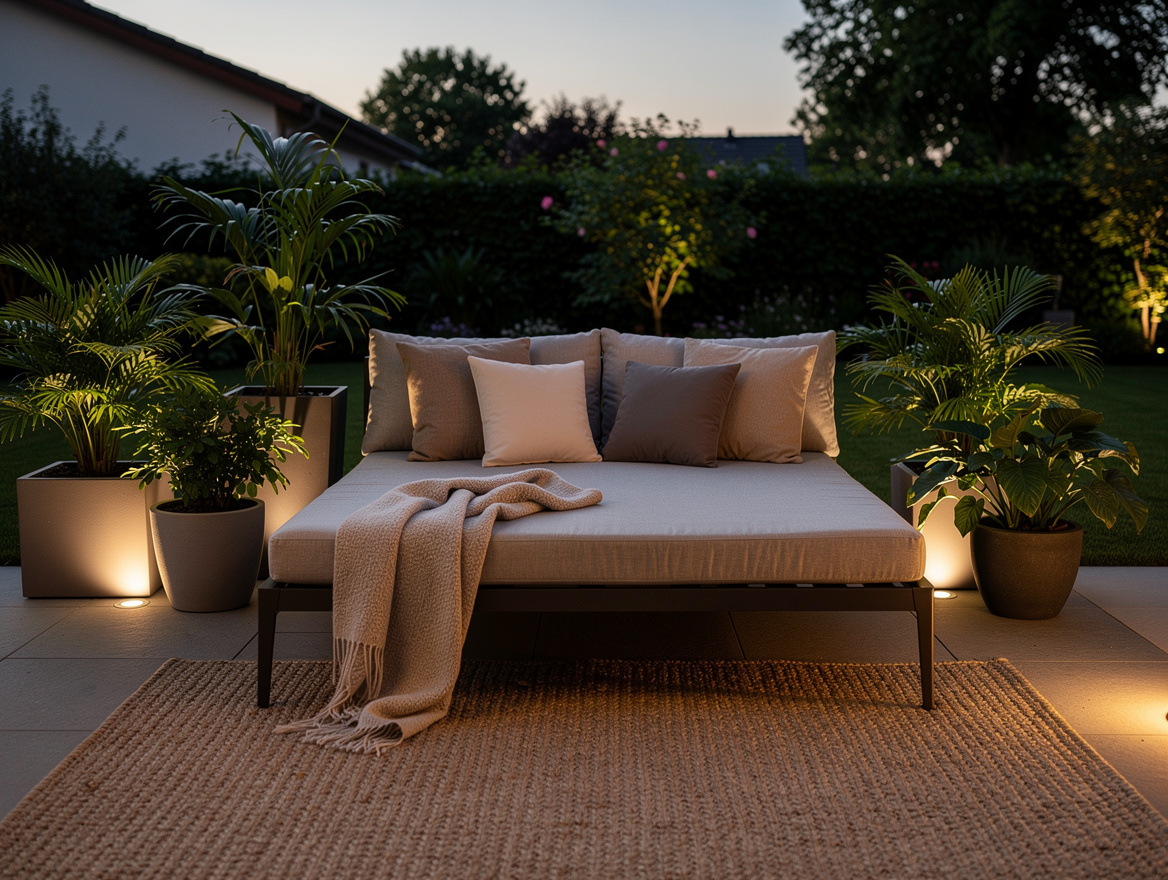
This was the upgrade that fixed the nighttime letdown. Overhead floodlight energy is wrong here, so I used a low mix: one outdoor lantern, one rechargeable table lamp, and a soft path light nearby.
I kept everything warm-toned and close to the seat. A woven IKEA lantern or a simple rechargeable lamp from Target does enough, because boutique-hotel lighting is about glow on fabric and wood, not blasting the entire yard like a parking lot.
Use One Strong Color Story and Stop There
I got a better result when I narrowed the palette instead of piling on beachy prints. Cream cushions, black or bronze framing, and one earthy accent like olive or rust made the throw pillows feel deliberate instead of seasonal clutter.
This is also where materials matter. If your frame has a sculptural look, keep the textiles quiet. If your frame is a warm teak sofa-daybed, which typically runs about 79 to 87 inches long and 31 to 39 inches deep and often costs $1,500 to $4,000, you can let the wood carry most of the visual richness.
Treat the Ground Like Part of the Daybed
I did not expect the floor to matter this much, but it changed everything. Once I slid a large outdoor rug under the front two-thirds of the setup, the daybed stopped floating awkwardly and started reading like an actual lounge zone.
Go bigger than your instinct says. A small rug looks apologetic, while a larger one from Costco or Target gives the same psychological effect you get at a hotel cabana: a defined footprint, softer edges, and a reason for the eye to stay there.
If you are deciding where to spend first, put the money into the frame and the cushions, then add lighting and tables after that. The boutique-hotel feeling comes from scale, comfort, and shade long before it comes from decorative extras.
Mia Carter writes about small-space living and budget home makeovers. She has restyled three rentals and tests most ideas in her own 45 sqm flat.