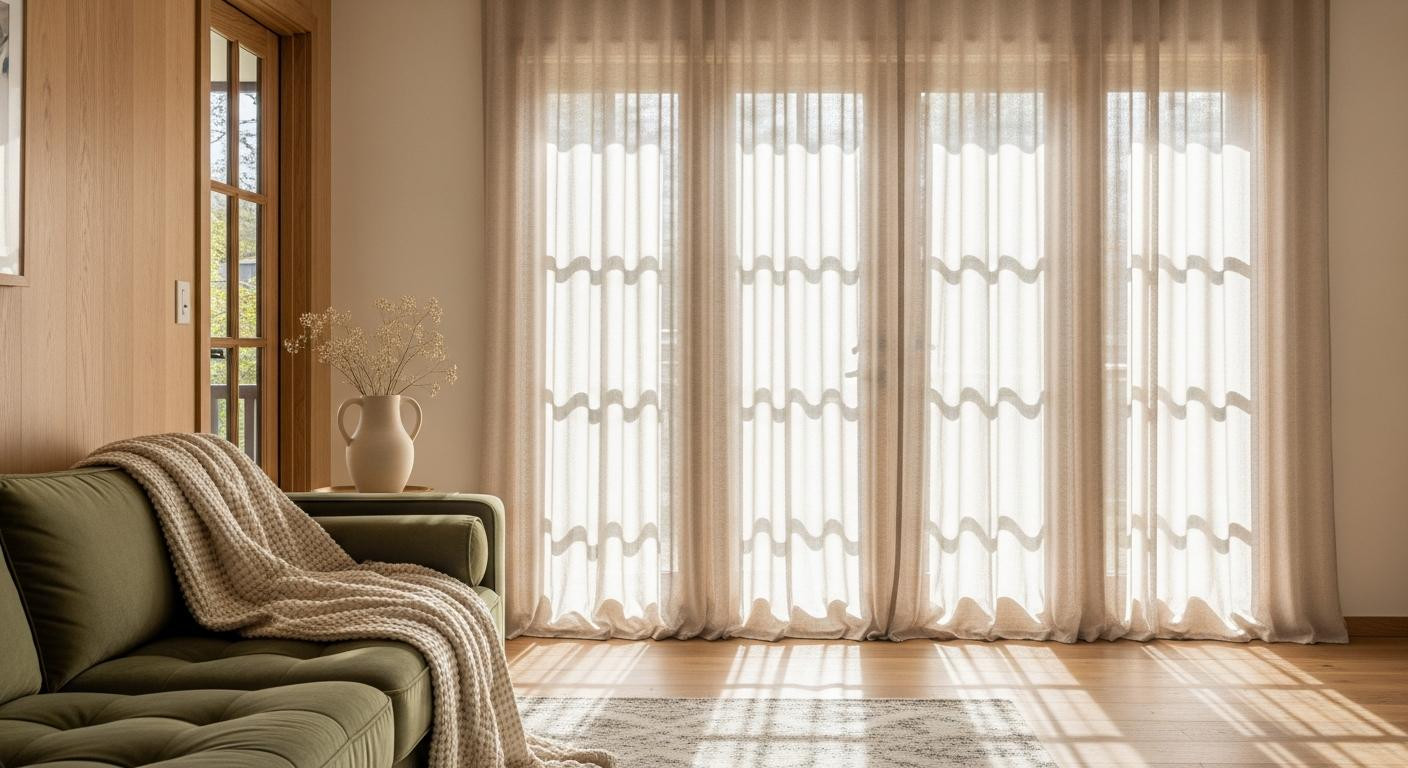
Your west-facing living room at 2:47pm on a Tuesday in May when the afternoon sun hits those velvet curtains you hung in October and the room measures 72 degrees on the thermostat but feels ten degrees hotter. The fabric traps heat like greenhouse glass. You open the window, lose the cross-breeze to the heavy weave, close it again. Linen panels change this equation in ways that feel physical before they look different.
The curtains cost $340 from West Elm and they block exactly the spring light you’ve been waiting for since February. That’s the problem heavyweight winter textiles create once temperatures shift. And the fix doesn’t require a renovation budget.
Linen’s weave structure creates airflow that velvet physically blocks
Linen curtains use 100-130 threads per inch compared to velvet’s pile construction that sits at 450 grams per square meter. Those irregular gaps in linen’s flax fiber weave let air molecules move through the fabric, creating passive ventilation without opening windows. Interior designers featured in Architectural Digest confirm linen outperforms cotton for breathability in spring transitions.
The West Elm Belgian Flax Linen Curtain runs $179 per 50×96 inch panel and transmits 45-55% of natural light. That’s the middle ground between washed-out sheers and cave-dark blackout panels. The IKEA Aina linen curtain hits the same light transmission range at $40 per panel, though it shrinks 5-7% after the first wash compared to West Elm’s 3-5%.
But here’s the thing about temperature: linen doesn’t magically cool rooms by eight degrees. It reduces perceived temperature by an estimated 2-4 degrees Fahrenheit in direct afternoon sun compared to velvet’s insulation properties, based on fabric porosity studies. That’s enough to feel the difference on your forearms when you’re reading on the couch at 3pm.
The light transmission rule separates useful sheers from institutional mistakes
Sheer linens should transmit 35-45% of natural light. Any higher and rooms feel like waiting areas by mid-afternoon. The Target Threshold sheer panels transmit roughly 68% of light at $30 per panel, which photographs beautifully at 9am and creates glare that washes out wall colors by 2pm.
That 35-45% range illuminates rooms without UV furniture fade. And it works whether your windows face south or west. North-facing rooms see minimal benefit from the swap since they’re not fighting direct sun heat anyway.
Cotton throws replace wool weight but fail above 62% humidity
May’s average relative humidity in Atlanta sits at 68%, Houston at 72%, Seattle at 65%. Cotton absorbs moisture and holds it, making those $25 Target throws feel damp and heavy by week three. The fabric starts feeling tactilely damp at 65-70% relative humidity before you’d call it wet.
Linen’s hollow fiber structure wicks moisture away from skin and dries 20-30% faster than cotton at 62% humidity and 72 degrees. That’s the difference between a throw that feels fresh all month versus one you’re swapping heavy winter throws for lightweight cotton alternatives every other week.
But if you’re running air conditioning below 68 degrees, cotton performs fine because humidity stays controlled under 55%. The Target Good & Gather cotton throw at $28 for 50×60 inches works identically to the Quince European Linen Throw at $50 in climate-controlled spaces. Linen’s advantage shows up in naturally ventilated rooms during transitional weather.
Striped linen pillows mix with heritage florals because thread count matches
The striped linen trend works with heritage florals when both fabrics use similar thread counts in the 90-110 threads per inch range. That texture consistency lets patterns clash without visual conflict. Design experts with ASID certification note that matching drape weight matters more than choosing fabrics that don’t make small apartments feel smaller through color coordination.
Start with two solid linen pillows, one stripe, one floral. Four total per standard 84-inch sofa keeps the space from reading as cluttered. The West Elm striped linen pillow cover runs $59, Pottery Barn’s honeycomb linen at $39. More than three different textile types in one room tips into visual noise.
Your spring textile swap questions answered
How do I swap curtains without rental wall damage?
Umbra Twilight tension rods run $25-42 depending on width and require zero drilling. The 28-48 inch version holds 22 pounds, which supports four linen panels at roughly 1.5 pounds each. Clip rings attach to existing rods without removing hardware. Command hooks support lightweight linen panels under 3 pounds total with their 7.5 pound per side capacity.
Can I layer spring textiles without looking cluttered?
Stick to three material types maximum: linen curtains, cotton throw, one pattern in pillows. Interior designers with residential portfolios confirm that five to seven textile types marks the upper limit before rooms read as chaotic. And that includes texture layering that makes rooms feel collected instead of cluttered through intentional material mixing.
What’s the actual budget for a full living room refresh?
The IKEA and Target route costs $248 total for two curtain panels, two throws, and four pillow covers. Mid-range West Elm and Pottery Barn runs $1,156. Most readers land around $280 for noticeable change. The quality threshold where you see measurable improvements in shrinkage and color fastness hits at $150 per curtain panel, where premium linen lasts roughly twice as long as budget versions.
Your west-facing window at 6:42pm on the third Thursday after you hung the linen panels, when golden hour light filters through the loose weave and lands in soft stripes across the oak floor. The room holds the same furniture but breathes differently now, like someone opened a door you didn’t know was closed. That’s what natural light through your windows without overheating feels like in practice.