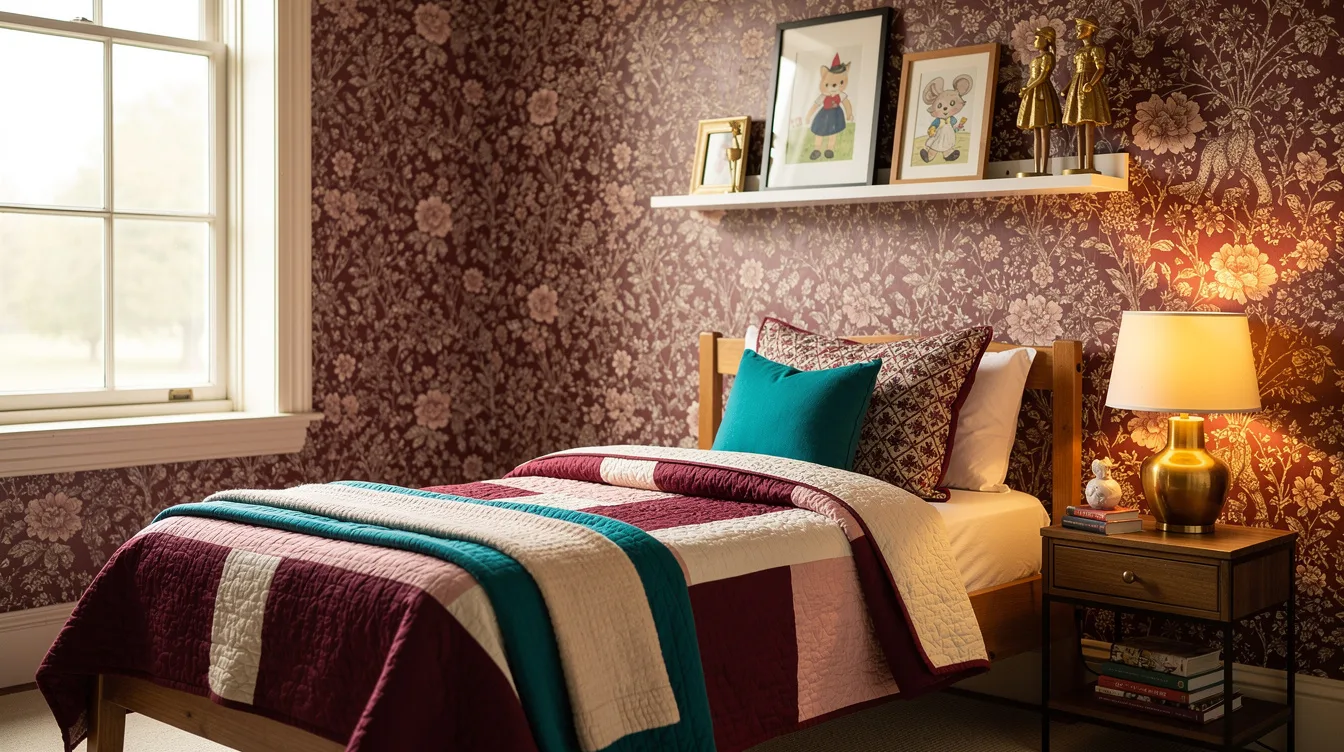
I always find childhood bedrooms more revealing than polished adult homes. In a room that was often only about 10 by 12 feet, you got the full blueprint: the color obsession, the favorite pattern, the weird lamp, the posters taped up a little crooked.
That is why the idea behind designers revisiting their early bedrooms still lands. The details were rarely expensive, but they were specific, and that is exactly what many grown-up rooms still lack.
Start With One Wallpaper Motif and Let It Lead
A childhood room gets memorable fast when one print does the heavy lifting. In a typical 10-by-12-foot bedroom, a single accent wall in floral wallpaper can change the whole mood without eating the budget.
I still think most people overmix patterns too early. A roll from Target or Amazon usually runs about $35 to $70, and about four to six rolls is typical for one wall, which is enough drama for a smaller room.
If you love the old-school designer look, go for oversized flowers, green-and-white toile, or a stripe that feels slightly formal. Cute micro prints tend to disappear, and that is not the point here.
Choose a Bed Shape That Feels a Little Theatrical
A plain bed frame rarely becomes the thing you remember from childhood. A curved metal bed, a simple canopy, or a trundle has more personality and gives the room a point of view.
For a kid’s space or guest room, a twin frame from IKEA, Walmart, or Wayfair usually lands around $140 to $320, while a brass-look option can push closer to about $400. That slight vintage note matters more than people think.
I would skip anything too bulky in a smaller room. A visually lighter frame leaves more breathing room around a typical 39-by-75-inch mattress and keeps the room from feeling packed in.
Layer in Soft, Slightly Quirky Textiles
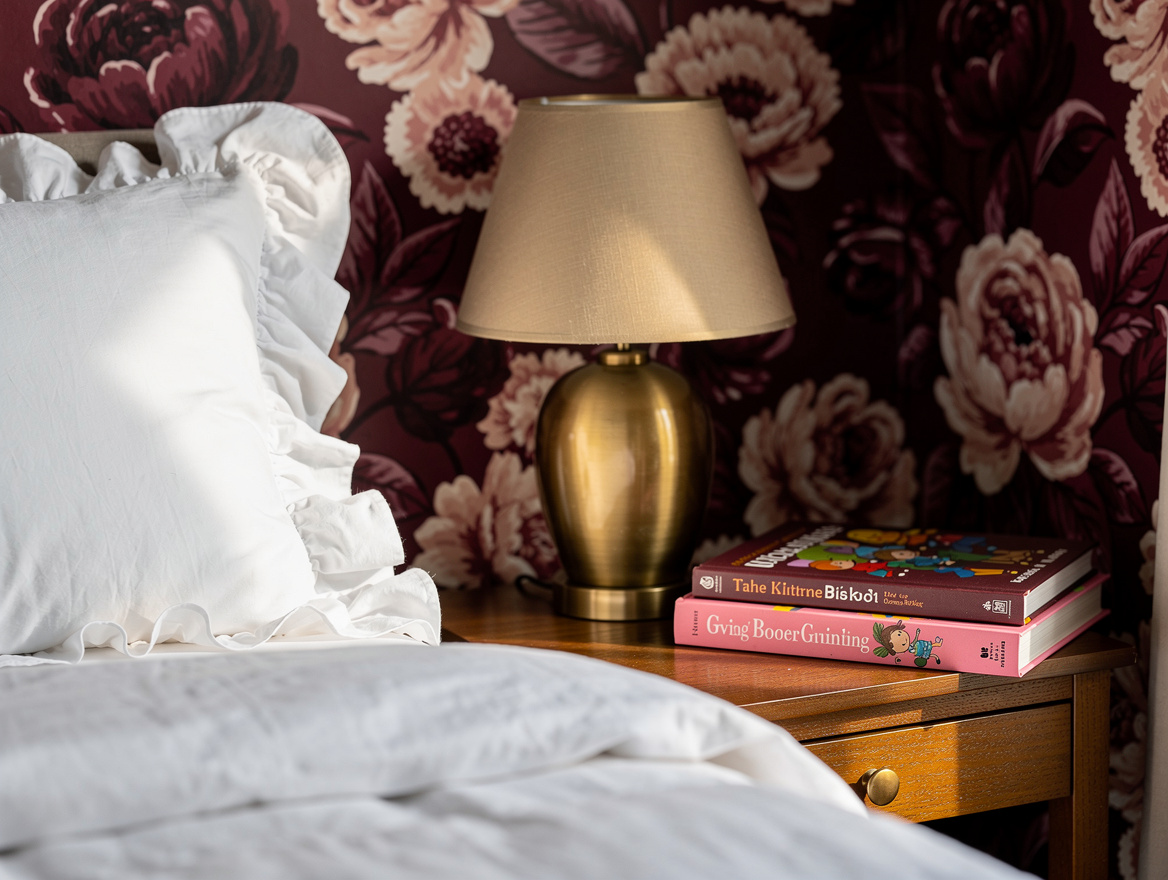
Designers remember the sensory parts of a bedroom, not just the furniture. A ruffled quilt, a flower-shaped rug, or gathered curtains can make a room feel personal in about five minutes.
This is where childhood bedrooms often had better instincts than adult ones. A shaggy accent rug from Target or Amazon is often around $40 to $120, and a patterned cotton bedding set from Home Depot or Walmart is typically about $50 to $140.
Do not make every fabric sweet. One floral piece, one solid, then maybe one stripe is enough, because too many precious textiles start reading theme room instead of lived-in room.
Mix Glossy Laminates With Real Wood and Brass
One thing that stands out in designer childhood rooms is material contrast. You see practical surfaces, older wood, and a touch of shine, which still works because it feels collected rather than showroom perfect.
A compact Formica-look desk or laminate nightstand from Wayfair or Amazon usually costs about $90 to $220, and pairing it with a pine dresser or oak shelf from Target or Ace Hardware gives the room some needed age.
Add one brass note, maybe a table lamp or drawer pull, and stop there. Too much faux brass gets loud fast, but one warm metallic accent still feels smart and a little nostalgic.
Use the Walls for Memory, Not Just Storage
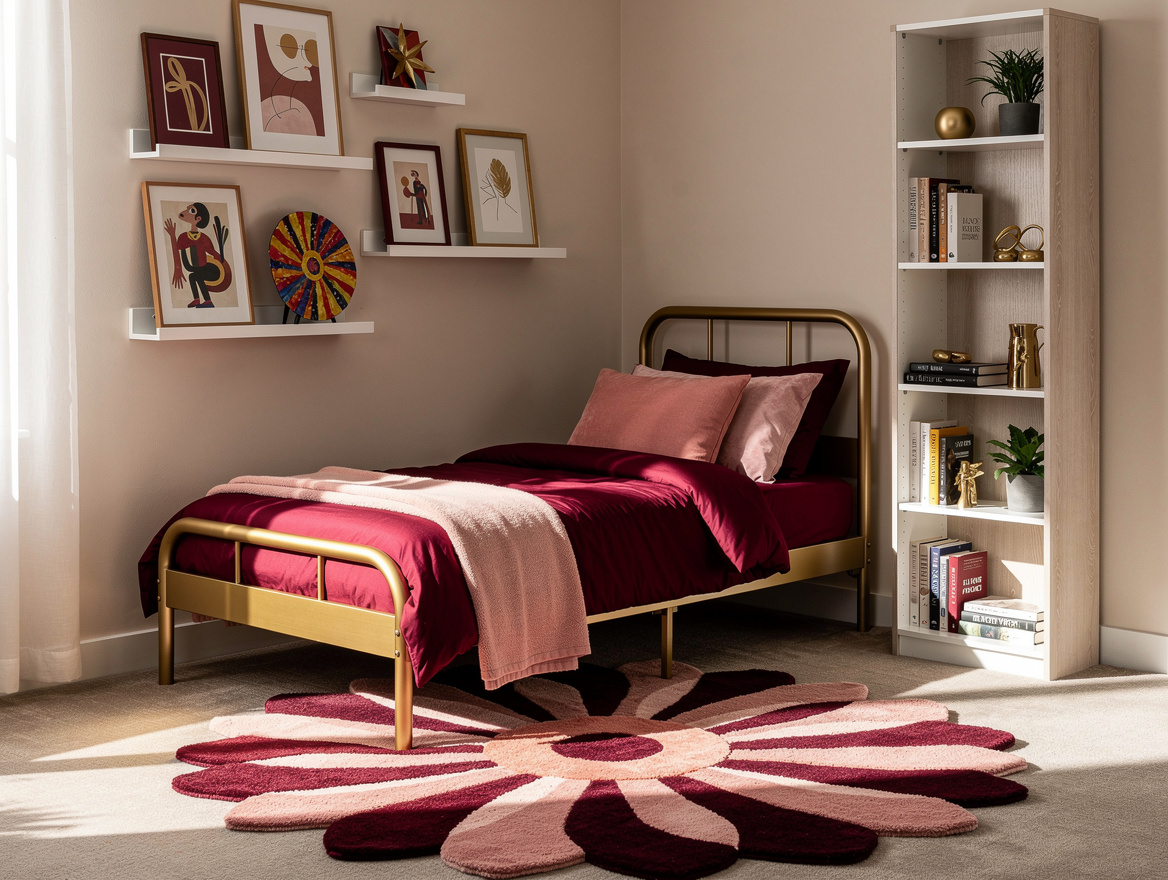
The best childhood bedrooms always had evidence of the person living there. Posters, framed magazine tears, trophies, and odd little shelves do more for a room than another generic storage cube ever will.
I like a shallow picture ledge for this because it keeps the display flexible. A basic set from IKEA or Amazon is often around $15 to $40, and it lets you rotate artwork, postcards, or book covers without turning the wall into a commitment.
A cork board works too, but I would choose a fabric-covered version or frame it out in wood. Raw office cork has a depressing dorm-room energy that most bedrooms never recover from.
Keep the Layout Tight and Leave a Little Empty Floor
Many childhood rooms that felt special were not large, they were simply edited well. Around a twin or full bed, you usually need roughly 24 to 30 inches of walking space where it counts, especially near the closet and the door.
That is why I would rather see one narrow bookcase from Lowe’s or Target than three small filler pieces. A simple vertical unit is often about $60 to $130, and it uses height instead of chewing up the center of the room.
Leave one patch of open floor for reading, playing, or just letting the rug show. Childhood rooms felt magical when there was space to actually inhabit them, not when every corner was proving a storage point.
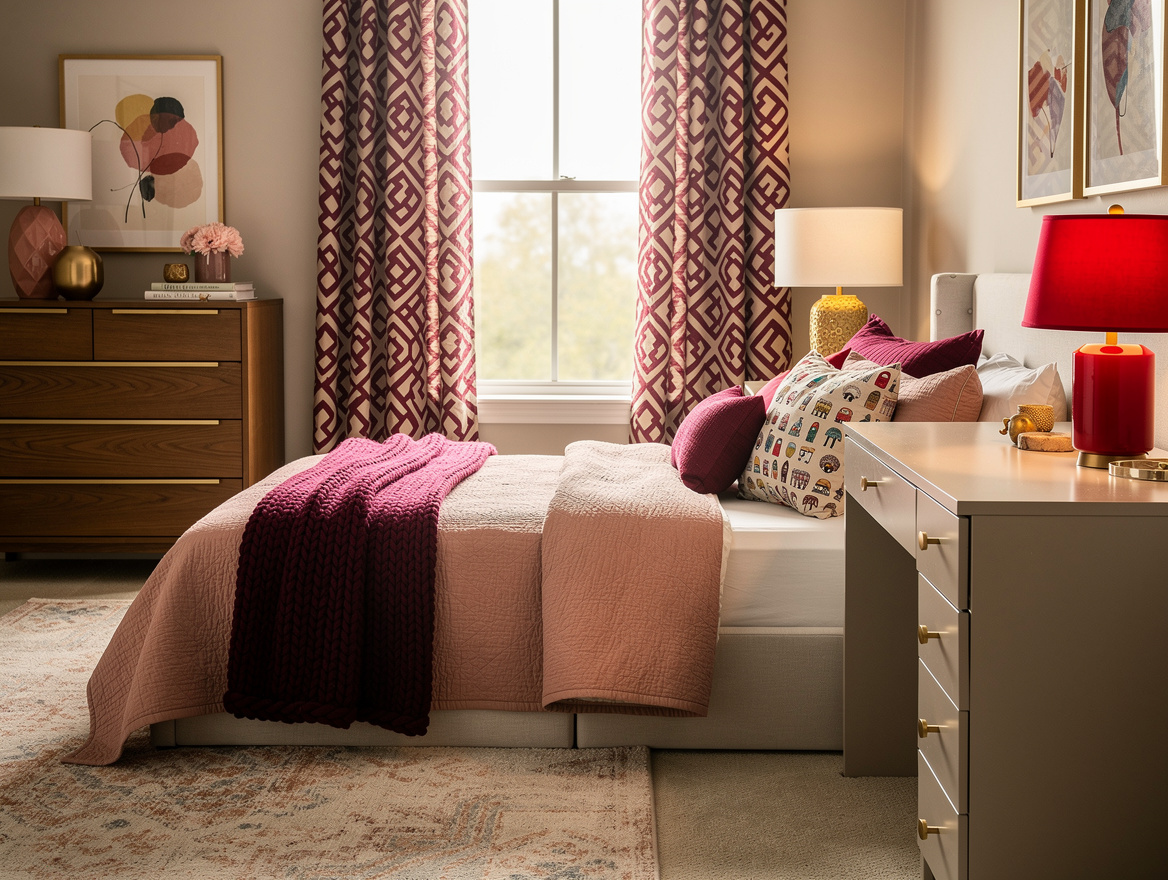
Begin with the one thing you would have begged for at age 12, wallpaper, a brass bed, or a ridiculously cheerful rug, then build around that. A room gets stronger when the first choice has some nerve.
Mia Carter writes about small-space living and budget home makeovers. She has restyled three rentals and tests most ideas in her own 45 sqm flat.