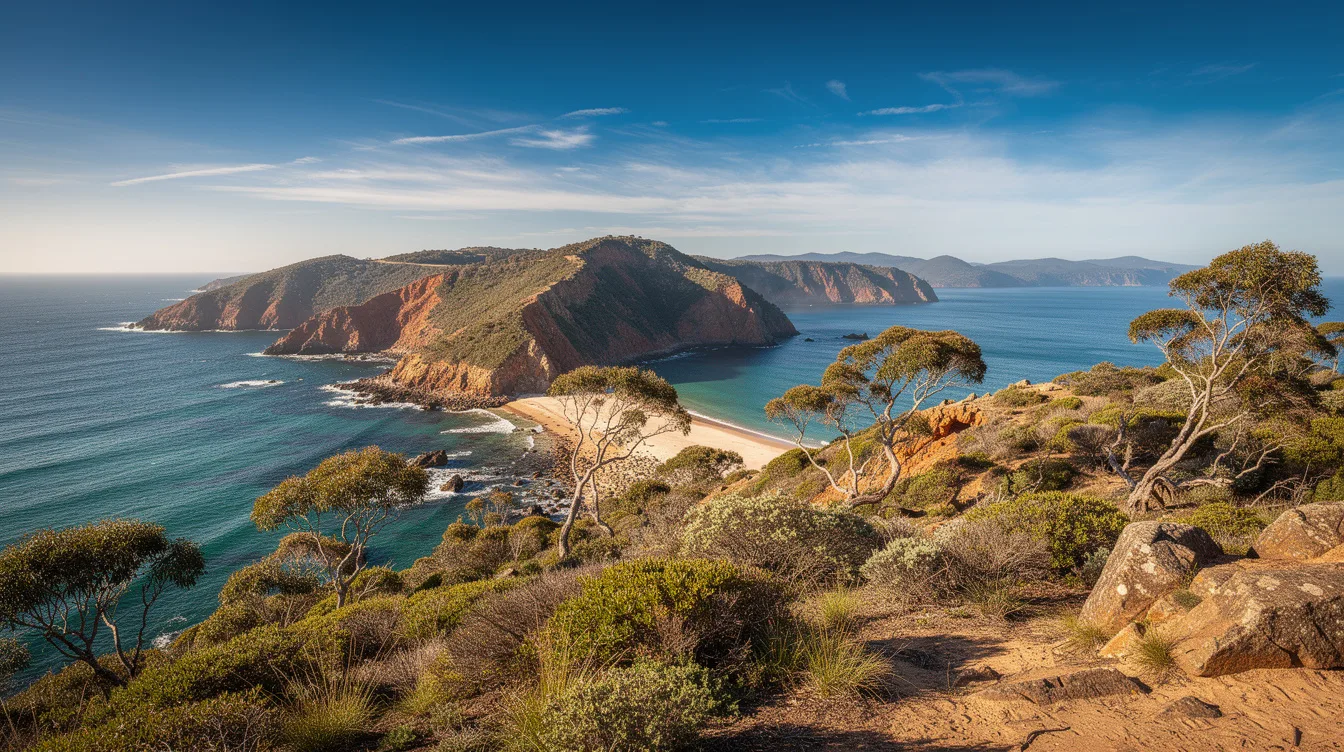
Bruny Island sits south of Hobart, where a threatened bird has its strongest foothold anywhere on Earth. The island supports the world’s largest population of the endangered forty-spotted pardalote, along with all 12 endemic bird species found in Tasmania.
And that gives Bruny a sharper identity than its postcard scenery. You come for the beaches and cliffs, but you stay alert for small movements in the eucalyptus canopy. The island feels remote, yet it takes only 30 to 40 minutes to drive from Hobart to Kettering.
The ferry takes 20 minutes, but the island feels farther away
From Kettering, the vehicular ferry reaches North Bruny in 15 to 20 minutes. The crossing runs every day, and passengers on foot travel free, while vehicle prices depend on size. You should arrive at least 20 minutes before departure, especially during the austral summer.
But Bruny isn’t an easy place to explore without a car. There isn’t a regular public transport network, so driving gives you access to The Neck, Adventure Bay, Cloudy Bay, and South Bruny. The island is connected by a narrow sandy isthmus, with calm water on one side and open sea on the other.
And you can make the trip in one day, though I think two nights gives Bruny room to breathe. Check the latest Tasmania travel guide before leaving Hobart because summer weekends can put pressure on ferry capacity and accommodation.
The Neck explains why Bruny feels like two islands
The Neck joins North Bruny and South Bruny in a long strip of sand. A boardwalk climbs to a lookout, where the island narrows beneath you and the water changes character on both sides. Go early or late, when the light softens and the wind hasn’t filled the stairs.
But the view isn’t the only reason to stop. The Neck helps you understand Bruny’s shape, which makes the rest of the drive more meaningful. Beyond it, South Bruny opens toward national park, beaches, forest, and a coast marked by dolerite cliffs reaching more than 656 feet.
And you don’t need a difficult hike to get a sense of the place. Cloudy Bay gives you a broad stretch of shore for walking and surfing, while Adventure Bay works better as a base for a beach day or a nature cruise. Read more about Tasmania’s national parks if you’re building a longer road trip.
Why birdwatchers come here before the crowds
Bruny Island is an Important Bird Area because its forests support the world’s largest population of the forty-spotted pardalote. The bird is small, threatened, and easy to miss, so patience matters more than dramatic scenery. You may hear movement overhead before you see anything at all.
And the pardalote isn’t the island’s only significant bird. Bruny holds up to 240,000 breeding pairs of short-tailed shearwaters, often called Tasmanian muttonbirds, and up to a third of the world’s swift parrot population. The island also supports every one of Tasmania’s endemic bird species.
But this is not a wildlife encounter with guaranteed results. You should slow down, keep your eyes in the trees, and let the island stay quiet. The habitat matters because invasive cats have raised concerns about pressure on native wildlife.
The best Tasmania birdwatching guide is one that leaves room for uncertainty.
Adventure Bay gives you the best first afternoon
Adventure Bay is where Bruny feels easiest to settle into. You can walk beside the beach, take a kayak out, or join an eco-cruise along the southern coast. The boats pass cliffs and sea caves, with chances to see seals, dolphins, seabirds, and sometimes whales.
And the cruise is my choice if you have only one day. From the water, the coast has more scale, and the boat’s movement makes the cliffs feel less like scenery and more like weather. The limitation is simple: wildlife sightings depend on conditions and the season.
But you can keep the afternoon grounded on land. Fluted Cape offers a coastal walk near Adventure Bay, while the island’s roads lead toward South Bruny and Cape Bruny Lighthouse. Some access roads include gravel, so drive carefully and allow more time than a map suggests.
Come hungry, then stay through the quieter hours
Bruny’s food stops are part of the reason a rushed day feels incomplete. You can buy oysters at Get Shucked, sample cheese at Bruny Island Cheese Co., and stop for local honey or whisky. The island’s produce is practical travel fuel, not a side attraction.
And summer, from December to February, brings longer days and easier beach time. It also brings more visitors, fuller ferries, and greater demand for places to stay. March through May offers less pressure, while winter can be cold, wet, and windy.
But the trade-off is worth accepting. By evening, the road quiets around Adventure Bay, the ferry traffic fades, and the eucalyptus forest holds the last light. Somewhere above it, a tiny threatened bird is still moving through the branches.