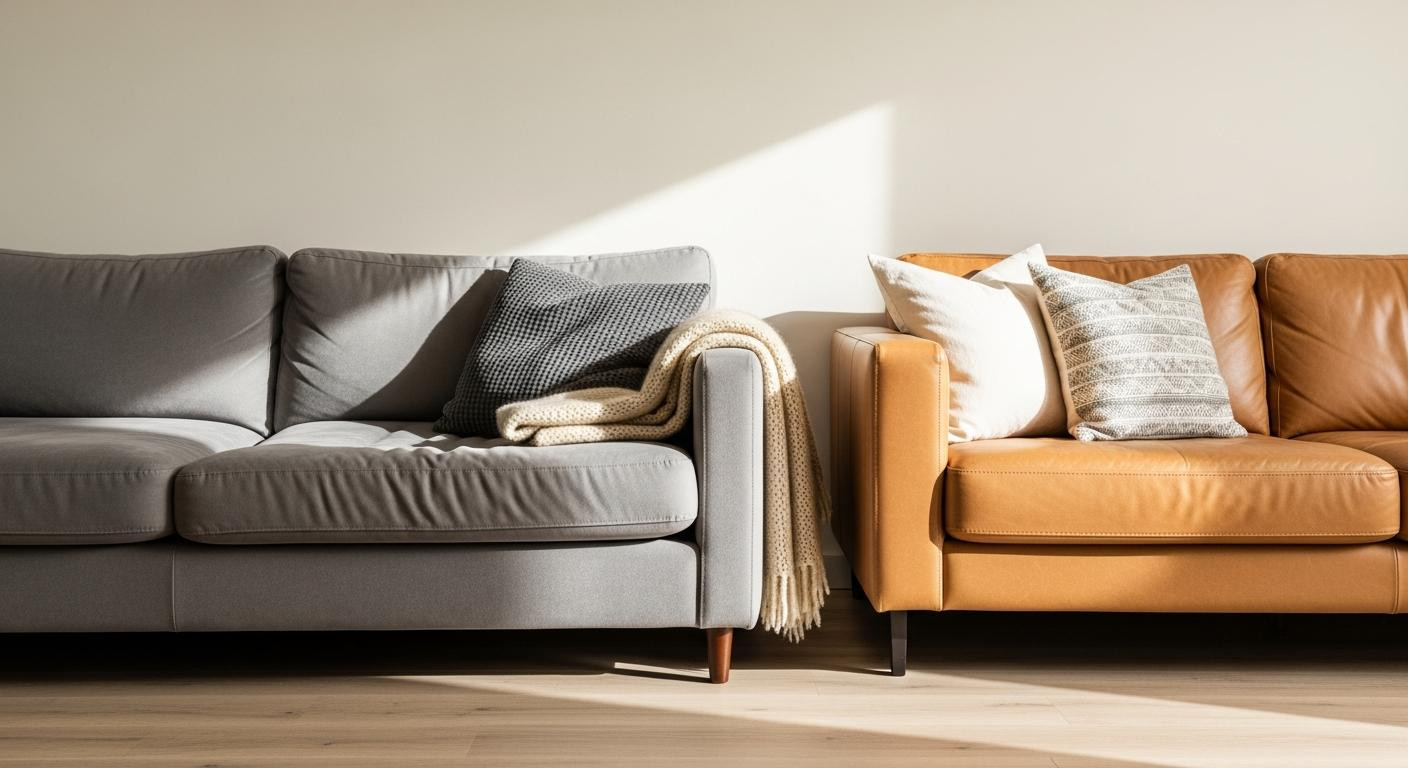
Your IKEA KIVIK hits month 19 when you sit down with morning coffee and your left hip sinks three inches lower than your right because the foam core compressed unevenly somewhere around month 14. The slipcover still looks fine. The frame feels solid when you push the arm. But that dip in the center cushion, the spot where you sat 340 evenings watching Netflix, now photographs like a hammock in your living room.
The $899 you spent bought 18 months of decent comfort before the math changed. Castlery Adams owners are texting different stories.
IKEA KIVIK gives renters exactly what 18-month leases need
The KIVIK’s modular frame and removable Orrsta light gray covers survive two apartment moves without visible damage. At $899 for the three-seat configuration, the monthly cost during an 18-month lease runs $49.94, cheaper than most gym memberships. The firm polyurethane foam supports adults without bottoming out through month 12.
But around month 14, the center cushion loses roughly a quarter of its resistance. Renters moving to new apartments at lease end avoid seeing this degradation. Owners keeping the sofa into year three watch the sagging accelerate. The Orrsta fabric pills after constant use, creating that fuzzy texture landlords recognize as well-used during final walkthroughs.
And the covers wash clean, which matters when you’re getting your security deposit back. That’s the trade: excellent short-term value that doesn’t pretend to be a forever piece.
Castlery Adams keeps supporting your back when IKEA would’ve quit
The pocket spring difference shows up at month 18
Castlery’s sinuous spring system, the S-shaped wires running left-to-right under the seat, maintains most of its original resistance through 24 months of daily use. IKEA’s polyurethane foam loses structural memory once the cells compress. You feel this as progressive sinking. Castlery feels this as consistent pushback.
At $1,599, the Adams costs $66.63 monthly over two years versus KIVIK’s $49.94. That $16.69 difference buys springs that don’t develop permanent dips. According to furniture engineers who test residential upholstery, spring systems in this price range typically outlast foam cores by three to five years.
Performance velvet survives what cotton blends can’t
The Adams’ stone grey performance velvet sheds dog hair with a single swipe. Two years in, the fabric shows minimal pilling and slight color fade in sun-exposed sections. IKEA’s Orrsta cotton-poly blend pills noticeably and fades faster under identical conditions. But the velvet costs you in texture, it’s not as soft as natural cotton when you run your hand across the cushions.
Homeowners keeping sofas past year two see this difference compound. The performance fabric holds its tight weave while cotton loosens, creating that worn-in look that reads as tired instead of lived-in.
Article Sven’s leather gets better while foam-based sofas get worse
Tanned leather develops patina instead of stains
The Sven’s full-grain Oxford Tan leather darkens 8 to 12 percent over 24 months, creating that lived-in warmth designers call earned character. Coffee spills wipe clean with damp microfiber, leaving zero permanent marks. IKEA’s Orrsta fabric absorbs liquids into the weave, creating shadow stains that remain visible through three wash cycles.
At $1,999, the Sven costs $83.29 monthly over two years. The leather’s self-healing properties, minor scratches that blend into patina, extend usable life to 8 to 10 years versus fabric sofas’ five to seven years. And the material feels cooler in summer, warmer in winter, adapting to room temperature in a way synthetic upholstery can’t match.
Tapered walnut legs photograph better at year two than day one
The Sven’s solid walnut legs accumulate micro-scratches that deepen the wood tone. This maturation makes the sofa feel more expensive over time. IKEA’s black-painted particleboard legs chip at contact points, exposing tan substrate that screams affordable furniture. Designers with residential portfolios note that solid wood elements age gracefully where painted composites deteriorate.
Your timeline determines which $700 price gap makes sense
Renters signing 12-month to 18-month leases get maximum value from IKEA’s $899 entry. The sofa delivers Pinterest-worthy style through the lease term before degradation becomes visible. Homeowners planning three-plus years in the same space absorb Castlery’s $1,599 cost across more months of peak performance.
The Adams’ springs maintain support through year five, while KIVIK’s foam requires cushion replacements at year three. Article’s $1,999 Sven serves buyers prioritizing leather’s aging properties over immediate budget concerns. The material itself becomes the investment, not just the frame underneath.
But you need at least 82 inches of wall space for any of these three-seaters. Measure your room’s usable width before ordering, especially if you’re allocating a significant furniture budget to one piece.
Your questions about mid-range sofas after two years answered
Can you really feel the spring difference or is it marketing
Sit on your current sofa for 40 minutes, then stand. If your lower back feels compressed, foam has failed. Castlery’s springs distribute weight across S-curves instead of compressing straight down. This prevents the stuck-in-quicksand feeling IKEA foam develops by month 20. The difference is tactile, not theoretical.
Which survives cats without becoming shredded
Castlery’s performance velvet resists claw snags better than IKEA’s cotton weave. Article’s leather shows scratch marks that blend into patina within weeks. None are claw-proof, but leather and tight-weave performance fabrics minimize visible damage. Professional organizers with cat-owner clients recommend strategic furniture placement away from scratching posts to extend any upholstery’s life.
Do replacement cushions cost less than buying new
IKEA sells replacement KIVIK cushions for approximately $180 at year three, extending the sofa’s usable life another two years. Article and Castlery don’t offer individual cushion sales, you’re replacing the whole sofa or living with wear. That $180 repair option makes IKEA’s initial savings compound if you’re willing to DIY the swap.
The Castlery Adams on a Thursday afternoon in year two, springs still pushing back against your spine while your neighbor’s KIVIK droops in the center cushion. Leather Svens developing honey tones. IKEA slipcovers drying on the balcony railing. Three timelines, three correct answers, all lived-in but not all aging the same direction.