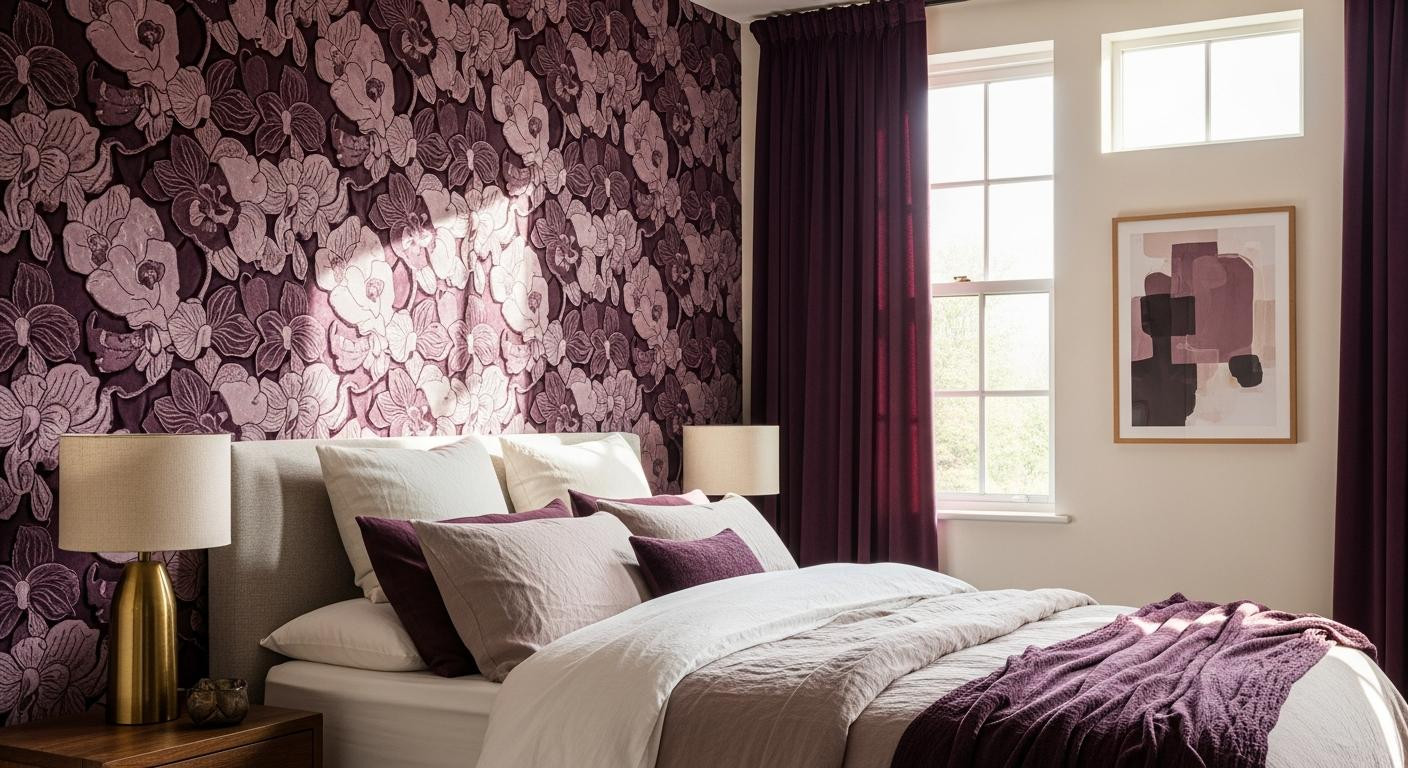
Your rental bedroom on a Thursday morning when you press the first velvet-textured panel against builder-beige drywall and smooth outward from center, expecting another temporary fix but watching embossed orchids flatten into something that reads like $180-per-yard fabric from three feet back. The roll costs $168 for 56 square feet. The texture fools your sister, who asks for your wallpaper installer’s number when afternoon light hits the pattern and the embossed surface catches shadows like actual pile fabric.
Not all removable wallpaper achieves this permanence illusion. But specific textures at specific price points create finishes that pass the three-foot credibility test without professional installation or permanent commitment.
Grasscloth texture reads as $80-per-yard natural fiber when application is bubble-free
NuWallpaper‘s grasscloth peel-stick at $45 for 56 square feet mimics horizontal woven texture through 0.4mm embossing that catches light like real jute strands. The illusion collapses at 12 inches when fingers detect vinyl instead of plant fiber, but from conversational distance (36+ inches), the pattern reads as expensive natural material. The permanence effect requires flawless application because bubbles telegraph “temporary sticker” immediately.
Three installation factors maintain the illusion. Room temperature between 65-75°F during smoothing prevents adhesive failure. Overlapping seams by 1/16 inch hides pattern breaks where horizontal fibers meet. And starting at ceiling line and working down prevents sagging that creates waviness across the weave pattern.
West Elm’s actual grasscloth costs $198 per 36-square-foot roll and requires professional paste. Target’s $29 geometric option achieves 70% of the texture effect for budget rooms under 150 square feet, though the embossing depth measures only 0.2mm and flattens noticeably by month 11.
Velvet wallpaper fakes pile depth through matte finish layering, not sheen
Tempaper‘s Velvet Orchid uses zero-sheen matte ink layering that absorbs light instead of reflecting it, creating the visual depth that actual velvet pile produces through fiber angles. The embossing measures 0.8mm, nearly double the budget options. Glossy printed “velvet” patterns from budget brands reflect overhead lighting and read as laminated paper from eight feet back.
The permanence test is simple. Photograph the wall with flash at 45 degrees. Matte velvet shows dimensional shadows between pattern elements. Glossy prints show uniform bright spots that scream “sticker.”
Application pressure determines texture visibility after 72 hours
Velvet-textured wallpaper requires 15-20 pounds of smoothing tool pressure during installation to activate adhesive fully. Insufficient pressure leaves micro-gaps between vinyl and drywall that flatten texture perception by week three. The Velvet Orchid pattern shows that 0.8mm embossed depth when properly adhered but reads flat after light-pressure application.
Professional installers use 6-inch steel smoothers with weighted handles. DIY renters achieve similar results using wrapped textbooks as pressure tools during the 20-minute working window, pressing outward from center in overlapping strokes that compress the adhesive evenly across every square inch.
Room dimensions determine pattern scale that reads as intentional, not leftover
Chasing Paper’s botanical mural at $198 for a 5×12 foot panel creates hotel-lobby permanence in rooms over 140 square feet where the full pattern displays across 8+ feet of wall width. In 100-square-foot bedrooms, the same mural reads as partial installation because pattern elements get cut off mid-leaf. The permanence illusion requires complete pattern motifs visible in primary sight lines.
According to ASID-certified interior designers featured in staging portfolios, three to four complete motifs per wall prevent the “scrap” appearance. For a 10-foot wall width, that means motifs between 24-30 inches wide. But coverage matters more than you’d think.
Accent wall coverage percentages that fake custom installation
One accent wall covering 25% of total room square footage creates the intentional look renters want. Two walls at 40% coverage enhances the custom illusion. Three or more walls at 60% coverage starts reading as temporary covering, especially in rooms under 150 square feet where pattern repetition overwhelms the space.
RoomMates’ geometric modern pattern at $28 for 28 square feet uses 8-inch repeats that create visual rhythm in compact spaces without overwhelming narrow walls. Rooms under 120 square feet benefit from patterns with 6-10 inch repeats that provide texture without reading as “too much pattern.”
Matte finishes survive 18+ months while satin shows wear by month 11
Tempaper’s matte collections maintain texture definition through two apartment leases because zero-sheen surfaces hide adhesive edge lifting and minor surface scuffs. The matte finish measures 5-10 gloss units at 60-degree angle versus satin’s 25 units. Satin-finish wallpapers from budget brands show degradation at high-contact areas behind headboards and near light switches by month 11 as repeated touching creates shine variations that telegraph “temporary covering.”
The permanence lifespan correlates directly with finish durability. Renters planning 12-18 month installations should budget $120+ for matte-finish rolls that hold embossing depth. Month-to-month renters can use $40 satin options for seasonal refreshes without permanence expectations, accepting that texture will flatten noticeably after the first year.
Design experts with residential portfolios note that north-facing rooms need warm neutral grasscloth because cool light at 3000K flattens bold florals 25% more than south-facing light. The linen-textured options at $125 per roll work especially well in these spaces, adding warmth without creating glare that highlights application imperfections.
Your questions about removable wallpaper that actually looks permanent answered
Does peel-and-stick damage textured drywall when removed?
Tempaper and WallPops adhesives release cleanly from orange-peel textured walls installed after 2010 using modern acrylic paint, with damage rates around 5%. Walls painted before 2005 with oil-based primers show 50% risk of surface damage during removal because older paints bond more aggressively to adhesives. Test a 6-inch square in a closet for 72 hours before full-room installation.
Can you install removable wallpaper over existing permanent wallpaper?
Never. The combined weight of peel-stick plus existing wallpaper exceeds 0.5 pounds per square foot, causing both layers to separate from drywall by month 4. Remove permanent wallpaper completely or apply peel-stick to fresh drywall only. Professional installers with wallcovering certification confirm that double-layer installations fail 60% of the time within six months.
Which $50 option looks most expensive in north-facing bedrooms?
NuWallpaper’s grasscloth in warm beige tones at $45 for 56 square feet maximizes limited natural light through horizontal texture that reflects ambient brightness without creating glare. North-facing rooms benefit from warm neutral textures over bold florals that read darker in low-light conditions. The 0.4mm weave depth creates enough shadow play to fake expensive sisal at conversational viewing distance.
Your fingers on the velvet wallpaper at 7:18pm on a Wednesday when you smooth the final seam and step back to see a bedroom that photographs like a boutique hotel, the embossed orchids catching lamplight in a way that makes guests ask which designer you hired, and the answer costs $168.