
Low cortisol habits can make mornings feel less abrupt through softer light, fewer visual demands, and simple room cues. No expensive wellness overhaul is required. A linen curtain, a warm lamp, or a phone basket may shift the first few minutes of the day. These 18 ideas keep the work practical, gentle, and renter-friendly.
- Layer linen curtains for softer morning light
- Could an amber lamp create a sunrise corner?
- Place a meditation cushion beside indoor greenery
- Swap harsh bulbs for warm low lighting
- Why does a styled bedside tray help?
- Blackout shades or gauzy curtains?
- Build a calming shelf with tactile ceramics
- What belongs around a low tea table?
- Let Farrow & Ball Pigeon shape the bedroom
- Give the phone a visible basket
- Do rounded furniture soften daily movement?
- Set a water carafe beside the bed
- Let trailing plants frame the window
- Anchor the reading nook with a wool rug
- A Calacatta Gold tray for candlelight
- Clear one surface for breathing space
- Across the lounge chair, add woven textures
- Install dimmable sconces beside the bed
1Layer linen curtains for softer morning light
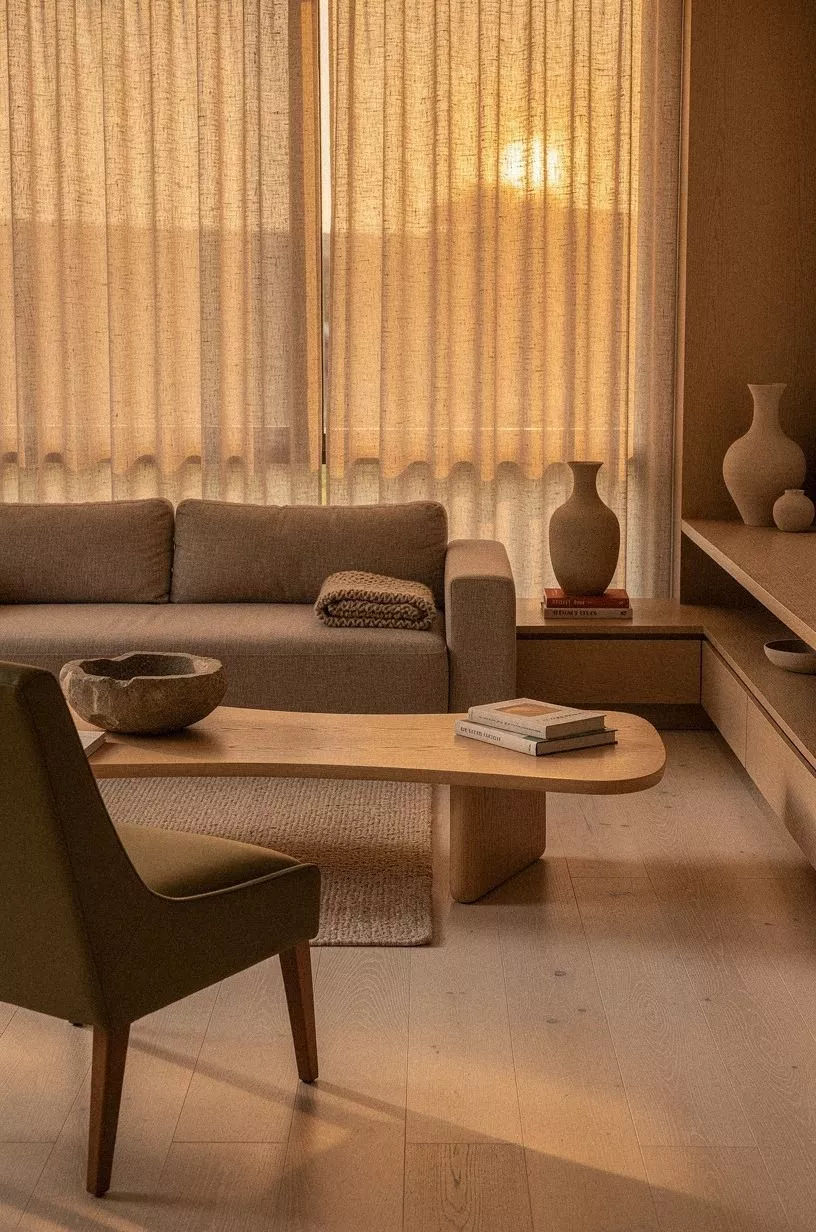
Layered curtains soften sharp sunrise glare without turning the room cave-dark. Start with a rod 4 to 6 inches above the window frame, then let the panels fall to the floor. Belgian flax linen works especially well with terracotta, olive, stone, and cerused white oak because the weave filters light while keeping the room airy.
Choose a gauzy inner panel and a slightly heavier outer panel. You’ll get privacy without losing the gradual change in morning brightness. Skip short café curtains here.
They interrupt the vertical line and can make the window feel busy, which isn’t helpful when the goal is a calmer visual start.
A natural linen panel can also soften a rental with minimal effort. You don’t need a full curtain wall. One well-proportioned window treatment may create a quieter first view, especially when paired with these gentle flexibility poses.
2Could an amber lamp create a sunrise corner?
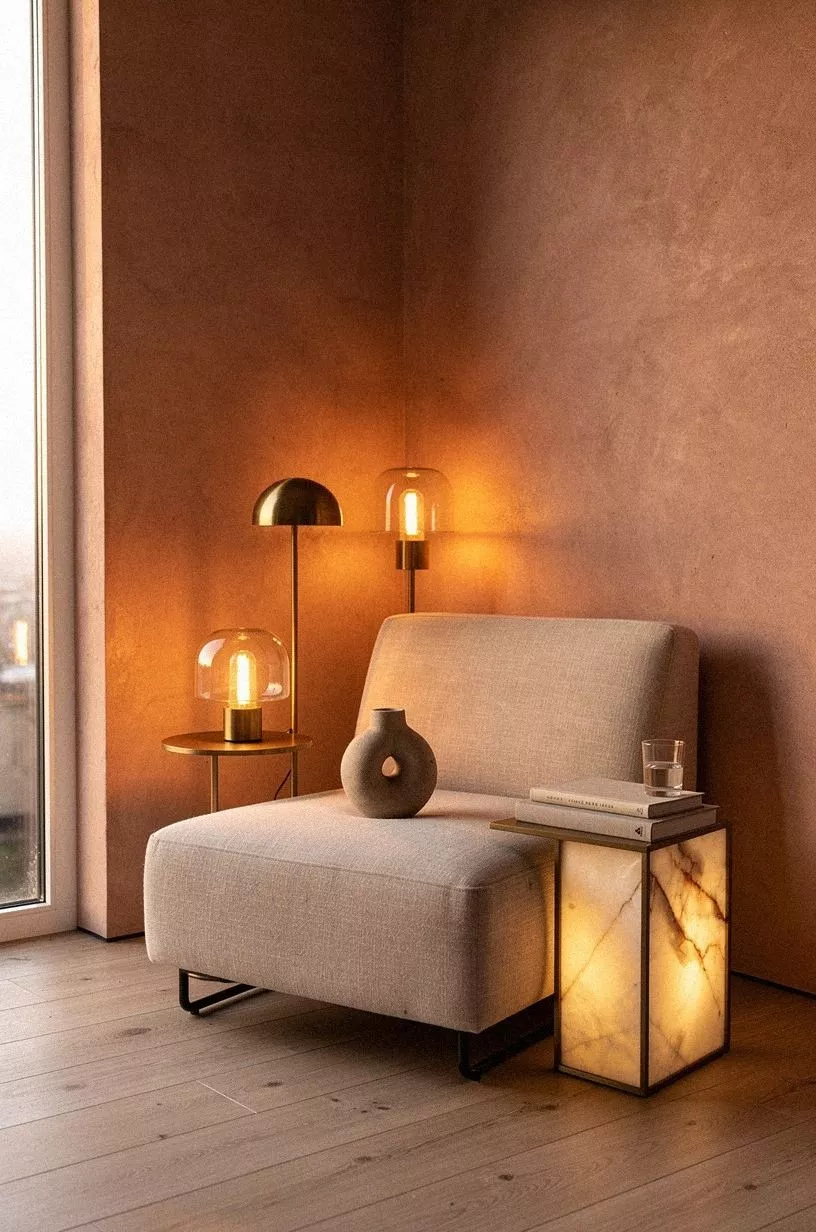
A sunrise corner gives your eyes one warm focal point before the rest of the room fully wakes up.
3Place a meditation cushion beside indoor greenery
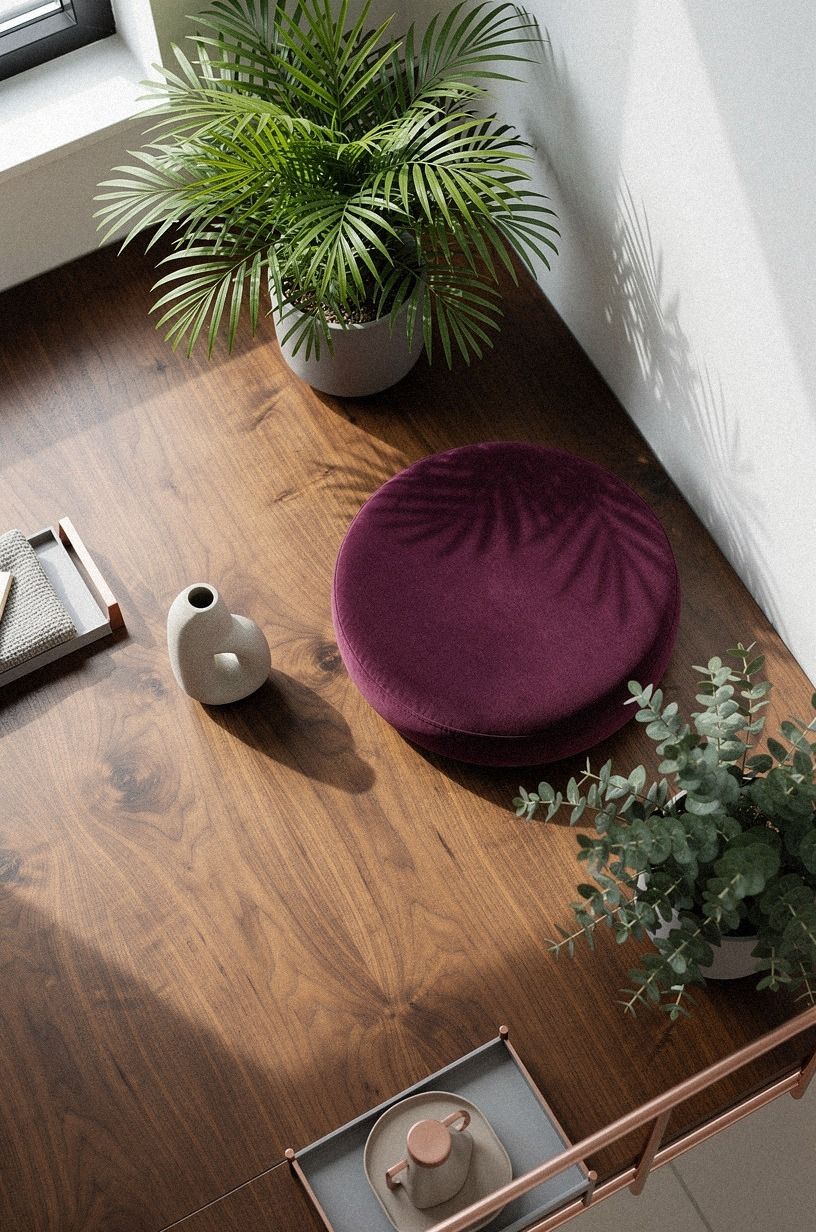
A cushion beside greenery creates a clear pause point without requiring a dedicated wellness room. Choose a low cushion in plum, gray, or muted rose, then place it beside a broad-leaf plant in a simple ceramic pot. Book-matched walnut adds depth behind the softer colors and keeps the arrangement from looking overly pale.
Give the cushion a little breathing room. You don’t need a large empty zone, but you’ll want enough clearance to sit without bumping a table or plant stand. A 24-inch cushion can work beside a compact planter in a bedroom corner.
The arrangement should feel usable at a glance. If the cushion becomes storage for laundry, the cue disappears. Keep one nearby basket for loose textiles, and choose a plant with a shape that feels generous rather than fussy.
4Swap harsh bulbs for warm low lighting
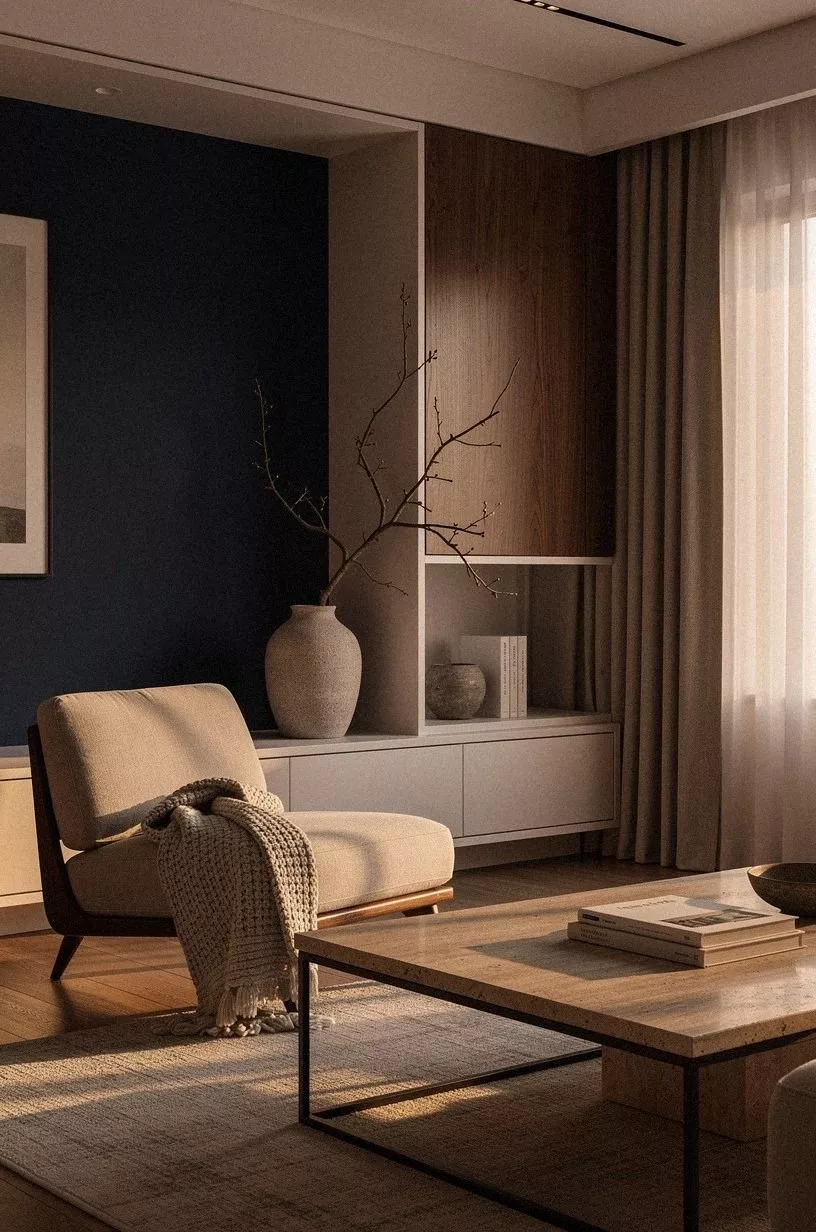
Warm low lighting can make a room feel calmer before any furniture changes happen.
5Why does a styled bedside tray help?
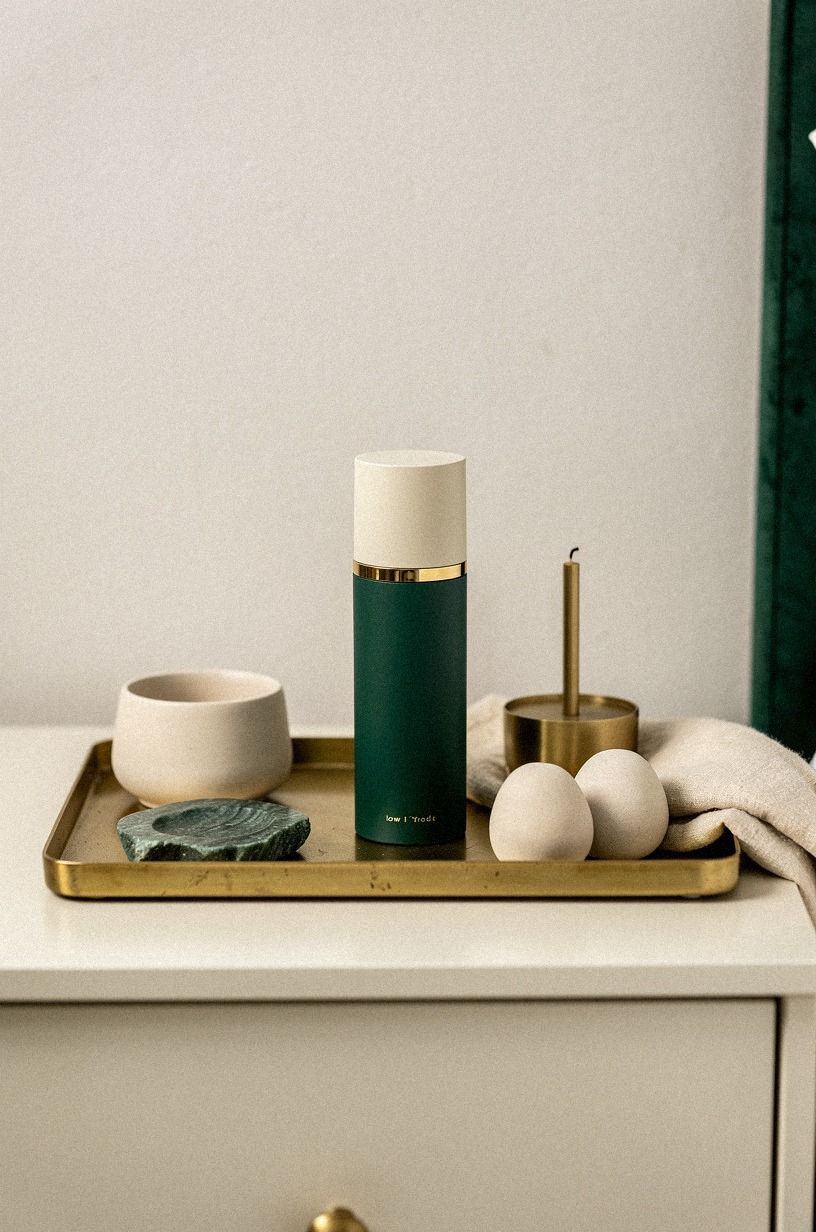
A bedside tray turns scattered objects into one contained visual zone. Use a shallow tray in emerald, gold, or cream, then keep only the objects used each evening: a glass, a small book, hand cream, or a fabric eye mask. Unlacquered brass developing soft patina adds warmth without looking overly shiny.
The strongest arrangement has open space around each item. You don’t need a full collection of wellness products.
In fact, too many bottles can make the tray feel like a task list. Choose one tactile textile, one ceramic, and one functional object. That’s enough for a polished but relaxed composition.
If you’re styling a small nightstand, use a tray no wider than the surface itself. A round shape softens the emerald-and-gold palette, while a rectangular tray creates a more orderly line. Keep the tray easy to lift, because a ritual that requires rearranging the whole bedside area won’t last.
6Blackout shades or gauzy curtains?
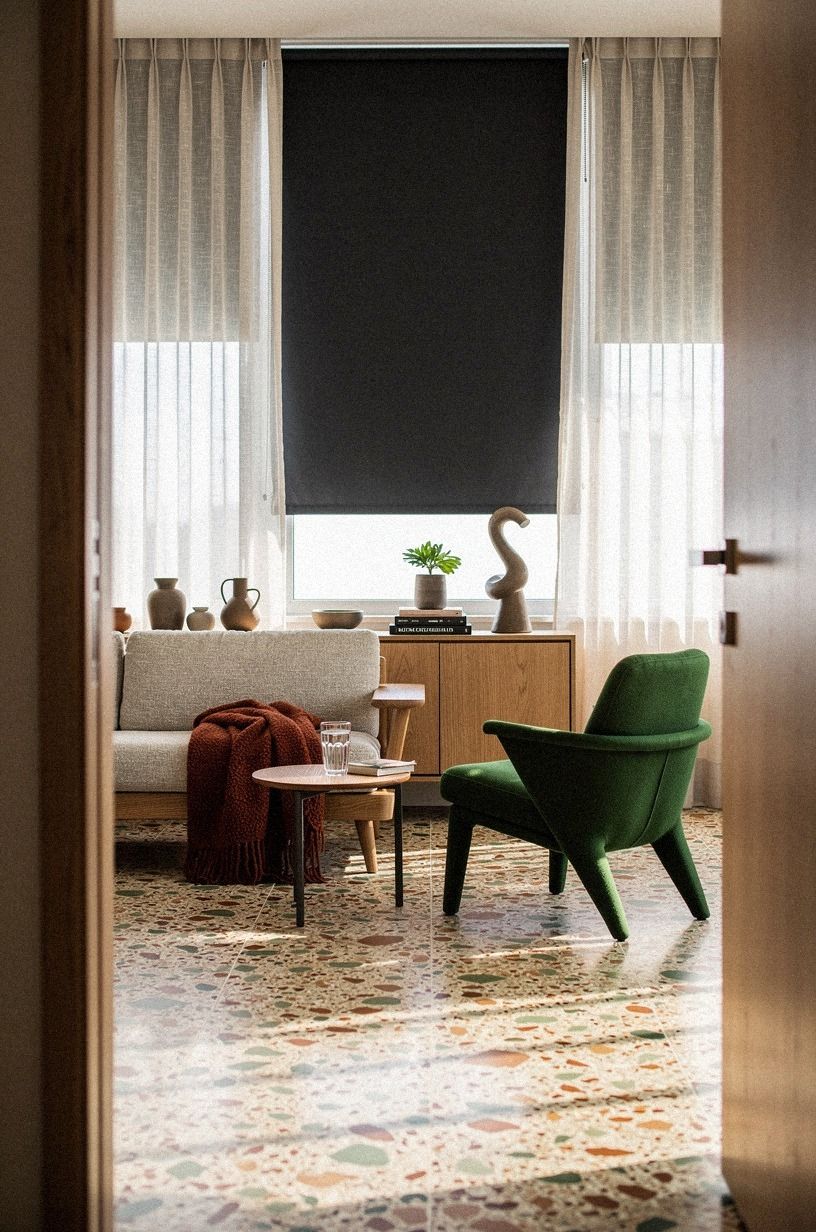
Blackout shades behind gauzy curtains give you control over darkness without sacrificing softness. The outer layer can remain open during the day while the hidden shade handles early light, street lamps, or changing seasons. Forest green, rust, and natural oak look especially rich beside an oversized-chip terrazzo surface or ledge.
Mount the shade close to the glass so the room keeps its clean outline. Then place the curtain rod 4 to 6 inches above the frame and extend the panels down to the floor. You’ll get a taller visual line and better light coverage.
Avoid making the blackout layer the only window treatment. A bare roller shade can feel stark in a bedroom, especially beside natural oak. Oversized-chip terrazzo breaks up the flatness and adds a grounded material note.
If nighttime light is a recurring problem, these joint-friendly movement patterns can complement the room’s slower rhythm.
7Build a calming shelf with tactile ceramics
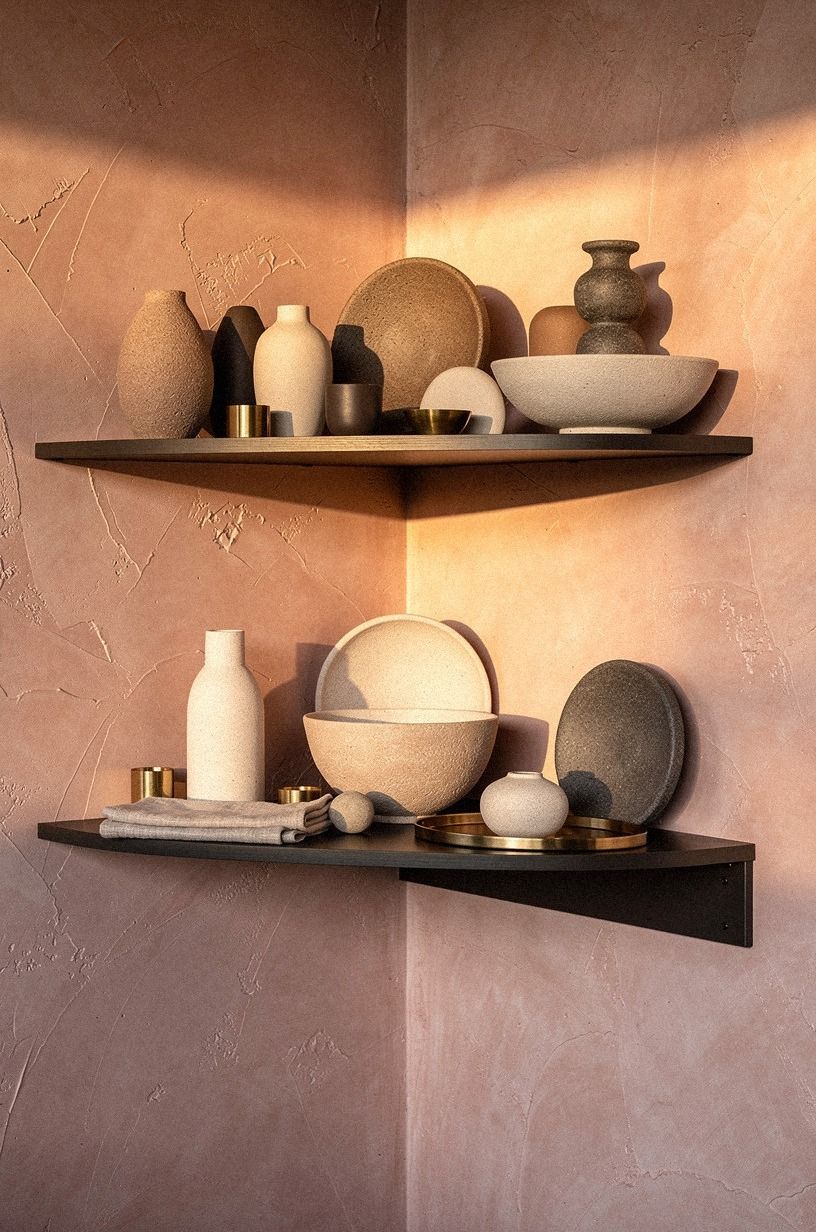
A calming shelf needs fewer objects than expected. Start with one hand-applied Venetian plaster backdrop, then add tactile ceramics in dusty rose, charcoal, and aged brass. The irregular finish gives the wall a soft shift in tone, so the shelf doesn’t depend on a crowded display.
Use three heights: a low bowl, a medium vessel, and one taller branch or lamp. This creates a composition that feels intentional without looking rigid.
You’re aiming for a shelf that can be understood quickly from the doorway. If every object has a different shape, color, and finish, the eye has too much work.
A matte charcoal vase usually works better than glossy black in this palette. It absorbs light instead of reflecting it back. Add one brass detail, not five.
The dusty rose should remain the gentle note, while the charcoal provides enough contrast to keep the shelf from looking washed out.
8What belongs around a low tea table?
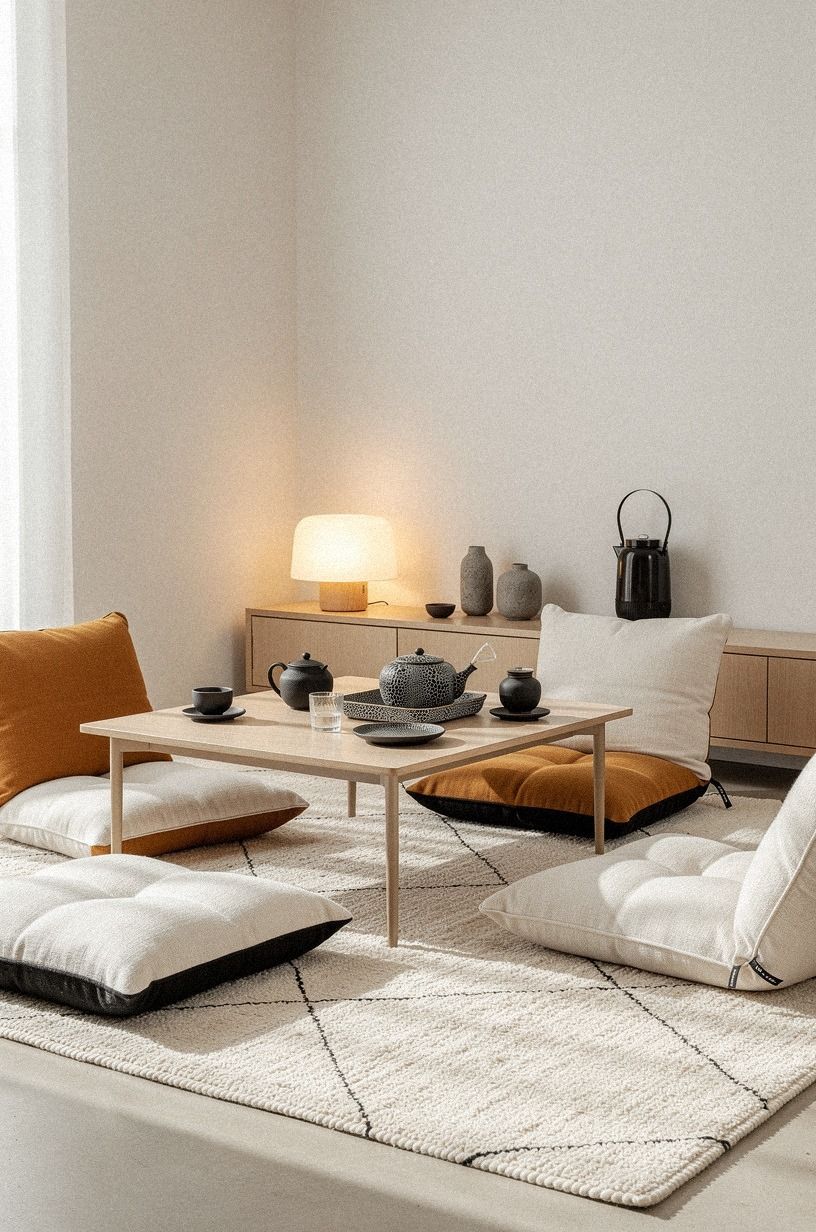
Floor cushions around a low tea table create a flexible gathering spot with very little furniture. Use warm white upholstery, camel textiles, and black accents, then ground the arrangement with a shagreen tray or a low wood table. Textured shagreen brings a dry, tactile finish that balances soft cushions.
Keep the table small enough to walk around easily. A crowded seating cluster can turn a peaceful corner into an obstacle course. You’ll want clear movement from the doorway to the sofa, especially in a small room.
Choose two cushion sizes and one main fabric. Too many patterns make the arrangement feel restless.
A camel cushion, a warm white cushion, and one black-edged bolster are enough to create contrast. If the space doubles as a work area, a lidded basket nearby keeps the cushions from becoming a permanent pile.
9Let Farrow & Ball Pigeon shape the bedroom
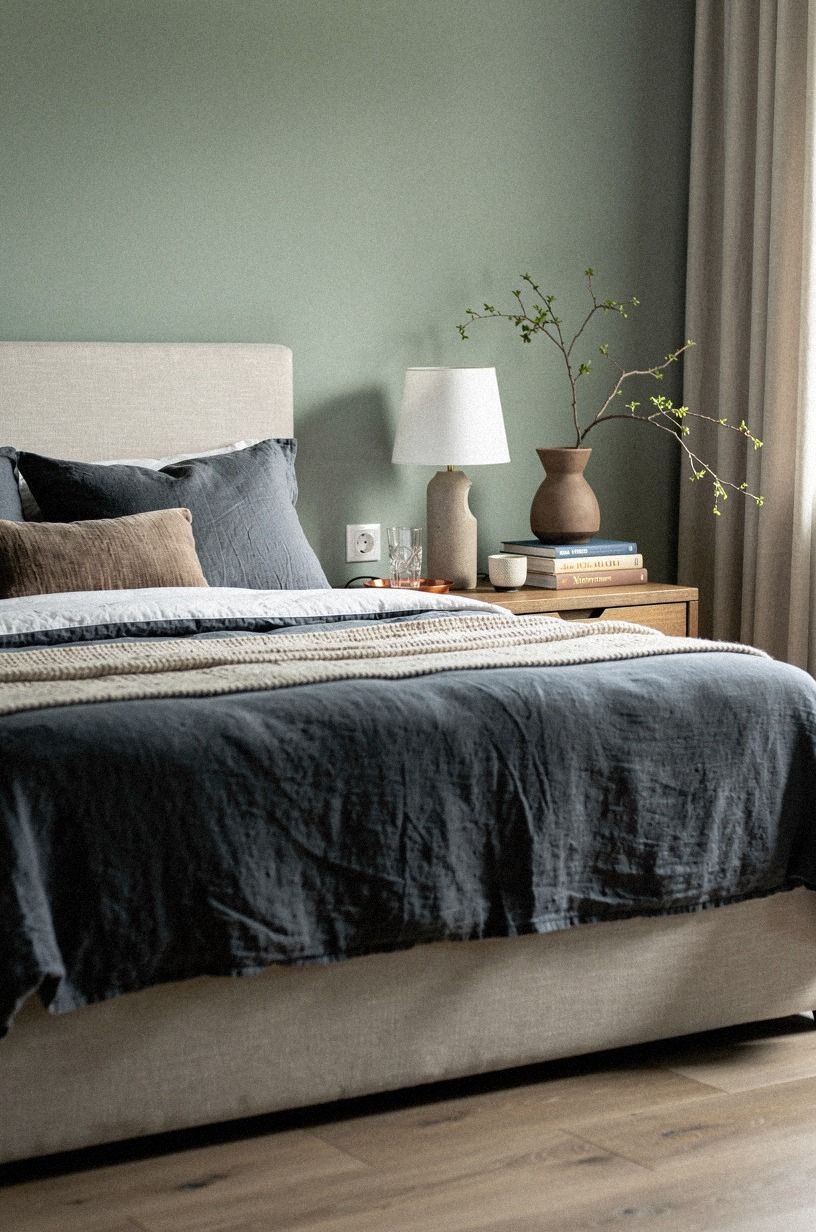
Farrow & Ball Pigeon can shape a bedroom as a muted supporting tone, while Farrow & Ball Hague Blue No. 30 supplies a deeper midnight-blue anchor. Pair the colors with copper, ivory, and washed Belgian linen for a scheme with contrast and lived-in warmth. Test the deeper color beside the actual window before painting every wall.
Use midnight blue on all four walls when the room needs visual quiet. A single accent wall can work, but it often creates a hard stop that makes the room feel more divided. You’re better off choosing one envelope of color and then varying texture through bedding, curtains, and wood.
Benjamin Moore White Dove OC-17 is a useful trim option when a clean edge is needed without icy contrast. Keep the Belgian linen relaxed rather than sharply pressed, and let copper appear through a lamp, frame, or small table. The result feels richer than a pale green scheme while retaining a restful quality.

10Give the phone a visible basket
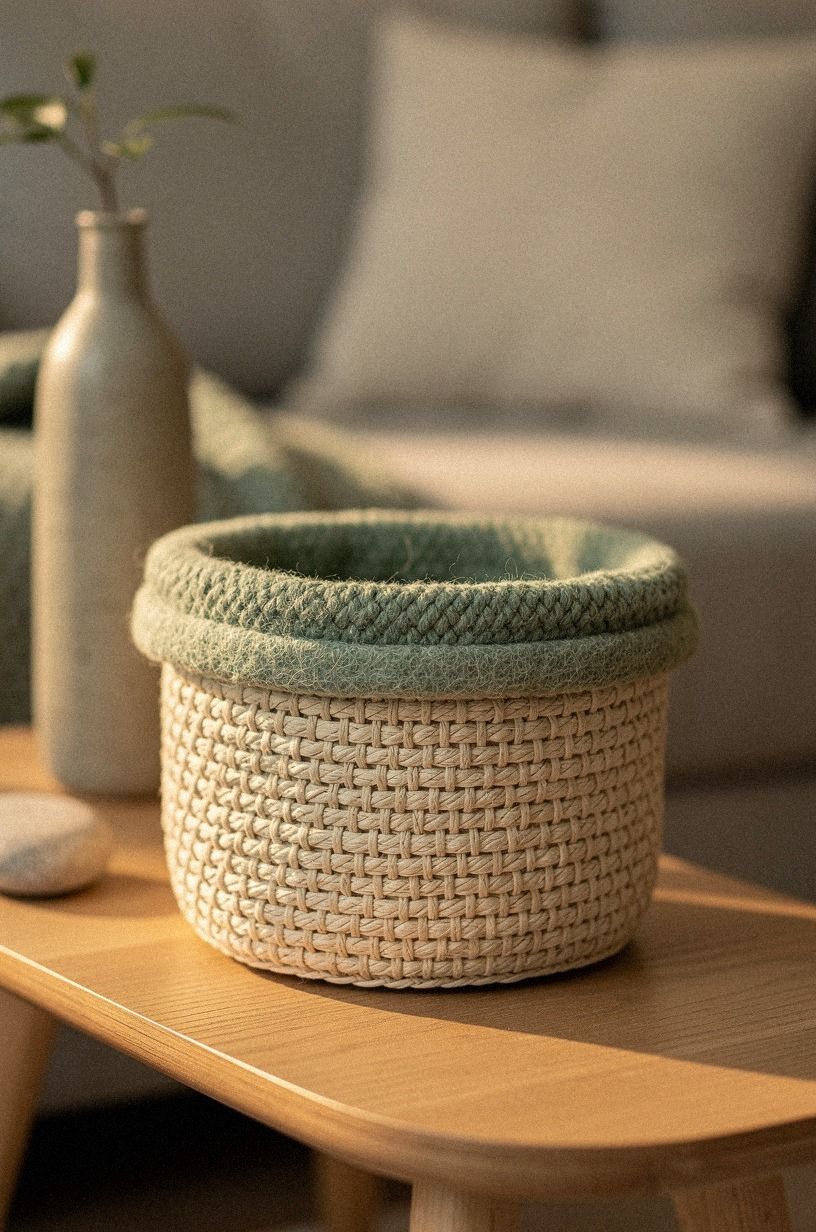
A visible basket gives the phone a designated landing place during meals, reading, or the first part of the morning. Choose a basket in sage green, warm cream, or natural wood, then place it where the hand naturally reaches. Organic bouclé on a nearby cushion or basket lining adds softness without introducing another strong color.
The basket should be attractive enough to stay visible. If it’s hidden in a drawer, the habit becomes easy to forget. A shallow basket on a console can hold several devices, while a small lidded basket beside the bed creates a stronger evening boundary.
You don’t need a complicated rule. Start with one daily window, such as the first 20 minutes after waking.
The room should make the choice easier by offering a clear alternative: a book, a glass of water, or a nearby chair. For another kind of routine experiment, see these practical winter nail routine notes.
11Do rounded furniture soften daily movement?
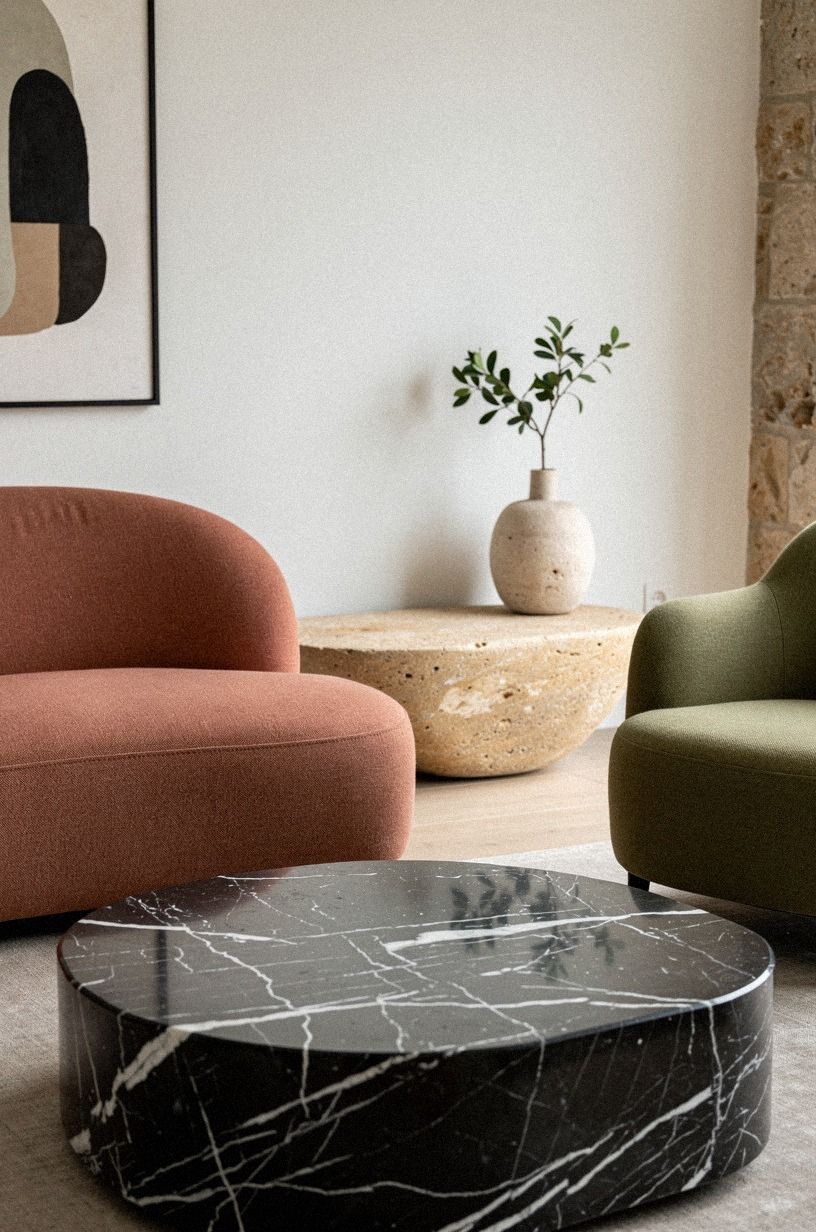
Rounded furniture makes circulation feel less abrupt, especially in a room with sharp architectural lines.
12Set a water carafe beside the bed
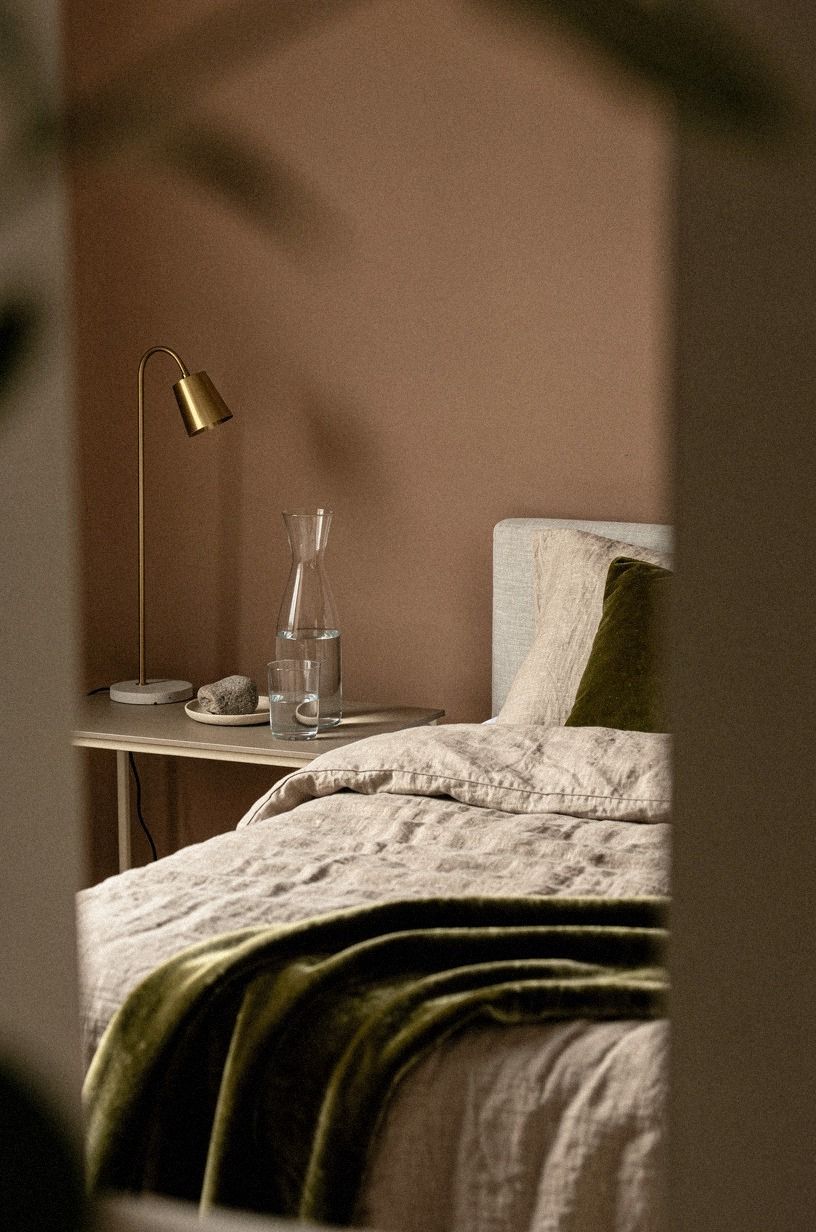
A water carafe beside the bed keeps a basic morning need visible and contained. Use a clear or lightly tinted vessel beside clay, linen, and aged brass, then add a simple glass on a small coaster. Deep-pile mohair velvet can appear on a nearby bench or cushion, giving the arrangement a soft counterpoint to the glass.
Choose a carafe with a stable base and a narrow enough profile for the nightstand. You’ll want the glass to sit beside it without crowding a lamp or book. A tray can help contain small drips, but it shouldn’t become a storage zone for unrelated items.
Artful simplicity matters here. One carafe, one glass, and one small textile are enough.
If the arrangement requires several accessories to look finished, it’s probably too elaborate for daily use. Keep the water fresh and the surface clear so the visual cue remains useful rather than decorative only.
13Let trailing plants frame the window
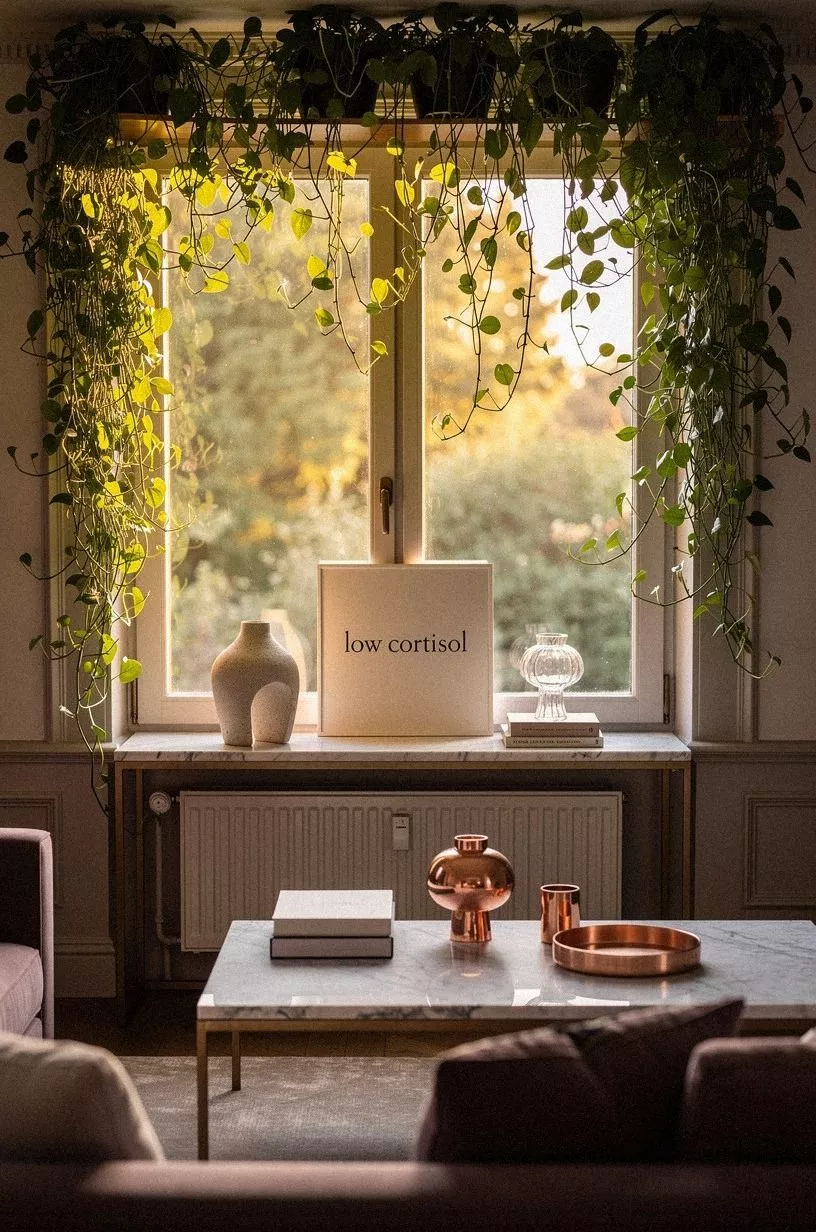
Trailing plants soften the hard outline of a window and add movement without visual noise.
14Anchor the reading nook with a wool rug
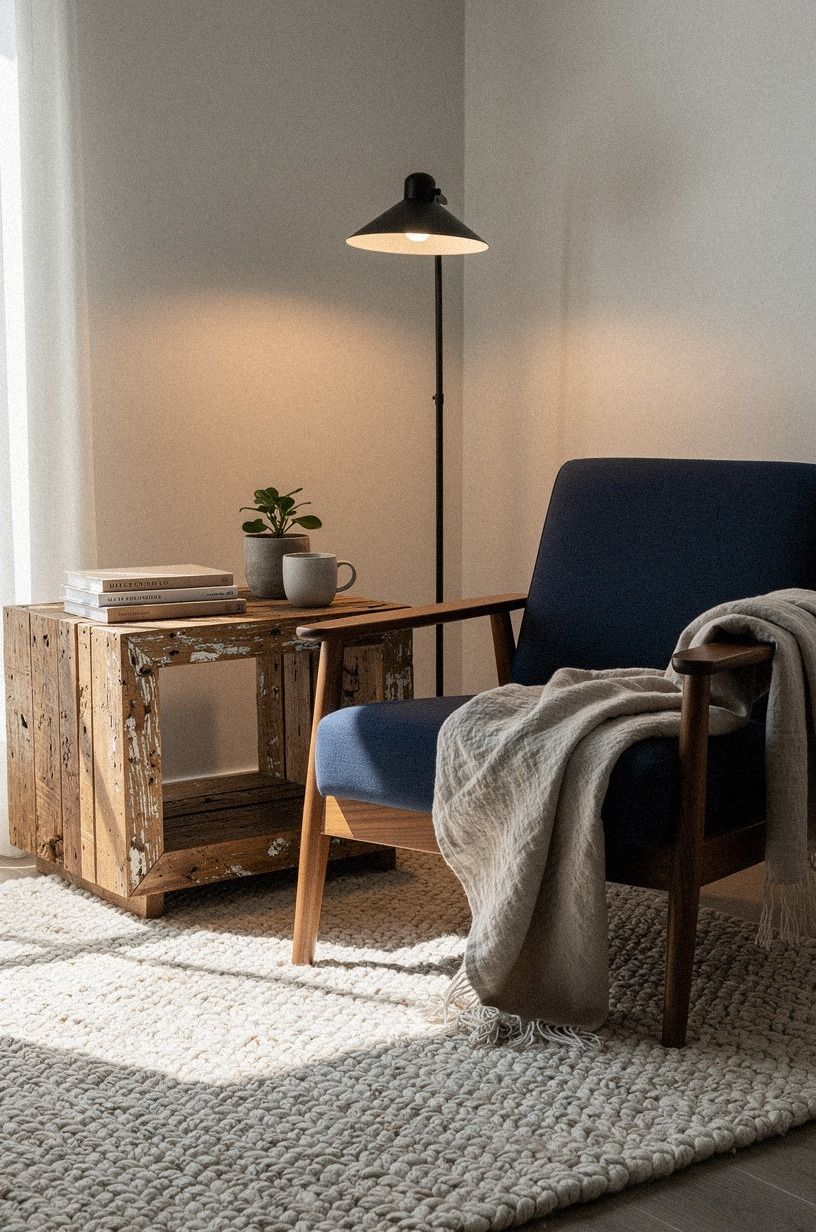
A wool rug anchors a reading nook by defining where the chair, lamp, and side table belong. Choose a rug large enough for the furniture to overlap it, then build around navy, white, walnut, and reclaimed weathered teak. Reclaimed weathered teak adds a dry, aged texture that keeps the palette from looking too formal.
The rug doesn’t need to fill the entire room. It only needs to connect the main pieces so the nook feels like one zone.
You’ll want the front legs of the chair and the lamp base on the rug whenever possible. That small overlap makes the arrangement feel stable.
Skip a tiny mat placed directly under the chair. It can look disconnected and may shift underfoot.
A wool pile also helps absorb some room echo, which can make a reading corner feel quieter. Keep a small side table nearby for a book, tea, or reading glasses.
15A Calacatta Gold tray for candlelight
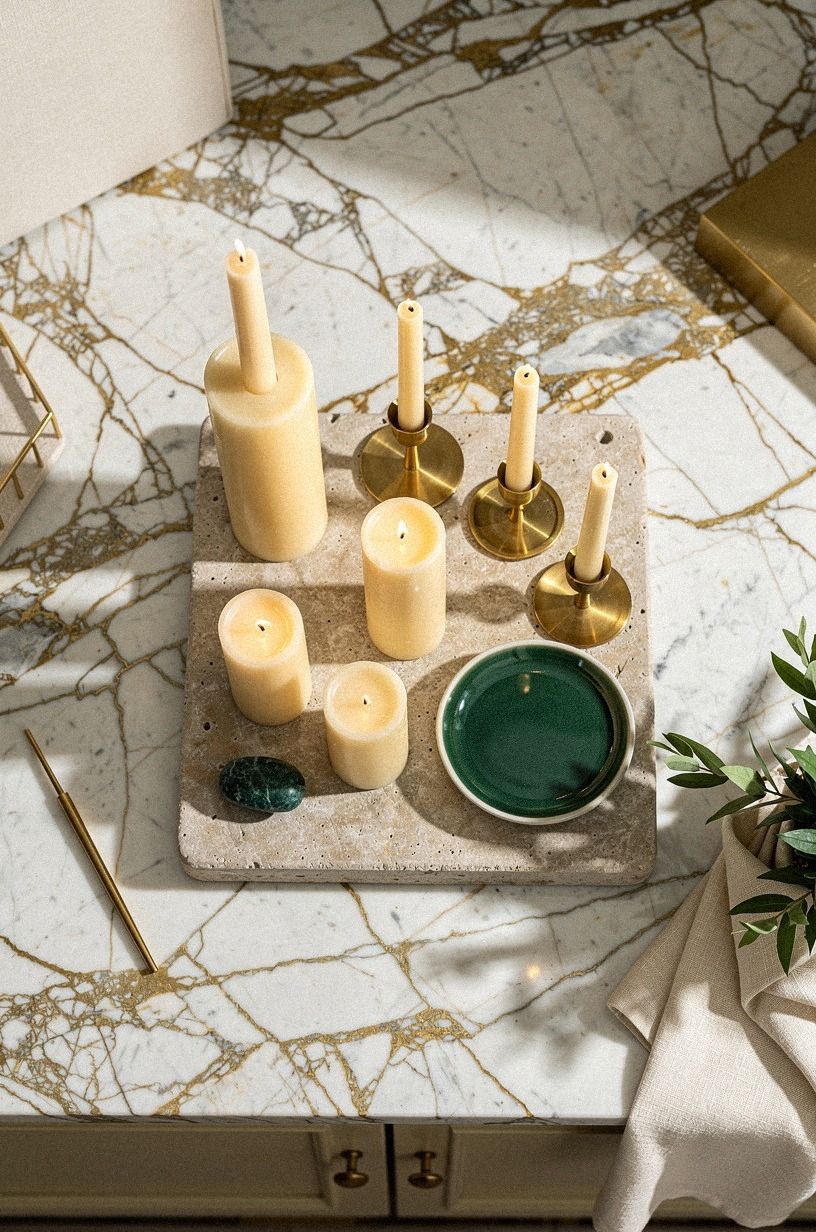
A stone tray gives candles a defined home and keeps small flames from scattering across multiple surfaces. Use two or three candles in varied heights on Calacatta marble with gold veining, then repeat emerald, gold, and cream through one nearby textile or ceramic.
Keep the arrangement compact enough to move before cleaning. You’ll want the tray away from curtains, books, and trailing greenery. Unscented candles can work well when fragrance feels distracting, while one mild scent may be enough for a larger room.
More isn’t automatically better.
The strongest grouping has negative space around the candles. Don’t fill every inch with matches, stones, and decorative objects.
A low brass holder, a cream pillar, and one green glass vessel offer enough variation. Never leave an open flame unattended, and use battery candles where children, pets, or loose fabrics make real flames unsuitable.
16Clear one surface for breathing space
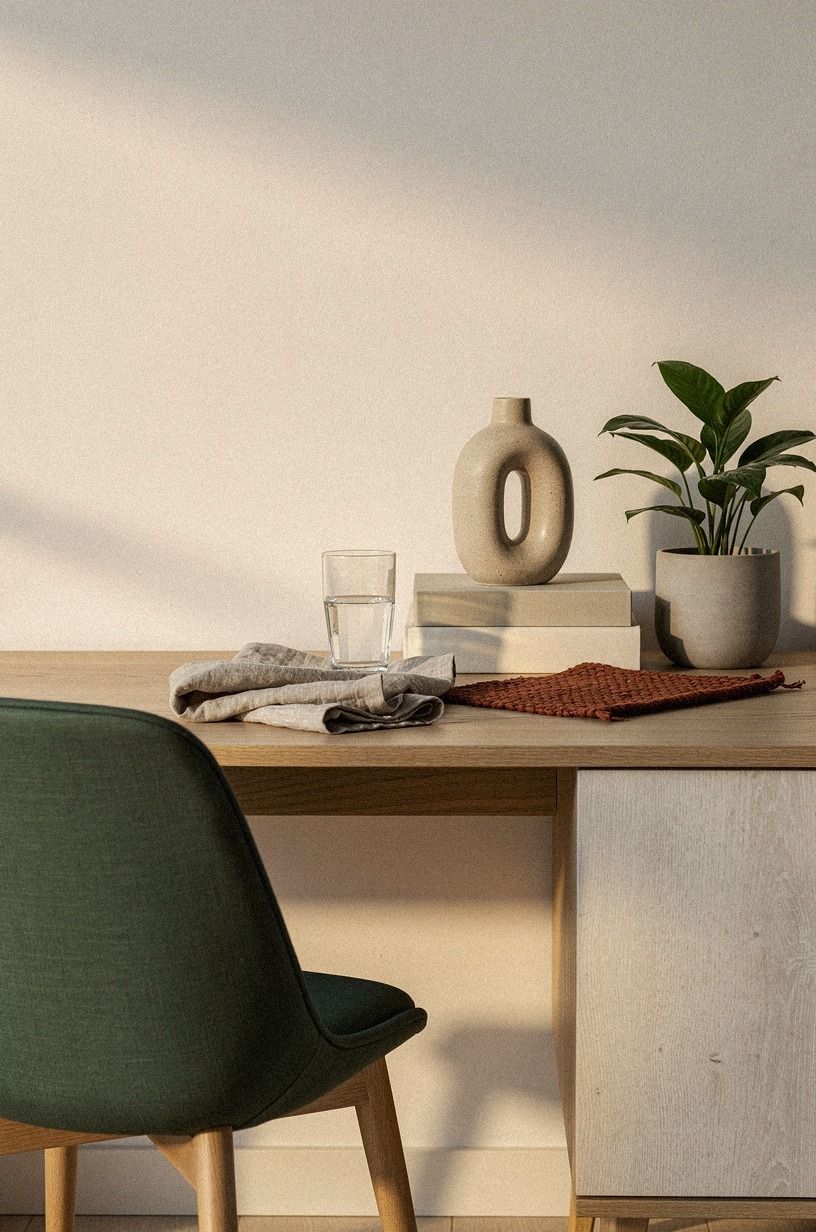
Clear one visible surface completely, then return only the objects that earn their place. A console in forest green, rust, and natural oak can hold one lamp, one bowl, and one framed piece. Cerused white oak keeps the surface warm while the empty area does the visual work.
Choose the surface seen first from the doorway. You’ll get more benefit from clearing that console than from organizing a hidden drawer nobody notices.
Dust, sort, and relocate anything that belongs elsewhere. The goal isn’t minimalism as a style rule.
It’s reducing the number of decisions presented at once.
A small bowl can catch keys, but it shouldn’t become a container for every loose object. If the surface fills again within a week, reduce the available landing zones elsewhere. One clear console can teach the room where clutter is allowed to stop.
That small shift matters!
17Across the lounge chair, add woven textures
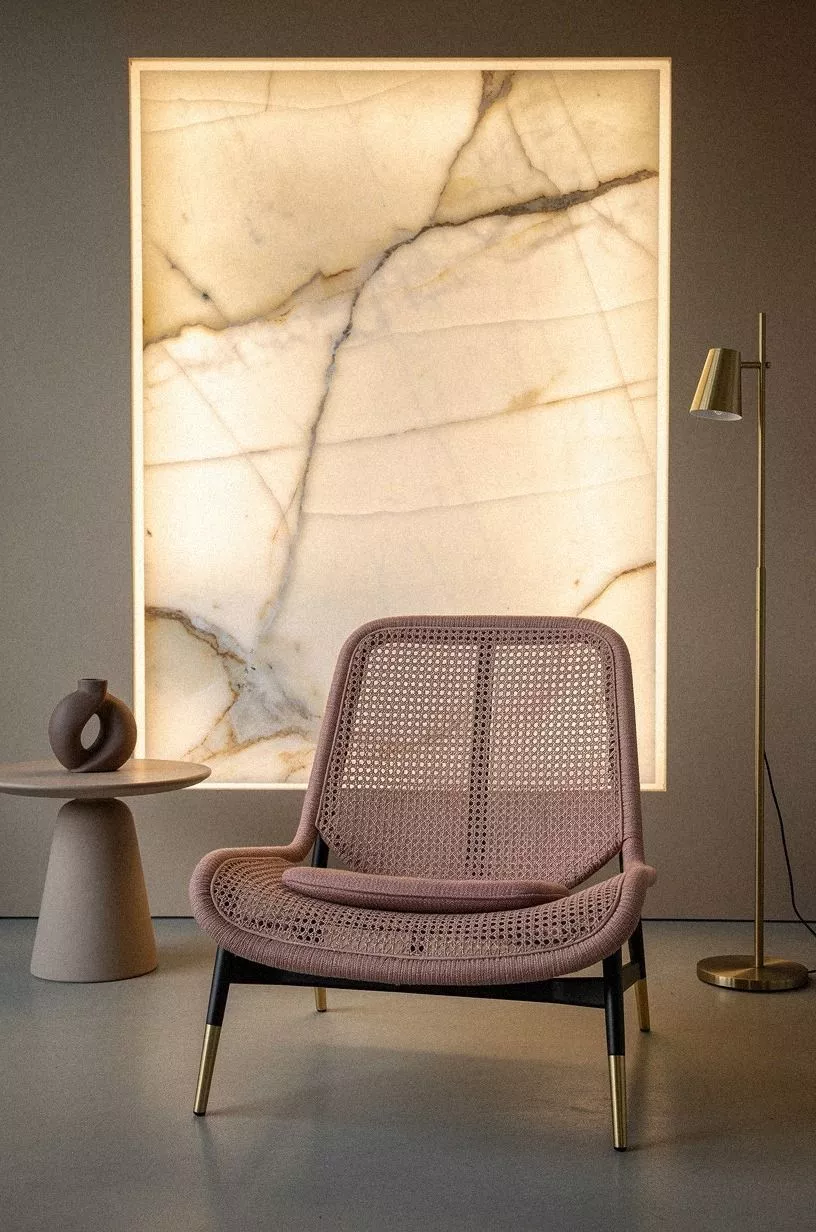
Woven textures make a lounge chair feel inviting without adding bright color. Start with one throw in dusty rose, charcoal, or soft cream, then add a small cushion with a nubby weave. Backlit translucent onyx nearby can provide a gentle glow against the woven layers and keep the corner from looking heavy.
Choose texture over pattern when the palette is already complex. A basket-weave throw, a boucle cushion, and a smooth wood arm create enough contrast without competing prints. You’ll want the chair to remain easy to sit in, so avoid stacking more than two loose layers.
A throw that slides to the floor every morning won’t support a simple routine. Use a heavier textile or tuck one corner over the arm. The best lounge chair arrangement looks relaxed but resets quickly.
For another low-effort personal routine, these practical winter nail routine notes show how a small repeated cue can stay practical.
18Install dimmable sconces beside the bed
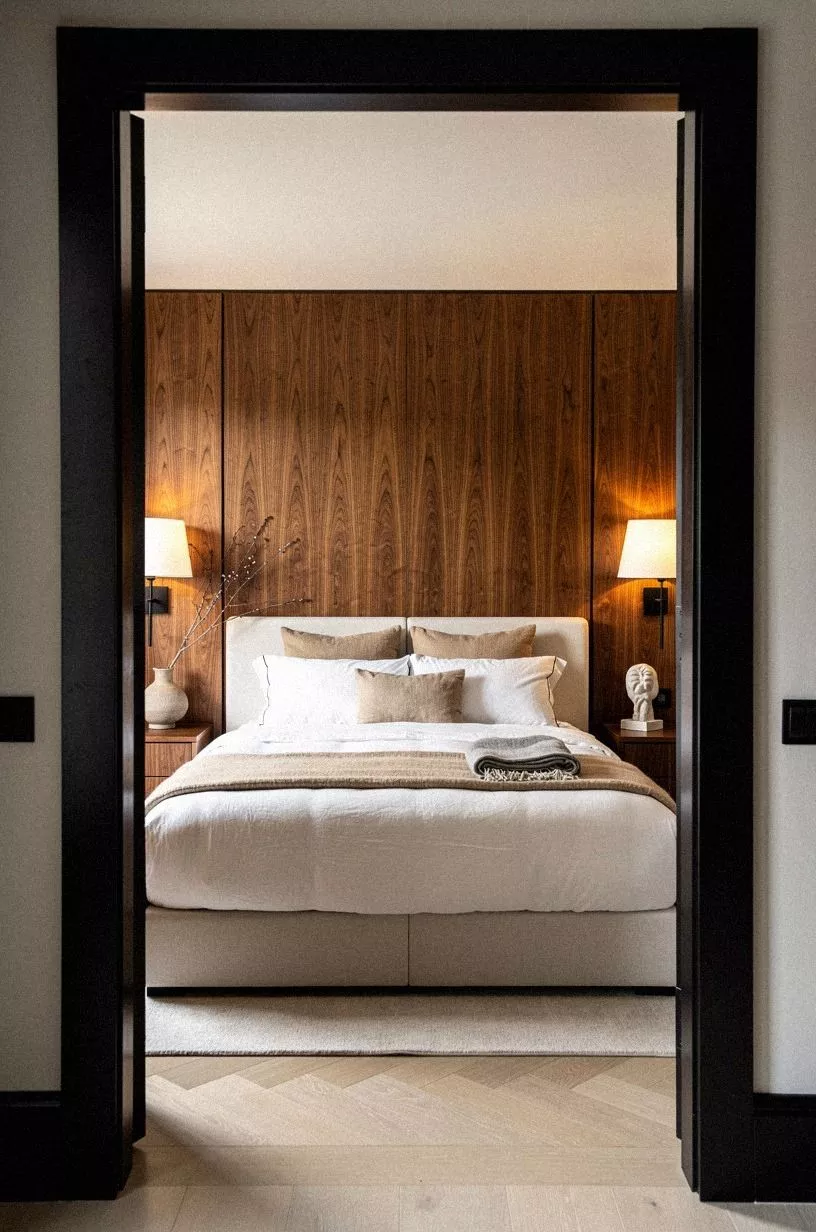
Dimmable sconces free the bedside surface and create an even pool of light on both sides of the bed.
What These Changes Really Cost
A low-maintenance room reset doesn’t require every item at once. Start with free changes, such as clearing one surface, moving a lamp, or grouping existing textiles. Typical US costs vary by scope, and the figures below are useful planning ranges rather than promises.
Common individual costs can also shape the plan:
These ranges make the order of operations clearer. Paint and textiles can shift the room’s atmosphere before a major furniture purchase. You’re not required to reach the high tier for a softer morning routine, and a smaller budget can still produce a noticeable visual reset!
The Low Cortisol Rule That Holds Up
The strongest low cortisol rooms aren’t built from a single color or a shopping list. They reduce friction at predictable points in the day. A basket gives the phone a home.
A dimmable lamp removes the need to tolerate harsh light. A clear console reduces the number of objects competing for attention.
That distinction matters because decoration can easily become another project to maintain. If a setup requires constant styling, it won’t feel calming for long.
Choose materials that age well, such as Belgian flax linen, wool, walnut, and unlacquered brass. They can look better with ordinary use, which means the room doesn’t need constant correction.
Many people also benefit from a room that changes gradually from morning to evening. Layered curtains can open with daylight, while low lamps can take over later.
A reading chair can serve as a pause point without becoming a dedicated wellness station. The best arrangement leaves room for ordinary life.
Health outcomes vary, and décor doesn’t replace professional care for ongoing stress, sleep, or mood concerns. Still, a calmer visual environment may support easier routines.
Start with one cue that removes a recurring annoyance, then let the rest of the room follow. The room only needs to make the next helpful choice easier!
The Questions Worth Answering First
What is the best low cortisol habit for a small room?
A clear surface paired with warm, dimmable lighting is often the easiest starting point. A visible phone basket can support the same goal without taking floor space. Choose one lamp, one tray, or one chair zone, then keep the surrounding area open enough to use comfortably.
Where can affordable calming room pieces be found?
Target, Wayfair, thrift stores, and local resale marketplaces can all offer useful basics. Look for linen-look curtains, baskets, lamps, and wood trays before searching for specialty wellness décor. Secondhand ceramic vessels and small tables often provide better texture for less money.
How much does a calming room makeover cost?
A small refresh can cost about $100 to $300 when existing furniture is reused and the focus stays on paint, textiles, and organization. Larger projects may fall within the typical $200-$800 budget tier, while new lighting and rugs can raise the total.
Can a calmer room be created on a budget?
Yes, and the first steps can cost nothing. Clear one surface, move a lamp lower, group existing cushions, and place the phone in a visible basket. A thrifted tray, warm bulb, or secondhand curtain can add function without requiring a full room redesign.
Is a low cortisol setup worth it in a small space?
Yes, because small rooms can benefit quickly from clearer circulation and fewer visual demands. Keep one walkway open, choose rounded furniture where possible, and use wall-mounted or vertical lighting. A single defined corner often works better than several half-finished zones.
Is this approach suitable for a rental?
Yes. Tension rods, plug-in sconces, removable hooks, peel-and-stick finishes, freestanding lamps, and baskets can create similar visual cues without permanent changes. Test removable products on an inconspicuous area first, and keep heavy furniture stable against the wall.
Where to Start First
Start with the visible phone basket. It costs less than a major furniture change, removes one repeated decision, and gives the room a clear morning boundary. Place it beside a warm lamp or empty console, then let the rest of the low-maintenance routine build around that single cue.