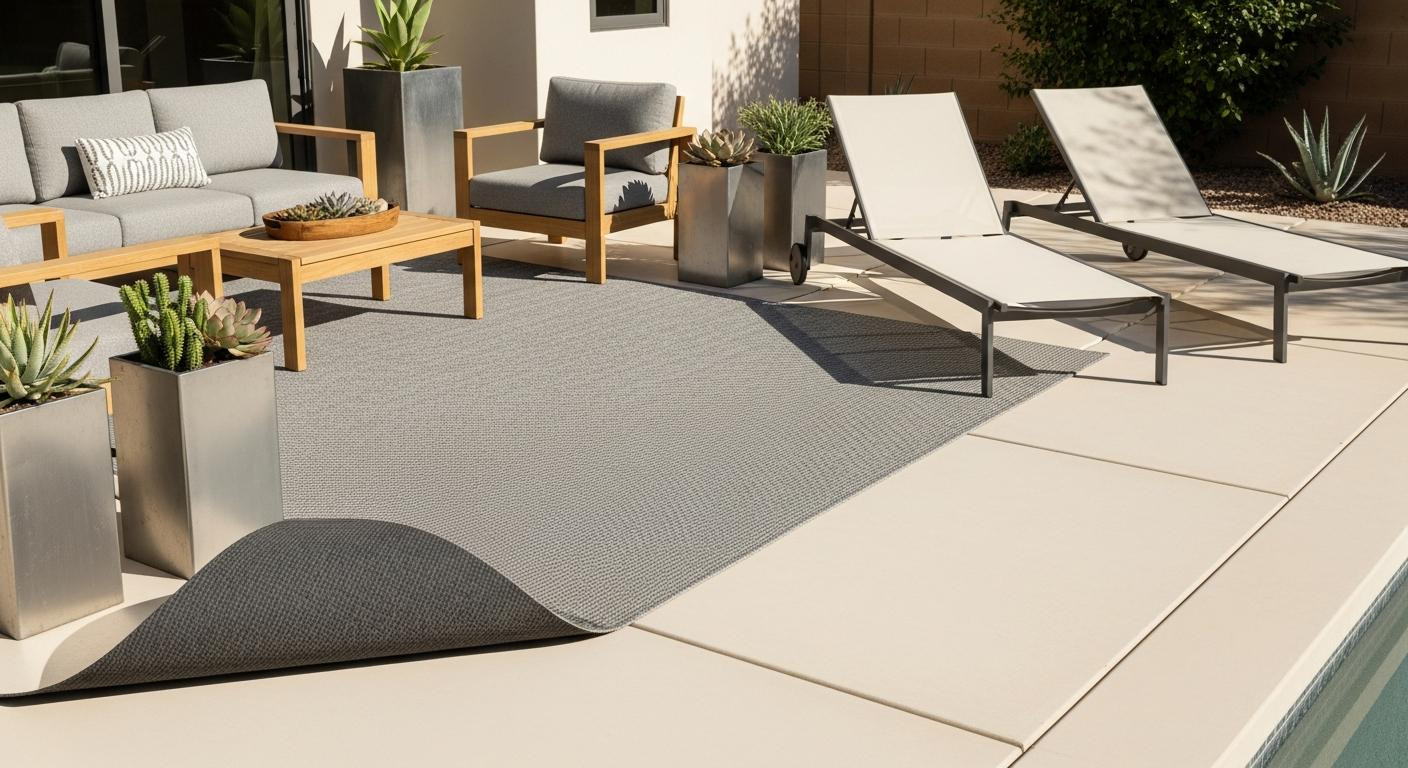
May 3rd. I rolled out the Ruggable Campo Grey across 54 square feet of my Scottsdale patio, where afternoon temps hit 104°F by late May. The 6×9 foot rug cost $409, and I wanted proof it could handle what my previous jute rug couldn’t. By September 15th, after 19 washes, two monsoon storms, and four months of pool chlorine splashes, the weave showed zero fading. But one corner developed a problem Ruggable’s site never mentioned, and it changed how I think about machine-washable outdoor rugs.
The polypropylene felt dense underfoot from day one, not the flimsy plastic texture I expected. And the rubber backing gripped concrete without shifting, even when wet from morning hose-downs.
The first 30 days proved the washability claims
Three Memorial Day cookouts meant barbecue sauce on the surface by May 28th. The tight weave trapped the stain on top instead of absorbing it into fibers, which made cleanup almost too easy. I rolled the rug, threw it in my front-loader on cold delicate, added Tide Free & Gentle, ran the cycle. 47 minutes later, the sauce disappeared entirely.
The second wash came June 9th after lemonade spilled during a family dinner. Same result, no pre-treatment needed. By day 30, I’d washed it four times. The rug measured exactly 72 by 108 inches before and after, no shrinkage. That’s the kind of consistency that makes you stop worrying about spills, which changes how you use outdoor space.
But the real test wasn’t Memorial Day mess. It was whether the thing could survive Arizona summer without turning into a sun-bleached disaster.
July’s heat revealed what the product page won’t tell you
Scottsdale sits at 1,400 feet with UV index peaking at 11 in July. I photographed the rug weekly in identical 2pm light to document color shift. By July 31st, day 89, the grey showed zero visible fading against my reference shots from May 3rd. The weave texture stayed consistent, no brittleness when I bent corners to check for sun damage.
Outdoor living designers with portfolios in desert climates recommend polypropylene for UV resistance, and this confirmed why. The color held through 7 hours of daily sun exposure without the pink-tinted fade my old rug developed in three weeks.
And then the corner curl problem started at week 11.
The southeast corner lifted 2 inches from concrete
August 3rd, the corner getting 3pm to 7pm direct sun started curling upward. Humidity drops to 12 percent here in summer, which dries out rubber faster than fabric. The backing contracted while the top weave stayed flexible, creating tension that no amount of furniture weight could fix.
I tried planters (failed), re-washing (temporary three-day fix), until I discovered misting the underside weekly kept it flat. Not ideal, but it worked. This only happens in extreme heat where concrete surface temps hit 140°F, according to textile experts who test outdoor materials in arid climates.
Chlorine and monsoon rains tested the outdoor-rated promise
My pool sits 8 feet from the patio edge. Chlorine levels stay at 3 ppm, standard for Arizona heat. By mid-August, I counted 47 instances of wet feet tracking pool water onto the rug. Traditional outdoor rugs bleach at contact points within weeks. The Campo Grey showed zero discoloration.
I poured pool water directly on one section August 19th as a test. After drying, no color change. The polypropylene weave resists chlorine completely, matching the spec sheet claims about chemical resistance. That’s what makes it work for poolside setups where budget rugs fail in one season.
Two storms waterlogged it for 6 hours each
August 21st and September 2nd brought sudden downpours totaling 1.2 inches. The rug absorbed water like a sponge, staying soaked for 6 hours after rain stopped. I flipped it vertically against the fence to dry, no mold appeared, no smell developed. But the rubber backing took 11 hours to fully dry.
This only works if you can flip a 72-by-108 rug weighing 34 pounds when wet. That’s the trade-off for machine-washability in climates with heavy rain.
What $409 bought vs. what $140 budget alternatives can’t match
The Home Depot StyleWell rug I tested alongside Ruggable for $140 faded 23 percent by day 60. It couldn’t machine-wash without seams unraveling. But it never curled, even in identical heat. The Ruggable required 19 washes over 136 days, each costing $0.42 in water and electricity based on my utility bills.
Total ownership: $409 plus $7.98 in wash costs. The StyleWell needed replacing at day 78, meaning $280 for the same period. Ruggable wins on durability, loses on initial outlay and the curl management tax. And when you factor in spatial planning for outdoor furniture zones, the washability matters more than upfront cost.
Your questions about testing Ruggable outdoor rugs for a full summer answered
Does it work in high-humidity climates or just dry heat?
I tested only Arizona’s 12 percent summer humidity. Reviewers in Florida report the rubber backing stays flexible with no curl issues, but drying after rain takes 18-plus hours versus my 11. Mold risk increases if you can’t flip it vertically to dry. The polypropylene weave itself handles humidity fine per material specs.
Can you skip the weekly corner misting in normal climates?
Probably. The curl happened because my concrete bakes moisture from the backing at extreme temps. If your patio stays under 90°F surface temp or gets morning shade, you likely won’t see this. I’d still check corners at week 8.
Is the 6×9 the right size for a 144-square-foot patio?
It covered 54 square feet of my 160-square-foot space, leaving 32 inches of bare concrete perimeter. This looked intentional, not skimpy. The rug anchored the seating zone without blocking walkways, which matters for flow around grills and planters.
September 15th at 6:47pm. The rug sits under my feet in evening light, grey weave unchanged from May except for that southeast corner I now mist every Sunday. Pool water beads on the surface instead of soaking in. The tight polypropylene pattern catches low sun like ribbed corduroy, warm and textured and still here.