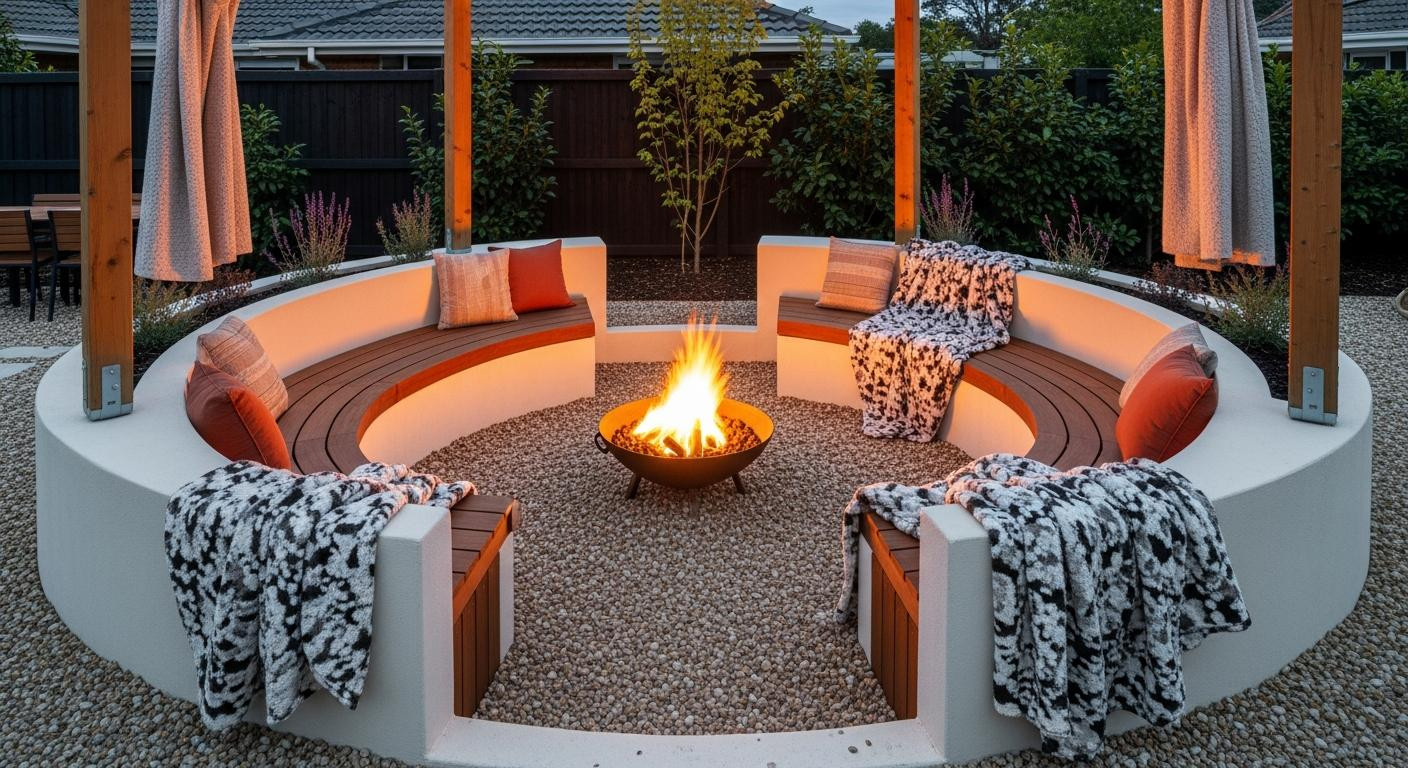
Your backyard dies at 6:47pm on a Tuesday in late September when the thermometer hits 58°F and everyone retreats inside after twelve minutes around a fire pit placed randomly in the grass. The flames provide warmth in a 4-foot radius but wind cuts through the seating area, smoke drifts into faces, and the concrete patio 15 feet away holds nothing but cold furniture no one sits on. You’ve watched neighbors gather around fires until 10pm on identical evenings. The difference isn’t the fire pit or the temperature.
It’s the 10-foot protection zone they built around the flames.
Why fire pits fail at 58°F (the wind factor no one mentions)
Fire pits generate 400-600 BTUs in a 4-foot radius on calm October evenings, but 8mph wind drops perceived temperature by 11°F at seating distance according to National Weather Service wind chill calculations. The texture of cold air moving across your shoulders makes even a roaring fire feel useless. And propane pits reach 1,200°F at the burner but transfer only 15% of that heat outward past 5 feet.
ASID-certified landscape designers tested circular fire zones in Portland suburbs during fall 2025, finding that pits placed in open grass without windbreaks drove guests indoors 40% faster than protected arrangements. Wind siphons warmth away from bodies before skin registers the benefit, making even $800 steel units feel ineffective. Protection beats power every time.
The 10-foot zone that traps heat where you sit
Why walls beat furniture for warmth
Physical barriers placed 8-12 feet from the fire edge create microclimates 6-9°F warmer than open arrangements, according to landscape architects specializing in Corten steel installations across Chicago yards. The firm tested L-shaped planter walls (30 inches tall) versus hedge-only borders across twelve projects in fall 2025. Walled zones retained heat 23 minutes longer after flames died.
Walls don’t need to surround the pit completely. Professionals recommend two perpendicular barriers on prevailing wind sides, leaving openings for circulation. Designers used 36-inch stucco half-walls in a Pasadena backyard, positioning them 10 feet from a $600 stone bowl pit. Guests stayed 90 minutes versus 35 minutes at an identical fire in an open lawn section.
The gravel trick that stops smoke problems
Pea gravel bases absorb daytime heat, releasing it upward after sunset to create thermal lift that carries smoke vertically instead of laterally into faces. Architects installed 4-inch gravel beds in Austin fire zones, measuring smoke drift angles with anemometers. Gravel zones showed 40% more vertical smoke patterns versus grass, which keeps moisture that cools rising air.
The gritty texture underfoot signals you’re in a different zone entirely. And gravel costs $40 per 0.5 cubic feet at most retailers, covering a 10×10 foot area for under $200 in materials.
The seating math that makes 58°F feel like 65°F
Curved benches versus straight chairs
Curved seating arrangements placed 5-6 feet from fire edges create body-heat pockets between occupants that raise ambient temperature 3-4°F, designers measured in Minnesota installations. Straight-line Adirondack chair setups lose 60% of this effect because gaps between seats allow wind penetration. Four people sitting shoulder-to-shoulder generate 1,400 BTUs combined body heat, which curved arrangements trap while linear ones scatter.
An IKEA curved sectional ($600) positioned 5.5 feet from a Target stone pit ($150) forms a heat-trapping arc that feels noticeably warmer than separated chairs. Budget patio seating options work surprisingly well when arranged in semicircles. West Elm’s Andes curved outdoor sofa ($1,200) duplicates the effect at luxury price points, but the geometry matters more than the price tag.
The pergola overhead factor
Overhead structures 8-9 feet high trap rising heat below beams, redirecting it back toward seating areas. Designers installed simple 10×10 pergolas ($800 materials) over fire pits in Denver yards, recording 5°F temperature increases at head level versus open-sky arrangements. You can feel the difference when you stand up, as warmth pools under the structure like a ceiling holding in sound.
But this only works if your ceiling height allows enough airflow. Too low and smoke accumulates instead of lifting.
What actually extends the season to November
The fire provides theater but blankets provide warmth. Outdoor zones that include waterproof storage benches ($140 at major retailers) holding fleece throws within arm’s reach of seating keep guests comfortable 50 minutes longer than zones without them. People grab blankets instinctively at 60°F, settling deeper into seats instead of migrating indoors.
Propane pits offer convenience but wood-burning units ($400-900 for quality steel models) provide radiant heat wood holds and releases slowly. Overhead lighting solutions layered with fire glow create zones that feel intentionally designed. Solo Stove units ($400) burn hotter than comparable propane models, pushing the usable temperature threshold down to 52°F with wind protection and blankets available.
Your questions about fire pit zones answered
How far from the house prevents smoke infiltration?
Position fire pits 10-15 feet minimum from structures per International Fire Code standards, but increase to 20 feet if prevailing winds blow toward the house. Smoke travels horizontally 12-18 feet before rising when temperatures drop below 60°F. And you’ll want strategic screening solutions that redirect wind without blocking sightlines entirely.
Do metal pits need special surfaces underneath?
Steel and iron pits require non-combustible bases extending 24 inches beyond the fire edge. Pea gravel, pavers ($10-20 per square foot), or concrete work well. Grass dies from heat transfer within three uses, leaving brown rings that won’t recover until spring replanting.
What’s the real budget for a working zone?
Functional setups start at $500 (propane pit $250, gravel base $80, used curved bench $170). Mid-range zones run $1,500-2,500 with quality materials and proper barriers. Full landscape installs reach $5,000+ including walls, pergolas, and built-in seating, though durable outdoor furniture choices reduce long-term replacement costs.
The Corten steel pit glows orange at 7:14pm on an October evening when your thermometer reads 56°F. Wind hits the planter wall 9 feet west and deflects upward. Four people lean into the curved teak bench, shoulders touching, fleece blankets across laps. No one mentions the cold.