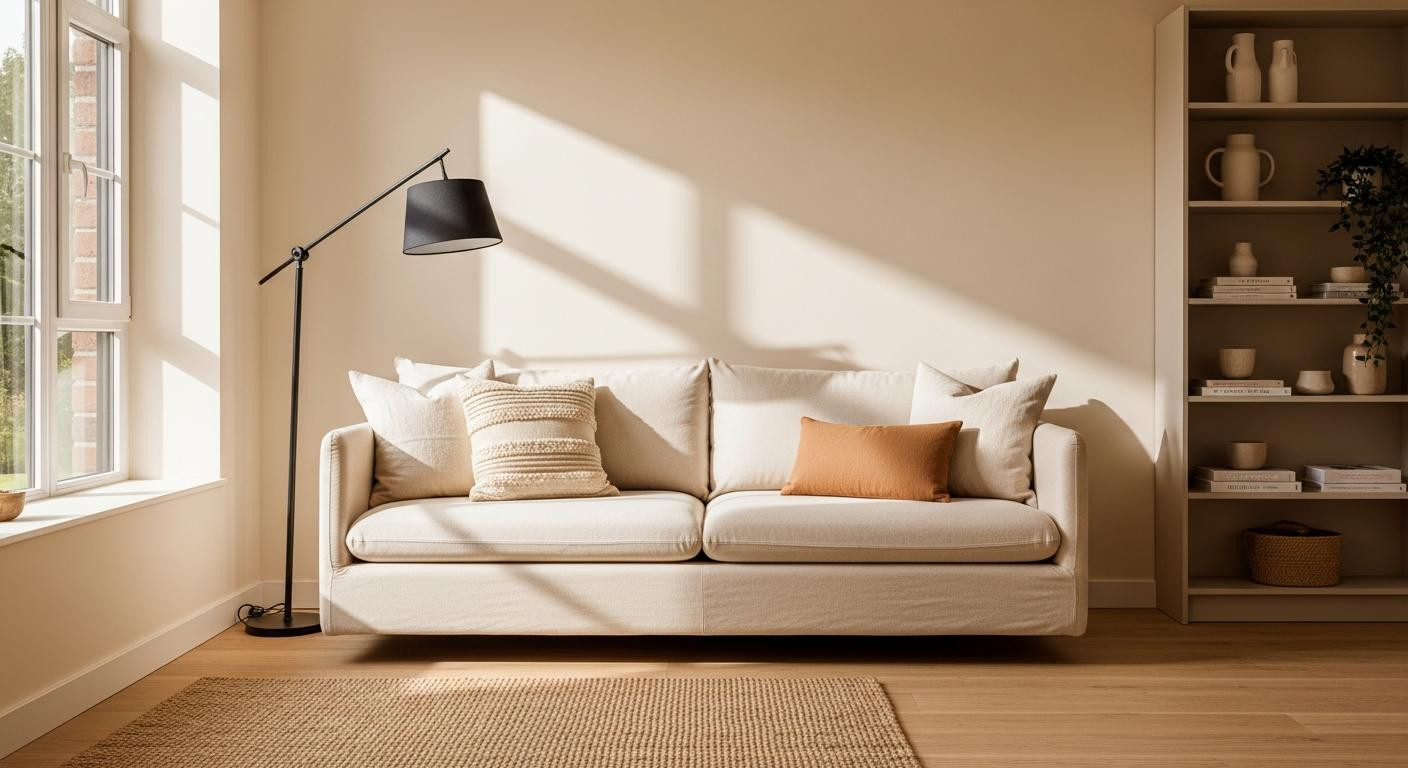
Your studio’s sofa sits against the wall because that’s where sofas go, pushed back to maximize floor space like every apartment you’ve rented since college. By Tuesday evening, the 400 square feet feel like 200. The bed’s visible from the kitchen counter, your work desk bleeds into the sleeping zone, and every object competes for the same sight line. The internet says buy a bookshelf divider or hang curtains. But the furniture you can’t see from the door does more to create bedroom separation than anything you purchase. Pull your sofa eight inches forward. Clear three specific sight lines. The room splits in two.
Your sofa against the wall collapses the entire studio into one visual blob
When every piece touches the perimeter walls, your eye reads the room as a single flat plane. There’s no foreground, no background, no layering that signals separate zones. The result feels cramped even when square footage allows for movement.
Interior designers recommend floating furniture at least 3 inches from walls to create visual breathing room. But in studios under 450 square feet, you need 8 to 12 inches of space behind your sofa to trick the brain into perceiving depth. That sliver of negative space between fabric and drywall creates shadow play that reads as intentional separation.
The West Elm Harmony sofa at $1,299 or the Target Threshold option at $250 both work when positioned mid-room instead of flush against the back wall. And yes, it feels wrong at first. You’ll want to reclaim those eight inches for walking space. Don’t. The visual payoff outweighs the slight traffic adjustment.
The three sight lines you clear first determine if guests see one room or two
Standing at your entry door, trace where your eye naturally lands. If you see the bed immediately, the studio announces itself as bedroom-first. That’s the problem you’re solving with strategic furniture placement, not additional purchases.
Sight line #1: Door to bed diagonal
Position an IKEA Kallax bookshelf at $79 perpendicular to your bed’s footboard, pulled 18 inches out into the room. Stock it with books on the studio-facing side, plants or lamps on the bedroom side. The shelf becomes a visual terminus that stops the eye before it reaches your unmade duvet.
According to ASID-certified interior designers featured in major shelter publications, this Kallax-plus-curtain combo creates the strongest illusion of separate rooms in small rentals. The bookshelf provides structure while sheer fabric adds soft definition without visual weight. But it only works if your ceilings measure at least 8 feet from floor to ceiling.
Sight line #2: Kitchen counter to sleeping zone
Cooking while staring at your bed kills any sense of spatial separation. Angle your sofa 15 to 20 degrees off-axis to block this view without obstructing the walking path between kitchen and bathroom. You’ll need 36 inches minimum clearance for comfortable traffic flow, especially if two people live in the space.
The angled placement creates a triangular pocket of negative space behind the sofa. Your brain registers that empty corner as a separate zone, even though nothing physically divides it. That’s the kind of detail that quietly elevates the whole setup without requiring additional furniture or landlord approval.
Rugs zone by what they don’t cover, not what they anchor
Soft zoning through area rugs saw searches increase 45% year-over-year as of April 2026, according to Pinterest trend data. But renters make the mistake of placing 8×10 foot rugs wall-to-wall, eliminating the contrast that creates visual separation. The lack of rug signals a zone change more effectively than continuous coverage.
Place your 8×10 rug to define the living area, then stop it 18 inches before your bed platform. Leave that strip of bare floor as a visual buffer between sleeping and living zones. A Wayfair jute rug at $120 or an Amazon synthetic option at $50 both function identically if you keep the edges visible and don’t let them disappear under furniture.
Design experts with residential portfolios recommend one consistent texture across your rug plus one textile piece to unify without crowding. Checks on the rug, checks on a single throw pillow. Stripes on the rug, stripes on sage curtains that filter light without blocking spatial flow. The repetition creates cohesion in a way that feels intentional rather than accidental.
Corner placement versus center placement
Center-positioned rugs bisect studios awkwardly, cutting the room in half without creating functional zones. Push your rug to the window-side third, anchoring the living zone while leaving the bedroom third completely bare. The asymmetric balance reads as deliberate separation instead of random furniture scatter.
And don’t try to cover every inch of visible floor. Empty oak or vinyl creates rest for the eye between zones, similar to how the tray trick that clears visual clutter on surfaces works by grouping items with negative space around them.
The rental-friendly partition that works only if your ceiling is 8+ feet
Sheer curtains on tension rods create soft bedroom walls, but they collapse visually in ceilings below eight feet. Measure floor to ceiling before buying panels. Install the rod at 7.5 feet minimum, using 84-inch linen panels from Target at $30 per panel. The fabric needs six inches of floor clearance to avoid feeling trapped or bottom-heavy.
Peel-and-stick wallpaper behind your bed adds designer weight without lease violations. Professional organizers with certification recommend testing a corner first, since some landlords consider adhesive backing damage despite marketing claims. Target options at $30 per roll compete directly with premium alternatives that cost three times more for identical square footage coverage.
Admittedly, this only solves the visual problem. You’ll still hear everything from the kitchen while trying to sleep. But the psychological effect of a defined bedroom zone reduces stress even when sound bleeds through sheer fabric. That’s what makes the setup work for renters who can’t install actual walls. Knowing about overhead lighting mistakes that shrink small rooms helps maintain the spacious feeling once you’ve created the zones.
Your questions about studio furniture arrangement tricks answered
Does floating furniture work in studios under 350 square feet?
Below 350 square feet, floating creates traffic jams rather than visual expansion. Keep your sofa within six inches of the wall and use slim console tables at $299 from CB2 as visual dividers instead of bookshelf bulk. The narrow profile maintains separation without consuming precious walkway inches.
What if my studio has no windows on the bedroom side?
Dark zones need layered lighting to simulate natural brightness. Place a floor lamp at $40 like the IKEA RANARP behind your sofa, add a bedside LED strip at $18 from Amazon to create ambient glow. Never rely on overhead-only lighting, which flattens the space and eliminates the shadow depth that makes zones feel separate.
Can I create zones without buying new furniture?
Yes, if your existing pieces cooperate. Move your sofa 8 to 18 inches from the wall, add a $50 rug to define one area, hang curtains on a $15 tension rod. Total cost stays under $100 for immediate transformation. You might find ideas in the corner bed nook setup using IKEA Kallax that repurposes modular furniture you already own.
By Thursday evening, the studio no longer announces itself as one compressed box. The sofa hovers mid-room, the Kallax blocks the bed from the doorway, and 18 inches of bare oak floor separates living from sleeping. Your neighbor asks if you moved to a one-bedroom. You didn’t. You just moved the sofa.