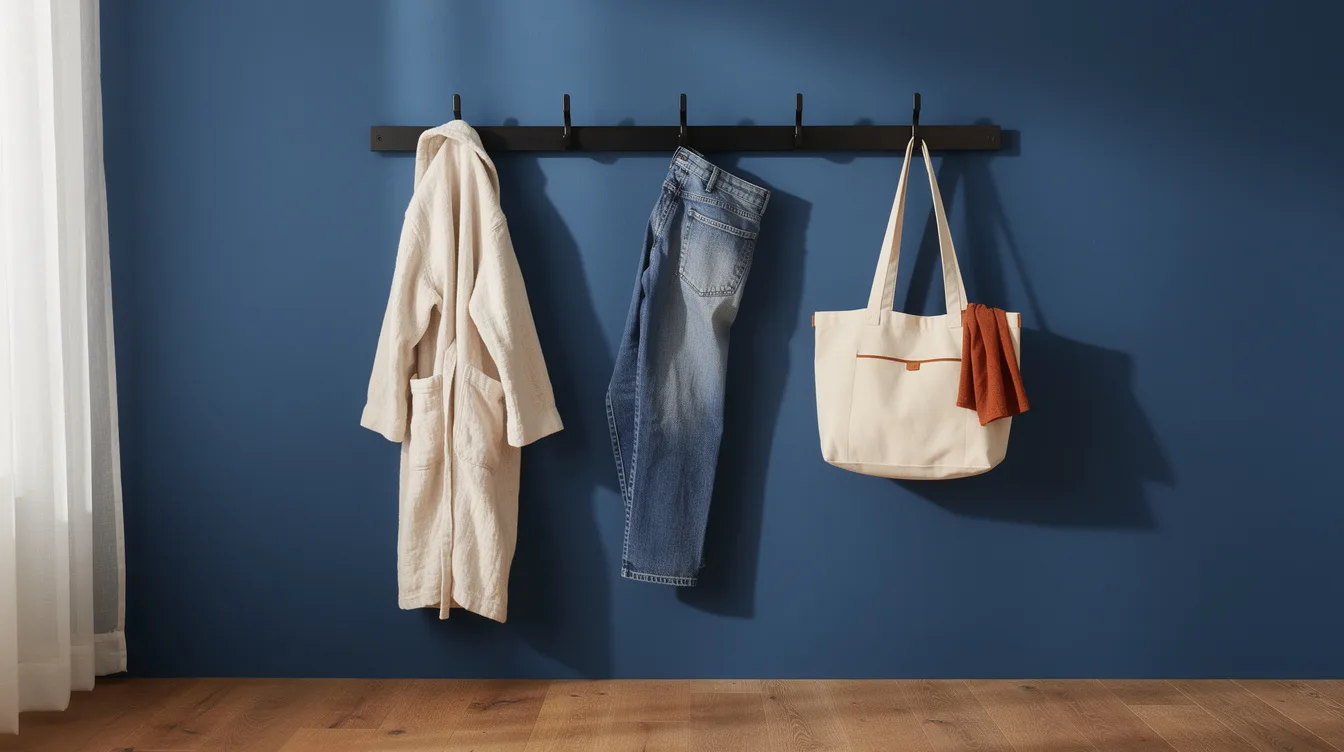
My last rental had a chair in the corner doing the work of a dresser, a hamper, and a coat rack at the same time.
Wall hooks fixed it, but only after I stopped buying the wrong ones. A small bathroom hook like IKEA’s BALUNGEN has about a 3.5-inch depth and a stated max of roughly 9 pounds, which covers a robe and nothing else.
Load that same hook with a wet towel, a tote, and tomorrow’s jeans and you get a slow lean, then a hole in the drywall.
Mount the Robe Hook Lower Than You Think
Most people set a robe hook too high, usually because they’re eyeballing it while standing with the drill already in hand.
For an adult, roughly 61 to 67 inches off the floor is the comfortable range. Go to the low end if you’re shorter, or if your robe is long enough to drag on the tile.
Kids need theirs at about 39 to 47 inches, which is why IKEA’s KROKIG rack gets mounted low and still earns its spot three years later.
Behind the bathroom door is the best unused wall in the house. Two to four hooks there, around 59 to 67 inches up, handle a robe, pajamas, and a towel.
The real win isn’t the square footage you save. It’s that damp fabric stays out of the wardrobe, where it turns folded cotton musty.
If drilling isn’t allowed, an over-door rack from Amazon typically runs $15 to $25 and needs nothing but the door itself.
Put a Real Hanger on the Valet Hook
Draping a blazer over a bare hook gives you two shoulder dents that no steamer fully argues out of the fabric.
Use one deep peg or a valet-style hook, then hang the piece on a proper wood hanger, the way a hotel closet does it.
The hook holds the hanger, the hanger holds the shoulders. That’s the entire idea, and it’s the only setup I trust for a blouse or a dress I’m wearing the next morning.
This is where I’ll spend a little. A single brass valet hook at Wayfair is typically $18 to $30, and it earns that back the first time you skip an ironing session.
Skip it for jeans and hoodies, which don’t care what shape they hold.
One hook, one garment, is also the honest weight rule. A standard single hook is built for one light-to-medium piece, not a stack of four.
Space the Hooks for the Clothes You Own
Four hooks crammed into a 12-inch run is a pile, not storage.
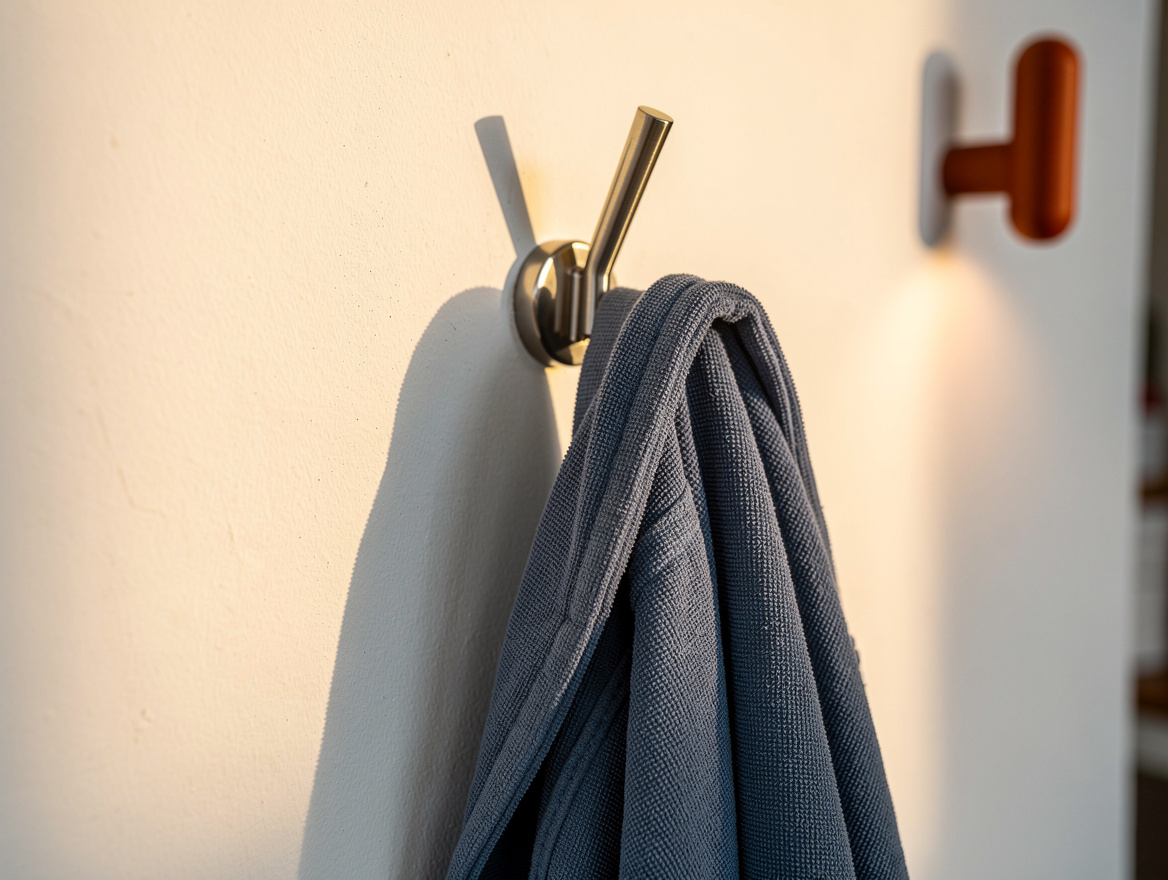
Shirts, robes, and light layers want roughly 8 to 12 inches between hooks. A bulky wool coat, a loaded backpack, or a puffer needs closer to 12 to 18 inches or they crush each other flat.
Projection is the number nobody checks. Aim for hooks that stick out about 2.5 to 4 inches.
The shallow key rack profile is the usual culprit here: garments slide right off it, and whatever stays gets pressed against the wall.
In a narrow bedroom, stop thinking in rows. Stagger the hooks vertically, roughly 10 to 14 inches apart, and two to four outfits fit in a strip of wall beside the wardrobe.
For a planned outfit station, three to five hooks spaced about 18 to 24 inches apart keeps a shirt, trousers, a cardigan, and a bag readable instead of tangled.
Screw It In Where Clothes Land Every Day
Adhesive hooks have one honest job: rentals, tile, and anywhere a drill isn’t on the table. Command strips are fine there and nowhere else.
For clothing you handle daily, screwed-in hardware is the durable choice. Hit a wall stud where you can, and use anchors rated for your surface when you can’t.
Drywall, plaster, masonry, and tile all take different hardware, and the packaging says which. A pack of Everbilt toggle anchors at Home Depot is typically under $10.
That ten dollars is the gap between a rail that carries a soaked winter coat and a Saturday spent with spackle and touch-up paint.
Do keep in mind why adhesives stay so popular: no holes, no argument about the deposit. They’re just not a system for outerwear.
Anything heavy, or several pieces sharing one spot, calls for a double hook, a rail, or heavy-duty hardware set properly into the wall.
Run One Rail in the Hallway
Scattered single hooks look tidy on a mood board and fall apart the second two people share an entry.
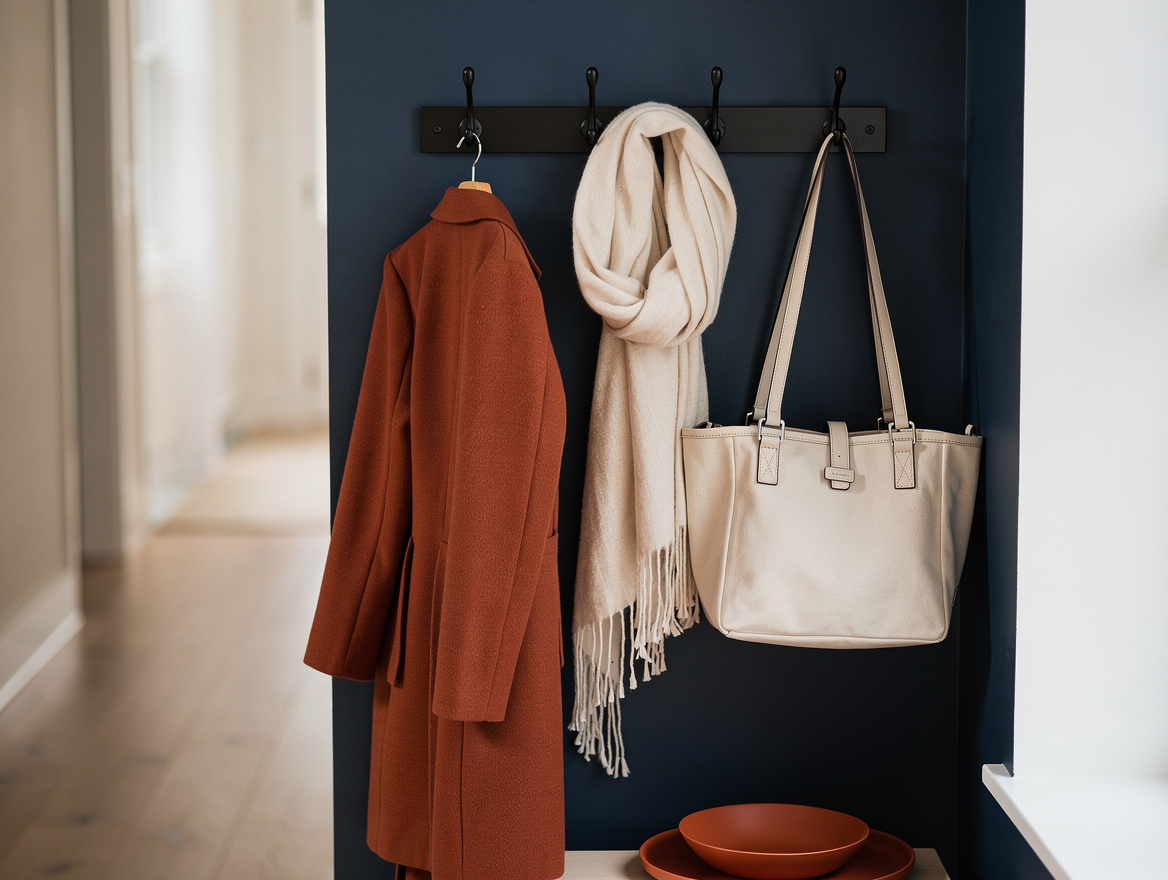
A rail of 24 to 36 inches with four to six hooks absorbs a jacket, a hoodie, a scarf, a cap, and a canvas tote without anyone claiming territory.
Twenty-four inches is a workable minimum for three or four garments. Thirty-six suits a household drop zone or genuine wardrobe overflow.
Target and Walmart both stock plain matte black rails in that range for around $20 to $35, and the flat finish hides hand grease far better than polished chrome does.
Leave 10 to 12 inches of clear air in front of it, especially next to a doorway or a wardrobe door that swings open.
A rail you have to sidestep gets abandoned inside a week, and then the coats go straight back onto the chair.
Give Worn-Once Jeans Their Own Hooks
The real clutter engine in a bedroom is the in-between pile: denim, knitwear, the sweatshirt that’s good for one more day.
Three or four hooks near the hamper give that category an address, and it stops migrating onto the chair, the bed, and the exercise bike.
I use plain satin nickel double hooks from Lowe’s, typically $6 to $9 each, mounted well away from the outfit station.
Keeping those two zones apart is the whole point. Once re-wear clothes mix with tomorrow’s shirt, you’re re-sorting the same pile every morning.
Jeans hang best folded at the knee over a double hook. A merino knit should be folded over the hook too, never hung by the shoulders, which stretches it out of shape.
Keep the count honest. Wall hooks are short-term visible storage, not a second closet, and a full rail means something needs washing or folding.
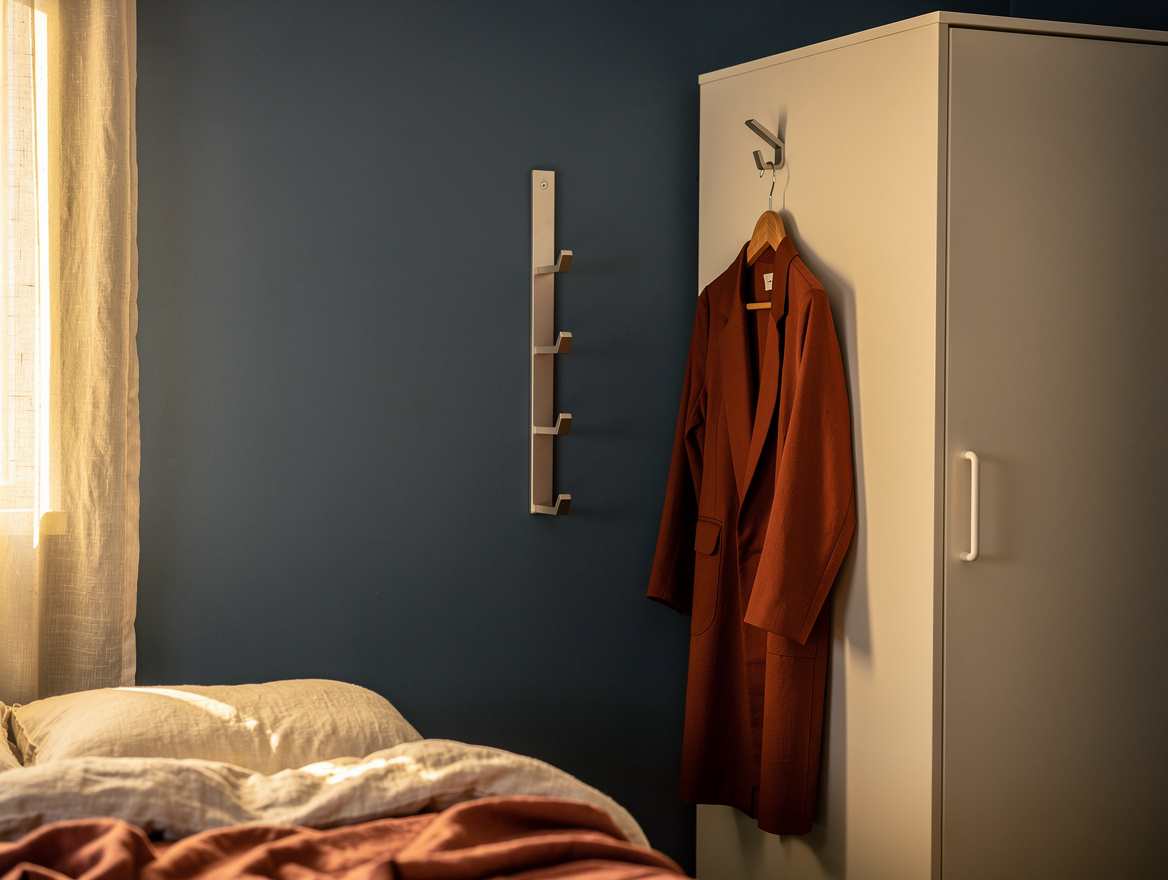
Start behind the bathroom door with one robe hook at about 61 inches, then add the hallway rail once you see how fast that chair empties out.
Both pieces plus a pack of anchors typically land near $50 at Home Depot, and that’s the entire system, no closet renovation required.
Mia Carter writes about small-space living and budget home makeovers. She has restyled three rentals and tests most ideas in her own 45 sqm flat.