·
14 min read
Saatva Classic · scored by the World Sleep Almanac · read methodology
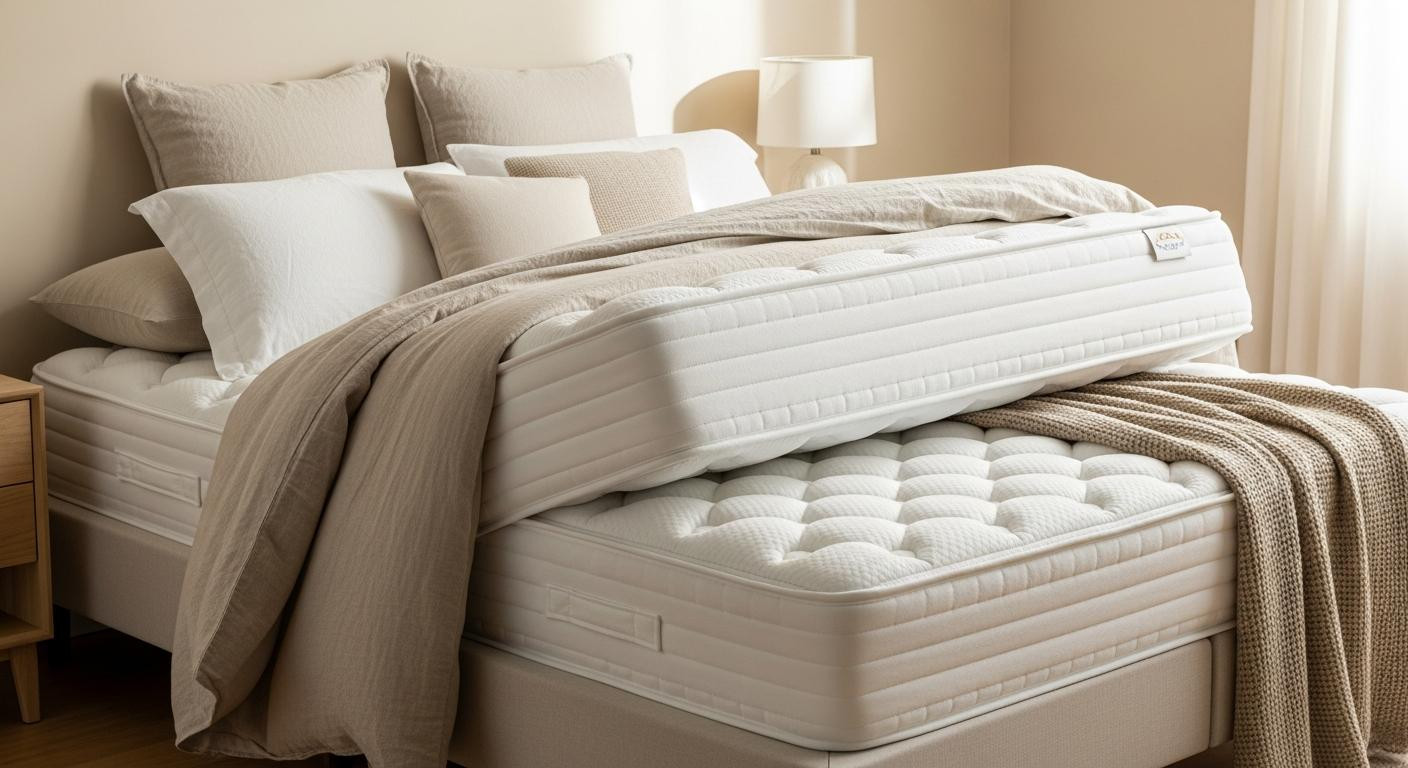
Your mattress sits 11 inches off the bedroom floor at 7:23am on a Saturday morning in mid-April. You bought it four years ago for $1,200, slept on the same side 1,460 nights straight, never flipped it because the care tag fell off and you forgot which side was up. The center dips nearly an inch lower than the edges where your hips land every night. Your partner’s side still feels firm. A new mattress costs $800 to $2,500. The flip-and-topper strategy costs $180 to $400, adds three years of usable life, and takes 90 minutes this weekend.
Spring timing matters because humidity drops, making rotation easier before summer sweat season locks in odors. And it’s the kind of maintenance that pays back $5 per month in avoided replacement costs.
Why April is the only month you should flip your mattress
Winter humidity trapped in foam and springs needs to escape before summer heat arrives. April’s 40% to 60% humidity levels let mattresses breathe during the 30 to 60 minute airing window after you strip the bed. Flipping in July risks locking moisture into the newly rotated side, creating mold conditions by August.
Your mattress contains two to four pounds of absorbed body oils and dead skin after winter months under heavy duvets. Sleep specialists at Sealy confirm spring rotation prevents the 30% faster wear rate that occurs when you skip seasonal maintenance. Vacuuming seams before rotation removes allergen buildup that causes the congested mornings you’ve normalized since February.
This step takes eight minutes with a handheld vacuum’s upholstery brush. The texture of quilted fabric catches dust you can’t see but absolutely feel when your face hits the pillow at night.
The flip sequence that actually extends mattress life
Head-to-foot rotation for pillowtop and foam mattresses
Pillowtop and memory foam mattresses can’t flip because the comfort layer only exists on one side. Rotate 180 degrees so your head moves to the foot end. This redistributes weight pressure from your hips and shoulders to previously unused areas.
Mark the current head position with painter’s tape before rotating to track which direction you’ve moved. Rotation every six months cuts visible sagging by 30% at the five-year mark compared to never-rotated mattresses. And it’s easier than wrestling a 100-pound queen mattress solo, which risks back strain you’ll regret Monday morning.
Full flip for innerspring and double-sided mattresses
Innerspring coils with comfort layers on both sides need complete 180-degree flips plus head-to-foot rotation. Check your care tag—if it says “no flip,” you have a single-sided construction like Saatva Classic or most Casper models. True flippable mattresses weigh 80 to 120 pounds for a queen.
Two people make this safe. The mattress edge meets the border wire at a seam that can separate if you drag it alone across the box spring. But when you finish, the fresh side feels noticeably firmer under your test hand, almost like the mattress you bought four years ago.
The $180 topper decision that changes everything
When flipping isn’t enough
Mattresses older than six years develop permanent compression where innerspring coils lose 20% of their support tension or foam refuses to rebound fully. You’ll feel this as a body-shaped dip that returns within 30 seconds of standing up. A 2 to 3 inch topper adds cushioning that compensates for lost support without buying a $1,200 replacement.
Toppers also solve mismatched firmness after flipping the rarely-used side up. And waterproof protectors ($30 to $80) go under toppers, catching the sweat and spills that cause 60% of premature mattress replacement. Interior designers featured in Apartment Therapy recommend this layering system for renters transforming firm beds into the fluffy feather topper that turned my firm rental bed into a boutique cocoon.
Feather vs foam toppers for different sleep positions
Side sleepers need pressure relief at hips and shoulders, making 3-inch memory foam or down-alternative toppers the right choice. Feather toppers create cloud-like softness but compress too much under side-sleeping weight, causing alignment issues by month four. Back sleepers maintain neutral spine positioning with 2-inch latex or firm foam toppers that add cushion without excessive sink.
Stomach sleepers should skip toppers entirely after flipping. Added height pushes your lower back into hyperextension, creating the pain you’re trying to eliminate. And that’s the kind of detail most topper marketing ignores completely.
What three years of extended life actually costs you
The $180 to $400 topper investment breaks down to $5 to $11 per month over three years of added mattress life. A new mid-range queen mattress costs $1,200 to $1,800 at Mattress Firm or online brands. Financing that purchase runs $50 to $75 monthly for 24 to 36 months at typical 10% to 15% APR rates.
The flip-and-topper strategy costs 85% less monthly while you save for an eventual upgrade. Admittedly, this only works if your mattress is under eight years old—after that, innerspring coils lose structural integrity and toppers become expensive bandages on a failing foundation. Mattress experts at Better Sleep Council confirm that maintenance extends quality sleep surfaces by two to five years when started before visible sagging exceeds one inch.
But when you catch wear early, the difference feels immediate. The same approach that transforms proper bedroom lighting makes your space feel twice as big applies here—small interventions compound into major comfort gains.
Your questions about mattress refresh for spring answered
How do I know if my mattress is too old to flip?
Press your palm into the mattress center where you normally sleep. If the foam rebounds in under three seconds and the surface feels uniformly firm across the entire top, flipping works. If your hand sinks two-plus inches and stays compressed after five seconds, the foam has degraded past the point where rotation helps.
Can I use a topper without flipping the mattress?
Yes, but you’re losing 30% of potential lifespan extension. The topper adds comfort to a declining surface without addressing uneven wear underneath. Flipping redistributes compression across unused support zones, letting the topper work with a more stable base. Together they add three years; separately toppers add 12 to 18 months before the sagging underneath becomes too severe.
What’s the cheapest effective topper for a firm mattress?
IKEA’s synthetic feather topper costs around $129 for a queen, adds two inches of sink, and survives machine washing. It sits between budget foam ($80 to $120) and luxury down ($300 to $500). Pair it with a Target Threshold waterproof protector to prevent topper staining from body oils that yellow synthetic fill within eight months of unprotected use. The same systematic approach that works for the matching storage system that stops bedroom chaos every morning applies to layering protectors and toppers correctly.
Your mattress sits rotated at 3pm Saturday, sun hitting the fresh side through the west window where dust particles float in afternoon light. The feather topper compresses under your test hand, releasing immediately when you pull away. Crisp white sheets smell like detergent instead of last week’s sleep.
All Almanac scores in this article are produced by the JM Editorial Team’s World Sleep Almanac methodology, applied identically to every mattress we feature.
If this article reached you, you’re already considering a serious sleep upgrade. Saatva’s 365-night home trial means you can test the mattress for a full year before committing — and the lifetime warranty holds without proration. Click below for today’s price.
Affiliate disclosure: World Sleep Almanac is reader-supported. When you buy through links on this page, we may earn a commission at no additional cost to you. Almanac scores are produced by the JM Editorial Team using the World Sleep Almanac methodology applied identically to every mattress we feature.