Tuesday morning, 7:42am. You reach for the coffee grinder behind three mismatched travel mugs you haven’t used since 2023, knocking over the vitamin bottle that lives next to the stove because your medicine cabinet overflowed in January. The kitchen measures 161 square feet, the exact US average, but feels 40% smaller every time you cook.
You’ve saved $180 worth of drawer organizers in your Amazon cart since March. The counters don’t need better storage. They need 11 fewer objects.
The ski slope method from TikTok’s visual decluttering challenge proves space expands not by adding containers but by subtracting contents. And that’s the shift that changes everything.
The spatial math that makes rooms shrink
A 220 square foot renter living room loses 18% of visual breathing room when surfaces hold 20 items versus six. Your eyes scan, categorize, and stress over each object. More items equals more micro-decisions equals higher cortisol.
Pinterest’s “declutter first 2026” boards show this contrast in sharp relief. One image features a bathroom vanity crowded with 41 expired products across three organizing bins. The next shows the same vanity holding eight current essentials with no containers at all.
According to therapist-trained interior designers featured in Apartment Therapy, less stuff unlocks mental flow because your visual field calms. The average cluttered kitchen counter holds 14 to 22 daily items. But design professionals with NKBA certification keep four to seven maximum.
That’s the difference between a kitchen that feels chaotic and one where you can actually breathe while cooking eggs.
Why your first instinct traps you
Storage bins multiply the problem by 30%
Buying organizers creates permission to keep borderline items. Research on renter behavior shows people who purchase bins first declutter 30% less than those who edit first. The bin itself becomes clutter.
And here’s the thing about containers. They’re visual noise even when they’re supposedly organizing your chaos. A bathroom vanity with three acrylic bins still screams stress when you open the cabinet door.
Marie Kondo’s updated guidance warns that storage solutions trap hoarders by hiding the real problem. The expired face cream from 2022 doesn’t need a prettier basket. It needs the trash can.
The fixed-space anxiety renters feel
In a 600 square foot apartment, you can’t expand walls. So you containerize instead of reducing. This creates clutter creep, that slow accumulation storage temporarily hides until every shelf bulges.
Renters see consequences daily because there’s no basement to bury mistakes. One Reddit thread from May gathered 2,700 upvotes with the complaint: “My apartment feels like a storage unit, every surface screaming with mismatched mugs.”
But homeowners face the same trap with more square footage to fill. The problem isn’t the size of your space. It’s the permission you’ve given stuff to occupy it.
The ski slope edit that clears rooms in two hours
The top-to-bottom sweep method
Start at your highest shelf and pull every piece of clothing onto the bedroom floor. Four boxes wait there: keep, donate, trash, relocate. The visual shock of seeing 73 items from one closet builds unstoppable momentum.
According to organizers with residential portfolios featured in The Spruce, this method transforms stress to serenity in two to four hours per room. And the sensory experience matters. The sound of items hitting the donation box, the lightness of empty shelves, the way air moves differently in a cleared space.
That’s what makes the method stick beyond the initial rush.
The 80% rule kitchen designers use
NKBA-certified kitchen designers recommend clearing 80% of counters first before considering any storage solutions. Counters breathe, rooms feel 30% bigger. The empty space itself becomes design.
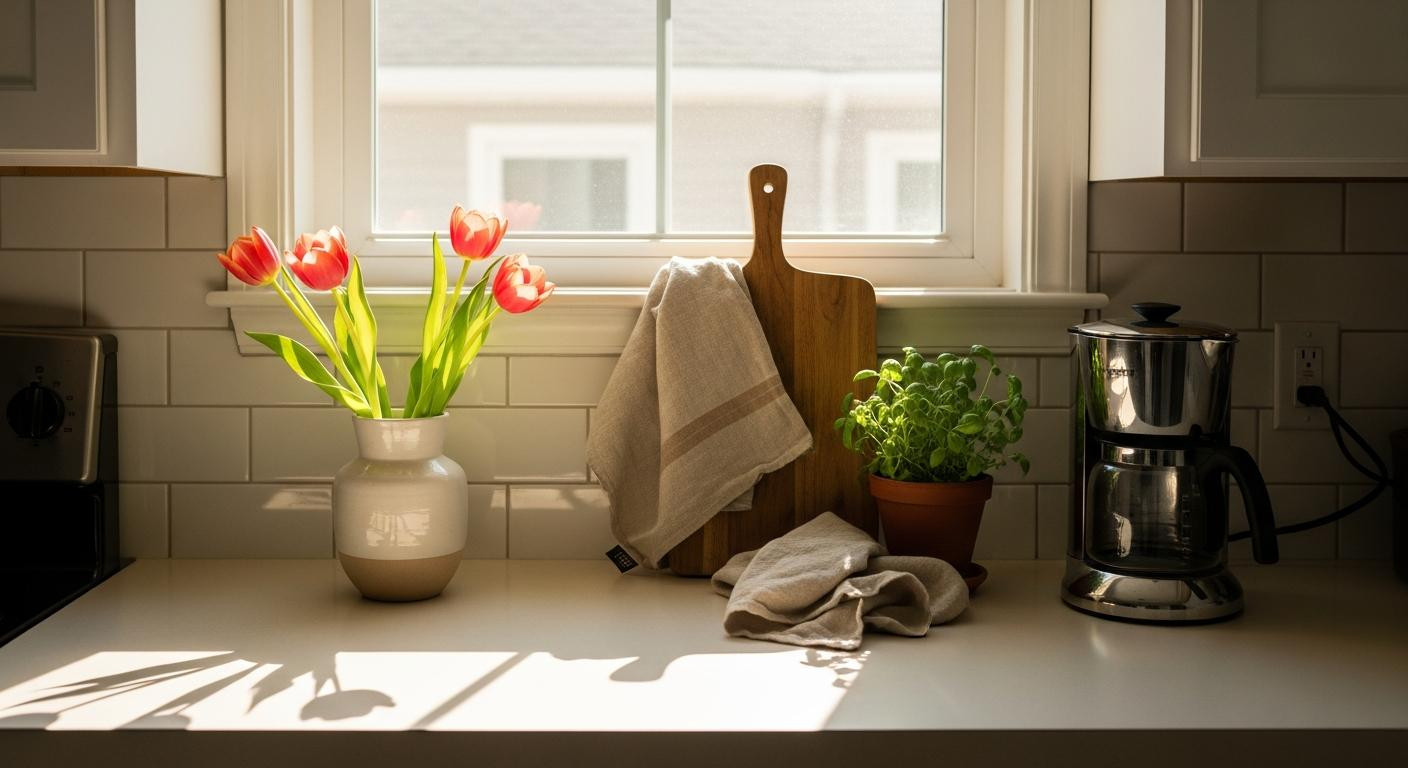
A kitchen counter holding four items, coffee maker, knife block, soap, plant, reads as intentional luxury. The same counter with 18 items reads as chaos even if everything’s technically organized. Interior photographers featured in Architectural Digest confirm that staged empties boost visual appeal in ways bins never will.
Decluttering furniture that fights your space works the same way. That armchair blocking the window doesn’t need a throw pillow. It needs Marketplace.
What empty space actually does to your brain
Your chest feels wider when you walk into a decluttered room. That’s not metaphor. It’s physiology responding to reduced decision fatigue and lowered anxiety triggers.
One TikTok transformation video showing a renter’s 400 square foot studio gained 3.2 million views in April. The creator shed 50 items for what she called a cozy modern vibe that photographs like luxury. Comments flooded in: “Empty counters equal breathing room.”
Professional organizers note that empty shelves changed my renter life because visual clutter creates mental noise you don’t even notice until it’s gone. The room doesn’t just look bigger. Your sleep quality improves when surfaces stop screaming for attention.
And that’s worth more than any organizing system from Target.
Your questions about decluttering first answered
What if I need those items later?
Data shows renters re-purchase fewer than 3% of discarded items. If you haven’t used something in eight months, you won’t miss it. The waffle iron used quarterly belongs in a cabinet, not on the counter taking up 12 inches of daily workspace.
Seasonal decor gets a pass, but only after the main declutter. Store it in labeled bins once you’ve earned the right to own containers.
How do I decide what stays on counters?
Kitchen designers use a four-item rule: daily-use only. And here’s the visual decluttering trick that killed anxiety for 2.1 million TikTok users. Peel labels from bottles to eliminate visual noise killing your calm.
Uniform bottles reduce stress even if item count stays the same. One ceramic vase beats seven mismatched containers every time.
Does this work if I have kids?
Start with adult spaces first. Model the behavior in your bedroom and kitchen. Kids’ clutter expands to fill available surface area, so show them the calm result before involving them in four-box sorting.
Once they see your transformation, the method makes sense. But trying to declutter their rooms while yours stays chaotic won’t stick.
Your kitchen counter on Saturday morning when sunlight hits the empty 12 inches next to the stove where the expired spice rack used to live. One ceramic vase from IKEA holds three tulips from the farmers market. The coffee maker sits alone, gleaming. You can breathe through your nose while the eggs sizzle, and when you finish cooking, you realize you haven’t thought about the support wire trick for string lights on the patio because indoor calm makes outdoor living actually appealing again.