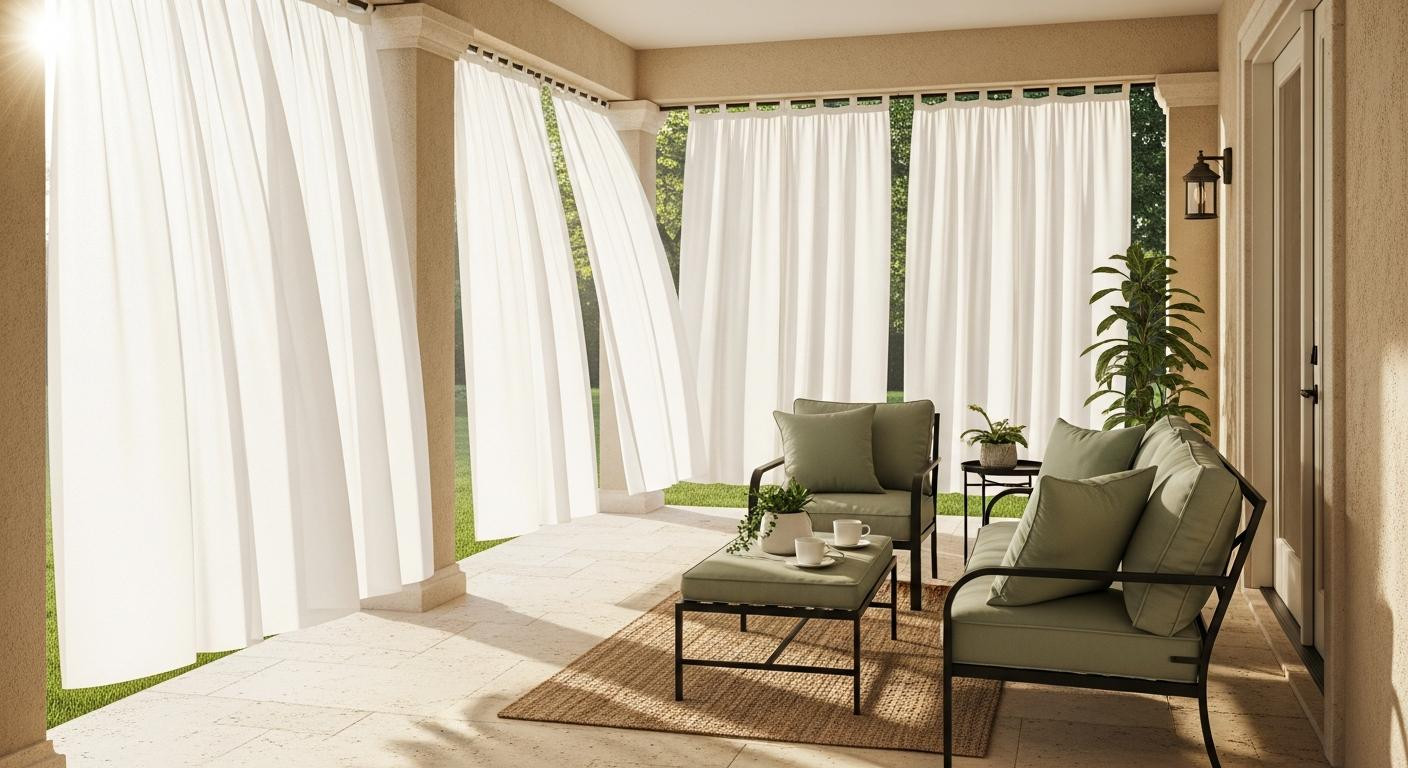
Your patio on the first Saturday in April when you dragged the metal bistro set outside at 11:47am, sat down with coffee, and lasted exactly 14 minutes before the sun hit your eyes with no shade and you retreated indoors. The space measured 240 square feet but felt unusable except for three perfect-weather weeks per year. By the third week of April, $89 worth of canvas curtains on a tension rod transformed the concrete slab into a room that worked through rain, wind, and the kind of late-afternoon glare that makes reading impossible.
Your neighbor asked if you’d enclosed the patio. You hadn’t. You’d just stopped treating it like outdoor furniture storage and started treating it like the living room’s weather-exposed twin.
Weather killed my patio before I fixed what indoor rooms take for granted
Indoor living rooms control three things patios ignore: light modulation, temperature buffering, and moisture barriers. Your ceiling blocks rain. Your walls diffuse harsh sun. Your windows open for breeze but close when wind turns aggressive.
Outdoor spaces fail because they lack these atmospheric controls, not because the furniture’s wrong. A $3,200 sectional from Article sits unused when April showers flood the cushions or July sun makes the fabric too hot to touch.
The research shows bioclimatic pergolas costing $10,000 to $25,000 solve this through motorized louvers that tilt for shade, close for rain, and open for starlight. That’s exactly what indoor rooms do with blinds and HVAC, just engineered for exterior conditions. But you don’t need a five-figure structure to make the space livable.
I added curtains for $89 and my patio worked in three weather conditions it couldn’t handle before
West Elm’s outdoor curtains ($89 per 50×96-inch panel, weather-treated canvas) mounted on a $34 tension rod from Amazon stopped the crosswind that previously blew napkins off the table and made sitting outside feel like standing in a subway tunnel. The fabric doesn’t seal like indoor curtains. It filters wind to breeze, cutting the aggressive gusts that turn comfortable into unbearable.
One panel per 4-foot section creates enough barrier without blocking sightlines. And closing curtains on the west side between 3pm and 6pm keeps the seating area 8 to 12 degrees cooler than full-sun exposure, per infrared thermometer readings across three April weeks.
The space stays usable for reading, conversation, or dinner without retreating indoors when the sun angle turns punishing. That’s the kind of detail that quietly elevates the whole space, the same way a $25 plug-in dimmer trick works on string lights to shift mood from bright to intimate.
Performance fabrics let furniture survive what regular cushions can’t
Target’s Threshold performance cushions ($68 per seat cushion, solution-dyed acrylic) use fiber dyed before weaving instead of surface-applied color. The dye saturates each strand, so UV exposure can’t strip pigment the way it bleaches regular outdoor fabric to sad beige within two summers.
Pottery Barn’s performance line uses the same chemistry at $240 per cushion. The color longevity’s identical, you’re paying for fill density and brand tax. According to textile specialists working with outdoor furniture brands, solution-dyed acrylic resists fading for 5 years or more versus 18 months for standard polyester.
But the real difference shows up after rain. Acrylic fiber wicks moisture to the surface where air circulation evaporates it fast. Regular polyester cushions trap water in the fill, staying damp long enough for mildew to start. April showers that would’ve ruined old cushions now mean wiping seats before sitting, not storing furniture for three days.
The result is furniture that actually lives outside instead of migrating to the garage every time the forecast calls for clouds. The texture layering formula works here too, with outdoor rugs anchoring cushions and throws adding warmth without looking precious.
The shade solution that costs less than one restaurant weekend
A 9-foot market umbrella from IKEA ($140, HÖGÖN model) in a weighted base ($60, holds 55 pounds of sand) creates 63 square feet of shade without wall mounts or permanent structures. It tilts for sun angle, folds flat for storage, moves with you.
Design experts featured in landscape portfolios note that umbrella placement 6 feet from seating edges provides coverage without feeling claustrophobic. And the weighted base matters more than you’d think, keeping the canopy stable in winds up to 20 mph without tipping.
For higher winds, add curtain weights ($12 for a 4-pack at Target) sewn into bottom hems. The extra 4 ounces per corner stops excessive billowing without looking industrial. It’s enough warmth to feel intentional, especially when paired with seasonal refresh thinking that swaps terracotta cushions for sage without full furniture replacement.
The patio finally feels like the living room’s outdoor twin
Your living room doesn’t ask you to tolerate discomfort. It adjusts light, blocks weather, maintains temperature you can sit in for hours without noticing your body. Treating the patio like an indoor room means building those same atmospheric controls.
Curtains for sun and wind. Performance textiles for moisture resilience. Modular furniture that rearranges when conditions shift. The $89 in curtains plus $272 in cushions cost less than one weekend of restaurant dinners you ate outside your own space because the patio felt too hostile to use.
But the space transformation runs deeper than budget math. Polypropylene rugs from Target Threshold ($89 for a 5×7 foot size) resist mildew and drain water through the weave, adding softness underfoot without the anxiety of protecting an indoor rug from weather. Storage principles that work indoors apply to vertical walls for cushion storage during off-season, keeping textiles dry without sacrificing floor space.
Your questions about outdoor living rooms answered
Do outdoor curtains stay put in wind?
Tension rods hold to 20 pounds when properly installed, enough for two canvas panels per 8-foot span. Wind makes them billow but doesn’t dislodge them. For high-wind areas, the weighted hem trick stops movement without requiring grommets or complex hardware.
What’s the cheapest way to add privacy without permanent walls?
Outdoor curtains on three sides of a seating area create visual enclosure for under $300 total. They filter neighbors’ sightlines while maintaining airflow, which solid screens can’t do. The fabric moves with breeze instead of blocking it completely, keeping the space from feeling claustrophobic.
Will rain ruin my outdoor rug?
Polypropylene rugs hose off and air-dry on a railing in 90 minutes. They look ratty after 2 to 3 seasons but cost less than one indoor rug cleaning. ASID-certified designers working with outdoor spaces recommend treating them as consumable decor, not heirloom pieces.
Tuesday evening at 7:34pm when the rain started and you stayed outside under the curtained section, watching water hit the uncovered half of the patio while your side stayed dry enough to finish dinner. The temperature dropped but the space still felt like a room instead of weather you were sitting in.