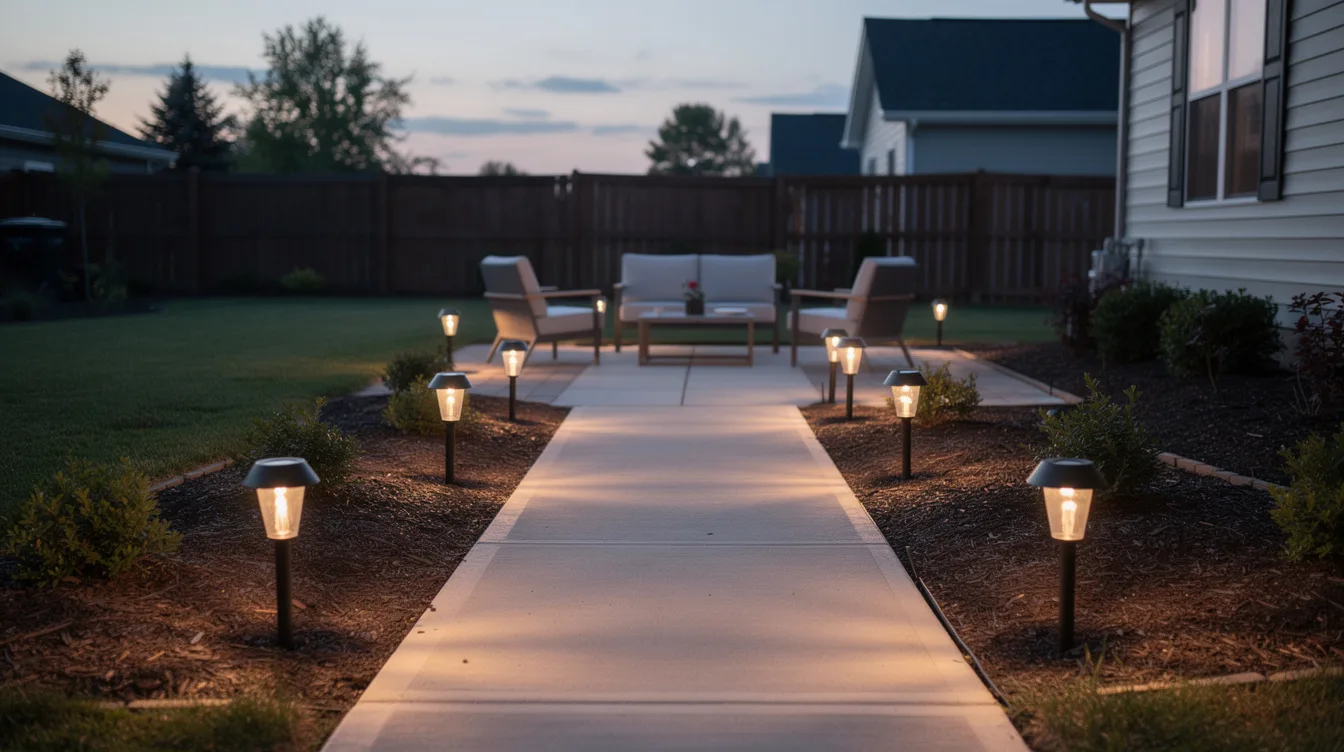
My rental yard had that frustrating in-between look: decent patio, tired grass, and a dark little path that disappeared the second the sun went down. I didn’t want to drill into anything, and I definitely didn’t want flimsy lights that made the place feel cheaper than it already was.
Solar path lights turned out to be the fix, but only after I stopped treating them like a bargain-bin afterthought. The resort vibe came from warm light, even spacing, and fixtures that looked good before they even switched on.
Pick one finish and stick to it
I learned fast that the resort look starts with restraint, not brightness. A yard lined with mixed finishes looks temporary, so I kept every fixture in black metal or warm bronze and skipped anything that looked chalky or toy-like.
The material matters more than people admit. Glass lenses and metal bodies read expensive at night, while all-plastic lights usually look flat by day, even before they turn on.
For a rental, I’d shop Home Depot or Lowe’s first and filter hard for metal-and-glass stake lights. That’s the easiest way to get the polished look without bringing in wires, anchors, or a landlord email thread.
Choose warm white over bright white every time
The first time I tested cooler lights, the yard looked more parking lot than hotel courtyard. Warm white solar lights give you a softer edge on mulch, gravel, and pavers, and they make outdoor furniture look better instead of washed out.
This is where cheap-looking setups usually go wrong. Too much icy light makes every plant look dusty, and it kills the relaxed mood you’re trying to build.
If you’re buying through Amazon, look for product language that clearly says warm white rather than daylight or cool white. I’d rather have a slightly dimmer warm glow than a brighter light that feels harsh the second the sun drops.
Use taller path lights where the yard needs shape
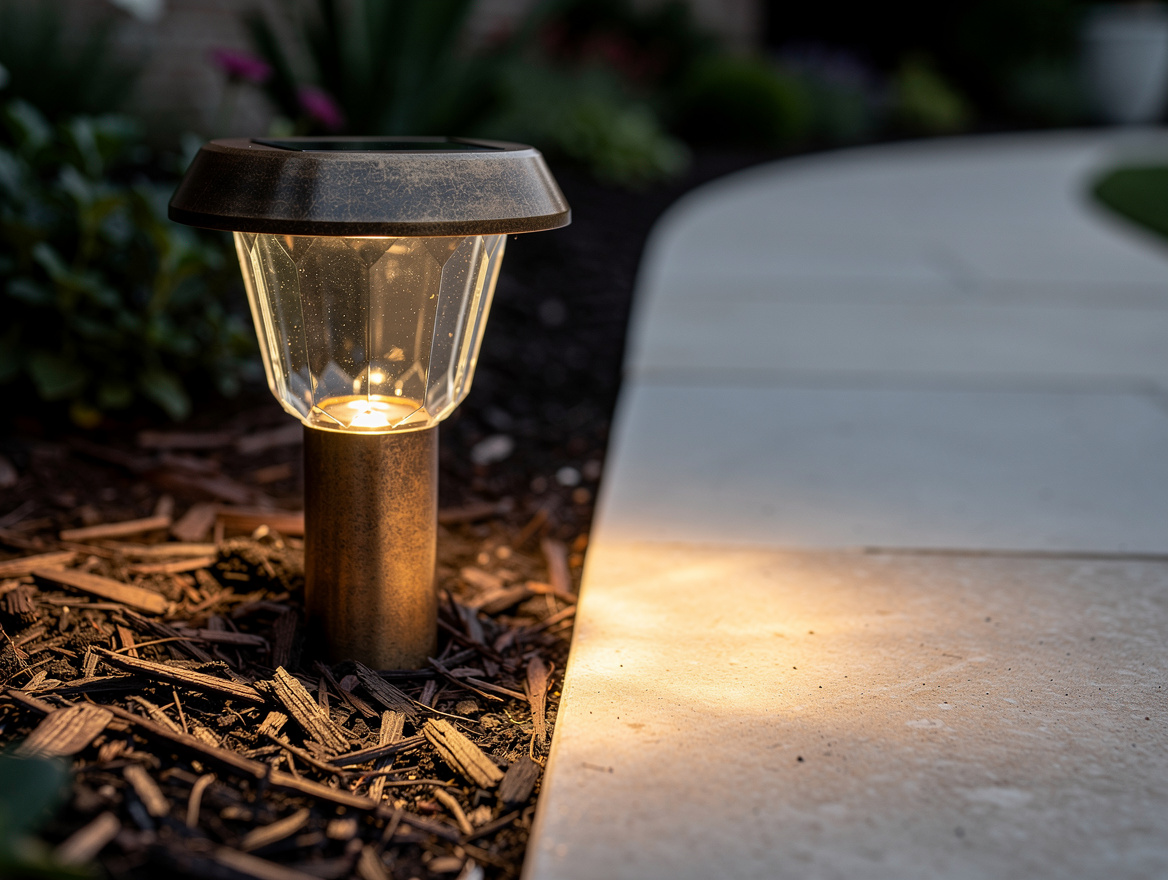
Standard stake lights are usually about 18.9 to 21.7 inches tall and around 5.1 to 5.5 inches wide, which is a useful typical range for walkways and borders. That height is tall enough to define a path, but still low-profile enough that it doesn’t feel like a commercial install.
I like a 21-inch path light near bends, gate openings, or the edge of a patio because it gives the yard structure after dark. Shorter fixtures disappear too easily unless your landscaping is already doing a lot of visual work.
For a more architectural line, some slim models run about 21.5 by 3 by 3 inches. A narrow modern fixture looks cleaner than the classic lantern shape, especially if your rental has concrete, gravel, or rectangular pavers.
Space them wider than you think
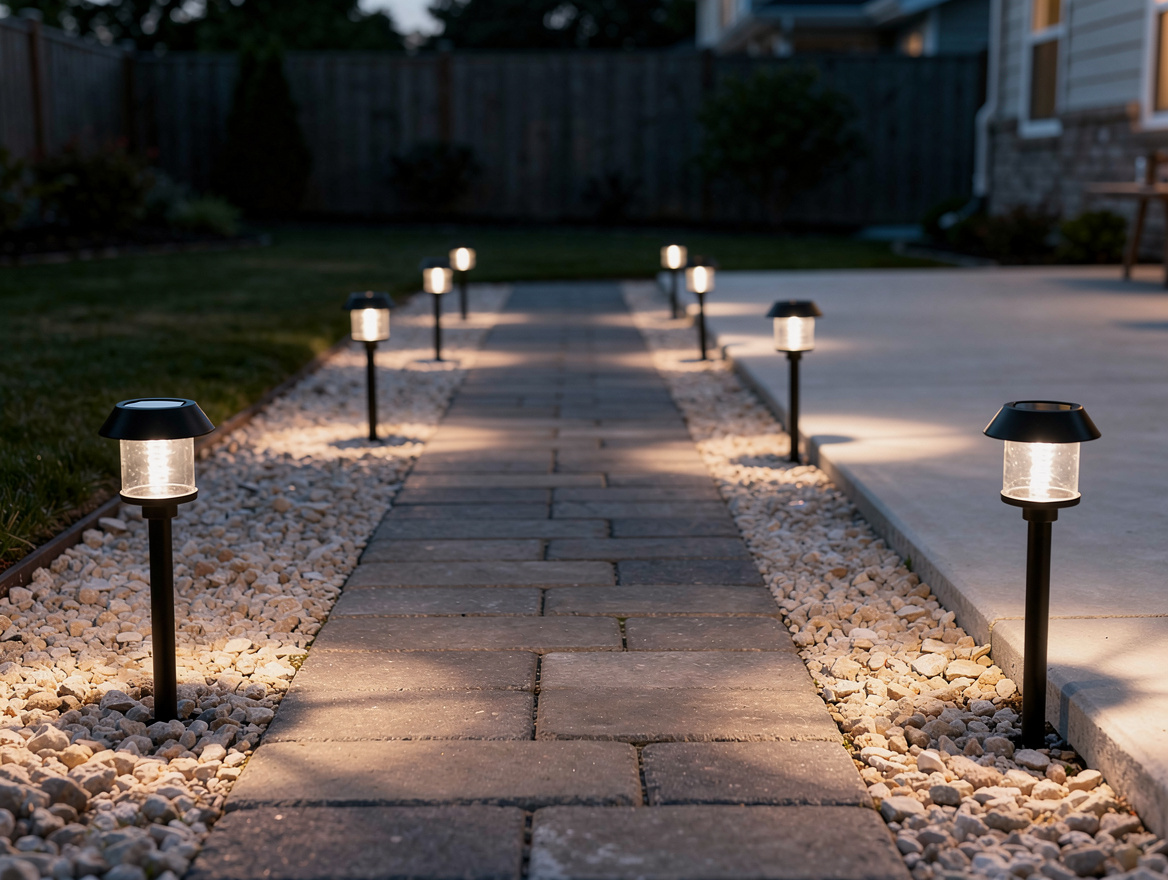
The fastest way to make solar lights look cheap is crowding them. A typical resort-style setup works better when lights sit about 6 to 8 feet apart, because the glow overlaps gently instead of turning the whole path into a runway.
I also stagger them when the yard allows it. A slightly offset line of stake lights feels more landscaped and relaxed than a rigid row that screams big-box starter kit.
This is the part where buying a few extra helps. Solar batteries fade unevenly over time, so having enough matching fixtures keeps the spacing balanced if one or two lights get weaker later.
Add one decorative style, then stop
If you want that subtle resort mood, one decorative detail goes a long way. A patterned cap or textured lens can cast a soft shape on the ground and make a plain border feel intentional.
I wouldn’t mix ornate lights with sleek modern ones. One decorative path-light style, repeated cleanly, looks designed, and that’s the whole goal.
This is also where mid-range pricing usually pays off. Budget packs under $30 can outline a path, but the more polished metal-and-glass sets I see at Lowe’s or Home Depot typically land in the roughly $30 to $80 range, and they almost always look better in daylight.
Use flush disk lights where posts feel too busy
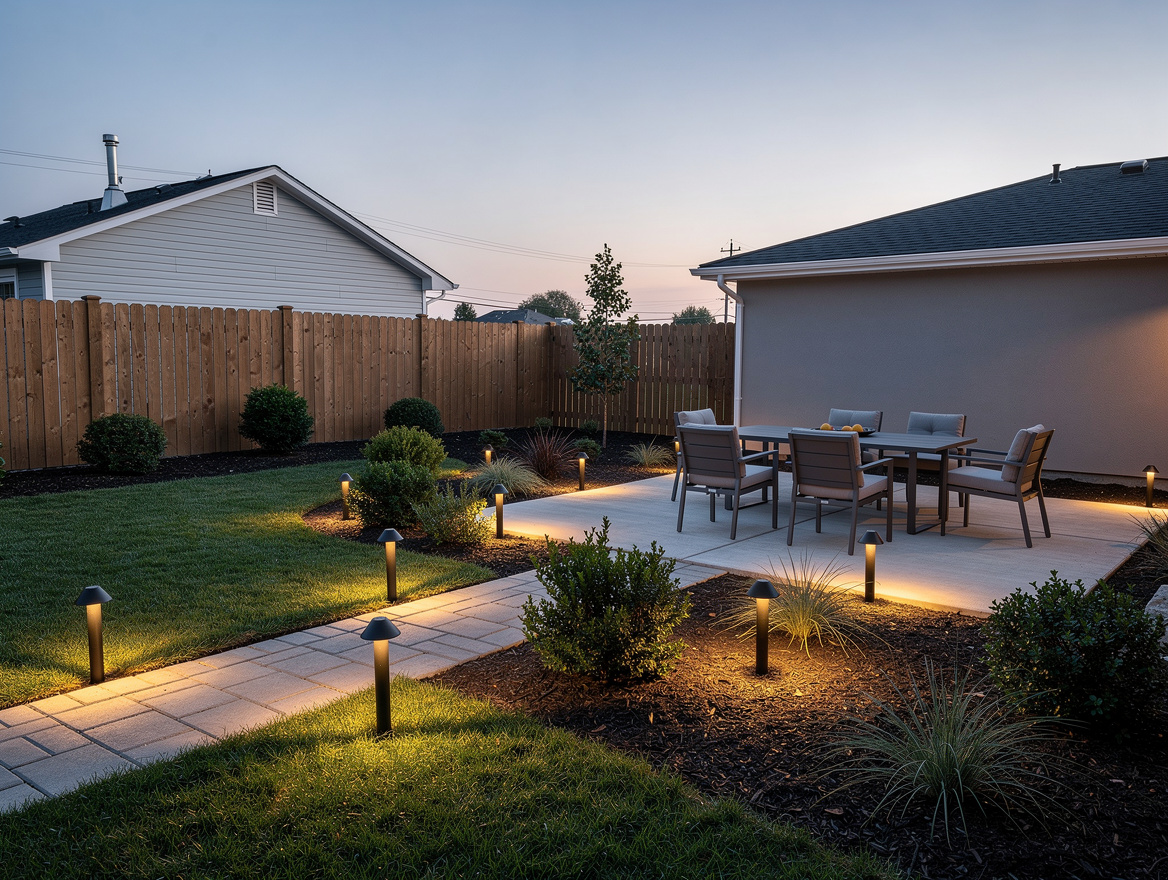
Not every rental yard wants upright fixtures. If your walkway is tight or your patio already has a lot going on, in-ground disk lights give you a cleaner line with no visible post clutter.
Typical disk styles are around 7.84 inches tall and 2.95 inches wide, which keeps them visually quiet. I like them along stepping stones, at the edge of gravel, or beside a narrow strip of grass where a full lantern top would feel fussy.
For a modern rental, this is my favorite no-screw option from Amazon or Walmart. The look is simpler, a little sharper, and much less likely to fight with whatever random patio furniture you already own.
Install them for removal later, not forever
The best part of a solar setup in a rental is that you can make the yard feel finished without acting like you own the place. I press each plastic stake into loosened soil by hand, keep the line shallow, and avoid forcing anything into hard ground where it can crack.
I never build the layout around one exact path. I place the first solar fixture at the entry point, the second near seating, then fill the gaps so the yard feels connected instead of over-planned.
That tool-free approach is the whole advantage here. No screws, no holes, no wiring, and no awkward patch job when it’s time to move out.
If you want the easiest shopping route, I’d break it into three lanes. Amazon is strongest for low-cost multi-packs, Home Depot and Lowe’s are better when you want a cleaner metal-and-glass finish, and Target or Walmart can work if you only need a small zone lit around a patio chair or short walkway.
Start with one 6- or 8-pack of warm-white metal-and-glass stake lights and test the spacing before you buy more. The layout does more work than the price tag, and in a rental yard, that’s exactly what you want.
Mia Carter writes about small-space living and budget home makeovers. She has restyled three rentals and tests most ideas in her own 45 sqm flat.