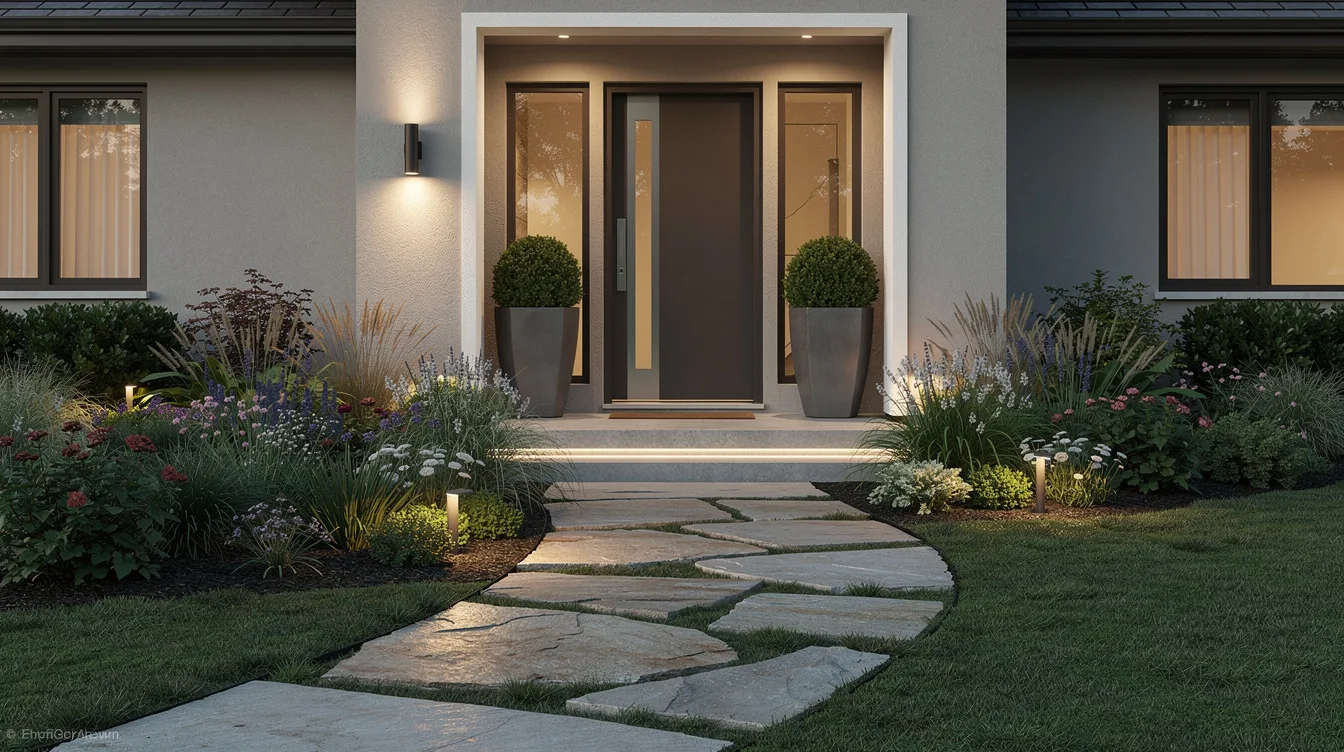
My front yard looked fine from the curb, but something felt off. Neighbors with newer landscaping seemed pulled together while my place read “stuck.” I finally realized the problems were subtle: the right elements, but wrong scale, materials, and colors that quietly dated the whole house.
These six fixes target the “secretly dated” mistakes I found in my own yard. Each one names real brands, typical 2026 costs, and the dimensions that actually matter. No vague advice.
Just what I would do again.
Shrink the Lawn Into Defined Zones
My front yard used to be a sea of thirsty grass with a skinny concrete strip cutting through. It screamed 1990s spec house and drained my water bill. In 2026, the oversized lawn is fading fast.
The fix is breaking it into smaller, purposeful pads.
Build a main walkway at least 4, 5 feet wide using concrete pavers from Belgard or Techo-Bloc. Add 2, 3 planting beds at least 4, 6 feet deep, plus a small gravel or paver seating pad near your entry. Keep lawn only where you actually walk or play.
Typical installed cost for a new paver walkway runs $8, $15 per square foot. A full curb-appeal refresh with mulch, plants, and edging averages $1,500, $5,000.
Pull Overgrown Shrubs Away From Windows
Shrubs swallowing your windows and hugging the foundation are one of the clearest “old house” signals. They block light, hide architecture, and read as neglected even when trimmed. I ripped out a row of leggy yews and the whole facade opened up.
Rebuild deeper beds, minimum 4, 5 feet from the house. Layer heights: low groundcovers up front, mid shrubs at 2, 3 feet, and structural plants at corners. Keep mature height below window sills, typically under 4 feet in front of glass.
For compact replacements, try dwarf hydrangea ‘Little Lime’ or Ilex crenata ‘Sky Pencil’ from Lowe’s or Home Depot. Expect $1,000, $3,000 to remove old shrubs and replant a 30, 50 foot bed properly.
Ditch the Dyed Mulch for Natural Ground Cover
Bright red or jet-black mulch is the fastest way to make a 2026 yard look stuck in 2006. It fights your plants for attention and never looks like it belongs. I switched to shredded hardwood in natural brown and the difference was instant.
Source natural shredded hardwood or pine bark nuggets from Home Depot or Lowe’s, typically $3, $6 per bag for 2 cubic feet. For longer-term solutions, swap mulch for low groundcovers like creeping thyme or sedum from local nurseries. They fill space, suppress weeds, and cost roughly $5, $10 per plant.
A 100-square-foot bed planted with groundcovers runs about $300, $600 versus $50, $100 annually for fresh mulch.
Swap Plastic Edging for Steel or Stone
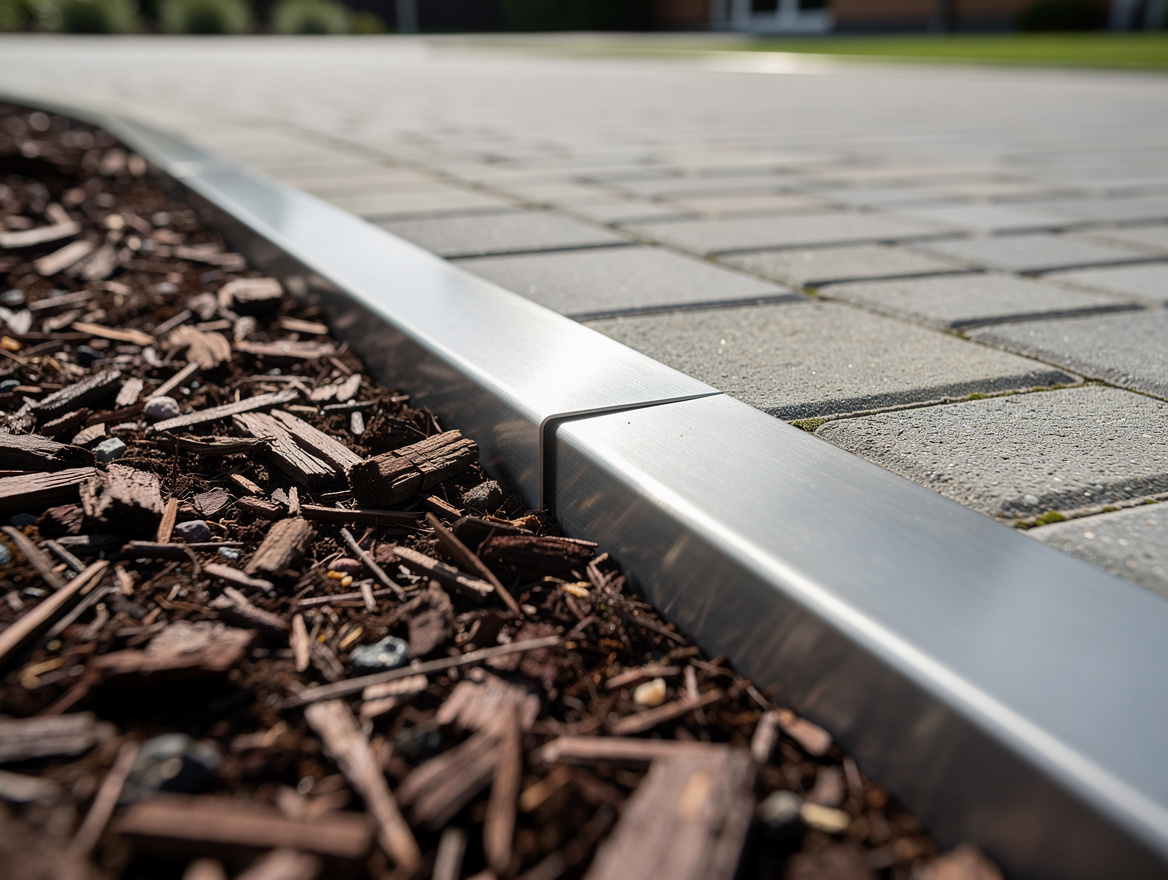
Flimsy black plastic edging curling up at the corners is a dead giveaway of cheap, dated landscaping. It cracks, shifts, and looks like a temporary fix that became permanent. I pulled mine out after three years of tripping over the exposed lip.
Replace it with steel landscape edging from Home Depot or Amazon, typically $15, $25 per 8-foot section for 4-inch height. For a softer look, use natural stone or concrete paver borders from Lowe’s. Steel installs with stakes and holds crisp lines for 15, 20 years.
A typical front yard needs 40, 60 linear feet, so budget $100, $200 for steel or $300, $600 for stone edging materials.
Scale Up Your Planters and Pots
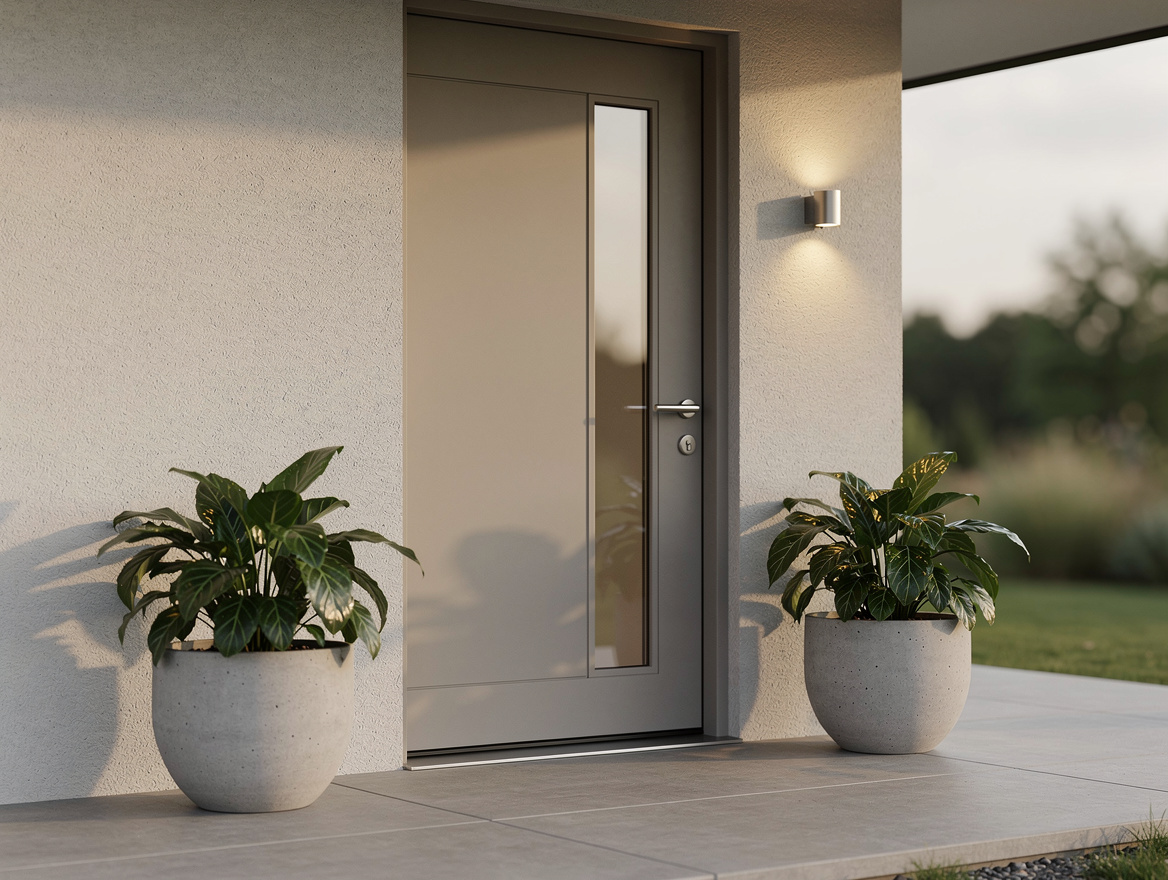
Tiny 8-inch pots flanking a wide front door look like afterthoughts, not design. They get lost visually and make your entry feel smaller, not grander. I learned this when my neighbor’s pair of 24-inch concrete planters made my matching setup look like dollhouse accessories.
For a standard 36-inch wide door, use planters at least 18, 24 inches in diameter and height. Source fiber-clay or concrete planters from Wayfair, IKEA, or Home Depot, typically $40, $120 each depending on size. Fill with a single dramatic plant like a tall grass or compact boxwood rather than crowded annuals.
Two properly scaled planters cost $80, $240 and do more for your entry than six small ones ever could.
Replace Harsh Builder Lighting With Warm LED
Builder-grade fixtures with cold blue-white LED or glaring flood spots make your house feel like a gas station at night. The light is harsh, the color is wrong, and the fixtures themselves are usually too small for the facade. I swapped mine and the house looked warmer from the street instantly.
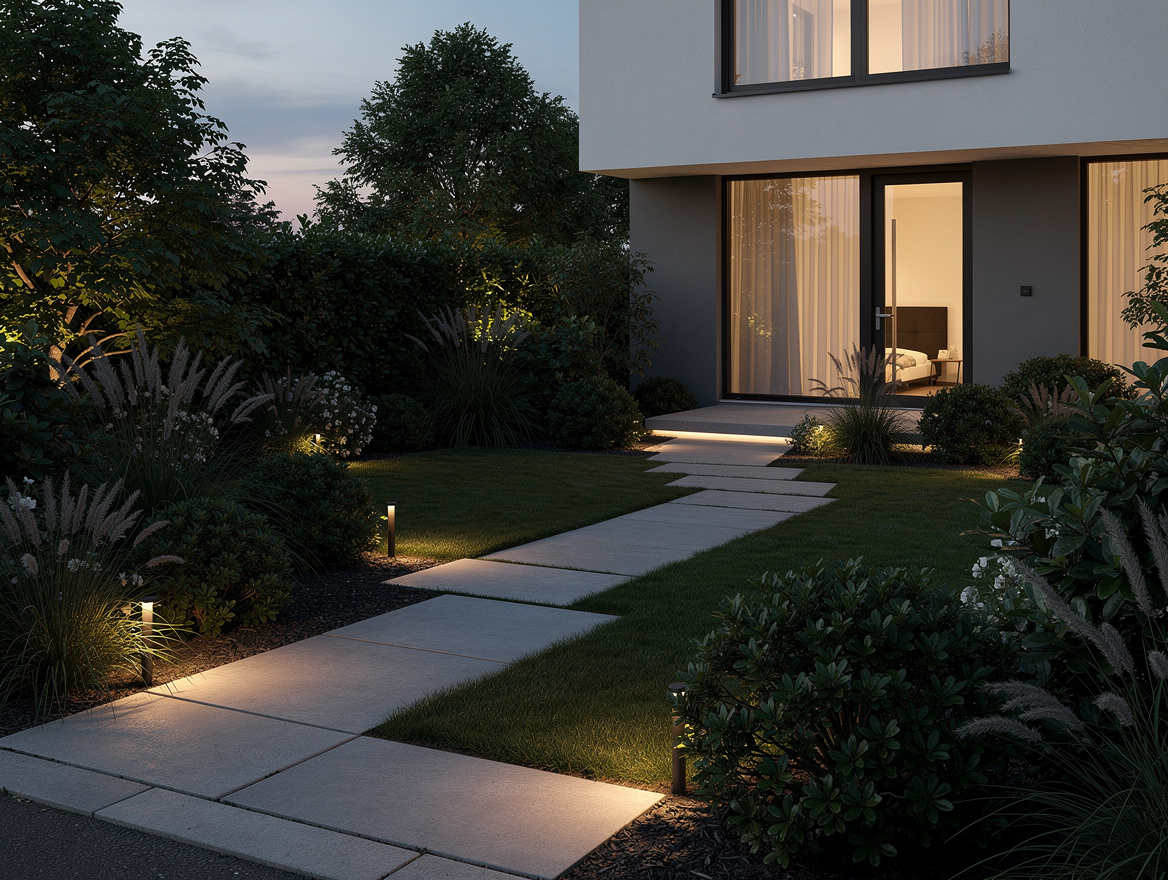
Choose warm LED fixtures at 2700K, 3000K from Home Depot, Lowe’s, or Amazon. Look for dark-sky compliant designs that cast light down, not out. A quality wall sconce runs $60, $150; a post lantern $80, $200.
For path lighting, low-voltage LED kits from Hampton Bay at Home Depot start around $200 for a 6-light set. Typical front yard lighting refresh: $400, $1,000 for fixtures plus $150, $300 if you hire an electrician for line-voltage swaps.
If I had to pick one place to start, I’d pull the overgrown foundation shrubs and rebuild those beds deeper. It changes your architecture overnight for less than a full hardscape overhaul. The lawn and lighting can follow.
Mia Carter writes about small-space living and budget home makeovers. She has restyled three rentals and tests most ideas in her own 45 sqm flat.