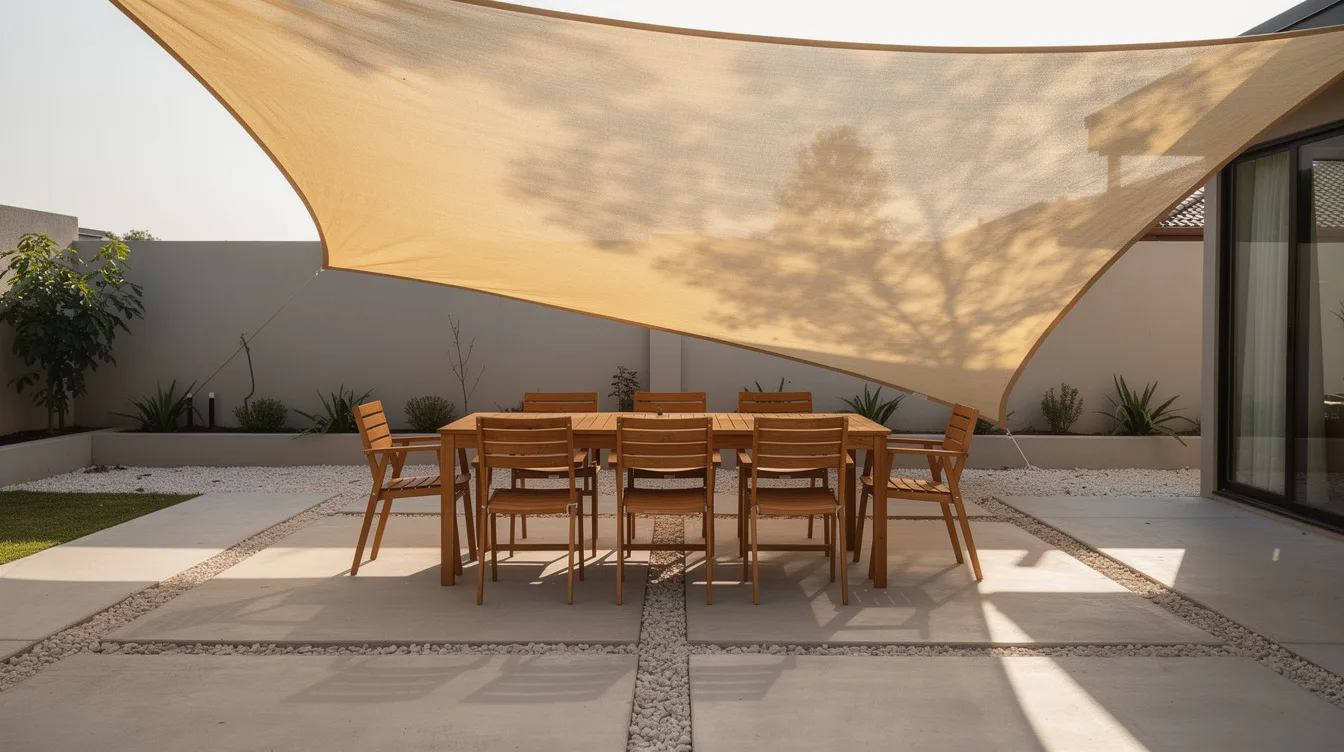
My backyard had shade. A proper sail, professionally mounted, stretched over the exact center of the lawn. Every July afternoon, I still sweated through my shirt by 5 PM.
The shade was real. The cooling was fiction. I’d built a beautiful roof over a heat trap, and the physics didn’t care how it looked on Instagram.
Most backyard shade fails the same way: it blocks photons but amplifies misery. Wrong placement, wrong materials, wrong angles. Below is what I rebuilt, piece by piece, with actual brands, tested dimensions, and 2026 price ranges that don’t require fantasy budgeting.
Shade the Spot Where You Actually Sit, Not the Prettiest Corner
My backyard looked shaded. The sail stretched over a decorative gravel bed near the fence. Problem was, I sat at the table fifteen feet away, still roasting at 5 PM while the hostas enjoyed their cool patch.
Most shade failures start here. Shade the perimeter, miss the seating zone. The fix is dirt cheap: a $29 Coolaroo 10×13 ft HDPE shade sail from Amazon or Home Depot, clipped to temporary poles directly over your chairs.
If 6 PM suddenly feels usable, that’s where your permanent structure goes.
Average 3×4 m sails run $40, $120 depending on GSM weight and hardware kit. Don’t mount to aesthetics. Mount to the 2 PM, 7 PM sun path.
Skip Solid Roofs That Turn Into Pizza Ovens
My neighbor’s covered patio looked magazine-worthy. Dark metal roof, flat pitch, walls on three sides. Standing under it in July felt like opening a preheated oven.
Zero airflow, trapped infrared radiating straight down.
Solid roofs fail when they’re designed as visual extensions instead of thermal systems. Dark shingles or black polycarbonate super-heat and re-radiate. Low pitch with no vent gap pools hot air.
Roof edge too close to the wall lets late-day sun sneak underneath and bake the seating area.
Better: light-colored reflective roofing in white or sand-tone steel. Build slope and a clear hot-air exit path. Raised back edge, vent slots, or an open-sided pergola frame with breathable fabric.
Projection needs to be deeper than intuition suggests, often 10, 13 ft to block 4 PM, 6 PM summer angles.
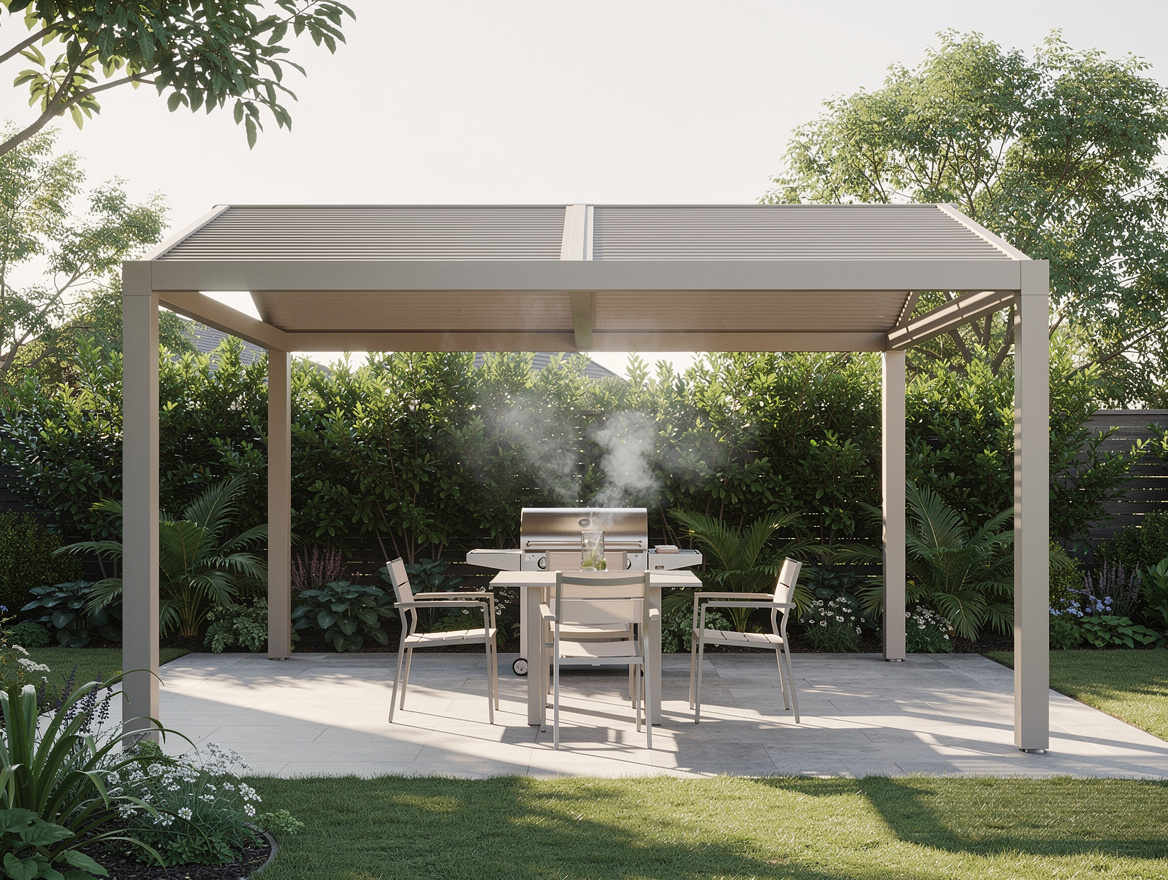
A 3×4 m Outsunny aluminum pergola with retractable fabric roof typically runs $500, $800 at Lowe’s or Wayfair. Higher-end louvered aluminum systems from brands like Palram-Canopia hit $1,500, $4,000 installed with motorization and drainage.
Break Up Heat-Sucking Hardscape Before You Shade It
Shade over concrete still leaves concrete. I learned this on a west-facing patio in Phoenix: the sail blocked direct sun, but the slab had stored four hours of heat and radiated it upward until 9 PM. My ankles baked.
The shade was technically correct, thermally useless.
Dark composite decking near walls is worse, bouncing radiant heat back toward seating. Pale stone or concrete with no soft breaks becomes a heat reservoir that outlasts the sun.
Fix: intersperse hardscape with ground cover, gravel, or permeable pavers that don’t store heat. A $45 IKEA RUNNEN deck tile in acacia over gravel runs cooler than concrete. Target and Walmart carry similar modular wood-composite tiles around $3, $5 per square foot.
Even a 2 ft gravel border between slab and seating zone interrupts the heat path.
Choose Fabric That Breathes Instead of Bakes
Not all shade cloth is equal. I once bought a heavy PVC-coated tarp, thinking denser meant cooler. It trapped humidity, dripped condensation, and turned the space into a steam room.
Wrong material, wrong physics.
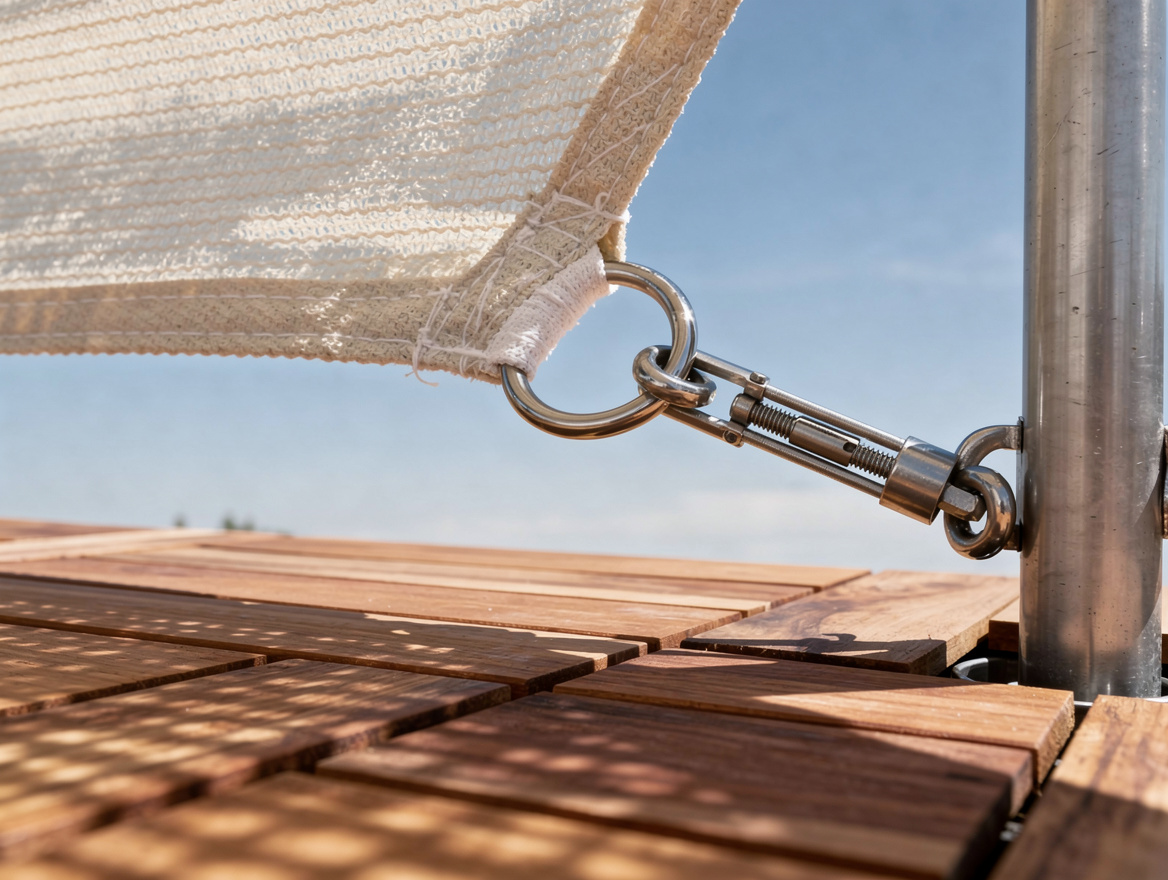
HDPE mesh with 90% UV block and actual airflow beats 100% block with zero breathability. Look for 185, 240 GSM weight from Coolaroo or SunnyGuard at Home Depot and Amazon. Typical 3×4 m runs $50, $90 with hardware.
Canvas and polyester canopies look substantial but hold moisture and heat. If you want solid coverage, pair it with elevation: a Wayfair 10×10 ft steel gazebo with vented double roof, around $250, $400, lets hot air escape through the gap between tiers. The vent is the feature, not the bug.
Angle Your Shade to Track the Sun, Not the Property Line
Square yards, square shade. I mounted my first sail parallel to the fence, which looked orderly and blocked 11 AM sun perfectly. By 4 PM, when I actually wanted to be outside, the angle had shifted and my chair was exposed.
Summer sun in most US latitudes sits west-northwest during usable evening hours. Shade mounted perpendicular to the property line often misses this entirely.
Test with a $35 Walmart Mainstays 9 ft tilt umbrella before committing to permanent mounts. Tilt function matters more than diameter. A 3×3 m sail mounted at 20, 30 degrees off square, tracking the 3 PM, 7 PM azimuth, covers more usable hours than a larger sail at wrong orientation.
Retractable awnings from AECOJOY or Outsunny at Amazon, typically $200, $700 for 10, 13 ft widths, solve this with adjustable projection. Manual crank is fine; motorization adds $300, $500 and another failure point.
Add Low-Angle Shade for Horizontal Heat
The final mistake: only shading from above. Late-day sun comes in horizontal, skimming under standard sails and awnings, heating legs and surfaces from the side. A 10 ft overhead sail does nothing against 6 PM western exposure at ankle height.
Fix: vertical or low-angle elements on the west side. A $89 IKEA NÄMMARÖ privacy screen in acacia, or equivalent lattice panels from Lowe’s and Home Depot, blocks lateral sun. Position 3, 4 ft from seating, not flush against it, to allow air circulation.
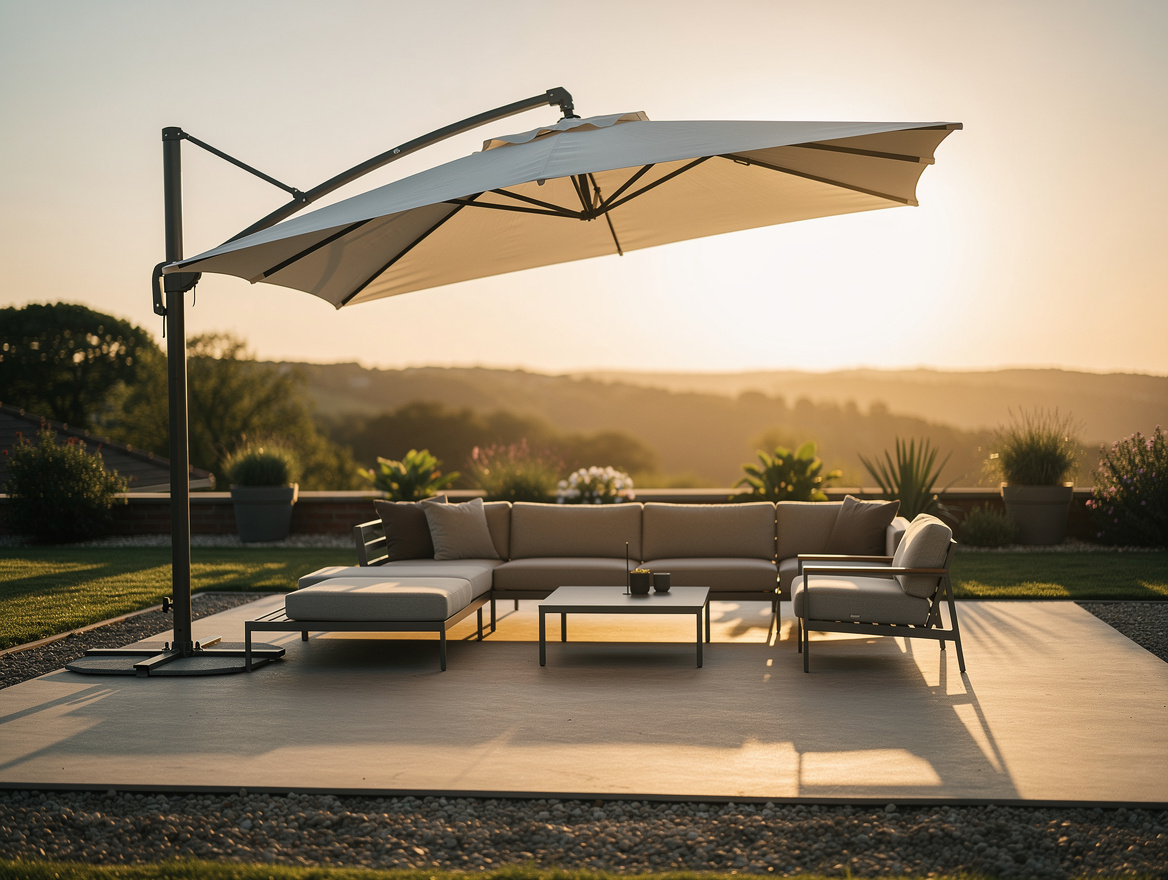
Portable option: a Costco Sunvilla 7.5 ft cantilever umbrella, typically $150, $200 in-season, angles to near-horizontal. Wayfair carries similar offset umbrellas from Arlmont & Co. around $180, $250. The cantilever base lets you position the canopy west of seating without a pole in your legroom.
If I had to pick one move, I’d start with a temporary $29 HDPE sail directly over the seating zone at 5 PM. Test the angle, feel the difference, then build permanent. Everything else is refinement.
Shade that doesn’t work at the hour you actually sit outside is just expensive decoration.
Mia Carter writes about small-space living and budget home makeovers. She has restyled three rentals and tests most ideas in her own 45 sqm flat.