
Hidden mini bar ideas for small spaces and apartments worked for me because they gave my living room a real job without eating the whole wall. I was trying to hide bottles, protect my lease, and keep a 35 to 40 in sofa depth clear enough to walk past without hip-checking a table. It felt impossible. Then I stopped thinking “cart” and started thinking “cabinet,” and the whole room exhaled.
- ✓ Clear one living room shelf for bottles
- ✓ Slide a mirror tray inside the cabinet
- ✓ Hide glassware behind woven console doors
Why does a hidden bar beat a cart in a small apartment?
Because a cart asks the room for permanent attention, and a cabinet asks for it only when you do. In a 320 sq ft living room, that difference is everything.
A bar cart sits in the middle of the floor and pretends it’s a sculpture. A cabinet sits against the wall and pretends it’s furniture, until 7pm when you open it and pour. The cabinet wins because your eye stops tracking it by Tuesday.
Mine did, and so did every guest who’s come over since. The math is brutal: a 24 in cart with three shelves takes the same visual weight as a 60 in sofa. A 36 in cabinet with the same bottles? Reads as a sideboard, full stop.
I’d skip the cart if you rent. Carts rattle, slide, and dent baseboards.
Cabinets just stand there. If you’re designing the whole zone from scratch, our budget living room refresh guide covers the same edit-first logic.
Here’s what it looked like before
Before I pulled this together, my living room had the full small-rental shuffle: one overworked media console, bottles drifting from shelf to shelf, and glasses that never seemed to live where I needed them. The room was not ugly.
It was just restless. Every time friends came over, I had to clear a side table, carry over ice, and pretend the random lineup of tonic, rye, and mismatched coupes was temporary.
I think that’s why the room felt smaller than it was. Your eye kept catching little interruptions instead of one calm zone. The walls were painted Benjamin Moore Revere Pewter HC-172, the sofa sat on an 8×10 wool rug with the front legs anchored correctly, and the basics were fine, but the bar stuff made the whole corner feel unfinished.
I didn’t need a renovation. I needed one hiding place, one serving surface, and a setup I could close in ten seconds when I wanted the room back.
I’m not a minimalist, I’m just a welcoming minimalist, which is a different thing.
What does a small apartment bar actually need to work?
Three things and only three things: one cleared shelf, one serving tray, and one drawer that closes. Everything else is decoration, and decoration is what kills small setups.
If you nail the three and resist the rest, you’re 80% of the way there. The remaining 20% is light, which I’ll get to. I think of it like a CB2 Cumberland bar cabinet in miniature: the bar isn’t a feature, it’s a function the cabinet already performs.
You’ll know your setup is broken when you spend more time moving bottles around than pouring drinks. That’s the test.
Mine failed it for a year. Yours probably does right now.
The fix isn’t prettier bottles. It’s fewer visible objects, and one quiet zone that owns them.
- Clear one living room shelf for bottles
- Slide a mirror tray inside the cabinet
- Hide glassware behind woven console doors
- Tuck the opener in a ceramic bowl
- Line the drawer with cocktail napkins
- Add a battery sconce under the shelf
- Decant spirits into matching square bottles
- Park a tiny fridge behind cane panels
- Hang art over the drop-down door
- Style books in front of the glasses
- Close the doors before guests arrive
- Pair the cabinet with a CB2 Primitivo side stool
- Swap puck lights for a West Elm rechargeable sconce
- Hide one bottle inside a Faux Bois book spine
- Lean a stoneware tray against the cabinet
- Frame the setup with a jute rug instead of a runner
- Edit the room around it before you buy anything
1Clear one living room shelf for bottles
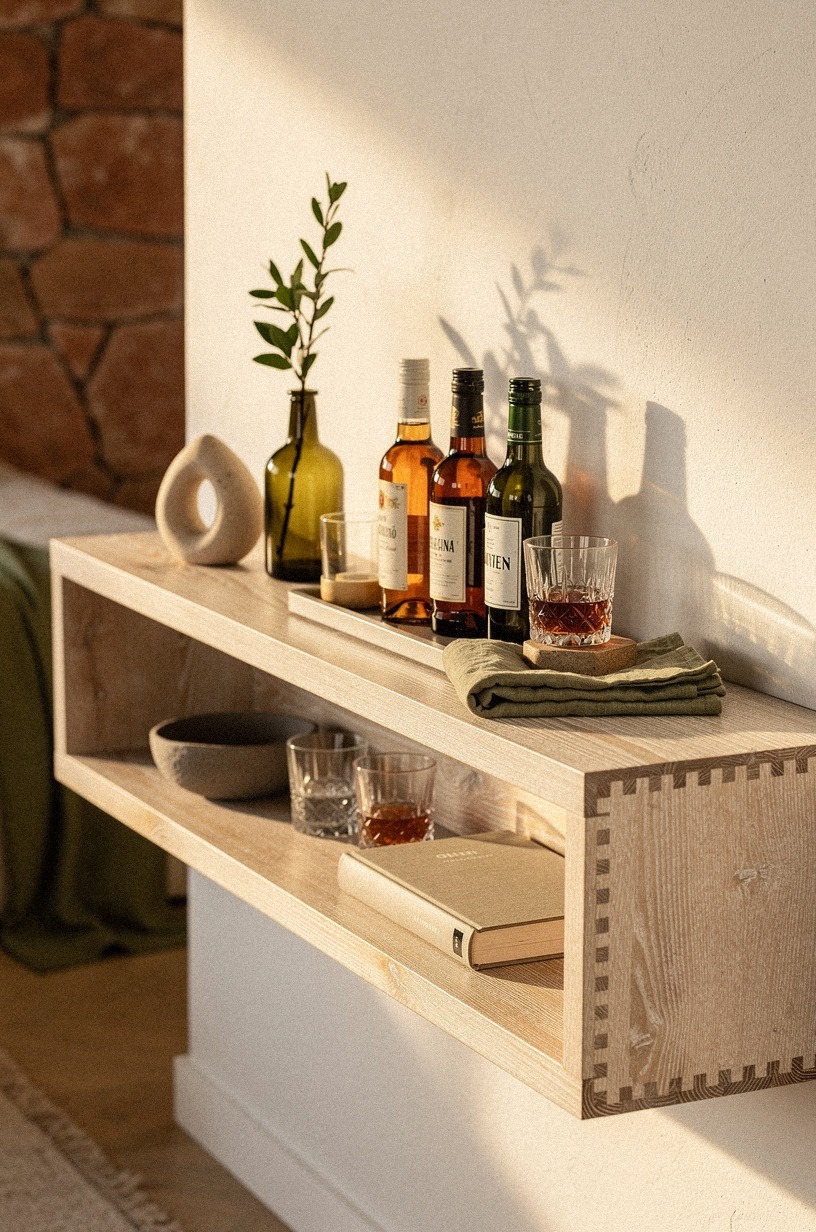
I started with the easiest hidden mini bar move in my small apartment bar ideas file: I cleared one shelf and gave it a single purpose. Not books plus candles plus mail plus bottles.
Just the bar. The shelf was cerused white oak with an exposed dovetail at the front corner, so once I stopped crowding it, the material finally read as intentional instead of accidental storage. The open grain caught the late-afternoon light and made the whole corner feel alive again, almost soothing by accident.
You want the bottles centered, the glassware low, and the tray discreet. I used a shallow travertine-look tray and kept the tallest bottle toward the back so you could still see the joinery. But here’s the part that mattered most, I removed everything decorative that wasn’t useful.
If you love layered rooms, my favorite cue is still this piece on the 4 layer maximalist formula that creates winter glow in small spaces for 280, but a mini bar shelf needs editing first. Once you claim one shelf and stop negotiating with it, the whole living room calms down.
2Slide a mirror tray inside the cabinet
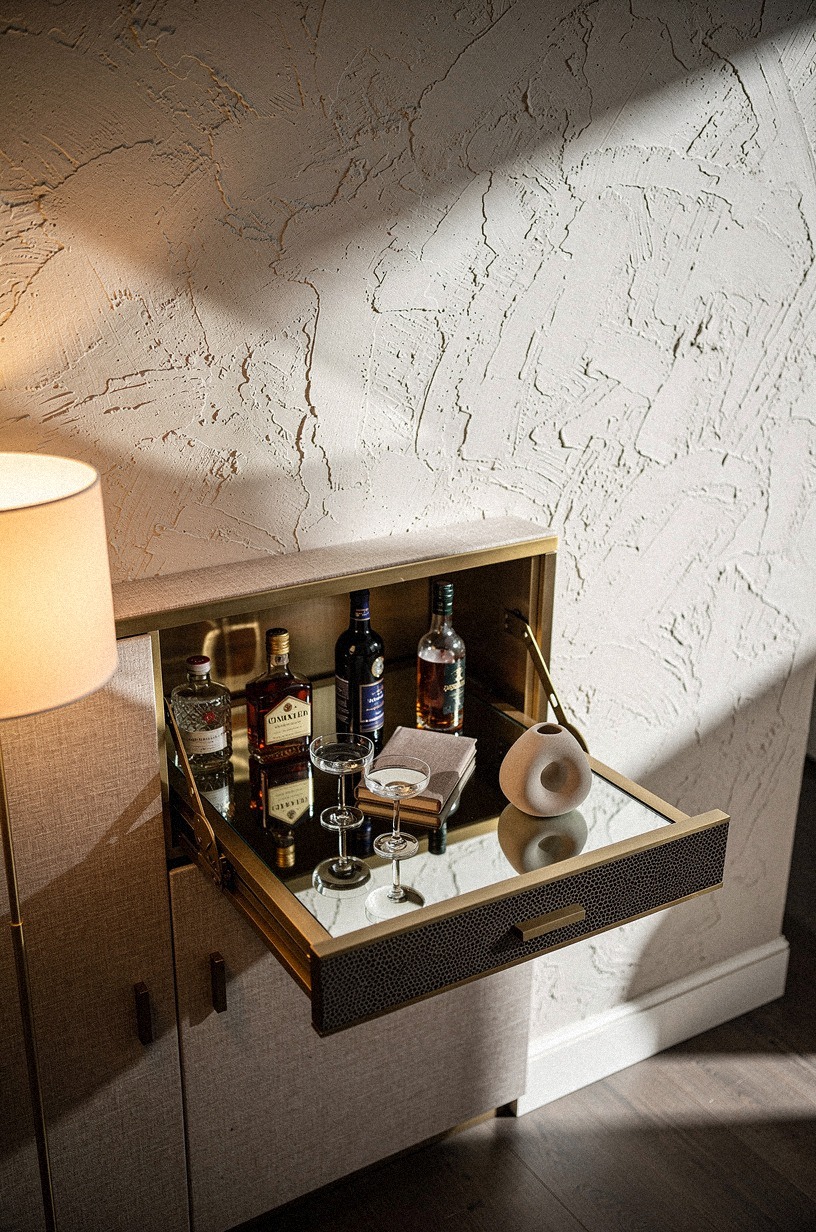
This was the moment my hidden mini bar started to feel grown up. And that little shift changed how the whole cabinet read. I found that if the tray lived all the way inside the cabinet, not half hanging out, I could keep the setup ready without seeing it all day.
Mine was a mirror tray with a slim aged-brass edge, and sliding it inside made the bottles catch light without shouting for attention. The polished surface doubles the warmth of the cabinet, which makes a small nook feel surprisingly welcoming at 7pm.
You do not need a deep cabinet for this. You need enough clearance for a couple of bottles, two coupe glasses, and your hand to reach in comfortably.
I lined the inside with clay linen so the glass wouldn’t tick against wood every time I grabbed something, and that soft lining made the whole thing quieter. If your apartment already leans warm and matte, you’ll probably like the visual payoff in matte surfaces make small apartments feel 40 bigger than glossy ones. I tried a shiny acrylic tray first.
Wrong move. The mirror worked because it disappeared until the cabinet opened.
3Hide glassware behind woven console doors
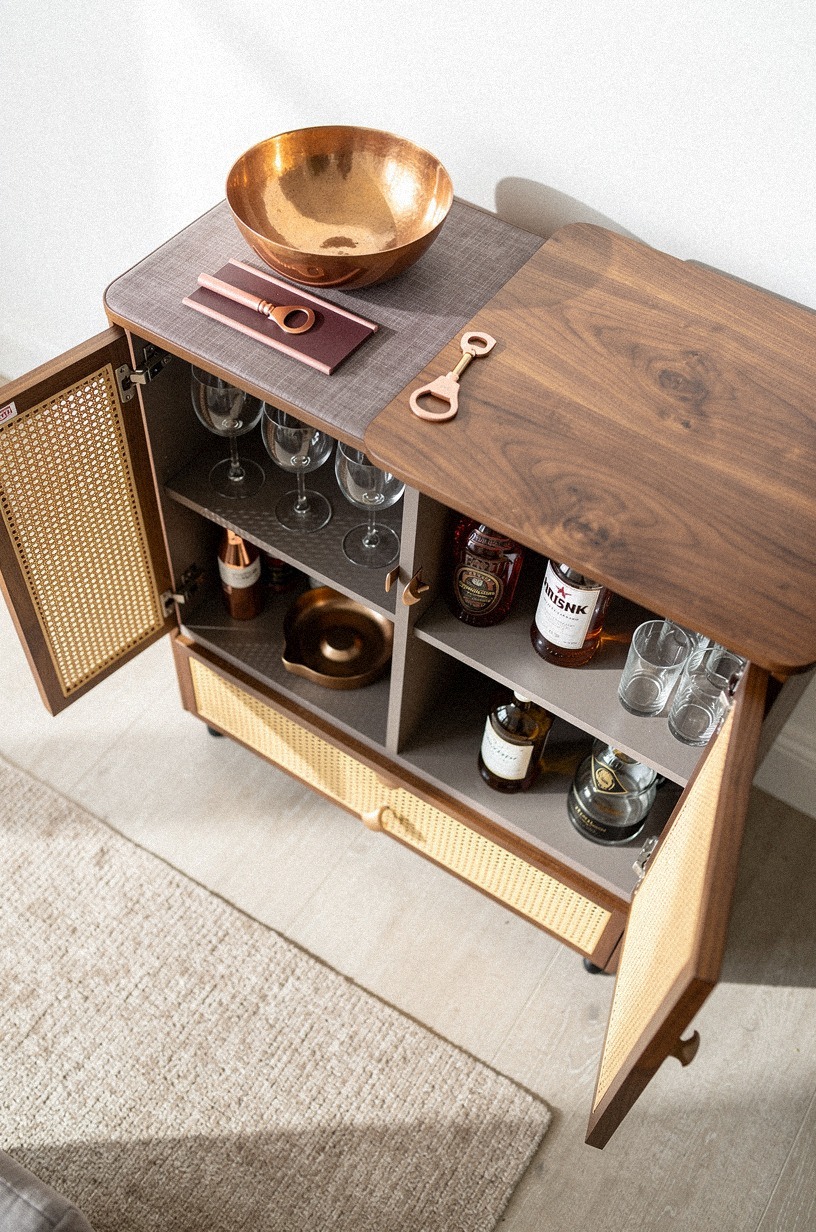
Woven doors were my fix for the part of minibar ideas that usually goes wrong in a living room: clear glass telegraphs clutter fast.
4Tuck the opener in a ceramic bowl
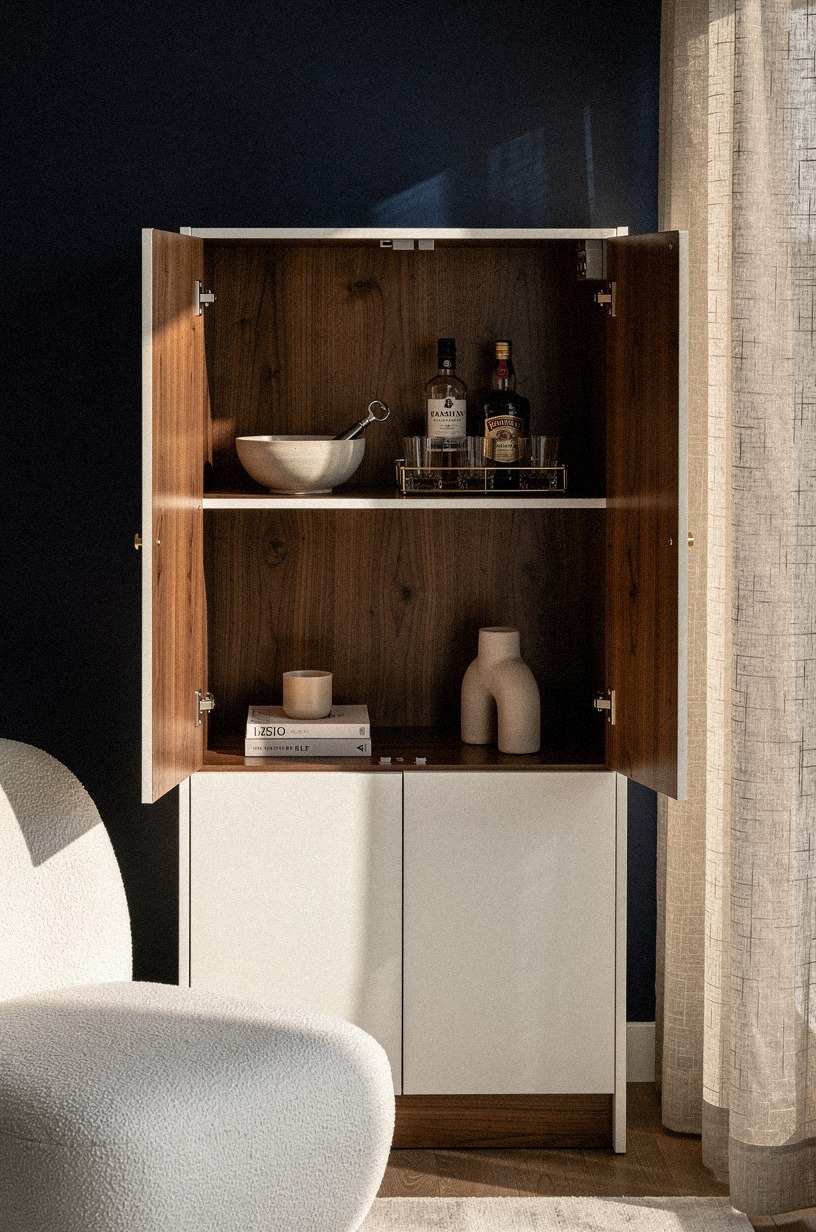
I do not expect this tiny move to matter so much, but it did. The opener used to float from drawer to tray to coffee table, and every time I needed it, I had that stupid two-minute search that makes you feel less organized than you are.
So I gave it a home in a small ceramic bowl right beside the spirits. The bowl is East Fork pottery in eggshell, which gives the cabinet a hand-thrown softness that mass-market pieces never have.
You want the bowl to feel deliberate, not like a junk catcher. I used one in a chalky off-white finish next to a small tray holding a couple of bottles and low glasses, and the shape softened all the hard lines of the cabinet.
But the best part was behavioral: when a tool has a landing spot, you put it back. That’s it!
I used the same rule I liked in IKEA’s 4 motion sensor light makes small apartments feel calmer at night, give the object one obvious place and your body follows. If you’re building a hidden mini bar, do not waste your discipline on the opener. Give it a bowl and move on.
5Line the drawer with cocktail napkins
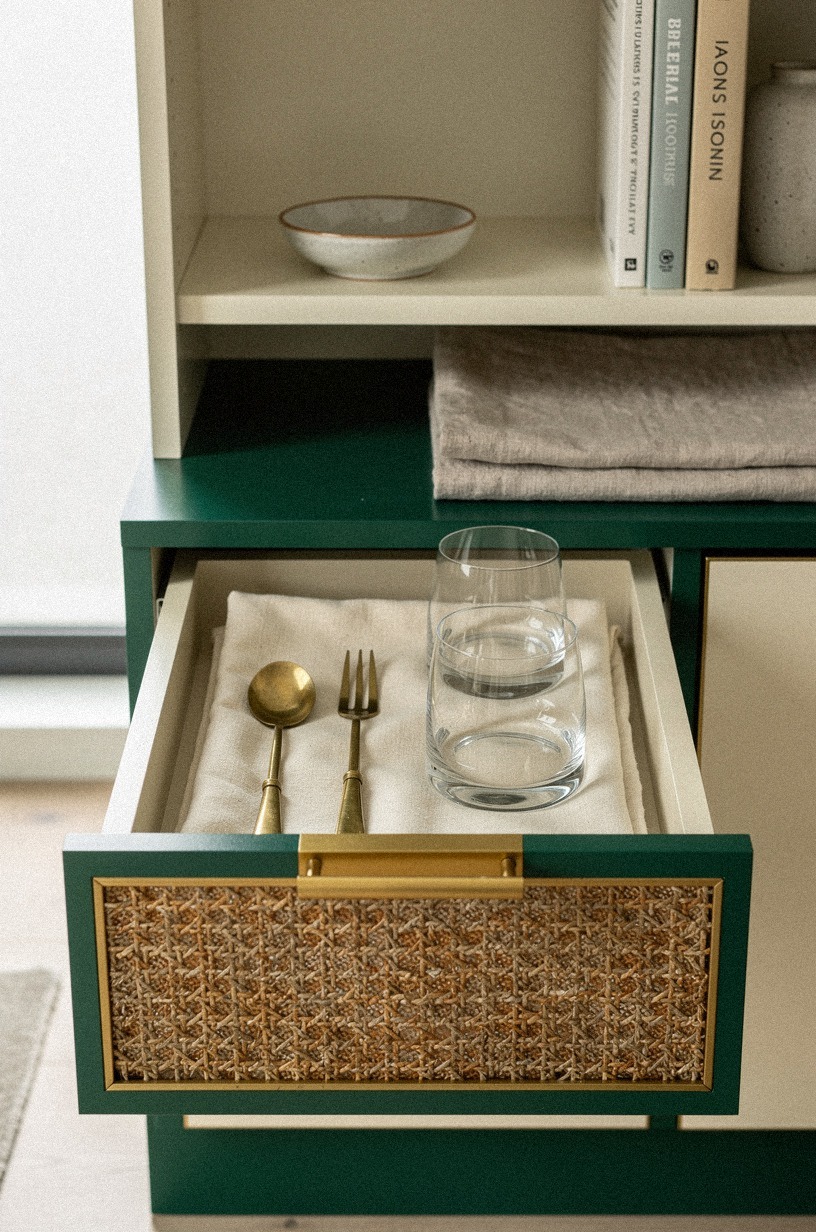
The drawer changed everything because it turned the bar from a shelf moment into a working setup. But only after I stopped treating the drawer like overflow storage! I lined mine with folded cocktail napkins, then tucked shallow brass tools beside low glassware so nothing rolled or clinked.
It looked neat, sure, but more important, it made the drawer feel finished enough that I wanted to keep it that way. The napkins are Moses Modern merino in cream, by the way, and the wool softens the wood the way a linen pillow softens a leather sofa.
You don’t need deep storage here. In fact, shallow is better. A small apartment bar drawer only works when you can see the full kit at a glance: napkins, opener, strainer, jigger, two low glasses. No digging.
No stacked chaos. I kept the palette calm with soft stone, brass, and clear glass so it didn’t feel like a novelty insert.
If you like apartment storage that disappears without going sterile, matte surfaces make small apartments feel 40 bigger than glossy ones nails the same idea. I tested a black felt liner first, and it looked heavy. Linen-colored paper with napkins on top was warmer and easier to live with.
6Add a battery sconce under the shelf
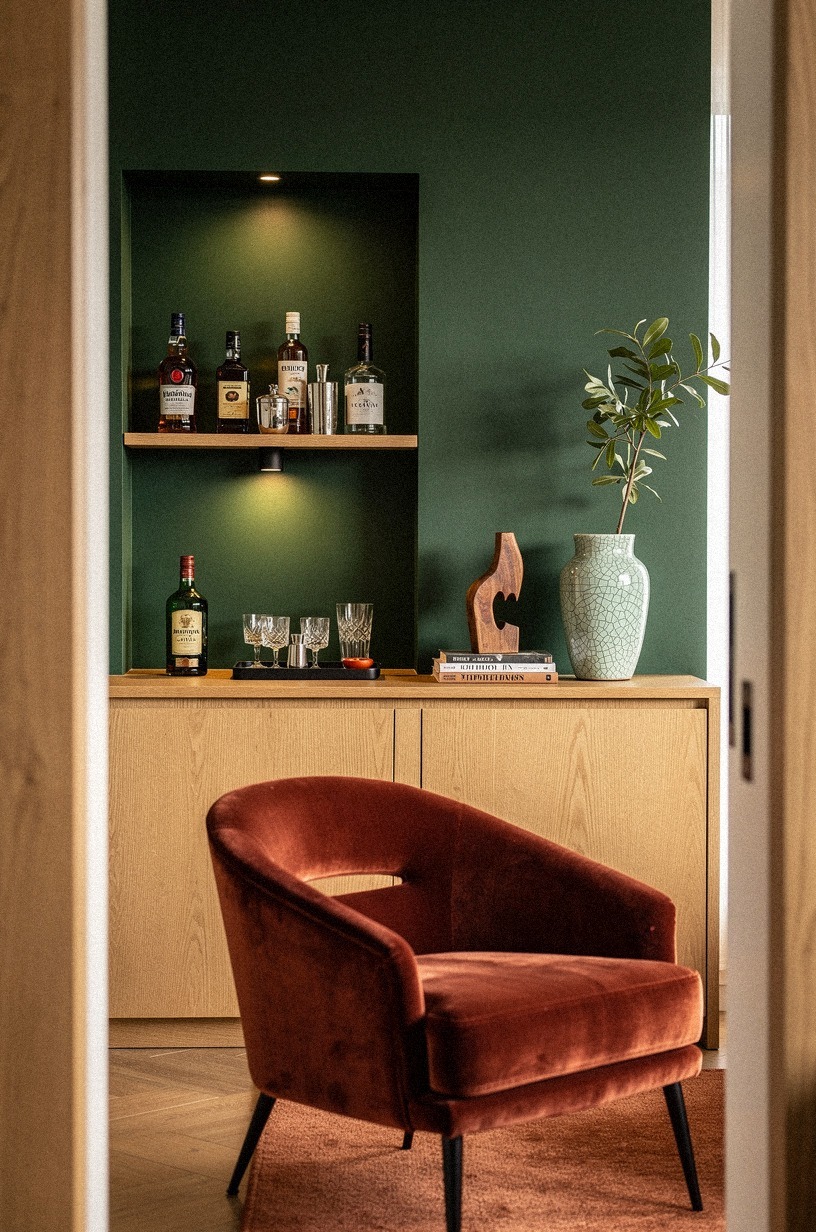
Light was the thing I resisted longest because I thought a mini bar needed overhead light or it wasn’t worth doing. Not true. The hidden mini bar finally clicked when I added one small battery sconce under the shelf so the bottles and glasses picked up a soft amber glow through the doorway.
You don’t need much brightness. You need one pool of light that tells your eye the zone is ready for evening.
Mine sat under the shelf above a compact tray, and from the hall you could see just enough glow to make the cabinet feel intentional, never theatrical. The room felt more welcoming the second I dimmed the overhead and let the sconce do the work. A 2700K warm-white LED bulb is the temperature to match, the same one we recommend for the rest of the room. But placement matters.
Too centered and it reads like a display niche. Off to one side and it feels lived in. I kept thinking about IKEA’s 4 motion sensor light makes small apartments feel calmer at night because the lesson is the same: quiet light changes behavior.
And yes, I skipped puck lights. They flatten everything.
7Decant spirits into matching square bottles
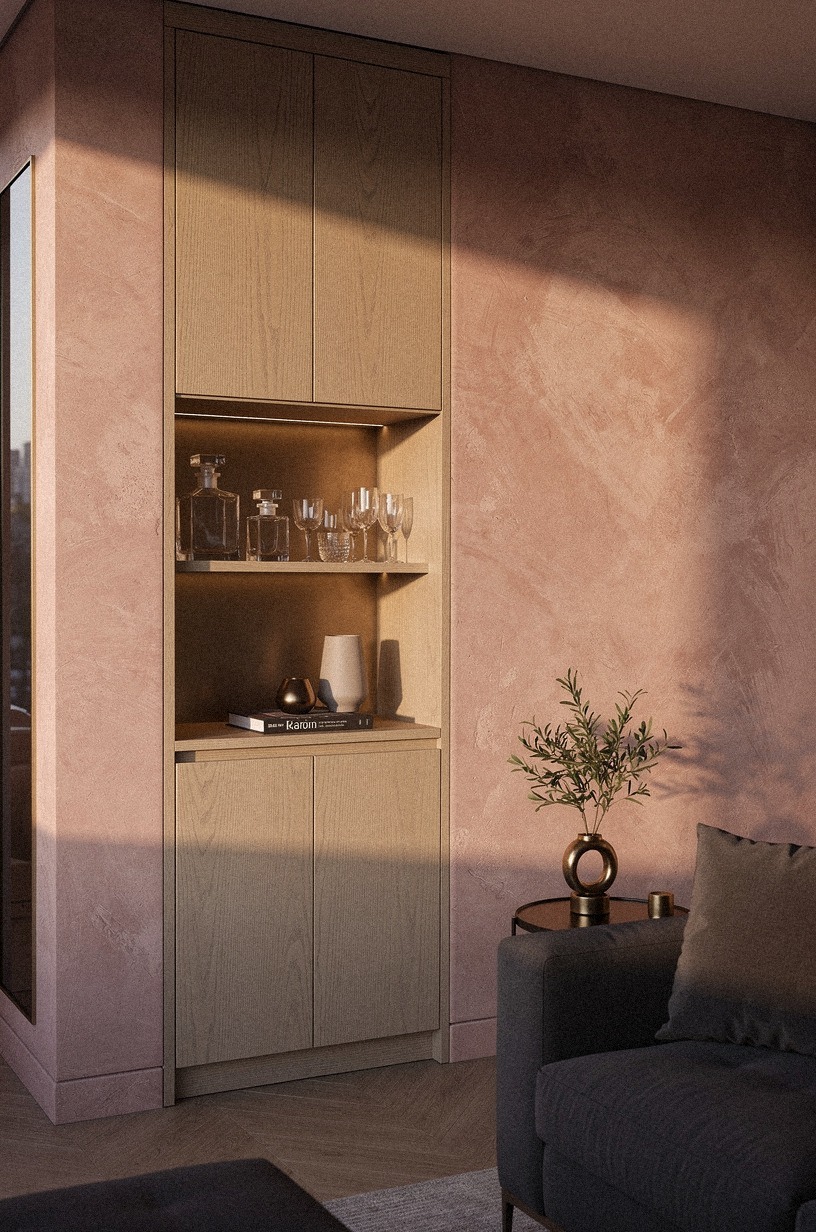
This is where the whole hidden mini bar stopped looking borrowed from three different apartments. I decanted the random labels into matching square glass decanters and lined them up on a discreet wall shelf, with glasses above and a concealed cabinet below. Same quantity as before.
Totally different mood.
You lose brand noise and gain shape. That’s what your eye responds to first in a small living room.
I kept the shelf simple, let the decanters form the pattern, and resisted adding extra decor around them. Why compete with the geometry when the geometry is already doing the work?
The Joy Jolt Levante 850 ml square decanters run about $30 for the set and read as serious glassware, not barware. If you love the idea of a bar without a full furniture footprint, the restraint in this medieval fortress city built on limestone cliffs has Europes most spectacular hidden bar locals access it through a hole in 800 year old walls weirdly helped me think about concealment better. But I’d skip round bottles here.
In a compact apartment, square wins because it stacks visually and leaves less chaos between forms.
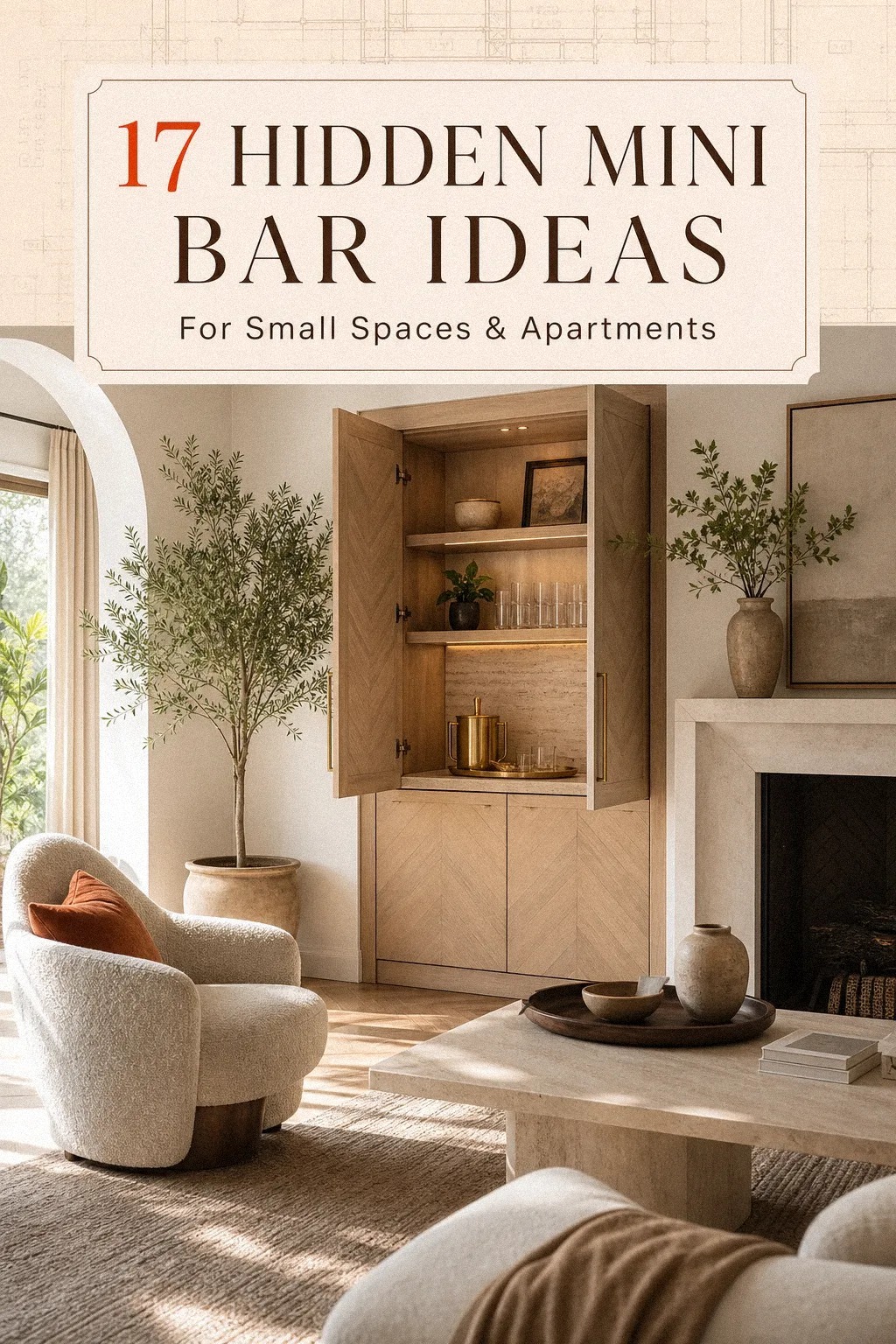
8Park a tiny fridge behind cane panels
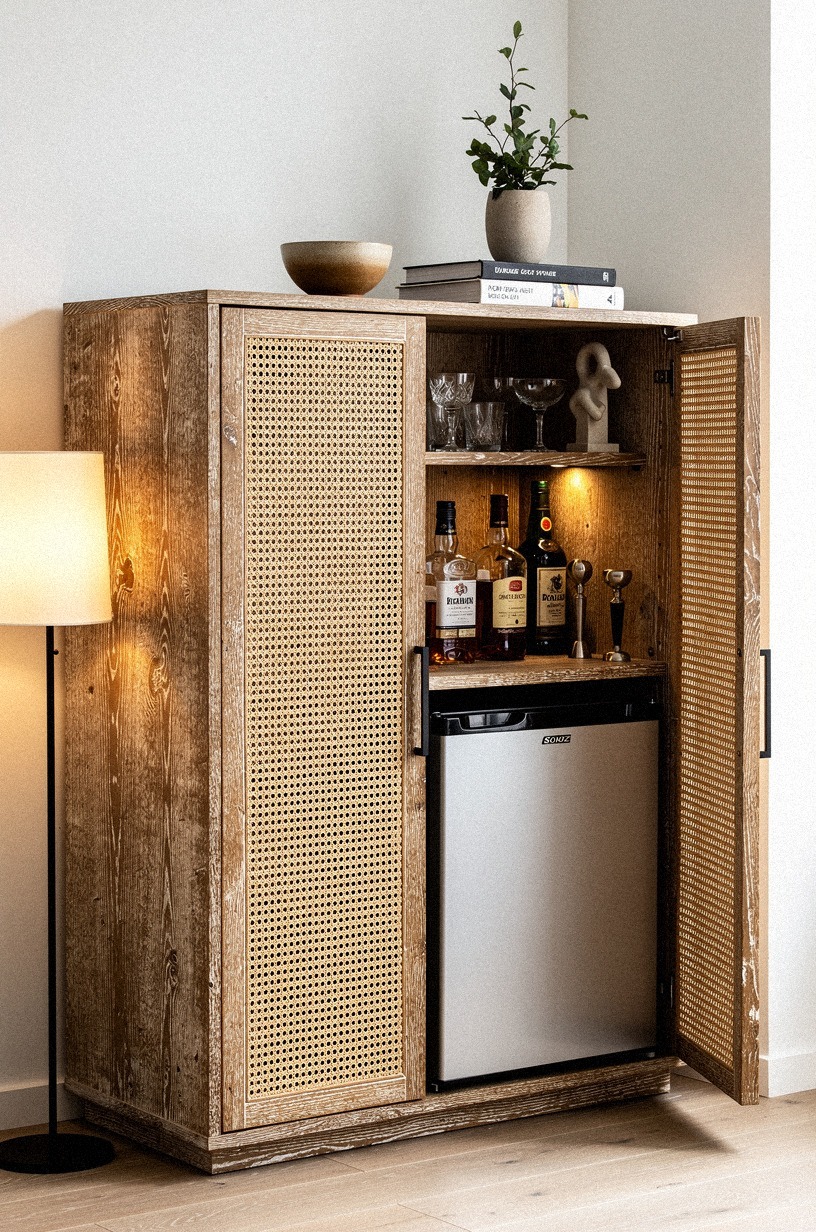
The tiny fridge was the most practical upgrade, and I fought it because I thought it would kill the room.
9Hang art over the drop-down door
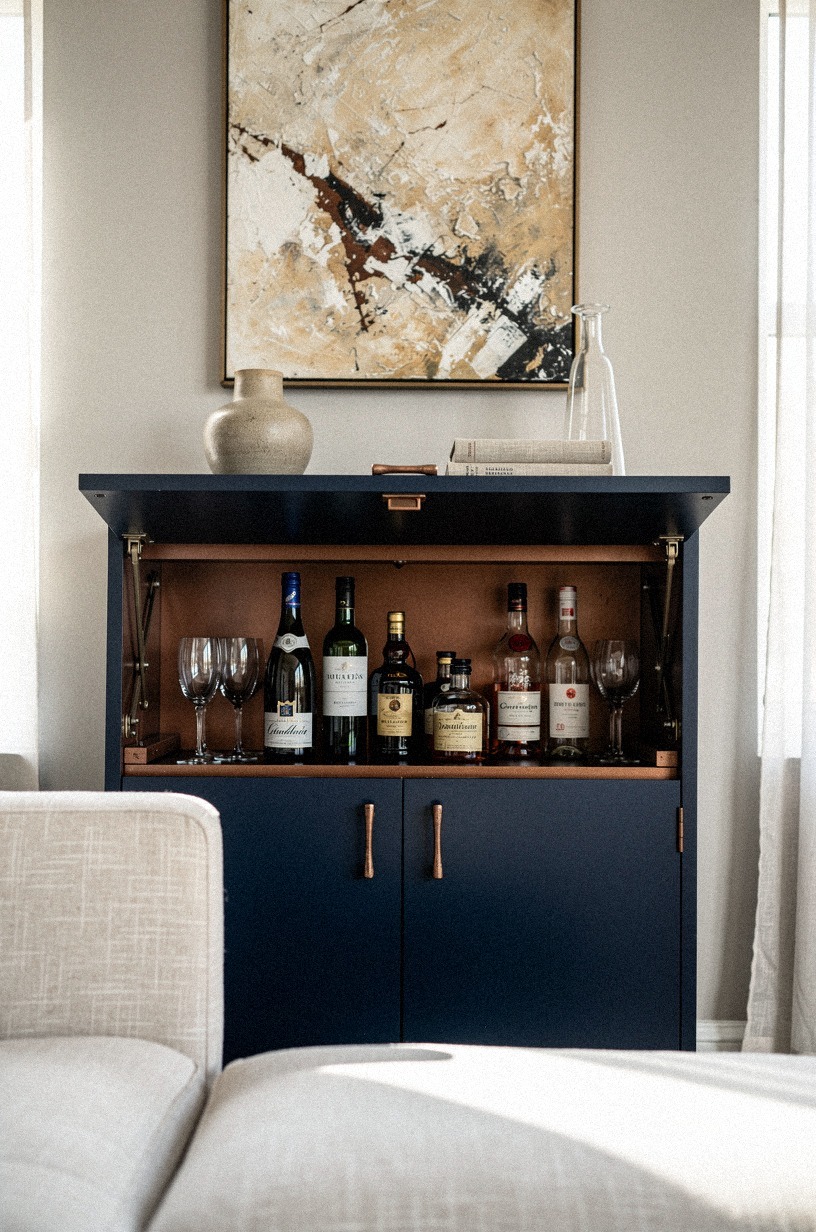
This was my favorite styling move because it fixed the dead zone above the cabinet without turning the bar into a shrine. I hung one moody piece of art over the drop-down door, then kept the interior simple so the composition held together when the door opened.
The room suddenly had height. That felt like a tiny miracle!
The print is a vintage botanical from Juniper Print Shop, framed in a 1.75 in walnut that echoes the cabinet doors below.
You want the art to belong to the living room first and the bar second. Mine had deep blue and tobacco tones that worked with Farrow & Ball Hague Blue No.30 in the frame detail and the darker bottles below, so even closed, the cabinet area felt composed.
The painting added a calming anchor to the wall, the kind of steady presence a small living room needs. And when the door dropped, the art still carried the wall.
If you’re trying to make storage disappear into the architecture, the 4 layer maximalist formula that creates winter glow in small spaces for 280 has the same idea about layering top to bottom. I wouldn’t hang a tiny print here.
Go larger than feels safe. In a compact apartment, underscaled art makes the cabinet look busier, not lighter.
10Style books in front of the glasses
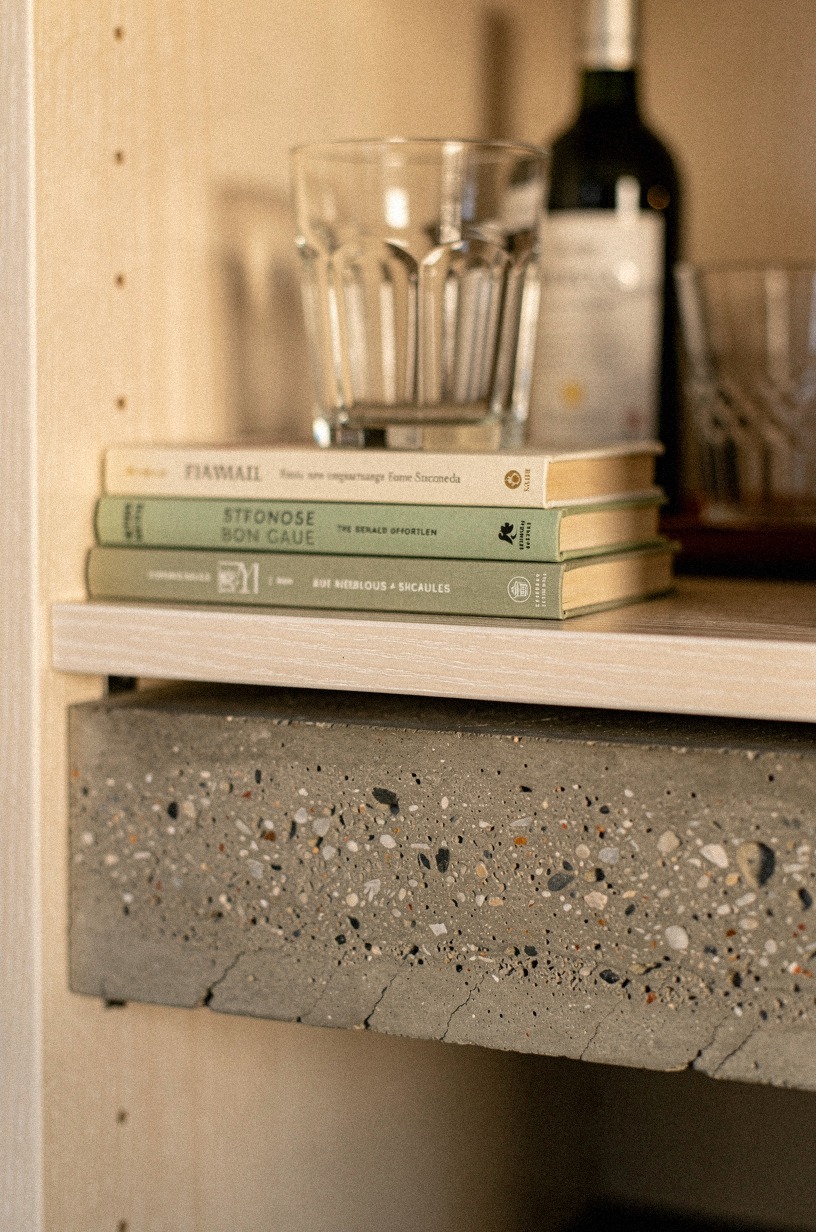
Books were the camouflage move that made guests look twice.
11Close the doors before guests arrive
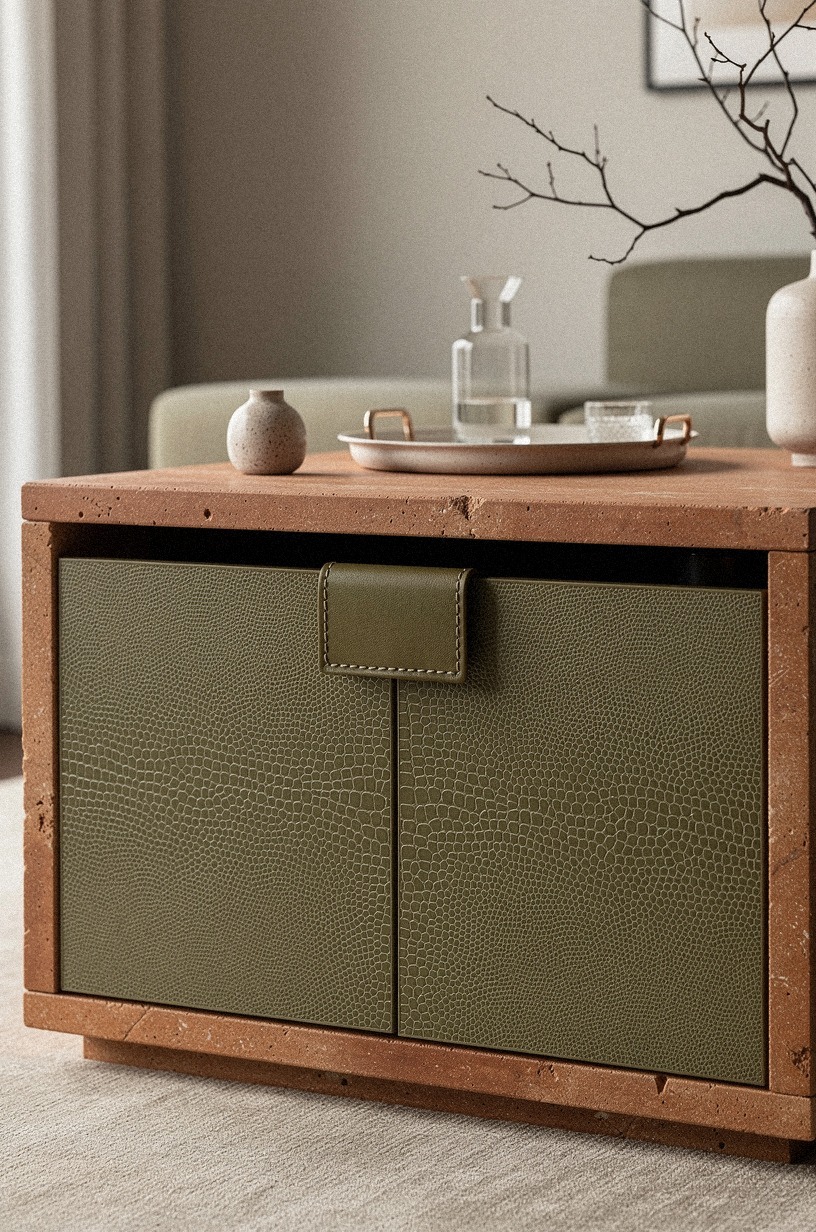
This sounds obvious, but it was the step that made the room feel finished instead of prepared. I close the cabinet doors before anyone comes over, leave the serving tray nearby, and let the bottles show only as a narrow shadow through the gap.
The mini bar isn’t gone. It’s just waiting.
The Emtek brass door pull in oil-rubbed bronze is what makes the closure feel intentional instead of clattery.
You should think about reveal timing the same way you think about candles or music. Not everything needs to be visible at once.
When the doors stay shut, the living room keeps its calm lines, and then the bar becomes part of the evening instead of part of the storage problem. But the tray matters too.
I keep one ready on the side so I can open the cabinet, lift what I need, and close it again in seconds. That rhythm is why the setup finally worked for me!
If you’re after the same hidden-first feeling, matte surfaces make small apartments feel 40 bigger than glossy ones reinforces the case for quiet finishes over shiny signals.
12Pair the cabinet with a CB2 Primitivo side stool
This was the move I didn’t expect to keep. A small CB2 Primitivo bouclé stool sat beside the cabinet as a perch for the tray, and once it landed there, the whole zone started reading as a tiny bar nook instead of a cabinet. The bouclé texture was soft enough that it didn’t fight the cane doors, and the height was right for serving without dragging out the dining table.
You want the stool at counter height, around 24 to 26 in, so the tray can come straight off the cabinet without a drop. A darker bouclé in a warm taupe is the move here, because a too-cream stool reads as nursery, not bar.
I keep a folded linen napkin on it when friends come over, and that’s the only styling it gets. The Pottery Barn Larkin console in warm walnut is the alternative if you want a slightly chunkier matching wood tone.
If you’re into the small-footprint lounge logic, our small living room layout guide walks through the same “one perch, one purpose” rule.
13Swap puck lights for a West Elm rechargeable sconce
Puck lights were the rookie mistake I made first.
14Hide one bottle inside a Faux Bois book spine
A faux bois hollow book is one of those things that sounds silly until you put it on the shelf. Mine holds a half-bottle of rye between two cookbooks, and you’d have to be looking for it to notice.
The real move is matching the wood tone to the shelf: I went with a darker walnut spine against my cerused white oak, and the contrast made the rest of the books feel more real by comparison. The House of Hampton walnut faux book runs about $22 and is the right size for a standard fifth.
You only need one. Two starts looking like a set, and a set looks like a scheme. Pick a book that’s taller than the bottle so the top hides cleanly.
If you don’t have a shelf deep enough, skip this. Books on a shallow shelf look nervous, and a hidden bar with nervous books reads as clutter with extra steps.
For more on the edit-first rule, our calming bedroom paint colors guide has the same restraint logic applied to walls.
15Lean a stoneware tray against the cabinet
When friends come over, I lean a single stoneware serving tray against the cabinet, top corner, so the bottles stay hidden and the tray looks like decor. It’s the one visible signal that says “this corner does something.” The tray itself is hand-thrown in oat-toned stoneware with a slightly uneven rim, and the imperfection is the whole point. It reads as craft, not as staged.
You want the tray taller than it is wide, because a wide tray leaned against a cabinet reads as fallen-over clutter. A vertical one reads as intentional styling. I rotate between two: the stoneware for everyday, and a Marmoset Found travertine catchall when guests come over because the stone picks up the same warm light the bottles do.
Either way, one tray only. Two and you’ve built a still life.
The food52 vertical stoneware tray is the move if you want a similar shape without the splurge.
16Frame the setup with a jute rug instead of a runner
The rug was the change that stopped my feet from knowing what room they were in. I swapped an 8×10 wool rug that floated behind the coffee table for a 6×9 natural jute rug pulled forward, so its front edge sat just under the cabinet doors.
Suddenly the cabinet had a floor, and the bar had a zone. The texture also felt grounding, the way a soft rug underfoot makes a tiny room feel intimate instead of tight.
You want flatweave here, not plush. A high-pile rug under a tray looks like a happy accident.
A flat jute rug reads as intentional, the way a sisal does in a hallway. I went with jute because it’s warmer underfoot than sisal in winter and it has a soft honey tone that picks up the brass tools without competing.
The nuLOOM natural jute 6×9 runs about $130, which beats most wool rugs at that size. For the rug-pulls-the-room-together logic, our patio materials cost comparison breaks down how surface texture changes a whole outdoor zone the same way.
17Edit the room around it before you buy anything
This is the part nobody tells you. The hidden mini bar didn’t fix my living room.
The editing I did before I bought anything fixed my living room, and the bar was the last thing I added. I took eleven objects off the media console before I put a single bottle back.
The console got lighter. The room got quieter.
Then the bar felt like it belonged.
You’d be surprised how much of this is just removal. One candle, three books, a vase nobody liked, a tray that held mail. Gone.
The bar doesn’t need a home when your living room already has one. The room became so welcoming by subtraction that friends kept asking what I changed.
I hadn’t added anything dramatic. I’d just stopped hiding the room behind things.
IKEA KALLAX in oak effect is the most boring cabinet that does this job well, by the way, and you can usually find one used for under $80. If you’re at the start of this whole refresh, our cozy home refresh checklist walks through the edit-first sequence before any money moves.
How much it cost
I kept my hidden mini bar makeover close to the low end of a living room refresh, not a full furniture redo. Most of the visual change came from editing, not buying, which is why I think these small apartment bar ideas are worth it when you rent.
My version borrowed the logic of the budget tier: reuse the cabinet, add the tray, add the sconce, organize the drawer, and stop overstyling. For context, a pair of Belgian linen drapes typically runs $120-$400, a wool rug 9×12 lands around $600-$2,500, and a compact storage piece can jump fast if you go custom. The tray alone was a Target Threshold stoneware piece at $32.
The sconce was a West Elm rechargeable at $89. The stool was a CB2 Primitivo around $249. Add the small fridge at about $300, a Marmoset Found travertine catchall at $58 for guests, and a $25 stoneware bowl for the opener, and you’re at $753 total.
That’s why I’d spend on the cabinet shape only if the rest of your room is already working. You can’t fix a chaotic bar with expensive millwork.
But you can fix a chaotic bar with editing, one hidden drawer, and better light.
The One-Boundary Rule
Here’s my honest take: a hidden mini bar isn’t really about drinks. It’s about visual permission. In a small apartment, every object asks to stay visible forever, and that’s what wears you out.
Once I gave the bottles, glasses, napkins, opener, and cold stuff one contained home, the living room stopped acting like a storage compromise and started acting like a room again. I think people miss that when they shop for bar carts. The cart promises charm.
What you usually need is closure.
I also learned that concealment works better when the materials still feel warm. That’s why I kept reaching for cerused white oak, book-matched walnut, woven cane, aged brass, and clay linen instead of slick lacquer or mirrored everything.
If the hiding place feels cold, you won’t enjoy using it, and then you’ll drift back to leaving bottles out. I know because I did exactly that with a shiny tray and a cart I thought looked “fun.” It was not fun by week three.
It was one more thing to dust. The room felt most inviting the day I matched every warm surface to the same family: brass on the tools, walnut on the top, cane on the doors.
Once those three agreed, nothing else had a chance to argue.
And there’s a design principle underneath all of this. A small living room feels generous when the eye can read the big shapes before the little ones.
Sofa. Rug.
Cabinet. Lamp. Art.
Then the details. If the first thing your eye catches is a jigger, a label, and three random stems, the room shrinks in your head even if the square footage hasn’t changed.
That’s why hidden storage keeps winning in apartments. Not because you’re pretending you don’t own things, but because you’re controlling when those things speak.
Would I do this again in a rental? Completely. I did not touch the walls beyond hanging art, I did not need built-ins, and I did not have to fake some luxury hotel bar fantasy to make it work.
I just made better choices about access, light, and what deserved to stay visible. The part that worked was restraint.
Not more bottles. Not more styling.
Better boundaries for the ones I already had.
The Two-Second Reset
But the real luxury in a small apartment is speed. If you can close the doors, leave one tray out, and get your floor back in two seconds, you will use the setup more and resent it less. That mattered to me more than looking fancy, and it’s the same reason 25 hidden doors in walls that make small spaces look bigger feels so persuasive.
Concealment gives the room back to you.
And once I understood that, I stopped shopping for more bar gear. I started protecting the reset instead. Your future self wants the version that closes fast, wipes clean, and leaves the cabinet looking like furniture by morning.
What People Always Want to Know
What is the best Hidden Mini Bar Ideas for Small Spaces & Apartments for a small living room?
A cabinet with one dedicated shelf and one working drawer is the best starting point because it gives you hidden storage and a serving surface at the same time. Think IKEA TONSTAD scale, not a full bar hutch. If you want more concealment cues, our small bedroom layout guide pushes the same edit-first logic.
– One clear bottle shelf – One tray inside reach – One drawer for tools and napkins
Where can I buy Hidden Mini Bar Ideas for Small Spaces & Apartments pieces on a budget?
I’d start with IKEA, Target Threshold, and CB2 for the cabinet, tray, and battery light, then check Facebook Marketplace for wood consoles with solid doors. You save the most when you buy the shell secondhand and upgrade the inside. I also like the low-cost lighting logic in our cozy home refresh checklist.
– Used console first – New tray and light second – Cane or baskets only if needed
How much does a Hidden Mini Bar Ideas for Small Spaces & Apartments makeover cost?
For most renters, it costs about $300 to $700 if you already own a cabinet and add a tray, light, liner, drawer pieces, a small fridge, and a single stool. Free changes matter too. For visual payoff before spending, matte surfaces make small apartments feel 40 bigger than glossy ones is a useful gut check.
– Clear one shelf – Reuse glasses you have – Move decor out before buying storage
Can I create a Hidden Mini Bar Ideas for Small Spaces & Apartments on a budget?
Yes, and the cheapest version is usually the smartest because it forces better editing before better shopping. I did the first pass with things I already had. And the layered-room thinking in the 4 layer maximalist formula that creates winter glow in small spaces for 280 helped me stop before I overbought.
– Remove half the shelf decor – Group bottles on one tray – Use a bowl for the opener and folded napkins
Is a Hidden Mini Bar Ideas for Small Spaces & Apartments worth it in a small space?
Yes, because a small space benefits most from visual control. When the bar can disappear, the living room keeps its function during the day and its mood at night.
– Closed doors before guests – Tray ready nearby – Light under the shelf, not overhead
Is Hidden Mini Bar Ideas for Small Spaces & Apartments a good idea for a rental?
Yes, it’s one of the better rental upgrades because you can get the custom feel without drilling cabinets into the wall. Stick to reversible changes and freestanding pieces.
– Battery sconce or puck light – Removable art hooks – Freestanding cabinet with cane or solid doors
The Shelf-First Rule
If I had to pick one, I’d start with the cleared shelf. Until the bottles have one boundary, every other fix fights clutter instead of fixing it.
Do that first, then add the tray. Your whole room will read calmer tonight!