
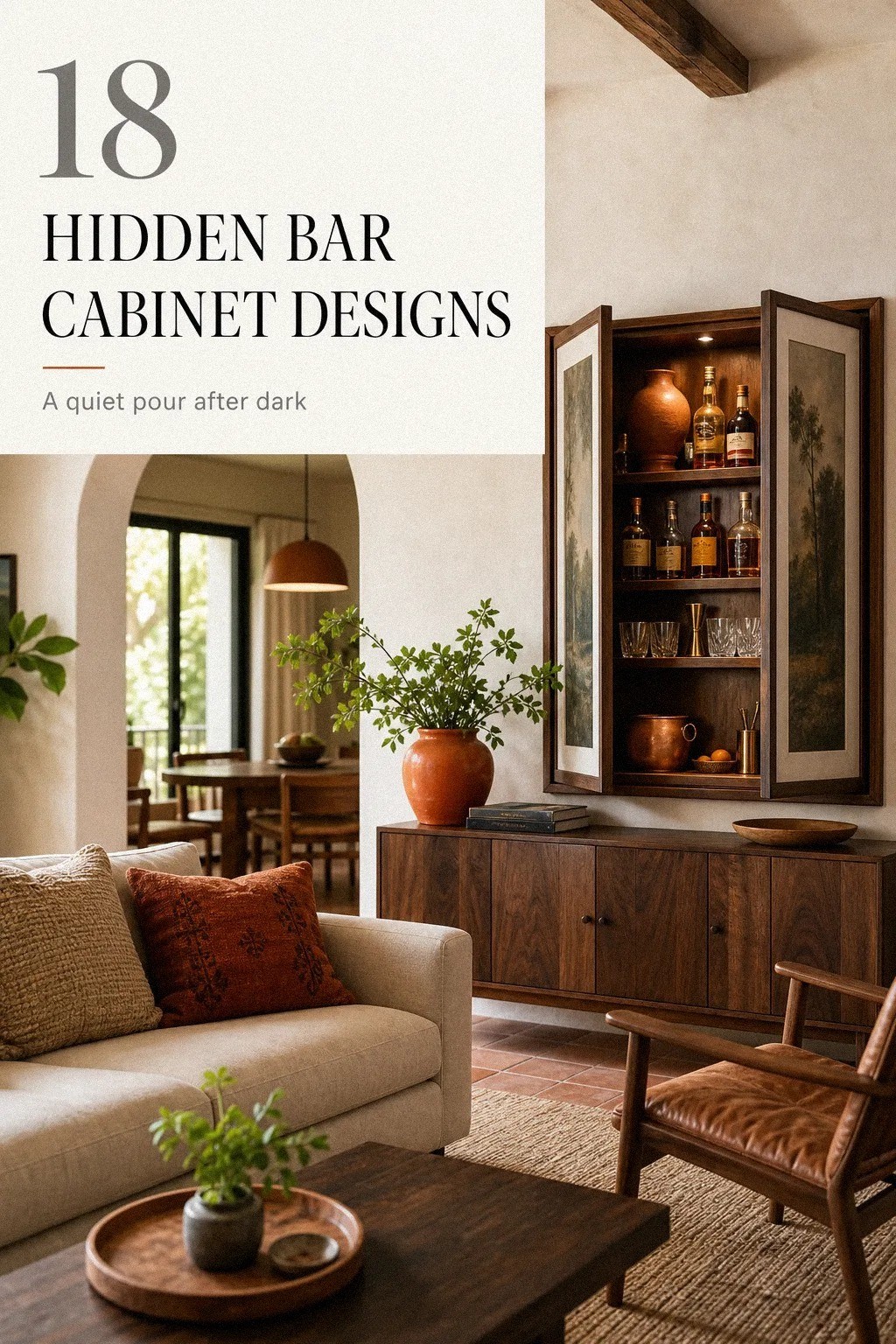
Hidden bar cabinet ideas for the dining room work best when the bottles vanish as soon as dinner starts. I learned that after styling a sideboard that looked fun for two days and messy for two months. More display wasn’t the answer. Better doors were, and panel-ready storage always feels more calm.
Don’t overthink: Wrap a corner cabinet in living room paneling.
- What makes picture frame doors feel so tailored?
- Wrap a corner cabinet in living room paneling
- Convert a tall sideboard into a hidden drinks station
- Slide tambour doors across the bottle shelves
- Mirror the back of a concealed drinks niche
- Sink a bar cabinet into built-in bookcases
- Dress cabinet doors with cane and shadow gaps
- Tuck a pullout tray behind banquette storage
- Flank the fireplace with hidden cocktail cupboards
- The Back-Bar Glow Rule
- Mask a dry bar inside the TV cabinet
- Add reeded doors to a slim corner bar
- Why hide stemware behind opaque arched panels?
- Build a fold-down shelf under framed artwork
- Forest green inside instead of a loud exterior
- Stage lamps on top of closed bar doors
- The Pocket Door Peace Method
- Conceal a mini fridge behind fluted base cabinets
1What makes picture frame doors feel so tailored?
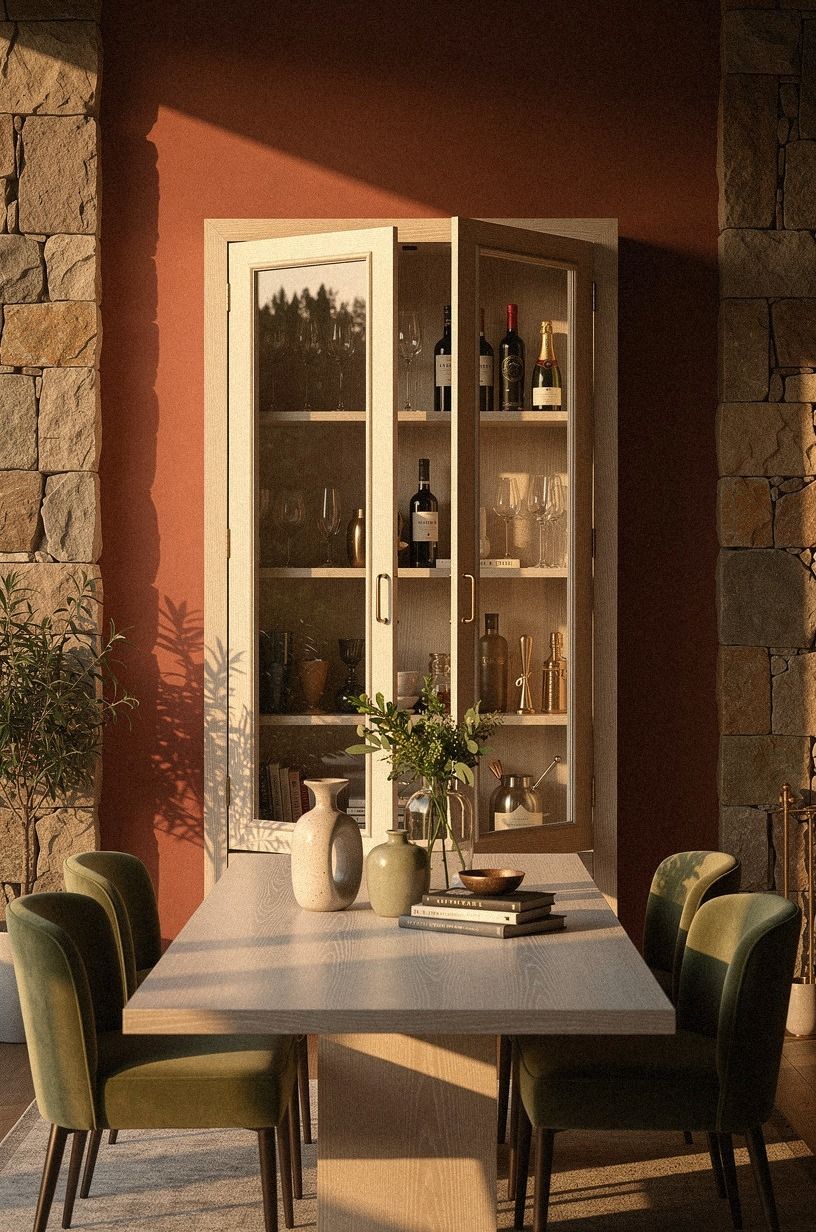
Picture frame doors are one of the cleanest ways to hide a bar because they read like wall trim first. In a traditional dining room, cerused white oak keeps the face warm instead of stark, and that wood tone matters more than people think.
The reveal can stay narrow and still feel usable. I like one shelf for daily bottles, one for stemware, and one tray below for tools, because a 3/4-inch white oak interior feels finished where plain melamine looks flat.
You still get the ritual. You just lose the clutter. If your dining room connects to a lounge, hidden bar ideas for the living room uses the same hide-it-first logic, and it’s a good one.
Typical cost by tier (US averages):
2Wrap a corner cabinet in living room paneling
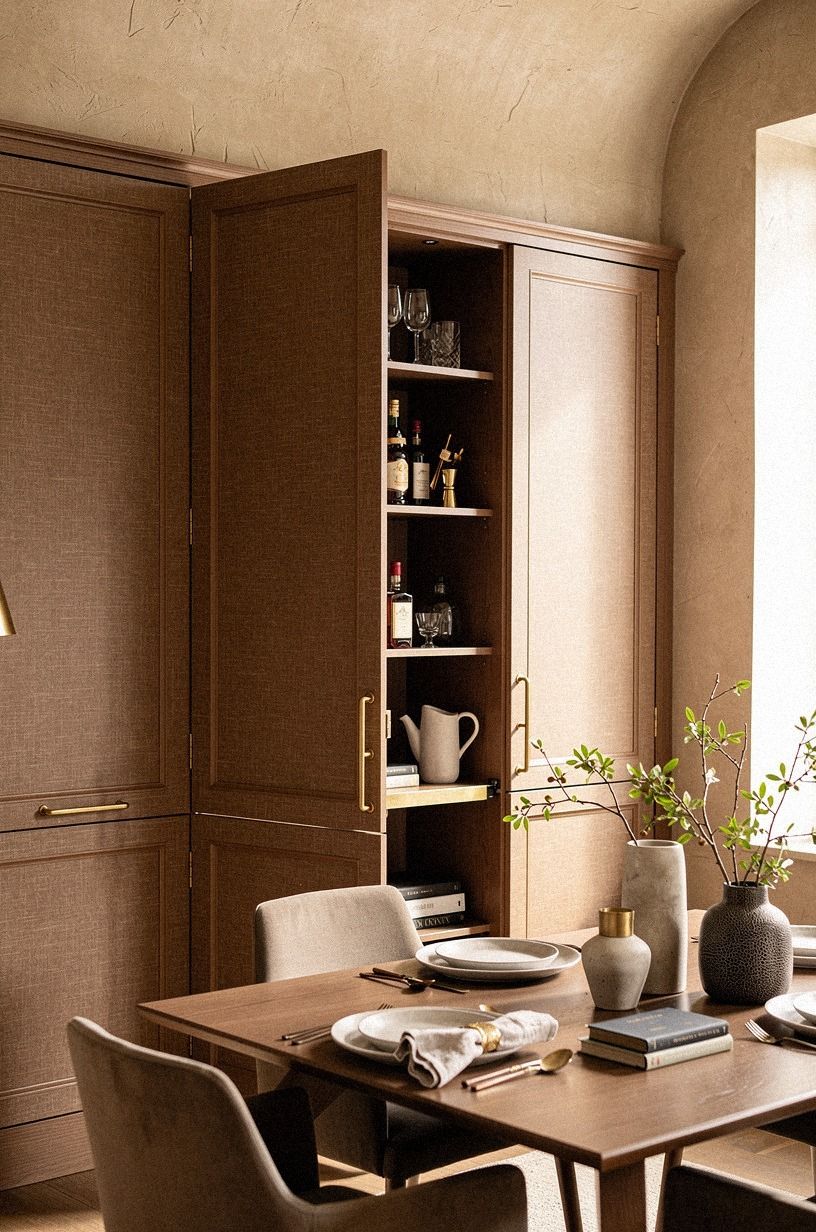
A corner cabinet disappears fast when the same paneling keeps running across it. That’s why this is one of the smartest cabinet bar design moves for a dining room with open sightlines. Paint the wall and the doors in Benjamin Moore Revere Pewter HC-172, and the whole corner feels more quiet.
The useful detail is the reveal line. Too wide and the disguise dies. Too tight and you’ll hate opening it, because a slim shadow gap looks right only when the door still works without a fight.
Shelves around 12-inch depths usually do it. You also want the cabinet aligned with the rest of the room, so the chair test that fixes your dining room rug in 5 minutes is a smart companion check.
3Convert a tall sideboard into a hidden drinks station
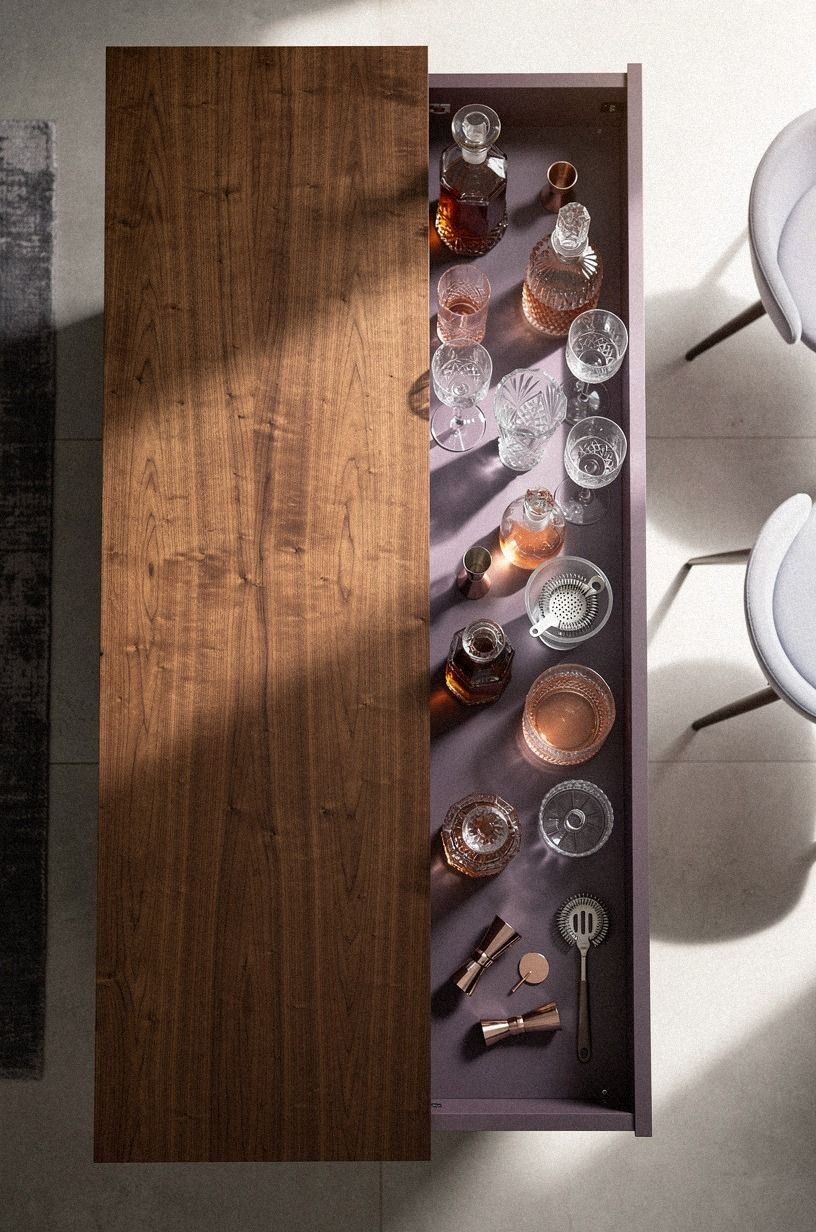
A tall sideboard is still the easiest bar cabinet in dining room ideas move if you don’t want custom millwork. You need good hinges, enough height for bottles, and an inside plan that keeps the mess from spreading. Book-matched walnut veneer gives the opening a polished feel instead of a makeshift one.
Break the inside into three zones and stop there. Bottles low.
Glasses at eye level. Tools on one tray.
That’s the whole edit, and aged brass hinges make the doors feel intentional every single time.
I’ve made the mistake of stuffing every fun bottle inside, and the cabinet looked tired by week two. Leave some air. If you want another furniture-first example, this living-room hidden bar roundup gets the three-zone restraint right.
4Slide tambour doors across the bottle shelves
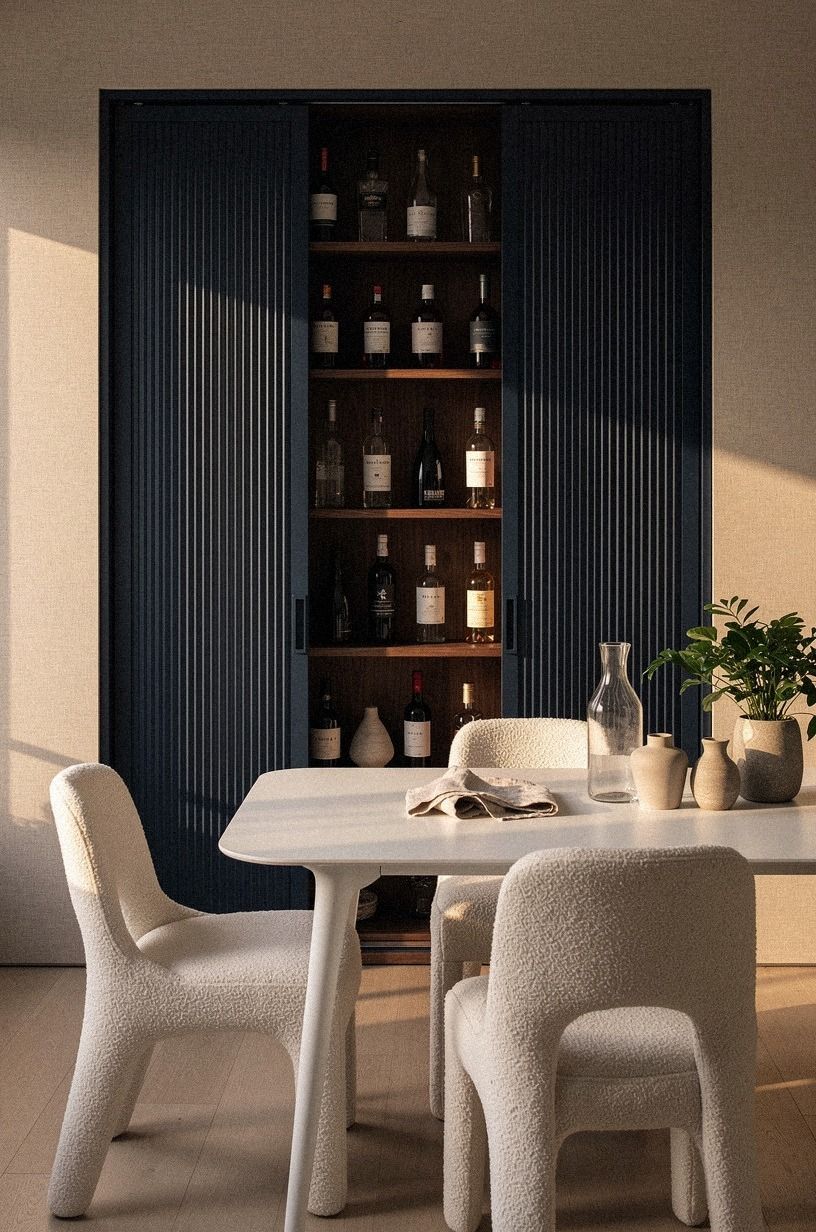
Tambour doors earn their keep in a dining room because they don’t need swing space. The slats slide aside, the walkway stays clear, and the cabinet looks neat even when you’re in the middle of mixing drinks. In navy and walnut, the mood feels moody in the best way.
That practical advantage matters if your table already needs every inch around it. A clearance zone of about 36 inches stays usable with tambour, while hinged doors can turn into a daily annoyance. I like walnut tambour with a cream interior so the whole setup stays clear, not severe.
For the mood piece, speakeasy dining room ideas for supper club vibes lines up beautifully, and it’s a supper-club reference without tipping into costume.
5Mirror the back of a concealed drinks niche
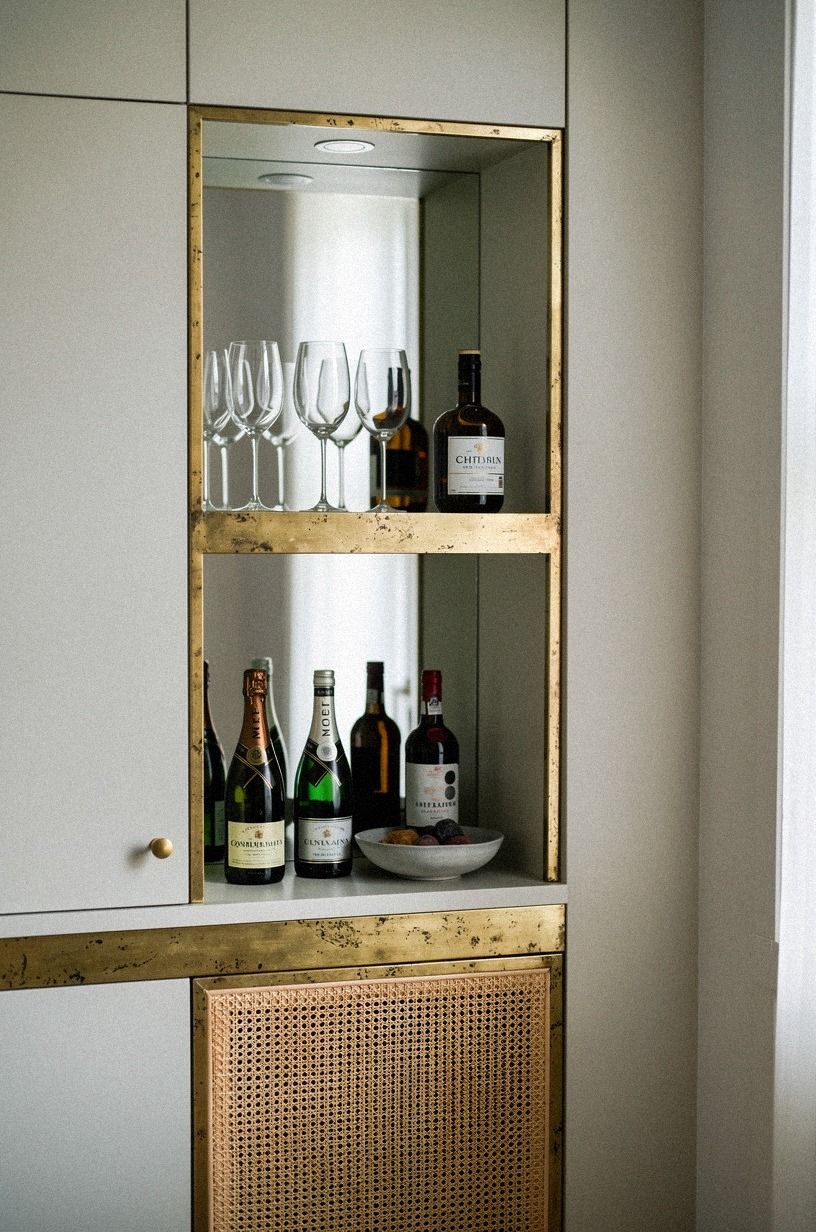
A mirrored back can make a tiny drinks niche feel twice as generous without changing the footprint. Light bounces.
Glassware doubles. And the opening feels more intentional than a plain painted box, especially when the trim is unlacquered brass.
Keep the mirror light. A little haze is lovely, but heavy foxing gets busy fast in a small cabinet. Shelves around 10 to 12 inches deep usually hold bottles, coupes, and a pale ivory enamel shelf keeps the whole niche clear.
For the rest of the room, my spring dining room essentials for 2025 shows how to keep the surrounding dining-room styling gentler than the reveal.
6Sink a bar cabinet into built-in bookcases
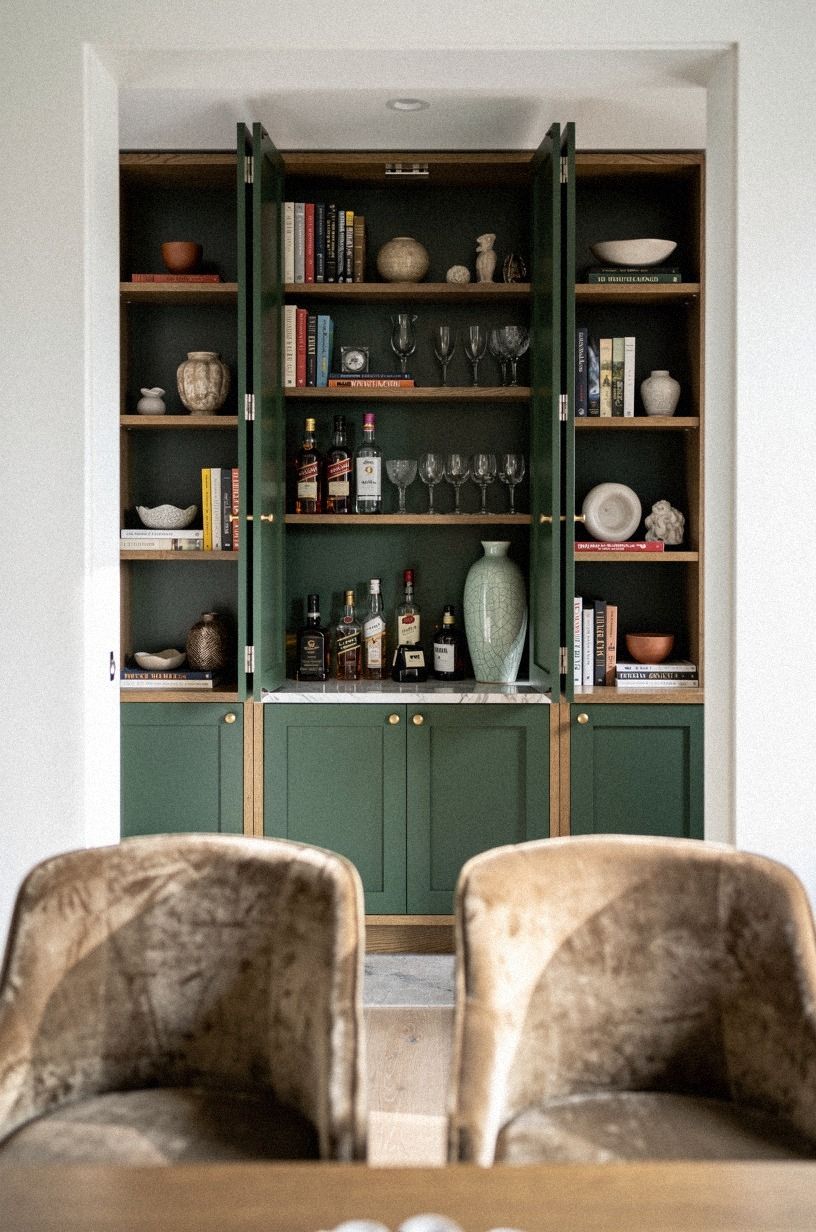
A bar cabinet inside bookcases feels calmer than a freestanding drinks station because the shelves carry the visual texture for you. Books, bowls, and art stay visible.
Bottles disappear until you want them. That’s an easier fit when the room already has chairs, a rug, and a chandelier competing.
Give the center bay a little depth without making it louder than the rest. Farrow & Ball Hague Blue No.30 is strong inside the reveal because clear glass and amber liquor show up beautifully against it.
Keep the work shelf near sideboard height so pouring feels natural. And if your room does double duty, hidden bar ideas for the living room proves how useful concealed storage becomes.
7Dress cabinet doors with cane and shadow gaps
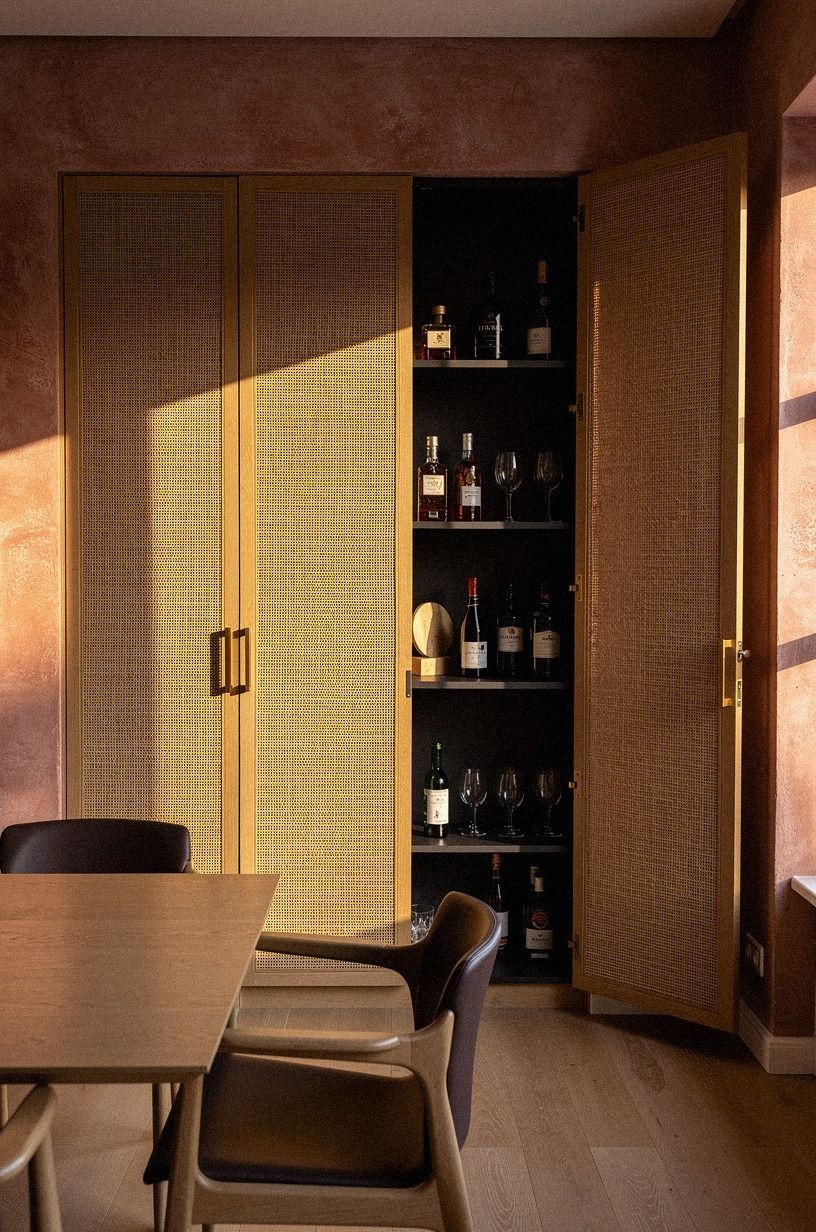
Cane doors soften a large storage wall quickly, which is why they work so well for hidden bars in dining rooms that need warmth more than more paint. The weave breaks up a solid wall, and natural cane webbing keeps the front lighter instead of heavy.
You don’t need a beachy room for this to work. A dark frame, a fine inset, and a smoked oak rail make the face feel tailored and a little finished, not themed.
I’d keep the inside simpler than the outside. One tray, one row of coupes, one shelf for bottles, and that’s enough. If you add too much pattern behind the cane, the woven door insert stops feeling quiet and starts feeling noisy.
8Tuck a pullout tray behind banquette storage
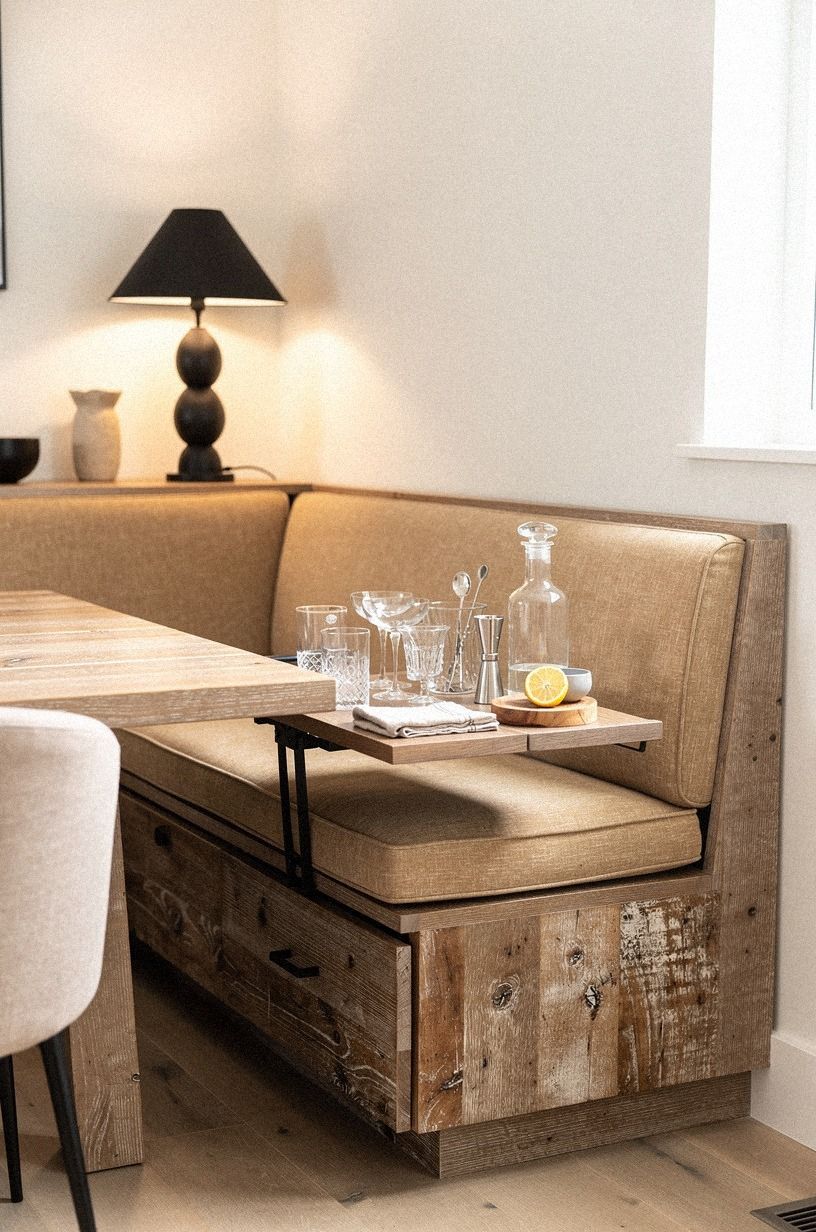
A pullout cocktail tray hidden inside banquette storage is one of the smartest small-space moves in this whole list. You get a bar when you need it, then you slide it away and reclaim the room. In a tight nook, reclaimed oak keeps the move grounded and welcoming.
Build the tray like furniture, not like office hardware. Dark runners, a wipeable liner, and a honed stone insert make it feel durable and a little luxurious without turning it precious.
Give yourself room for a shaker, two glasses, and one bottle, then stop. More than that gets clumsy fast. This medieval hidden bar story is wildly theatrical, but your version should stay simple.
That’s what keeps small-space storage sane.
9Flank the fireplace with hidden cocktail cupboards
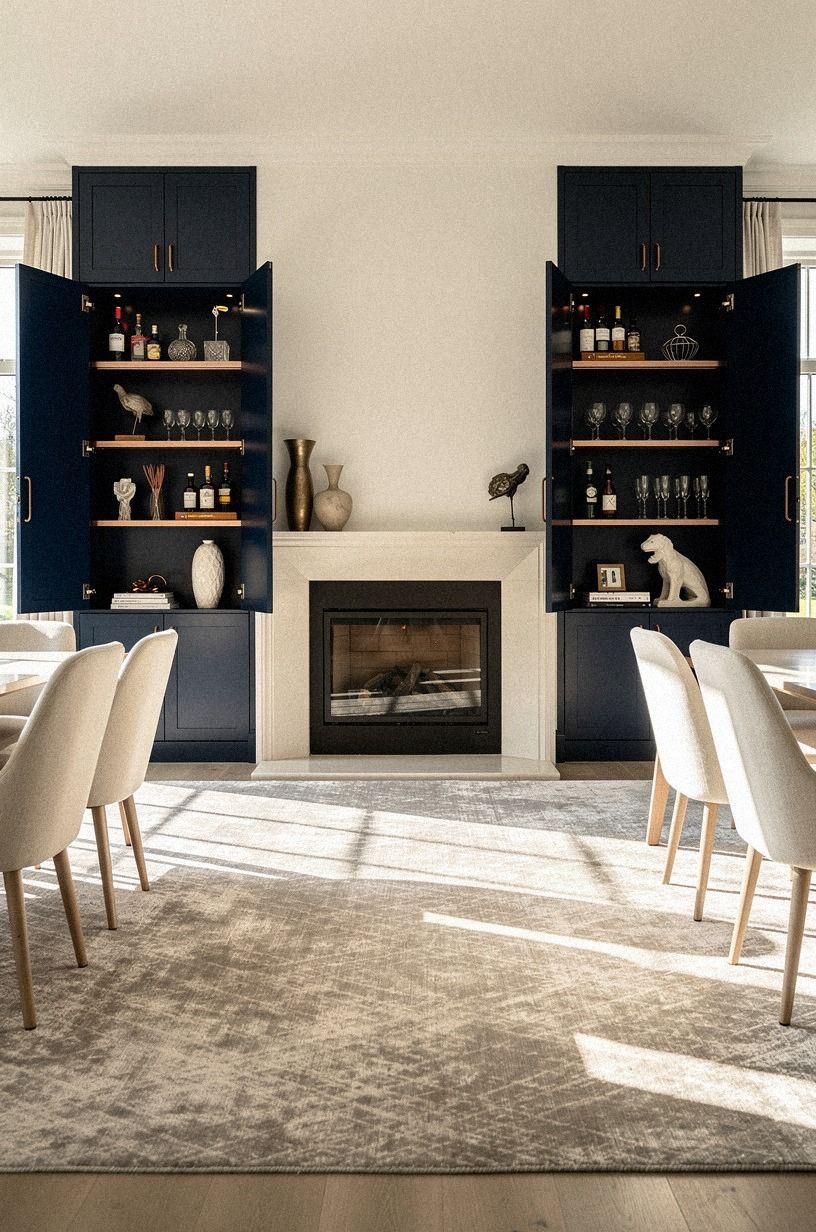
If your dining room has a fireplace, use the side cupboards for the bar instead of adding another furniture piece. The symmetry already exists, and the storage disappears when the hearth should be doing the visual work. Midnight blue cabinetry beside a warm surround feels timeless.
Split the duties so each cupboard stays readable. Bottles on one side.
Glassware and napkins on the other. A honed limestone surround helps the whole wall feel settled rather than busy.
For the mood side of the equation, speakeasy dining room ideas for supper club vibes is a strong reference. But keep breathing room around the firebox, because the hearth wall should never feel crowded.
10The Back-Bar Glow Rule
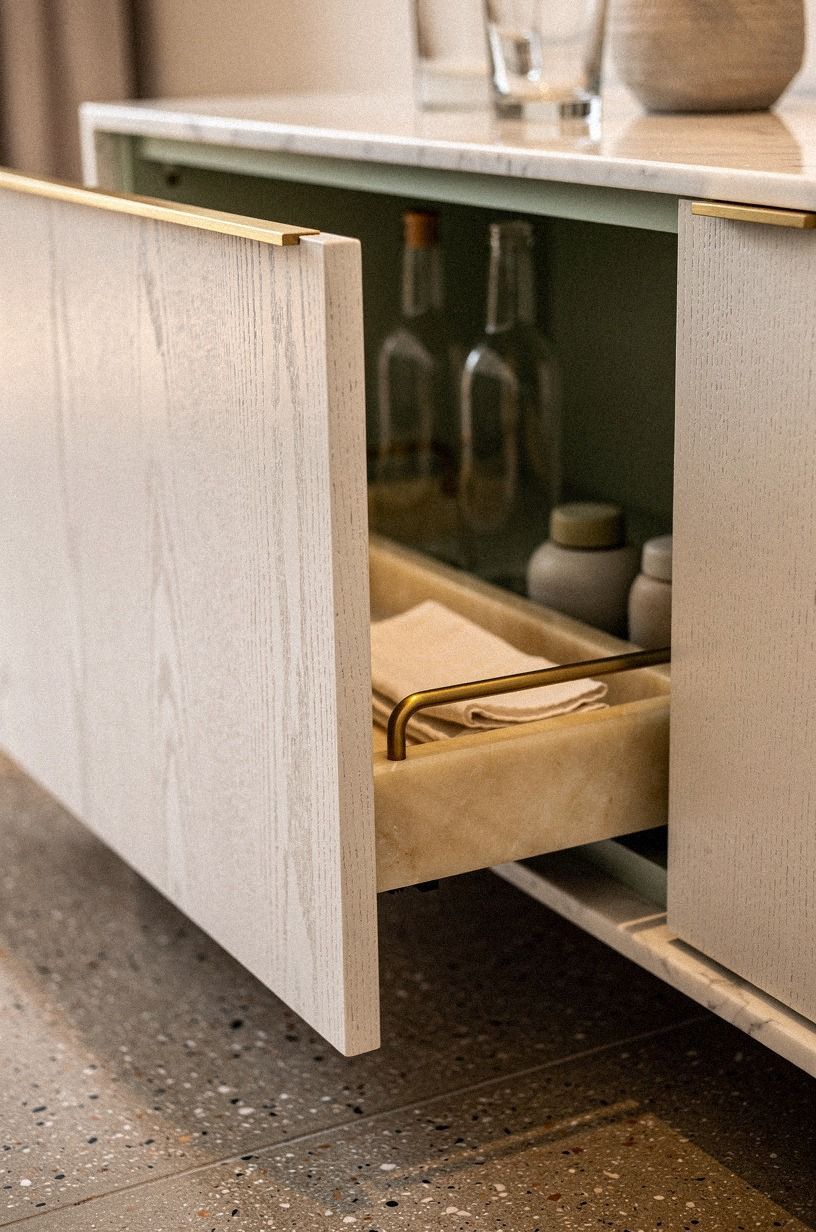
A credenza feels more expensive when the inside is lined with touch-point materials instead of generic shelf paper. That’s the back-bar glow rule I keep coming back to. A Calacatta Gold marble slab at the base catches bottle light in a way laminate never will.
Pair that with one brass detail and stop there. Unlacquered brass rail trim is enough to make the cabinet feel elegant, while too many shiny parts can turn fussy fast.
I’d rather spend on the surfaces you touch than on extra decor you’ll end up moving around. The whole point is a marble-and-brass reveal that still feels easy on a Tuesday night.
11Mask a dry bar inside the TV cabinet
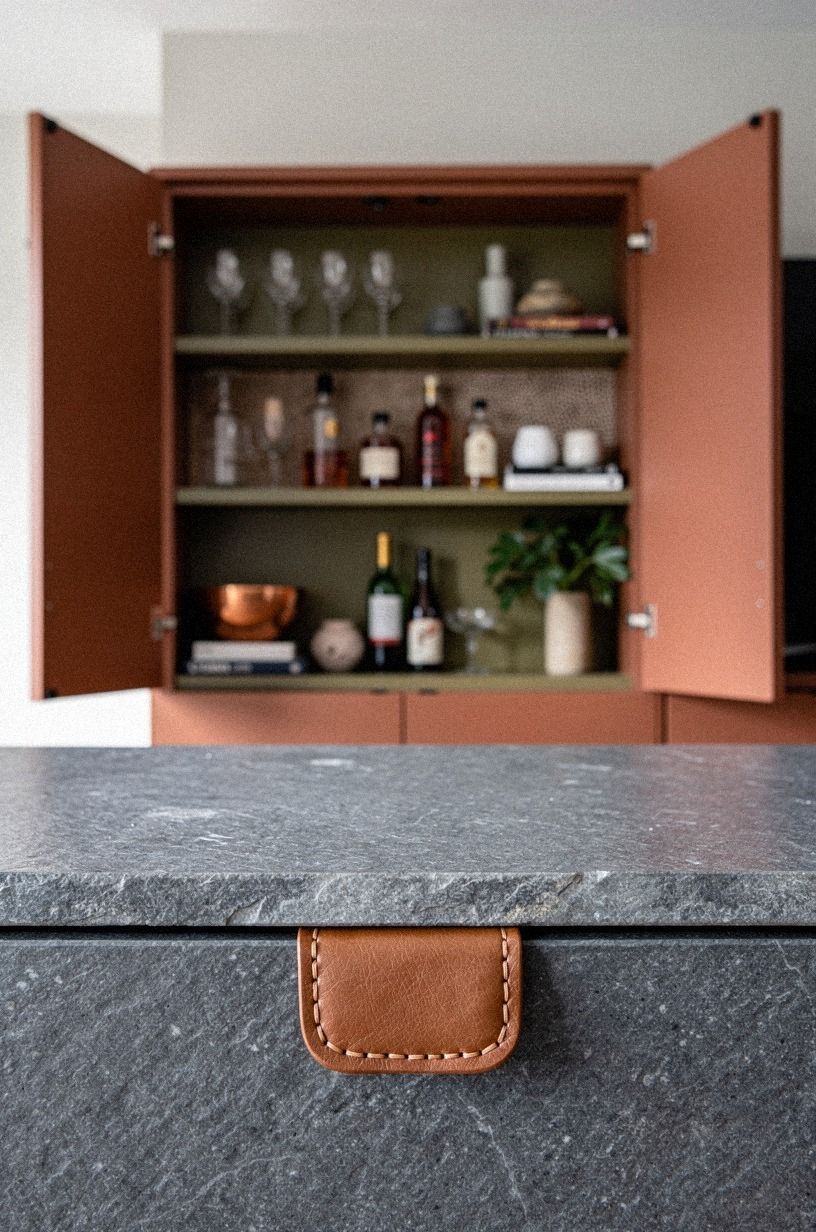
A TV cabinet in the dining room can feel awkward until it gets a second job. That’s where a dry bar helps.
Terracotta doors, a stone-look shelf, and a hidden bottle zone make the whole wall feel less electronic and more furniture-like. Terracotta lacquer softens the tech edge right away.
Wood-toned materials do most of the heavy lifting here. Dark hardware keeps it grounded, and a travertine-look shelf gives the opening an earthy touch that still feels polished.
Put the bottles low, the glasses at hand height, and the fiddly tools in one drawer if you can. For another example of furniture doing two jobs well, this hidden bar ideas for the living room piece is useful.
12Add reeded doors to a slim corner bar
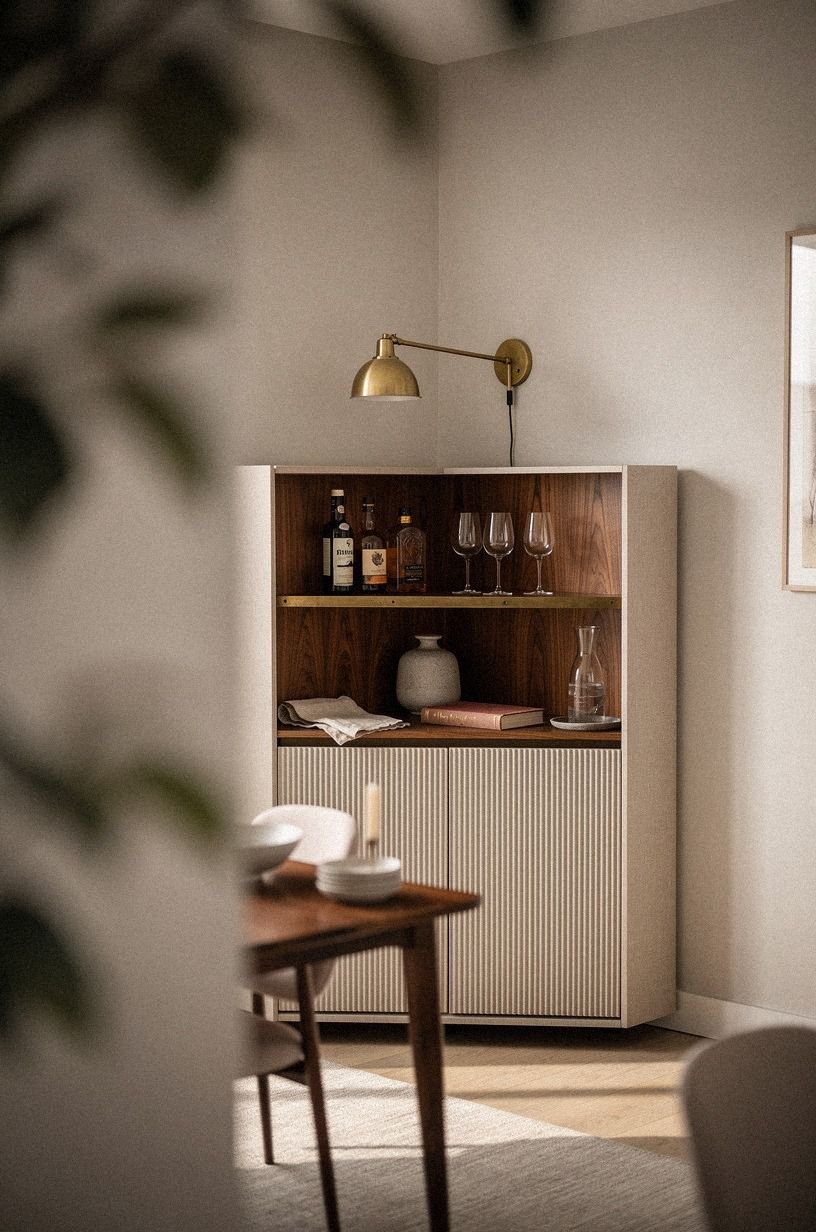
Reeded doors are ideal on a slim corner cabinet because they add depth without adding width. That’s exactly what an awkward dining corner needs. In clay and linen tones, reeded glass fronts feel gentle and inviting.
Keep the cabinet shallow and let the inside height work hard. Stacked shelves, one small drawer, and a neatly lined base are usually enough. I like book-matched oak veneer inside because it gives the reveal movement without clutter.
For more texture-first styling, my spring dining room essentials for 2025 makes the same point in another way, and it’s a texture-first reference.
13Why hide stemware behind opaque arched panels?
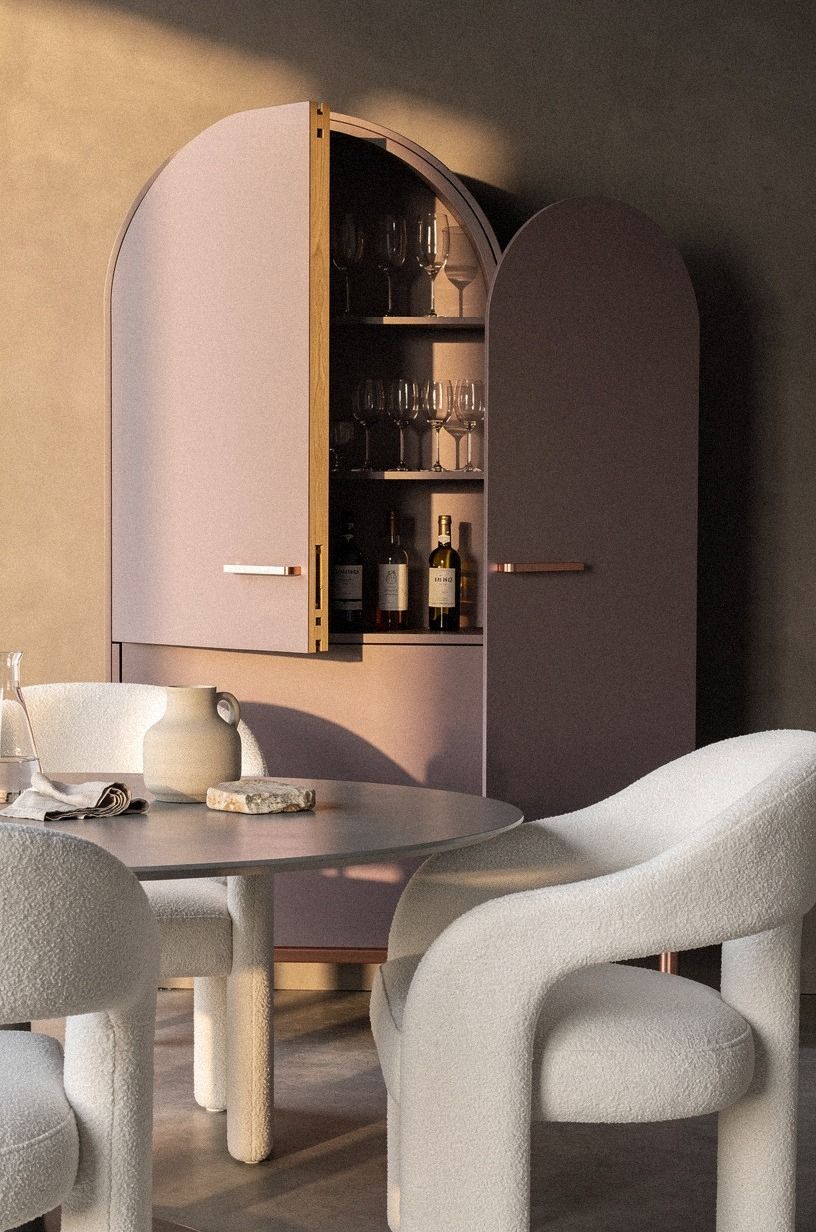
Arched doors give a cabinet softness without forcing you to display every single coupe you own. That’s the appeal. In a plum and gray dining room with rose-gold details, opaque arched panels feel architectural even when they’re just smart joinery.
Make the doors solid enough to feel convincing. A muted plum exterior, a pale interior, and rose gold hardware can look rich without getting costume-y.
You can repeat the curve once in a mirror or bowl, but not six times. For the low-light version of this look, speakeasy dining room ideas for supper club vibes is a helpful mood board, and it’s especially charming after dark.
14Build a fold-down shelf under framed artwork
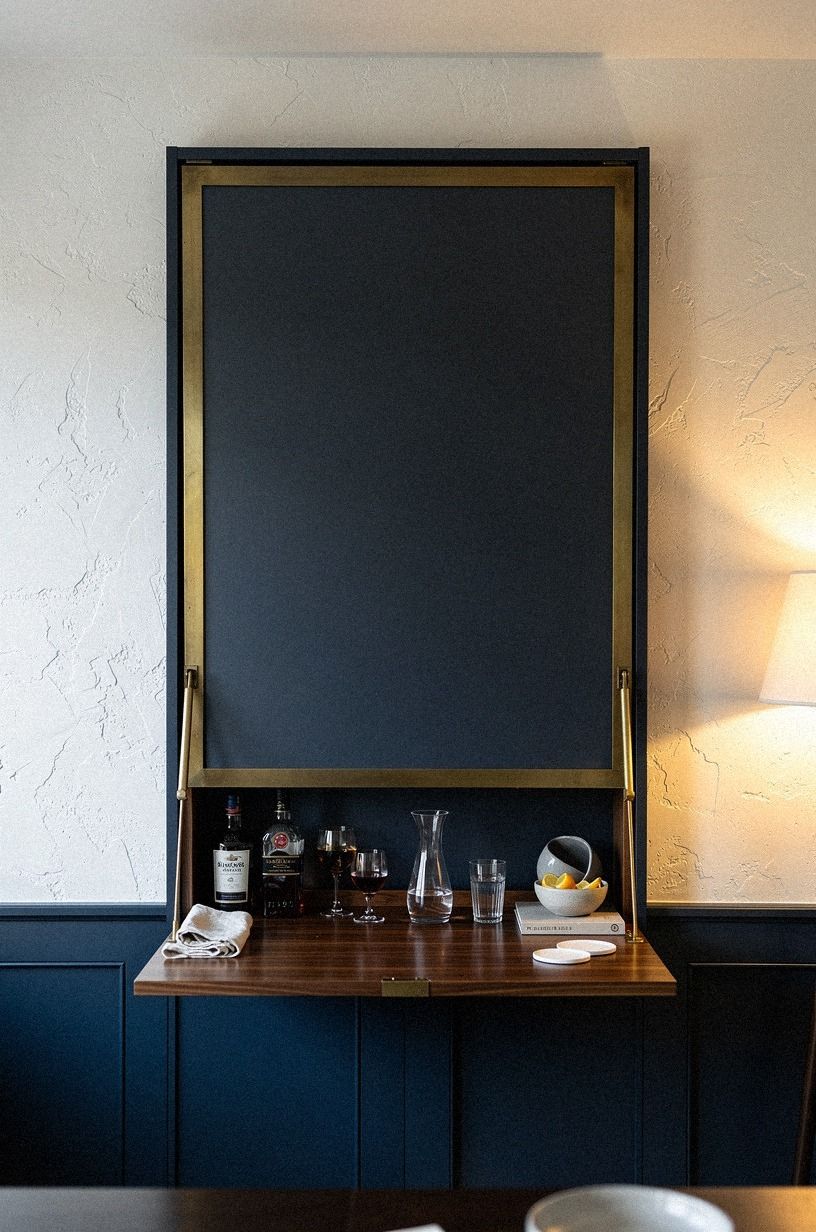
A fold-down shelf under framed artwork is one of my favorite hidden-bar ideas for a tight dining room because the wall decor becomes a serving ledge only when you need it. By day, it looks decorative.
At drink time, it turns functional in about three seconds. Brass piano hinges make that move feel smooth instead of flimsy.
The shelf has to stay believable. A navy, white, and walnut mix works well because the outside remains crisp while the inside brings warmth, and a walnut drop front always feels richer than painted MDF.
Keep the surface shallow enough for two glasses, one bottle, and citrus. If it starts acting like a desk, the move is over. This living-room hidden bar article follows the same hide-function-inside-decor principle, and you’ll see why it works.
15Forest green inside instead of a loud exterior
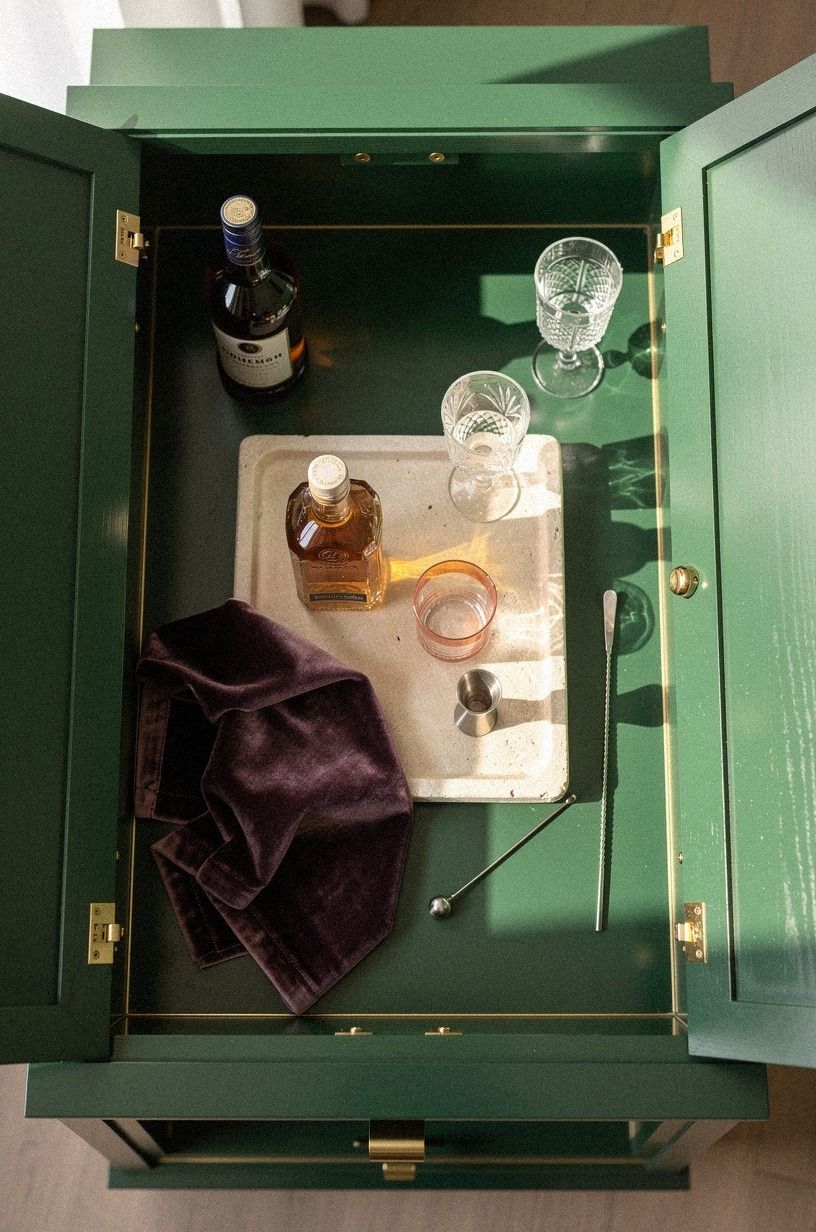
A quiet exterior with a dramatic reveal is often the best move in a dining room, and that’s why I love deep green inside the cabinet more than all over the wall. Farrow & Ball Studio Green No.93 gives the opening a bold, moody hit without making the whole room feel smaller.
That contrast is what makes the reveal memorable. On the outside, a soft putty enamel keeps the room calm. Inside, the green feels intimate and a little luxurious.
You don’t need much styling once the color is doing the work. A few bottles, clear coupes, and one tray are enough, because the finish itself already feels dramatic.
16Stage lamps on top of closed bar doors
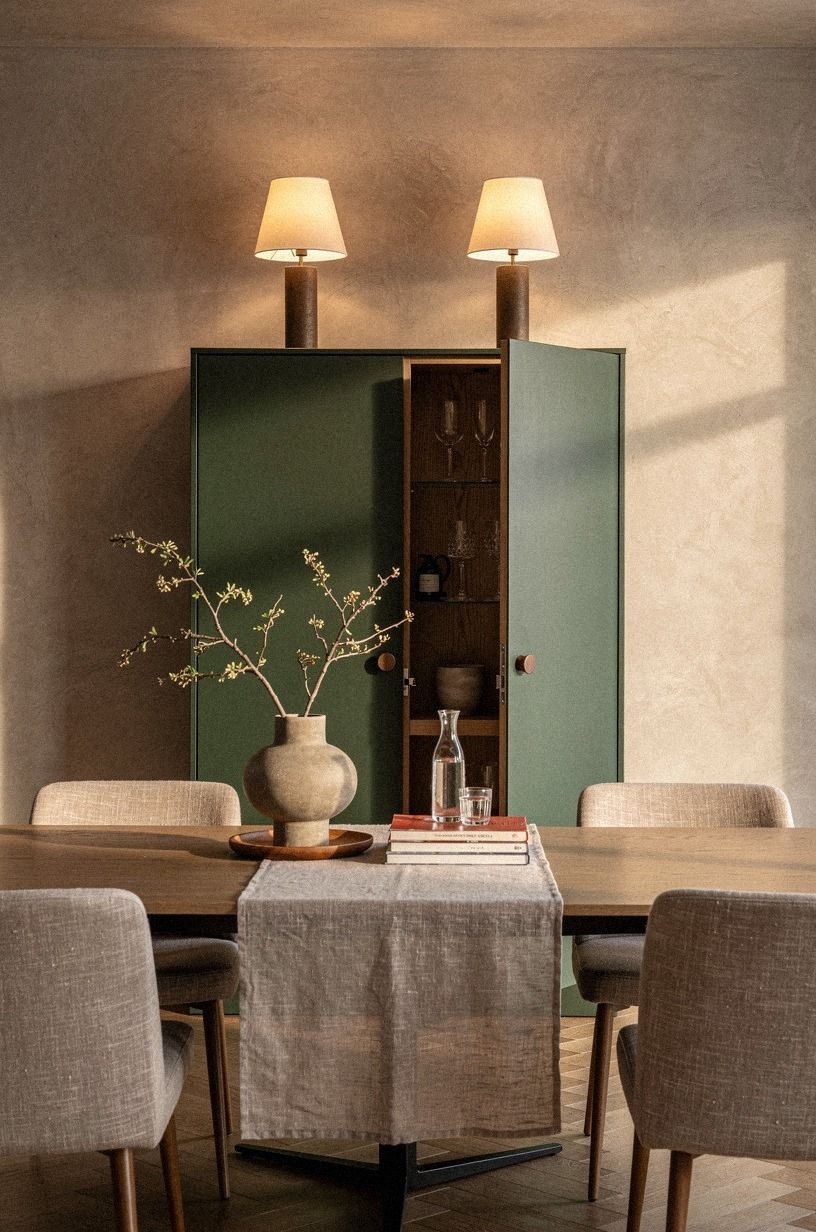
Closed bar doors need a reason to belong in the room, and lamps are one of the easiest ones. Put a small pair on top, or one lamp and a stack of bowls, and the cabinet stops reading like storage. Petite ceramic lamps make the top feel useful and welcoming.
Scale matters. Low lamps keep sightlines open across the table, and warm bulbs around 2700K throw that amber pool of light you want at dinner. A linen drum shade keeps the glow soft rather than harsh.
Tiny lamps look apologetic, so go a little heavier than you think. My spring dining room essentials for 2025 is a good lighting-balance reference if you’re balancing lights with textiles and chairs.
17The Pocket Door Peace Method
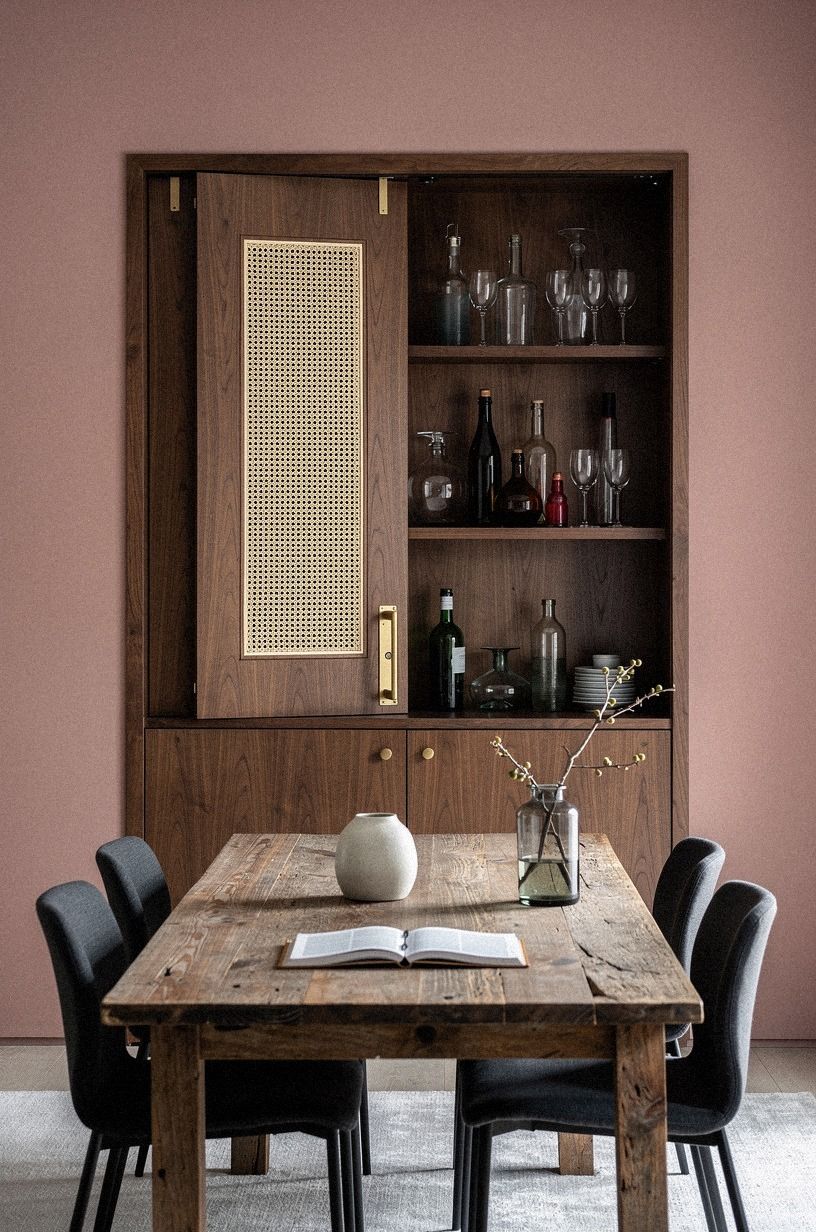
Pocket doors solve one of the most annoying bar-cabinet problems: where the open doors go while you’re using it. Once the panels slide back into the carcass, the room feels less cramped and a lot more serene. Pocket-door hardware kits earn every dollar here.
This works especially well in a dining room where chairs are constantly moving in and out. A walnut wall unit keeps the face handsome when closed and quiet when open.
I’d only use pocket doors if the cabinet is wide enough to deserve them. On a tiny piece, they’re fussy. On a long built-in, they’re calming and genuinely useful.
18Conceal a mini fridge behind fluted base cabinets
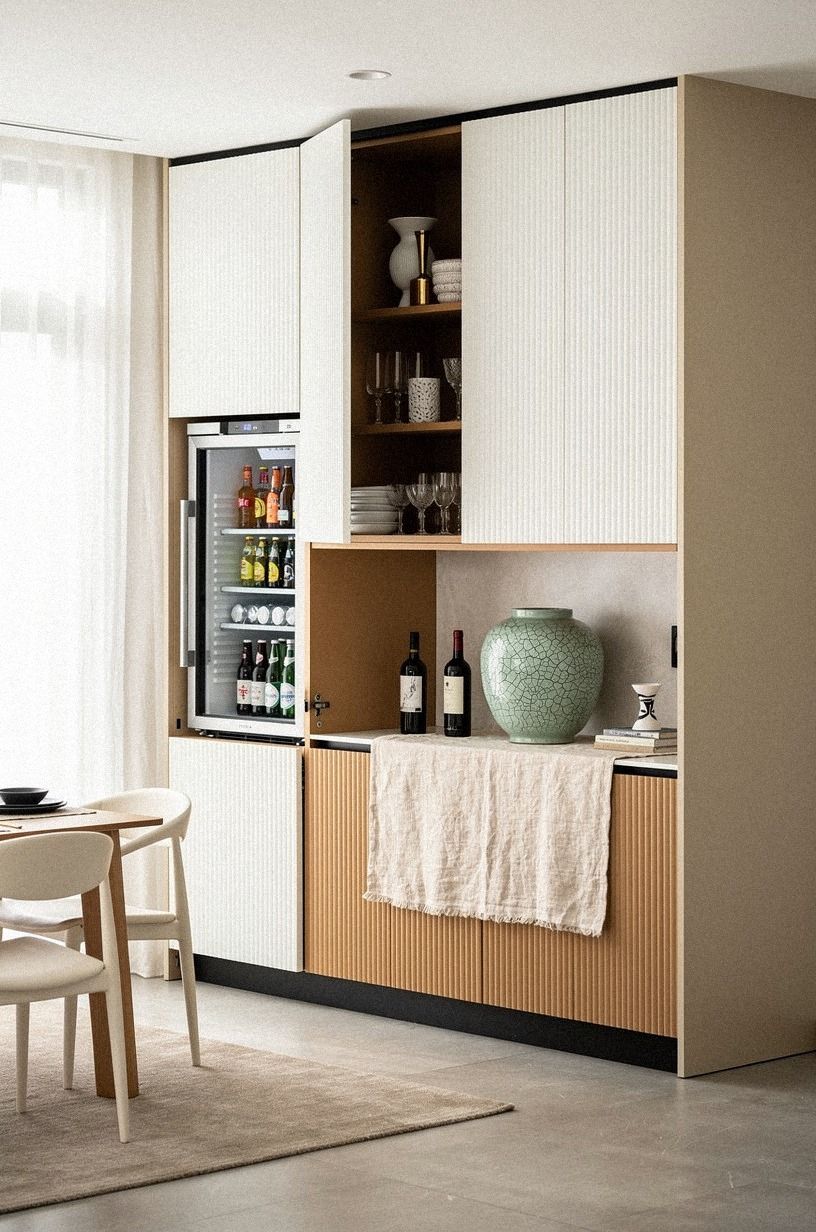
A mini fridge behind fluted base cabinets makes sense if you host often or love chilled mixers. The appliance disappears, the room still feels warm, and you don’t have to choose between cold storage and a calm-looking dining room. Fluted base cabinets make that practical move feel tailored.
Let one door hide the fridge and let the others hold glasses or bottles so the appliance doesn’t steal the whole composition. Camel lacquer cabinetry keeps the setup warm and a little sophisticated even with black accents nearby.
Ventilation matters, so read the manufacturer specs before you build around it. But if you rarely chill anything beyond tonic, skip the fridge and use the width for storage instead. Hidden bar ideas for the living room pushes the same idea, and it’s a practical one.
Why hidden bars work better than open ones in dining rooms
I’ve tried the open-bar look, and I get the appeal. For a few days, it feels generous and styled.
Then dust lands on the coupes, the labels start shouting at the room, and every platter you need for dinner is somehow trapped behind a bottle. Open console bars can look charming at first, but they don’t stay peaceful for long.
Closed storage fixes more than clutter. It gives the room somewhere to rest. When the doors shut, your eye lands on color, shape, and proportion instead of logos and glass stems.
A closed walnut sideboard feels more refined on an ordinary Tuesday, when nothing is staged and nobody’s coming over.
And that’s why I still prefer doors over open shelves. You don’t have to style every bottle.
You don’t have to apologize for the half-used tonic. You just reset the room, and solid cabinet fronts make that reset feel immediate.
Here’s the part people miss: closed storage makes you edit what you keep. You buy fewer novelty bottles, you stop hoarding mismatched glasses, and you start choosing pieces that feel good to touch.
One heavy tray. One proper shaker. One set of coupes.
Weighted brass trays feel more comforting than a pile of filler you’ll keep rearranging.
But the money is better spent, too. I’d rather pay for good hardware, solid doors, and one handsome tray than waste the same budget on decorative filler.
Accessories can flatter a room. Concealed millwork can calm it down, and that’s the real difference.
The Questions I Get Asked Most
What is the best Hidden Bar Cabinet Ideas for the Dining Room for a small living room?
A slim corner cabinet or a tall sideboard is usually the best choice. IKEA HAVSTA keeps the footprint tidy, and your room stays easier to move through. I’d rather start narrow and elegant than go wide and regret the chair clearance.
Where can I buy Hidden Bar Cabinet Ideas for the Dining Room pieces on a budget?
Start with IKEA, Target, and Wayfair, then check Facebook Marketplace before you buy new. Secondhand wood usually paints better than cheap laminate, and you can spend the savings on hardware, liner, or rechargeable lights.
How much does a Hidden Bar Cabinet Ideas for the Dining Room makeover cost?
A light refresh usually costs about $100 to $300, while bigger carpentry upgrades climb from there. Paint is the cheapest lever. Better knobs, puck lights, shelf liner, and one stone or brass tray usually change the look fastest.
Can I create a Hidden Bar Cabinet Ideas for the Dining Room on a budget?
Yes, and you can start with what you already own. Peel-and-stick grasscloth liner gives the inside a more finished look, and rechargeable lights help more than people expect. I’d edit the bottle count before I’d buy new furniture.
Is a Hidden Bar Cabinet Ideas for the Dining Room worth it in a small space?
Yes, because the hidden part keeps the room from looking overworked. Closed storage is even more useful in a compact room than in a large one. Keep the cabinet shallow, protect chair clearance, and match the finish to the rest of the room.
Is Hidden Bar Cabinet Ideas for the Dining Room a good idea for a rental?
Yes, if you keep the changes reversible. Furniture-based bar storage is renter friendly, and you can use removable liner, trays, and rechargeable lights without touching the walls. A tall sideboard is usually the safest starting point.
Where I’d Start First
If I had to pick one, I’d start with picture frame doors. Picture frame fronts hide the bottles before they decorate them, which keeps the room calm even on a random weeknight. Pin that move for later and judge every other option against it.